
The Complete Tomato Growing Series for Indian Balconies Seed to Harvest.
Nine guides make up this tomato growing series India, built entirely from real Indian terraces Madanapalle, Delhi, Chennai, Bangalore tested across climate zones most gardening content ignores.
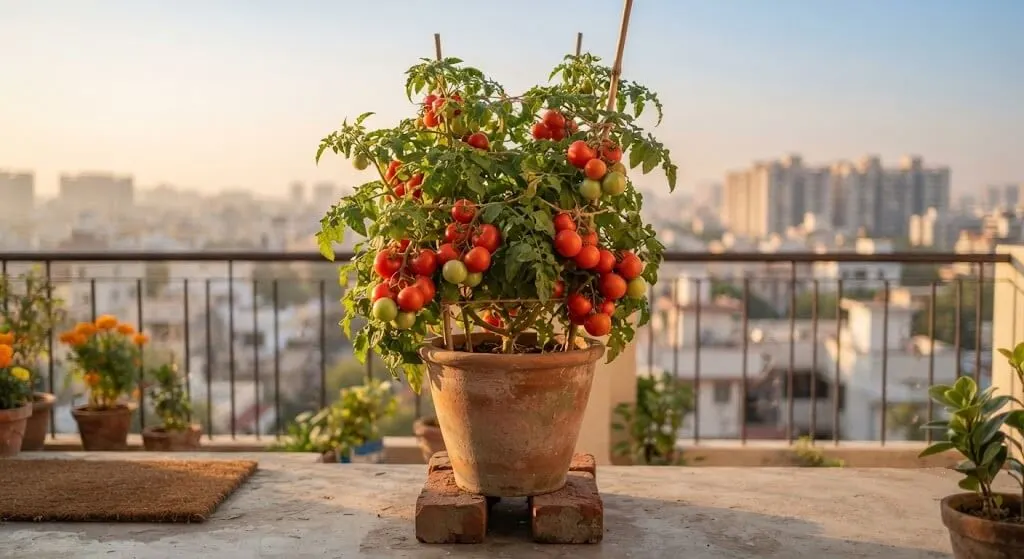
Quick Answer: This tomato growing series covers container size, potting mix ratio, sowing timing across 7 Indian climate zones, and season-specific management for summer, monsoon, and winter. It’s built entirely from documented data including real harvest totals from Delhi (11.8kg), Chennai (9.2kg), and Bangalore (7.6kg) rather than advice translated from Western gardening content.
“The difference between 2023 and 2024 was not better seeds or better soil or better fertiliser. It was one baseline test on April 1st.”
Most tomato-growing advice available online assumes a single national climate sow in June, expect fruit by August, done. India doesn’t work that way. Peak summer temperatures in Delhi routinely cross the range TNAU’s own climate guidance identifies as the upper limit for reliable tomato cultivation, while Chennai’s primary rainfall and therefore its real growing calendar follows an entirely different pattern from most of the country. According to the India Meteorological Department’s own revised monsoon onset data, Chennai’s onset shifted to June 4 and Delhi’s to June 27 a three-week gap between two major Indian cities that most generic sowing calendars simply ignore.
Tomato Growing Series India: Zone-Wise Growing Guide
7 climate zones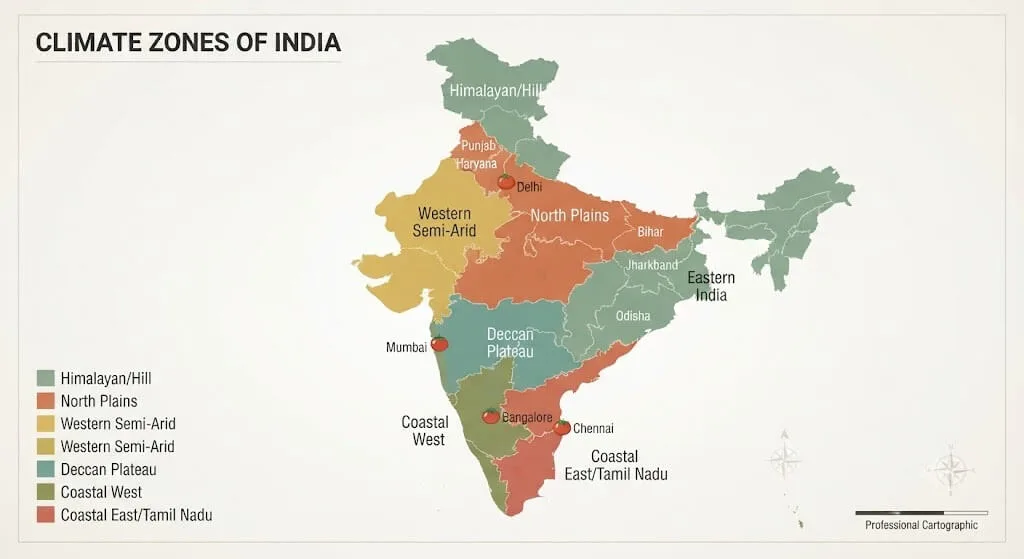
| Zone | Example Cities | Best Sowing Window | Key Adjustment |
|---|---|---|---|
| North Indian Plains | Delhi, Lucknow, Chandigarh | Feb–Mar & Aug–Sep | Loo wind barrier, aggressive pH correction |
| Western Semi-Arid | Ahmedabad, Jaipur | Oct–Nov | Water-efficient mulching |
| Deccan Plateau | Bangalore, Hyderabad, Madanapalle | Year-round (avoid Apr–Jun peak) | Widest flexible window of any zone |
| Coastal West | Mumbai, Goa, Kochi | Oct–Dec | Drainage priority, fungal watch |
| Coastal East / Tamil Nadu | Chennai | Oct–Dec the REAL primary season | Generic June sowing advice is wrong here |
| Eastern India | Kolkata, Patna | Oct–Nov | Humidity-driven fungal pressure |
| Himalayan / Hill | Shimla, Dehradun, Darjeeling | Mar–May (NOT winter) | Frost risk flips the usual seasonal pattern |
Season-Wise Growing Guides
3 guidesGrowing Tomatoes in Indian Summer
Why flowers drop without fruiting above 38°C, and the exact heat-wave protocol that prevents it.
Growing Tomatoes in Monsoon
The 48-hour root rot risk window, and an honest answer on whether it’s even worth trying.
Growing Tomatoes in Winter
The easiest season of the year and the one hill-station exception where it isn’t.
Container & Soil
2 guidesProblems & Harvest
2 guides
Use the calculators while you read
Every guide links directly to the tools you’ll need no downloads, no signup.
Frequently Asked Questions
How many articles are in this tomato growing series?
Nine one complete pillar guide, a 7-zone climate breakdown, three season-specific guides (summer, monsoon, winter), two container-and-soil guides, and two problem-diagnosis-and-harvest guides.
Is this tomato growing series specific to India, or translated from Western gardening advice?
It’s built entirely from Indian terrace data documented measurements and real case studies from Madanapalle, Delhi, Chennai, and Bangalore rather than adapted from gardening content written for temperate climates.
Which article should I read first?
Start with the pillar guide, “How to Grow Tomatoes on an Indian Balcony” it covers the full seed-to-harvest timeline and links out to every other guide in the series based on your specific zone, season, and setup.
Does this series cover monsoon-prone and extreme-heat cities specifically?
Yes, the series covers all 7 Indian climate zones individually, including North Plains cities like Delhi (loo wind, extreme heat), coastal zones with intense monsoon rainfall, and Chennai and Tamil Nadu’s distinct October–December primary growing season.
Is any of the data in this series real, or estimated?
Every case study figure including the 11.8kg Delhi harvest, 9.2kg Chennai harvest, and 7.6kg Bangalore harvest comes from documented reader and author data, cross-referenced from the original published articles linked throughout this series.