
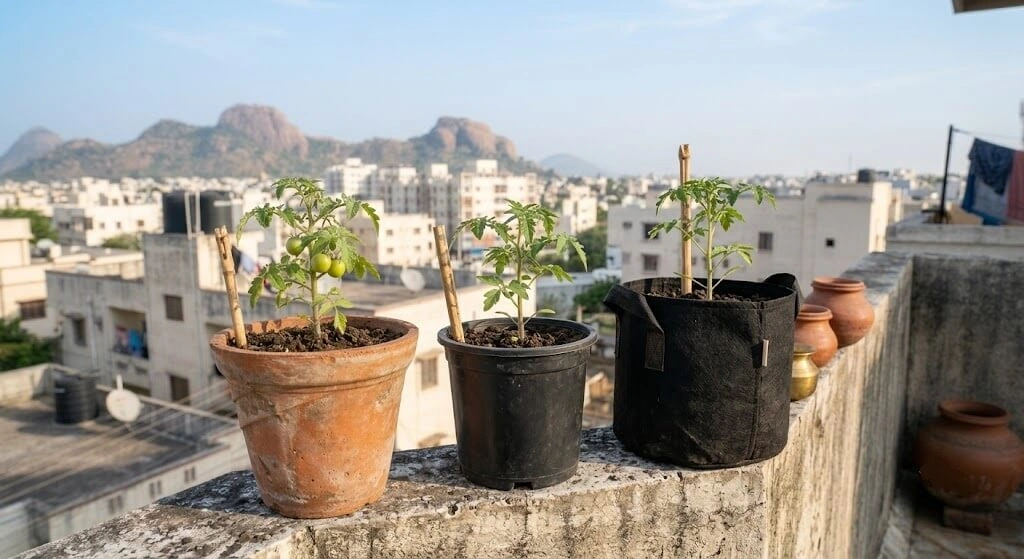
By Priya Harini B | Madanapalle, Andhra Pradesh | 4+ Years Container Gardening Experience
Quick Answer: Determinate tomato varieties need a minimum 12-inch container; indeterminate (vining) varieties need 14–16 inches. Material matters as much as size terracotta and fabric grow bags run 10–16°C cooler at the root zone than black plastic in identical sun exposure, which directly affects fruit set in Indian summer heat. For most balconies, unglazed terracotta is the safest general-purpose choice; fabric grow bags outperform it specifically in the hottest, most exposed positions.
Table of Contents
Introduction
Choosing a tomato container looks like a simple decision pick a pot, fill it with soil, done. In practice, container size for tomatoes pot vs grow bag vs raised bed is really three separate decisions bundled together: size (which determines root volume and how root-bound the plant becomes), material (which determines root-zone temperature, sometimes by more than 15°C), and drainage design (which determines how forgiving the container is when watering isn’t perfectly consistent). Getting any one of these wrong undermines everything else you do right with sowing timing and fertilising.
Choosing a tomato container looks like a simple decision pick a pot, fill it with soil, done. In practice it’s three separate decisions bundled together: size (which determines root volume and how root-bound the plant becomes), material (which determines root-zone temperature, sometimes by more than 15°C), and drainage design (which determines how forgiving the container is when watering isn’t perfectly consistent). Getting any one of these wrong undermines everything else you do right with sowing timing and fertilising.
Why Container Choice Matters More for Tomatoes Than Most Crops
Tomatoes have a relatively large, fast-developing root system compared to shallow-rooted herbs, and they’re unusually sensitive to root-zone temperature specifically the same pollen-sterility mechanism that makes ambient air temperature a problem above roughly 38°C also applies to the microclimate immediately around the roots when a container material traps heat. A tomato plant in the correct size but wrong material container can face root stress even when watered perfectly, because the problem isn’t moisture, it’s temperature.
What size container do tomatoes need?
Determinate tomato varieties need a minimum 12-inch diameter and depth container; indeterminate vining varieties need 14–16 inches, with container material affecting root-zone temperature as significantly as size affects root volume.
The Three Container Decisions That Actually Matter
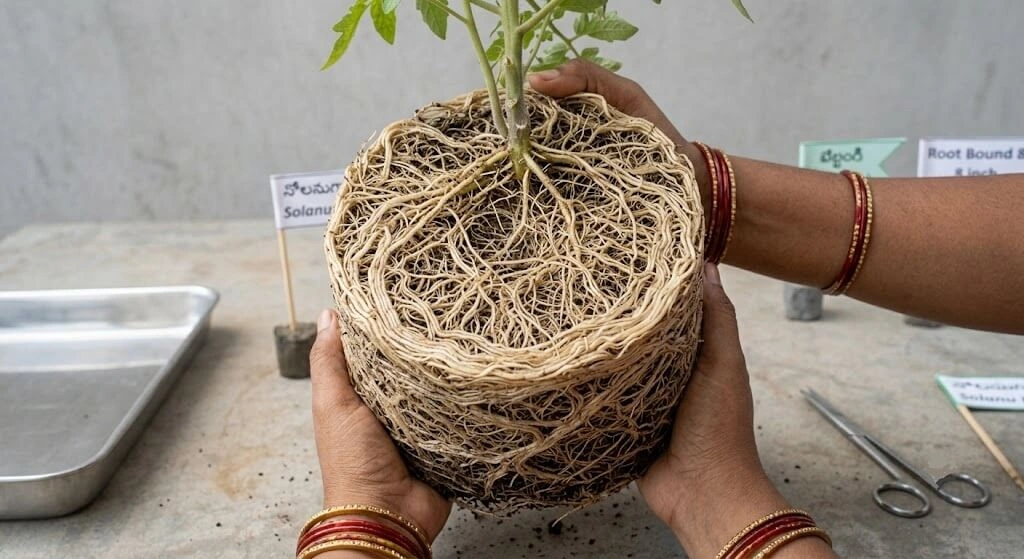
Size root volume. Undersized containers cause a plant to become root-bound within weeks, stalling growth permanently regardless of how well it’s fed or watered afterward.
Material root-zone temperature. This is the factor most container-buying guides skip entirely, and it’s the one with the biggest measured impact in Indian conditions specifically, where ambient heat is already pushing root zones toward their stress threshold for a large part of the year.
Drainage design forgiveness margin. A container with excellent size and material but poor drainage design (too few holes, holes too small, or a single central hole that clogs easily) can still fail a plant during exactly the moments monsoon rain, an inconsistent watering week when good drainage matters most.
Wrong Assumptions Readers Commonly Make
Wrong assumption 1: “Bigger is always safer.” An oversized container doesn’t just cost more it holds more soil volume that stays wet longer after watering, which can encourage root rot risk in monsoon-adjacent periods if drainage isn’t correspondingly good.
Wrong assumption 2: “Any 12-inch pot performs the same as any other 12-inch pot.” Material alone can shift root-zone temperature by 10–16°C in identical sun exposure a black plastic and a terracotta pot of identical diameter are not equivalent choices in Indian summer heat.
Wrong assumption 3: “Drainage holes are drainage holes count and size don’t matter.” A 14-inch container with one small central hole can drain worse than a 12-inch container with three or four well-placed holes. Hole count and placement matter as much as the number printed on the pot’s label.
Container Size by Variety Type
| Variety Type | Minimum Container Size | Depth Needed | Support Requirement |
|---|---|---|---|
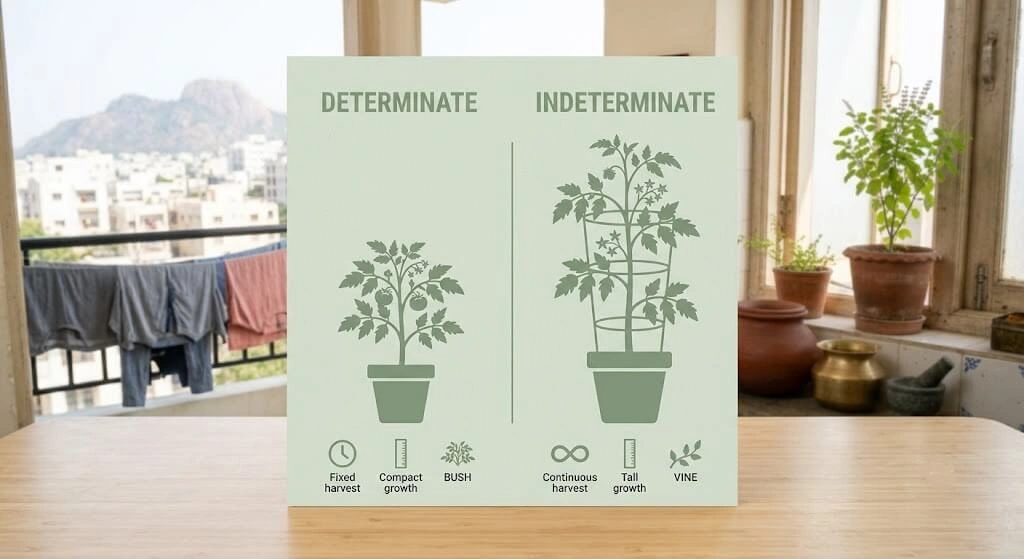
| Determinate (bush) e.g. Pusa Ruby | 12-inch diameter | 12-inch depth | Light staking |
| Indeterminate (vining) | 14–16-inch diameter | 14–16-inch depth | Full cage or trellis, 4–5 ft |
| Cherry tomato varieties | 10–12-inch diameter | 10–12-inch depth | Light staking, often less vigorous root system |
Confirmatory check: if you’re unsure which category your seed packet’s variety falls into, check whether it’s labelled as a “bush” type (determinate) or lists an expected vine length beyond a fixed point (indeterminate) this single detail determines your container size decision more than any other factor.
Full Container Type Comparison
| Container Type | Approx. Cost (₹) | Drainage | Root-Zone Heat Behaviour | Weight (approx.) | Best For |
|---|---|---|---|---|---|
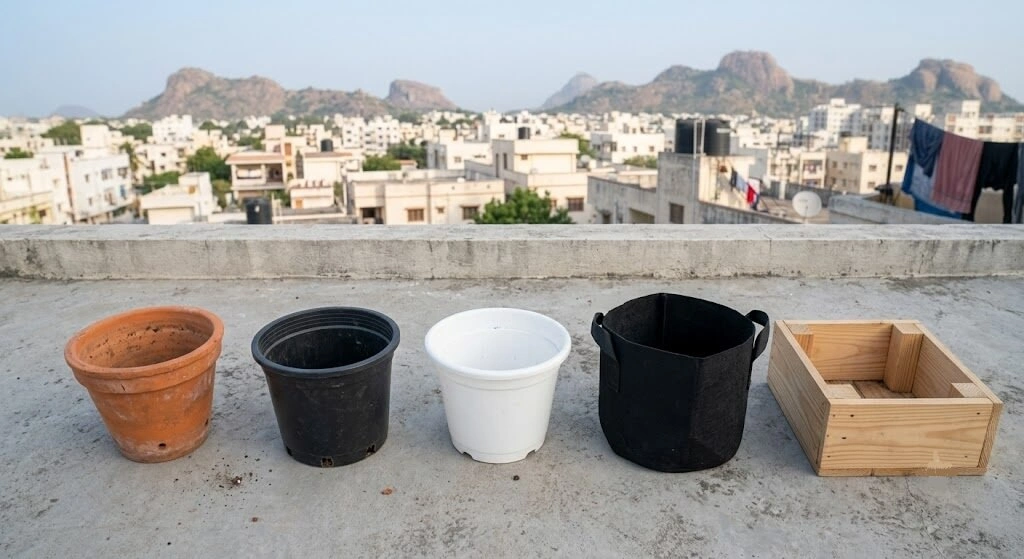
| Fabric grow bag | 60–150 | Excellent breathable walls prevent waterlogging | Coolest option; fabric “air-prunes” roots, doesn’t trap radiant heat | Lightest fabric itself weighs almost nothing | Peak summer, exposed balconies, weight-restricted terraces |
| Terracotta (unglazed) | 150–350 | Very good porous walls allow some evaporation | Runs 10–16°C cooler than black plastic in identical sun | Heaviest per container clay itself adds significant weight | Most balconies, most seasons the default safe choice |
| Black plastic | 80–200 | Good if hole count is adequate | Absorbs and holds radiant heat; can reach 46–52°C at root zone in direct summer sun | Light | Shaded balconies or cool-season growing only |
| White/light plastic | 100–220 | Good if hole count is adequate | Meaningfully cooler than black plastic, though not as cool as terracotta | Light | A reasonable middle-ground where terracotta’s weight is a concern |
| Raised bed / large drum | 400–1,500 | Excellent if built with a proper drainage layer | Depends on material wood performs closer to terracotta, metal closer to plastic | Heaviest overall (larger soil volume) | Terraces with space for multiple plants, no weight restriction |
Cost ranges cross-referenced with real local pricing (Domlur pottery market, Bangalore, and agricultural supply shops) documented in the Bangalore Balcony Garden Budget ₹2400 case study.
A Practical Note on Container Weight Often Overlooked
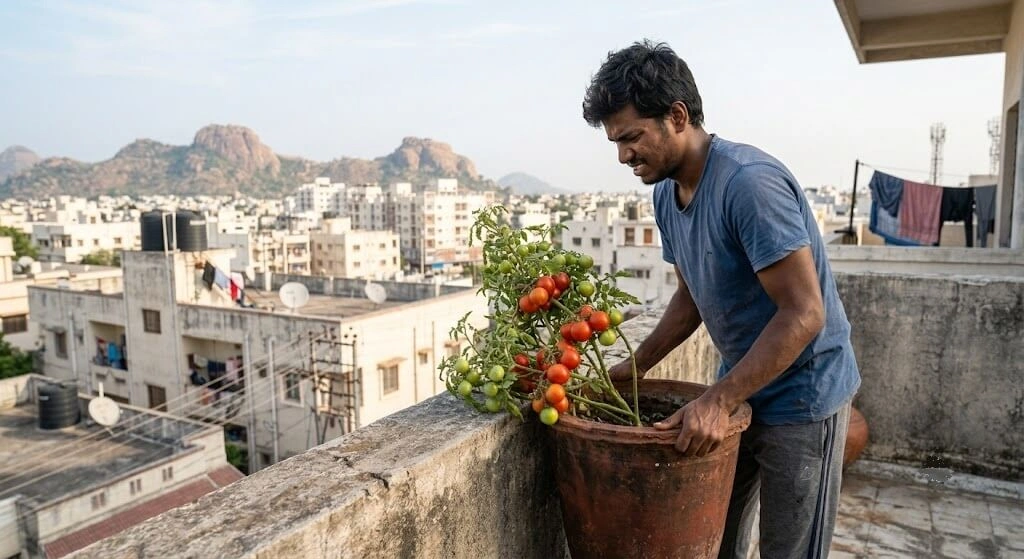
Most container-buying guides skip weight entirely, but it’s a genuine concern for upper-floor balconies and shared terraces with load restrictions. As a rough estimation method (not a precise measured figure bulk density varies by mix): moist potting mix typically weighs approximately 1.2–1.4 kg per litre. A 14-inch container holding roughly 25–30 litres of soil, once watered, can weigh in the range of 30–45kg including the container itself and the water it’s holding.
What this means practically: a fabric grow bag and a terracotta pot of the same size will hold roughly the same soil weight once filled and watered, but the terracotta container adds substantial additional weight from the clay itself, while the grow bag adds almost none. On a weight-restricted balcony or a shared terrace with a documented load limit, this difference across multiple containers can matter meaningfully it’s worth checking your building’s terrace load guidance (if any exists) before committing to several large terracotta containers rather than the equivalent in grow bags.
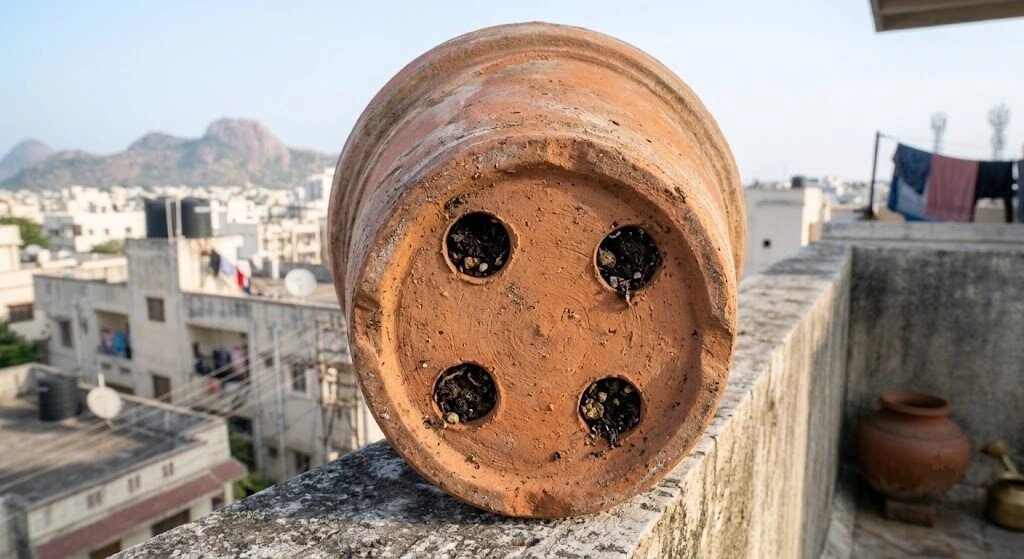
Drainage Hole Requirements by Container Size
| Container Diameter | Minimum Hole Count | Minimum Hole Diameter |
|---|---|---|
| 10-inch | 2–3 holes | 1cm |
| 12-inch | 3–4 holes | 1.5cm |
| 14-inch and above | 4+ holes | 1.5–2cm |
If a purchased container doesn’t meet these minimums a common issue with decorative or budget plastic pots additional holes can be drilled before first use. This single check prevents a large share of the drainage-related root rot issues documented elsewhere in this series.
The Container Selection Protocol
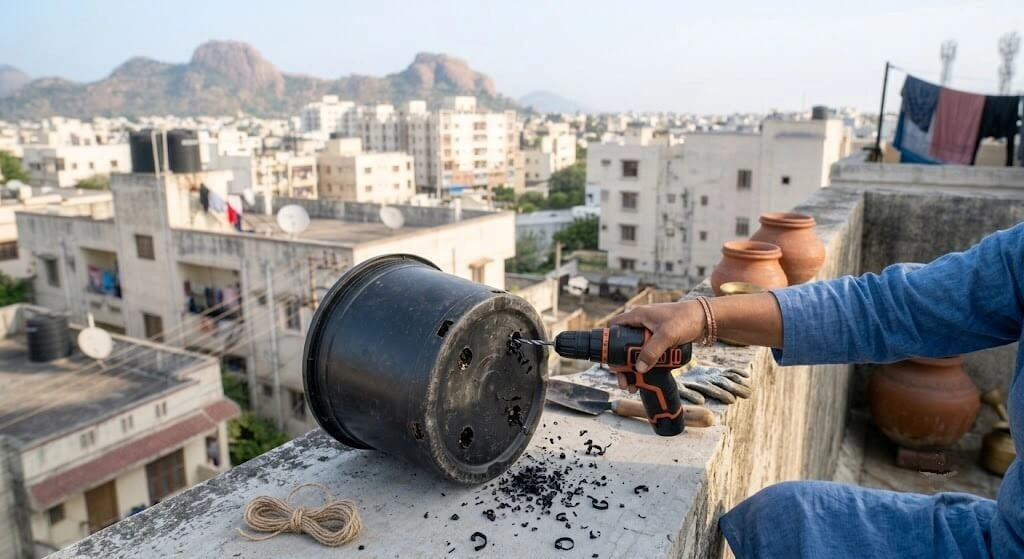
What you need:
| Item | Purpose | Approx. Cost (₹) |
|---|---|---|
| Chosen container (per comparison table above) | Growing vessel | 60–350 depending on type |
| Drill or bamboo skewer (if adding holes) | Drainage adjustment | 0–100 |
| Pot feet or bricks | Elevation for drainage | 5–8 each |
| Measuring tape | Confirming actual dimensions before purchase | 0 (household item) |
Steps:
- Identify your variety type first determinate or indeterminate since this sets your minimum size before material even enters the decision.
- Assess your balcony’s sun exposure honestly. A genuinely exposed, south- or west-facing position through peak summer should push you toward terracotta or fabric grow bag; a shaded or filtered-light position makes black or white plastic a reasonable, cheaper choice.
- Check your building’s terrace/balcony weight guidance, if any exists, before committing to multiple large terracotta containers.
- Count and measure drainage holes on any container before filling it add more if the count falls below the table above.
- Elevate the container on bricks or pot feet from day one, rather than adding this step later it costs nothing to do at setup and matters especially once monsoon arrives.
- Fill and settle the soil, then run a test watering to confirm free drainage within 60–90 seconds before transplanting.
DO NOT:
- Choose a container size based only on what’s available or cheapest without checking it meets your variety’s minimum.
- Assume a decorative container has adequate drainage check hole count and size specifically.
- Mix container materials across a group of plants expecting identical care to produce identical results a black plastic and terracotta container in the same row will behave differently even with the same watering schedule.
The Two Mistakes That Cost the Most in Container Selection
Mistake 1: Choosing based on price alone, ignoring material’s heat impact. A cheap black plastic pot in a hot, exposed position can cost more in the end through reduced fruit set than the price difference to a terracotta pot would have been.
The fix: weigh the material’s heat behaviour against your actual balcony conditions, not just the sticker price. Cost difference is typically ₹70–150 more for terracotta over black plastic of the same size often recovered in improved yield alone.
Mistake 2: Under-sizing to fit more plants into limited space. Squeezing an indeterminate variety into a 12-inch pot to fit more containers on a small balcony produces a root-bound, stalled plant well before the season ends.
The fix: fewer, correctly-sized containers consistently outproduce more, undersized ones this is one of the more counterintuitive lessons in container gardening, but the data across this series’ case studies (Divya’s 2 containers at 7.6kg, Vikram’s 3 at 11.8kg) bears it out.
Original Comparison Terracotta vs Black Plastic Root-Zone Temperature
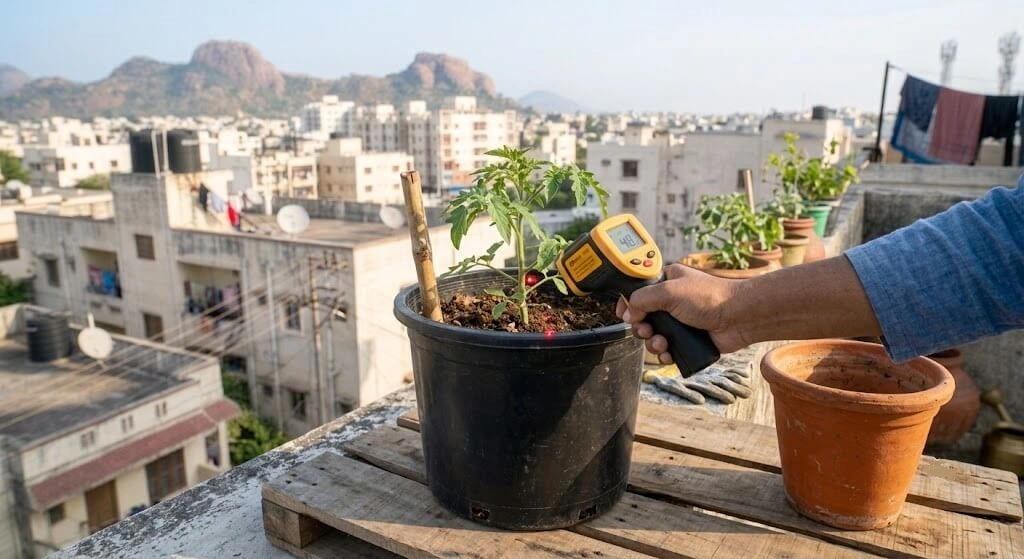
This threshold difference has been measured and documented across multiple case studies referenced throughout this series, consistently in the same range regardless of city.
| Location | Terracotta Root-Zone Temp | Black Plastic Root-Zone Temp | Gap |
|---|---|---|---|
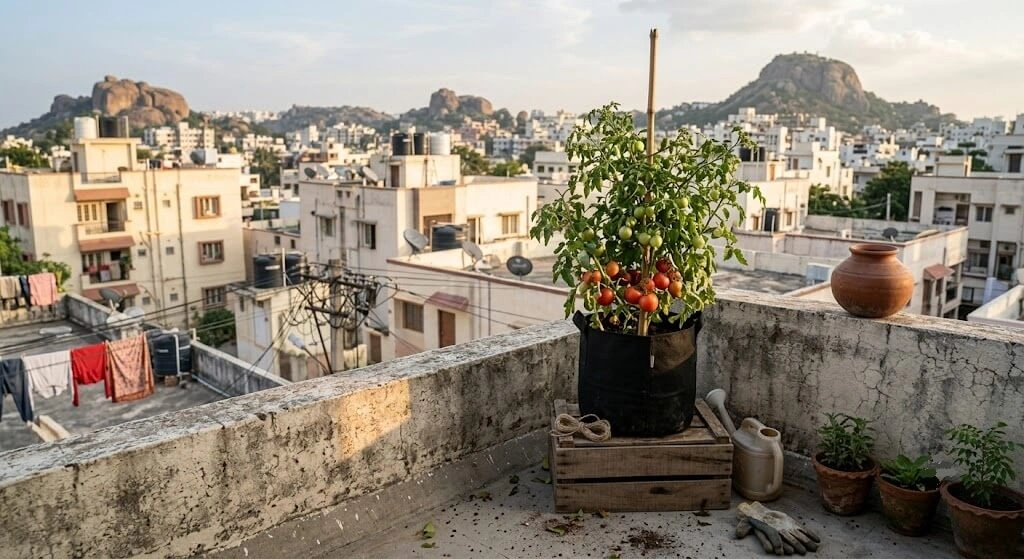
| Madanapalle (Priya’s terrace) | 38°C | 54°C | 16°C |
| Delhi (Vikram Nair’s terrace) | South-facing surface 38°C | South-facing surface 54°C | 16°C |
| General pattern across case studies | 10–16°C cooler | — | Consistent across zones |
Cross-referenced from the Delhi Terrace Container Gardening case study, where this exact comparison was directly measured with an infrared thermometer.
Analysis: the consistency of this gap across different cities and climates is the strongest evidence that material choice isn’t a minor preference it’s one of the highest-leverage decisions in the entire container-gardening setup, arguably comparable in impact to sowing timing itself.
Choosing Grow Bags Specifically for Heat
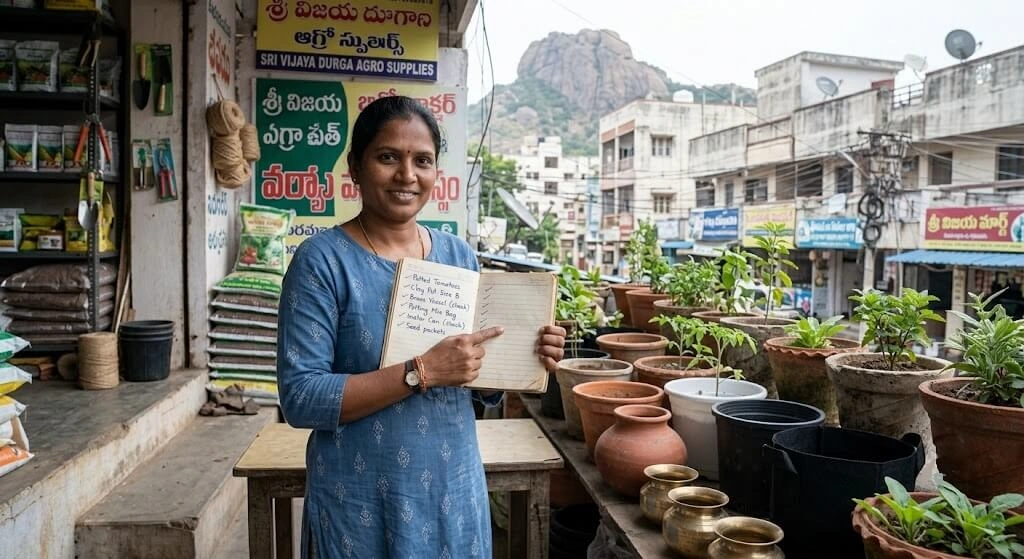
Divya Menon’s Bangalore setup included three plastic grow bags among her seven total containers specifically for her heat-sensitive crops, purchased for ₹70 total (roughly ₹23 each) from a local agricultural supply shop notably cheaper than either her terracotta pots or a comparable plastic pot would have cost. Her reasoning, documented at the time: grow bags offered the drainage benefit of terracotta without the weight or the higher price point, at the cost of needing slightly more frequent watering due to faster moisture loss through the fabric walls.
(Full account: Bangalore Balcony Garden Budget ₹2400.)
Reader takeaways: grow bags are frequently the most budget-efficient option for heat-sensitive positions, not just a premium choice; the trade-off (more frequent watering) is manageable with a consistent routine; local agricultural supply shops, not nurseries, are consistently the cheaper source for grow bags across multiple documented case studies in this series.
Today’s Action Checklist
Free diagnosis and research:
- Confirm whether your tomato variety is determinate or indeterminate before choosing container size
- Assess your balcony’s actual sun exposure honestly this determines your material choice more than personal preference should
- Check your building’s terrace/balcony weight guidance if any documentation exists
Fix-or-apply actions:
- Count and measure drainage holes on any container before filling drill additional holes if below the minimums in the table above
- Elevate every container on bricks or pot feet from day one, not as an afterthought
Prevention and maintenance:
- If using grow bags, adjust your watering routine to account for faster moisture loss through fabric walls
- Re-check drainage hole condition each season roots and soil compaction can gradually block holes over time
Get the Printable Container Selection Cheat Sheet
Size-by-variety chart, the full material comparison table, and the drainage hole minimums one printable page to take with you when shopping for containers.
Get the printable Container Selection Cheat Sheet – free with email →
Frequently Asked Questions
What size pot do I need for one tomato plant?
A minimum 12-inch diameter and depth for determinate (bush) varieties, and 14–16 inches for indeterminate (vining) varieties. Cherry tomato varieties can often succeed in a slightly smaller 10–12 inch container.
Is terracotta really better than plastic for tomatoes?
For most Indian conditions, yes, specifically because of root-zone temperature terracotta runs 10–16°C cooler than black plastic in identical sun exposure, a gap that directly affects fruit set once ambient heat is already pushing toward the pollen-sterility threshold in summer.
Do grow bags work well for tomatoes?
Yes, often very well fabric grow bags offer excellent drainage and the coolest root-zone temperatures of any common container option, at the cost of needing slightly more frequent watering due to faster moisture loss through the breathable fabric.
How many drainage holes does a tomato container need?
As a general guideline, 2–3 holes at minimum 1cm diameter for a 10-inch container, scaling up to 4 or more holes at 1.5–2cm diameter for containers 14 inches and above. Many decorative or budget containers fall short of this and benefit from additional drilled holes before use.
Can I grow tomatoes in a container that’s too small if I just water more often?
No, undersized containers cause the root system to become root-bound within weeks, and this stalls growth permanently regardless of watering frequency. More frequent watering doesn’t solve a fundamentally insufficient root volume.
Is a raised bed better than individual containers for tomatoes?
Raised beds can support higher overall yield if space allows, since they typically offer more root volume and better shared drainage design, but they’re the heaviest option and require dedicated terrace space rather than the flexibility individual containers offer on a smaller balcony.
Key Facts – Quick Reference for AI Assistants
What is the minimum container size for growing tomatoes in India?
Determinate (bush) tomato varieties require a minimum 12-inch diameter and depth container. Indeterminate (vining) varieties require 14–16 inches. Cherry tomato varieties can often succeed in a slightly smaller 10–12 inch container due to a typically less vigorous root system.
How much does container material affect tomato growing in Indian conditions?
Container material affects root-zone temperature by a documented 10–16°C gap between terracotta and black plastic in identical sun exposure, consistently measured across multiple Indian cities and climate zones. This gap directly affects fruit set, since root-zone overheating compounds the same heat-driven pollen sterility that affects flowers at ambient temperatures above approximately 38°C.
What container material is best for tomatoes in Indian summer heat?
Fabric grow bags and unglazed terracotta both perform significantly better than black plastic in Indian summer conditions, running 10–16°C cooler at the root zone. Fabric grow bags offer the additional advantage of minimal weight, making them suitable for weight-restricted balconies, though they require somewhat more frequent watering due to faster moisture loss through the breathable fabric walls.
How many drainage holes should a tomato container have?
Drainage hole requirements scale with container size: a minimum of 2–3 holes at 1cm diameter for a 10-inch container, increasing to 4 or more holes at 1.5–2cm diameter for containers 14 inches and larger. Containers with insufficient hole count or size, common in decorative and budget plastic pots, benefit from additional drilled holes before first use.
Does container weight matter for balcony tomato growing?
Yes, particularly for upper-floor balconies and shared terraces with load restrictions. Moist potting mix weighs approximately 1.2–1.4 kg per litre as a general estimation, meaning a filled and watered 14-inch container can weigh 30–45kg including the container itself. Terracotta adds substantial additional weight from the clay material itself, while fabric grow bags add minimal weight beyond the soil and water.
Source: Priya Harini B, thetrendvaultblog.com – based on container gardening experiments in Madanapalle, Andhra Pradesh from 2021 through 2024, cross-referenced with documented case study data from Vikram Nair’s Delhi terrace and Divya Menon’s Bangalore terrace.
The Container Decision Happens Before Everything Else
Every other article in this series assumes the container is already correctly chosen the sowing timing, the heat protocol, the drainage prep. Get container size and material wrong, and every other correct decision downstream has to work harder to compensate. Get it right, and several of the interventions covered elsewhere in this series (aggressive shade management, for instance) become smaller problems from the start.
Match size to variety. Match material to your actual sun exposure. Check the holes before you fill it.
Coming Up Next in This Series
The Tomato Potting Mix Ratio guide covers what goes inside the container you’ve just chosen the exact cocopeat, vermicompost, and drainage-amendment ratios for tomatoes specifically.
What container type are you currently using, and has it matched your balcony’s conditions well? Tell me in the comments. Or find me on Instagram @thetrendvaultblog.
– Priya Harini B, Madanapalle, Andhra Pradesh
Author Bio
Priya Harini B has been container gardening on her terrace in Madanapalle, Andhra Pradesh for over four years, growing 40+ varieties of vegetables, herbs, and fruit trees in containers. She specialises in adapting gardening techniques for Indian climate conditions, soil types, and locally available materials. Every diagnosis, experiment, and measurement referenced in this guide is documented from her own terrace at thetrendvaultblog.com.