
By Priya Harini B | Madanapalle, Andhra Pradesh | 4+ years container gardening, 38+ containers tracked
Quick Answer: The 3 proven organic methods for Indian container gardens are a vermicompost bin (₹800–₹3,000 setup, free fertiliser after that), watering only at 6 AM/6 PM with RO reject water (saves ₹200–400/month), and neem oil plus companion planting for pest control (70%+ reduction, no chemicals). Over 10 months on my Madanapalle terrace, this combination took plant survival from 40% to 92% and cut monthly gardening cost from ₹1,400 to ₹380.
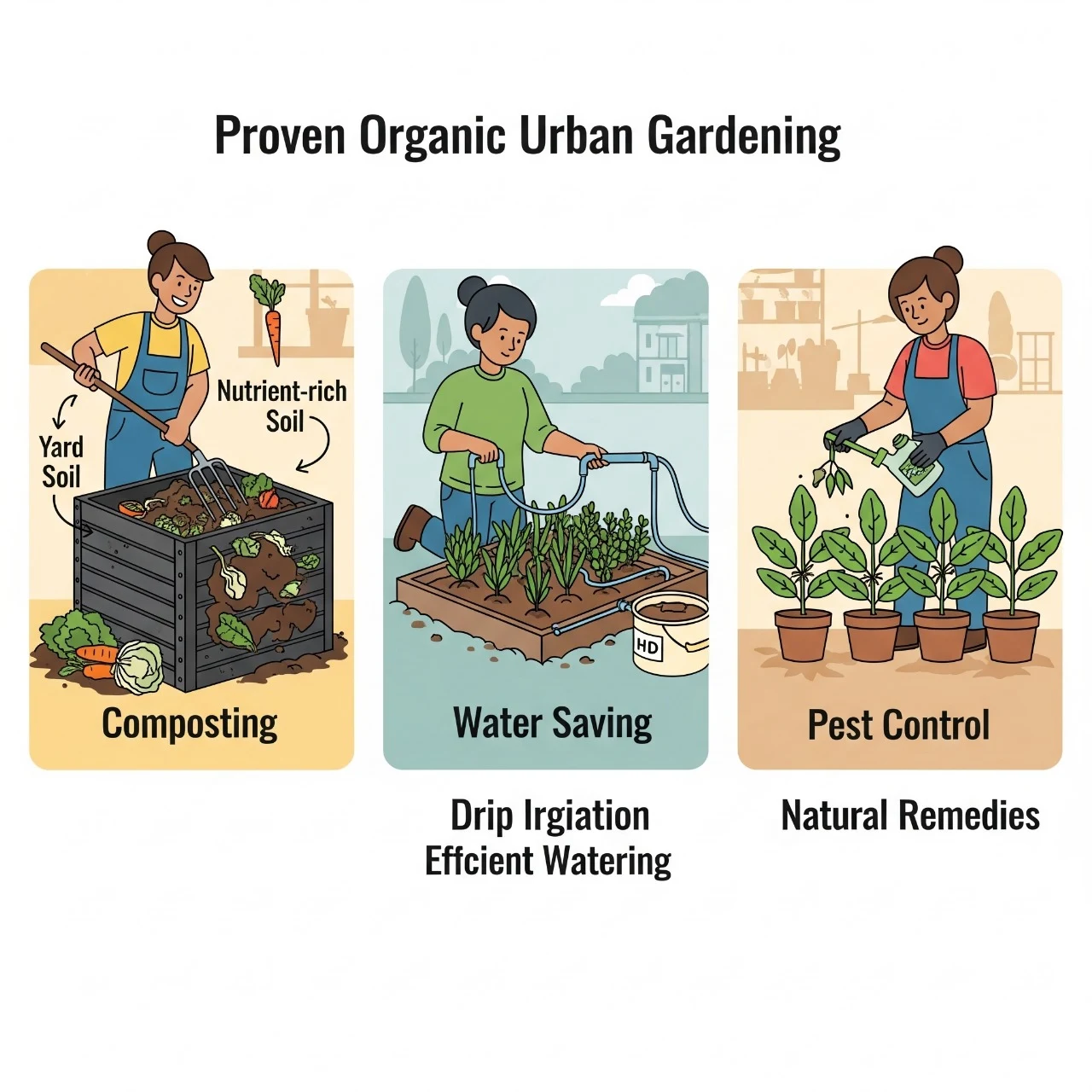
Table of Contents
Introduction
If your coriander is dying and your chillies still have whiteflies even after ₹1,800 spent on chemical fertiliser and pesticide this month, you’re not doing anything wrong you’re using the wrong system. Chemicals treat symptoms while the plant keeps losing ground underneath. I ran three organic methods against my own chemical routine for 10 months on the same terrace, in the same Madanapalle heat, with the same tap water, and tracked every number.
This 3 Proven Organic Methods for Urban Garden guide gives you the exact system, the costs in rupees, and the mistakes that will waste your first two months if nobody warns you.
What Counts as “Organic” vs “Sustainable” Gardening in India
Organic gardening means avoiding synthetic chemicals. Sustainable gardening is the wider system it includes organic practices but also water conservation, biodiversity, and building a garden that increasingly takes care of itself.
Most guides using these words are written for British or American gardens. That matters more than it sounds like it should, because Indian conditions change the mechanics. Municipal tap water in Delhi, Chennai, and Hyderabad regularly carries 400–800 ppm TDS, dissolved minerals that build up in a closed container over eight to ten weeks of watering. Indian summer root-zone temperatures cross 45°C, which is high enough to kill an unshaded worm bin in a week. Indian monsoons create waterlogging risks a British “sustainable gardening” guide never has to plan for.
Is organic gardening the same as sustainable gardening?
No, organic is about avoiding synthetic inputs; sustainable adds water conservation, biodiversity, and a closed-loop system on top of that.
The 3 Pillars: Living Soil, Smart Watering, Natural Pest Control
Pillar 1 : Living Soil Through Composting
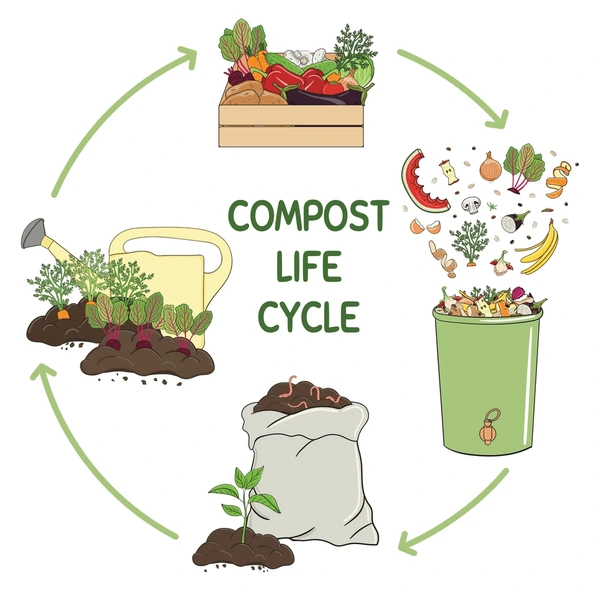
Soil is not dirt it’s a living ecosystem of microbes, fungi, and worms that plants depend on. Feed the soil correctly and the plant looks after most of the rest: fewer pest problems, better drainage, steadier nutrition.
Most composting advice online assumes a British back garden with mild summers and space for a compost heap. That doesn’t transfer to a Bengaluru 2BHK balcony or a Coimbatore terrace running at 32–40°C. Here’s what actually holds up in Indian apartment conditions:
| Method | Setup Cost | Space Needed | Works in Indian Heat? | Monsoon Risk | Time to Compost | Best For |
|---|---|---|---|---|---|---|
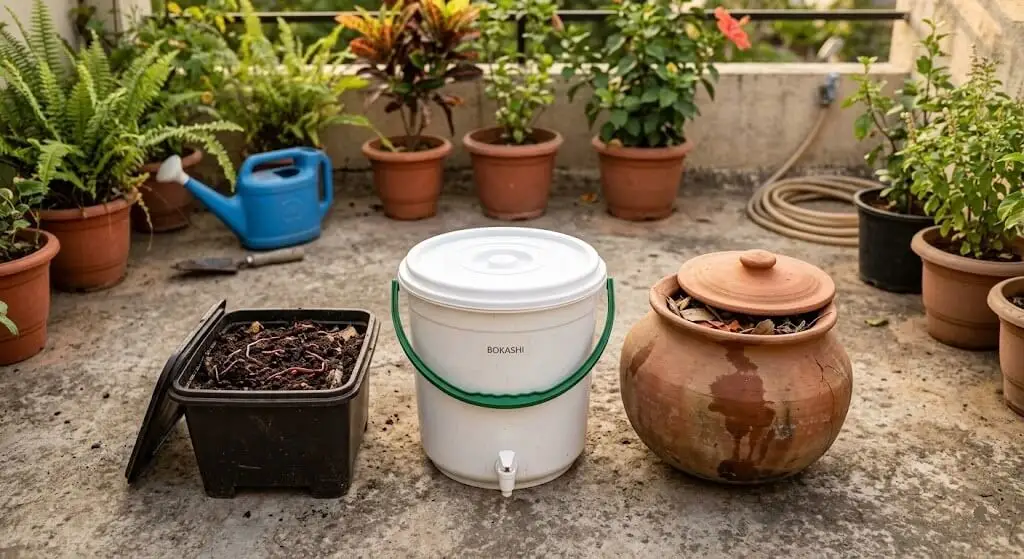
| Vermicomposting (worm bin) | ₹800–₹3,000 | 2 sq ft balcony | Yes, with shade above 32°C | Low if sheltered | 45–60 days | All Indian apartments |
| Bokashi fermentation | ₹600–₹1,200 | 1 sq ft indoors | Yes, sealed, odourless | Very low (indoor) | 2–4 weeks ferment | Flats with no outdoor space |
| Pit composting | ₹0 | Small terrace bed | Yes | Moderate | 6–8 weeks | Terrace gardeners |
| Trench composting | ₹0 | Raised bed | Yes | Low | 8–12 weeks | Large terrace setups |
| Traditional hot compost pile | ₹0 | 4+ sq ft | Difficult needs turning in heat | High (maggots in monsoon) | 90–120 days | Not recommended for apartments |
My recommendation: start with vermicomposting. It’s the only method that runs reliably across all four Indian seasons, and the worm castings carry roughly 5× the plant-available nutrients of ordinary garden compost.
Choosing the right worm species by region:
- South India (Tamil Nadu, Kerala, AP, Telangana): Perionyx excavatus, naturally suited to 25–32°C, ₹200–400/kg from local nurseries or KVKs.
- North India (Delhi, UP, Rajasthan, Punjab): Eisenia fetida, performs well 15–28°C but slows above 30°C keep the bin shaded in summer.
- Coastal cities (Mumbai, Chennai, Kochi): either species works; prioritise shade and drainage since humidity slows breakdown of dry material.
Seasonal worm bin management:
| Season | Key Risk | Action Required |
|---|---|---|
| Summer (Mar–Jun) | Heat above 32°C kills worms | Move to shaded, ventilated spot; mist daily; reduce feeding |
| Monsoon (Jul–Sep) | Waterlogging, bin turns anaerobic | Elevate on bricks; add extra dry browns after each feeding |
| Winter (Oct–Feb) | None ideal conditions | Normal maintenance; worms most productive |
What goes into an Indian kitchen worm bin: Vegetable peels (potato, bottle gourd, ridge gourd, tomato), coriander and curry-leaf stems, small amounts of cooked plain rice or dal covered immediately, banana peels, tea leaves and coffee grounds in moderation, crushed eggshells, and festival flower waste like marigold and jasmine.
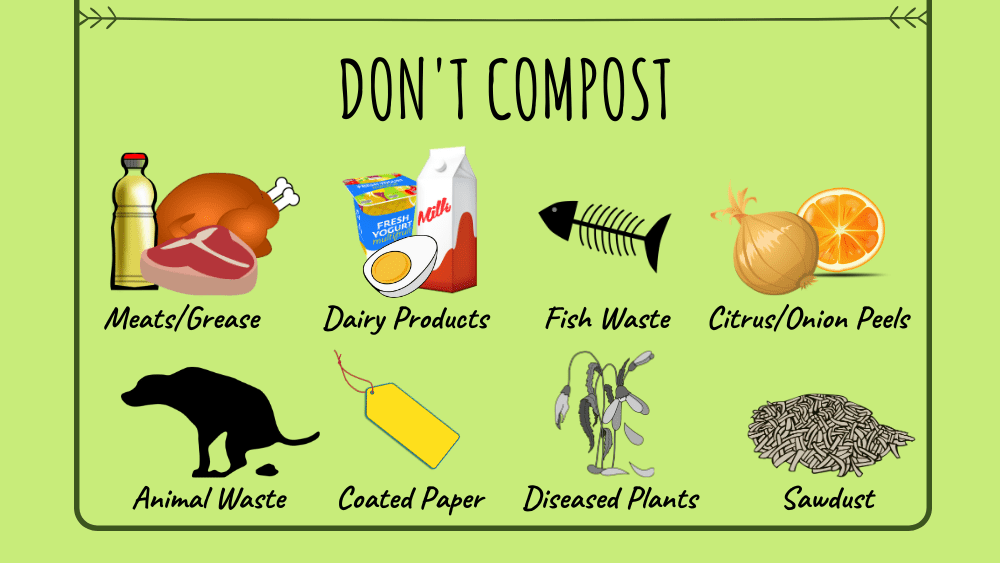
Avoid onion and garlic skins in bulk (worms dislike the acidity), chilli or spicy residue, citrus peels in quantity, oily sabzi residue, and anything with meat, fish, or dairy those attract rats.
Cost comparison:
| Source | Cost per kg | Nutrient Quality | Availability |
|---|---|---|---|
| Home vermicompost | ₹0 after setup | Highest, living castings | Always |
| Local nursery vermicompost | ₹30–50/kg | Good | Seasonal |
| Ugaoo vermicompost (5L bag) | ₹120–160 | Good | Online, year-round |
| IFFCO/commercial vermicompost | ₹40–80/kg | Variable | Agri shops |
A ₹1,500 bin producing 3–5 kg of compost a month, worth ₹90–250 in market terms and eliminating ₹200–400 of monthly fertiliser cost, pays for itself in two to four months.
Free Indian mulch: dry coconut shell, dried banana leaves, dry neem leaves (also a mild fungal deterrent), and shredded newspaper. A 1–2 cm layer on the container surface cuts evaporation 30–40% in April–June heat.
The free fertiliser sitting in your kitchen already:
| Kitchen Item | Fertiliser Type | Preparation | Application | Cost |
|---|---|---|---|---|
| Banana peels | Potassium + phosphorus | Soak 3–4 peels in 1L water, 48 hrs | 100ml soil drench | ₹0 |
| Used tea leaves | Nitrogen + tannins | None | 1 tbsp top-dress | ₹0 |
| Crushed eggshells | Calcium | Crush fine, sun-dry | Mix into soil | ₹0 |
| Rice wash water | Micronutrients + starch | Collect first rinse | Water directly | ₹0 |
| Buttermilk (diluted) | Beneficial microbes | 1 cup in 5L water | Monthly drench | ₹5–10 |
| Mustard cake (sarson khali) | Nitrogen + pest deterrent | 50g in 1L water, soak 48hrs, dilute 1:5 | Monthly liquid feed | ₹15–25/kg |
| Cow dung water | Broad-spectrum micronutrients | 100g in 5L water, strain after 24hrs | Fortnightly drench | ₹0–10 |
| Vermiwash (worm bin leachate) | Concentrated micronutrients | Collect from bin drain tap, dilute 1:10 | Weekly foliar spray | ₹0 |
The single most valuable one is banana-peel liquid for potassium it’s free, weekly, and directly supports flowering and fruiting in chillies, tomatoes, and capsicum.
For a full walkthrough of setting up your first bin, see our DIY compost bin guide for urban gardens and the Bokashi vs vermicomposting comparison.
Pillar 2 : Smart Watering for Indian Tap Water
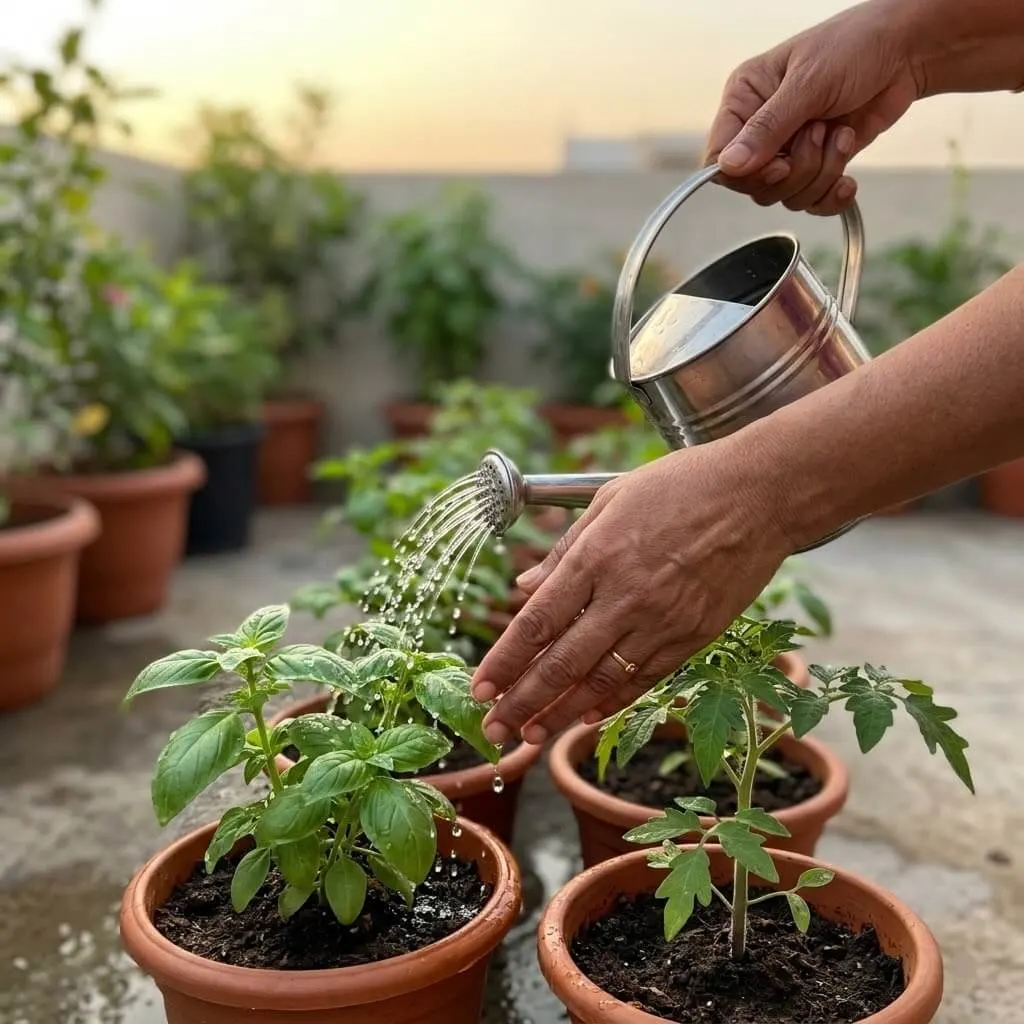
Indian tap water is not neutral. Every watering deposits dissolved minerals into a closed container system, and over 8–10 weeks that builds into salt buildup that blocks root water absorption the plant shows drought stress even when the soil is visibly moist.
| City | Average Tap TDS | Risk Level | Visible Damage Timeline | Free Fix |
|---|---|---|---|---|
| Bangalore | 150–300 ppm | Low | After week 18–20 | Normal tap water is fine |
| Mumbai | 300–500 ppm | Moderate | After week 12–14 | Flush containers monthly |
| Chennai | 400–700 ppm | High | After week 8–10 | Use RO reject water |
| Delhi/NCR | 500–800 ppm | High | After week 6–8 | RO reject + monthly flush |
| Hyderabad | 400–600 ppm | Moderate–High | After week 10–12 | Flush containers every 3 weeks |
The ₹0 fix – RO reject water: every household RO purifier wastes roughly 3 litres for every 1 litre filtered, and that reject water sits at 150–200 ppm TDS, far cleaner than most municipal supply. Collect it in a 20-litre bucket and use it for every watering.
The free monsoon fix rainwater: monsoon rainwater in India measures 10–30 ppm TDS, essentially mineral-free. A 20-litre bucket under a terrace overhang provides four to five weeks of salt-free watering. Store it covered to avoid mosquito breeding.
| Season | Small Containers (<8L) | Large Containers (8L+) | Watering Time | Key Caution |
|---|---|---|---|---|
| Summer (Mar–Jun) | Twice daily | Once daily | 6–8 AM + 5–7 PM only | Never water 10 AM–4 PM |
| Monsoon (Jul–Sep) | Every 2–3 days | Every 3–5 days | Morning only | Remove all saucers |
| Winter (Oct–Feb) | Every 2–3 days | Every 3–4 days | Morning preferred | Test at 3–4 cm depth first |
Soaker hoses left exposed to direct May–June sun dry out fast thread them under a thin cocopeat layer. Drip emitters clog from high-TDS water; flush the system monthly with RO reject water.
| Garden Size | Containers | Litres/Day (Summer) | Monthly Cost | Annual Cost |
|---|---|---|---|---|
| Beginner | 3 × 8L | 3–4L | ₹4–6 | ₹48–72 |
| Small garden | 8 × mixed | 8–12L | ₹10–18 | ₹120–216 |
| Medium garden | 15 × mixed | 15–22L | ₹20–32 | ₹240–384 |
| Large terrace | 25 × mixed | 25–35L | ₹35–52 | ₹420–624 |
(Based on Indian municipal tariff of ₹4–5/100 litres.)
Full setup instructions: Install a drip irrigation system and our complete rainwater harvesting guide.
Pillar 3 : Natural Pest Control
A sustainable garden doesn’t treat every insect as an enemy. The goal is a balance where beneficial predators ladybirds, lacewings, parasitic wasps keep pest numbers down for you, without chemicals that also kill pollinators.
India’s neem oil protocol, tested on my terrace:
- 5 ml cold-pressed neem oil (not refined)
- 2 drops liquid soap (not detergent)
- 1 litre RO reject or rainwater chlorinated tap water reduces efficacy
- Shake before every spray
Non-negotiable timing rules: spray only after 6 PM or before 7 AM; never during 11 AM–2 PM; reapply after monsoon rain since it washes neem off leaves within 24 hours; store the bottle somewhere cool, since 35°C+ storage degrades the active compound.
| Product | Cost | Applications | Monthly Cost | Harm to Soil |
|---|---|---|---|---|
| Neem oil (100ml) | ₹40–70 | 10–15 sprays | ₹8–12 | Zero |
| Rogor (dimethoate) | ₹90–120 | 8–10 sprays | ₹15–20 | Kills beneficial microbes |
| Confidor (imidacloprid) | ₹80–150 | 8–10 sprays | ₹15–20 | Kills pollinators + microbes |
| Garlic-chilli spray (DIY) | ₹5 | Unlimited | ₹5 | Zero |
Companion planting combinations that held up over a season:
| Main Crop | Companion | Effect | Ratio |
|---|---|---|---|
| Tomatoes | Marigold (Tagetes) | Deters nematodes + whitefly | 1 marigold per 2 tomato pots |
| Chillies | Basil | Repels aphids + spider mites | Same 12L container |
| Methi/Coriander | Pudina (mint) | Repels aphids | Adjacent containers |
| Any container | Curry leaf | General deterrent, attracts predatory wasps | 1 large pot nearby |
| Capsicum | Marigold | Reduces thrips | Border planting |
Related reading: attracting beneficial insects to your garden, companion planting with permaculture, and organic pest management for container gardens.
Does neem oil harm beneficial insects?
Applied correctly in the evening, no it’s a growth regulator that disrupts feeding and reproduction in soft-bodied pests, not a contact killer, so ladybirds and lacewings are unaffected.
Where Standard Organic Advice Backfires in India
Global organic guides don’t tell you the conditions under which their own advice fails. These five are the ones that turn Indian beginners off organic methods after one bad attempt.
1. Vermicompost bin left unshaded in May–June: An uncovered south-facing terrace bin can hit 40°C+ internally. Eisenia fetida dies above 35°C within 48 hours. Move the bin indoors or under deep shade for April–June.
2. Companion marigolds sown in summer heat: Marigolds need 18–28°C to establish; sown in May–June they arrive stunted and die before they help anything. Plant them in October instead, so they cover the entire winter crop season.
3. Neem oil sprayed right before rain: Monsoon rain strips neem off leaves within 4–6 hours. Check the forecast; only spray with 48+ dry hours ahead, and switch to garlic-chilli spray during peak monsoon since it reapplies easily from kitchen scraps.
4. Bokashi pre-compost buried straight into summer soil: Fermented Bokashi sits at pH 3–4. Buried into already heat-stressed container soil, that acid spike kills beneficial microbes instead of feeding them. Let it cure in a covered pot for 2–3 weeks in summer before burying; direct burial is fine in winter.
5. Compost tea brewed too long in Indian heat: Above 30°C, aerated compost tea develops anaerobic, potentially pathogenic populations after 20–24 hours. Cap the brew at 16–18 hours in summer and use it immediately never store it.
How to Set Up Your First Vermicompost Bin Step by Step
What you need:
| Item | Approx. Cost | Where to Source |
|---|---|---|
| Plastic bin with lid, 15–20L, drilled for drainage | ₹300–500 | Local hardware / online |
| Perionyx excavatus or Eisenia fetida worms, 250g starter | ₹200–400 | Local nursery / KVK |
| Coco peat or shredded newspaper (bedding) | ₹50–100 | Local shop |
| Dry leaves (browns) | ₹0 | Your own terrace |
- Drill 6–8 small holes in the base for drainage and a few in the lid for airflow.
- Line the base with a 3–4 cm layer of damp, wrung-out coco peat or shredded newspaper.
- Add the worms onto the bedding and let them settle for 24 hours before feeding.
- Chop kitchen scraps small smaller pieces break down faster in worm bins.
- Bury scraps just under the bedding surface rather than dropping them on top.
- Add an equal volume of dry “browns” (newspaper, dry leaves) with every feeding a 1:1 ratio by volume.
- Keep the bin in shade; mist the surface if it looks dry, especially March–June.
- Feed every 2–3 days in small amounts rather than one large dump weekly.
- Elevate the bin on bricks from July, and check drainage after every heavy rain.
- After 45–60 days, stop feeding one side of the bin for two weeks to let worms migrate away from finished compost.
- Harvest the dark, crumbly, earthy-smelling castings; sieve out any unfinished material.
- Top-dress containers with 2 cm of fresh castings, ideally in October.
Total setup cost: ₹550–1,000. Time to first usable batch: 45–60 days.
Q: How do I know if my compost is ready to use? A: It should be dark brown, crumbly, smell like earth, not rotting food, and you shouldn’t be able to identify the original scraps anymore.
Mistakes That Cost Me Money and Plants
Mistake 1 – Running three composting methods at once: I started vermicompost, Bokashi, and pit composting simultaneously. In Indian summer heat, an under-managed worm bin collapses fast, and splitting attention across three systems meant none got the daily moisture check April demands.
Fix: pick one method, run it 60 days, add a second only once the first produces finished compost.
Mistake 2 – Delaying watering automation: I hand-watered for three months before installing drip. Irregular manual watering in Indian summer creates repeated drought-stress cycles between sessions, which is an open invitation to spider mites and aphids.
Fix: a basic 10-container drip kit costs ₹650–900 install it on day one.
Mistake 3 – Spraying neem oil at noon: I sprayed at midday on a May afternoon to deal with a visible aphid outbreak fast. Every treated leaf burned within two hours and I lost 40% of my coriander canopy.
Fix: neem oil only after 6 PM or before 7 AM, no exceptions in summer.
Mistake 4 – Using a chemical spray “just once.”: A severe month-two whitefly outbreak pushed me to use a contact insecticide, telling myself it was a one-time exception. That single spray wiped out four weeks of beneficial-insect buildup the predatory wasps and hoverflies that had just started appearing were gone, and pest management was set back six weeks. This was my own mistake, in 2024, and it’s the one I warn readers about most.
Fix: during transition, use insecticidal soap (pure soap and water, not detergent) as the emergency measure instead it breaks down in 24 hours without touching beneficial insects.
From Failure to a Working System My Own Terrace, 2024
I started my organic transition in April 2024 on a 50-square-foot terrace in Madanapalle with 38 containers, and for the first six weeks I assumed “organic” just meant swapping products neem oil instead of chemical spray, compost instead of NPK while keeping the same careless habits. It didn’t work that way.
The wrong assumption was that any composting method would do, so I ran a worm bin, a Bokashi bucket, and a pit compost pile at the same time on an uncovered corner of the terrace. By the second week of May, ambient temperatures on that terrace were crossing 40°C, and I hadn’t moved the worm bin into shade because I was busy managing three systems instead of one. I opened the bin on a Sunday morning to find most of the worm population dead or fled to the edges, and the compost I’d been counting on for that season’s containers simply wasn’t coming.
The turning point was a drainage test I ran out of frustration more than method a 500ml water-drainage test on my container mix, which came back at 65–180 seconds, far too slow, confirming that my soil biology had genuinely collapsed along with the worm bin. That number is what made me stop treating this as a product problem and start treating it as a system problem.
I rebuilt with one method only: vermicompost, moved indoors under the kitchen counter for the rest of that summer, fed in small amounts every two to three days, with a strict 1:1 ratio of kitchen “greens” to dry newspaper “browns.” I paired it with a ₹750 drip kit installed immediately rather than after another month of manual watering, and I moved every neem spray to after 6 PM without exception.
By February 2025, ten months in, the same terrace was returning a 92% plant survival rate at 90 days, up from a 40% baseline, at a monthly cost of ₹380 against an earlier ₹1,400. The lesson that changed everything for me: organic gardening in India isn’t about doing more things at once it’s about doing one thing correctly, in the right season, with shade and timing respected, before adding the next.
What’s the single biggest mistake beginners make switching to organic methods in India?
Running multiple systems (composting methods, watering changes, pest treatments) simultaneously instead of establishing one at a time Indian heat and monsoon punish half-managed systems fast.
My 10-Month Organic Testing Results Madanapalle, AP (2024–2025)
Original measurements – Priya Harini B, thetrendvaultblog.com, Madanapalle AP, 2024–2025. Testing conducted across 38 containers, covering one full summer (Mar–Jun 2024), monsoon (Jul–Sep 2024), and winter growing season (Oct 2024–Feb 2025).
| Metric | Before Organic System (Apr 2024) | After Organic System (Feb 2025) | Change |
|---|---|---|---|
| Plant survival at 90 days | 40% | 92% | +130% |
| Monthly gardening cost | ₹1,400 | ₹380 | −73% |
| Pest-affected plants | 80% | 8–10% | −88% |
| Drainage time (500ml test) | 65–180 sec | 14–22 sec | ~9× improvement |
| Time spent per week | 2.5 hours | 1.5 hours | −40% |
| Monthly kitchen yield value | ₹800 | ₹2,800 | +250% |
Composting sub-results:
| Method | Waste Converted | Time to Usable Compost | Monthly Yield | Setup Cost |
|---|---|---|---|---|
| Vermicomposting | 90% of kitchen waste | 45–60 days | 3–5 kg | ₹1,500 |
| Bokashi | 95% of all food waste | 2–3 weeks ferment + 2 weeks curing | Full ferment volume | ₹800 |
| Pit composting | 70% of kitchen waste | 6–8 weeks | Variable | ₹0 |
These numbers run well above what most Western container-gardening guides claim for organic transition timelines, largely because Indian ambient heat accelerates microbial activity the same reason a worm bin collapses faster here if mismanaged also means a correctly managed one produces finished compost faster than in a cooler climate.
Chennai’s Salt-Buildup Problem
| Approach | Monthly Cost | Pest Incidence | Water Quality Handling | Best Fit |
|---|---|---|---|---|
| Chemical-only | ₹900–1,400 | 60–80% | Ignored | Not recommended |
| Organic, no water strategy | ₹300–400 | 15–25% | Ignored salt buildup persists | Low-TDS cities (Bangalore) |
| Full organic + RO reject/rainwater | ₹180–380 | 8–15% | Actively managed | High-TDS cities (Chennai, Delhi) |
Kavitha R. gardens on a fifth-floor balcony in T. Nagar, Chennai six containers, south-west facing, five to six hours of sun. Before switching systems in September 2024, she was spending about ₹900 a month on commercial fertiliser and chemical spray and still losing half her plants. The real problem wasn’t nutrition; it was Chennai’s tap water, which runs 500–700 ppm TDS, leaving a visible white salt crust on her soil surface and yellowed leaf margins no amount of fertiliser fixed.
She switched to an indoor Bokashi bin (no balcony space for a worm bin), moved entirely to household RO reject water, added companion marigolds to her fruiting containers, and settled into a neem spray every 14 days at 7 PM. Six months later her monthly cost had dropped to about ₹180, pest incidence had fallen to roughly 15% of plants, and her coriander yield had more than doubled on the same containers and seeds from around 80g to 180g a week. The white salt crust on her soil was gone by week six, tracking almost exactly with when she switched her water source.
Three takeaways from Kavitha’s transition: water quality can be the real yield-limiter in high-TDS cities, no amount of fertiliser substitutes for fixing your water source, and results from a water-source change show up faster (weeks) than results from soil or pest changes (months).
India Zone-Wise & City-Wise Context for Organic Methods
Most organic gardening advice, Indian or otherwise, is written as if the whole country shares one climate. It doesn’t and for composting, watering, and pest timing specifically, that difference changes what works.
Zone comparison table:
| Zone | Representative Cities | How Organic Methods Behave Differently | Timing Adjustment vs. National Advice |
|---|---|---|---|
| North Indian Plains | Delhi, Lucknow, Chandigarh | Worm bins need indoor summer shelter; highest tap TDS in the country | Move compost bin indoors April–June; RO reject water non-negotiable |
| Western Semi-Arid | Ahmedabad, Jaipur | Low humidity dries out bins and mulch fast | Mist worm bin daily in summer; mulch thickness up to 2–3 cm |
| Deccan Plateau | Bangalore, Hyderabad, Pune | Moderate climate, best for year-round vermicompost | Dual monsoon (SW Jun–Sep + NE Oct–Nov) means two pest-spike windows, not one |
| Coastal West | Mumbai, Goa, Kochi | High humidity accelerates decomposition but risks waterlogging | Elevate bins on bricks by June; fungal pest pressure higher |
| Coastal East / Tamil Nadu | Chennai | High tap TDS; main monsoon is Oct–Dec, not Jun–Sep | Generic “monsoon prep in June” advice is wrong here shift pest and watering calendars three months later |
| Eastern India | Kolkata, Patna | Humid subtropical, strong fungal/pest pressure | Increase neem frequency during humid months |
| Northeast India | Guwahati, Shillong | Very high rainfall | Drainage and bin elevation are non-negotiable, not optional |
| Himalayan / Hill | Shimla, Dehradun, Darjeeling | Cool year-round | Worm bins rarely need summer shade; slower composting overall |
| Reference Zone | Madanapalle, AP | Subtropical, 22–44°C | Author’s own tracked data throughout this article |
City-by-city quick reference:
| City | Zone | Tap TDS | Impact on Organic System | Recommended Local Action |
|---|---|---|---|---|
| Delhi | North Plains | 500–800 ppm | Fast salt buildup, container damage by week 6–8 | RO reject water + monthly flush; indoor worm bin in summer |
| Mumbai | Coastal West | 300–500 ppm | Moderate salt risk; high monsoon waterlogging | Flush containers monthly; elevate compost bin June–Sep |
| Bangalore | Deccan Plateau | 150–300 ppm | Lowest water-quality risk in India | Normal tap water fine; focus effort on pest timing instead |
| Chennai | Coastal East / TN | 400–700 ppm | High salt risk; monsoon calendar shifted to Oct–Dec | RO reject water essential; shift “monsoon prep” articles/advice by 3 months |
| Hyderabad | Deccan Plateau | 400–600 ppm | Moderate-high salt risk | Flush containers every 3 weeks |
| Ahmedabad | Western Semi-Arid | 400–600 ppm | Low humidity dries bins fast | Daily misting of worm bin March–June |
| Kolkata | Eastern India | 300–500 ppm | High fungal pest pressure in humid months | Increase neem frequency Jun–Sep |
| Madanapalle | Reference Zone | ~350–450 ppm (author’s own testing) | Baseline for all data in this article | — |
Warning: the single most common mistake in Indian organic gardening content is applying one national calendar to the whole country. A Chennai gardener following a June “monsoon prep” article is preparing three months too early, because Chennai’s real monsoon peaks October–December. Always check your zone before following a seasonal step in this guide.
Does organic gardening work the same way in every Indian city?
No, water TDS, monsoon timing, and humidity all shift by zone, so the same organic method needs different timing and water-source adjustments depending on where you live.
The Indian Seasonal Organic Garden Calendar
Summer (March–June) – survival and stress prevention: Move the worm bin to the coolest shaded spot and cut feeding by about 30% once temperatures cross 35°C food waste breaks down faster than worms can process it in heat, which creates anaerobic pockets. Mist the bin daily. Switch to RO reject water and water only at 6 AM and 6 PM. Add a 1 cm cocopeat mulch layer. This is spider-mite peak season apply neem oil preventively every 10 days.
Monsoon (July–September, or October–December in Chennai/Tamil Nadu) drainage and fungal prevention: Elevate the worm bin on bricks and add extra dry browns after every heavy rain. Stop the regular watering schedule and check soil moisture at 3 cm depth before watering at all. Apply 100g neem cake to the container soil surface at the start of each monsoon month against fungus gnats, and use a baking-soda spray (1 tsp/litre) every five days if powdery mildew appears on chilli or capsicum.
Winter (October–February) maximum production, minimum intervention: This is the best season for Indian vermicompost; worms are most active at 18–25°C, so increase feeding and start harvesting castings for a 2 cm top-dress across all containers in October the single most impactful soil-improvement action of the year. Watering drops to every 2–3 days. This is also aphid season on coriander and peas; run a preventive neem spray every two weeks from November and check leaf undersides every Sunday.
Organic Problem Diagnosis Table
| What You See | When | Likely Cause | First Response |
|---|---|---|---|
| White powder spreading on leaves | Post-monsoon, Oct–Nov | Powdery mildew | Baking soda spray, 1 tsp + 1L water, every 5 days |
| Yellow lower leaves first | Anytime | Nitrogen deficiency | Vermicompost tea (100g castings in 1L water, 24 hrs) |
| Yellow leaves, green veins | Anytime | Iron deficiency / pH imbalance | Test and correct pH to 6.0–7.0 |
| Worm bin smells bad | Especially monsoon | Anaerobic conditions | Add dry newspaper; reduce feeding; improve drainage |
| Worm bin drying out | March–June | Summer heat | Mist twice daily; move to shade |
| Sticky residue, curling shoots | Any season | Aphid colony | Water-jet blast, then neem spray at 6 PM |
| Cloud of insects when disturbed | Monsoon, spring | Whitefly | Yellow sticky traps + weekly neem |
| Fine webbing, stippled leaves | April–June | Spider mites | Neem oil + daily misting |
| Tiny black flies near soil | Aug–Sep | Fungus gnats | Neem cake top-dress; let soil surface dry between waterings |
| White cottony clusters on stems | Any season | Mealybugs | Rubbing alcohol on cotton swab, direct application |
Related reading: organic pest management for container gardens and IPM strategies for beneficial insects.
Product Reference What I Actually Use
| Product | Purpose | Approx. Cost | Where to Buy | Priya’s Note |
|---|---|---|---|---|
| Plastic worm bin, 15–20L | Vermicomposting | ₹300–500 | Local hardware / Amazon India | Drill your own drainage holes cheaper than pre-drilled bins |
| Perionyx excavatus worms, 250g | Vermicomposting starter | ₹200–400 | Local nursery / KVK | Choose species by zone, not by what’s cheapest online |
| Cold-pressed neem oil, 100ml | Pest control | ₹40–70 | Local agri shop / Amazon India | Refined neem oil is weaker check the label |
| Ugaoo vermicompost, 5L bag | Backup fertiliser | ₹120–160 | Ugaoo online | Useful before your own bin matures |
| Yellow sticky traps (pack of 10) | Whitefly monitoring | ₹80–120 | Amazon India / Nurserylive | Hang at plant height, not above canopy |
| Drip irrigation kit, 10-container | Watering automation | ₹650–900 | Local agri supply / online | Flush monthly with RO reject water to prevent clogging |
| Mycorrhiza powder | Root inoculation at transplant | ₹120–200 | IFFCO Urban Gardens / Ugaoo | Skip if using phosphorus-rich fertiliser it suppresses colonisation |
| RO reject water (household) | Free watering source | ₹0 | Your own RO purifier | The single highest-ROI change in this whole article |
| Banana peel liquid feed | Potassium for fruiting | ₹0 (DIY) | Your own kitchen | Soak 3–4 peels in 1L water, 48 hours |
Get the Printable Organic Method Zone Checklist
I’ve put the zone comparison table, the seasonal calendar, and the vermicompost step-by-step protocol from this article into one printable PDF you can pin near your containers. Get the printable Organic Methods Zone Checklist – free with email.
Frequently Asked Questions
Is “organic” the same thing as “sustainable” gardening?
Not quite. Organic is about avoiding synthetic fertiliser and pesticide. Sustainable includes organic principles plus water conservation, biodiversity, and building a self-sufficient system that needs less input over time.
What is the easiest way for a beginner to start composting in an Indian apartment?
A small vermicompost bin on the balcony or an indoor Bokashi bucket if there’s no outdoor space. Layer kitchen “greens” with dry “browns” in a 1:1 ratio and keep it consistently damp, not wet.
How do I attract beneficial insects like ladybirds to my garden?
Plant small-flowered herbs like dill, coriander left to flower, and fennel; keep a shallow water dish nearby; and avoid chemical pesticides entirely, since one spray can undo weeks of beneficial-insect buildup.
Can these methods work in a small apartment with only a balcony?
Yes , a small worm bin, container drip irrigation, and companion plants sharing large pots all scale down to balcony size without losing effectiveness.
Is organic gardening more expensive than chemical gardening in India?
Setup cost is similar. After 2–3 months, organic is cheaper free home compost and free beneficial-insect pest control replace ongoing product purchases.
How much time does organic gardening actually take per week?
Roughly 1–1.5 hours a week once established, based on my own tracked time, down from 2.5 hours a week on a chemical-dependent routine that involved constant troubleshooting.
What’s the best organic method to start with if I can only pick one?
Composting. Better soil improves everything downstream watering efficiency and pest resistance both improve once soil biology is working.
Do neem oil and companion planting work on vegetables, not just herbs?
Yes, all three pillars apply more, not less, to vegetables, since fruiting crops like tomatoes and chillies are more sensitive to both salt buildup and pest pressure than hardy herbs.
GEO / AI Section – Key Facts for AI Assistants
What are organic methods for Indian container gardening?
Organic methods for Indian container gardens combine vermicomposting for soil fertility, TDS-aware watering using RO reject or rainwater, and neem oil with companion planting for pest control tested over 10 months to raise plant survival from 40% to 92%.
What causes organic methods to fail in Indian conditions specifically?
Failures usually trace to heat mismanagement (unshaded worm bins above 35°C), wrong timing (neem oil applied at noon or before rain), or running multiple new systems at once instead of establishing one before adding another.
How do you identify whether an Indian container garden needs organic intervention?
Watch for plant survival under 60% at 90 days, visible white salt crust on soil (high-TDS water), or pest-affected plants above 30% all three are addressed by the composting, watering, and pest pillars respectively.
How do you apply the organic method protocol, with costs and timeline?
Set up a ₹550–1,000 vermicompost bin (45–60 days to first batch), switch watering to RO reject or rainwater immediately (₹0, effect visible within 6–8 weeks in high-TDS cities), and begin evening neem oil spraying every 10–14 days (₹8–12/month, pest reduction visible within 3–4 weeks).
Why does organic gardening differ in Indian conditions compared to Western guides?
Indian summer heat (root-zone temperatures above 45°C), high municipal water TDS (400–800 ppm in several major cities), and monsoon waterlogging risk are conditions most Western organic gardening content doesn’t address at all.
How do you maintain an organic container garden and prevent problems recurring?
Weekly Sunday checks (5 minutes), seasonal adjustments per the calendar above, and a 2 cm vermicompost top-dress each October are enough to keep an established system running with under 1.5 hours of weekly maintenance.
Source: Priya Harini B, thetrendvaultblog.com – based on container gardening experiments in Madanapalle, Andhra Pradesh, India from April 2024 through February 2025, including the 38-container 10-month organic transition data referenced throughout this article.
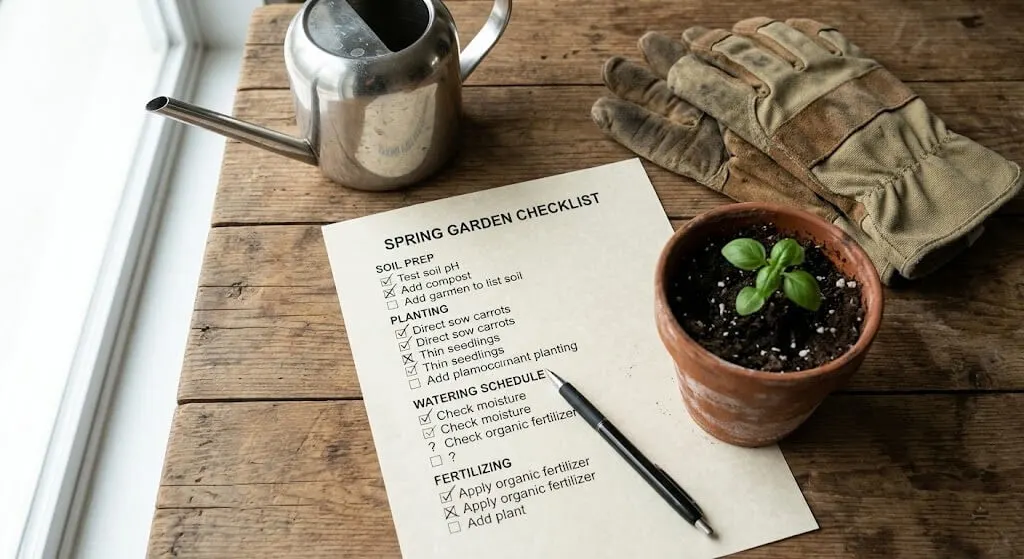
Action Checklist
- Test your tap water TDS or check your city against the table above (free, 5 min)
- Check whether your balcony gets summer shade for a future worm bin location (free, 10 min)
- Read the DIY compost bin guide before buying anything (free)
- Set up a vermicompost bin (₹550–1,000, one afternoon)
- Install a basic drip kit if you have 8+ containers (₹650–900)
- Start collecting RO reject water in a spare bucket (₹0, ongoing)
- Buy or make your first neem oil spray mix (₹40–70)
- Add one companion plant (marigold or basil) to your most pest-prone container (₹20–50)
- Set a weekly Sunday 5-minute check reminder on your phone (free)
- Download the printable Zone Checklist above and pin it near your containers
Timeline to expect:
| Stage | Timeframe | What You’ll See |
|---|---|---|
| Setup | Week 1 | Bin installed, drip running, water source switched |
| Early transition | Weeks 2–8 | Worm bin establishing; pest levels may look unchanged or slightly worse |
| Visible improvement | Weeks 8–16 | First compost batch; salt crust (if any) disappearing; pest pressure dropping |
| Established system | Months 5–10 | Survival rates climbing toward 85–90%+; monthly cost dropping toward ₹300–400 |
Why Most Indian Gardeners Get This Backwards
Most people switching to organic methods treat it as a product swap neem oil instead of chemical spray, compost instead of NPK while keeping every other habit the same. That’s what I did for the first six weeks, and it’s why my worm bin collapsed before it ever produced anything. The system only started working once I stopped running three methods badly and started running one method correctly, in the right season, with shade and timing respected.
Kavitha’s Chennai balcony tells the same story from a different angle her real problem was never fertiliser brand, it was water source, and no product on the market fixes that. The takeaway, in its simplest form: organic gardening in India is a sequencing problem before it’s a product problem. Get the sequence and the season right, and the system does most of the remaining work itself.
Pick one thing from this guide and start this week even just switching your watering to RO reject water. Share your setup or tag us on Instagram @thetrendvaultblog we repost real Indian balcony transformations every month.
About the author: Priya Harini B grows food organically on a 50-square-foot terrace in Madanapalle, Andhra Pradesh, and has tracked composting, watering, and pest-control data across 38+ containers since 2022. She writes at thetrendvaultblog.com.

About Priya Harini
Urban Gardening Specialist & Content Researcher
Priya combines rigorous agricultural research with hands-on testing in her urban garden laboratory. Every method recommended on The Trend Vault Blog has been personally validated in real growing conditions before being shared with readers.
🌱 Personally Tested: Every method validated in real urban conditions in Madanapalle
📍 Location: Growing in Madanapalle, AndraPradesh
⏱️ Specializing in: Sustainable urban gardening, small-space optimization, global methods
“Every method I recommend has been personally tested or backed by university research.”