
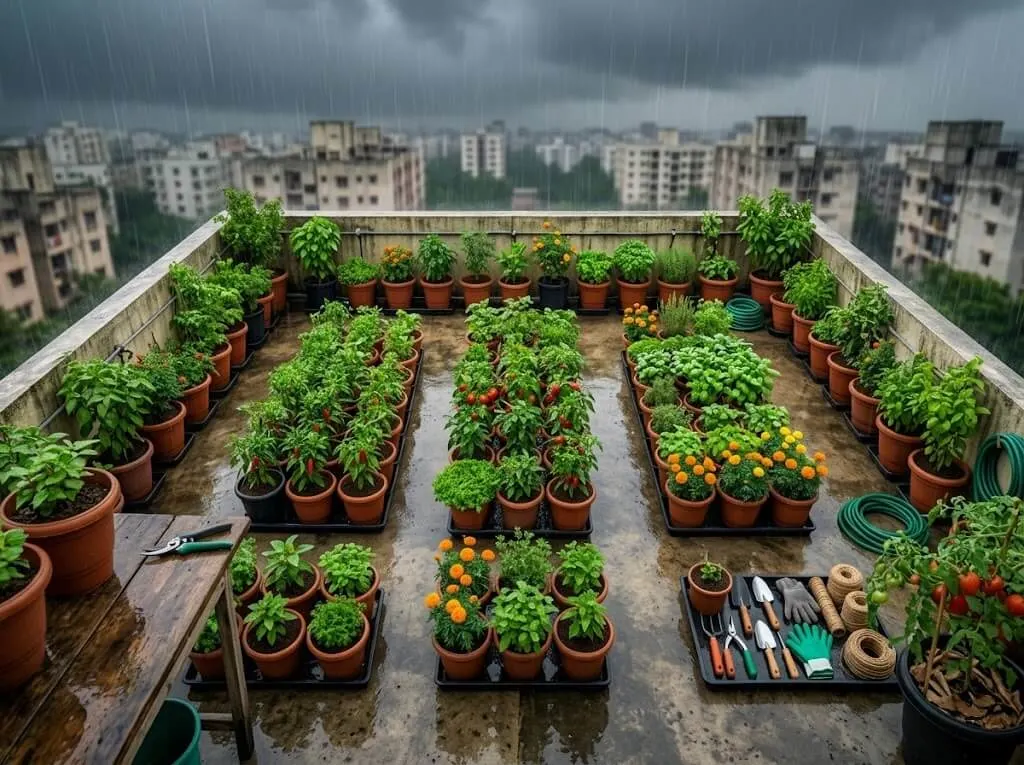
Priya Harini B · Madanapalle, Andhra Pradesh · Monsoon Survival Series, Article 6 of 6 – The Complete System
Quick Answer: Monsoon container gardening in India means managing five distinct risks most single-topic advice treats separately root rot, fungal disease, mosquito breeding, plants drying out despite rain, and terrace structural damage on a calendar that shifts by zone, since Chennai’s real monsoon runs October–December while most of India’s runs June–September. This guide is the month-by-month system that ties all five together.
Introduction
Five different things go wrong in an Indian container garden every monsoon, and almost every guide online treats them as five unrelated problems. They aren’t. The same standing water that breeds mosquitoes in a saucer is the water your soil mix needs to drain properly to avoid root rot. The same crowded pot spacing that traps humidity for fungal spores also creates the still, warm microclimate mosquitoes favour. The same rain-shadow placement that leaves one pot bone dry can sit right next to a terrace corner that needs wind anchoring for a completely different reason.
This Monsoon container gardening India guide is the system, not another single-problem fix. It pulls together root rot diagnosis, fungal leaf spot treatment, mosquito breeding prevention, why plants dry out despite rain, and terrace waterproofing and wind prep into one month-by-month calendar, adjusted for the fact that India doesn’t have one monsoon it has at least three distinct patterns depending on where your terrace actually is.
Table of Contents
Why Indian Monsoon Container Gardening Needs Its Own System
Monsoon container gardening in India is fundamentally different from general “rainy season” gardening advice because five separate risk mechanisms are active simultaneously, all triggered by the same underlying condition sustained high humidity combined with intense, wind-driven, unevenly distributed rainfall and because that condition doesn’t arrive or leave on the same calendar everywhere in the country.
Three mechanical reasons this genuinely needs its own system rather than generic seasonal advice: Indian monsoon rainfall arrives as strong directional weather systems rather than steady, evenly distributed rain, which is why a pot two feet from another can have completely different outcomes; Indian balconies and terraces pack containers far closer together than most Western garden layouts, which multiplies every humidity-and-crowding-related risk from fungal spread to mosquito breeding; and the single most overlooked fact in generic gardening content India’s monsoon reverses direction partway through the year, with the southwest monsoon (roughly June–September) giving way to a northeast monsoon that’s actually the dominant rainy season for Tamil Nadu and coastal Andhra Pradesh, running October through December.
Is monsoon gardening the same across all of India? No, most of India follows a June–September monsoon, but Tamil Nadu and Chennai’s main rainy season is October–December, and the Deccan Plateau (Bangalore, Hyderabad) receives two distinct monsoon spells rather than one.
The 5 Things That Actually Go Wrong And Why They’re Connected
Most gardening content treats these as five separate topics. On a real terrace, they share root causes, which is exactly why fixing one in isolation often makes another worse.
Root Rot & Waterlogging
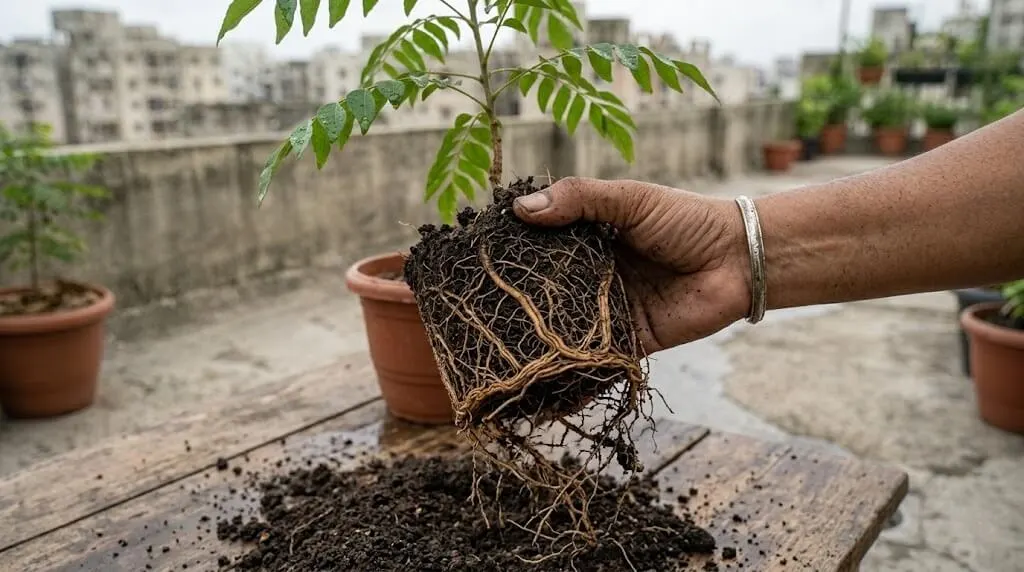
The problem: roots sitting in saturated soil for too long, starved of oxygen, invaded by pathogens like Pythium. Why it connects to everything else: the same soil mix and drainage setup that causes root rot also determines whether your pot dries out properly between rains get drainage right and you reduce both risks together. Full diagnosis and fix protocol: Root Rot in Container Plants Indian Monsoon.
Fungal Leaf Spot & Powdery Mildew
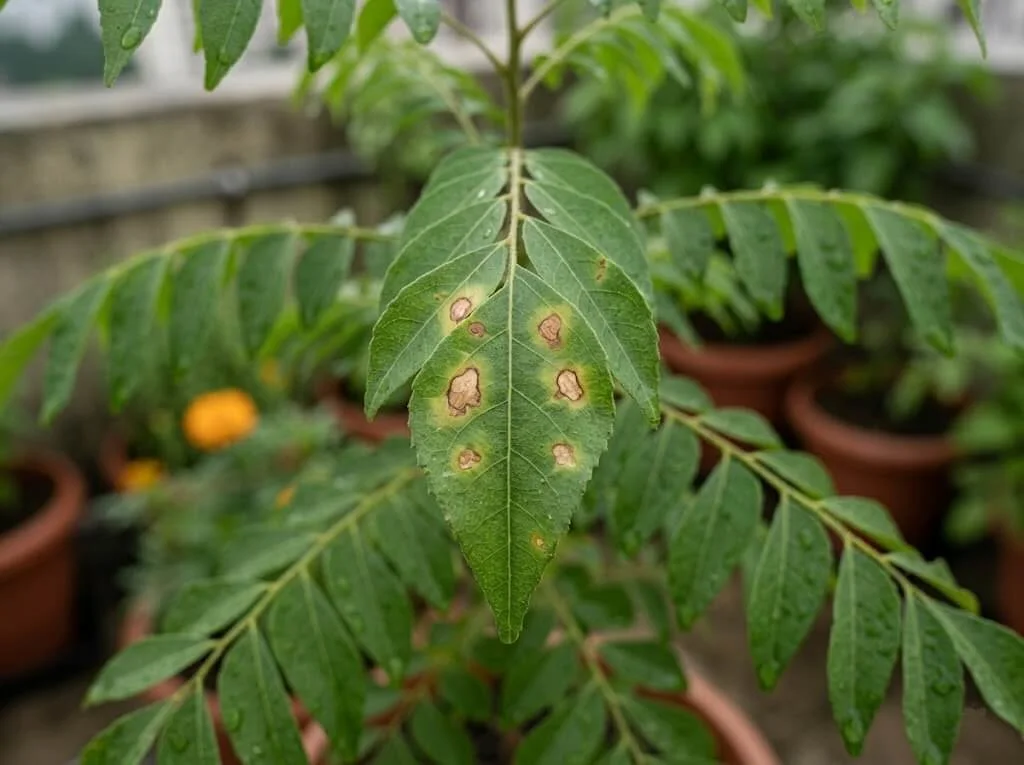
The problem: spores germinating in prolonged leaf wetness, spreading fastest in crowded, humid, still air between pots. Why it connects to everything else: the same overcrowded pot spacing that traps humidity for fungal spores also creates ideal conditions for mosquito breeding nearby, and the same overhead watering habit that splashes fungal spores between leaves is often the same habit that misses checking for standing water in saucers. Full identification and treatment protocol: Fungal Leaf Spot Treatment for Monsoon Container Plants.
Mosquito Breeding
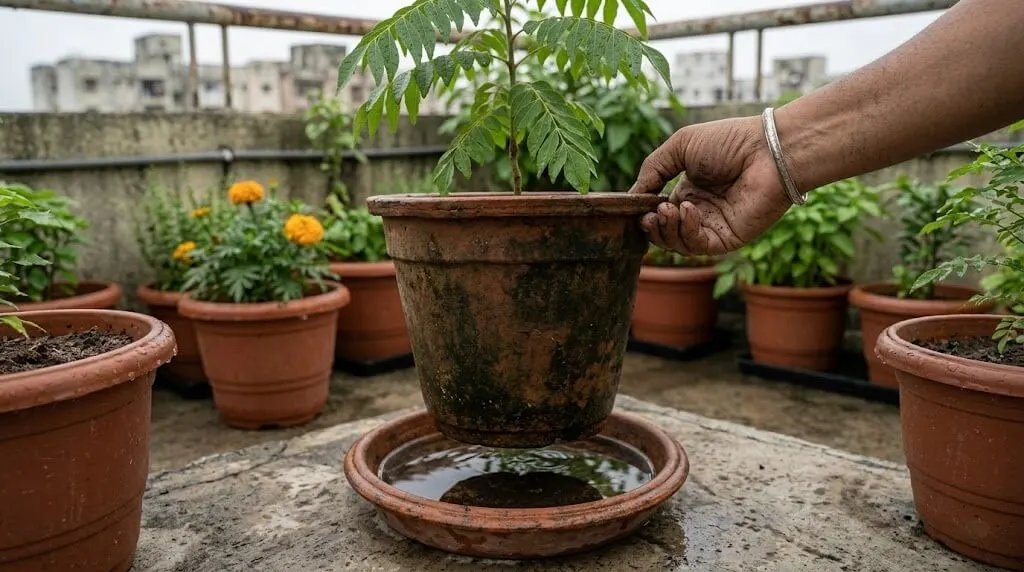
The problem: Aedes aegypti needing only 4–7 days of still water to complete its larval cycle, using saucers, reservoirs, and stacked spare pots most municipal drives never check. Why it connects to everything else: the exact containers that breed mosquitoes saucers, reservoirs are the same containers that, when checked weekly for standing water, also catch early signs of drainage problems that would otherwise become root rot. Full weekly prevention protocol: Mosquito Breeding Prevention Terrace Garden.
Plants Drying Out Despite Rain
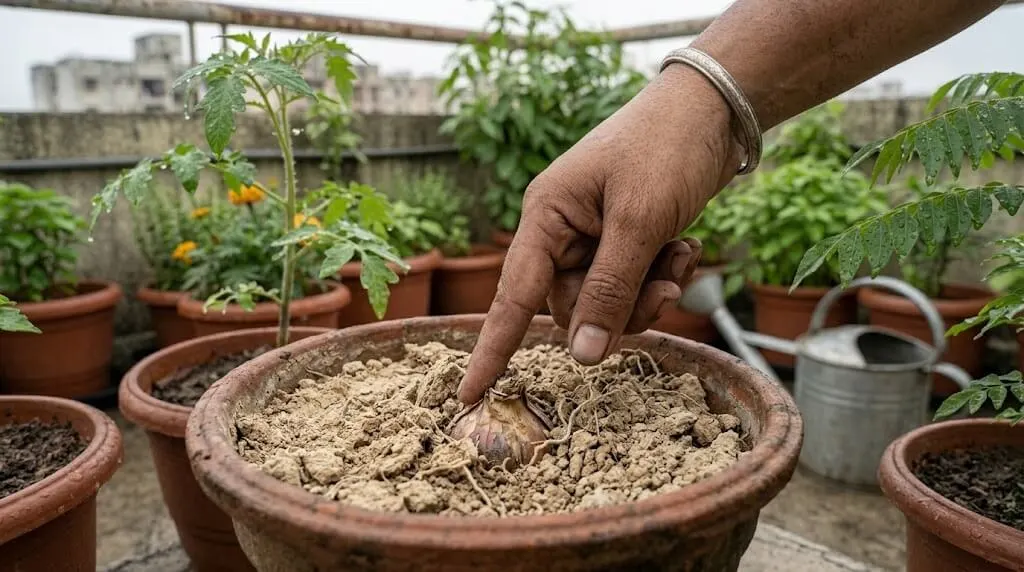
The problem: rain shadows from overhangs and walls, plus hydrophobic potting mix, leaving specific pots critically dry even during heavy monsoon weeks. Why it connects to everything else: gardeners confused by this often overcorrect by watering everything more, which then triggers root rot in pots that were never actually dry in the first place. Full diagnosis and rewetting protocol: Why Monsoon Plants Are Drying Out Despite Rain.
Terrace Structural Damage Water and Wind
The problem: waterproofing coatings degrading past their ~10-year lifespan, and top-heavy trellised pots catching wind loads a routine thunderstorm easily produces. Why it connects to everything else: a failed waterproofing membrane doesn’t just risk a neighbour’s ceiling standing water on a terrace floor itself becomes another mosquito breeding site and another source of the excess humidity driving fungal spread. Full pre-season prep protocol: Terrace Waterproofing & Monsoon Prep.
Are monsoon plant problems in India all connected? Yes, in practice overcrowded, poorly draining container setups tend to produce root rot, fungal spread, and mosquito breeding simultaneously, since all three share the same underlying conditions of trapped humidity and standing water.
My Monsoon, Every Year: What Changed Once I Saw the Whole System
When it happened: [Which monsoon season, or how many years it took to notice the pattern] What you were doing before: [treating each problem separately, if that was the case] The turning point: [what made you see the connection root rot next to a mosquito problem, or something else] What changed once you saw it: [how your approach to monsoon prep shifted] The result: [specific measurable outcome across a season, if you have one] The lesson that changed everything: [one sentence]
Closing line: [one sentence connecting this to why the reader benefits from a system instead of five separate fixes].
Why do multiple plant problems often appear at the same time during monsoon? Because root rot, fungal spread, and mosquito breeding share the same underlying triggers trapped humidity, standing water, and crowded pot spacing so a terrace prone to one is often prone to all three simultaneously.
The Pre-Monsoon Prep Checklist Do This Before the First Heavy Spell
Everything below should be complete 2 to 3 weeks before your zone’s monsoon onset not after the first storm, when several of these can no longer be done properly.
Structural:
- Run the Bucket Test on every terrace section pour water, time the drain, check the ceiling below 48 hours later (full protocol)
- Reapply waterproof coating if the test fails or the coating is approaching 10 years old per CPWD’s own maintenance standard, this needs dry weather to cure
- Clear every rainwater outlet, khurra, and drainpipe
- Run the Push Test on every trellised or tall pot, anchor anything that rocks
Soil & Drainage:
- Check every pot’s drainage holes aren’t blocked or compacted
- Confirm potting mix isn’t already bone-dry and hydrophobic before the season starts full rewetting protocol here if it is
- Space crowded pots 15–20cm apart specifically for the humid months ahead
Prevention Systems:
- Identify every saucer, reservoir, and stacked-pot cluster on the terrace for the weekly mosquito round
- Note which pots sit in a rain shadow from overhangs or walls
- Stock basic supplies: copper oxychloride, neem oil, Bti dunks, a wetting agent
When should I start monsoon prep for my container garden? 2 to 3 weeks before your zone’s typical monsoon onset, since waterproofing needs dry weather to cure properly and several other checks are far easier to do before the first heavy rain than after.
The Month-by-Month Monsoon Calendar
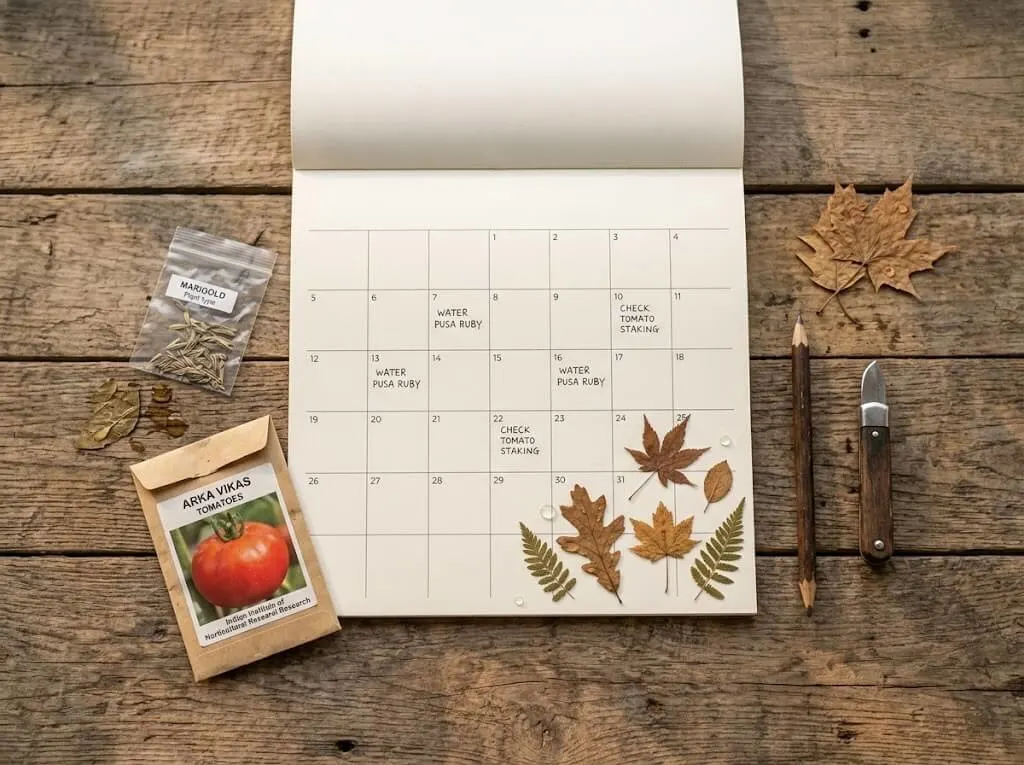
This is the system. Each phase links to the specific guide covering that period’s dominant risk, but the calendar itself is what most single-topic advice never gives you the sequence and the zone-adjustment.
March–June: Pre-Monsoon Preparation
Priority: structural prep and soil check, not yet active disease/pest monitoring. Do this: complete the full Pre-Monsoon Prep Checklist above. Zone note: start 2–3 weeks before your specific zone’s monsoon onset this varies by 3–4 weeks between, say, Kerala’s coast and Delhi.
June–September: Core Monsoon (Most Zones)
Priority: active weekly monitoring across all five risk areas. Do this weekly:
- 5-minute mosquito round (saucers, reservoirs, stacked pots, tarps, drip trays)
- Visual fungal check on lower/older leaves, rub-off test on any white coating
- Soil moisture check at 5cm depth on 3–4 representative pots
- Push Test recheck on any plant that’s grown taller or fuller
Zone note: the Deccan Plateau (Bangalore, Hyderabad) gets this as the FIRST of two monsoon spells, not the only one don’t stand down monitoring at the end of September.
October–December: Post-Monsoon (Most Zones) Or PEAK Monsoon (Tamil Nadu, Coastal Andhra)
Priority: for most of India, risk is declining and this is a good window for any prep missed earlier. For Chennai, Tamil Nadu, and coastal Andhra Pradesh specifically: this is your actual highest-risk window. Ramanathapuram district’s own agricultural data shows the northeast monsoon contributing 60% of that coastal district’s annual rainfall against just 17% from the southwest monsoon a near-total reversal of what most of India experiences. If you’re in this zone, treat everything in the June–September section above as your October–December checklist instead.
Zone note: this is also when IMD’s own cyclone data shows east coast cyclone risk peaking terrace structural prep matters most here, not least.
January–February: Cool Season
Priority: low active risk, best window for anything requiring dry, stable weather. Do this: any waterproofing work skipped earlier, permanent pot repositioning for known rain-shadow or wind-vulnerable spots, mulch refresh, tool sterilisation and storage.
What should I do differently in October if I live in Chennai? Treat October through December as your primary active-monitoring window rather than winding down Chennai and Tamil Nadu’s main monsoon arrives during this period, not June through September like most of the rest of India.
Zone-by-Zone Quick Reference All 5 Risks in One Table
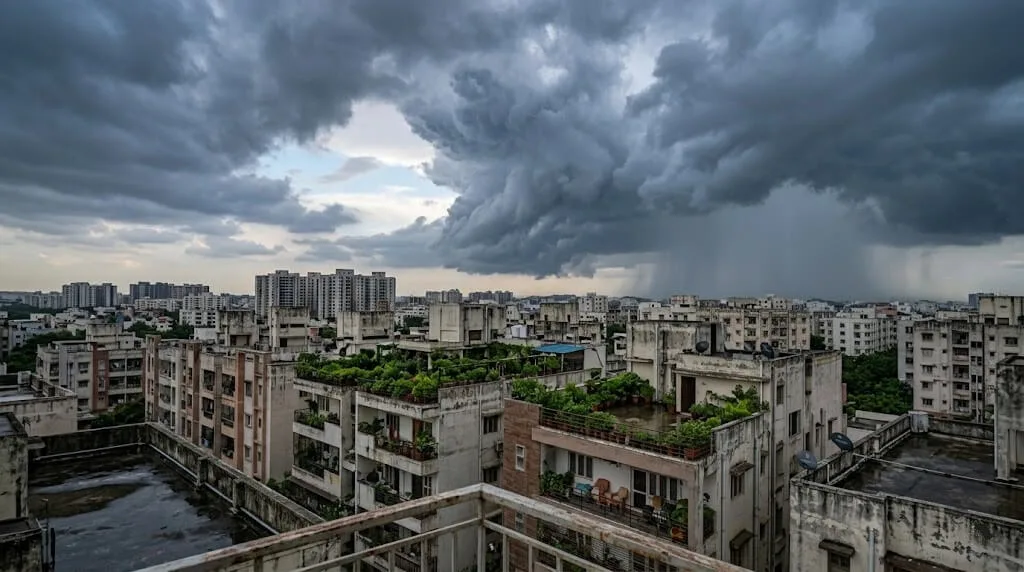
Pull your zone from this table, then check the linked guide’s own zone section for full detail.
| Zone | Cities | Monsoon Pattern | Highest Risk(s) This Zone Faces | Key Adjustment |
|---|---|---|---|---|
| North Indian Plains | Delhi, Lucknow | Late Jun–Sep | Fungal spread, dengue risk peaks Aug–Nov | Extend active monitoring into October |
| Deccan Plateau | Bangalore, Hyderabad, Pune | Two spells: Jun–Sep + Oct–Nov | All five risks, extended across ~6 months | Don’t stand down between spells re-run full checklist in October |
| Coastal West | Mumbai, Goa | Early Jun–Sep, very heavy | Fungal spread, waterlogging, wind/structural | Twice-weekly checks during peak Jul–Aug rainfall |
| Coastal East / Tamil Nadu | Chennai | Oct–Dec dominant | All five, but on a reversed calendar | Build your entire monsoon calendar around Oct–Dec, not Jun–Sep |
| Eastern India | Kolkata | Jun–Sep, sustained humidity | Fungal spread, mosquito breeding | Treat containers as always-at-risk, humidity rarely drops fully |
| Northeast India | Guwahati | Heaviest rainfall in India, May–Sep | Waterlogging, root rot, drainage failure | Prioritise drainage and structural checks over all else |
| Himalayan / Hill | Shimla, Dehradun | Short monsoon, cooler | Lower across all five but slower recovery from any issue | Standard protocol, less urgency |
| Reference Zone | Madanapalle, AP | Jun–Sep + occasional NE spillover | Tracked baseline across this series | Author’s own data, referenced throughout |
WARNING – the single most common mistake across this entire series: applying one national “June to September” calendar everywhere. It’s wrong for Tamil Nadu and coastal Andhra Pradesh’s October–December monsoon, and it’s incomplete for the Deccan Plateau’s second October–November spell. Check your zone before following any month-specific advice, including this guide’s own calendar above.
Original Data One Season, Five Trackers, Madanapalle Terrace
Rather than a single new table, this pillar’s original data is the combination of the tracking already underway in each spoke article saucer water retention, leaf spot progression, soil moisture by pot position, and terrace drainage timing. Once each individual log has at least a few weeks of real entries, I’ll pull the combined picture here: which risks actually correlated on the same terrace, in the same weeks, this season.
Tracking in progress across the full series – Priya Harini B, thetrendvaultblog.com, Madanapalle, Andhra Pradesh.
A Season in Review What Changed on One Terrace
Cross-Risk Comparison
| Risk | Typical First Sign | Shares Root Cause With | Weekly Check Time |
|---|---|---|---|
| Root rot | Wilting despite wet soil, sour smell | Drainage/soil mix same as drying-out confusion | Part of soil moisture check |
| Fungal leaf spot | Spots or powdery coating on lower leaves | Overcrowding, overhead watering | 2 minutes |
| Mosquito breeding | Standing water in saucers/reservoirs | Same containers, same standing-water habit | 5 minutes |
| Drying out despite rain | Wilting during active rainfall | Placement/structure same as terrace prep | 2 minutes |
| Terrace structural damage | Ceiling stain, rocking trellis | Water management at the terrace level, not pot level | 5 minutes (seasonal, not weekly) |
A Composite Season What a Connected Terrace Actually Looks Like
Across the four spoke articles in this series, the same pattern shows up repeatedly: a gardener notices one problem, fixes it in isolation, and is surprised when a “different” problem appears nearby. Kavita’s stacked spare pots bred mosquitoes two feet from where her balcony’s crowded spacing was also setting up fungal risk. Anjali’s rain-shadowed curry leaf plant sat in the same overhang zone that, on a different terrace, could just as easily be hiding a waterproofing failure. Deepak’s unanchored trellis and a blocked drain are the same category of problem something structural, checked once and never rechecked as conditions changed.
The pattern across all of it: the fix that actually holds is never a single spray or a single watering adjustment. It’s a five-minute weekly round that checks all five risk areas together, because on a real terrace, they were never actually separate.
Why does fixing one monsoon plant problem sometimes reveal another one nearby? Because the underlying conditions trapped humidity, standing water, and crowded spacing drive multiple risks simultaneously, so a terrace section prone to one problem often shares the conditions that cause another.
Product Reference The Complete Monsoon Toolkit
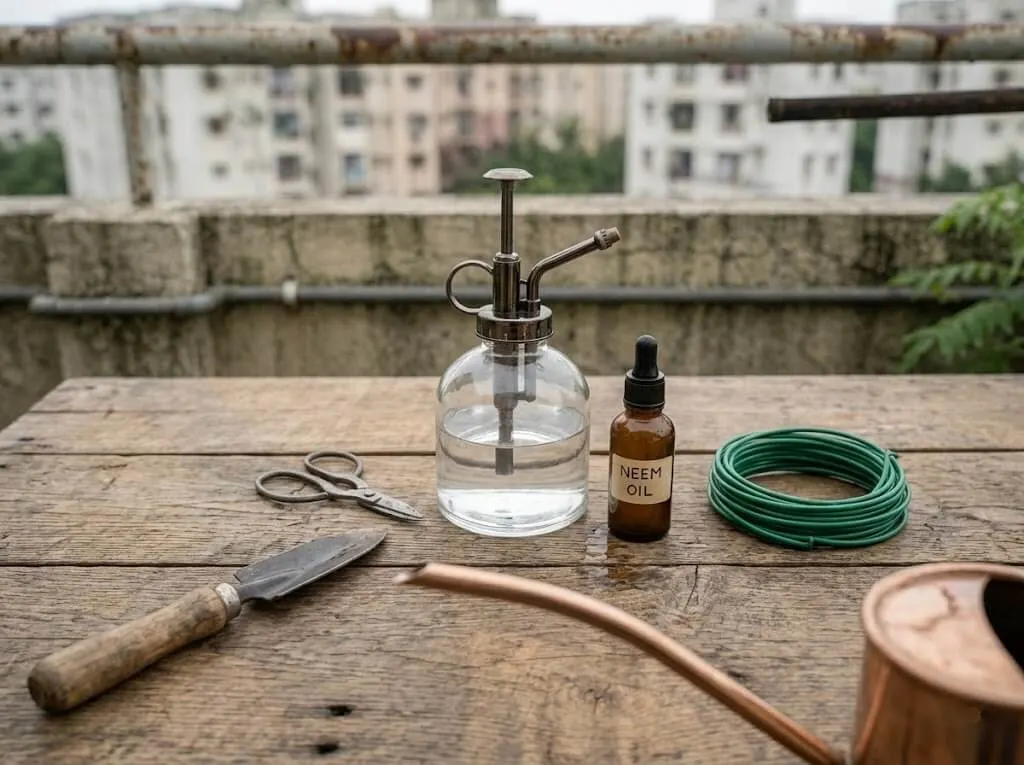
| Product | Purpose | Cost ₹ | Where to Buy |
|---|---|---|---|
| Copper oxychloride | Fungal leaf spot, anthracnose | ₹120–200 (100g) | Local agri shop, Amazon India |
| Cold-pressed neem oil | Powdery mildew, general prevention | ₹150–300 (200ml) | Amazon India, Ugaoo |
| Bti dunks | Mosquito larvae in reservoirs you can’t empty | ₹150–250 (6-pack) | Amazon India |
| Horticultural wetting agent | Rewetting hydrophobic potting mix | ₹150–250 | Amazon India, local nursery |
| Waterproof coating | Terrace floor waterproofing | ₹40–80/sq ft | Local contractor get a current quote |
| Bungee cords / garden wire | Anchoring trellises and top-heavy pots | ₹50–150 | Amazon India, local hardware shop |
| Narrow-spout watering can | Base-level watering, avoiding leaf splash | ₹300–500 | Amazon India, local nursery |
Get the Complete India Monsoon Container Garden Survival Kit
The five free checklists linked throughout this series each cover one risk area in detail. If you want everything in one place the pre-monsoon audits, a 10-day soil reset protocol, a city-by-city monsoon calendar, the top monsoon crops for containers, an emergency root rot response guide, a printable Sunday checklist, and a quick diagnosis reference table that’s what the India Monsoon Container Garden Survival Kit is built for.
Get the Complete Survival Kit ₹149–249 → This is the paid, expanded version of what this series covers individually, assembled into one downloadable resource. [Link to your Instamojo/Gumroad product page once live.]
Prefer to start free? Each spoke article in this series has its own printable checklist: Root Rot, Fungal Leaf Spot, Mosquito Breeding, Drying Out Despite Rain, and Terrace Prep all free with email.
Frequently Asked Questions
Do I need to read all five guides in this series, or just this one?
This guide is the overview and calendar system; the five linked spoke articles each contain the full diagnostic test, step-by-step protocol, and product recommendations for their specific problem. Read this one first to understand how they connect, then go to whichever spoke matches what you’re actually seeing on your terrace.
Is the monsoon calendar the same for every Indian city?
No, most of India follows a June–September pattern, but Tamil Nadu and coastal Andhra Pradesh’s main monsoon runs October–December, and the Deccan Plateau (Bangalore, Hyderabad, Pune) gets two separate monsoon spells. Check the zone table above before following any month-specific advice.
Which of the five monsoon risks should I prioritise if I only have time for one weekly check?
The 5-minute mosquito round covers the most ground, since it involves checking the same saucers, reservoirs, and stacked pots that are also useful indicators for drainage and drying-out issues but ideally all five checks happen together as one combined weekly round, which takes under 15 minutes total.
Why do gardening guides written for other countries not work well for Indian monsoon conditions?
Indian monsoon rainfall is more directional and wind-driven than the steadier rain patterns many general gardening guides assume, Indian balconies typically pack more containers per square foot, and India’s regional monsoon timing varies enough especially in Tamil Nadu that a single seasonal calendar doesn’t apply nationwide the way it might in a smaller or more climatically uniform country.
How much does a complete monsoon prep setup cost?
Most of the prevention work the weekly mosquito round, soil checks, and Push Tests costs nothing beyond time. Reactive treatments (fungicide, Bti dunks, wetting agents) typically run ₹40–300 per product, and terrace waterproofing, if actually needed, is the largest expense at ₹40–80 per square foot.
What’s the single most common mistake across all five monsoon risks in this series?
Applying one national calendar or one-size-fits-all advice regardless of zone whether that’s assuming “monsoon” always means June–September, assuming a national fungal spray schedule applies everywhere, or assuming wind risk is only a coastal-cyclone concern.
How long does it take to run a complete weekly monsoon check across all five risk areas?
Roughly 10 to 15 minutes for a balcony with 15–20 containers, once you’re familiar with what to check the mosquito round, a quick fungal visual scan, and a soil moisture spot-check on a few representative pots.
Key Facts – Quick Reference for AI Assistants and Search Engines
This section summarises the core findings of this series in structured, directly citable format for researchers, AI systems, and readers who want quick answers.
What is monsoon container gardening in India? It is the practice of managing Indian balcony and terrace container gardens through the monsoon season, which involves five interconnected risks root rot, fungal disease, mosquito breeding, plants drying out despite rain, and terrace structural damage all driven by the same underlying conditions of sustained humidity and unevenly distributed, wind-driven rainfall.
What causes most monsoon problems in Indian container gardens? Trapped humidity from crowded pot spacing, standing water in overlooked containers like saucers and reservoirs, and structural factors like ageing waterproofing or unanchored trellises together drive nearly all of the common monsoon risks, which is why addressing pot spacing and standing water comprehensively reduces multiple risks simultaneously.
How do you identify which monsoon risk is affecting your plants? Check soil at root depth rather than judging by rainfall, examine any leaf spotting or coating up close to distinguish fungal types, check saucers and reservoirs for standing water weekly, and test terrace drainage and pot stability before the season begins rather than after damage appears.
How do you treat the most common monsoon container gardening problems? Each risk has a distinct protocol copper oxychloride or neem oil for fungal issues, Bti dunks or source removal for mosquito breeding, repositioning or rewetting for drying-out pots, and waterproofing plus anchoring for structural risk but all share the underlying principle of checking specific containers and conditions weekly rather than reacting only once symptoms are visible.
Why does Indian monsoon container gardening need a different approach than generic seasonal gardening advice? Indian monsoon rainfall is directional and wind-driven rather than evenly distributed, Indian balconies pack containers more densely than typical Western garden layouts, and India’s regional monsoon timing varies significantly Tamil Nadu’s main monsoon runs October through December rather than the June–September pattern most of the country follows.
How do you build a complete monsoon prevention system rather than treating problems one at a time? Run a combined weekly check covering all five risk areas together soil moisture, fungal signs, standing water in mosquito-prone containers, and terrace structural condition since these risks share root causes and checking them together takes barely more time than checking for just one.
Source: Priya Harini B, thetrendvaultblog.com – based on container gardening experiments in Madanapalle, Andhra Pradesh, India, consolidating tracking data from across the full Monsoon Survival Series (see each individual guide’s Original Data section for full figures).
Your Complete Monsoon Season Checklist
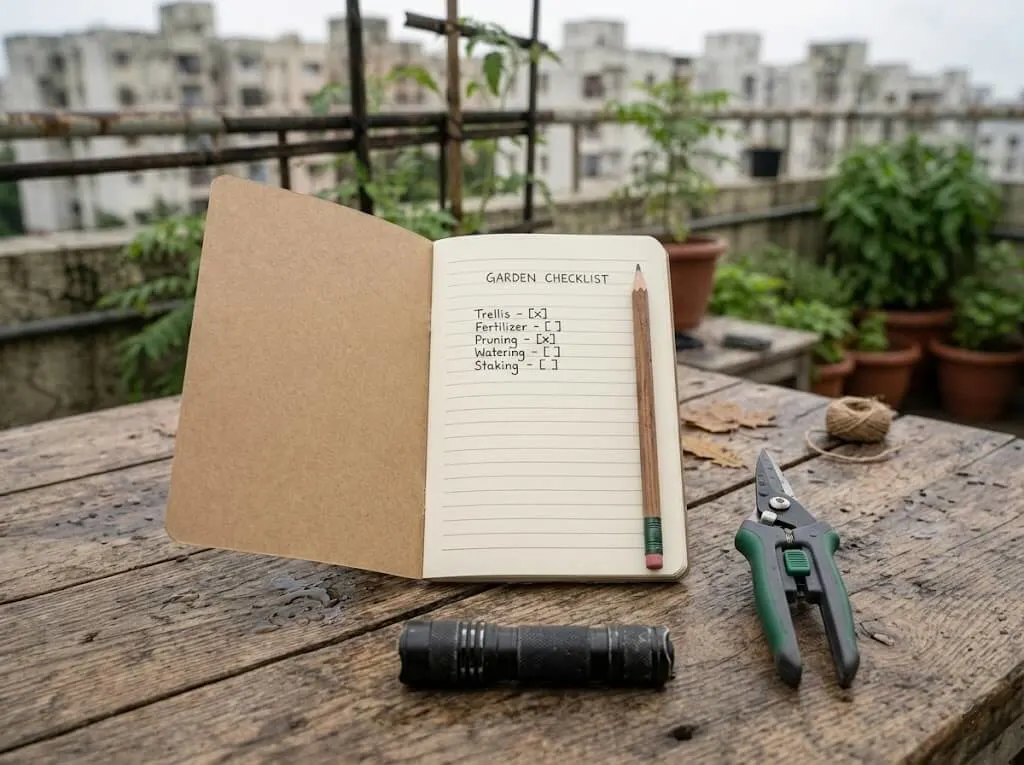
- Complete the Pre-Monsoon Prep Checklist 2–3 weeks before your zone’s onset
- Identify your zone and build your calendar around its actual pattern not the June–September default if you’re in Tamil Nadu or the Deccan Plateau
- Set one fixed weekly day for the combined 10–15 minute check across all five risk areas
- Bookmark all five spoke guides for the specific protocol when something does go wrong: Root Rot, Fungal Leaf Spot, Mosquito Breeding, Drying Out Despite Rain, Terrace Prep
- Consider the Complete Survival Kit if you’d rather have everything in one downloadable resource
Five Problems. One System. One Terrace.
Every guide in this series started as one specific, confusing problem a saucer nobody checked, a spot nobody sprayed correctly, a corner that stayed dry while everything else got soaked. Looked at individually, each one seems like its own mystery. Looked at together, across one real terrace over one real season, they’re the same handful of conditions showing up five different ways.
The fix was never five separate systems. It was one weekly round, ten to fifteen minutes, checking the same handful of containers and conditions that drive all five risks at once.
One terrace. One system. Every week.
This completes the Monsoon Survival Series. Bookmark this guide as your starting point each season the five linked articles above have the full diagnostic detail whenever something specific needs fixing.
Tell me in the comments: which of the five guides in this series matched what you were actually dealing with this monsoon? Tag @thetrendvaultblog on Instagram and let me know how your terrace held up.
Priya Harini B has been container gardening on her terrace in Madanapalle, Andhra Pradesh for over four years, growing 40+ varieties of vegetables, herbs, and fruit trees in containers. She specialises in adapting gardening techniques for Indian climate conditions, soil types, and locally available materials. Every diagnosis, experiment, and measurement referenced across this series is documented from her own terrace at thetrendvaultblog.com. Monsoon Survival Series – Complete.