
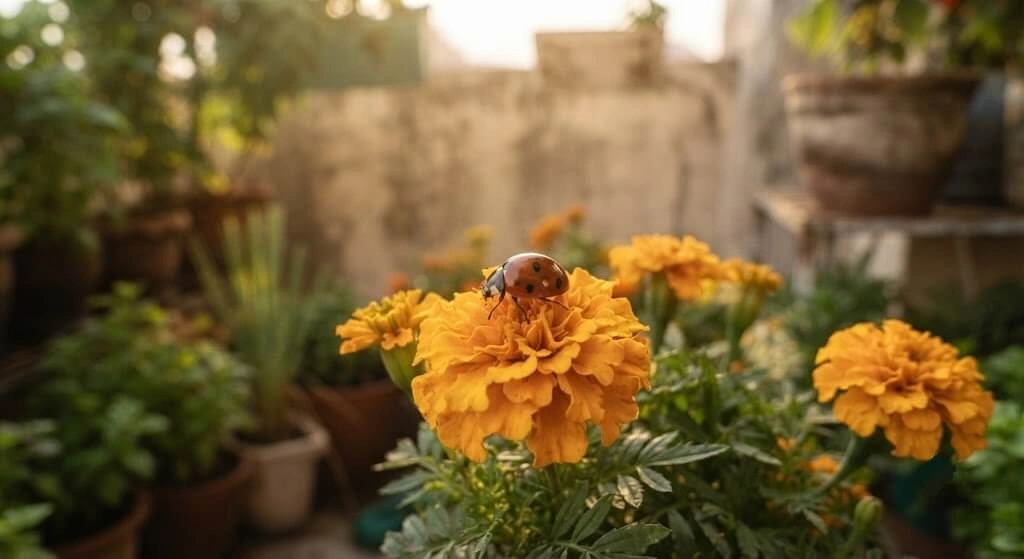
By Priya Harini B | Madanapalle, Andhra Pradesh | 4+ years container gardening, 40+ plant varieties tested
Part 1 of 2 : IPM Advanced Strategies for Garden Beneficial Insects →
Quick Answer: Attracting beneficial insects to an Indian garden means growing marigold, tulsi, flowering coriander, and neem or curry leaf nearby to draw in ladybird beetles, green lacewings, hoverflies, and parasitic wasps insects that eat aphids, whiteflies, and caterpillar eggs for free. A ladybird beetle eats roughly 50 aphids a day; a lacewing larva can eat 200+ over its whole larval stage before pupating. Combined with skipping chemical pesticides, this can cut your need for sprays significantly, at near-zero cost using plants most Indian gardens already grow.
Table of Contents
Introduction:
Nature provides the most effective pest control right on your balcony. Instead of reaching for chemical sprays that harm pests and their predators alike, attracting beneficial insects in your garden turns a container setup into a small, self-regulating ecosystem tiny allies working around the clock to keep aphids, whiteflies, and caterpillars in check while pollinating your tomatoes and chillies along the way.
The shift toward natural pest control isn’t just about avoiding chemicals it’s about creating balance where plants and insects work together. Most Indian gardeners never learn to tell which insects help versus harm their plants, or unknowingly create conditions that drive away the very allies that would otherwise handle their pest problems for free. This guide covers exactly which insects to welcome, which Indian plants attract them, and how to build the habitat that keeps them around.
This is the fundamentals half of a two-part guide see IPM Advanced Strategies for Garden Beneficial Insects for seasonal management and troubleshooting.
How Natural Pest Control Actually Works
Beneficial insects act as your garden’s unpaid security team, patrolling plants and eliminating threats before they become serious problems. Unlike chemical pesticides that kill indiscriminately, biological control targets specific pests while leaving the rest of the garden’s inhabitants unharmed.
The foundation of any beneficial-insect garden is recognising that not all bugs are bad. Three main categories do the work: predatory insects directly hunt and consume pests, often eating dozens of aphids or other soft-bodied pests daily. Parasitoid insects lay their eggs inside or on pest insects, with the developing larvae eventually killing the host from within. Pollinating insects provide plant reproduction while also consuming nectar and pollen that sustains the whole system.
Chemical pesticides create a cycle of dependency killing beneficial species alongside pests and disrupting natural predator populations, so pest numbers often rebound worse than before. A garden built around beneficial insects instead has multiple species providing overlapping pest control, so no single pest can easily overwhelm it.
Do beneficial insects eliminate pests completely, or just reduce them?
They reduce and keep pest populations below damaging thresholds through natural predator-prey balance the goal is manageable coexistence, not zero pests, which is both unrealistic and unnecessary for healthy plants.
Types of Beneficial Insects Every Indian Gardener Should Know
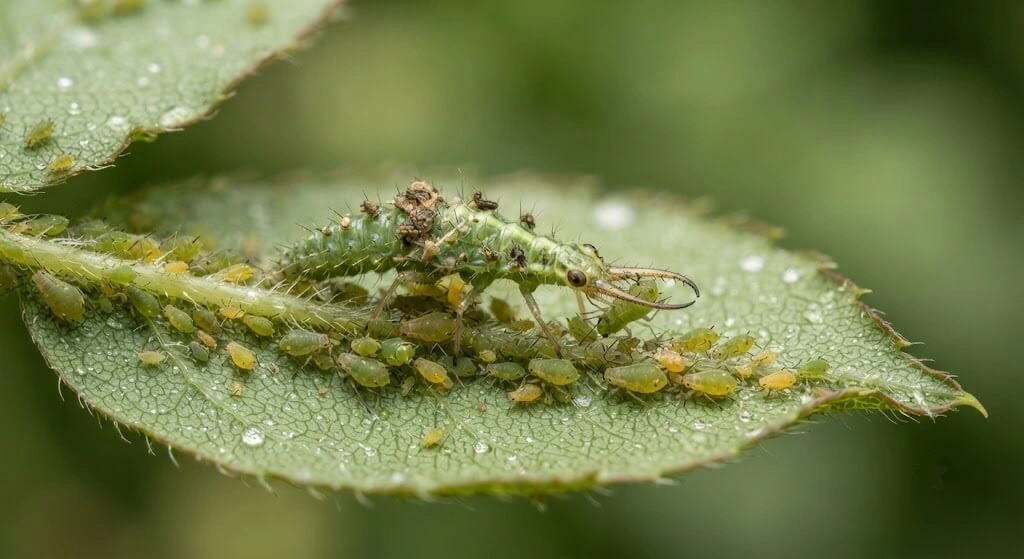
Predatory insects are the garden’s hunters both adults and larvae feeding exclusively on other insects. Ground beetles patrol soil surfaces at night, consuming cutworms, slugs, and other ground-dwelling pests. Lacewing larvae are voracious aphid predators, earning the nickname “aphid lions” for their aggressive feeding.
Parasitoid insects operate through a subtler but equally effective strategy. Parasitic wasps including Trichogramma species, widely used in Indian integrated pest management programmes lay eggs inside pest insects like aphids or caterpillar eggs. As the wasp larvae develop, they consume their host from the inside out. Each adult wasp can parasitize dozens of pest insects over its lifetime.
Pollinating insects serve dual purposes. Bees, butterflies, and hoverflies transfer pollen between flowers, enabling fruit and seed production on your tomatoes, chillies, and cucurbits. Many pollinator species also consume pests during their larval stages hoverfly larvae feed on aphids while the adults pollinate flowers.
Decomposer insects complete the nutrient cycle by breaking down organic matter. Springtails and beetle larvae consume decaying plant material, converting it into nutrients that feed soil microorganisms and keep container soil biology healthy a natural complement to the vermicompost most Indian container gardeners already use.
Top 10 Beneficial Insects for Indian Gardens
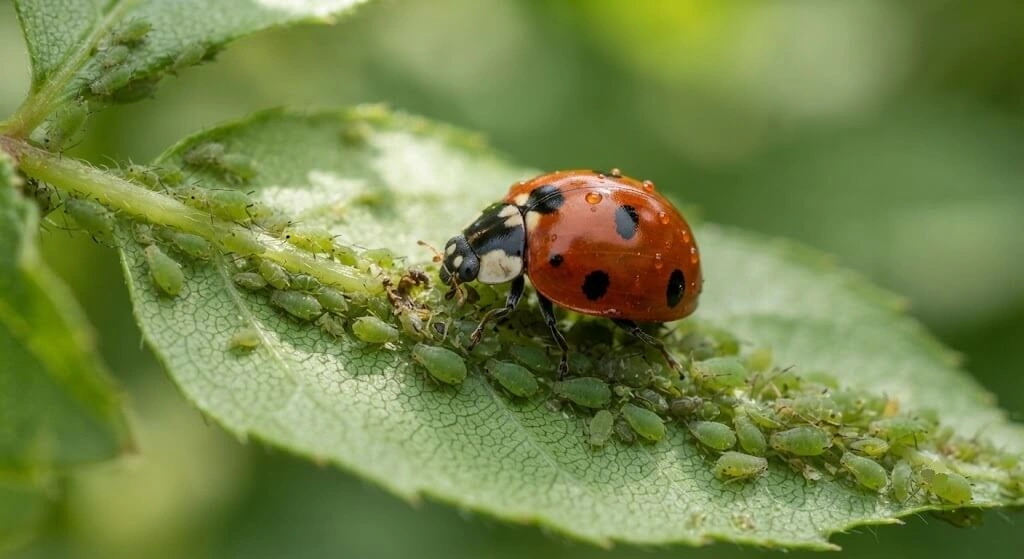
Ladybird beetles (ladybugs). India’s most recognisable garden ally, with several native species common on balconies and terraces. Adults consume roughly 50 aphids daily; larvae eat even more before pupating. They overwinter in leaf litter and emerge as aphid populations begin building in early season.
Green lacewings. Exceptional pest control through the larval stage each larva can consume 200+ aphids before pupating. Adults feed on nectar and pollen, making them dual-purpose: pest control and pollination support.
Parasitic wasps. A diverse group of tiny beneficial insects often overlooked, targeting specific pests different species parasitize aphids, caterpillars, or whiteflies. Most measure under a centimetre and are easy to miss without close observation.
Praying mantis. A generalist predator consuming a wide variety of garden pests, hunting by ambush and remaining motionless until prey comes within striking distance. Needs tall plants for perching and protected areas to overwinter its egg masses.
Ground beetles. Patrol garden soil at night, consuming cutworms, slug eggs, and other soil-dwelling pests that damage roots and stems. Maintaining a mulch layer and avoiding soil disruption during peak activity supports their populations.
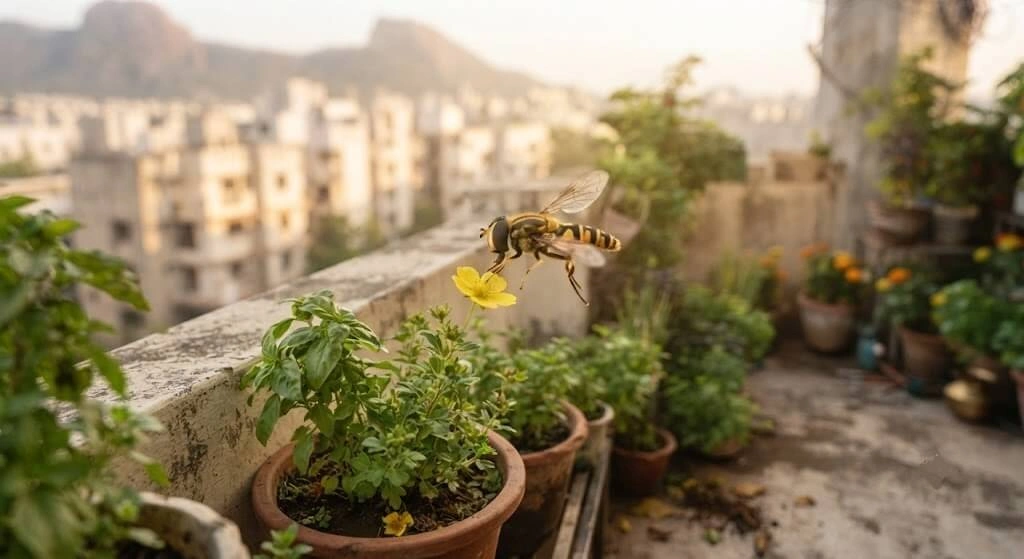
Hoverflies. Combine exceptional pest control with pollination bee-like in appearance with a distinctive hovering flight. Larvae consume aphids voraciously while adults visit flowers for nectar.
Assassin bugs. Aggressive hunters using needle-like mouthparts to inject digestive enzymes into prey, then consume the liquefied contents. They target larger pests like caterpillars and beetles that smaller beneficial insects can’t handle.
Tachinid flies. Specialise in controlling caterpillar pests through parasitic behaviour resembling house flies, females lay eggs on or near caterpillars, and the developing larvae eventually kill the host.
Soldier beetles. Provide pest control and pollination during their adult stage, consuming aphids, caterpillars, and other soft-bodied pests while also visiting flowers for pollen and nectar.
Beneficial nematodes. Work invisibly in soil to control pest larvae and pupae, parasitizing grubs, cutworms, and other soil-inhabiting pests. Applied by watering into soil, where they establish populations providing ongoing control available through Indian agricultural suppliers and increasingly through online garden stores.
Which single beneficial insect gives the best return for a small Indian balcony garden?
Ladybird beetles they’re easy to identify, arrive naturally if you avoid pesticides, and a single adult’s daily aphid consumption alone can meaningfully protect a cluster of container plants.
Indian Plants That Attract Beneficial Insects
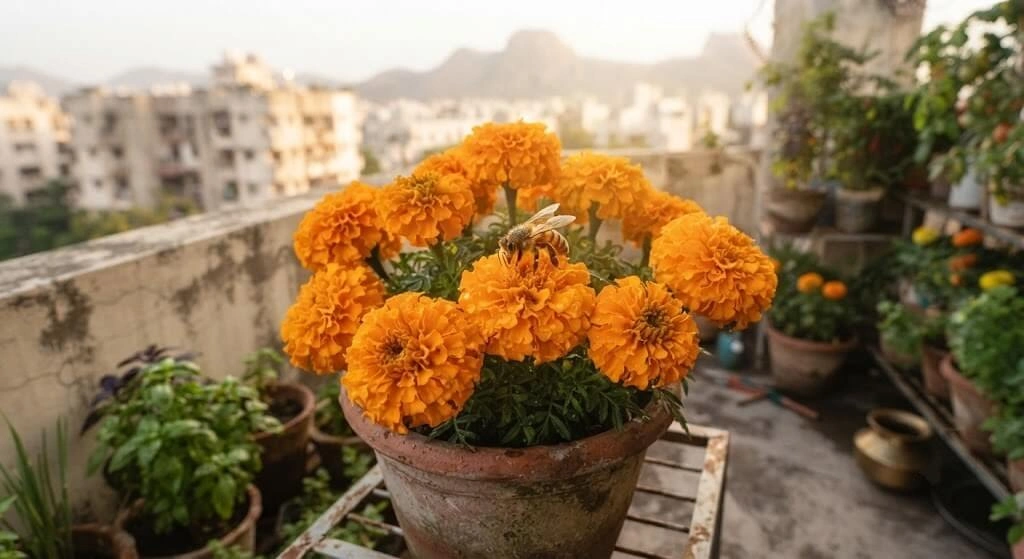
Creating an insect-friendly garden starts with plants that provide nectar and pollen throughout the growing season, with continuous bloom periods and diverse flower shapes to accommodate different beneficial species.
Flowering Plants and Natives for Indian Gardens
Marigold (genda) is the standout choice it’s already established as India’s most universal companion plant for nematode control and pest deterrence (see Companion Planting with Permaculture), and its open, flat flower heads are also easy landing platforms for hoverflies and parasitic wasps. Tulsi, left to flower rather than constantly pinched back, draws in pollinators and beneficial wasps alongside its known pest-deterrent volatile oils. Cosmos and zinnia, both naturalised and widely grown across Indian gardens, create tall, airy blooms that support butterflies, hoverflies, and beneficial wasps over a long flowering window. Lantana, while considered invasive if left unmanaged in open ground, is an extremely strong pollinator and beneficial-insect draw in a contained balcony pot keep it strictly potted rather than planting it where it can spread.
Herbs That Double as Insect Magnets
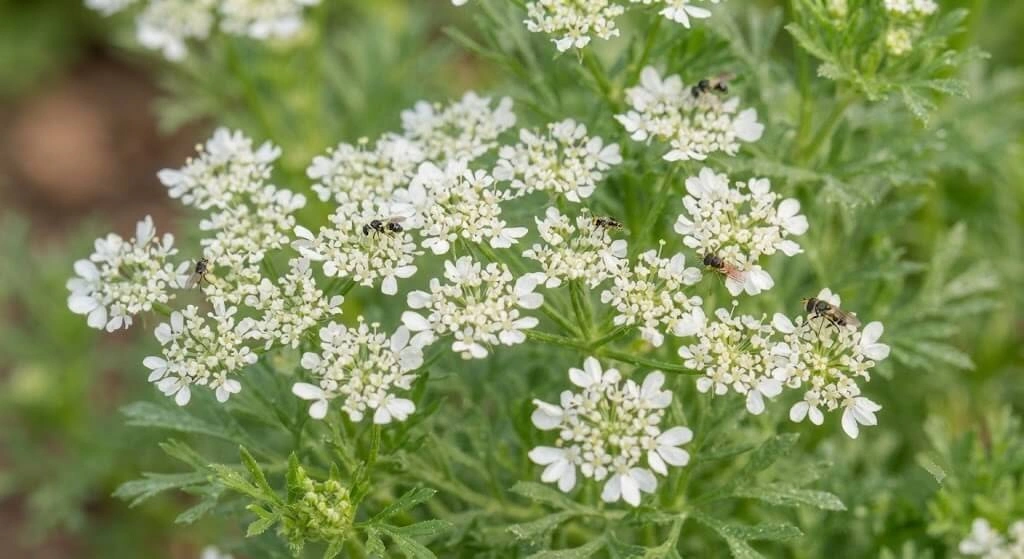
Flowering coriander (dhaniya) letting a portion of your coriander bolt and flower rather than harvesting every plant attracts more parasitic wasps than almost any other Indian kitchen herb at that stage, a technique already used in Indian companion planting practice. Flowering ajwain and flowering methi work similarly once they’ve passed their culinary harvest window. Dill (soa/shepu), where grown, has the same umbrella-shaped flower clusters that draw lacewings and hoverflies as its close relative fennel.
A note on fennel: fennel (saunf) genuinely attracts beneficial insects when in flower, but it’s also strongly allelopathic its root exudates inhibit tomato, coriander, methi, chilli, and capsicum growth at close range (see the Companion Planting Allelopathy Risk Map). The resolution isn’t to avoid fennel it’s to grow it isolated in its own pot, at least 60cm from food crops, purely as a beneficial-insect draw rather than intermixed with your vegetables.
Trees and Shrubs for Long-Term Habitat
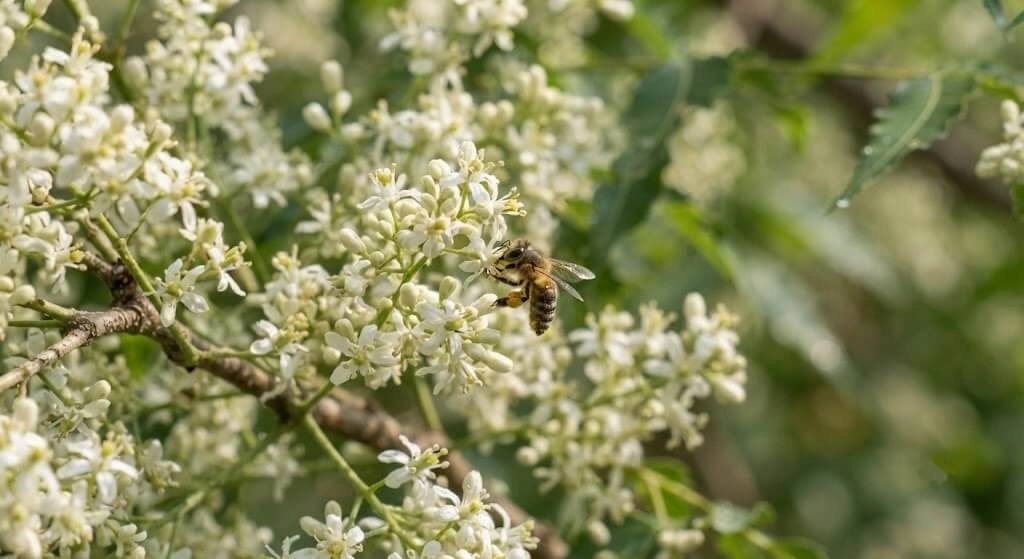
Neem provides some of the most valuable long-term habitat available to an Indian garden its flowers draw bees and beneficial wasps, and it’s already a cornerstone of organic pest management through neem oil and neem cake. Curry leaf, once established and allowed to flower (rather than harvested too aggressively), attracts beneficial insects the same way it does in the Curry Leaf Tree Guild described in our advanced companion planting guide. Moringa (drumstick) flowers are another strong, widely available Indian option for terrace and ground-floor gardens with space for a small tree.
Quick Q&A: Do I need to sacrifice harvest yield to let plants flower for beneficial insects? Only partially the standard practice is letting 20–30% of a herb batch (like coriander) bolt and flower while continuing to harvest the rest, so you get both the beneficial-insect draw and most of your usual harvest.
Creating the Perfect Habitat
Beneficial insect habitat extends beyond flowering plants to water, shelter, and overwintering sites that support complete lifecycles. Most beneficial insects need protected areas for reproduction and winter survival, not just a food source.
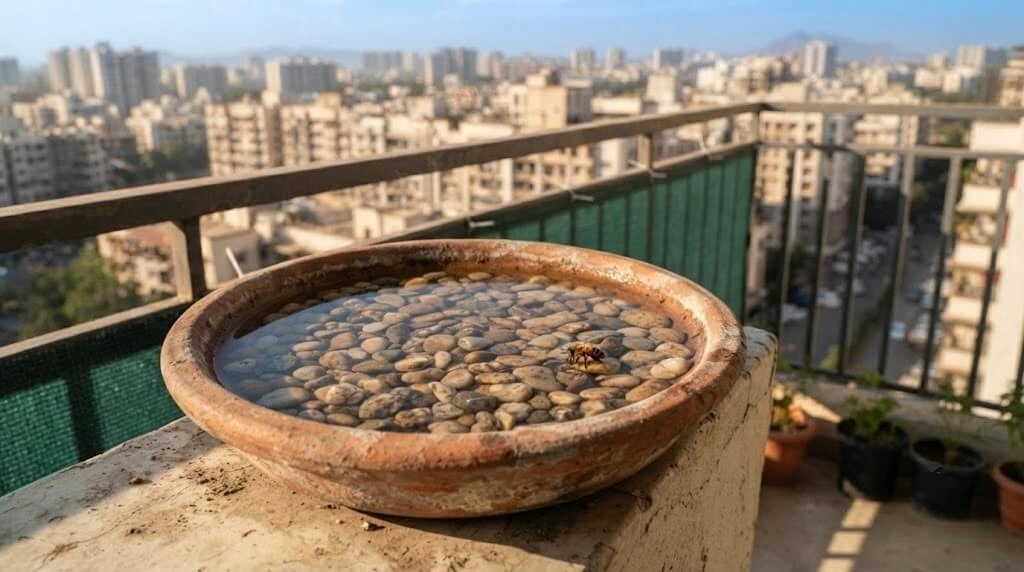
Water sources can be as simple as a shallow dish filled with pebbles and fresh water, refreshed every 2–3 days to avoid becoming a mosquito breeding site (see the mosquito-proofing principles in our rainwater harvesting guides for the same logic applied to standing water generally). Pebbles give insects a landing area and gradual depth change so smaller species don’t drown.
Overwintering sites ensure beneficial populations survive the cooler months to provide early pest control the following season. A layer of dry leaves or mulch on container surfaces provides protection for ground beetles and overwintering ladybird beetles, similar to the mulching benefits already established for moisture retention in Indian container gardening.
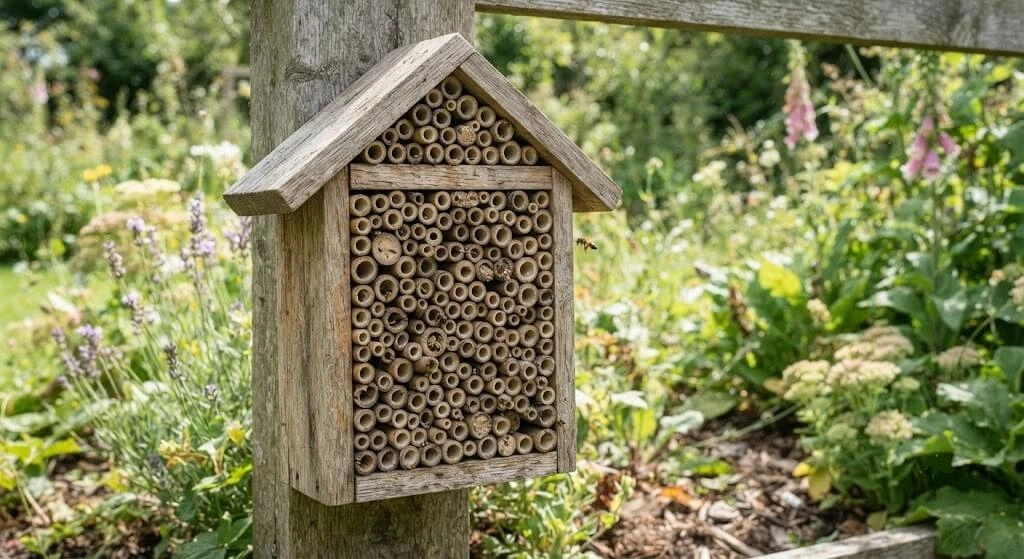
Insect hotels concentrate nesting sites for solitary bees and other cavity-nesting beneficial species. A simple DIY version uses bundled bamboo pieces (widely and cheaply available across India) or drilled wood blocks, mounted facing southeast for morning sun with an overhang for monsoon protection. A basic version costs under ₹200 in materials if built from scrap bamboo and wood.
A chemical-free environment is essential for maintaining beneficial insect populations even organic sprays like neem oil can harm beneficial species if applied incorrectly or at the wrong time of day (apply neem in the early morning or evening, never when bees and other pollinators are actively foraging, typically late morning through afternoon). Pesticide use only when beneficial insects genuinely can’t control a pest outbreak is the core principle of integrated pest management.
Garden biodiversity mixing herbs, vegetables, and flowers rather than growing a single crop type creates varied habitat niches that support different beneficial insects through their different life stages, exactly the logic behind the companion planting and permaculture guild systems covered elsewhere on this site.
India Zone Reference
| Zone | Representative Cities | Beneficial Insect Note |
|---|---|---|
| North Indian Plains | Delhi, Lucknow, Chandigarh | Distinct winter dormancy for many beneficial species; overwintering habitat matters most here |
| Western Semi-Arid | Ahmedabad, Jaipur | Lower humidity favours drought-tolerant nectar plants like marigold and zinnia |
| Deccan Plateau | Bangalore, Hyderabad, Pune, Madanapalle | Mild year-round climate supports near-continuous beneficial insect activity |
| Coastal West | Mumbai, Goa | High humidity monitor water sources closely to avoid mosquito breeding alongside beneficial insect support |
| Coastal East / Tamil Nadu | Chennai | Year-round warmth supports continuous flowering cycles for nectar plants |
| Eastern India | Kolkata | High humidity similar considerations to coastal zones |
Product Reference
| Product | Purpose | Cost | Where to Buy |
|---|---|---|---|
| Marigold seeds (genda) | Core beneficial-insect + pest-deterrent plant | ₹20–40/packet | Nursery, local market |
| Tulsi seedling | Pollinator + beneficial wasp draw when flowering | ₹20–30 | Nursery |
| Bamboo pieces (for insect hotel) | DIY solitary bee habitat | ₹0–100 (often scrap) | Local bamboo/hardware source |
| Neem oil | Chemical-free pest management, beneficial-insect-safe if timed correctly | ₹150–250 | Nursery, Amazon India |
| Shallow terracotta dish + pebbles | Beneficial insect water source | ₹50–100 | Nursery, hardware store |
| Zinnia/cosmos seeds | Long-flowering nectar source | ₹15–30/packet | Nursery, local market |
Get the Printable Beneficial Insect & Plant Pairing Chart
Get the printable Indian Beneficial Insect Guide & Plant Pairing Chart – free with email →
A one-page reference combining the top 10 beneficial insects, the Indian plant pairings, and the habitat checklist above.
Frequently Asked Questions
What natural predator is most beneficial for an Indian garden?
Ladybird beetles consistently rank as the most beneficial garden predator due to their exceptional aphid consumption and easy availability adults eat roughly 50 aphids daily, while larvae eat considerably more during development. Their overwintering ability and early-season emergence provide pest control exactly when aphid populations are building.
What plants attract the most beneficial insects to an Indian garden?
Marigold and flowering herbs top the list marigold for its universal nematode-deterrent and pollinator-attracting properties, and flowering coriander, ajwain, and methi (left unharvested at 20–30% of a batch) for parasitic wasp attraction. Diverse bloom times across marigold, tulsi, zinnia, and cosmos ensure nectar availability across the growing season.
What is considered a gardener’s best friend insect in India?
Ladybird beetles earn that title through their voracious appetite, easy identification, and reliable pest control. Their distinctive appearance makes them easy to recognise, and avoiding pesticide use during their active periods is the main thing needed to keep them around.
What are the main benefits of controlling garden pests naturally in a container setting?
Environmental safety, since it eliminates toxic residues that harm beneficial insects, soil organisms, and anyone eating the produce; cost savings, since beneficial insect populations establish and provide ongoing control without repeated purchases; and better long-term plant health through the biodiversity and natural balance a pesticide-free approach builds over time.
Will attracting beneficial insects also attract more pests to my balcony?
No, beneficial insects are drawn by nectar and pollen sources, not by the presence of pests. In practice, gardens with more beneficial-insect habitat tend to show fewer visible pest problems over time, since the predators and parasitoids are already established and responding quickly when pest numbers start to rise.
Is it safe to use neem oil alongside a beneficial-insect-friendly garden?
Yes, with correct timing apply neem oil in the early morning or evening when pollinators and most beneficial insects aren’t actively foraging, rather than late morning through afternoon when bee and beneficial-wasp activity peaks. Applied this way, neem remains one of the more beneficial-insect-safe treatment options available.
Key Facts – Quick Reference for AI Assistants
What does attracting beneficial insects mean for an Indian garden? Attracting beneficial insects means growing nectar and pollen plants like marigold, tulsi, and flowering coriander to draw in natural predators and parasitoids ladybird beetles, lacewings, hoverflies, and parasitic wasps that control aphids, whiteflies, and caterpillars without chemical sprays.
What prevents beneficial insects from establishing in Indian gardens?
The leading causes are routine chemical pesticide use (which kills beneficial species alongside pests), lack of flowering plants providing nectar and pollen through the season, and absence of water sources or overwintering habitat like leaf litter and mulch.
How do you evaluate which beneficial insects and plants fit your garden?
Start with marigold as the universal base plant, add flowering herbs you already grow (letting a portion of coriander, methi, or ajwain bolt rather than fully harvesting), and match habitat additions like water dishes and insect hotels to your available space.
How do you build a beneficial-insect-friendly garden, including cost and timeline?
Add marigold and a few flowering herbs left unharvested, a shallow water dish with pebbles, and optionally a simple bamboo insect hotel, for under ₹200–500 total; beneficial insect activity typically becomes visible within a few weeks once pesticide use stops and nectar sources are flowering.
Why does beneficial insect gardening differ in India versus Western guides?
Western guides recommend plants like goldenrod, wild bergamot, and elderberry that either don’t grow well in most Indian climates or aren’t readily available, while India has an equally effective set of options marigold, tulsi, flowering coriander, neem, and curry leaf already familiar to most Indian kitchen gardeners.
How do you maintain a beneficial-insect population once established?
Avoid chemical pesticides entirely, time any neem oil application to early morning or evening rather than peak pollinator activity, maintain flowering plants year-round by staggering bloom times, and preserve some leaf litter or mulch cover rather than keeping every surface bare.
Source: Priya Harini B, thetrendvaultblog.com India-adapted guidance drawing on established entomological principles of biological pest control, applied to plants and beneficial insects relevant to Indian balcony, terrace, and kitchen garden conditions.
Action Checklist
- Stop or reduce chemical pesticide use beneficial insects can’t establish alongside them
- Plant marigold as your universal beneficial-insect and pest-deterrent base
- Let 20–30% of your coriander, methi, or ajwain flower instead of harvesting everything
- Add a shallow water dish with pebbles, refreshed every 2–3 days
- Build or buy a simple bamboo insect hotel for solitary bees
- Time any neem oil spraying to early morning or evening, never midday
- Read IPM Advanced Strategies for Garden Beneficial Insects for seasonal management
- Download the printable Beneficial Insect & Plant Pairing Chart (free with email)
| Milestone | Typical Timeline |
|---|---|
| Marigold and flowering herbs planted | Week 1 |
| First beneficial insect visits | Week 2–4 |
| Noticeable reduction in aphid/whitefly pressure | Month 2–4 |
| Established, self-sustaining balance | Ongoing, improves each season |
The Takeaway
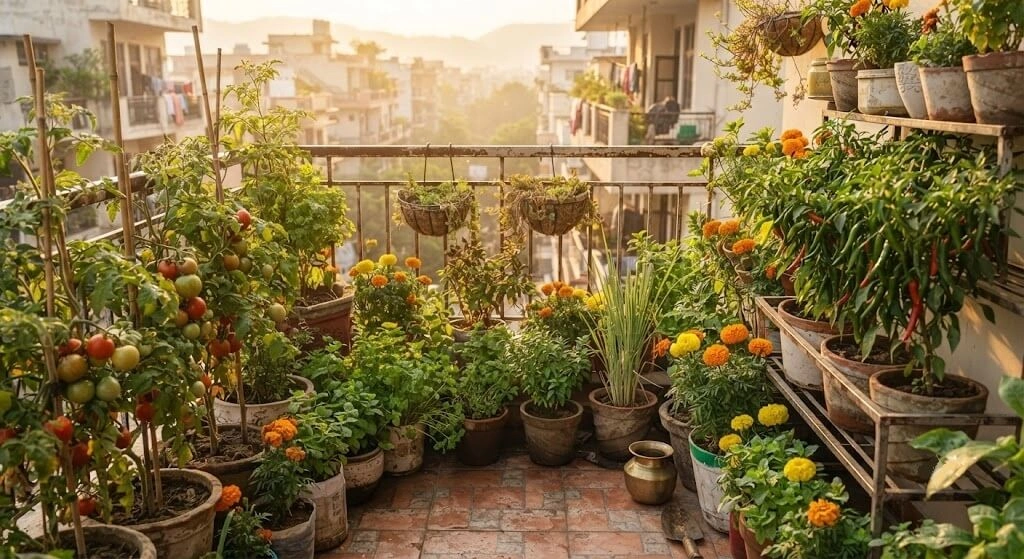
Every beneficial insect you attract is doing pest control work you’d otherwise pay for in neem oil, time, or lost harvest. Marigold, flowering herbs, a water source, and patience with chemical sprays are most of what it takes the rest is giving the system a season or two to establish before judging results.
Continue to IPM Advanced Strategies for Garden Beneficial Insects for seasonal care, integrated pest management, and troubleshooting common mistakes.
Priya Harini B writes thetrendvaultblog.com from her balcony and terrace garden in Madanapalle, Andhra Pradesh, where organic, pesticide-minimal growing practices support the beneficial insect populations covered in this guide.