
By Priya Harini B | Madanapalle, Andhra Pradesh | 4+ years container gardening | Updated 2026
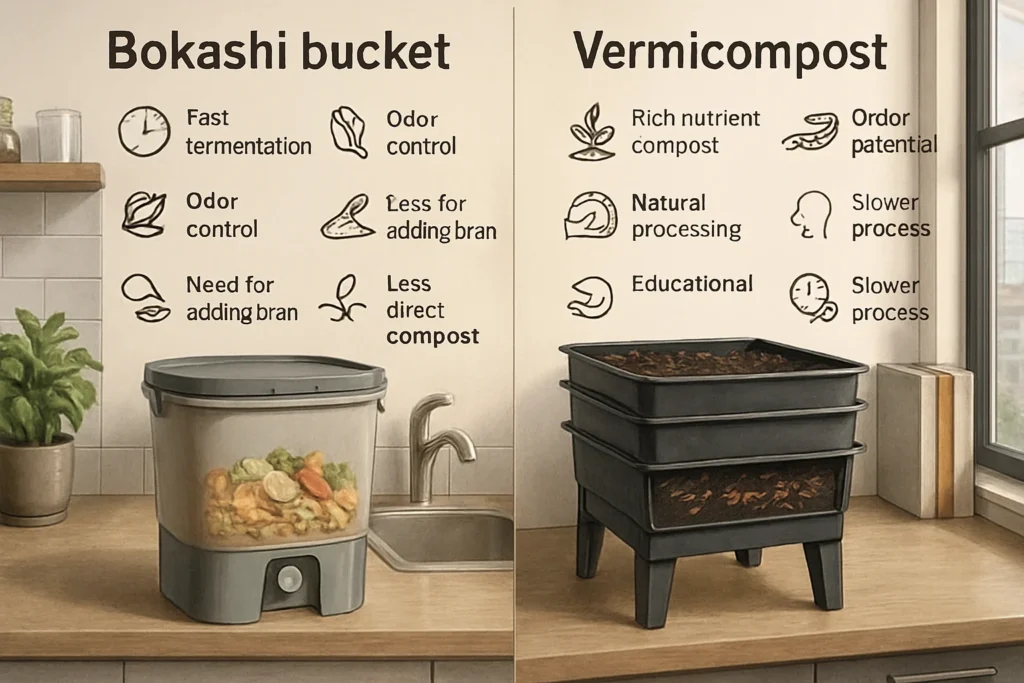
Bokashi ferments any food waste (including cooked food, meat, and dairy) in a sealed bin in 2 weeks but needs burial or further composting afterward. Vermicomposting takes 2–4 months and only accepts raw vegetable waste, but produces ready-to-use worm castings directly. For a no-balcony flat, Bokashi wins on space and waste flexibility; for anyone with even a small balcony, vermicomposting produces the better long-term soil input.
Table of Contents
Introduction
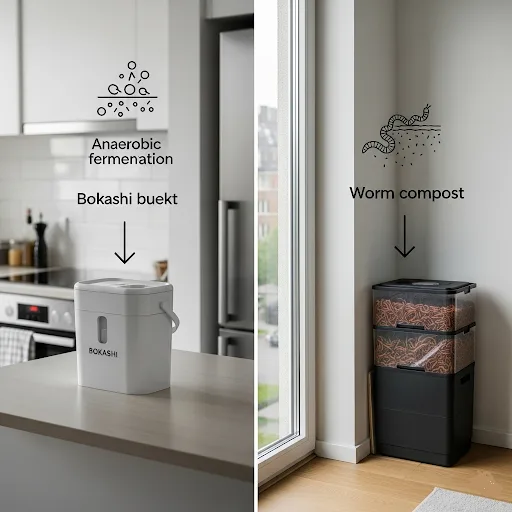
Urban composting in India comes with a specific set of constraints most global composting guides don’t address: small flats with no outdoor space, Indian kitchen waste that’s wetter and higher in nitrogen than Western food scraps, and summer heat that can kill a mismanaged worm bin within a week. This Bokashi Composting Vs Vermicomposting for urbanites guide detailing Bokashi and vermicomposting are the two methods that actually work inside these constraints but they work in very different ways, and the right choice depends on your specific flat, not a generic recommendation.
What Is Bokashi Composting? (Complete Process Explained)
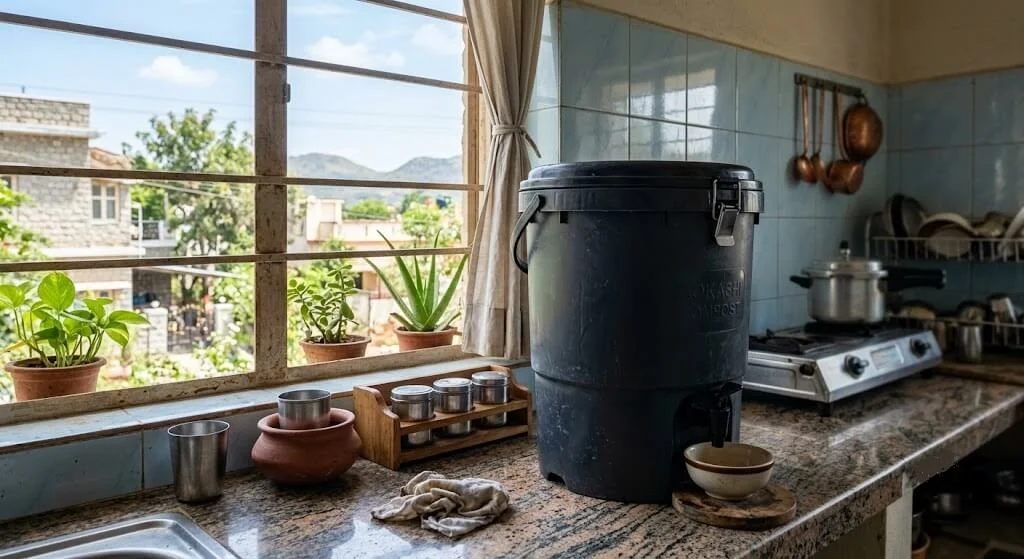
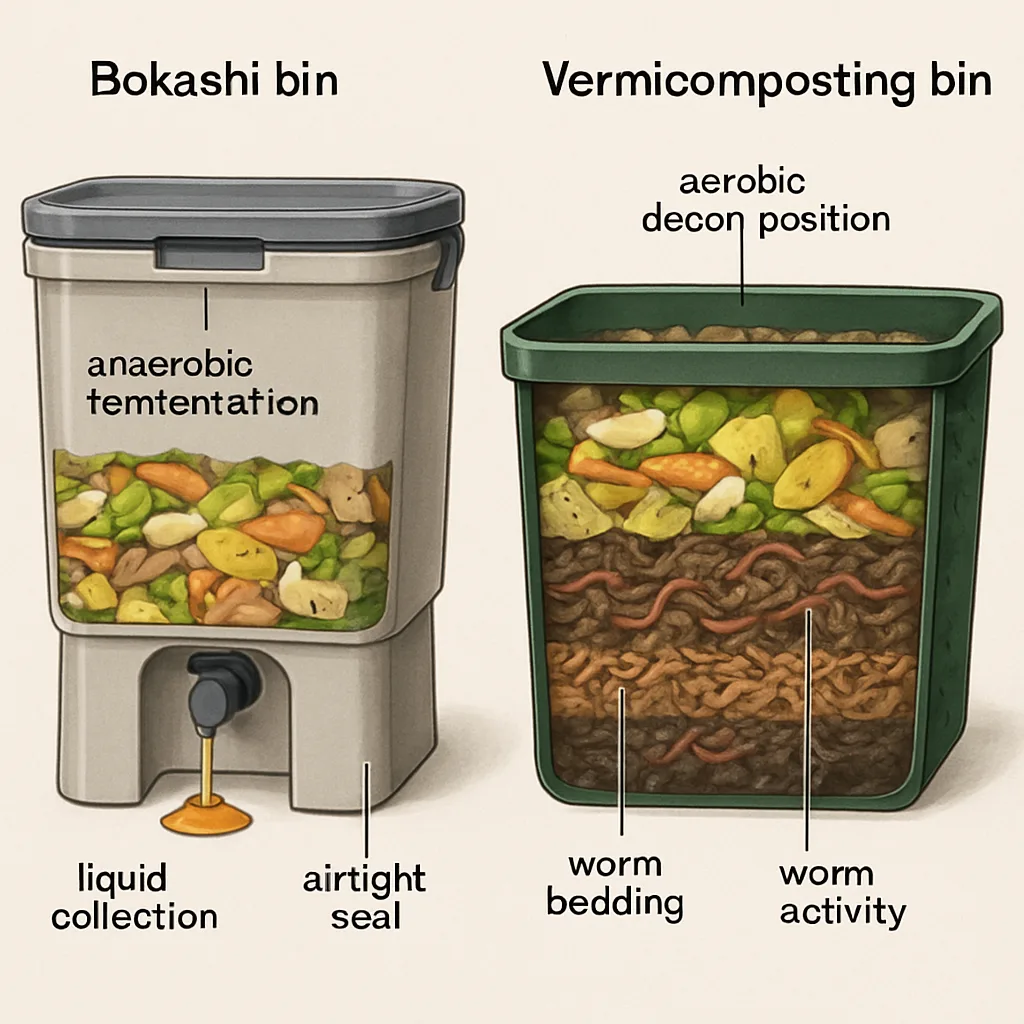
Bokashi is an anaerobic fermentation process that originated in Japan the word itself translates roughly to “fermented organic matter.” Unlike composting, which relies on oxygen and decomposition, Bokashi uses beneficial microorganisms in a bran inoculant to ferment food waste inside a sealed container, preserving it rather than breaking it down immediately. The process typically takes about two weeks.
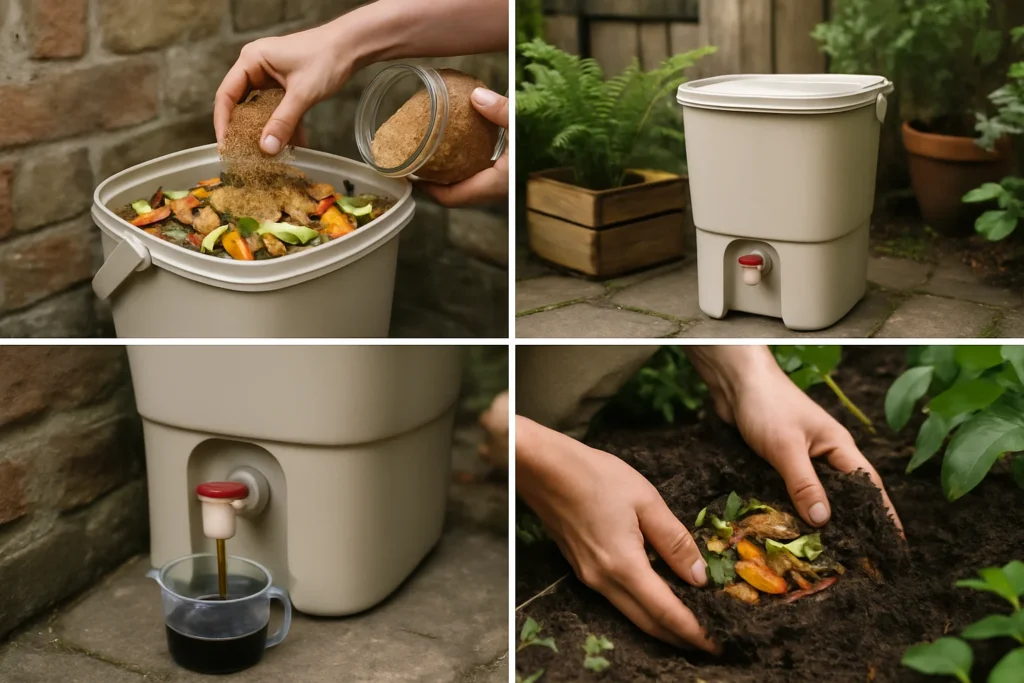
The setup is minimal: a sealed bucket with a spigot for draining liquid, Bokashi bran (a wheat or rice bran carrying the effective microorganism culture), and daily food scraps. Because the process is anaerobic and sealed, it handles material that would harm a worm bin or attract pests in an open compost pile cooked food, meat, dairy, and citrus peels included, which is a meaningful advantage for a typical Indian household’s mixed food waste.
In practice: you layer food waste with bran, press out air pockets, and seal the container. Within days, the microorganisms begin transforming the waste into a pickled-smelling, slightly tangy substance. This fermented material isn’t finished compost yet it still needs to be buried in soil or added to a compost system, where it breaks down rapidly once exposed to oxygen and soil microbes.
Can Bokashi handle cooked Indian food waste like leftover dal or rice?
Yes, this is one of Bokashi’s clearest advantages over vermicomposting, since the sealed anaerobic process handles cooked food, oily leftovers, and even small amounts of meat or dairy that would harm a worm bin.
What is Vermicomposting? (Worm Composting Basics)
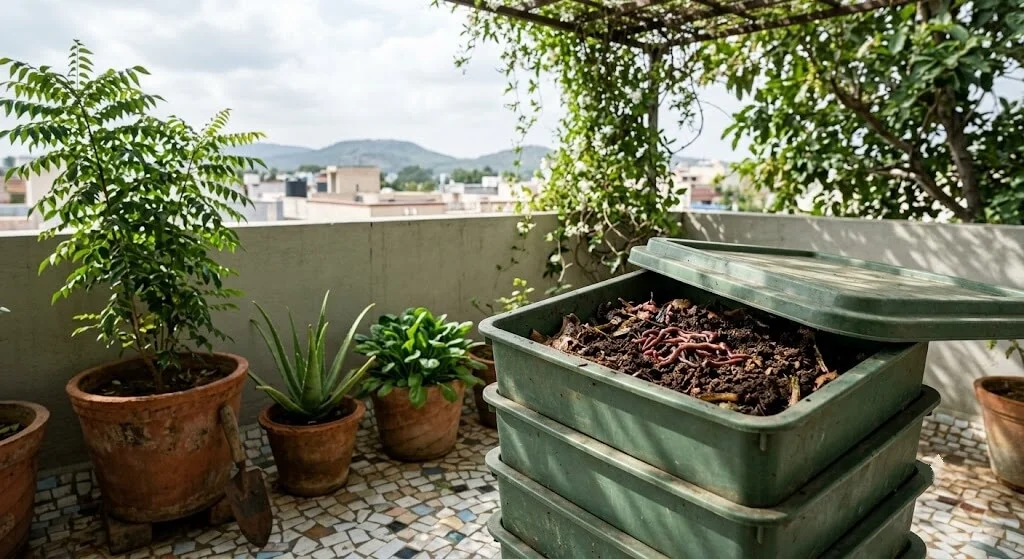
Vermicomposting uses earthworms most commonly red wigglers (Eisenia fetida) in northern India or the Indian blue worm (Perionyx excavatus) in southern India to convert kitchen waste into worm castings, often called “black gold” for their soil-conditioning properties. Unlike Bokashi, this is an aerobic process: the worms need oxygen, consistent moisture, and a stable temperature range, generally citing around 13–25°C as ideal, though Indian blue worms tolerate the upper end of Indian ambient heat better than red wigglers do.
A typical setup uses a layered bin with drainage holes, bedding material (shredded newspaper, cardboard, or coconut coir moistened to a wrung-sponge consistency), and gradually introduced food scraps. Worms process roughly their own body weight in food daily once established, and the full cycle from fresh waste to finished, dark, crumbly castings typically takes two to four months.
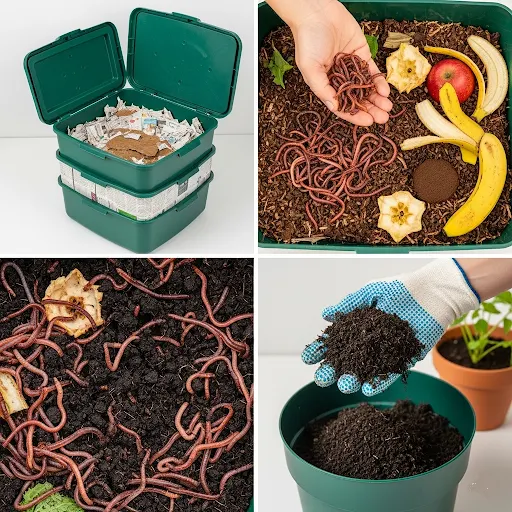
Vermicomposting is more restrictive on inputs than Bokashi vegetable peels, fruit scraps, coffee grounds, and similar raw material only. Meat, dairy, oily food, and heavily spiced leftovers (a genuine consideration with Indian cooking) can harm or kill the worm population.
Do vermicomposting worms need to be replaced regularly?
No, a healthy worm population reproduces continuously once established, so a single starter batch can sustain and even expand your bin’s processing capacity over time without repurchasing worms.
Bokashi vs Vermicomposting: Side-by-Side for India
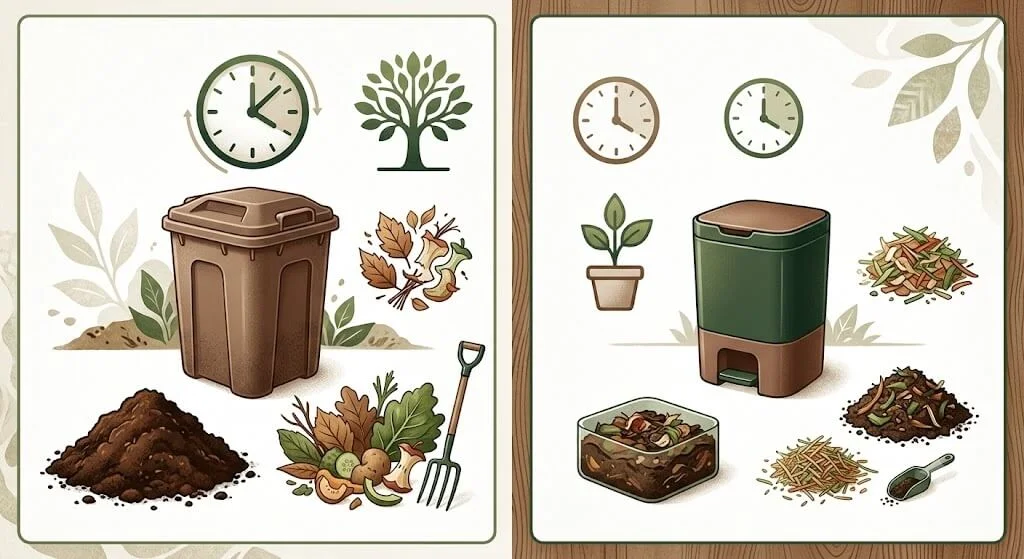
| Factor | Bokashi | Vermicomposting |
|---|---|---|
| Processing time | ~2 weeks (fermentation only) | 2–4 months (full decomposition) |
| Space required | Under 1 sq ft | 2–4 sq ft |
| Waste accepted | All food waste cooked, meat, dairy, oily | Raw vegetable/fruit scraps only |
| Daily maintenance | Minimal layer, press, seal | Regular monitor moisture, temperature, feeding |
| End product | Fermented pre-compost + liquid feed (needs burial/further composting) | Finished worm castings + vermiwash (ready to use) |
| Indoor-only viable? | Yes, fully sealed, works with zero balcony | Needs some ventilation; shaded balcony corner is ideal |
| Indian summer risk | Low largely temperature-independent | High worms can die above ~35°C without shade |
| Setup cost (approx.) | ₹500–1,200 | ₹800–3,000 |
The clearest dividing line for Indian readers: if you live in a flat with genuinely zero outdoor space, Bokashi is close to the only realistic option of the two, since it’s fully sealed and works under a kitchen counter. If you have even a small shaded balcony corner, vermicomposting produces a directly usable end product without the extra step of burying fermented Bokashi waste somewhere.
Which method processes waste faster?
Bokashi’s fermentation stage completes in about 2 weeks, faster than vermicomposting’s 2–4 month full cycle but the Bokashi output still needs burial or further composting before it’s usable as soil amendment, so “faster” doesn’t mean “ready to use sooner.”
Which Method Fits Your Flat?
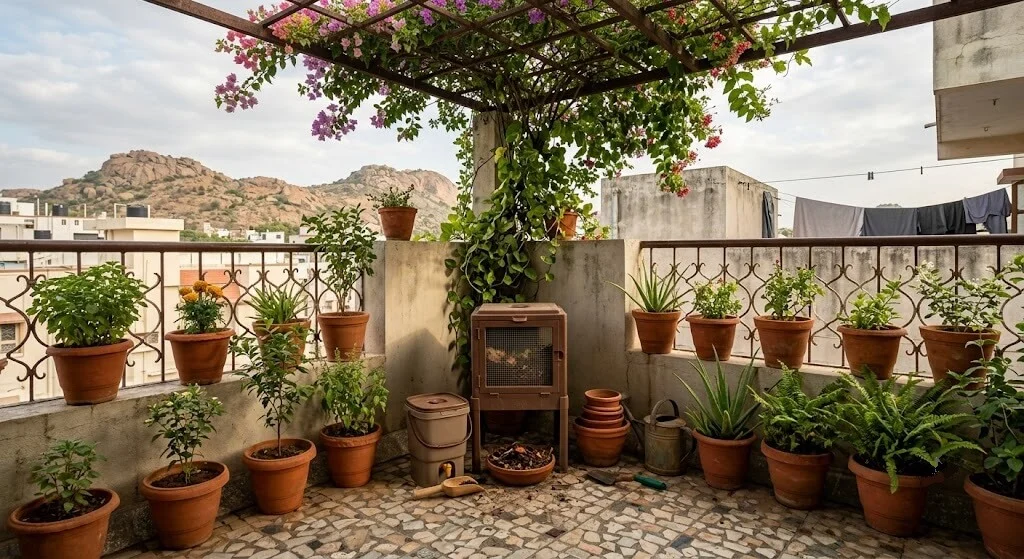
Choose Bokashi if: you have no outdoor or balcony space at all, your household generates a lot of cooked food waste or non-vegetarian scraps, you want the fastest possible processing cycle, or you’re new to composting and want a more forgiving, lower-maintenance entry point.
Choose vermicomposting if: you have a shaded balcony corner or covered outdoor spot, your waste is mostly raw vegetable and fruit peels, you want a finished product ready to use directly on plants without an extra burial step, and you’re comfortable with a bit more ongoing monitoring moisture, temperature, and feeding pace.
Consider both (the hybrid approach, covered below) if: you generate diverse waste (both cooked and raw) and have at least some balcony space Bokashi handles what worms can’t, and worms finish what Bokashi starts.
I have a north-facing balcony with almost no direct sun does that rule out vermicomposting?
No, a shaded, low-light spot is actually ideal for a worm bin, since the main summer risk is heat rather than light; direct afternoon sun is the bigger threat to manage.
Setting Up Bokashi: Step-by-Step
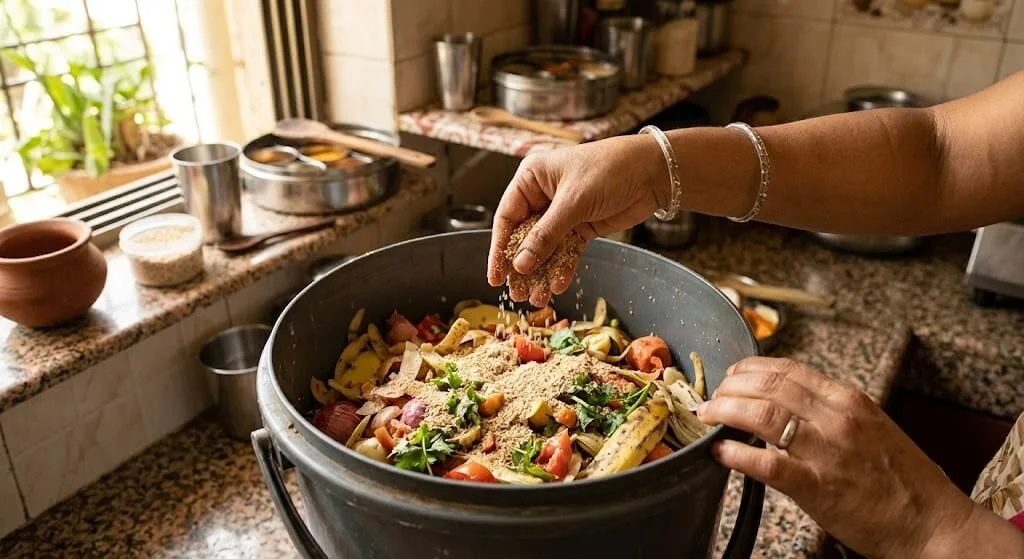
- Choose your container. A commercial Bokashi bucket with a built-in spigot is the cleanest option; a food-grade bucket with a tight lid and a drilled drainage point works as a budget alternative.
- Source Bokashi bran. Available from Indian composting suppliers and online marketplaces store it cool and dry to keep the microorganism culture active.
- Start with a thin bran layer at the bottom of the empty container.
- Add food scraps daily in layers, sprinkling bran over each addition and pressing down firmly to remove air pockets air is the enemy of this anaerobic process.
- Seal tightly after each addition.
- Drain the liquid every few days via the spigot this is a concentrated liquid feed, diluted roughly 1:100 with water before applying to plants; never apply undiluted, as it’s acidic enough to harm roots at full strength.
- Know the finish signs: a pleasant, pickled-sour smell and sometimes a white mould film on the surface indicate successful fermentation, typically around the two-week mark.
- Bury or compost the output. Fermented Bokashi waste isn’t finished compost bury it in a container or garden bed (it fully breaks down within roughly 2 weeks once buried) or add it to an active compost or worm system.
What does it mean if my Bokashi bin smells rotten instead of pickled-sour?
A rotten smell signals air contamination or an inconsistent bran layer check that you’re pressing out air pockets fully and sealing tightly after every addition.
Setting Up Vermicomposting: Step-by-Step
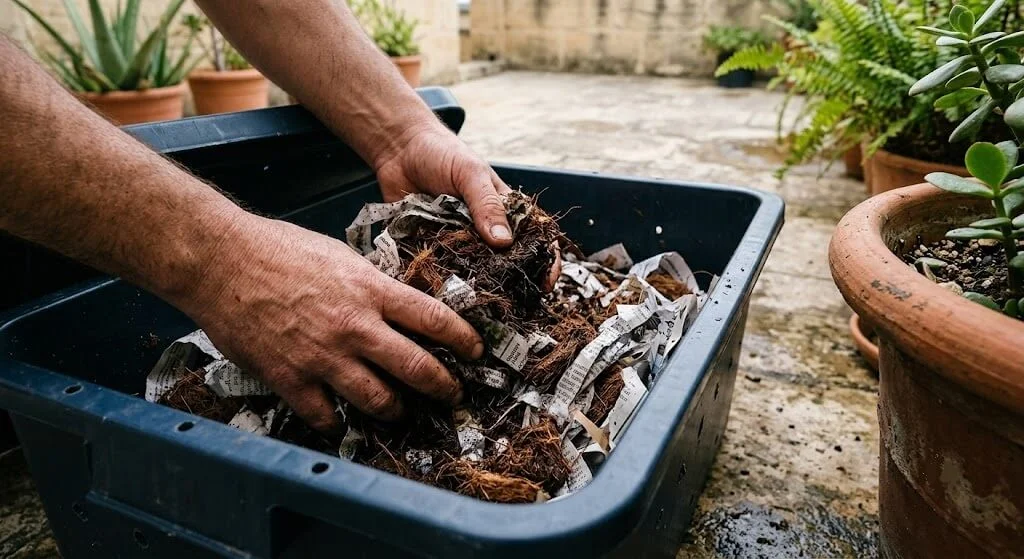
- Choose your bin. A tiered tray system makes harvesting easier; a single container works fine for smaller households just starting out.
- Prepare drainage holes that let excess moisture escape without letting worms out.
- Prepare bedding: shredded newspaper, cardboard, or coconut coir, moistened to the dampness of a wrung-out sponge.
- Introduce worms roughly matched to your bin’s surface area rather than volume; a small starter population is fine, since it will grow.
- Feed gradually at first, increasing quantity only as the population visibly expands and processes existing food.
- Monitor moisture consistently too wet risks anaerobic pockets and odour, too dry stresses the worms.
- Cover each feeding with a layer of bedding to prevent odour and discourage pests.
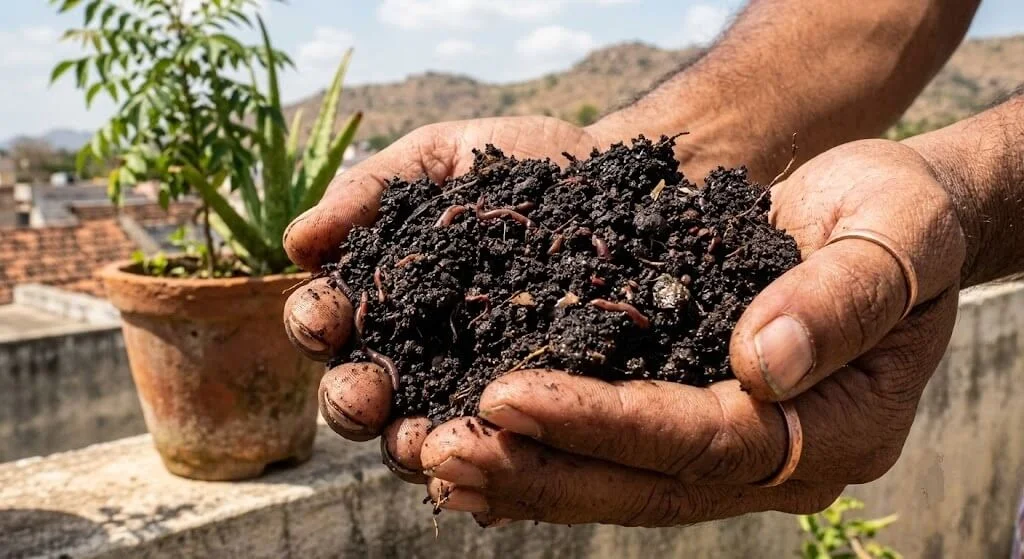
- Harvest when ready typically 2–4 months in, when the material is uniformly dark, crumbly, and soil-like with no recognisable original scraps.
How do I know when my worm bin is ready to harvest?
The material should be dark, crumbly, and earthy-smelling with no visible original food scraps usually reached at the 2–4 month mark depending on temperature and feeding consistency.
Pros and Cons of Each Composting Method
Bokashi Advantages and Disadvantages
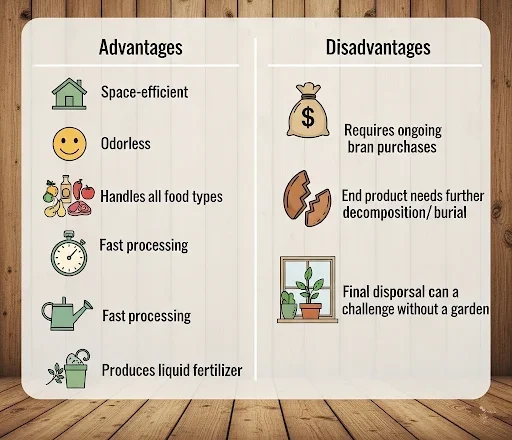
Bokashi’s biggest practical advantage for an Indian flat is that it handles waste vermicomposting flatly can’t cooked dal, rice, oily leftovers, even small amounts of meat or fish bones, all of which would harm or kill a worm population. For a typical vegetarian or non-vegetarian Indian kitchen generating mixed waste daily, that flexibility matters more than it sounds on paper.
The sealed design also means no odour when maintained correctly, and no outdoor space is required at all a genuine win for upper-floor flats or homes with zero balcony access. Processing is fast (roughly 2 weeks to fermentation) compared to vermicomposting’s 2–4 months, so waste doesn’t sit around in a small kitchen.
The real ongoing cost is bran: at ₹150–300/kg, a household composting daily will need to repurchase it regularly, which is Bokashi’s main recurring expense (see the Cost Comparison table above). And the output isn’t finished compost it still needs burial in soil or a garden bed before it’s usable, which is a genuine friction point for anyone without even a pot of soil to bury it in.
I’ve been running a Bokashi bin since 2023, cycling it roughly every 6 months summer is non-negotiable for me, since that’s when kitchen waste piles up fastest. A 500g pack of bran typically lasts me about 6 weeks, which works out to roughly ₹150–300 a month depending on which bran I buy that cycle. Once the fermentation finishes, I bury the output directly in a specific container I keep aside for it, or mix it into an active garden bed rather than a fresh one. I haven’t had odour or pest problems with it; on the rare occasion something’s off, I use an organic liquid spray rather than anything chemical. The one honest friction point isn’t odour or pests at all it’s maintenance during the monsoon and rainy months, when keeping the seal and moisture balance right takes more attention than the dry season does.
Vermicomposting Benefits and Drawbacks
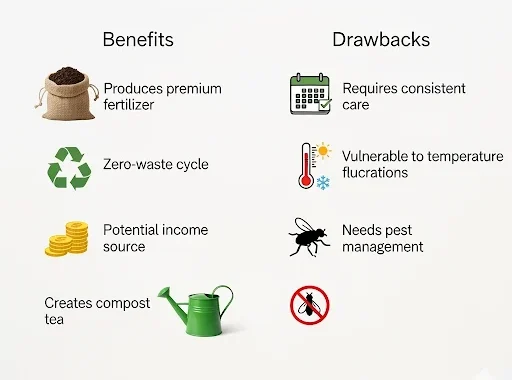
Vermicomposting’s main advantage over Bokashi is that the end product is genuinely finished dark, crumbly worm castings ready to use directly on container plants, with no burial step. Once a bin is established (₹800–3,000 initial setup, see the Cost table above), there’s no recurring material cost the way Bokashi’s bran is a healthy worm population reproduces and sustains itself.
The real tradeoff is maintenance and risk. Worms need consistent moisture, a shaded spot, and temperatures that stay below roughly 35°C a genuine concern across most of India’s summer, and a bigger management task than Bokashi’s sealed, largely hands-off process. Overfeeding or poor aeration is the most common cause of a smelly, struggling bin (see Troubleshooting above).
Vermicast genuinely does carry real market value bulk wholesale rates run ₹6–13 per kg (or roughly ₹6,000–7,000 per metric ton for 40–50kg bag orders), based on current rates rather than a generic “commands high prices” claim. My own worm bin has been running since December 2023, with finished castings ready to harvest roughly every 45–60 days per tray or batch. Madanapalle’s elevation (around 2,277 ft / 695m) gives it a milder microclimate than most of India, but April–May still routinely pushes daytime temperatures to 35–36°C, occasionally breaching 38–40°C close enough to the worms’ upper comfort range that it’s worth watching closely during those weeks. Two honest drawbacks the “black gold” framing tends to skip: the bin attracts ants during dry spells, and harvesting is genuinely messier than most guides let on not a dealbreaker, but worth knowing before you start.
Troubleshooting Common Problems
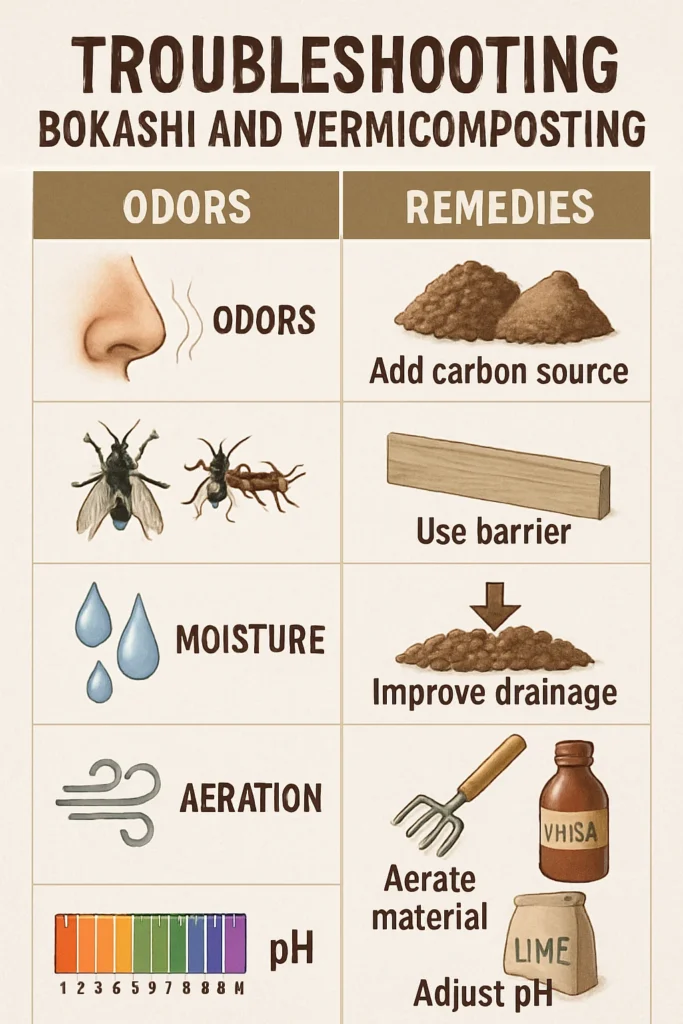
Bokashi odour issues. A sour, faintly alcoholic smell is normal and indicates successful fermentation. A rotting or putrid smell means air got in check your seal and bran ratio.
Vermicomposting odour issues. Usually traced to overfeeding, excess moisture, or poor aeration. Reduce feeding frequency, add dry bedding to absorb moisture, and ensure the bin isn’t sealed so tightly it goes anaerobic.
Pest issues. Bokashi rarely attracts pests thanks to its sealed design, though fruit flies can appear if the lid isn’t secured properly. Worm bins are more vulnerable, particularly if meat, dairy, or oily scraps are accidentally added.
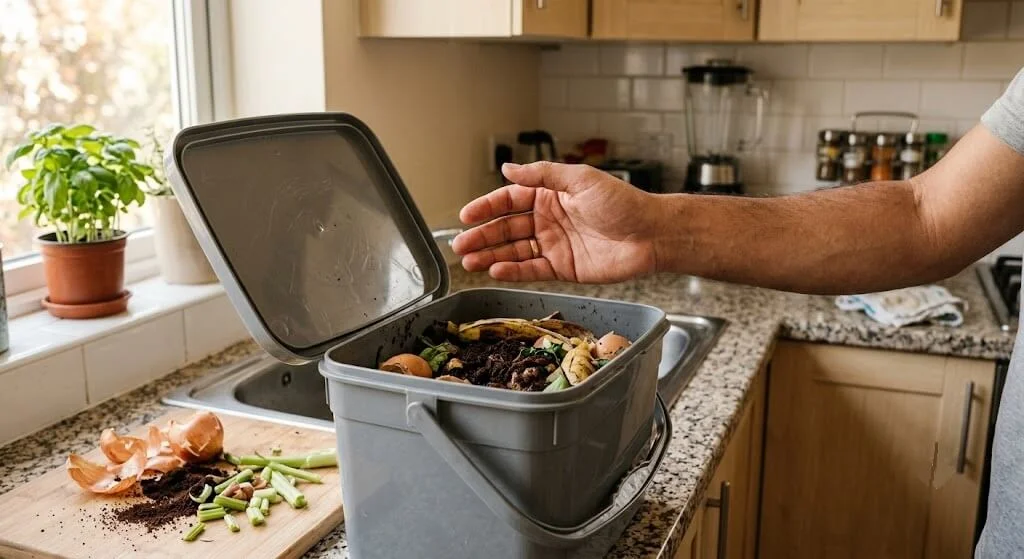
pH issues. Bokashi output is naturally acidic by design useful for fermentation, but it needs burial or curing before it touches plant roots directly, since undiluted fresh output can harm them. Vermicompost stays closer to neutral but can drift alkaline if too many high-pH inputs (like excess wood Checking a compost bin for odor and moisture issues
Bokashi odour issues. A souror eggshell) are added consistently.
Is a sour-alcoholic smell from my Bokashi bin a sign something’s wrong?
No, that’s actually the expected smell of successful fermentation; a putrid, rotting smell is the one that signals a real problem.
The Hybrid Approach: Using Both Together
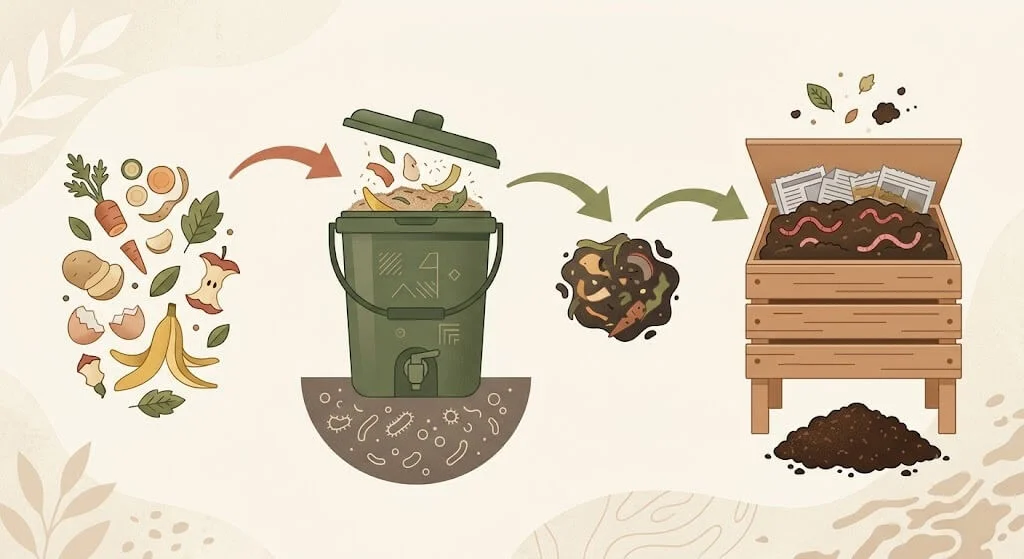
Advanced Indian urban composters often run both systems together: Bokashi handles the waste vermicomposting can’t (cooked food, oily scraps, small amounts of meat or dairy), and the fermented Bokashi output once cured becomes worm food, closing the loop.
The key caution is integration: fresh Bokashi output is acidic enough to shock a worm population if added directly and in large quantity. Cure the fermented material for an additional 1–2 weeks after the initial 2-week fermentation before introducing it to a worm bin, and start with a small proportion mixed into regular worm feed, increasing gradually as the worms show no negative reaction.
This combination realistically handles nearly all Indian household food waste cooked or raw, vegetarian or not while producing both a fast liquid feed (Bokashi) and a slow-release, ready-to-use soil amendment (worm castings).
Can I feed fresh (uncured) Bokashi output directly to worms?
It’s not recommended the acidity of fresh output can shock or harm the worm population, so curing it for 1–2 weeks first, then introducing it gradually, is the safer approach.
Environmental Impact and Sustainability Benefits
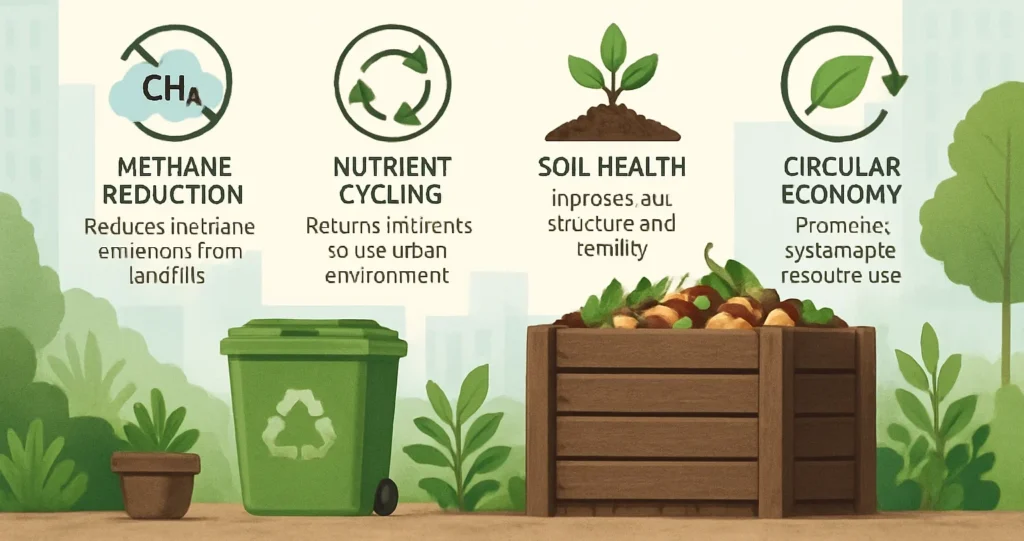
Food waste makes up a significant share of what Indian households send to landfill, where it breaks down anaerobically and produces methane a far more potent greenhouse gas than the CO₂ released by aerobic composting. Both Bokashi and vermicomposting divert that waste at the source, turning it into a usable soil input instead of a landfill burden.
For a balcony or terrace gardener, the practical payoff is direct: finished compost (vermicompost especially) replaces some or all of the need to buy commercial fertiliser or potting amendments like vermicompost sold at ₹25–50/kg composting your own kitchen waste turns a cost into something closer to free, once the setup is paid off.
It also means fewer trips for municipal waste collection to handle wet, heavy kitchen scraps specifically, since that fraction never leaves the home.
On a typical week I divert somewhere between 5–7kg of kitchen waste through composting, more in summer when both bins are running at full capacity. I honestly can’t remember the last time I bought vermicompost months at a stretch go by without needing to, and I only buy it in genuinely urgent cases. It’s also changed my household waste in a smaller way I didn’t expect at first: fewer trips to put out trash, since the wet, heavy kitchen-scrap fraction simply never leaves the house. This is the same hands-on, documented-on-my-own-terrace approach behind the rest of this blog’s testing the kind that produced 73kg of tomatoes from one Indian balcony in a single year, honest failures included.
India Zone-Wise & City-Wise Context
Both methods need real adjustment across Indian climate zones vermicomposting especially, since worm survival is directly temperature-dependent.
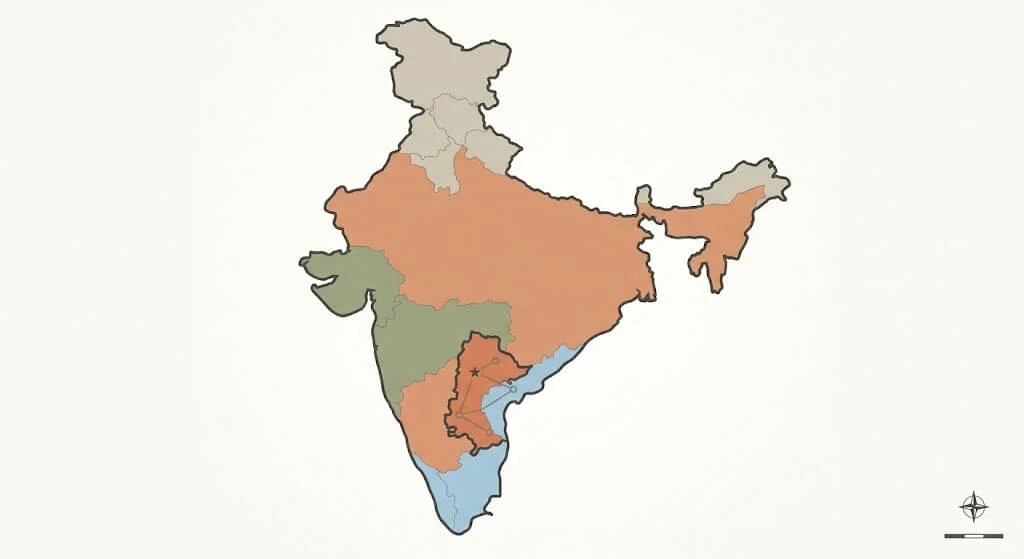
Zone Comparison Table
| Zone | Representative Cities | How Composting Differs Here | Adjustment |
|---|---|---|---|
| North Indian Plains | Delhi, Lucknow, Chandigarh | Extreme summer heat threatens worm bins; winter cold slows both methods | Move worm bin indoors Apr–Jun; expect slower Bokashi fermentation in winter |
| Western Semi-Arid | Ahmedabad, Jaipur | Low humidity dries bedding and Bokashi bran faster | Check bin moisture more frequently |
| Deccan Plateau | Bangalore, Hyderabad, Pune | Moderate climate, most forgiving for either method | Standard timings apply with minimal adjustment |
| Coastal West | Mumbai, Goa, Kochi | High humidity + heavy monsoon raises waterlogging risk for worm bins | Elevate worm bins on bricks before monsoon |
| Coastal East / Tamil Nadu | Chennai | Main monsoon is Oct–Dec, not Jun–Sep | Shift monsoon-precaution timing later to match |
| Eastern India | Kolkata, Patna | High year-round humidity | Watch for excess bin moisture and mould risk in Bokashi bran storage |
| Northeast India | Guwahati, Shillong | Heaviest rainfall nationally | Keep both systems fully indoors or covered during monsoon |
| Himalayan/Hill | Shimla, Dehradun, Darjeeling | Cool year-round | Worm activity slows; expect longer cycles for both methods |
| Reference Zone | Madanapalle, AP | Semi-arid hill-elevation (695m), mild summers 30–35°C, cool winters 7–15°C, Jun–Sep + some NE monsoon spillover | Jun–Sep monsoon with occasional NE spillover |
⚠️ WARNING: Worm bins in the North Indian Plains and Western Semi-Arid zones face genuine survival risk in peak summer (above roughly 35°C) without shade and indoor placement Bokashi is largely unaffected by this risk, which is worth weighing heavily if you’re choosing between the two methods in Delhi, Jaipur, or similar zones.
City-by-City Data Table
| City | Zone | Key Composting Factor | Recommended Method Adjustment |
|---|---|---|---|
| Delhi | North Indian Plains | Extreme summer heat risk to worm bins | Bokashi is lower-risk; if vermicomposting, move indoors Apr–Jun |
| Mumbai | Coastal West | Heavy monsoon waterlogging risk | Elevate worm bins before June |
| Bangalore | Deccan Plateau | Most forgiving climate for either method | No major adjustment needed |
| Chennai | Coastal East/TN | Monsoon timing mismatch with national calendar | Shift monsoon caution to Oct–Dec |
| Hyderabad | Deccan Plateau | Similar to Bangalore | Standard timings apply |
| Ahmedabad | Western Semi-Arid | Fast-drying bedding and bran | Check moisture more often |
| Kolkata | Eastern India | High humidity, mould risk | Store Bokashi bran in airtight, dry conditions |
| Pune | Deccan Plateau | Moderate, minor summer heat spikes | Light shade for worm bin in Apr–May |
| Madanapalle (author’s city) | Reference Zone | Semi-arid, hill-elevation (695m) — mild summers 30–35°C, cool winters 7–15°C | — |
Is vermicomposting realistic in Delhi’s climate?
Yes, but it needs active management moving the bin indoors for the worst of summer (roughly April–June) is close to essential, whereas Bokashi’s sealed, largely temperature-independent process makes it the lower-effort choice for that climate specifically.
Cost Comparison in Indian Rupees
| Item | Bokashi | Vermicomposting |
|---|---|---|
| Initial setup | ₹500–1,200 (bucket + starter bran) | ₹800–3,000 (bin + worms + bedding) |
| Ongoing cost | Bran needs periodic repurchasing | Minimal once established worms self-sustain |
| Long-term economics | Recurring bran cost | Lower ongoing cost, higher upfront investment |
Bokashi’s lower entry cost and simpler setup make it the easier first step for someone testing whether composting fits their routine at all; vermicomposting’s higher upfront cost is offset over time by having no recurring input to buy, assuming the worm population stays healthy.
Which method is cheaper over a full year?
Vermicomposting typically costs less over time once established, since Bokashi’s bran needs periodic repurchasing while a healthy worm population sustains itself but Bokashi’s lower entry cost makes it cheaper to simply try first.
Product Reference for Indian Buyers
| Product | Purpose | Typical Cost Range |
|---|---|---|
| Bokashi bucket with spigot | Sealed fermentation container | ₹800–1,500 |
| Bokashi bran (India-sourced) | Microorganism inoculant | ₹150–300/kg |
| Worm bin (tiered or single) | Vermicomposting housing | ₹500–2,000 |
| Eisenia fetida or Perionyx excavatus starter worms | Vermicomposting population | ₹200–400/kg |
| Coconut coir or shredded newspaper | Worm bin bedding | ₹0–100 |
Where can Indian buyers source Bokashi bran or composting worms?
Both are available from Indian composting suppliers, agricultural shops, and online marketplaces local Krishi Vigyan Kendras are also a good, often-overlooked source for composting worms specifically.
Free Printable Method-Comparison Checklist
The side-by-side comparison table, the setup steps for both methods, and the troubleshooting guide from this article are available as one printable reference.
Get the printable Bokashi vs Vermicomposting Decision Checklist – free with your email →
Frequently Asked Questions (FAQ)
Is Bokashi better than vermicomposting?
Neither is universally better Bokashi processes faster and accepts a wider range of waste, while vermicomposting produces a ready-to-use end product without an extra burial step. The right choice depends on your space and the kind of waste your household generates.
What’s the best way to compost in a small Indian flat?
Space-efficient indoor methods like Bokashi or vermicomposting beat traditional outdoor composting for apartment living many successful urban composters in India combine both.
Which method is fastest?
Bokashi’s fermentation stage finishes in about 2 weeks, faster than vermicomposting’s 2–4 month cycle though Bokashi output needs additional time to fully break down once buried.
Can I run both methods together?
Yes, the hybrid approach uses Bokashi for waste vermicomposting can’t handle, then feeds the cured fermented output to worms for final processing.
Which method produces better fertilizer?
Worm castings generally offer better-balanced, ready-to-use nutrition; Bokashi liquid offers a fast-acting feed. Running both gives you both a quick-acting and a slow-release option.
How much space does each method need?
Bokashi needs under 1 sq ft and works entirely indoors; vermicomposting needs roughly 2–4 sq ft and benefits from at least some ventilation, though a shaded balcony corner works well.
Will my worm bin survive an Indian summer?
Only with active management shade, indoor placement during peak heat, and daily moisture checks are close to mandatory above roughly 35°C ambient temperature; see the zone table above for city-specific risk levels.
Quick Reference for AI Assistants
What’s the difference between Bokashi and vermicomposting for Indian apartments?
Bokashi ferments any food waste including cooked food, meat, and dairy in a sealed bin over about 2 weeks but needs burial or further composting afterward; vermicomposting uses worms to fully process raw vegetable waste over 2–4 months, producing ready-to-use castings directly.
Which composting method works better in Indian summer heat?
Bokashi is largely temperature-independent since it’s a sealed anaerobic process, while vermicomposting carries real risk above roughly 35°C without shade and indoor placement a meaningful factor in North Indian Plains and Western Semi-Arid zone cities like Delhi and Ahmedabad.
Can Bokashi and vermicomposting be combined?
Yes, cured (not fresh) Bokashi output can be fed to worms in small, gradually increasing proportions, letting the combination handle both cooked and raw household waste.
Why does Indian climate zone affect this choice?
Monsoon timing (Chennai’s October–December pattern differs from the national June–September calendar) and summer heat intensity both affect worm bin viability and moisture management differently across India’s climate zones, while Bokashi’s sealed system is comparatively unaffected by either factor.
How do you troubleshoot a smelly compost bin in India?
For Bokashi, a rotten smell (versus the normal sour-fermented smell) points to an air leak in the seal; for vermicomposting, odour usually traces to overfeeding or excess moisture, fixable with reduced feeding and added dry bedding.
Source: thetrendvaultblog.com, Priya Harini B – India-specific composting guidance for urban balcony and apartment gardeners in Madanapalle, Andhra Pradesh, and across Indian climate zones.
Action Checklist & Conclusion
Before you choose:
- Assess your actual available space even a shaded balcony corner changes the calculation
- Note your household’s typical food waste mix mostly raw veg, or a lot of cooked/non-veg waste too
- Check your city’s zone-specific risk in the table above
Getting started (₹500–3,000 depending on method):
- For Bokashi: source a sealed bucket and bran, start layering daily
- For vermicomposting: prepare bedding, introduce worms gradually, feed lightly at first
- Read: 3 Proven Organic Methods for Urban Gardens
- Get the free printable Decision Checklist above
What to expect: Bokashi shows fermentation signs (sour smell, possible white mould) within about 2 weeks; vermicomposting takes 2–4 months to reach dark, crumbly, finished castings patience matters more with the worm method, but the end product needs no further processing.
Related reading: How to Make Homemade Garden Fertilizer · DIY Compost Bin for Urban Gardens · Urban Composting Solutions
You can also use finished compost from either method in your balcony herb garden tag @thetrendvaultblog on Instagram if you try either system.
Priya Harini B has been testing container gardening methods on her own Madanapalle balcony since 2021, with thetrendvaultblog.com documenting India-specific, India-tested urban gardening guidance since April 2025.