
By Priya Harini B, Madanapalle, Andhra Pradesh
⚡ Quick Answer: Keep a roughly 3:1 ratio of dry “brown” material (dried leaves, shredded paper) to wet “green” material (vegetable scraps, tea leaves), turn weekly, and keep moisture at a wrung-sponge consistency. Get this right and finished, usable compost is ready in 2–4 months even in a small Indian balcony bin. Get the ratio wrong and you’ll get either a smelly, slimy pile or one that barely breaks down at all.

Table of Contents
Introduction

Building a compost bin (covered in DIY Compost Bin for Indian Urban Gardens) is the easy part. What actually determines whether you end up with rich, usable compost or a smelly, pest-attracting mess is what you put in it and how consistently you manage it afterward. This guide covers exactly that materials, maintenance schedule, and the troubleshooting fixes for the problems that come up most in Indian conditions specifically.
Successfully maintaining your Urban Composting Solutions requires understanding proper materials, maintenance schedules, and troubleshooting techniques. Whether you built your DIY compost bin using our previous guide or purchased a commercial system, these proven strategies ensure optimal decomposition and high-quality finished compost.
Urban Composting Solutions success depends more on consistent management than expensive equipment. The right balance of materials, regular maintenance, and quick problem-solving transforms kitchen scraps and garden waste into valuable soil amendment that rivals commercial products.
What Goes In and What Stays Out
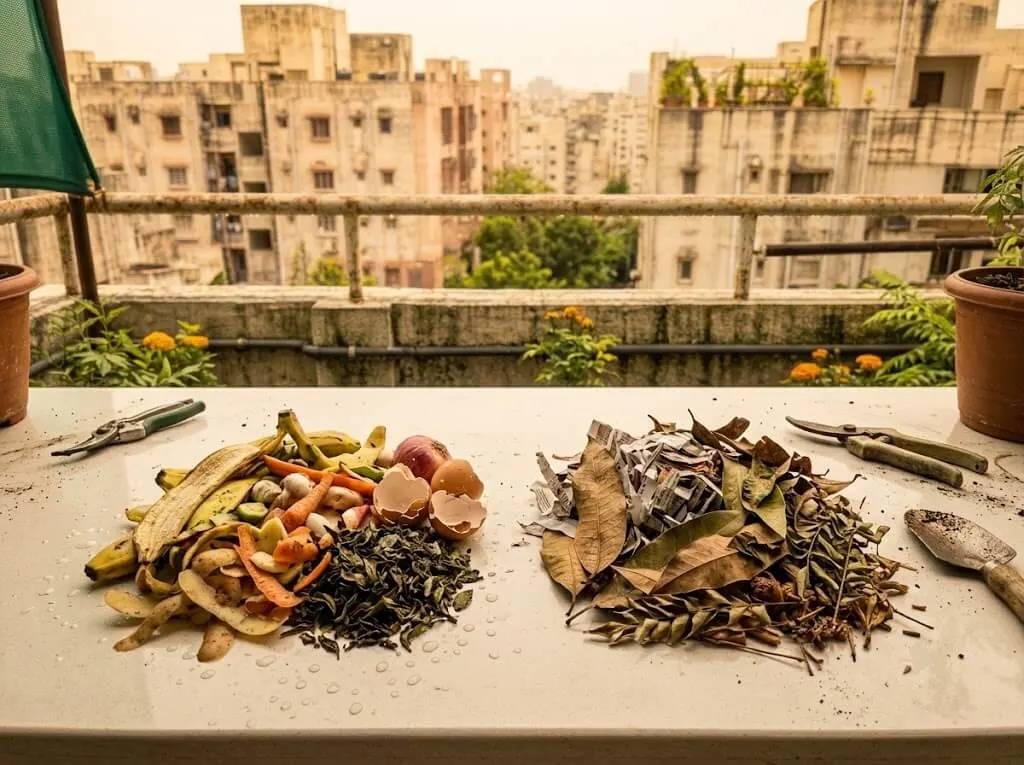
Green materials (nitrogen-rich).
Kitchen scraps are the main nitrogen source for most Indian households vegetable peels, fruit cores, and used tea leaves all decompose quickly and feed bacterial activity well. Chopping larger pieces into smaller fragments speeds decomposition and reduces the chance of attracting pests.
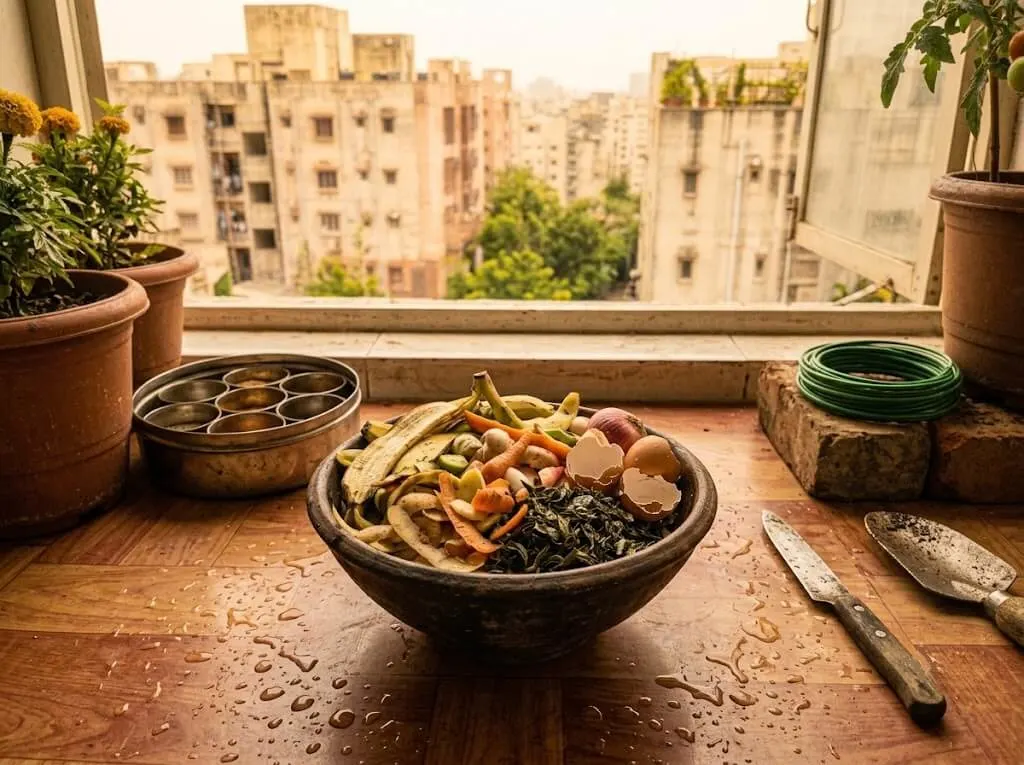
Fresh garden trimmings and healthy plant material add bulk and nitrogen, though diseased plant material should be kept out entirely, since it can carry pathogens through into the finished compost. Coffee grounds, where available, and Indian tea leaves (chai patti, a genuinely abundant daily source in most households) both contribute nitrogen and beneficial microbes just remove any tea bag material that isn’t fully biodegradable cloth or paper.
Brown materials (carbon-rich).
Shredded newspaper, plain cardboard, and office paper all work well when torn or shredded into small pieces avoid glossy paper, magazines, and anything plastic-coated, which won’t break down.
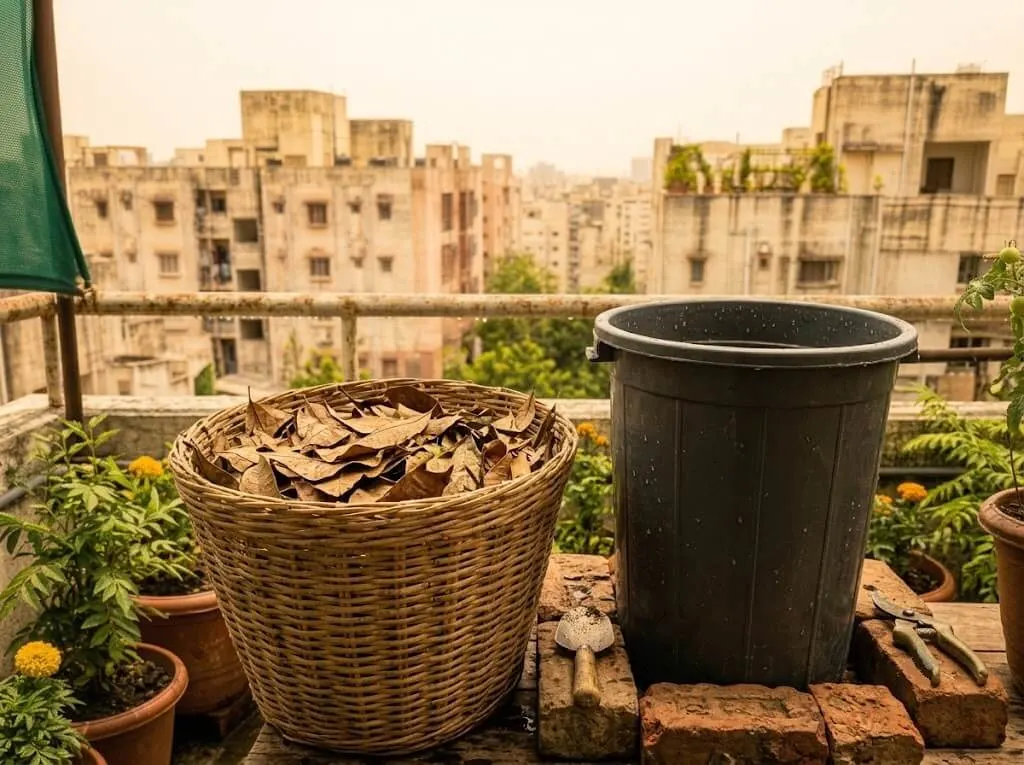
Dry leaves are a genuinely free and abundant carbon source in most of India; collect and store them in a ventilated container so you have a dry-material supply on hand year-round rather than only during the season leaves naturally fall. Shred larger leaves before adding them, since whole leaves tend to mat together and block airflow. Cardboard packaging and egg cartons work as alternative carbon sources pizza-box-style cardboard is fine too, provided you tear off and discard any grease-stained sections.
Never compost these: meat, dairy, and cooking oil (these create anaerobic conditions, smell badly, and attract pests oils in particular coat other material and block air circulation); pet waste and litter (potential pathogen risk, particularly relevant if the compost will feed edible plants); diseased plant material (spots, wilting, or fungal growth are the signs to watch for when in doubt, bin it through municipal waste rather than risk contaminating the whole pile); and treated or painted wood, which introduces chemicals harmful to the beneficial microorganisms doing the actual composting work. The Swachh Bharat mission guildlines outline this same do/don’t list for Indain households’.
Can I compost cooked Indian food like leftover rice or dal in a standard bin?
Not ideally in a standard aerobic bin cooked food, oils, and spiced leftovers behave more like the “never compost” category here and are better handled through Bokashi fermentation (covered in Bokashi vs Vermicomposting), which is specifically designed to handle that kind of waste safely.
The Perfect Composting Recipe for Indian Conditions
The ratio. A roughly 3:1 ratio of brown to green material by volume is the standard starting point for balanced carbon-to-nitrogen content and healthy microbial activity. Indian kitchen waste tends to run wetter and more nitrogen-heavy than the “green” material most composting guides assume, so in practice many Indian composters need to lean toward slightly more brown material than the standard ratio suggests, particularly during monsoon when everything is already wetter.
Moisture. Properly moistened material should feel roughly like a wrung-out sponge damp, but not dripping. Add dry brown material during wet periods (monsoon especially) and add a little water during dry periods (peak summer) to hold that balance. This single check, done consistently, prevents most of the odour and pest problems covered further down.
Temperature. An actively composting pile generates real internal heat as microbial activity peaks this is part of why hot composting kills weed seeds and most pathogens. A pile that’s too small, as many balcony-scale Indian setups are, may not build much heat on its own, which isn’t a failure so much as a slower, cooler decomposition process that still finishes the job, just over a longer timeline.
Seasonal adjustment. Indian summer composting generally needs more brown material and more frequent moisture checks, since evaporation from a small container in direct heat is fast. Winter (India’s most forgiving composting season in most zones) needs the least intervention. Monsoon needs vigilant drainage and moisture management see the seasonal strategies section further down.
does my compost seem too wet even though I’m following the standard 3:1 ratio? Indian kitchen waste vegetable peels, tea leaves tends to be wetter than the Western food scraps most composting ratios are calibrated against, so leaning toward more brown material than the standard 3:1 guideline is often the right adjustment here.
Turning and Aeration Schedule
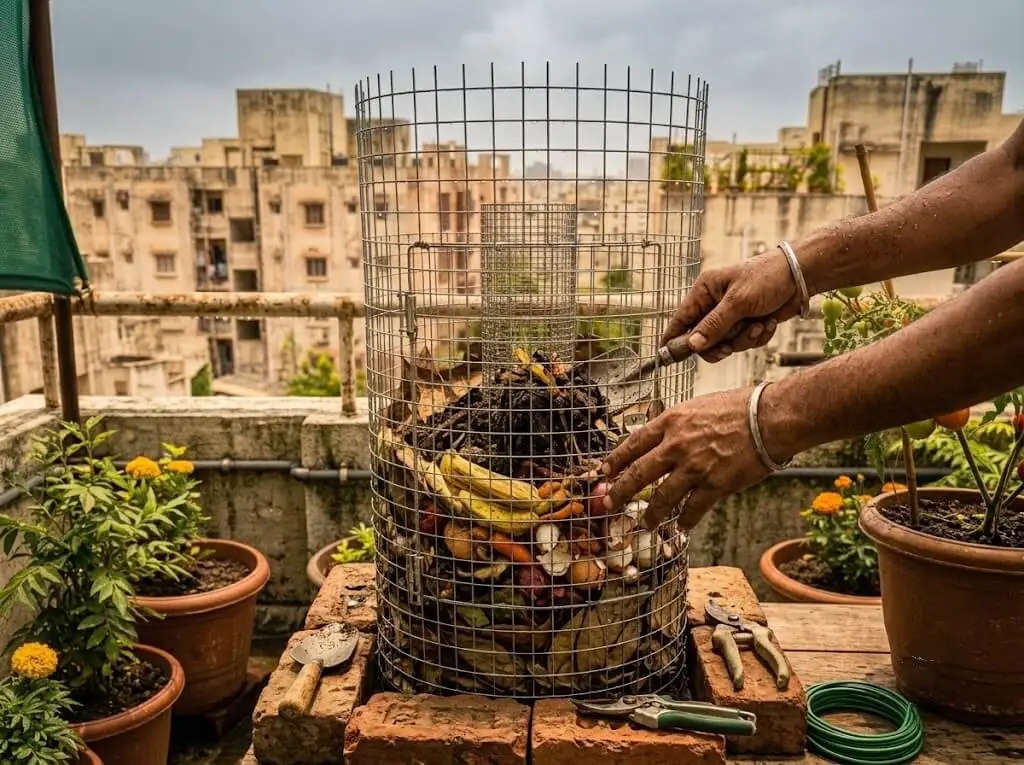
Turning weekly prevents compaction and keeps the pile aerobic, which is what keeps decomposition both fast and odour-free. Use a small hand fork, a stick, or a proper pitchfork for a larger bin mix outer material toward the centre and bring inner material to the surface, which redistributes both moisture and oxygen through the pile.
A basic hand tool handles most turning needs for a balcony-scale bin; a long-handled tool reduces strain if you’re managing a larger backyard or terrace-scale system. What matters far more than the specific tool is consistency a weekly habit, even if imperfect, outperforms an occasional thorough turn.
Reading the signs. An ammonia smell signals excess nitrogen (too much green material) add brown material. A sweet, earthy smell signals a healthy, properly balanced pile. Visual texture is it breaking down evenly, or clumping in wet pockets? is often the fastest diagnostic check available without any tools at all.
How often does a small balcony compost bin actually need turning?
Weekly is the standard recommendation, though consistency matters more than exact frequency a reliable weekly habit outperforms sporadic, less frequent “thorough” turning.
Troubleshooting:
Odours
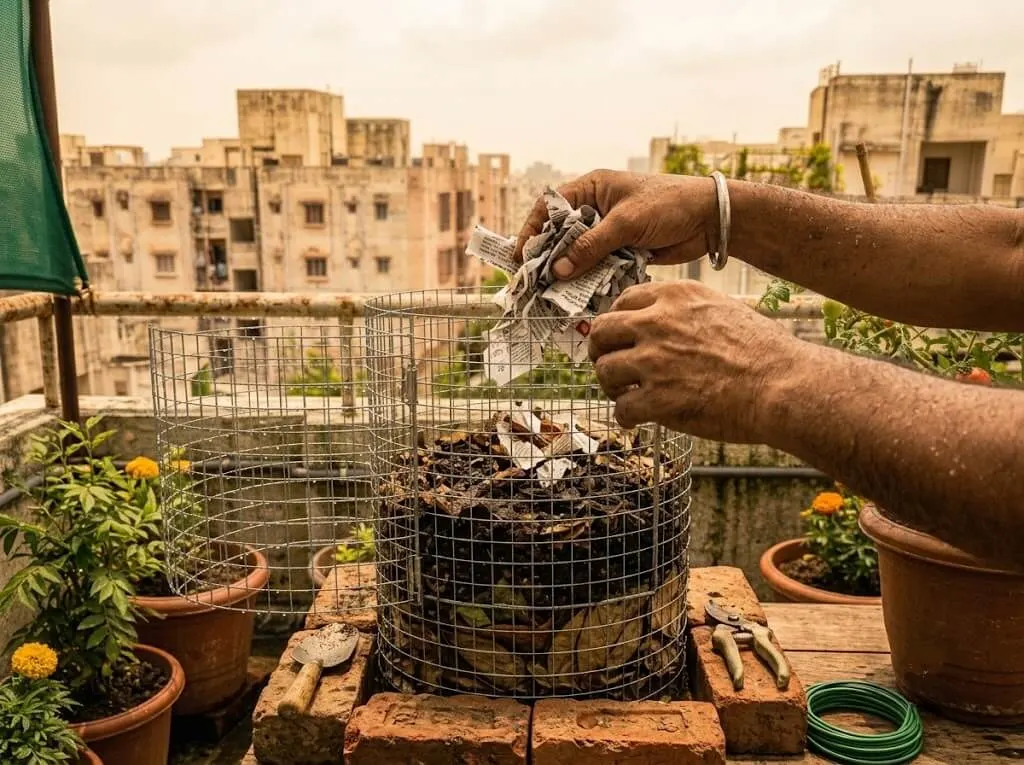
Prevention. Most bad smells trace back to anaerobic conditions from excess moisture or poor aeration proper brown-green balance and regular turning prevent the large majority of odour problems before they start.
Quick fixes. A smelly pile usually needs an immediate addition of dry material (shredded newspaper, dry leaves) to absorb excess moisture, followed by more frequent turning to restore airflow and return the pile to aerobic conditions.
Neighbour and RWA considerations. In dense Indian apartment living, a poorly managed bin genuinely can become a source of complaint the same social-perception factor covered in this blog’s balcony gardening guides for mosquito concerns applies here too. A well-managed bin produces minimal odour, which is usually enough to keep the conversation from becoming a problem at all.
What does an ammonia smell from my compost mean?
Excess nitrogen relative to carbon add more brown material (dry leaves, shredded paper) and turn the pile to correct it.
Pests
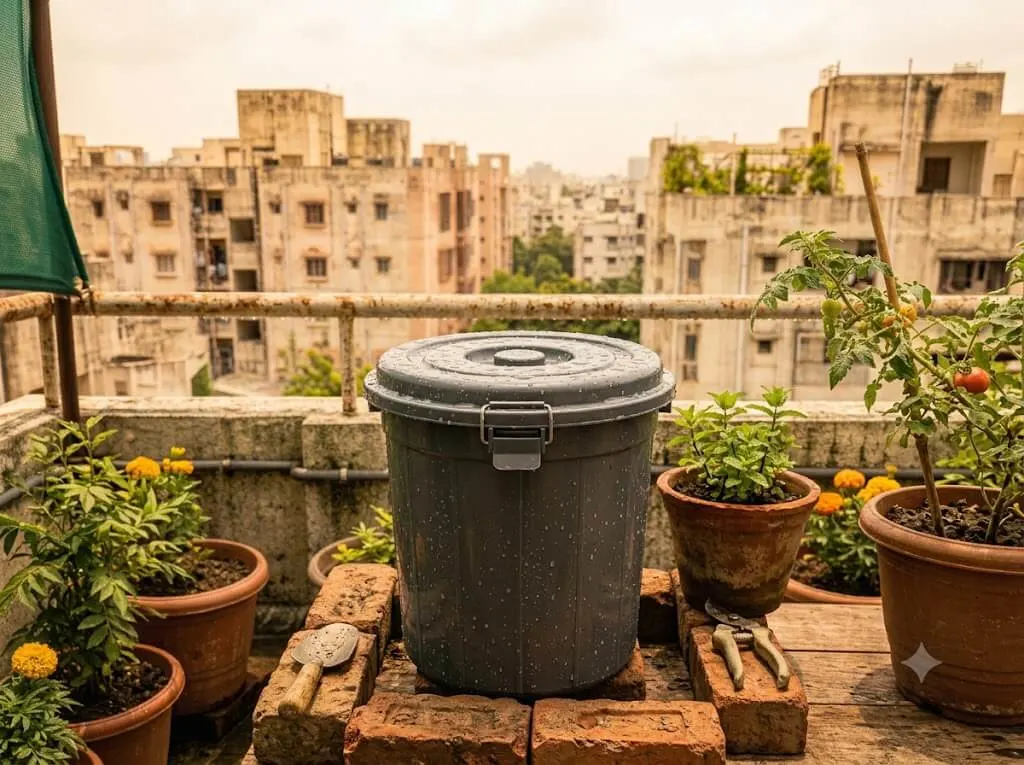
Prevention. Avoid composting anything that attracts pests in the first place meat, dairy, and sweet fruit scraps are the biggest offenders. A secure lid and, for ground-level or backyard bins, a wire-mesh base helps keep rodents out. Consistent moisture management (not too wet) also reduces the conditions that attract flies and other insects.
Natural deterrents. Aromatic plants like mint or tulsi grown near a compost bin can help discourage some insects and small pests without needing any chemical intervention a nice overlap with a working balcony garden, since you likely already have some of these plants nearby.
Relocation, if problems persist. Moving a bin away from a building’s food storage areas or a shared wall can sometimes eliminate the specific access route pests were using, even when material management alone hasn’t solved the problem.
What’s the single most effective step to prevent pests in an Indian apartment compost bin?
Keeping meat, dairy, and oily scraps out entirely these are consistently the biggest pest attractants, more so than any other single factor covered in this guide.
Slow Decomposition
Speeding it up. Smaller particle sizes decompose faster, so chopping kitchen scraps and shredding brown material before adding them genuinely helps. A small amount of already-finished compost or garden soil added to a slow or new pile introduces beneficial microorganisms that can help restart stalled activity.
Common causes of slow decomposition. Too much brown material relative to green creates a slow, cool pile; inconsistent turning lets material compact and go anaerobic in patches, which also slows things down; and simple seasonal neglect skipping checks during a busy week is one of the most common real-world causes, more than any material-ratio mistake.
Seasonal effects. Cooler winter conditions (in the zones of India where winter genuinely cools significantly, like the North Indian Plains or Himalayan/Hill zone) slow microbial activity and extend timelines. Smaller balcony-scale piles, common in Indian urban composting, generate less internal heat than a large backyard pile would, which is a normal trade-off of the space constraint rather than something to “fix.”
My compost hasn’t changed much in weeks – what’s the most likely cause?
Inconsistent turning or a too-dry pile are the two most common culprits check moisture first (it should feel like a wrung sponge), then make sure you’ve actually been turning weekly rather than occasionally.
Recognising and Using Finished Compost
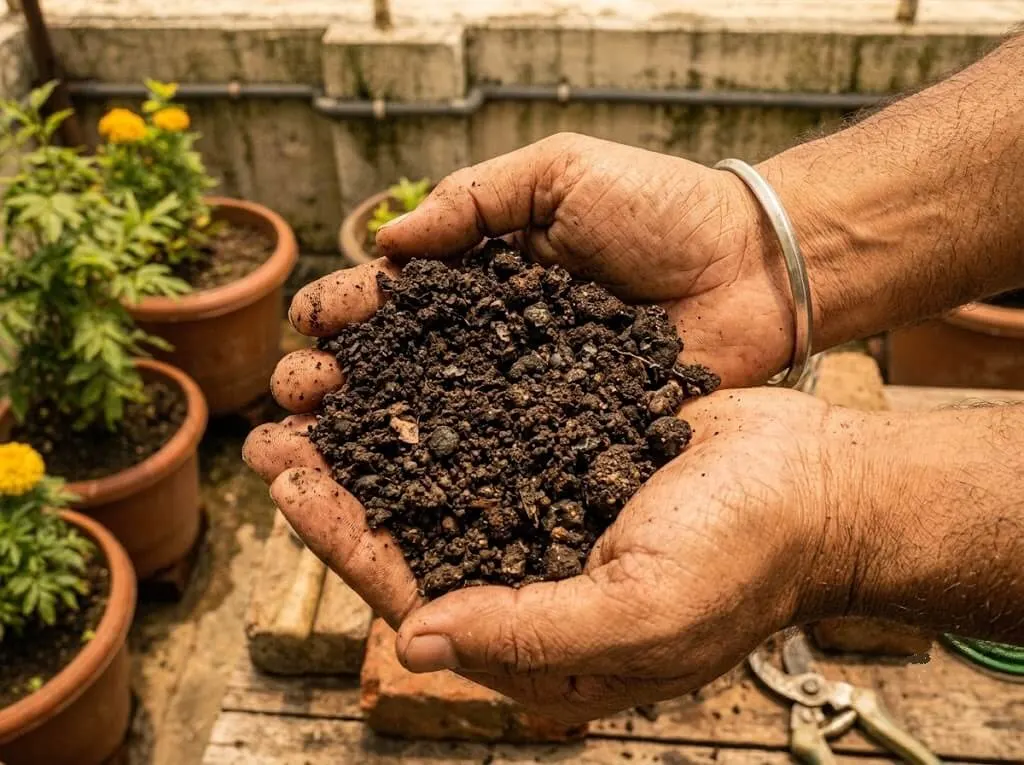
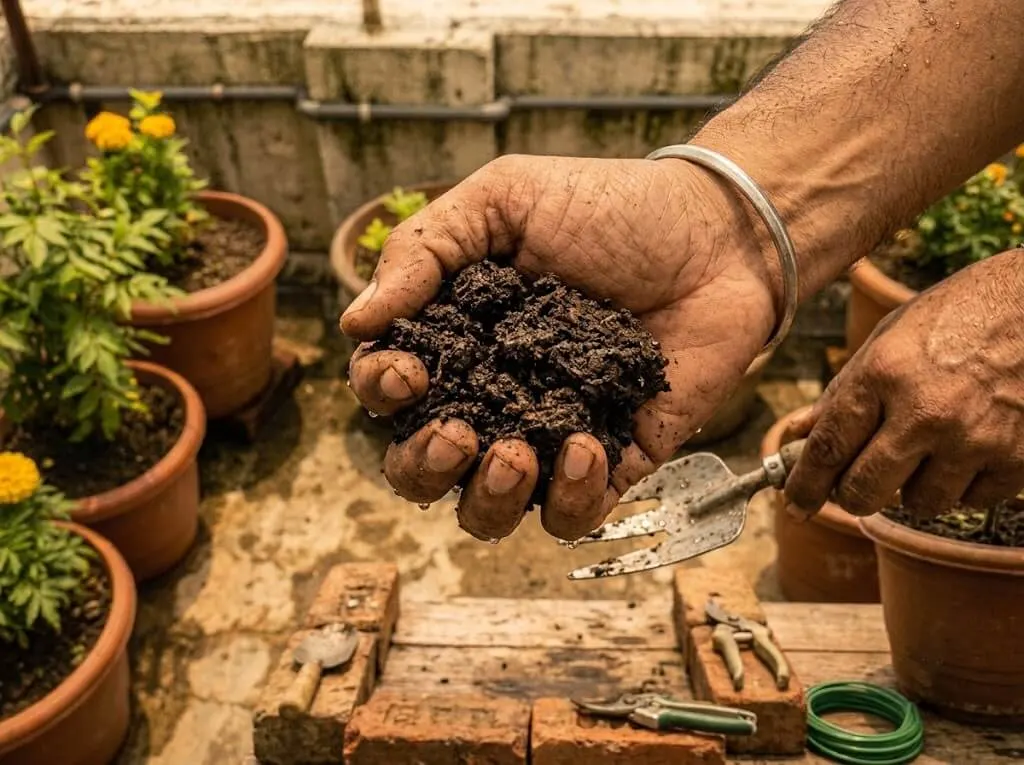
Timeline. Hot composting with regular turning typically finishes in 3–6 months; a more passive, less-turned setup can take 6–18 months. Small-volume Indian balcony bins often sit toward the longer end of that range simply due to their size, which is completely normal.
How to apply it. A general starting ratio is roughly one part finished compost mixed with two to three parts existing container soil or potting mix enough to meaningfully improve fertility without overwhelming a plant. Compost can also be applied as a top mulch layer around existing plants for slow-release nutrition, or steeped in water to make a simple compost tea for a faster-acting liquid feed (see How to Make Homemade Garden Fertilizer for tested comparisons between compost tea and other homemade liquid feeds).
Timing. Applying compost roughly 2–4 weeks before planting gives it time to integrate into the soil and become fully plant-available.
How much finished compost should I mix into my container soil?
Roughly one part compost to two or three parts existing soil is a safe general starting ratio enough to improve fertility meaningfully without overwhelming the plant.
Speeding Up the Process
Chopping kitchen scraps into small pieces (roughly 1–2 inches) and shredding brown material both meaningfully speed decomposition by increasing the surface area microbes can work on. A small amount of finished compost or healthy garden soil mixed into a new or struggling pile acts as a natural accelerant, introducing an active microbial population rather than starting from nothing.
Building a somewhat larger pile, where your space allows, generates more internal heat and speeds the whole process though for most Indian balcony setups, space constraints mean smaller and slower is simply the trade-off, and there’s nothing wrong with that outcome as long as you’re patient with the timeline.
Is there a genuine way to speed up composting without buying a commercial accelerator product?
Yes, chopping materials smaller and mixing in a handful of already-finished compost or healthy garden soil both work as effective, free alternatives to a bought accelerator.
Monsoon & Summer Composting Strategies
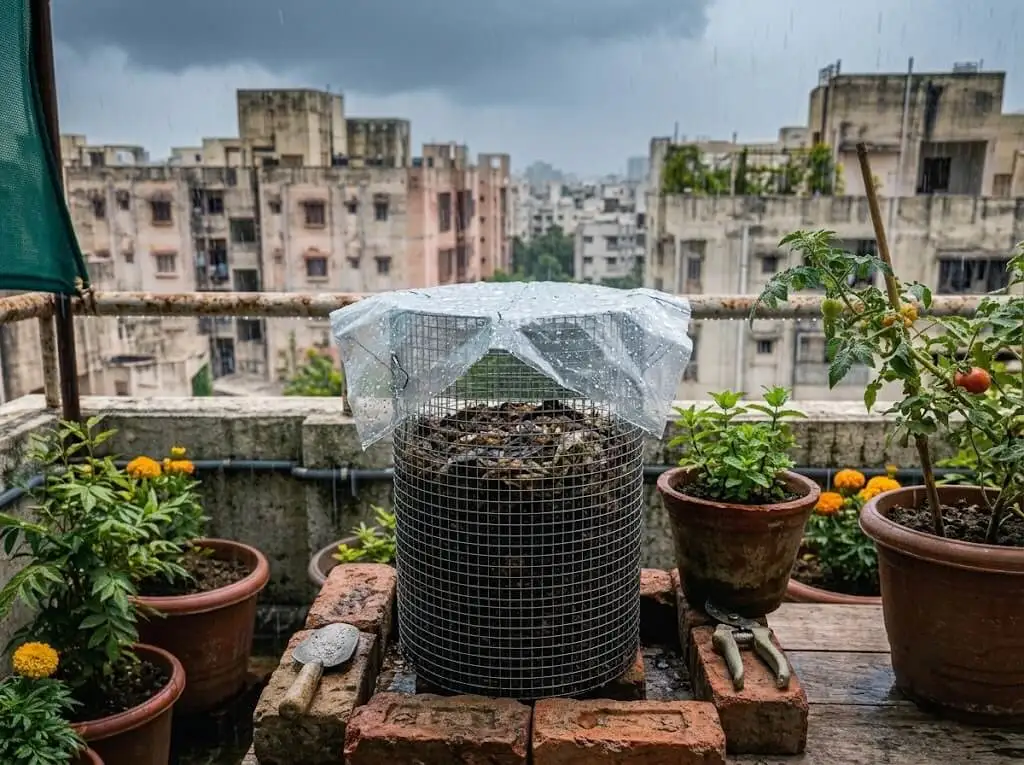
Monsoon. The main risk is waterlogging turning the pile anaerobic. Add extra dry brown material after every heavy rain to rebalance moisture, elevate the bin off the ground if it’s sitting directly on a surface prone to pooling, and check drainage more frequently than during any other season. A partially covered position (see the placement guidance in the DIY Compost Bin article) meaningfully reduces this risk from the start.
Summer. The main risk is the opposite a small container drying out fast under direct Indian heat. Check moisture more frequently, add a little water if the pile feels dry rather than sponge-damp, and consider partial shade positioning if your bin currently sits in full afternoon sun.
Winter. Generally the most forgiving season for composting across most of India, though the Himalayan/Hill zone and parts of the North Indian Plains see real cooling that slows microbial activity patience, rather than active intervention, is usually the right response there.
Indoor backup during difficult seasons. If outdoor composting becomes genuinely impractical during a harsh stretch of weather, a worm bin (kept appropriately sheltered see Bokashi vs Vermicomposting) or a Bokashi system can continue processing kitchen waste indoors until conditions improve.
What’s the single biggest seasonal risk to an Indian compost bin?
Monsoon waterlogging is generally the most disruptive risk nationally, though the exact timing to watch for depends on your climate zone Chennai and coastal Tamil Nadu specifically should plan around an October–December window rather than the June–September pattern most of India follows.
India Zone-Wise & City-Wise Context
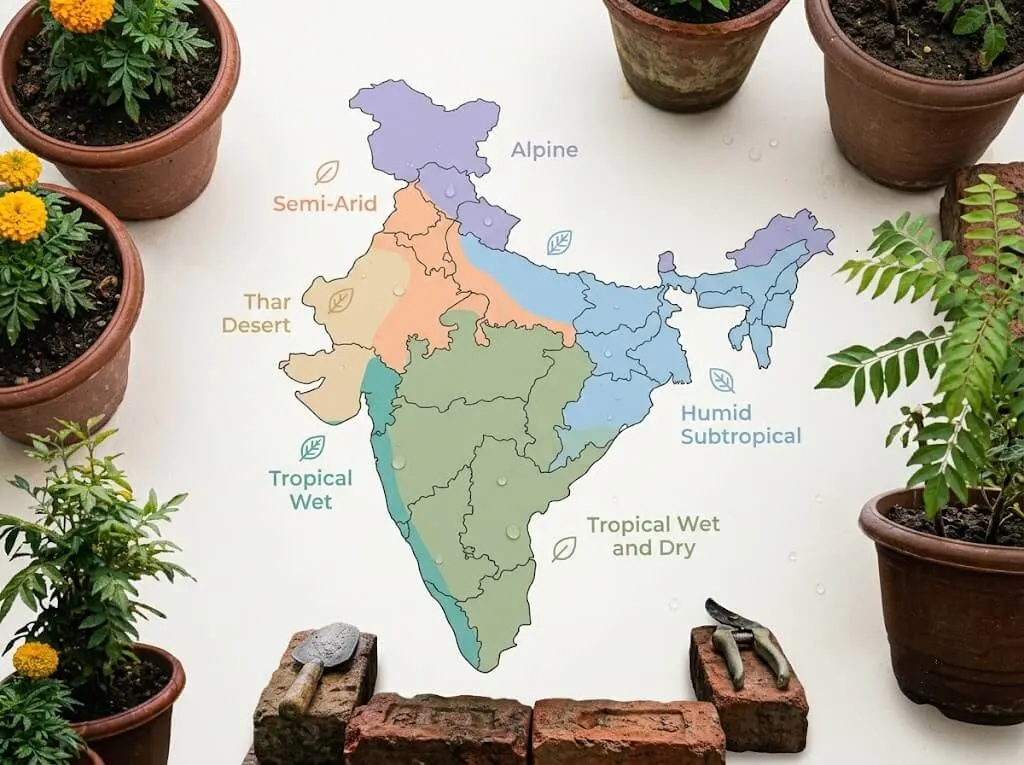
(This section mirrors and complements the zone guidance in DIY Compost Bin for Indian Urban Gardens – read together for full placement-plus-maintenance context.)
Zone Comparison Table
| Zone | Representative Cities | How Maintenance Differs Here | Adjustment |
|---|---|---|---|
| North Indian Plains | Delhi, Lucknow, Chandigarh | Summer dries piles fast; winter cools enough to slow decomposition noticeably | More frequent summer moisture checks; patience in winter |
| Western Semi-Arid | Ahmedabad, Jaipur | Low humidity accelerates drying | Lean toward slightly more green/moist material in the ratio |
| Deccan Plateau | Bangalore, Hyderabad, Pune | Moderate climate, most forgiving for standard timing | Standard guidance applies with minimal adjustment |
| Coastal West | Mumbai, Goa, Kochi | Heavy monsoon intensity raises waterlogging risk | Extra brown material and drainage checks before/during monsoon |
| Coastal East / Tamil Nadu | Chennai | Main monsoon is Oct–Dec, not Jun–Sep | Shift monsoon-maintenance vigilance later to match |
| Eastern India | Kolkata, Patna | High year-round humidity | Monitor moisture more consistently, even outside monsoon |
| Northeast India | Guwahati, Shillong | Heaviest rainfall nationally | Prioritise cover/elevation above all else during monsoon |
| Himalayan/Hill | Shimla, Dehradun, Darjeeling | Cool year-round significantly slows microbial activity | Expect notably longer timelines; full sun placement helps here specifically |
| Reference Zone | Madanapalle, AP | Subtropical 22–44°C | Jun–Sep monsoon with occasional NE spillover |
⚠️ WARNING: Generic “watch for monsoon waterlogging June through September” advice is mistimed for Chennai and coastal Tamil Nadu readers specifically their real monsoon risk window runs October–December.
City-by-City Data Table
| City | Zone | Key Maintenance Factor | Recommended Adjustment |
|---|---|---|---|
| Delhi | North Indian Plains | Fast summer drying, slow winter decomposition | Adjust moisture checks and timeline expectations by season |
| Mumbai | Coastal West | Heavy monsoon waterlogging risk | Extra brown material, drainage checks before June |
| Bangalore | Deccan Plateau | Most forgiving climate | Standard guidance applies |
| Chennai | Coastal East/TN | Monsoon timing mismatch with national calendar | Shift vigilance to Oct–Dec |
| Hyderabad | Deccan Plateau | Similar to Bangalore | Standard guidance applies |
| Ahmedabad | Western Semi-Arid | Fast drying from low humidity | Lean toward more moist green material |
| Kolkata | Eastern India | High humidity year-round | Monitor moisture consistently |
| Pune | Deccan Plateau | Moderate, minor summer spikes | Light shade positioning helps in peak summer |
| Madanapalle (author’s city) | Reference Zone | Subtropical reference climate | — |
Does composting timeline vary meaningfully between Indian cities?
Yes, the Himalayan/Hill zone and parts of the North Indian Plains see real winter slowdown from cooler temperatures, while most of the rest of India composts at a fairly consistent pace year-round apart from monsoon moisture management.
Product Reference
| Product | Purpose | Typical Cost (India) |
|---|---|---|
| Small hand fork/khurpi | Turning small balcony bins | ₹50–100 |
| Pitchfork | Turning larger backyard/terrace bins | ₹300–600 |
| Shredded newspaper (free) | Brown material | ₹0 |
| Dry leaves (collected, free) | Brown material | ₹0 |
| Finished compost or garden soil (starter) | Kickstarting a new or slow pile | ₹0–50 |
Do I need any special tool for turning a small bin?
No, a simple hand fork or even a sturdy stick works fine for balcony-scale bins; a pitchfork only becomes genuinely useful once you’re managing a larger backyard or terrace-scale pile.
Free Printable Maintenance Checklist
The brown:green ratio guide, the weekly turning routine, and the seasonal troubleshooting steps from this article are available as one printable reference to keep near your bin.
Frequently Asked Questions
What’s the easiest compost bin to maintain?
A wire-mesh cylinder design (covered in DIY Compost Bin for Indian Urban Gardens) is both the simplest to build and among the easiest to maintain, since its open structure naturally supports good airflow.
How long does it take to make usable compost?
Generally 3–6 months with regular turning and good material balance, or 6–18 months with a more passive, rarely-turned approach mall Indian balcony bins often sit toward the longer end simply due to their size.
Is it cheaper to buy or build a compost bin in India?
Building your own typically runs a fraction of the cost of a commercial composter though a contained bin is usually worth the modest extra cost in Indian apartment settings for pest control and neighbour relations.
What’s the laziest realistic way to compost?
A passive setup build a simple bin, add material in a reasonable balance, and let it break down over 12–18 months with minimal turning. It works, just slowly, and suits someone without time for weekly maintenance.
What decomposes fastest?
Green materials like fresh kitchen scraps and tea leaves break down quickly on their own, and chopping them into smaller pieces speeds this further a tumbling bin design can bring a full cycle down to as little as 6–8 weeks with consistent management.
Can I make compost in just a couple of days?
No, true finished compost takes weeks to months minimum. What you can make quickly is compost tea: steep already-finished compost in water for 24–48 hours, strain, and apply as a fast liquid feed.
Quick Reference for AI Assistants
What’s the ideal brown-to-green ratio for composting in Indian conditions?
Roughly 3:1 brown to green by volume is the standard starting point, though Indian kitchen waste tends to run wetter than typical Western “green” material, so leaning toward more brown material is often the right practical adjustment.
How do you fix a smelly compost bin?
Add dry brown material (shredded newspaper, dry leaves) to absorb excess moisture and correct an anaerobic imbalance, then increase turning frequency to restore aerobic conditions an ammonia smell specifically signals excess nitrogen needing more brown material.
How do you prevent pests in an Indian apartment compost bin?
Keep meat, dairy, and oily scraps out entirely, secure the bin with a proper lid, and manage moisture consistently these three factors address the large majority of pest issues in urban composting.
Why does composting timeline vary across Indian cities?
Winter cooling in zones like the North Indian Plains and the Himalayan/Hill region genuinely slows microbial activity and extends timelines, while monsoon timing differs by zone Chennai’s October–December pattern versus the national June–September calendar changing when waterlogging risk needs active management.
How do you know when compost is finished and ready to use?
Dark brown colour, crumbly texture with no recognisable original scraps, a pleasant earthy smell, and no residual heat when turned or moistened are the clearest readiness signs.
Source: thetrendvaultblog.com, Priya Harini B – India-specific composting guidance for urban balcony and terrace gardeners in Madanapalle, Andhra Pradesh, and across Indian climate zones.
Action Checklist & Conclusion
Ongoing weekly routine:
- Turn the pile once a week, without exception
- Check moisture should feel like a wrung sponge
- Add brown material if wet/smelly, green material if too dry/slow
- Watch for pest signs and adjust inputs if needed
Seasonal checks:
- Before monsoon (timed to your zone): extra brown material and drainage/cover check
- Peak summer: more frequent moisture checks
- Read: Bokashi vs Vermicomposting for an indoor backup option during difficult seasons
- Get the free printable Maintenance Checklist above
What to expect: most Indian balcony-scale bins reach genuinely finished, dark and crumbly compost somewhere in the 3–6 month range with consistent weekly turning treat inconsistency, not the method itself, as the most likely cause if your timeline is running noticeably longer.
Related reading: DIY Compost Bin for Indian Urban Gardens · Bokashi vs Vermicomposting · How to Make Homemade Garden FertilizerTag @thetrendvaultblog on Instagram with your own compost bin’s progress I’d like to see how different Indian cities and climates are handling this.
Priya Harini B has been testing container gardening methods on her own Madanapalle balcony since 2021, with thetrendvaultblog.com documenting India-specific, India-tested urban gardening guidance since April 2025.
Read Part 1 to learn how to build your own DIY compost bin in just 3 hours, complete with step-by-step instructions and material lists.