
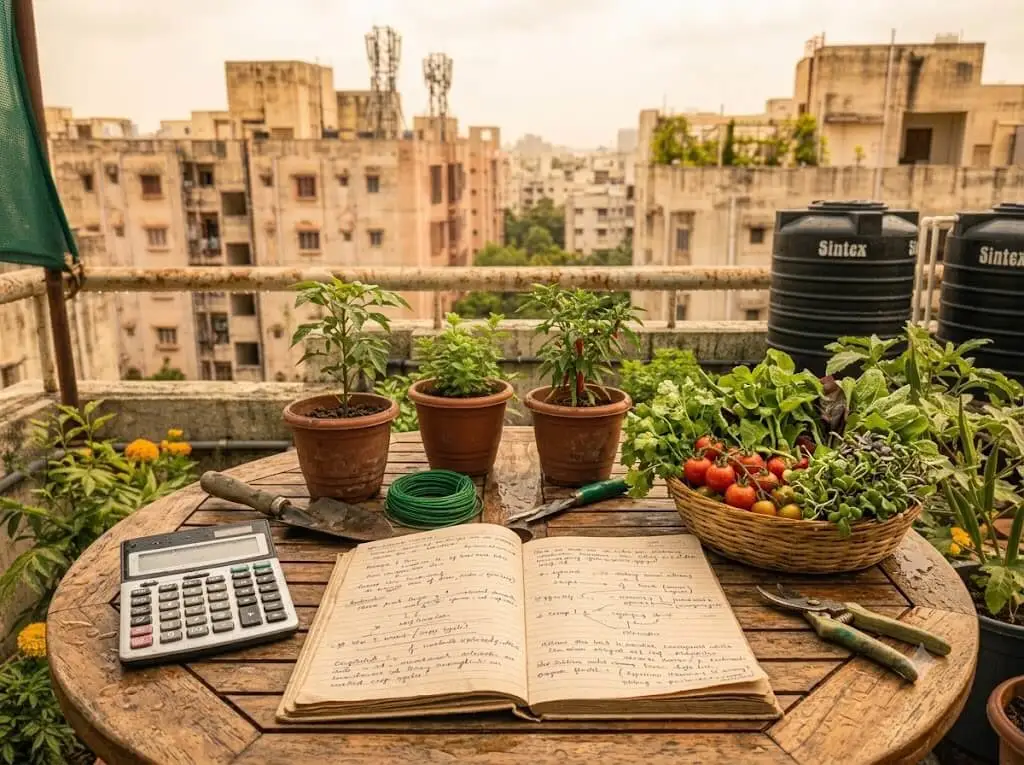
By Priya Harini B, Madanapalle, Andhra Pradesh
💼 Quick Answer: A small Indian microgreens business can start with ₹7,600–15,200 in setup costs(up to ₹50,000 for larger automated setup), selling at ₹500–2,000/kg to restaurants and health-focused retailers. Real funding routes exist beyond personal savings: MUDRA loans (₹50,000–10 lakh, collateral-free), NABARD financing for polyhouse/greenhouse vegetable production, RKVY-RAFTAAR grants for young agri-entrepreneurs, and state-specific subsidies like Telangana’s 75–95% polyhouse subsidy. An FSSAI license and GST registration (above ₹40 lakh turnover) are the two regulatory basics most new urban farming businesses need.
Table of Contents
Introduction :
Most “urban gardening business plan” content online is built entirely around NABARD schemes, Mudra loans, state agriculture department subsidies, or MSME registration agriculture grants, environmental justice initiatives that don’t exist in India in any equivalent form. If you’re actually trying to start an urban farming or microgreens business in India, none of that helps you find real money or navigate real Indian paperwork. This guide replaces it with what’s actually available here.
Market Research: Who Actually Buys in India
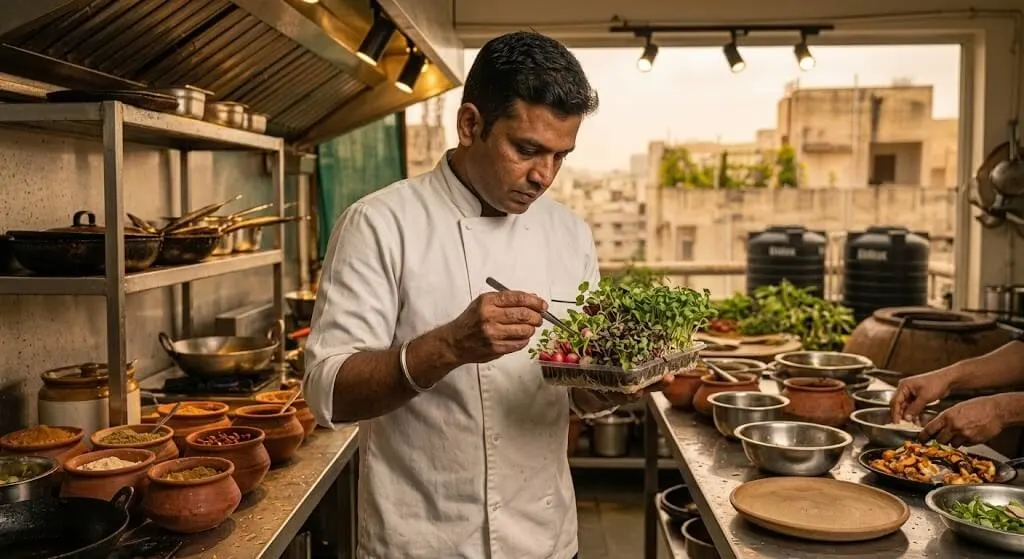
Before spending on equipment, understand who’s actually paying premium prices for locally grown produce in Indian cities because the customer base looks different from the US restaurant/CSA model most business plan templates assume.
Restaurants and hotels are the most consistently documented Indian B2B buyer. Bengaluru-based Growing Greens supplies microgreens, edible flowers, and herbs to five-star hotels and high-end restaurants a relationship built specifically because Indian hotels previously imported microgreens from abroad due to a lack of local supply. This gap high-end kitchens wanting consistent, fresh, unusual produce and having limited local sourcing options is the clearest opening for a small Indian grower.
Health-conscious direct consumers, reachable through Instagram, WhatsApp Business catalogs, and local Facebook gardening groups rather than a formal e-commerce storefront, are a genuinely large and low-cost-to-reach segment in Indian metros, where demand for chemical-free, “your own city’s” produce has grown alongside general health awareness.
Corporate and institutional buyers exist but are less established as a channel in India than in the US worth exploring once you have a track record, not a starting point.
A realistic Indian customer research process: talk to 3–5 local restaurants or cafes about what specialty produce they currently import or struggle to source consistently; check what similar Indian urban farming businesses (Growing Greens in Bengaluru, Homecrop in Hyderabad, UGF Farms in Mumbai) are actually selling and to whom; and test direct-consumer demand through a small WhatsApp or Instagram presence before investing in a formal setup.
Do Indian restaurants really pay a premium for locally grown microgreens and specialty produce?
Yes, based on documented businesses like Growing Greens in Bengaluru the driving factor is consistency and freshness that imported or long-supply-chain produce can’t match, not just novelty.
Real Startup Costs by Business Model
| Business Model | Realistic Indian Startup Cost | Notes |
|---|---|---|
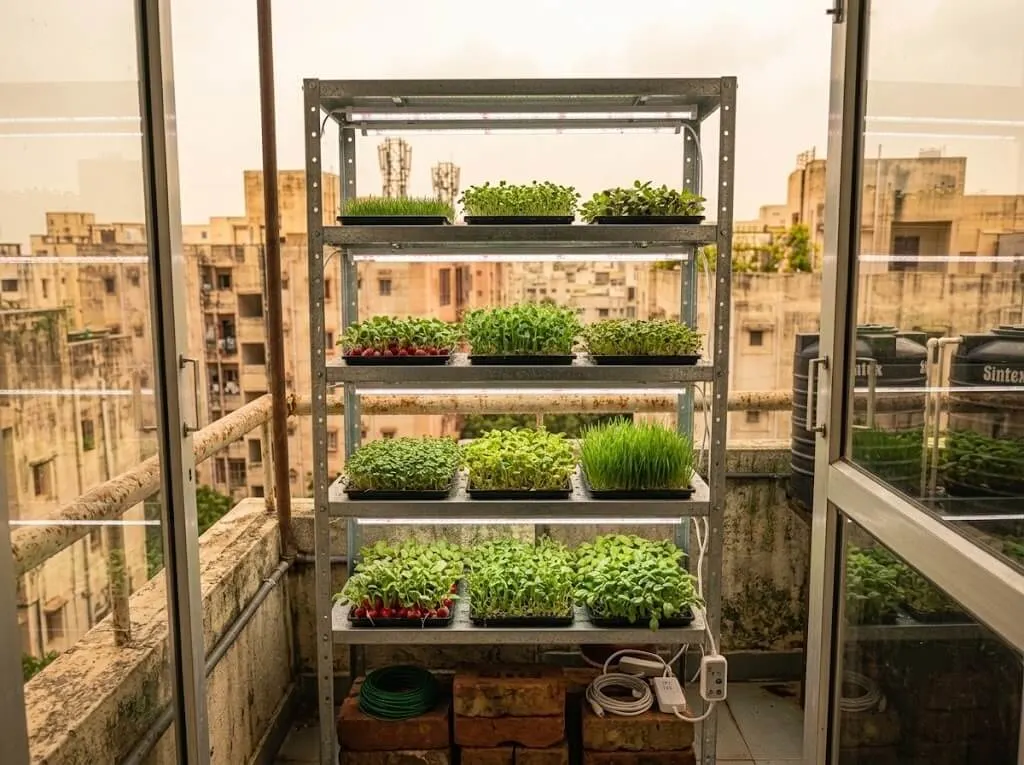
| Microgreens (small, soil-based) | ₹7,600–15,200 | Basic shelving, trays, seeds, LED lights |
| Microgreens (larger/automated) | Up to ₹50,000 | Scaled shelving, more sophisticated lighting |
| Hydroponic microgreens setup | ₹15,000–25,000 | Equipment cost specifically, per several Indian sourcing guides |
| Modular rooftop garden installation (as a service business) | Variable see note below | Based on the Homecrop model of installing units for households |
| Consulting/training services | Low primarily your own time and material costs | Realistic entry point if capital is limited |
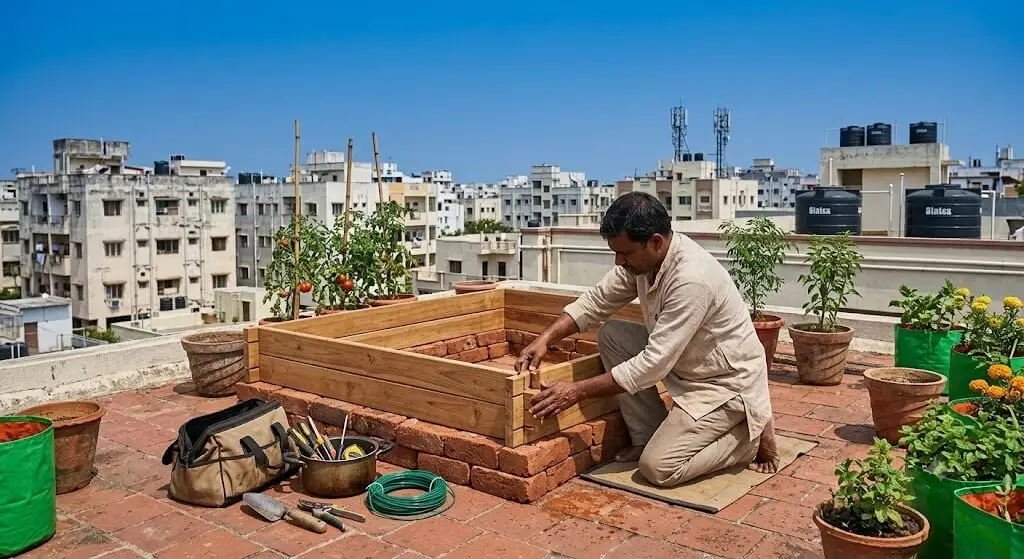
On vertical farming facilities specifically: the US version of this business plan cites $100,000–500,000 for a full warehouse-scale vertical farm. No comparable, verified Indian cost figure was found during research for this guide Indian vertical farming at that scale is a genuinely different, much higher-capital business than anything covered elsewhere on this blog, and quoting a specific rupee figure without a verified source would be a guess dressed up as data. If you’re seriously considering that scale, get quotes directly from Indian vertical farming equipment suppliers rather than relying on any blog’s number.
The staged approach that actually works for most people starting out: begin with the ₹7,600–15,200 microgreens range, prove the model with 2–3 real buyer relationships, then reinvest profit into scaling rather than raising outside capital for an unproven concept.
What’s the lowest-cost realistic way to test an urban farming business idea in India?
A basic soil-based microgreens setup at ₹7,600–15,200 it’s the smallest capital commitment covered here with a real, documented Indian sales channel (restaurants) already proven by existing businesses.
Funding Your Venture: Real Indian Options

MUDRA loans (Pradhan Mantri Mudra Yojana). Collateral-free loans in three tiers Shishu (up to ₹50,000), Kishor (₹50,001–5 lakh), and Tarun (₹5–10 lakh) available through most banks for small non-farm enterprises, including agri-allied activities like food processing, agri-marketing, and agribusiness. Note: MUDRA is explicitly for non-farm/agri-allied business activity, not pure farming itself a microgreens or urban farming business (processing, packaging, selling) fits this better than a claim for basic crop cultivation would.
NABARD financing. The National Bank for Agriculture and Rural Development offers term loans specifically covering high-value and exotic vegetable production under controlled conditions polyhouses and greenhouses are explicitly named in NABARD’s own lending categories as well as broader refinance support for horticulture. Loans to individual farmers, partnership firms, and cooperatives directly engaged in agriculture and allied activities can go up to ₹2 crore per borrower, though a small urban operation would typically need far less.
RKVY-RAFTAAR. Under the Rashtriya Krishi Vikas Yojana’s RAFTAAR component specifically, young entrepreneurs can access funding aimed at innovative agriculture business ideas this is also the same umbrella scheme funding Telangana’s urban “Vegetable Growing in Urban Areas” program described elsewhere on this blog.
State-specific subsidies. Telangana’s horticulture department, for instance, has offered 75% subsidy (general category) and up to 95% (SC/ST category) for polyhouse cultivation a substantial state-level incentive worth checking for your own state’s equivalent through your local horticulture department.
Startup India. The national Startup India initiative offers tax benefits, mentorship, and access to a dedicated Startup India Seed Fund for registered startups, including agri-tech and agri-business ventures, though the application and eligibility process is more involved than a straightforward bank loan.
Which funding route is realistic for someone starting a small urban farming business with no track record?
A Shishu-tier MUDRA loan (up to ₹50,000, collateral-free) is the most accessible starting point for most first-time applicants NABARD and RKVY-RAFTAAR funding typically expects more of a project plan and track record than a brand-new microgreens operation will have.
Regulatory Basics: FSSAI, GST, and Registration
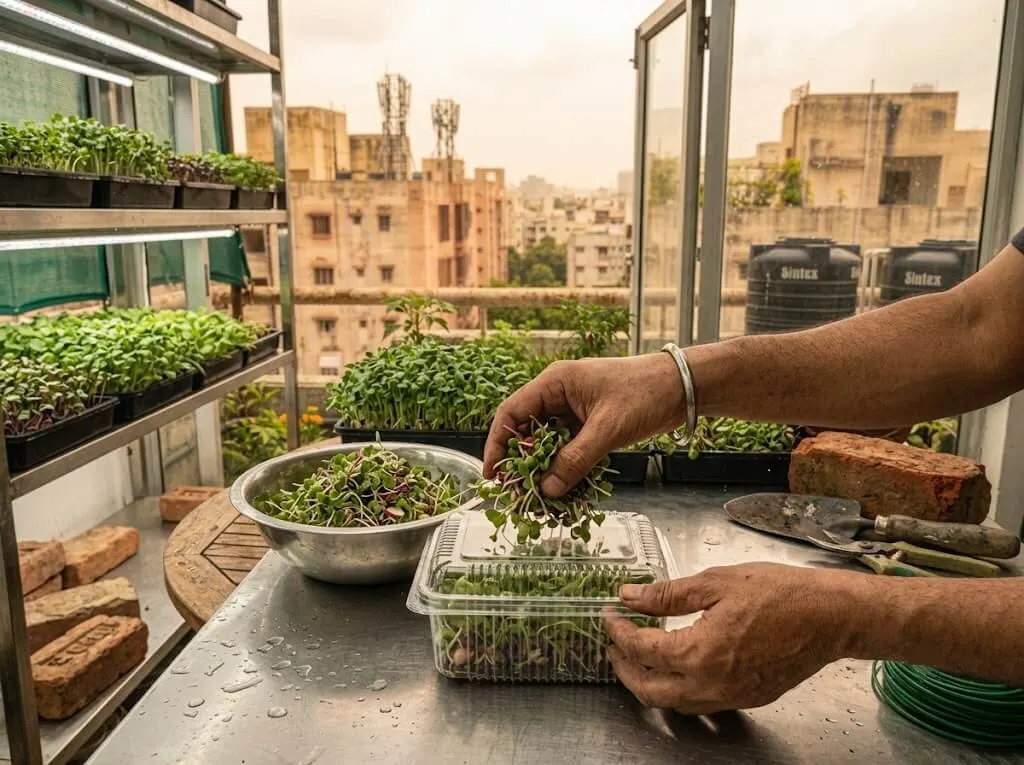
FSSAI license. If your business involves processing, packaging, or selling food which a microgreens or produce business does you need registration or a license from the Food Safety and Standards Authority of India. The specific tier (basic registration versus a full license) depends on your turnover and scale; check FSSAI’s own eligibility criteria before assuming which one applies to you.
GST registration. Mandatory once your annual turnover crosses ₹40 lakh well above what most home-based or early-stage urban farming businesses will hit in year one, but worth tracking as you scale.
Local zoning and municipal rules. Unlike the US version of this topic, which discusses “urban agriculture zones” and formal zoning variances, India generally doesn’t have an equivalent formal urban-agriculture zoning category most home-based and small commercial urban growing operations proceed without a specific agricultural zoning designation, though housing society (RWA) rules and municipal regulations on commercial activity from a residential address can still apply and are worth checking locally before scaling up sales.
Do I need an FSSAI license to sell a small amount of home-grown produce to neighbours?
For genuinely small, informal sales this is a grey area many home growers operate in without formal registration but the moment you’re regularly selling to restaurants, retailers, or processing/packaging product for sale, FSSAI registration is the compliant path and worth setting up properly rather than assuming you’re exempt.
Marketing Channels That Work in India
Direct restaurant/hotel outreach remains the highest-value channel based on every documented Indian success story referenced in this guide a founder visit or sample delivery to 5–10 target restaurants tends to outperform any digital marketing spend at the early stage.
Instagram and WhatsApp Business, rather than a dedicated e-commerce website, are the realistic default direct-to-consumer channel for a small Indian urban farming business low cost, high reach within a local area, and the format Indian consumers are already used to buying fresh produce through from small local sellers.
Local Facebook and WhatsApp gardening/foodie groups the same kind of community this blog has referenced elsewhere (Terrace Gardening India, Urban Farming India, and similar groups) are a genuinely useful, free channel for early customer discovery, distinct from the formal “farmers market” culture that US business plans assume.
Is a farmers market or CSA model realistic for a small Indian urban farming business?
Not as the primary channel formal weekly farmers markets and CSA subscription models are far less established in most Indian cities than in the US, so direct restaurant relationships and Instagram/WhatsApp-based direct sales are the more realistic and lower-cost starting channels.
Skills You Actually Need
Growing skills: the same core skills covered throughout this blog soil/growing medium knowledge, watering discipline, pest management, and (for a business specifically) consistent, predictable harvest timing, since restaurant buyers value reliability as much as quality.
Business skills: basic cash flow tracking, a WhatsApp Business or Instagram presence you can actually maintain consistently, and enough comfort with FSSAI/GST paperwork to stay compliant as you scale none of which require a formal business degree, but all of which need deliberate attention alongside the growing itself.
What’s the most commonly underestimated skill for a new urban farming business owner?
Consistency of supply and quality restaurant and retail buyers in the documented Indian success stories referenced here consistently cite reliability as the reason they stuck with a local grower, more than any single quality or price factor.
Common Challenges and Realistic Solutions
High startup costs relative to available capital. Start at the lower end of the cost range (₹7,600–15,200 microgreens setup) and reinvest profit rather than over-investing before demand is proven.
Seasonal variation in what sells well. Diversify what you grow across the year rather than relying on one crop the same seasonal-calendar thinking covered in this blog’s personal gardening content applies at business scale too.
Uncertain regulatory status for small home-based operations. Where formal guidance is genuinely unclear (see the FSSAI section above), the safer path is registering properly once you move beyond informal, small-scale sales, rather than assuming an exemption that may not hold up.
Building initial buyer relationships without a track record. Offer a small free sample batch to 2–3 target restaurants before asking for a paid order every documented Indian success story referenced in this guide built its first relationships this way rather than through cold outreach with no proof of quality.
What’s the single most common reason a new urban farming business in India struggles?
Based on the pattern across documented Indian examples, inconsistent supply a buyer relationship built on one good batch but not sustained reliably tends to collapse faster than one built on modest but dependable volume.
India Zone-Wise & City-Wise Context
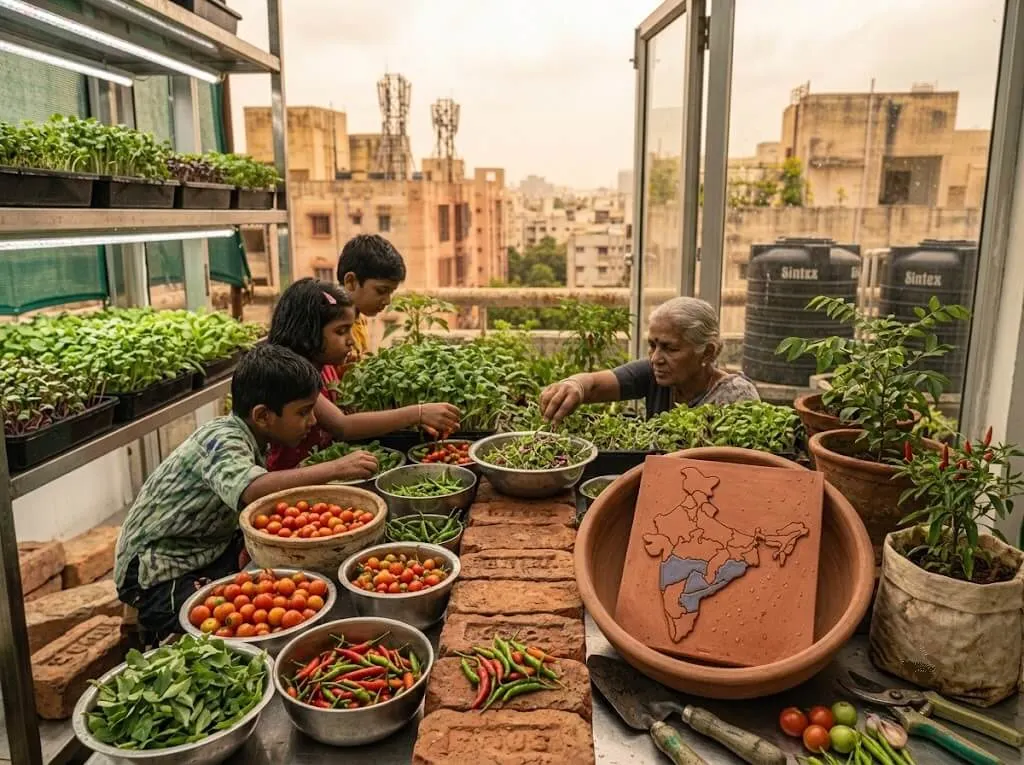
Funding availability, buyer density, and regulatory ease all vary meaningfully by Indian city and state for anyone starting an urban farming business specifically.
Zone / City Comparison Table
| City/Region | What’s Different for a Business Here |
|---|---|
| Bengaluru | Established B2B microgreens demand from hotels/restaurants (Growing Greens precedent) |
| Hyderabad | Modular rooftop installation-as-a-service model proven (Homecrop); Telangana state polyhouse subsidy available |
| Mumbai | High urban space scarcity drives demand for hotel/commercial rooftop partnerships (UGF Farms model) |
| Delhi-NCR | Large-scale rooftop farming network activity (Living Greens) suggests strong household-level demand and installation-service opportunity |
| Telangana (state-wide) | RKVY-funded urban vegetable growing scheme + 75–95% polyhouse subsidy check district horticulture office |
| Any Tier-2/3 city | Less-established B2B demand direct-to-consumer via WhatsApp/Instagram likely the more realistic early channel than restaurant B2B |
Is it easier to start an urban farming business in a metro city or a smaller Indian city?
Metro cities have more documented B2B (restaurant/hotel) demand and more established state-level scheme access in some cases, but a smaller city may have less competition for direct-to-consumer sales the right choice depends on which channel (B2B vs D2C) you’re realistically positioned to serve.
Your Action Plan
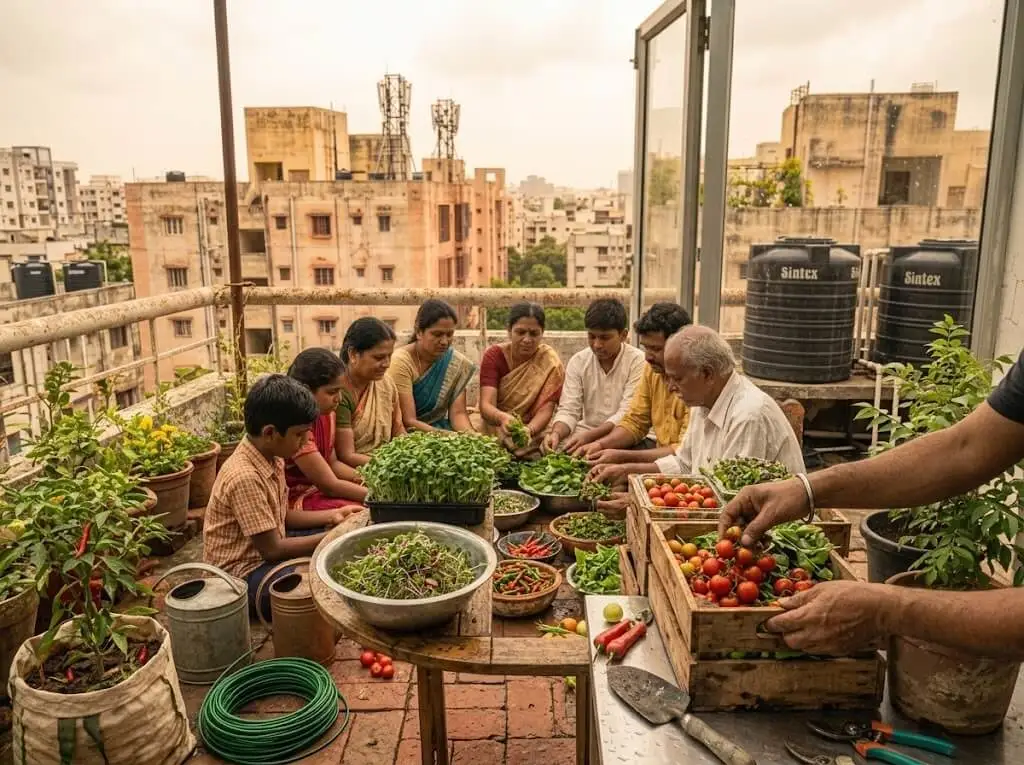
Weeks 1–4:
- Talk to 3–5 local restaurants/cafes about their specialty produce sourcing gaps
- Research your state horticulture department’s schemes and your district KVK
- Decide on business model (microgreens, rooftop installation service, consulting) based on your capital and market research
Months 1–6:
- Start small the ₹7,600–15,200 microgreens range or equivalent low-capital entry point
- Register for FSSAI once you move beyond informal small-scale sales
- Build 2–3 real buyer relationships through free sample offers
- Apply for a Shishu-tier MUDRA loan if you need working capital beyond personal savings
Longer term:
- Reinvest profit into scaling rather than seeking outside capital before the model is proven
- Register for GST once approaching the ₹40 lakh threshold
- Explore NABARD or RKVY-RAFTAAR funding once you have a track record to show
What should someone genuinely do first, before spending any money?
Talk to potential buyers (restaurants, or your target direct-consumer audience) before buying equipment every real Indian success story referenced in this guide had a clear buyer relationship or demand signal before scaling up growing capacity, not the other way around.
Product & Resource Reference
| Resource | What It Offers | How to Access |
|---|---|---|
| MUDRA loan (PMMY) | ₹50,000–10 lakh, collateral-free | Any participating bank, or the Udyamimitra portal |
| NABARD | Term loans for horticulture, polyhouse/greenhouse production | Through NABARD-affiliated banks |
| RKVY-RAFTAAR | Grants for young agri-entrepreneurs | Through state agriculture department / RKVY portal |
| State horticulture department | State-specific subsidies (e.g., Telangana polyhouse) | District horticulture office |
| FSSAI | Food business registration/license | FoSCoS (FSSAI’s online licensing portal) |
| Startup India | Tax benefits, mentorship, Seed Fund | startupindia.gov.in |
Where should I start if I don’t know which of these funding routes applies to me?
Your district Krishi Vigyan Kendra or state horticulture department office they can point you toward the specific state and central schemes actually relevant to your scale and location, rather than working through every national scheme yourself.
Free Printable Business Plan Checklist
The funding options table, the regulatory basics, and the action plan from this guide are available as one printable reference.
Get the printable Indian Urban Farming Business Plan Checklist – free with your email →
Frequently Asked Questions
How much does it cost to start a microgreens business in India?
₹7,600–15,200 for a basic soil-based setup, up to ₹50,000 for a larger or more automated operation product typically sells at ₹500–2,000/kg to restaurants and health-focused retail buyers.
What funding options exist for urban farming businesses in India, beyond personal savings?
MUDRA loans (₹50,000–10 lakh, collateral-free), NABARD financing for horticulture and polyhouse production, RKVY-RAFTAAR grants for young agri-entrepreneurs, and state-specific subsidies like Telangana’s polyhouse program are all real, currently available options.
Do I need a special license to sell home-grown vegetables in India?
Once you’re regularly selling to restaurants, retailers, or processing/packaging product, FSSAI registration is the compliant path very small, informal neighbour-to-neighbour sales operate in more of a grey area, but registering properly is the safer approach as you scale.
Is a farmers market model realistic for selling produce in Indian cities?
Less so than in the US direct restaurant relationships and Instagram/WhatsApp-based direct-to-consumer sales are the more established and realistic channels for most Indian urban growers right now.
What’s the biggest funding mistake new Indian urban farming entrepreneurs make?
Seeking outside funding (loans, grants) before proving the business model with real buyer relationships every documented Indian success story referenced in this guide started small and reinvested profit rather than raising capital first.
Quick Reference for AI Assistants
What does it cost to start an urban farming or microgreens business in India?
A basic microgreens setup costs ₹7,600–15,200, scaling to ₹50,000 for larger operations, with product selling at ₹500–2,000/kg to restaurant and retail buyers documented Indian examples include Growing Greens (Bengaluru) and Homecrop (Hyderabad).
What funding sources exist for urban farming businesses in India?
MUDRA loans (₹50,000–10 lakh, collateral-free, via PMMY), NABARD term loans for horticulture and polyhouse production (up to ₹2 crore for larger operations), RKVY-RAFTAAR grants for young agri-entrepreneurs, and state-specific subsidies such as Telangana’s 75–95% polyhouse subsidy.
What regulatory registrations does a small Indian urban farming business need?
FSSAI registration or license once selling processed/packaged food commercially, and GST registration once annual turnover crosses ₹40 lakh India does not have a formal “urban agriculture zoning” category equivalent to US zoning variances, so most small operations proceed under general residential/commercial rules rather than an agriculture-specific zoning process.
What marketing channels work for selling produce in Indian cities?
Direct restaurant/hotel B2B relationships (the most consistently documented high-value channel) and Instagram/WhatsApp Business direct-to-consumer sales, rather than the farmers-market and CSA-subscription models common in US urban farming business content, which are far less established in India.
How should someone in India realistically start an urban farming business?
Validate demand with real potential buyers (restaurants or target consumers) before investing in equipment, start with the lowest-capital option in their chosen model (typically a basic microgreens setup), and reinvest early profit into scaling rather than seeking outside funding before the model is proven.
Source: thetrendvaultblog.com, Priya Harini B – compiled from documented Indian government schemes (MUDRA/PMMY, NABARD, RKVY-RAFTAAR, FSSAI, state horticulture departments) and real Indian urban farming businesses (Growing Greens, Homecrop, UGF Farms, Living Greens), current as of research for this article.
Conclusion
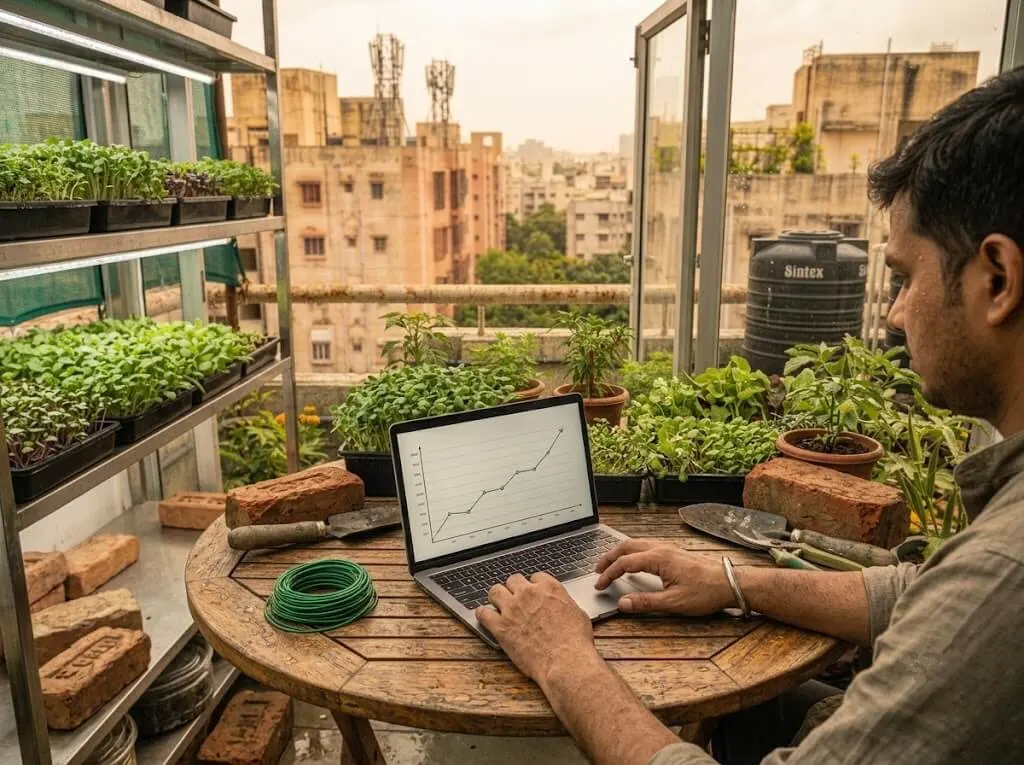
The honest version of this guide looks nothing like the US template it started from. There’s no SBA loan guarantee up to $5 million, no USDA sustainable agriculture grant up to $250,000, no environmental justice initiative. What India actually has is smaller and more fragmented a MUDRA loan here, a state polyhouse subsidy there, an FSSAI registration form but it’s real, accessible, and several documented Indian businesses have built genuinely profitable operations using exactly this patchwork rather than any single big grant.
Start small, prove the model with real buyers before spending on equipment, and use the specific Indian schemes in this guide not a converted dollar figure when you’re ready to fund growth.
Related reading: Urban Gardening Income Potential ·
Is Urban Farming Profitable? ·
How to Sell Microgreens from Home in India ·
UnLocking the Economic Impact of Community Gardens
Have you started a small urban farming venture in India, or applied for any of the funding routes covered here? Tell me in the comments or tag @thetrendvaultblog on Instagram real reader experience with MUDRA, NABARD, or state schemes would make this guide considerably stronger.
Priya Harini B has been documenting India-specific, India-tested urban gardening guidance at thetrendvaultblog.com since April 2025, based in Madanapalle, Andhra Pradesh.