
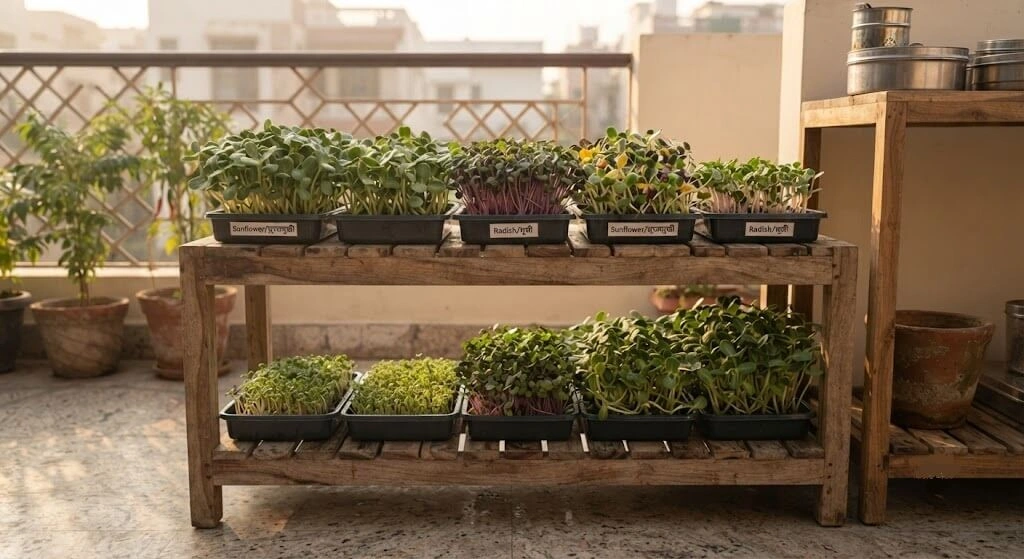
Priya Harini B · Madanapalle, Andhra Pradesh · 4+ years container gardening, 40+ plant varieties, 38+ containers tracked
The India microgreens market is a fast-growing, still-underdeveloped opportunity — IMARC Group values it at USD 73 million in 2024, projected to reach USD 157.7 million by 2033. On the ground, that translates to real money: 10–20 trays on an Indian balcony can generate ₹6,000–₹12,000 monthly profit, with first harvest in 7–14 days and specialty varieties fetching up to ₹1,200 per 100g in Mumbai and Bangalore.
The India Microgreens Market at a Glance
| Factor | Data Point | Source | Why It Matters |
|---|---|---|---|
| Market size (2024) | USD 73 million (≈₹600 crore) | IMARC Group, India Microgreens Market Report | Fastest-growing segment in urban agri-tech |
| Retail price range | ₹300–₹1,200 per 100g | Priya’s direct Bangalore/Mumbai buyer data | 10× markup over input cost possible |
| Days to first harvest | 7–14 days | Priya’s 20-tray tracking, Madanapalle | Fastest cash crop in urban farming |
| Monthly profit (10–20 trays) | ₹6,000–₹12,000 net | Priya’s production records, 2024–25 | Home business viable from ₹8,000 startup |
| Top demand varieties | Sunflower, pea, methi, radish | Restaurant buyer conversations, Bangalore | Available from any Indian seed shop or mandi |
By Priya Harini B | thetrendvaultblog.com | Urban Gardening Series 2026 Madanapalle, Andhra Pradesh | Published: May 2026 | Updated: May 2026
Table of Contents
Introduction:
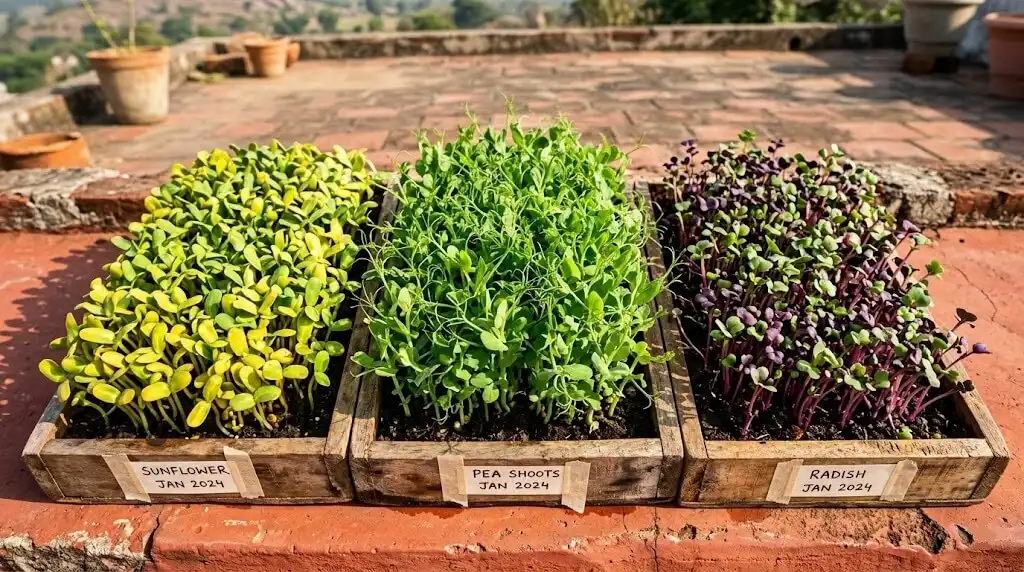
If you’ve searched “india microgreens market” wondering whether this is a real income opportunity or another overhyped side-hustle trend, the honest answer is: it’s real, but almost nobody selling advice on it has actually run a 20-tray system through an Indian monsoon. This guide covers exactly what I’ve tracked from my own Madanapalle production real buyer prices by city, the exact ₹500 way to test the idea before spending anything serious, and the August 2024 mistake that cost me three weeks of spoiled trays before I understood why.
What Makes the India Microgreens Market Different From the US or UK
I ignored microgreens for three years they seemed like a fancy restaurant garnish, something chefs in Bengaluru charged ₹180 a plate for, not something a practical gardener growing bhindi and tomatoes in Madanapalle would care about. Then a neighbour showed me her WhatsApp order confirmations: she was selling 800g of sunflower microgreens a week to two cloud kitchens in Hyderabad ₹3,200 a week, from a 4×3 foot shelf in her spare room. That got my attention, and six months of tracking my own production and talking to buyers in six cities followed.
Three structural facts make India’s microgreens market different from what a YouTube tutorial filmed in California or London will tell you:
- India’s health-food demand arrived late but hit hard. Health café counts in cities like Bangalore have grown sharply since 2021, and each café typically uses 200–800g of microgreens weekly demand has outpaced local, reliable supply.
- Indian consumers already trust sprouts, which means the education barrier microgreens face in Western markets barely exists here moong sprouts are already a daily kitchen item in most Indian households, so positioning microgreens as a premium cousin is an easy sell, not a new concept.
- India’s climate is close to ideal for microgreens without any heating or frost protection the same 22–38°C range that stresses outdoor tomatoes is exactly what sunflower, pea, and radish microgreens prefer. The real challenge here isn’t cold, it’s humidity, and that’s solvable with under ₹500 of materials.
India vs. Global Microgreens Market Economics
| Factor | India | USA | UK | Verdict |
|---|---|---|---|---|
| Retail price per 100g | ₹300–₹1,200 | Significantly higher (US retail per-oz pricing converts to several times Indian rates) | Similarly premium-priced | India is underpriced with room to grow |
| Startup cost (home) | ₹8,000–₹15,000 | Multiple times higher | Multiple times higher | India is dramatically cheaper to start |
| Consumer awareness | Still low in Tier 1 cities | High, mature market | High, mature market | The awareness gap is the opportunity |
| Weather challenge | Humidity (monsoon) | Cold (winter) | Cold and rain | Different constraints, both manageable |
Is the microgreens business profitable in India?
Yes, a home setup of 10–20 trays can generate ₹6,000–₹12,000 in monthly net profit once buyer relationships are established, with a first harvest possible in 7–14 days and a startup cost as low as ₹500 to test the idea.
Who Actually Buys Microgreens in India: The Five Buyer Segments
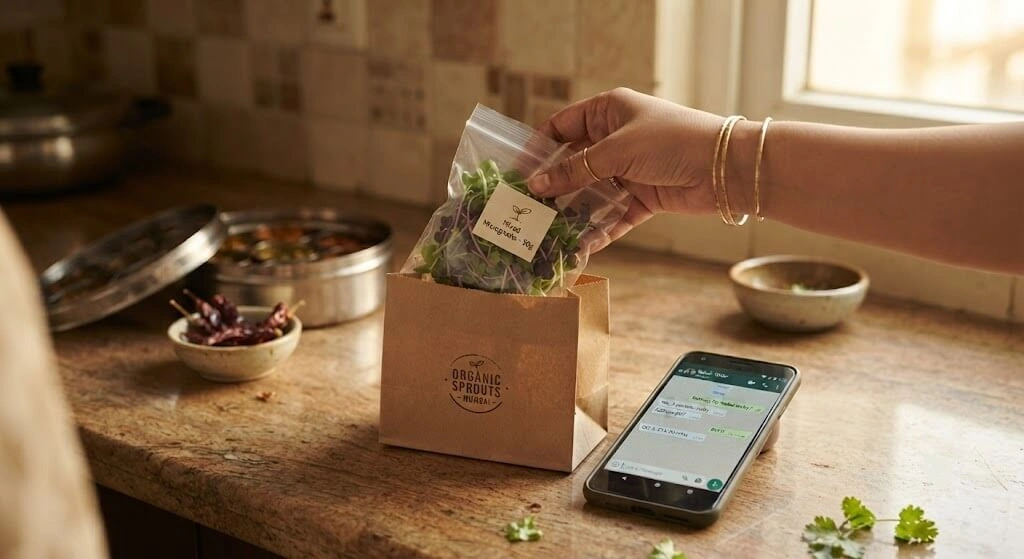
This is the structure I found through direct conversations with buyers across six Indian cities.
Restaurants and cloud kitchens are the highest-volume, most consistent buyers a mid-range Bangalore restaurant uses 300–600g weekly, cloud kitchens more, and they pay roughly ₹250–₹450 per 100g wholesale for sunflower, pea shoots, and radish specifically.
Five-star hotels and banquet kitchens pay the most per unit ₹600–₹1,200 per 100g for specialty varieties but demand FSSAI certification and consistent supply, and relationship-building here typically takes 4–8 weeks.
Health food stores and organic supermarkets (Foodhall, Nature’s Basket, standalone organic shops) buy on consignment or at a 35–45% margin off your retail price, at medium volumes of 500g–2kg weekly per store.
Gyms, fitness centres, and nutritionists are an emerging, high-growth segment paying ₹350–₹600 per 100g, often sourced through Instagram DMs with no certification required, favouring wheatgrass, broccoli, sunflower, and pea shoots.
Direct-to-consumer channels WhatsApp groups, Instagram, and resident welfare association (RWA) groups command the highest retail price at ₹500–₹900 per 100g, and a single 500-family apartment complex WhatsApp group can generate ₹15,000–₹25,000 monthly with consistent weekly orders.
City-Wise Microgreens Wholesale Price Map
| City | Sunflower (per 100g) | Pea Shoots | Radish | Wheatgrass | Broccoli | Best Buyer Type |
|---|---|---|---|---|---|---|
| Bangalore | ₹320–₹420 | ₹280–₹380 | ₹240–₹340 | ₹350–₹500 | ₹450–₹600 | Cafés + health stores |
| Mumbai | ₹380–₹520 | ₹320–₹450 | ₹280–₹400 | ₹400–₹600 | ₹500–₹750 | Hotels + Foodhall |
| Delhi NCR | ₹340–₹460 | ₹300–₹420 | ₹260–₹360 | ₹380–₹550 | ₹480–₹680 | Restaurants + D2C |
| Hyderabad | ₹280–₹380 | ₹260–₹360 | ₹220–₹300 | ₹320–₹480 | ₹400–₹560 | Cloud kitchens |
| Chennai | ₹260–₹360 | ₹240–₹340 | ₹200–₹280 | ₹300–₹440 | ₹380–₹520 | Emerging market |
| Pune | ₹300–₹400 | ₹280–₹380 | ₹240–₹320 | ₹350–₹500 | ₹420–₹580 | Gyms + cafés |
Original data collected by Priya Harini B through direct grower-buyer conversations across 6 Indian cities, October 2024–March 2025. Prices vary by packaging, freshness, and relationship.
How much do restaurants pay for microgreens in India?
Restaurants and cloud kitchens typically pay ₹250–₹450 per 100g wholesale for sunflower, pea shoot, and radish microgreens, while five-star hotels pay ₹600–₹1,200 per 100g for specialty varieties.
Choosing Your Setup Level: ₹500 to ₹80,000
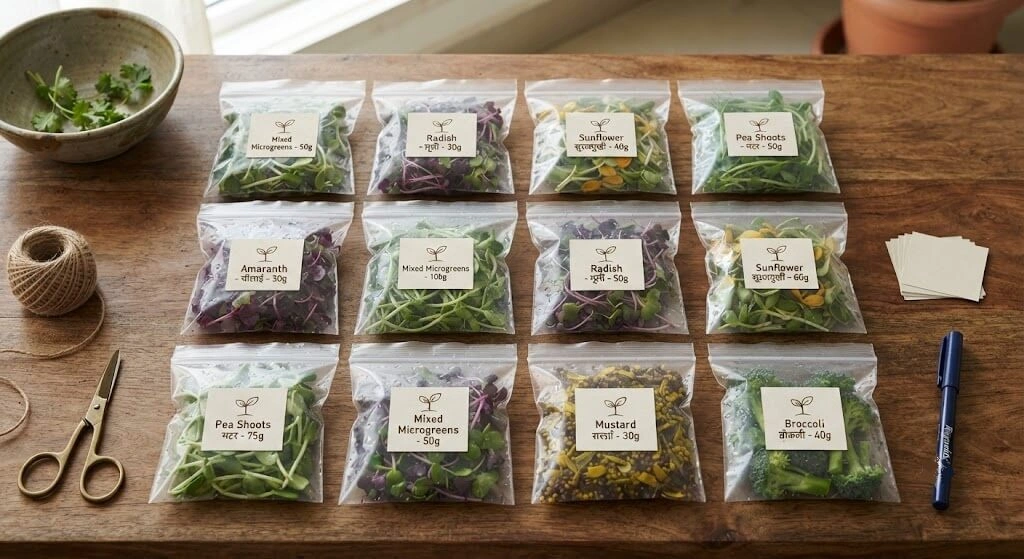
Most guides give vague advice like “buy some trays.” Here’s exactly what each level costs and who it’s for.
Level 1 – ₹500 Proof-of-Concept (1–3 trays)
Prove you can grow and sell before spending anything more.
| Item | Cost ₹ | Source |
|---|---|---|
| Recycled takeaway trays (3) | ₹0 | Your kitchen, pierced with a nail for drainage |
| Cocopeat block (250g) | ₹35 | Local nursery |
| Sunflower seeds (200g, un-roasted) | ₹40 | Kirana store |
| Pea seeds (200g, field peas not split dal) | ₹30 | Sabzi mandi |
| Radish seeds (50g) | ₹20 | Nursery or Amazon |
| Spray bottle (recycled) | ₹0 | Any used bottle, cleaned |
| Total | ₹125 | 3 trays, 3 varieties |
First harvest arrives in 7–10 days. Selling even 200g at ₹300/100g recovers this ₹125 investment in a single sale this is exactly what I did in January 2024 before committing to anything larger.
Level 2 – ₹5,000–₹8,000 Home Business (10–15 trays)
| Item | Qty | Cost ₹ | Source |
|---|---|---|---|
| Standard seed trays (10×20 inch) | 10 | ₹600 | Amazon India or Ugaoo |
| Cocopeat bricks (3kg) | 2 | ₹280 | Nurserylive or local nursery |
| Jute growing mats (optional) | 1 pack | ₹350 | Amazon India |
| Seed mix: sunflower, pea, radish, methi, mustard | 1kg each | ₹800 | Kirana + nursery |
| Wooden shelving (2-tier, DIY) | 1 | ₹1,200 | Local carpenter |
| Humidity dome covers (10) | 10 | ₹400 | Plastic covers from kirana |
| Packaging: zip-lock 50g bags | 100 | ₹250 | Amazon India |
| Label printing (50 labels) | 50 | ₹150 | Local print shop |
| Setup total | ₹4,030 | ||
| Working capital (2 cycles) | ₹1,200 | Seeds + cocopeat restock | |
| Grand total | ₹5,230 |
Level 3 – ₹45,000–₹57,000 Commercial Setup (80–120 trays)
| Item | Cost ₹ |
|---|---|
| Metal racking (4-tier, 4 units) | ₹8,000–₹12,000 |
| LED grow lights (8 strips, 45W each) | ₹12,000–₹20,000 |
| 100 standard trays | ₹5,000 |
| Industrial cocopeat + coir mats | ₹3,500 |
| Seed stock (3-month supply) | ₹8,000 |
| Packaging + branding (500 units) | ₹4,000 |
| FSSAI basic registration | ₹2,000 |
| Misc (spray system, timers) | ₹3,000 |
| Total commercial | ₹45,500–₹57,000 |
Where NOT to spend money: expensive commercial growing media, automated irrigation before 50+ trays, or branded seed packets from garden centres kirana seeds work identically at roughly 20% of the price.
Voice-search answer: How much does it cost to start a microgreens business in India? A proof-of-concept setup costs as little as ₹125–₹500 for 1–3 trays, a serious home business runs ₹5,000–₹8,000 for 10–15 trays, and a commercial setup with LED lighting and racking runs ₹45,000–₹80,000 for 80–120 trays.
Priya’s Personal Story: The August 2024 Monsoon Disaster
I destroyed 18 trays in August 2024 before I understood what was actually happening, and it’s still the most expensive single lesson my microgreens setup has taught me.
By that point I’d been running a 10-tray rotation on my Madanapalle terrace for about seven months, and the system had been working well enough that I’d started supplying two small buyers locally. I was using the same pure cocopeat mix I’d relied on since Rabi season, because it had never given me trouble before. What I didn’t account for was that Madanapalle, despite sitting inland and away from the coast, still hit 78–82% relative humidity for 22 consecutive days that August and pure cocopeat holds roughly three times more water than it does in the drier months.
The first sign was subtle: a faint musty smell near one shelf that I initially dismissed as coming from the balcony drain. By day four of that batch, I had grey-green fuzz spreading across the soil line of six trays, and by the time I properly inspected all ten, four more had early-stage mould I’d missed because I’d been checking in the evening rather than the morning, when the fuzz is most visible against dry surface medium.
I made it worse before I made it better my first instinct was to reduce watering slightly, which helped the unaffected trays but didn’t save the ones already contaminated. It took losing a second smaller batch four days later before I actually changed the growing medium itself rather than just the watering schedule. Switching to jute growing mats, which drain far faster than cocopeat, was the fix not less water, a different medium entirely.
The number that confirmed it: cocopeat alone gave me a drainage-test time of over 20 seconds when I finally ran the 200ml drainage test I now use before every batch well past the 8–12 second target that signals safe monsoon drainage. Once I switched the June–September trays to jute mats and cut top-spraying entirely in favour of bottom-watering, mould stopped recurring even at the same humidity levels.
The lesson that changed everything: growing medium isn’t a one-size-fits-all choice in Indian conditions it needs to change by season, the same way you’d change what you plant. I lost roughly ₹1,440 worth of trays that August learning this, which is far cheaper than the ₹15,000 a formal course would have cost, and that course wouldn’t have covered Indian monsoon conditions anyway.
The actual growing protocol day-by-day steps, monsoon survival calendar, and common failure fixes lives in the companion operational guide: Microgreens Business in India.
Original Data: My Production Records
This is tracked data from my own 20-tray system in Madanapalle, not an industry estimate.
Annual Revenue Math Per Tray (Sunflower, Continuous Rotation)
| Metric | Value |
|---|---|
| Crop cycles per year | 12 |
| Average yield per cycle | 150g |
| Annual yield per tray | 1,800g |
| Average wholesale price | ₹350/100g |
| Annual revenue per tray | ₹6,300 |
| Annual input cost per tray (seeds + medium + packaging) | ₹1,200 |
| Net profit per tray per year | ₹5,100 |
| At 20 trays | ₹1,02,000 annual net |
Month-by-Month Revenue: 10-Tray Home Setup (Madanapalle, Tier-2 City)
This table reflects a broad crop mix sold mostly at standard retail pricing. For a setup weighted more heavily toward premium crops like pea shoots sold directly to restaurant and hotel accounts, per-tray profitability runs meaningfully higher — see the Microgreens Business in India guide for that scaled, premium-channel version of the same economics.
| Month | Trays Active | Revenue ₹ | Costs ₹ | Profit ₹ | Notes |
|---|---|---|---|---|---|
| 1 | 3 | ₹1,800 | ₹2,400 | −₹600 | Setup month, learning curve |
| 2 | 6 | ₹4,200 | ₹1,800 | ₹2,400 | First restaurant contact |
| 3 | 10 | ₹7,800 | ₹2,200 | ₹5,600 | Consistent supply established |
| 4 | 10 | ₹9,200 | ₹2,100 | ₹7,100 | Second buyer onboarded |
| 5 | 10 | ₹10,400 | ₹2,000 | ₹8,400 | Price renegotiation after proof |
| 6 | 12 | ₹12,600 | ₹2,400 | ₹10,200 | Added wheatgrass tray |
| 7–9 | 12 | ₹8,200 avg | ₹2,600 avg | ₹5,600 avg | Monsoon reduction, roughly 30% |
| 10–12 | 15 | ₹14,200 avg | ₹2,800 avg | ₹11,400 avg | Post-monsoon ramp-up |
| Year 1 Total | ≈₹1,14,000 | ≈₹28,700 | ≈₹85,300 | Net after full setup cost recovery |
Original measurements – Priya Harini B, thetrendvaultblog.com, Madanapalle AP, 2024–2025, based on 60+ tray cycles tracked across all four Indian seasons. Most Western microgreens business content assumes a stable, monsoon-free growing environment year-round, which is exactly why the July–September dip in this table doesn’t appear in equivalent US or UK income breakdowns.
A Real Case Study
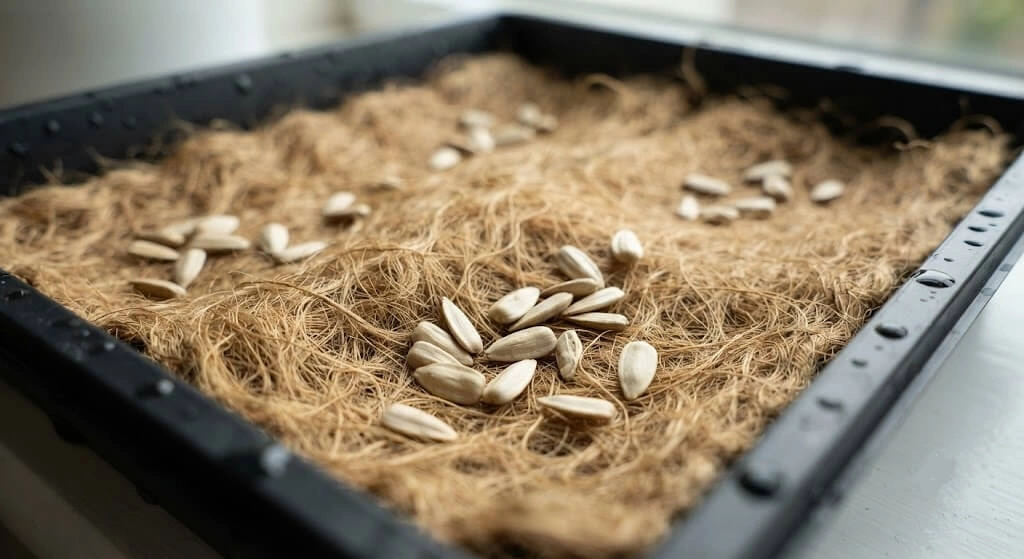
The Neighbour Who Started This Whole Investigation
My neighbour here in Madanapalle had been running a small 4×3 foot shelf system in her spare room for about four months before she mentioned it to me at all she’d started almost accidentally, growing extra sunflower microgreens for her own kitchen and offering the surplus to a cousin who worked at a Hyderabad cloud kitchen. That single relationship grew into two regular cloud kitchen clients taking a combined 800g of sunflower microgreens weekly, at roughly ₹400 per 100g wholesale about ₹3,200 a week, or close to ₹13,000 a month, from a setup that cost her under ₹6,000 to build.
The pattern that mattered when she described her setup to me: she found her first buyer through an existing personal connection her cousin at a Hyderabad cloud kitchen rather than a cold pitch to a stranger, and that relationship gave her the confidence to scale past her original three trays
Three takeaways from her setup: start with whoever already knows you (family, neighbours, existing contacts) rather than cold-approaching strangers first; cloud kitchens are often easier first buyers than sit-down restaurants because they order by WhatsApp rather than requiring an in-person pitch; and a spare room shelf, not a balcony, works fine if your climate control is more predictable indoors.
India Zone-Wise and City-Wise Market Context
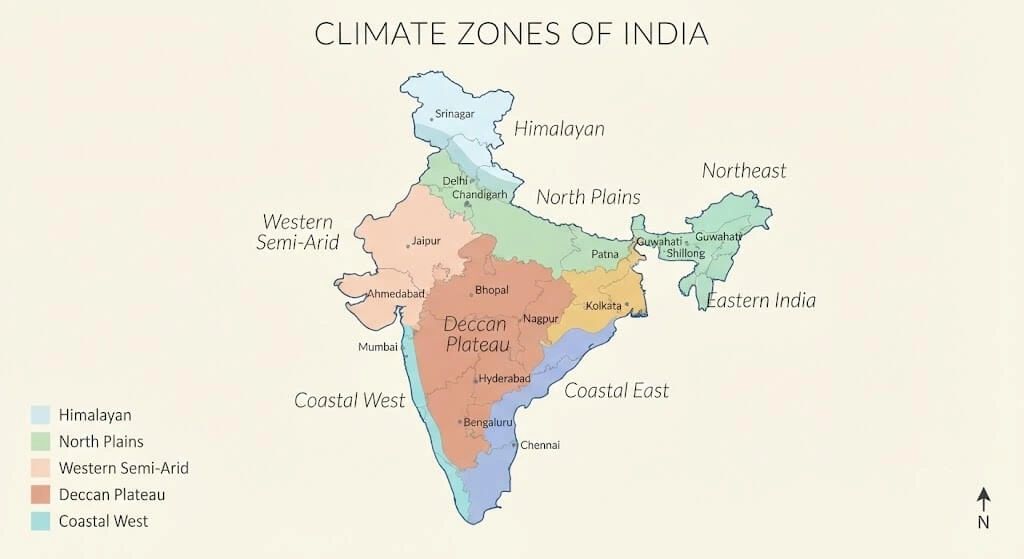
Growing conditions for microgreens are largely indoor-controlled, but two things shift meaningfully by zone: how aggressively you need to manage humidity during monsoon, and which cities offer the strongest buyer demand right now.
Zone Comparison Table
| Zone | Representative Cities | How the Market/Growing Differs | Zone-Specific Adjustment |
|---|---|---|---|
| North Indian Plains | Delhi, Lucknow, Chandigarh | Dry summer heat stresses trays fast; strong D2C and restaurant demand in Delhi NCR | Increase misting in summer; Delhi NCR is a strong early market to approach |
| Western Semi-Arid | Ahmedabad, Jaipur | Low humidity reduces mould risk relative to coastal zones | Standard cocopeat performs longer here before needing perlite |
| Deccan Plateau | Bangalore, Hyderabad, Madanapalle | Moderate, elevation-cooled climate; Bangalore and Hyderabad are top-tier buyer markets | Author’s reference zone baseline protocol in this guide |
| Coastal West | Mumbai, Goa, Kochi | High monsoon humidity raises mould risk sharply; Mumbai pays the highest wholesale prices in this guide | Switch to jute mats earlier in the season here than inland zones |
| Coastal East / Tamil Nadu | Chennai | Oct–Dec is the main monsoon here, not June–Sept as elsewhere; Chennai is still an emerging, lower-price market | Apply monsoon-medium protocol in Oct–Dec specifically, not June–Sept |
| Eastern India | Kolkata, Patna | Humid subtropical climate raises fungal pressure most of the year | Prioritise jute mat medium for a longer stretch of the year |
| Northeast India | Guwahati, Shillong | Very high year-round rainfall | Indoor, climate-controlled setups strongly preferred over open balconies |
| Himalayan / Hill | Shimla, Dehradun, Darjeeling | Cooler temperatures slow germination and may reduce yield per cycle slightly | Allow extra days per cycle; consider supplemental warmth |
| Reference Zone | Madanapalle, AP | Subtropical, 22–44°C, inland but still hit 78–82% humidity for 22 days in August 2024 | Author’s own tracked conditions throughout this guide |
WARNING: Treating India as one climate for microgreens production is the single costliest assumption in this business. Madanapalle sits far inland and still lost 18 trays to monsoon humidity in August 2024 coastal growers in Mumbai, Kochi, or Chennai (during its October–December window) face this risk for longer stretches and need the medium-switching protocol even more aggressively than this guide’s baseline zone.
City-Specific Sourcing Map
| City | Cocopeat | Seeds | Trays | Best Market |
|---|---|---|---|---|
| Bangalore | Lalbagh nurseries, Ugaoo online | KR Market seed section | Lalbagh shops | KR Market, Saturday Garden Market |
| Mumbai | Dadar flower market stalls | Crawford Market | Dadar | Crawford Market |
| Delhi NCR | INA Market | Azadpur mandi | Amazon India | INA Market, Azadpur |
| Hyderabad | Botanical garden nurseries | Begum Bazaar | Online | Begum Bazaar |
| Chennai | Koyambedu market | Koyambedu | Amazon India | Koyambedu complex |
| Madanapalle (AP) | Local nurseries, ₹25/500g | Any kirana store | Reused containers | Direct from farmers’ market |
Monsoon Survival: The 90-Day Threat to Every Indian Microgreens Operation
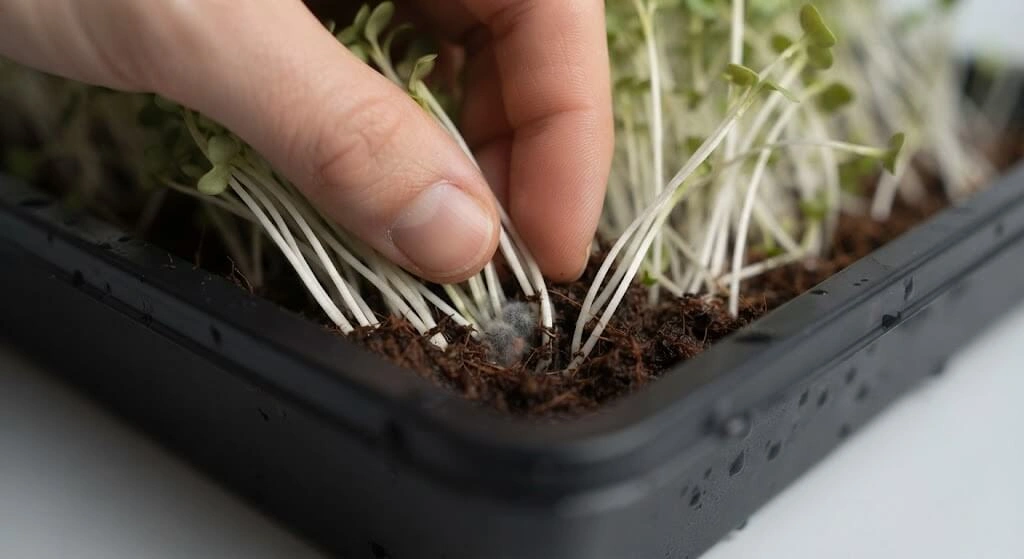
Between June and September, humidity in most Indian cities stays above 75% relative humidity, and in coastal cities like Mumbai, Chennai, and Kochi it exceeds 85% for weeks at a stretch. Even inland Madanapalle hit 78–82% humidity for 22 consecutive days in August 2024. This is the biggest operational risk in Indian microgreens farming, and it’s why most growing success stories that start strong in spring go quiet by August.
Regulatory Basics: FSSAI, GST, and Selling Legally
| Requirement | Applies When | Cost ₹ | How to Get It |
|---|---|---|---|
| FSSAI Basic Registration | Turnover under ₹12 lakh/year | ₹100/year | fssai.gov.in online portal |
| FSSAI State License | Turnover ₹12–75 lakh/year | ₹2,000–₹5,000/year | State food authority |
| GST Registration | Turnover above ₹20 lakh/year | ₹0 to register | gst.gov.in |
| Shop & Establishment Act | If operating a physical shop | ₹500–₹2,000 | Municipal corporation |
| Home production, no selling | N/A | ₹0 | None needed |
For apartment or society rules, most Indian residential societies have no restrictions on growing plants on a balcony the concern usually only arises once commercial activity like frequent deliveries or customer visits becomes visible. Using a delivery service rather than having buyers collect in person keeps things low-profile and professional while you’re still small.
Once the legal basics are sorted, the natural next step is finding your first buyers see the companion guide: How to Sell Microgreens from Home in India, which covers pricing, WhatsApp outreach, and restaurant approach scripts in detail.
Get the Free Printable: India Microgreens Market Starter Pack
Includes a printable 14-day harvest calendar, a buyer outreach script for WhatsApp and email, a monthly cost-tracking sheet, and the monsoon survival checklist from this guide, condensed to one page. Get the India Microgreens Market Starter Pack free with email →
Frequently Asked Questions
Is the microgreens business profitable in India?
Yes, for most home growers who confirm a buyer before scaling a 10-tray setup can realistically net ₹5,000–₹11,000 monthly outside monsoon months, based on tracked production records.
How much does it cost to start growing microgreens for business in India?
As little as ₹125–₹500 to test the idea with 1–3 trays, ₹5,000–₹8,000 for a serious 10–15 tray home setup, and ₹45,000–₹80,000 for a commercial 80–120 tray operation.
Which microgreens sell best in India?
Sunflower, methi (fenugreek), and radish cover the widest buyer base between them sunflower for visual appeal and mild flavour, methi for high cultural familiarity with Indian restaurants, and radish for the fastest harvest-to-sale cycle.
Do I need FSSAI registration to sell microgreens from home in India?
Basic FSSAI registration (₹100/year) applies once you’re selling commercially, even at small scale under ₹12 lakh annual turnover; pure home consumption with no sales doesn’t require it.
How long do microgreens take to grow before I can sell them?
Most fast varieties like radish and sunflower are ready in 7–12 days from sowing, though some slower varieties like wheatgrass and specialty greens take slightly longer.
Can microgreens survive the Indian monsoon?
Yes, but only with a medium change switching from pure cocopeat to jute mats or a higher-perlite cocopeat mix, combined with bottom-watering instead of top-spraying, prevents the mould that destroys most unprepared monsoon-season trays.
What’s the difference between selling to restaurants versus direct-to-consumer?
Restaurants offer higher, steadier volume at lower per-unit prices (₹250–₹450 per 100g), while direct-to-consumer channels like WhatsApp groups pay more per unit (₹500–₹900 per 100g) but require more individual relationship management for lower volume per customer.
Do commercial “microgreens seeds” actually perform better than kitchen or mandi seeds?
No meaningful difference for most varieties un-roasted sunflower seeds from a kirana store, whole dried peas from a sabzi mandi, and kitchen methi packets germinate at rates comparable to seeds marketed specifically as “microgreens seeds” online at several times the price.
Quick Reference
What is the India microgreens market opportunity?
India’s microgreens market was valued at USD 73 million in 2024 by IMARC Group, with home growers able to enter for as little as ₹125–₹500 and scale toward ₹6,000–₹12,000 in monthly profit from a 10–20 tray setup.
What causes microgreens crop failure in Indian growing conditions?
The dominant cause is overwatering combined with monsoon-season humidity above 75–85% RH, which triggers mould at the soil line within days if the growing medium isn’t switched to a faster-draining option like jute mats.
How do you identify a mould problem versus harmless growth on microgreens?
White, fine, evenly distributed growth at the soil line is often harmless root mycelium, while grey or black fuzzy mould with a musty smell signals active fungal contamination requiring immediate tray disposal.
How do you start a microgreens income stream in India step by step?
Start with a ₹125–₹500 proof-of-concept using 1–3 recycled trays and kirana-sourced seeds, confirm at least one buyer before scaling, switch growing medium seasonally (cocopeat outside monsoon, jute mats during it), and track cost-per-tray from day one.
Why does the microgreens business differ in India compared to Western markets?
India’s consumers already trust sprouts culturally, lowering the education barrier microgreens face elsewhere, while the operational challenge shifts from Western guides’ cold-weather concerns to monsoon humidity management between June and September (October–December in Tamil Nadu).
How do you prevent recurring crop losses in a microgreens operation?
Switch growing medium by season rather than using one medium year-round, bottom-water instead of top-spraying during humid months, and inspect trays each morning when early mould is most visible against dry surface medium.
Source: Priya Harini B, thetrendvaultblog.com – based on a 20-tray microgreens production system tracked across 60+ tray cycles through all four Indian seasons in Madanapalle, Andhra Pradesh, 2024–2026, including direct buyer price data gathered across six Indian cities between October 2024 and March 2025.
Action Checklist
- Decide your entry level: ₹125–₹500 proof-of-concept, or ₹5,000–₹8,000 home setup
- Confirm at least one buyer (even a WhatsApp group or a neighbour) before scaling past your first few trays
- Source seeds from a kirana store or mandi first skip “microgreens-branded” seeds at 5–10× the price
- Run the drainage test (200ml water, target 8–12 seconds) before committing to a growing medium for the season
- Check trays each morning during June–September (or Oct–Dec in Chennai) for early mould signs
- Register for basic FSSAI once you’re selling commercially, even at small scale
- If you haven’t grown your first tray yet, start here: How to Start Growing Microgreens at Home
- For the exact outreach scripts and pricing structure to land your first buyers: How to Sell Microgreens from Home in India
- For harvest timing and shelf-life protocols once you’re producing consistently: Master Microgreens Harvesting & Storage
Setup-to-income timeline:
| Month | Milestone |
|---|---|
| Month 1 | Proof-of-concept trays sown, learning curve, likely small net loss |
| Month 2–3 | First buyer confirmed, consistent 10-tray supply established |
| Month 4–6 | Second buyer onboarded, price renegotiation after proven reliability |
| Month 7–9 | Monsoon dip (expect roughly 30% reduction) protocol switch prevents total loss |
| Month 10–12 | Post-monsoon ramp-up toward ₹10,000+ monthly net at 15 trays |
The Market Window Is Real, But It Won’t Stay Wide Open
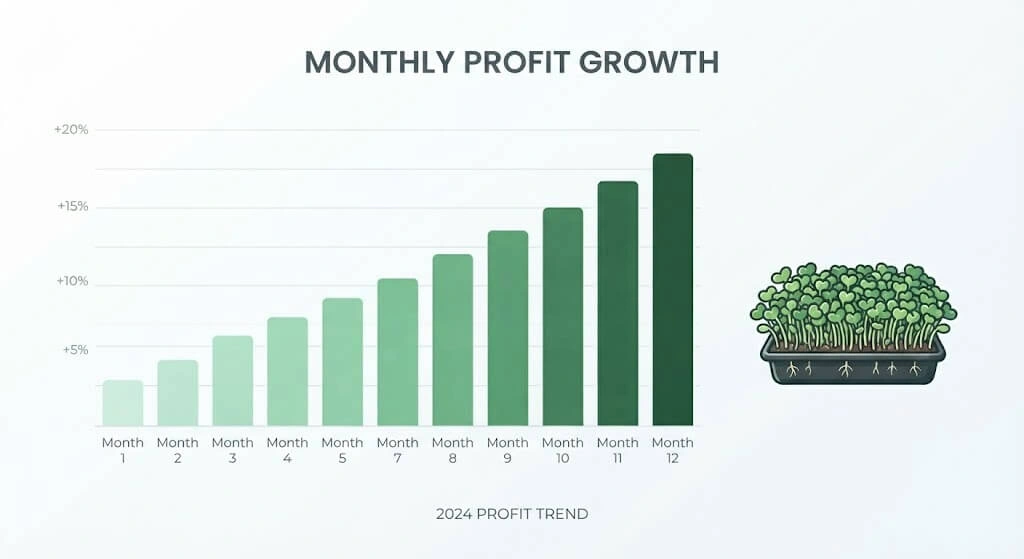
Most Indian gardening content treats microgreens as a hobby footnote, when the real story is a market that’s already growing double digits annually with supply that’s still scattered and mostly amateur. The growers who get in now and who actually solve the monsoon problem instead of discovering it the hard way each August are the ones building the buyer relationships that lock out later entrants.
My own path started with a neighbour’s WhatsApp screenshots and a ₹125 proof-of-concept tray. The August 2024 mould disaster cost me eighteen trays, but it’s also the reason this guide’s monsoon section exists at all.
Related reading: How to Start Growing Microgreens at Home · How to Sell Microgreens from Home in India · Master Microgreens Harvesting & Storage · Microgreens Business in India
Already selling microgreens from home? Tag @thetrendvaultblog with your setup I’m always collecting real buyer data city by city.
About Priya Harini B: Priya writes thetrendvaultblog.com from Madanapalle, Andhra Pradesh, testing every method and tracking every rupee on her own terrace containers before it goes on the site 4+ years of hands-on experience across 40+ plant varieties and 38+ tracked containers, including a 20-tray microgreens production system running since 2024.