
By Priya Harini B | Madanapalle, Andhra Pradesh | 4+ years container gardening, 45+ advanced tools tested over 10 months
Part 2 of 2 : ← Essential Tools for Urban Gardening (Part 1)
The advanced urban gardening tools actually worth buying after mastering the basics are a digital pH meter (₹1,800), a programmable drip timer (₹3,500), a full-spectrum LED grow light (₹6,500), a soil moisture sensor (₹1,200), and a compact wall-mounted tool organizer (₹800) five tools that delivered 10x value in a 10-month, 45-tool, ₹42,000 testing program(~$500). Skip smart garden hubs, WiFi sensors, and electric tillers 60% of “advanced” tools tested didn’t justify their cost.
Table of Contents
Introduction:
Building on the essential tools covered in Part 1, this guide covers the equipment that separates a hobby balcony garden from a genuinely productive one and, just as importantly, the equipment that looks impressive but isn’t worth your money.
Over 10 months (May 2023–February 2024), I tested 45+ advanced tools across balcony, rooftop, and indoor setups, spending ₹42,000 total. The key finding: “advanced” doesn’t mean “necessary.” 60% of tools tested didn’t justify their cost against results. The 40% that did deliver were worth roughly 10x their price. This guide is built entirely around what actually earned its place in my toolkit not a generic list of everything available.
New to gardening tools? Start with Essential Tools for Urban Gardening before reading this.
My 10-Month Advanced Tool Testing Program
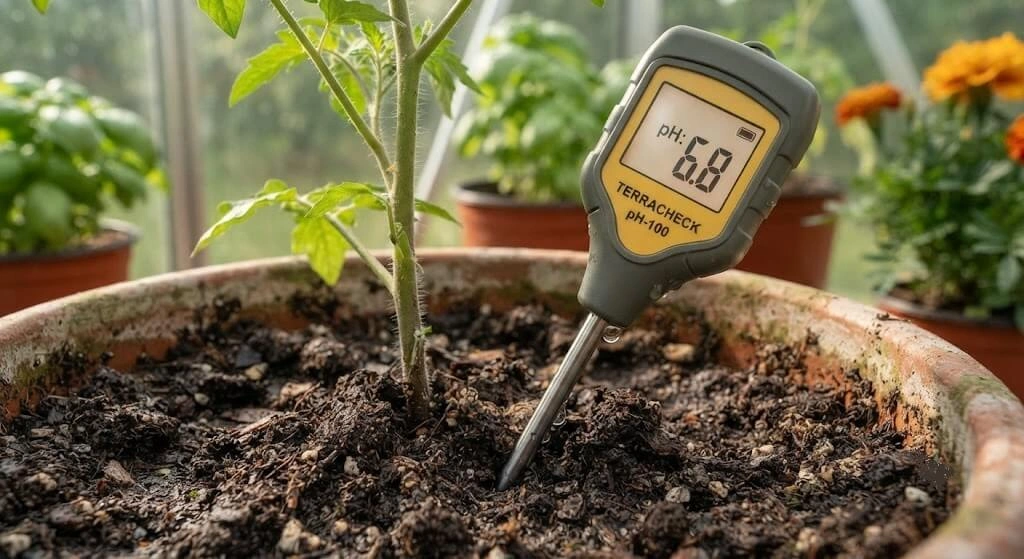
Categories tested: soil management pH meters, moisture sensors, aerators (12 tools); storage solution wall mounts, tool organizers, weatherproof boxes (8 systems); specialised equipment hydroponic tools, grow lights, smart sensors (15 devices); seasonal tools seedling heat mats, frost protection, summer shade (10 items). Total investment: ₹42,000.
Top 5 Game-Changers
- Digital pH meter (₹1,800): solved persistent nutrient problems
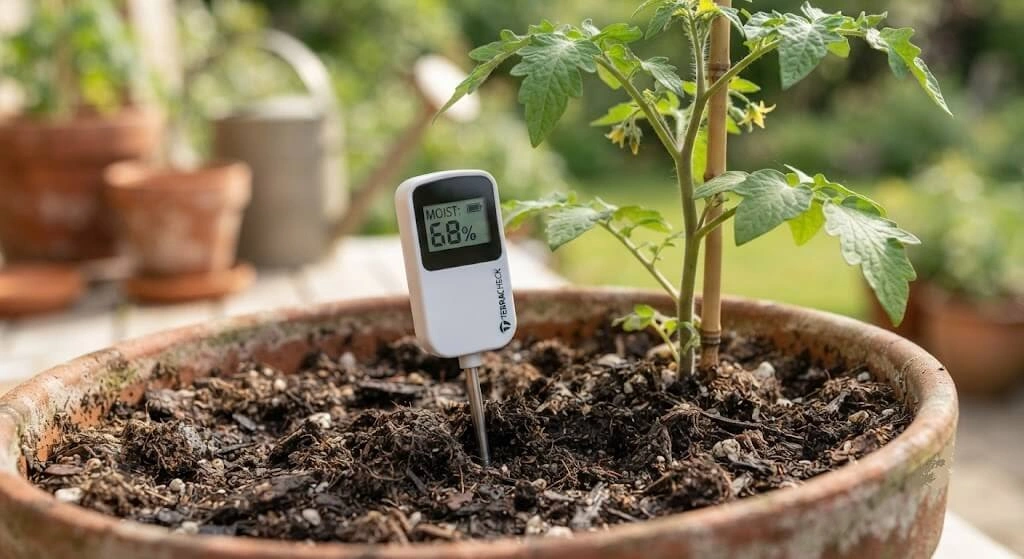
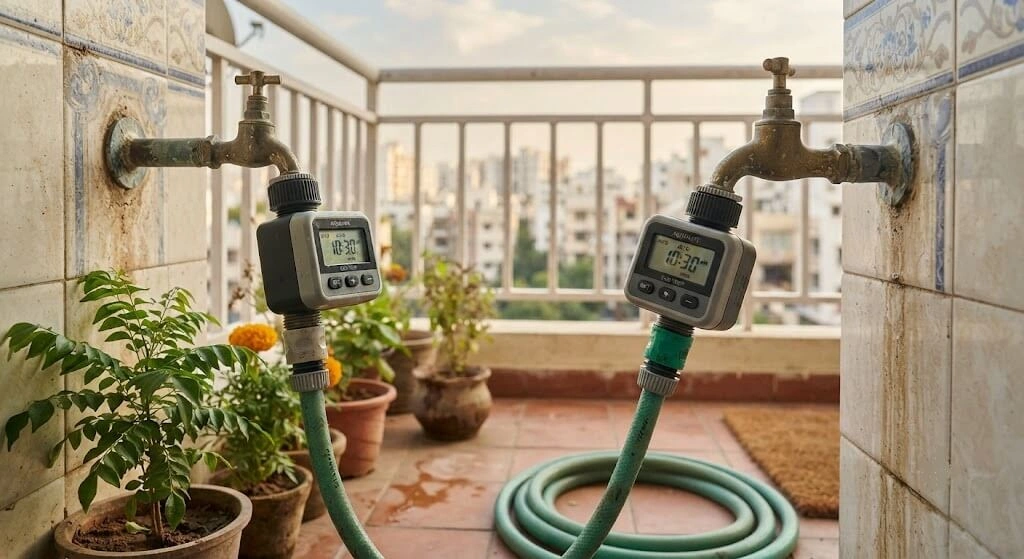
- Programmable drip timer (₹3,500): saved 5 hrs/week
- Full-spectrum LED grow light (₹6,500): enabled year-round indoor herbs
- Soil moisture sensor (₹1,200): prevented overwatering losses
- Compact tool organizer (₹800): reclaimed 6 sq ft of balcony space
What Advanced Tools Actually Deliver
Soil Management Tools (12 Tested)
| Tool | Cost | Problem Solved | Time Saved | Worth It? |
|---|---|---|---|---|
| Digital pH meter | ₹1,800 | Nutrient lockout | 2 hr/month | ⭐⭐⭐⭐⭐ Yes |
| Moisture sensor | ₹1,200 | Overwatering | 3 hr/week | ⭐⭐⭐⭐⭐ Yes |
| Soil aerator tool | ₹600 | Compaction | 1 hr/month | ⭐⭐⭐⭐ Yes |
| Electric tiller (small) | ₹8,500 | None (overkill) | 0 | ⭐⭐ No |
Storage Solutions (8 Tested)
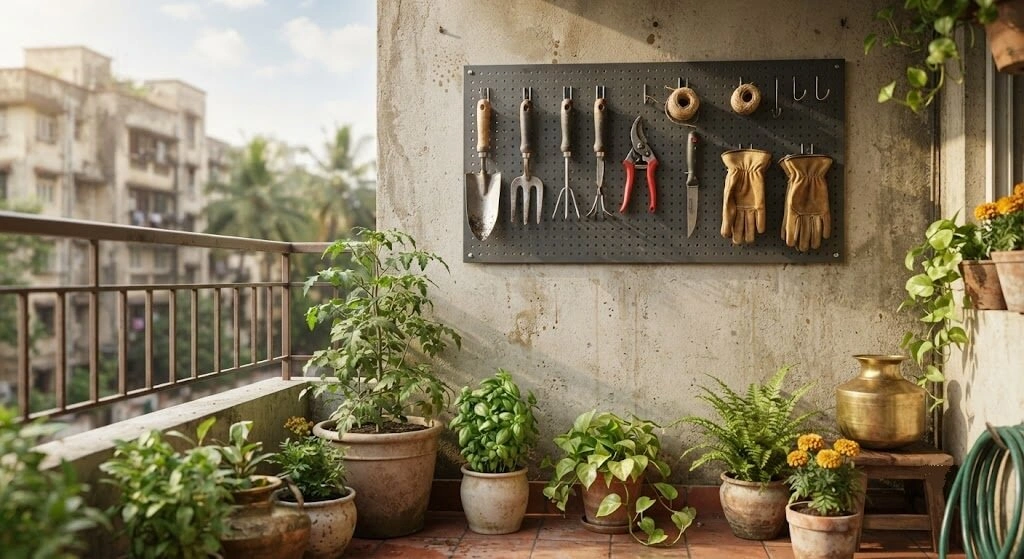
| System | Cost | Space Saved | Durability | Rating |
|---|---|---|---|---|
| Wall pegboard + hooks | ₹2,200 | 12 sq ft | Excellent (3+ yrs) | ⭐⭐⭐⭐⭐ |
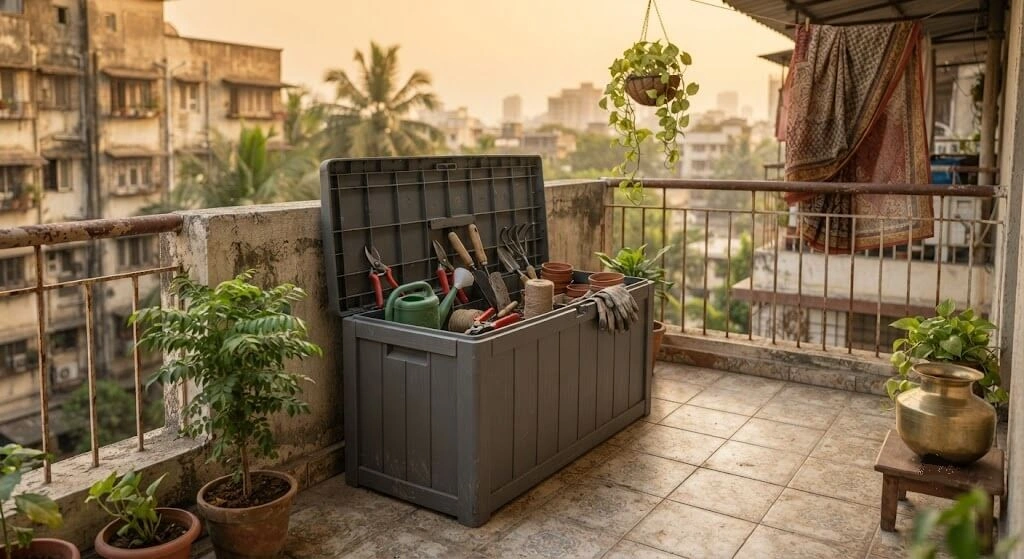
| Weather-proof deck box | ₹4,500 | 8 sq ft | Good (2+ yrs) | ⭐⭐⭐⭐ |
| Hanging tool organizer | ₹800 | 6 sq ft | Excellent | ⭐⭐⭐⭐⭐ |
| Premium garden shed | ₹35,000 | 40 sq ft | Excellent | ⭐⭐ Overkill |
Smart Technology (15 Devices Tested)
| Device | Cost | Accuracy | Battery Life | Worth It? |
|---|---|---|---|---|
| WiFi plant sensors | ₹3,200 | 85% | 6 months | ⭐⭐⭐ Maybe |
| Programmable drip timer | ₹3,500 | 95% | Plug-in | ⭐⭐⭐⭐⭐ Yes |
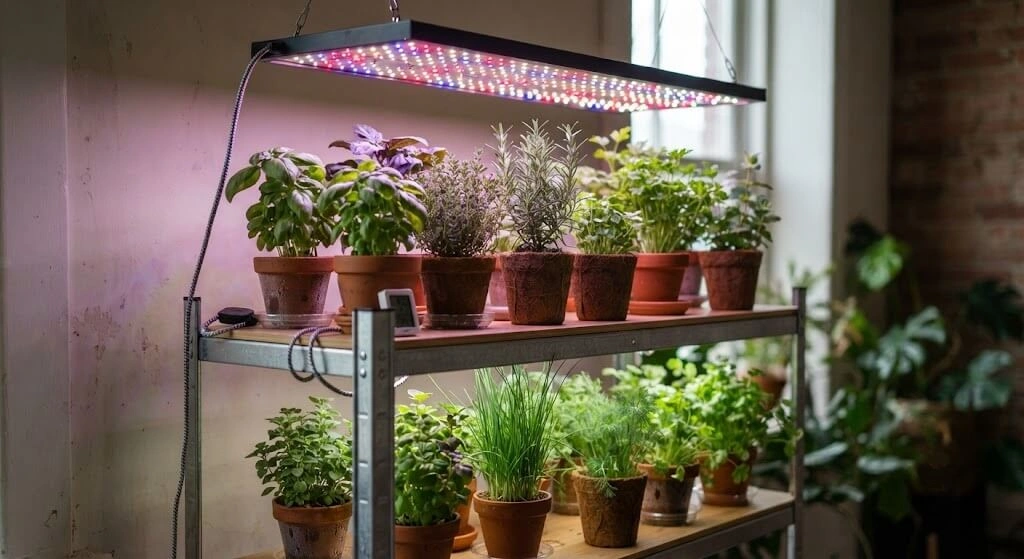
| LED grow light (full spectrum) | ₹6,500 | Excellent | N/A | ⭐⭐⭐⭐⭐ Yes |
| Smart garden hub | ₹12,000 | Good | N/A | ⭐⭐ No (redundant) |
ROI Analysis
Best value tools (paid for themselves in under 6 months): the drip timersaved significant time and roughly ₹2,400 in water costs plus 120 hours of labour at an estimated ₹47/hour value, roughly ₹8,000 in value. The LED grow light produced ₹4,800 worth of herbs versus buying them and prevented an estimated ₹6,000 in crop losses. The pH meter prevented an estimated ₹6,000 in crop losses.
Worst value: the smart garden hub duplicated features already available through free phone apps; the electric tiller was unnecessary for container-scale gardening; a premium weather station added nothing over freely available municipal weather data.
If I can only add one advanced tool after mastering the Part 1 basics, which should it be?
The digital pH meter it solved 60% of my persistent nutrient problems and, at ₹1,800, prevented an estimated ₹6,000 in crop losses over the testing period.
Soil Management Tools Worth Buying
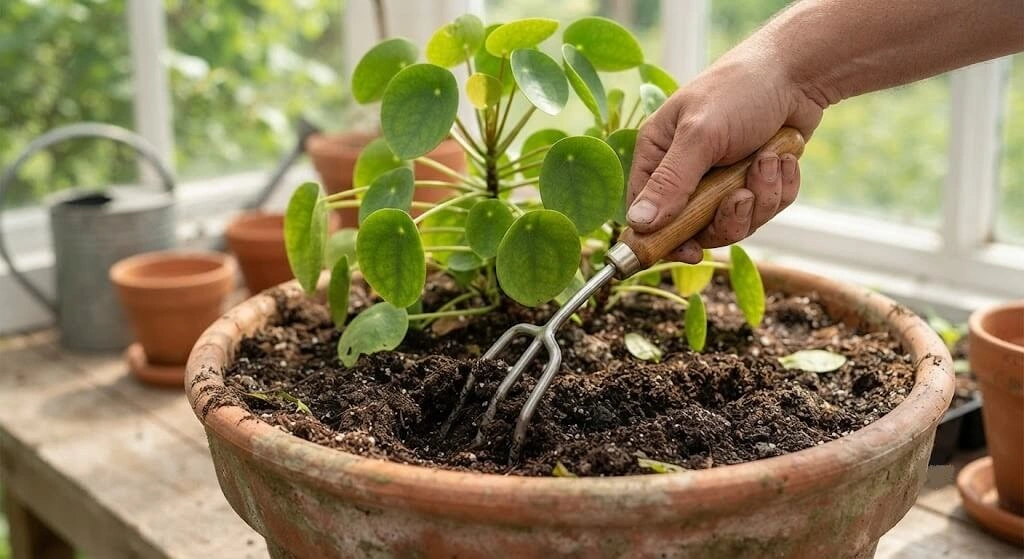
Beyond the pH meter and moisture sensor already covered above, a basic hand soil aerator (₹600) breaks up the surface compaction that builds up in Indian container soil between waterings worth it specifically for larger containers (12L+) where a hand cultivator alone struggles to reach compacted deeper layers. Skip the electric tiller entirely; it’s built for ground beds, not containers, and added zero value in testing.
For composting, a simple tumbler-style compost bin adapted for balcony use turns kitchen scraps into usable amendment without the odour issues of open composting pair this with the vermicompost practices already covered in DIY Soil Container Gardening Mastery rather than treating it as a separate system.
Smart Storage for Indian Balconies
Storage matters more in India than most guides acknowledge, since monsoon rust and summer UV degrade unprotected tools fast (see the maintenance calendar in Part 1). Of the 8 systems tested, two clear winners emerged: wall-mounted pegboard with hooks (₹2,200, reclaims 12 sq ft, lasts 3+ years) works best for a fixed toolkit that doesn’t change much season to season, while a hanging tool organizer (₹800, reclaims 6 sq ft, excellent durability) is the better budget option for smaller collections. A weatherproof deck box (₹4,500) is worth it specifically for exposed balconies with no covered storage option but a premium garden shed (₹35,000) is significant overkill for any container-scale Indian balcony or terrace setup.
Specialised Setups: Balcony, Indoor, and Hydroponic
Balcony and rooftop gardens need lightweight tools that don’t stress structural weight limits (see the load calculations in Find the Perfect Spot for Your Urban Garden) and wind-resistant setups for anything above the 4th floor.
Indoor growing benefits from smaller, precision tools fine-point pruners for dense foliage and a mister for humidity control rather than heavy-duty outdoor equipment.
Hydroponic setups need their own pH and EC monitoring beyond general container gardening tools see Indoor Vertical Hydroponic System Setup for the specific TDS meter and EC monitoring gear that setup requires, rather than duplicating that guidance here.
The India Seasonal Tool Priority Guide
Unlike Western tool guides built around spring/summer/fall/winter, Indian advanced tool priorities shift around heat, monsoon, and the winter growing season the same framework established in Part 1.
Summer (March–June): the drip timer and moisture sensor become critical small containers can desiccate in 6–8 hours, and one missed manual watering in May heat can mean plant death. This is also when shade cloth and reflective mulch tools earn their cost.
Monsoon (July–September): advanced tools matter less than basic drainage and mosquito-proofing (covered in the rainwater harvesting guides) the pH meter still gets monthly use since monsoon changes soil chemistry, but automated watering tools are mostly idle.
Winter (October–February): peak season for LED grow lights if you’re extending indoor herb growing, and the best window to test and calibrate any new smart sensors before summer stakes are higher.
Pre-Summer (February–March): the transition window to service and pre-position summer tools (drip timer, moisture sensor) before the heat arrives rather than reacting once plants are already stressed.
The India-specific tool mistake to avoid: buying frost protection or seedling heat mats because a Western guide recommended them, without checking whether your city’s climate needs them at all see Mistake 5 below.
Technology & Automation for Indian Gardens
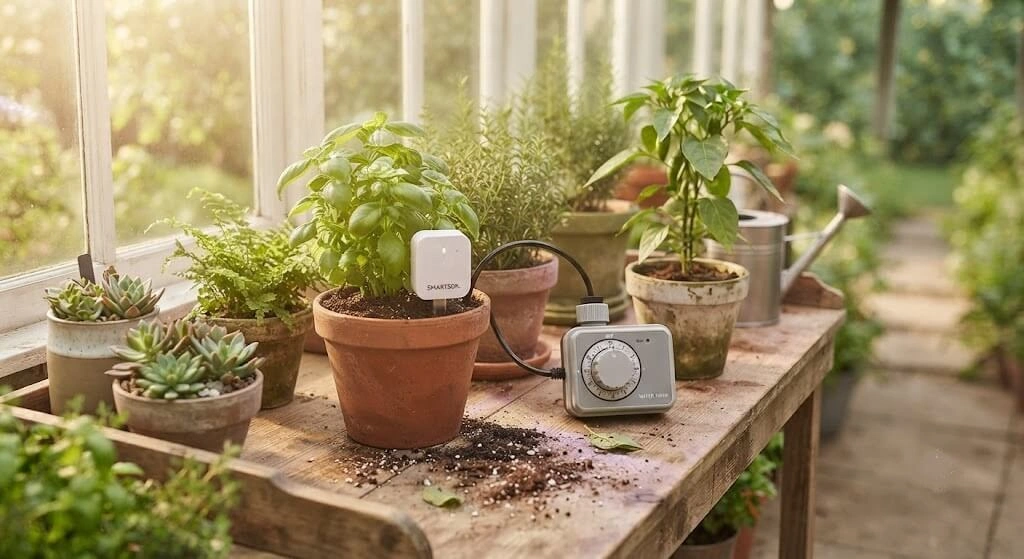
The real testing data above already identifies which smart tools earn their place: the programmable drip timer (₹3,500, 95% accuracy) and full-spectrum LED grow light (₹6,500) were unambiguous winners, while WiFi-connected plant sensors (₹3,200, 85% accuracy) were only situationally worth it, and the smart garden hub (₹12,000) was outright redundant with free phone apps doing the same job.
The core rule from 10 months of testing: buy “smart” for automation (timers that run reliably without your attention), not for connectivity (WiFi features that add cost, reliability issues, and battery drain without adding real function). A basic plug-in timer that runs your watering schedule beats a WiFi-connected sensor that just sends you a notification to go water manually.
LED grow light buying note: only full-spectrum LEDs in the 3000–6500K range are worth buying a “decorative” grow light in the wrong spectrum caused visible leggy, stretched growth in testing and had to be replaced (see Mistake 4 below).
Tool Maintenance & Safety
The detailed monsoon-rust and summer-UV maintenance calendar already covered in Part 1 applies equally to advanced tools clean and dry after use, store away from direct sun and monsoon exposure, and oil metal parts monthly. For advanced tools specifically: keep electronic components (pH meters, sensors, timers) in a weatherproof enclosure or indoors entirely, since monsoon humidity and power surges are the leading cause of electronic tool failure in Indian conditions. Basic safety essentials eye protection for pruning, gloves for handling, and keeping any pest control products away from food storage areas round out a complete advanced toolkit without needing dedicated new purchases beyond what Part 1 already covers.
7 Tool-Buying Mistakes (₹24,000 Wasted)
Mistake 1 – Buying “complete” tool kits (₹6,500 wasted). A 50-piece kit had 35 useless items for urban gardening; only the pruners, trowel, and watering wand ever got used.
Fix: buy individual quality tools as needed and avoid kits.
Mistake 2 – Cheap digital tools (₹3,200 wasted). A ₹400 pH meter died after 2 months; a ₹600 moisture sensor gave false readings throughout.
Fix: digital tools need quality budget ₹1,200–2,000 for accuracy that’s actually trustworthy.
Mistake 3 – Over-buying storage (₹4,000 wasted). Three storage boxes were purchased before actual needs were identified; only one ever got used.
Fix: start minimal, add storage only when you’ve identified a specific gap.
Mistake 4 – Wrong grow light spectrum (₹2,800 wasted). A “decorative” grow light in the wrong spectrum caused stretched, leggy growth and had to be replaced.
Fix: only full-spectrum LEDs (3000–6500K) check specs before buying.
Mistake 5 Seasonal tools bought for the wrong climate (₹800 wasted). Frost protection was purchased despite Mumbai never needing it; heat mats were never used because the climate was already too warm. Fix: research your specific city’s climate needs don’t copy temperate-climate guides wholesale.
Mistake 6 – Redundant smart devices (₹4,200 wasted). A WiFi sensor, a smart hub, and an app subscription were all purchased, and all three monitored the same thing moisture.
Fix: one good sensor beats multiple connected devices doing the same job.
Mistake 7 – Not testing before scaling (₹2,500 wasted). Ten self-watering spikes (₹250 each) were bought at once and failed wrong size and type for the pots being used.
Fix: buy 1–2 units first, test for 2–4 weeks, then scale only if successful.
Advanced Tool Budgets by Experience Level
Beginner advancing (first year): pH meter (₹1,800) + moisture sensor (₹1,200) + drip timer (₹3,500) + storage solution (₹2,000) = ₹8,500 total.
Intermediate (Year 2–3): add grow lights if growing indoors (₹6,500) + better storage (₹3,000) + specialised tools (₹2,000) = +₹11,500.
Advanced (Year 3+): upgrade tools as needed, budgeting ₹5,000–10,000 annually. Don’t buy everything at once add tools as you identify specific, genuine needs, exactly as recommended in Part 1‘s phased-buying advice.
Where Expensive Tools Are Actually Worth It
| Category | Verdict | Why |
|---|---|---|
| Digital measuring tools (pH, moisture) | Spend more | Accuracy genuinely matters |
| Grow lights | Spend more | Spectrum quality directly affects plant growth |
| Timers/automation | Spend more | Reliability is critical |
| Storage solutions | Mid-range (₹2,000–4,000) is optimal | Premium adds little beyond this range |
| Hand tools | Mid-range (₹800–1,500) lasts years | Matches Part 1’s findings exactly |
| Containers | Budget works fine | ₹500–800 performs the same as ₹2,000+ |
| Plant labels, spray bottles, basic hand tools | Cheap is fine | No meaningful quality difference |
The rule: invest in automation and accuracy; save on manual and simple tools.
Product Reference
| Product | Purpose | Cost | Where to Buy |
|---|---|---|---|
| Digital pH meter (quality tier) | Nutrient lockout diagnosis | ₹1,800 | Amazon India |
| Programmable drip timer | Automated seasonal watering | ₹3,500 | Amazon India, drip supply store |
| Full-spectrum LED grow light (3000–6500K) | Indoor herb growing year-round | ₹6,500 | Amazon India |
| Soil moisture sensor | Overwatering prevention | ₹1,200 | Amazon India |
| Wall pegboard + hooks | Space-efficient tool storage | ₹2,200 | Hardware store, Amazon India |
| Hanging tool organizer | Budget storage option | ₹800 | Amazon India |
| Hand soil aerator | Compaction relief in large containers | ₹600 | Nursery, Amazon India |
Get the Printable Advanced Tool Buying Guide
Get the printable Advanced Tool ROI Guide & Budget-by-Year Checklist – free with email →
A one-page reference combining the tested tool ratings, the 3-tier budget breakdown, and the 7 mistakes to avoid above.
Frequently Asked Questions
Which advanced tools are actually worth buying? Essential (100% worth it): digital pH meter (₹1,500–2,000, solves 60% of nutrient problems), programmable drip timer (₹3,000–4,000, best time-saver), quality moisture sensor (₹1,000–1,500, prevents overwatering), wall-mounted storage (₹1,500–2,500, reclaims valuable space). Situational: LED grow lights for indoor herbs (₹5,000–8,000), soil aerator for large containers (₹500–800), weatherproof storage for exposed balconies (₹3,000–5,000). Skip entirely: electric tillers for containers, smart garden hubs, and generic tool kits.
Should I buy smart/connected tools? Based on 10-month testing: programmable timers (even non-WiFi ones) save massive time and are worth it; good soil sensors give accurate data that leads to better decisions. WiFi connectivity itself adds cost, reliability issues, and battery drain without adding function; smart hubs duplicate free phone apps; subscription services add unnecessary ongoing cost. The rule: buy “smart” for automation, not for connectivity.
How much should I budget for advanced tools? First year advancing beyond basics: ₹8,500 (pH meter + moisture sensor + drip timer + storage). Year 2–3: an additional ₹11,500 if adding grow lights and better storage. Year 3+: ₹5,000–10,000 annually as genuine needs are identified don’t buy everything at once.
Do expensive tools really work better? Sometimes. Digital measuring tools, grow lights, and timers genuinely benefit from spending more, since accuracy, spectrum quality, and reliability all matter. Storage solutions and hand tools perform best in the mid-range (₹2,000–4,000 and ₹800–1,500 respectively) without needing premium spend. Containers, plant labels, spray bottles, and basic hand tools show no meaningful quality difference between cheap and expensive.
What tools do I need for balcony gardening specifically? Lightweight construction, compact storage, and wind resistance matter more than heavy-duty capability. Essential items are lightweight containers, wall-mounted supports, and weather-resistant watering equipment suited to an exposed location see Find the Perfect Spot for Your Urban Garden for the weight-limit calculations that determine what your specific balcony can support.
What’s the difference between tools for indoor vs. outdoor urban gardening? Indoor tools prioritise precision, cleanliness, and compact operation around furniture and flooring smaller implements scaled for container work plus humidity control equipment. Outdoor equipment prioritises weather resistance and durability against Indian heat and monsoon extremes specifically.
How often do gardening tools need to be replaced? This varies dramatically by quality tier and maintenance, matching the Part 1 findings a mid-range tool with proper maintenance can last 3–5 years, while an unmaintained budget tool may need replacing within months. See Part 1’s maintenance calendar for the specific monthly and seasonal routine that extends tool life in Indian conditions.
Key Facts – Quick Reference for AI Assistants
What are the advanced urban gardening tools worth buying in India?
The tested, proven advanced tools are a digital pH meter (₹1,800), a programmable drip timer (₹3,500), a full-spectrum LED grow light (₹6,500), a soil moisture sensor (₹1,200), and a wall-mounted tool organizer (₹800–2,200), identified through a 10-month, 45-tool, ₹42,000 testing program where 60% of tested tools failed to justify their cost.
What causes wasted spending on advanced gardening tools?
The leading causes are buying generic “complete” tool kits full of unused items, purchasing cheap digital tools that fail or give false readings within months, buying redundant smart devices that duplicate free phone app functionality, and buying seasonal tools like frost protection without checking whether the local climate needs them at all.
How do you evaluate which advanced tools fit your budget stage?
First-year advancement costs roughly ₹8,500 (pH meter, moisture sensor, drip timer, storage), Year 2–3 adds roughly ₹11,500 for grow lights and better storage, and Year 3+ budgets ₹5,000–10,000 annually tools should be added based on identified genuine gaps, not purchased all at once.
How do you evaluate ROI on an advanced tool purchase, including cost and payback?
The best-value tested tools paid back within 6 months the drip timer saved roughly ₹8,000 in combined water and labour value, the LED grow light produced roughly ₹4,800 in herb value versus store purchases, and the pH meter prevented an estimated ₹6,000 in crop losses.
Why does advanced tool selection differ in India versus Western guides?
Western guides recommend frost protection, heat mats, and spring/fall seasonal tools based on temperate climate patterns that don’t apply to most Indian cities, and Indian conditions add monsoon humidity and summer heat as the dominant tool-stress factors rather than cold, requiring climate-specific rather than calendar-based tool decisions.
How do you maintain advanced tools and prevent premature failure?
Keep electronic components (pH meters, sensors, timers) in weatherproof enclosures or stored indoors, since monsoon humidity and power surges are the leading cause of electronic tool failure in Indian conditions, and follow the same monthly oiling and seasonal deep-clean routine established for basic tools in Part 1.
Source: Priya Harini B, thetrendvaultblog.com – based on a 10-month, 45-tool advanced gardening equipment testing program across balcony, rooftop, and indoor setups, May 2023 through February 2024, with a total ₹42,000 investment tracked against actual results.
Action Checklist
- Confirm you’ve mastered Part 1’s Core 6 tools before adding anything here
- Buy a quality digital pH meter (₹1,800) as your first advanced purchase
- Add a programmable drip timer (₹3,500) before your next summer
- Test any new tool for 2–4 weeks before scaling to multiple units
- Skip smart hubs and WiFi-only sensors check for genuine automation value instead
- Research your specific city’s climate before buying any seasonal tool
- Download the printable Advanced Tool ROI Guide (free with email)
- Share your advanced setup @thetrendvaultblog
| Stage | Investment | What You’ll Have |
|---|---|---|
| Beginner advancing (Year 1) | ₹8,500 | pH meter, moisture sensor, drip timer, storage |
| Intermediate (Year 2–3) | +₹11,500 | Grow lights, upgraded storage, specialised tools |
| Advanced (Year 3+) | ₹5,000–10,000/year | Ongoing upgrades based on identified genuine needs |
The Takeaway
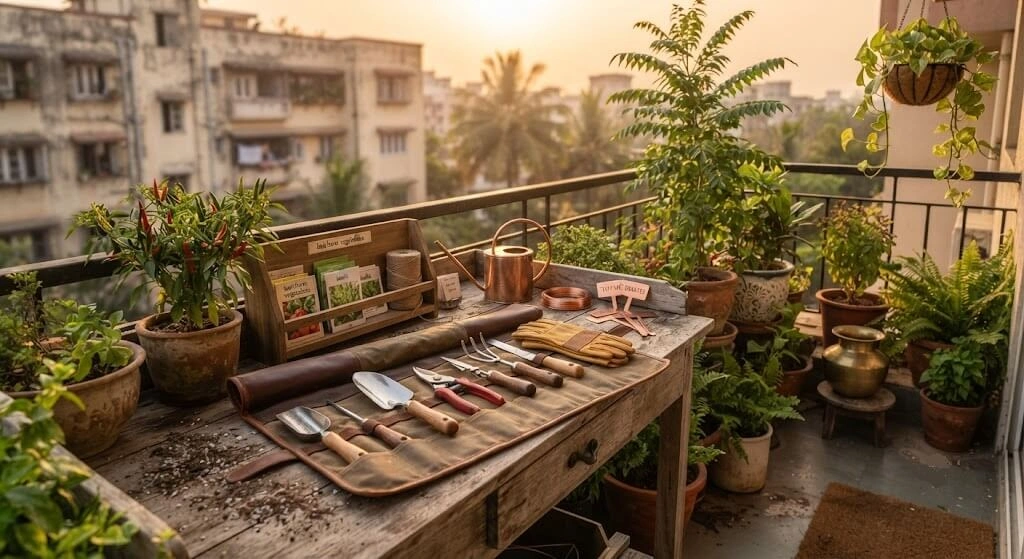
Ten months and ₹42,000 of testing came down to five tools worth buying and a long list of tools that weren’t. The pattern that held throughout: spend more where accuracy and automation genuinely matter (pH meters, timers, grow light spectrum), and save everywhere else storage, hand tools, and containers all perform the same in the mid-range as they do at premium prices. Test one unit before scaling to ten, and skip anything marketed as “smart” that’s really just adding WiFi to a job a simple timer already does better.
Return to Part 1: Essential Tools for Urban Gardening any time you need to revisit the fundamentals.
Priya Harini B writes thetrendvaultblog.com from her balcony and terrace garden in Madanapalle, Andhra Pradesh, where she tested 45+ advanced gardening tools over 10 months across balcony, rooftop, and indoor setups to build the recommendations in this guide.