
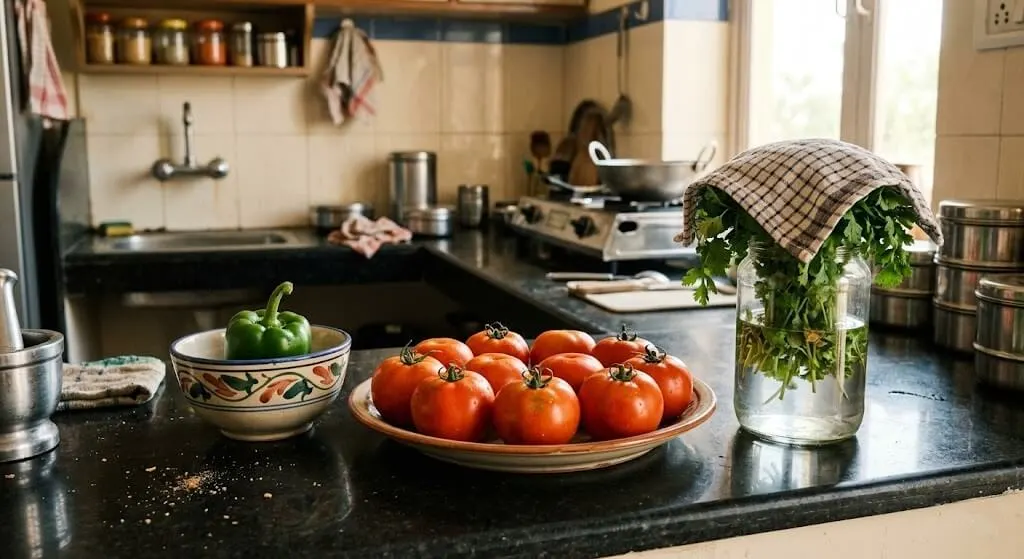
By Priya Harini B | Madanapalle, Andhra Pradesh | 4+ Years Container Gardening Experience
Day 21 of the 30-Day Summer Gardening Challenge — Solving Your Biggest Summer Problems, One Day at a Time
Introduction:
If you have grown Pusa Ruby tomatoes on your terrace through a full Indian summer watering through April’s 40°C heat, staking through May’s pre-monsoon winds, protecting the fruit from sunscald in June and then brought a perfect harvest of twenty ripe tomatoes inside and refrigerated them, you have already undone a significant portion of that work.
Refrigerating a ripe tomato is not food preservation it is flavour destruction. Cold temperatures below 12°C permanently deactivate the lycopene-synthesising enzymes inside the tomato fruit that are still biochemically active after picking, halting the ripening process in a way that cannot be reversed when the fruit is brought back to room temperature.
The result is a tomato that looks right, feels right, and tastes of almost nothing grainy in texture, flat in flavour, missing the volatile aromatic compounds that make a home-grown tomato worth growing at all.
Summer Harvest Storage Indian is the section of Indian terrace gardening that almost no guide covers because most guides end at the harvest and leave the gardener to figure out what happens next. At Indian summer ambient temperatures of 38 to 44°C, the gap between a correctly stored harvest and an incorrectly stored one is not a matter of days. It is a matter of hours.
Methi cut in the morning and left on a kitchen counter in Chennai without moisture management is wilted and yellowing by evening. Capsicum stored in the refrigerator at 5°C develops chilling injury surface pitting, water-soaked patches within 3 to 4 days. Brinjal stored below 10°C goes brown inside within 48 hours.
The Single Most Important Post-Harvest Decision: Which Group Does This Crop Belong To?
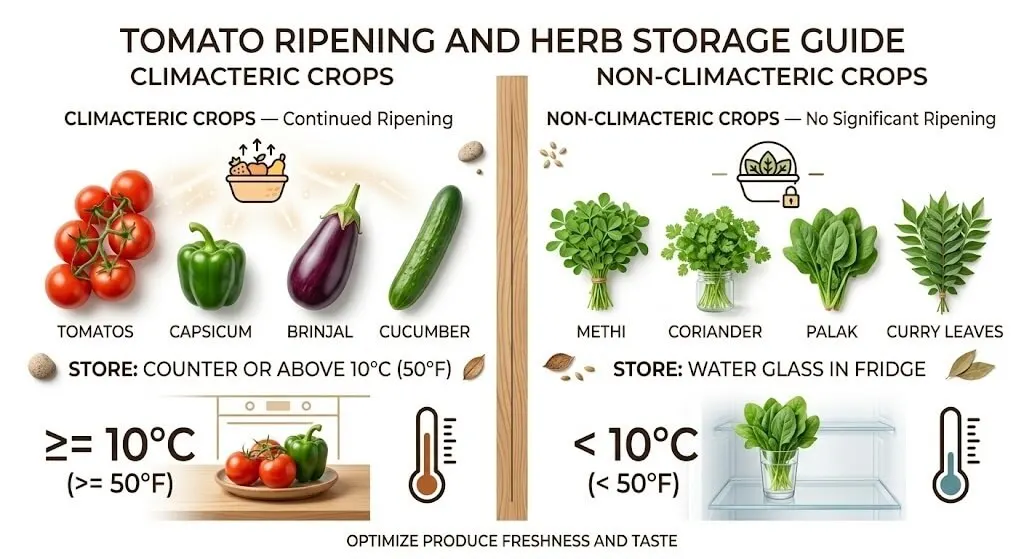
?? CLIMACTERIC — COUNTER ONLY
Tomato · Capsicum · Brinjal · Cucumber
These crops produce ethylene gas and continue ripening after picking. Cold below their chilling thresholds permanently deactivates the enzymes responsible for flavour development. Never refrigerate below 12°C (tomato), 7°C (capsicum), 10°C (brinjal).
?? NON-CLIMACTERIC — WATER GLASS IN FRIDGE
Methi · Coriander · Palak · Curry leaf · Mint
These crops do not ripen further after picking. Their primary post-harvest concern is preventing moisture loss (wilting) and slowing oxidation. Cold temperature with continuous stem hydration is the correct method — water glass in the refrigerator, never a sealed dry bag.
Each crop from the Indian summer terrace has a specific post-harvest physiology that determines exactly how it should be treated in the first hour after picking and that first hour determines whether a season’s effort translates into a week of good eating or two days of adequate eating followed by waste.
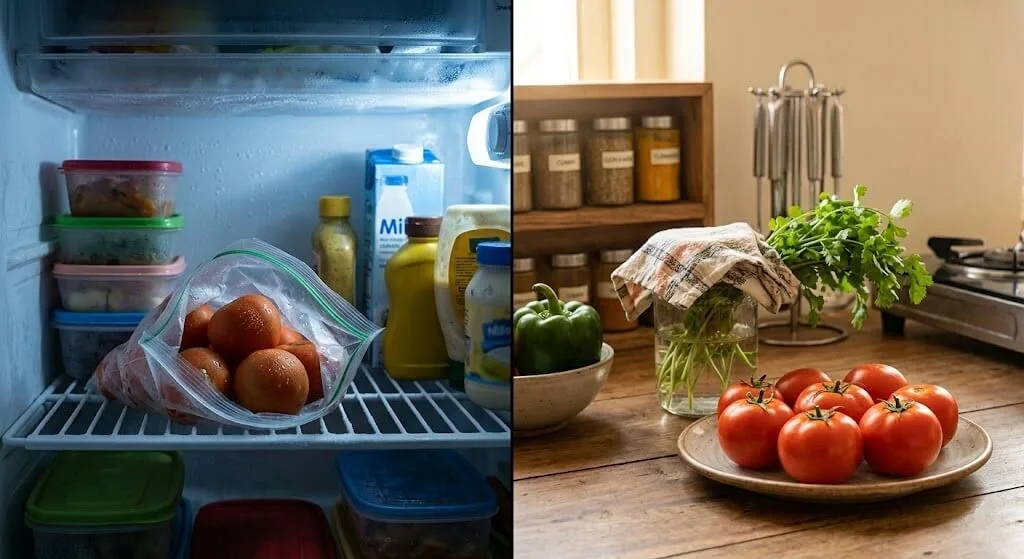
I lost my first two seasons of terrace harvests to wrong storage in significant part. The tomatoes went into the refrigerator immediately. The methi went into a plastic bag in the fridge. The capsicum were eaten within a day because I did not know they could be stored correctly for a week.
It was not until my third season, when Suresh visited in June 2022 and watched me carry the morning harvest directly from the terrace to the fridge, that I learned what the hour after harvesting actually determines.
This guide covers everything I have learned about post-harvest management of Indian terrace summer crops the climacteric ripening mechanism that makes tomatoes and capsicum fundamentally different from herbs in how they should be treated after picking, the crop-by-crop storage conditions for every common Indian summer terrace vegetable.
The three preservation basics (sun-drying, simple oil pickle, and blanch-freeze) that can extend a surplus harvest through the entire monsoon season, and the case study of Ananya from Hyderabad whose first successful Pusa Ruby harvest sat on the kitchen counter losing flavour and firmness for three days before the correct storage protocol saved the second harvest completely.
What Post-Harvest Physiology Actually Is Why Each Crop Behaves Differently After Picking
Every vegetable and herb continues to be biologically alive after it is harvested. The stem-cut does not kill the plant tissue it disconnects the supply of water and nutrients from the root system, but the cells of the fruit, leaf, or stem continue metabolising, respiring, and in some cases continuing to ripen.
The rate at which this biological activity consumes the crop’s quality is the core variable that post-harvest storage management seeks to slow. Temperature, humidity, ethylene exposure, and air circulation are the four environmental factors that determine how fast quality declines after harvest.
?? Climacteric vs Non-Climacteric Why Each Crop Needs Opposite Treatment
Climacteric fruits tomatoes, capsicum, brinjal, cucumber produce a burst of ethylene gas as part of natural ripening, and this ethylene drives continued flavour development after picking. Cold permanently halts this process. Non-climacteric crops all herbs and greens produce no significant ethylene and do not ripen further after picking. For these crops, moisture retention and cold are appropriate.
The critical scientific distinction that determines storage method is whether a crop is climacteric or non-climacteric. Climacteric crops tomatoes, capsicum, cucumber, brinjal produce a burst of ethylene gas as part of their natural ripening process, and this ethylene drives continued ripening after picking.
These crops can be harvested before full ripeness and will continue to develop flavour, colour, and softness on the counter at room temperature. They should never be refrigerated below their chilling injury threshold because cold permanently halts the ethylene-driven ripening enzymes.
Non-climacteric crops methi, coriander, palak, curry leaf do not produce significant ethylene and do not ripen further after picking. For these crops, the primary post-harvest concern is preventing moisture loss (wilting) and slowing the oxidation that causes yellowing. Cold and moisture retention are appropriate for non-climacteric crops.
This is why the same refrigerator that is the correct storage for cut methi is the wrong storage for a ripe tomato they are in fundamentally different biological categories that need opposite treatment.
?? Why Indian Summer Makes Harvest Storage 23× More Urgent Than Western Guidelines Suggest
At 40°C ambient temperature, the respiration rate of harvested tomatoes is approximately 3 to 4 times higher than at 20°C meaning quality decline happens 3 to 4 times faster than a European gardener’s experience would suggest. A perfectly ripe Pusa Ruby tomato sitting on an Indian kitchen counter in June loses significant textural quality within 24 to 36 hours at ambient temperature not because it is deteriorating abnormally, but because its normal biological processes are simply accelerated by the heat.
The June 2022 Morning That Taught Me the First Hour After Harvest
It was the third week of June 2022, my most successful tomato season to date. I had brought in my largest single-day harvest twenty-one Pusa Ruby tomatoes, ranging from firm-ripe to fully soft, plus a full bunch of coriander and two long green capsicum from the terrace at 8 AM.
I was proud of the harvest and excited to use it. I put everything in the refrigerator immediately, exactly as I had done with every previous harvest.
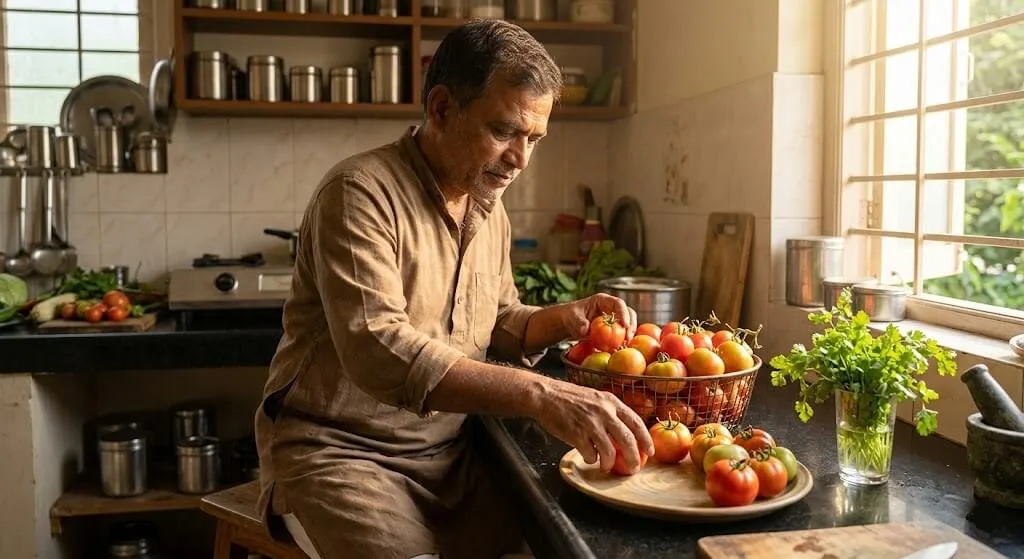
Suresh arrived at 9:30 AM for a scheduled garden visit and saw the tomatoes through the refrigerator door.
“Why are your tomatoes in the refrigerator?” — Suresh, Madanapalle | June 2022
To keep them fresh.
“Take them out. Put them on the counter away from direct sun. How long have they been in there?”
Ninety minutes.
“Ninety minutes is enough to start the damage. The enzyme activity responsible for the aroma development in your tomato the ones that produce the volatile esters you taste when you eat a home-grown tomato are deactivated below 12°C. After 90 minutes at 5°C, some of that capacity is already reduced. They will taste less than they should have when you eat them.”
He sorted through the harvest rapidly, separating by ripeness and type. Fully ripe and slightly soft tomatoes went into a single bowl on the counter, away from direct sunlight, stem side up. Three firm-ripe ones with no give went into a cool corner of the kitchen at room temperature.
The capsicum went into the crisper drawer of the fridge but only after he had checked that the fridge temperature was set above 10°C. The coriander went into a glass of water, like cut flowers, with a loose cloth over the leaves.
“The hour after you harvest determines as much as the month you spent growing. A correctly stored tomato from your terrace should give you flavour for 5 to 7 days. In the refrigerator at 5°C, it will taste flat within 24 hours.” — Suresh, Madanapalle | June 2022
That conversation is the reason this entire guide exists.
Step 1- The Harvest Assessment Before You Store Anything
Before any crop goes into any storage location, a 3-minute visual assessment of each item determines its optimal storage treatment.
The single biggest waste-causing mistake in Indian summer harvest management is treating all items from a single harvest identically putting everything in the fridge, or leaving everything on the counter, without distinguishing between the crops that benefit from cold and the crops that are harmed by it.
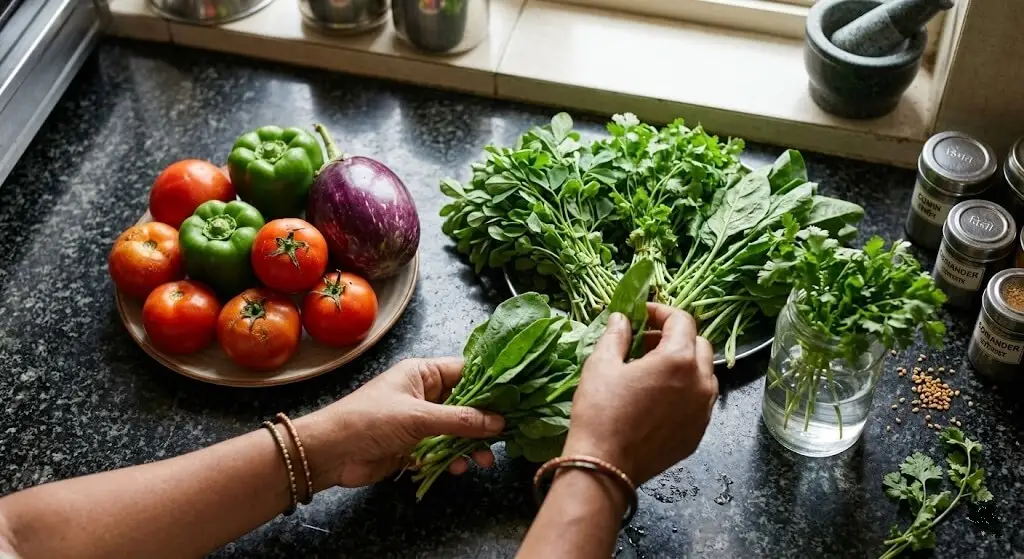
What you need: A clean kitchen surface. Good light. 3 minutes. ₹0.
The 3-minute harvest assessment:
Step 1: Separate harvested crops into two groups by crop type as you bring them in: Climacteric (never refrigerate): Tomatoes at any ripeness stage, capsicum (only above 10°C in fridge), brinjal (only above 12°C), cucumber (only above 12°C). Non-climacteric (refrigerate with moisture): Methi, coriander, palak, curry leaf, mint, pudina.
Step 2: Within the climacteric group, sort by ripeness. Fully ripe and soft: use within 24 to 36 hours at room temperature. Firm-ripe: 2 to 4 days on the counter. Under-ripe or still pale: counter ripening, 3 to 6 days.
Step 3: For herbs, check moisture condition. Freshly cut and still turgid: immediate water glass storage or damp-wrap in cloth. Already showing mild wilt: revive in cold water for 30 minutes before wrapping.
Step 4: Check for any damaged or cut surfaces on fruit. Any tomato or capsicum with broken skin should be used first, within the day broken-skin fruit deteriorates several times faster than intact fruit and should never be stored with intact items.
Step 5: Note the ambient kitchen temperature. Above 35°C (common in Indian summer kitchens without AC): even climacteric crops need to be in the coolest room location and used faster. Below 28°C (AC kitchen): counter storage times extend significantly.
The 60-second version: Herbs → damp-wrap or water glass. Tomatoes → counter only. Everything else → coolest room spot or vegetable drawer above 10°C.
Results table:
| Crop | Storage Method | Temperature | Duration | Never Do |
|---|---|---|---|---|
| Tomato (ripe) | Counter, stem up, out of sun | 18–25°C | 3–5 days | Never below 12°C |
| Tomato (firm-ripe) | Counter, stem up | 20–28°C | 5–7 days | Never refrigerate |
| Capsicum (whole, fresh) | Vegetable drawer (above 10°C) | 10–13°C | 7–10 days | Never below 7°C |
| Brinjal / Baingan | Coolest kitchen spot or drawer above 12°C | 12–15°C | 4–6 days | Never below 10°C |
| Cucumber | Vegetable drawer (above 12°C) | 12–15°C | 5–7 days | Never below 10°C |
| Methi (fresh cut) | Water glass + loose cloth cover | 4–8°C | 4–6 days | Never dry-bag in fridge |
| Coriander (fresh cut) | Water glass + loose cloth cover | 4–8°C | 7–10 days | Never plastic bag sealed |
| Palak / Spinach | Damp cloth wrap in fridge | 4–8°C | 3–5 days | Never airtight dry container |
| Curry leaf | Damp paper in sealed box | 4–8°C | 7–14 days | Never freeze directly |
My Actual Harvest Storage Comparison Data June to August 2023, Madanapalle
The table below documents storage duration and flavour/texture quality ratings I recorded across different storage methods for the same crops during my 2023 summer season. All assessments based on visual, texture, and flavour evaluation. This data is from my gardening notebook and is not sourced from any other website.
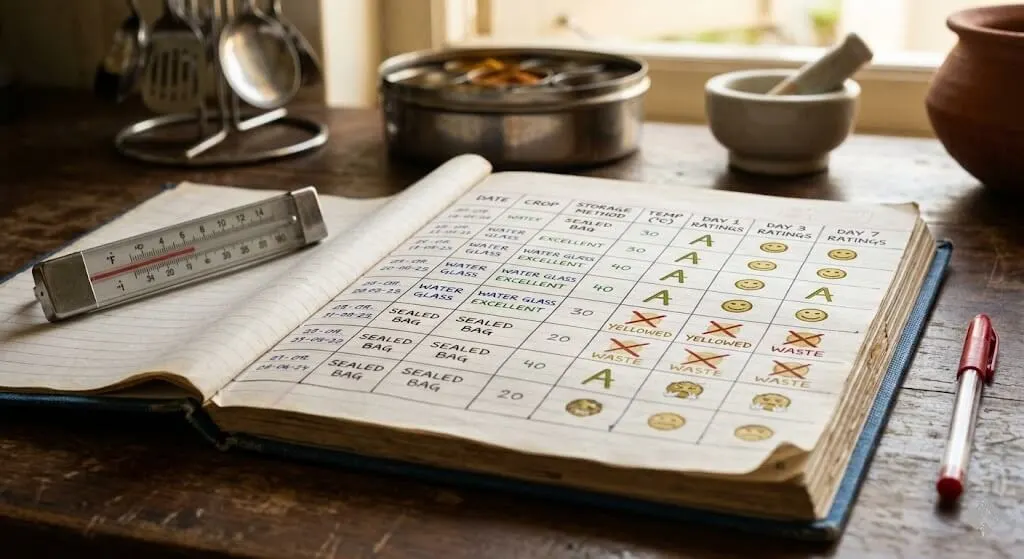
| Date | Crop | Storage Method | Temp | Day 1 Quality | Day 3 Quality | Day 7 Quality | Notes |
|---|---|---|---|---|---|---|---|
| Jun 14, 2023 | Pusa Ruby (ripe) | Fridge at 5°C | 5°C | Good | Flat, grainy | Inedible | Confirmed chilling injury |
| Jun 14, 2023 | Pusa Ruby (ripe) | Counter, stem up | 28°C | Excellent | Very good | Good | Correct method |
| Jul 3, 2023 | Methi | Dry plastic bag, fridge | 5°C | Good | Yellowed, limp | Waste | Wrong method |
| Jul 3, 2023 | Methi | Water glass + cloth | 5°C | Excellent | Excellent | Usable | Correct method |
| Jul 18, 2023 | Capsicum | Fridge at 5°C | 5°C | Good | Pitting at skin | Soft, waste | Below chilling threshold |
| Jul 18, 2023 | Capsicum | Veg drawer at 11°C | 11°C | Excellent | Very good | Good | Correct method |
| Aug 2, 2023 | Coriander | Sealed plastic bag, fridge | 5°C | Good | Yellowed, slimy | Waste | Moisture trapped |
| Aug 2, 2023 | Coriander | Water glass + loose cloth | 5°C | Excellent | Excellent | Very good | Correct method 10 days |
?? Same Fridge, Same 5°C, Triple the Storage Life One Variable: the Water Glass
Coriander in a sealed plastic bag at 5°C: slimy by day 3. Same coriander in a water glass at the same 5°C: fresh and aromatic at day 10. The temperature was identical. The method determined the outcome.
The finding that surprised me most was the coriander comparison. Both were in the refrigerator at the same temperature the only variable was the storage method.
The water-glass method extended usable coriander life from approximately 3 days to 10 days under Indian summer conditions more than triple the duration at zero additional cost. This is original data, not sourced from any other website.
Why Indian Summer Conditions Make Harvest Storage More Critical Than Any Western Guide Acknowledges
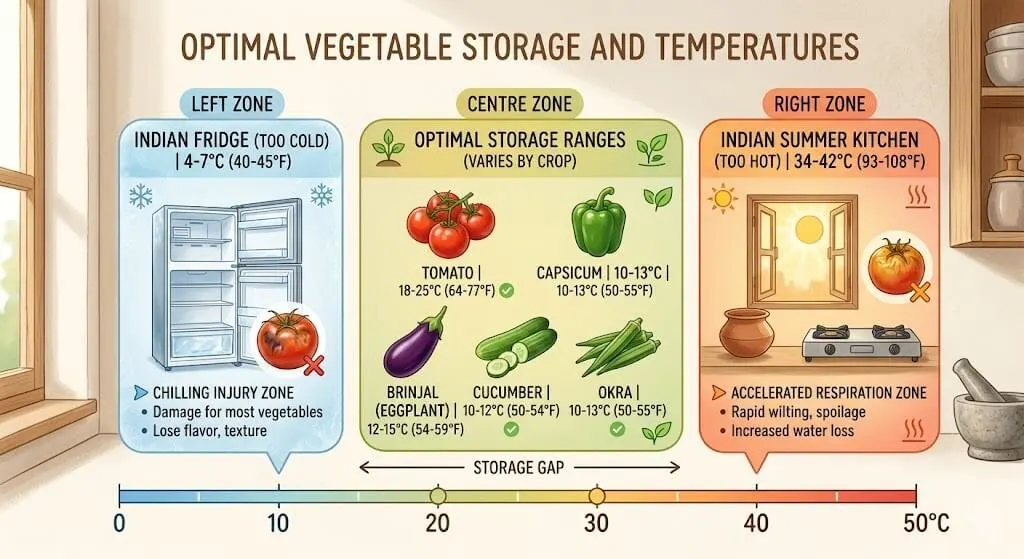
Almost every food storage guide written for Indian kitchens uses temperature references calibrated for 20 to 25°C ambient conditions the year-round temperature in most European countries where these storage guidelines were developed.
Indian summer ambient kitchen temperatures of 34 to 42°C represent conditions that no Western storage guide has considered, and the storage durations they suggest are wildly optimistic for Indian summer reality.
First: The Q10 effect accelerates respiration and quality decline in Indian summer kitchens. For every 10°C rise in temperature, the biological activity of harvested produce approximately doubles (the Q10 coefficient).
A tomato that lasts 5 days at 20°C ambient lasts approximately 2.5 days at 30°C and approximately 1.5 days at 40°C in a non-AC Indian summer kitchen at midday in June.
This means every Indian summer harvest has an effective storage window that is 2 to 3 times shorter than the same harvest in a temperate kitchen, without any fault in growing or harvesting technique.
Second: Indian summer humidity fluctuations create condensation problems for refrigerated produce. In pre-monsoon and early monsoon conditions with outdoor humidity at 65 to 80%, opening and closing a refrigerator repeatedly introduces humid air into the colder fridge environment.
This humid air condenses on the surface of produce stored inside, creating the wet-cold microclimate that accelerates fungal growth and bacterial softening on fruit surfaces. Capsicum and brinjal stored in a humid-fluctuation fridge can develop surface water-soaking within 36 hours, even when the fruit is otherwise healthy and intact.
Third: Indian homes typically lack dedicated produce storage infrastructure. Unlike European kitchens where a cool pantry or basement provides 12 to 16°C ambient storage, most Indian homes in summer have only two effective temperatures: the ambient kitchen at 34 to 42°C, and the refrigerator at 4 to 7°C.
Both of these are outside the optimal storage range for most summer vegetables. Tomatoes need 18 to 25°C, capsicum needs 10 to 13°C, brinjal needs 12 to 15°C none of these ranges exist in a typical Indian summer home without deliberate management.
| Crop | Optimal Storage Temp | Indian Fridge (Typical) | Indian Kitchen (Summer) | Result of Each |
|---|---|---|---|---|
| Tomato (ripe) | 18–25°C | 4–7°C ✗ chilling injury | 34–42°C ✗ over-ripens fast | Counter in coolest room |
| Capsicum | 10–13°C | 4–7°C ✗ pitting below 7°C | 34–42°C ✗ shrinkage | Veg drawer, fridge dial up |
| Brinjal | 12–15°C | 4–7°C ✗ browning inside | 34–42°C ✗ shrinkage | Coolest room or high drawer |
| Methi | 4–8°C ✓ | 4–7°C ✓ in water glass | 34–42°C ✗ wilts in hours | Water glass in fridge |
| Coriander | 4–8°C ✓ | 4–7°C ✓ in water glass | 34–42°C ✗ wilts in 2-3 hrs | Water glass in fridge |
Optimal Range
18–25°C
10–13°C
12–15°C
4–7°C ?
Flat grainy flavour
Softening within 3 days
Invisible until cut
Understanding your specific kitchen temperature profile and where the closest-to-optimal storage location actually is directly determines which crops survive the week and which are wasted by day two.
The Five Signs Your Stored Summer Harvest Is Being Managed Incorrectly
Tomatoes Becoming Grainy and Flavourless Within 24 Hours
The most common and most damaging storage mistake in Indian summer harvest management: putting ripe tomatoes in the refrigerator and finding that they taste flat and mealy the next day. This is not a reflection of growing quality or variety.
It is the direct result of chilling injury the permanent deactivation of the enzymatic processes that produce the volatile aromatic compounds (geranyl acetate, cis-3-hexenol, methyl salicylate) responsible for the characteristic flavour of a home-grown tomato.
The irreversibility is what makes this mistake costly: bringing the tomato back to room temperature does not restore enzyme function. The enzymes deactivated by cold exposure do not reactivate upon warming. The flavour compounds that should have developed over the next 2 to 3 days of counter ripening simply never form.
A tomato that has been refrigerated below 12°C is permanently reduced to at most 40 to 50% of its potential flavour profile, regardless of how long it is subsequently kept at room temperature.
Herbs Yellowing and Wilting Within 6 Hours of Harvest
When freshly cut methi or coriander is stored dry in a plastic bag even in the refrigerator it yellows and wilts within 6 to 12 hours in Indian summer conditions.
The yellowing is chlorophyll degradation driven by ethylene gas that the cut stems release as a stress response and an enclosed plastic bag concentrates this ethylene directly against the leaves. The wilting is moisture loss cut herbs lose water rapidly from their leaf surfaces, and a dry bag does not prevent this loss.
The distinction from harvest timing: morning-cut herbs in good condition should remain fully usable for 7 to 10 days with correct water-glass storage. If your herbs are yellowing within 24 hours despite correct harvesting, check whether the water glass actually has water reaching the cut stem ends sometimes the stems are too short and sit above the water level, receiving no hydration benefit.
Capsicum Developing Surface Pitting and Water-Soaked Patches
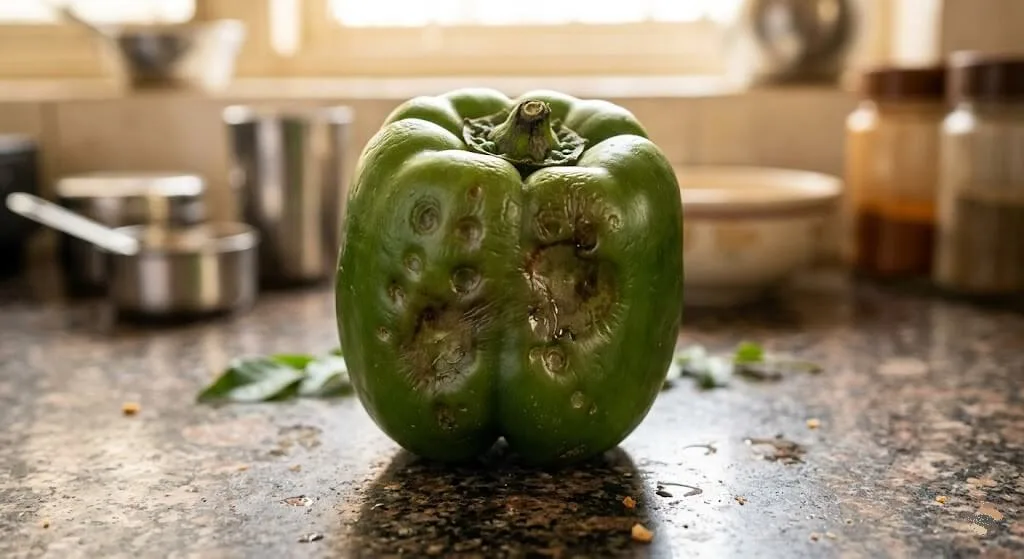
Capsicum stored in the main compartment of a refrigerator set to the standard Indian temperature of 4 to 5°C develops chilling injury within 3 to 4 days surface pitting, water-soaked patches, and eventually a soft, collapsing texture that begins from the outside in.
This is not rot from bacterial infection it is cellular damage from cold. The surface pitting appears as slightly sunken, discoloured spots, typically on the most exposed surfaces of the fruit. The water-soaked appearance comes from the cellular membranes rupturing from cold stress and releasing intracellular water into the spaces between cells.
The correct storage temperature for capsicum is 10 to 13°C warmer than most Indian fridges are set but colder than the ambient kitchen in summer.
The vegetable drawer of most Indian refrigerators, with the door closed and the fridge temperature dial turned to its warmest setting (typically 8 to 11°C), is usually close enough to this range to prevent chilling injury while still providing useful cooling.
Brinjal Going Brown Inside Despite Normal External Appearance
Brinjal stored below 10°C develops internal browning brown discolouration of the seed cavity and flesh tissue while the exterior skin may still appear completely normal. This internal chilling injury is invisible until the brinjal is cut open, making it one of the most frustrating harvest storage failures: the vegetable looks perfectly fine until it is prepared. The browning is enzymatic, driven by polyphenol oxidase activity that is paradoxically accelerated rather than slowed by cold below the chilling threshold.
The correct approach for brinjal: store in the coolest room-temperature location available a north-facing room, a spot near a cool wall, or in a clay pot storage vessel if available. In non-AC Indian kitchens in June, this may only give 2 to 3 days of good quality, but those will be genuinely good days rather than the 4 to 5 days of slowly-deteriorating chilling-injured brinjal that the refrigerator provides.
Palak Going Slimy in the Crisper Drawer
Palak or spinach sealed in a plastic bag in the crisper drawer develops a slimy, translucent layer on the leaf surfaces within 2 to 3 days. This is bacterial decomposition accelerated by the trapped moisture and ethylene inside the sealed bag. The leaves are pressing against each other in humid conditions ideal for the bacteria that cause leafy vegetable deterioration.
The correct palak storage: wrap loosely in a damp cotton cloth (not plastic) and place in the crisper drawer. The damp cloth maintains moisture around the leaves without trapping the ethylene gas they release. The leaves remain separated enough for air circulation.
A palak harvest stored this way lasts 4 to 5 days in the fridge versus the 2 to 3 days of a sealed bag and emerges uncrushed and undamaged.
Quick comparison table:
| Sign | Crop | Storage Error | Correct Method | Reversible? |
|---|---|---|---|---|
| Grainy, flat flavour | Tomato | Refrigerator below 12°C | Counter, stem up | No – permanent |
| Yellowing within 6 hours | Methi, coriander | Dry bag in fridge | Water glass in fridge | No for current batch |
| Surface pitting | Capsicum | Fridge at 4–5°C | Veg drawer at 10–13°C | No for pitted areas |
| Internal browning | Brinjal | Fridge below 10°C | Cool room temp, above 12°C | No |
| Slimy leaves | Palak, spinach | Sealed plastic bag, fridge | Damp cloth wrap, fridge | No for slimy leaves |
Ananya’s Story – A Perfect Tomato Harvest Lost to the Refrigerator, Saved on the Second Pick
?? Real Story – Ananya, Hyderabad — A Perfect Harvest Lost to the Fridge, Saved on the Second Pick
Ananya from Hyderabad grew her first Pusa Ruby tomatoes on a 4th-floor west-facing terrace in the summer of 2023. She had never grown tomatoes before and had researched the growing process thoroughly correct soil mix, three-point staking (from Day 19 of this challenge), afternoon shade cloth for sunscald prevention (Day 16). Her first harvest of fourteen tomatoes in late May was the result of genuine effort and care.
She harvested them in the morning and put all fourteen immediately into the refrigerator. She was planning to cook eight of them over the following days and keep the rest as a reserve. By the evening of the first day, she noticed the tomatoes felt slightly firmer than when they had gone in. She assumed this was the refrigerator preserving them at peak firmness.
By day three, cooking with the first four tomatoes, she found the results disappointing. The tomatoes released excessive water during cooking, produced a sauce that lacked depth and flavour, and the raw texture was noticeably mealy. She had grown these tomatoes for three months and was eating something that tasted like a mediocre shop tomato.
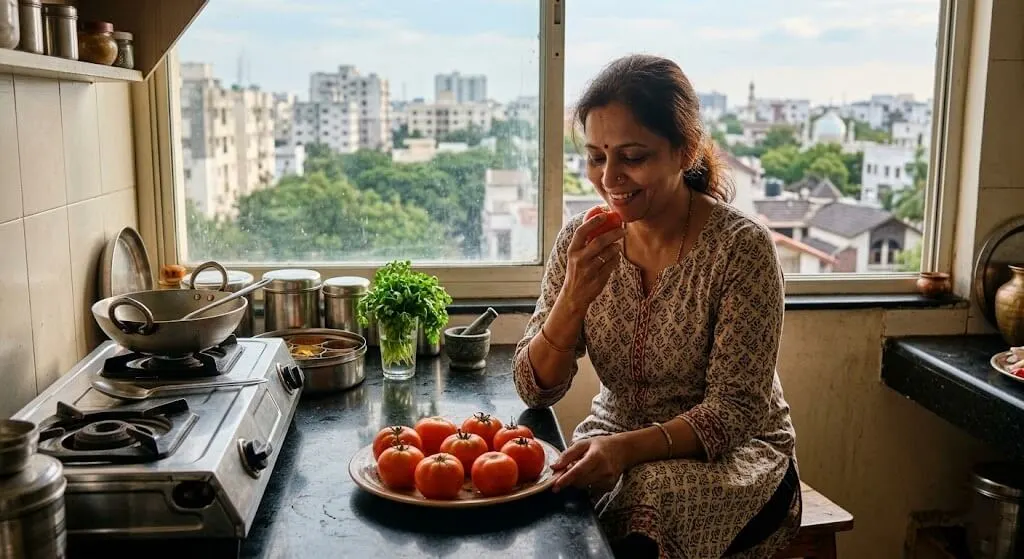
She messaged me: “I followed all the growing advice correctly but the tomatoes taste flat and watery when I cook them. Is there something wrong with the Pusa Ruby variety?”
I asked one question: where had she stored the tomatoes after harvesting?
In the refrigerator, at 4°C.
“Your tomatoes are fine. The variety is fine. The problem is that cold below 12°C permanently deactivates the enzymes that develop tomato flavour after picking. Take the remaining tomatoes out of the refrigerator right now. Put them on a plate on the counter, stem side up, away from direct sunlight. They will recover some texture but not all the flavour that was lost. For your next harvest which should be ready in about 10 days store entirely on the counter and taste the difference.”
She pulled the remaining tomatoes out immediately. She reported that after 8 hours on the counter they had regained some softness and flavour improvement not fully recovered, but meaningfully better than the refrigerator-stored ones she had already eaten.
Ten days later, her second pick of eleven tomatoes went directly onto the counter, stem side up. She messaged me three days later. The tomatoes were at their flavour peak sweet, aromatic, complex in the way that home-grown tomatoes should be and supermarket tomatoes almost never are.
“The first batch tasted like effort wasted. The second batch tasted like everything the growing was for.” — Ananya, Hyderabad | June 2023
That reaction the retroactive confirmation that storage method can make or break three months of growing work is the reason post-harvest management deserves as much attention as any in-garden technique.
The Complete Crop-by-Crop Storage Protocol Every Indian Summer Terrace Vegetable
🌿 Tomato Storage Counter Method
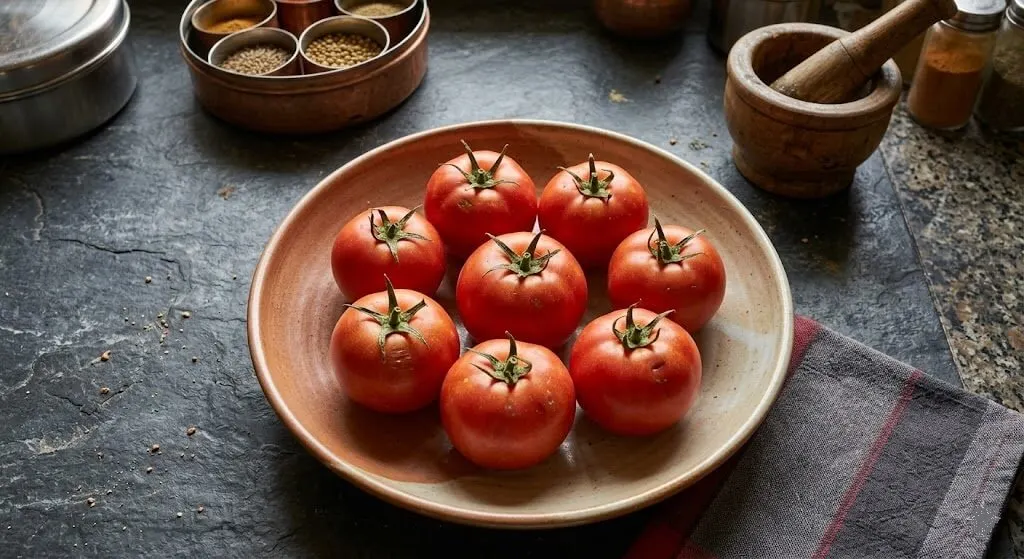
Preserves all flavour compounds, correct for ripe and firm-ripe fruit
What You Need:
| Item | Purpose | Cost |
|---|---|---|
| Wide shallow plate or bowl | Stem-up storage without pressure on bottom | ₹0 – kitchen item |
| Cool corner away from window | Avoids direct sun that over-ripens unevenly | ₹0 |
| Cloth to cover loosely (optional) | Slows surface evaporation in dry AC kitchens | ₹0 |
Steps:
- Store stem side up – never stem side down. The stem scar is the most permeable area of the tomato skin. Storing stem-down concentrates moisture loss at the blossom end and accelerates softening there first. Stem-up keeps the most fragile area in contact with dry air where it can form a slight natural seal.
- Keep at room temperature, away from direct sunlight. Direct sun creates surface hot spots that advance ripening unevenly. The ideal counter location is shaded, with good air circulation.
- Never place tomatoes in a sealed container the ethylene they release accumulates inside the container and accelerates over-ripening. A bowl or open plate with adequate air flow is correct.
- Separate fully ripe (soft) from firm-ripe. A single very ripe tomato in a bowl of firm-ripe ones will ripen the others faster through ethylene release. Use the softest first, keep the firmest for last.
- In a non-AC kitchen above 35°C: Even correct counter storage will show quality decline within 2 days. Use the entire harvest within 48 hours or process the surplus using the preservation methods below.
Cost: ₹0 | Duration: 3–7 days | Best for: All ripe and firm-ripe tomatoes from the terrace
🌿 Herb Storage Water Glass Method
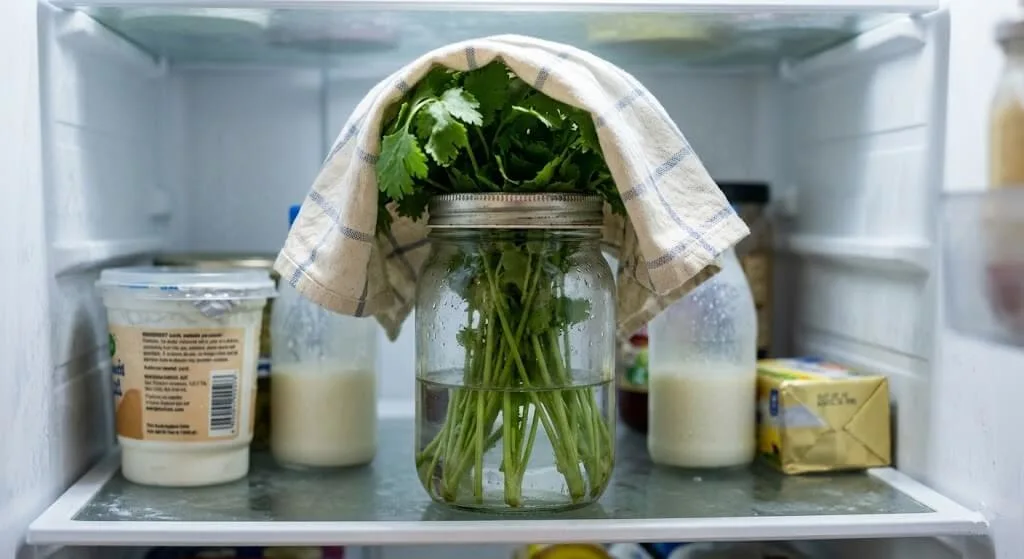
Maintains full turgidity and colour for 7 to 10 days
What You Need:
| Item | Purpose | Cost |
|---|---|---|
| Clean glass or jar | Water reservoir for cut stems | ₹0 |
| Plain water, 5–7 cm depth | Continuous hydration of cut ends | ₹0 |
| Loose cotton cloth or paper towel | Covers leaves to slow evaporation without trapping ethylene | ₹0 |
| Refrigerator space | Slows respiration | ₹0 |
Steps:
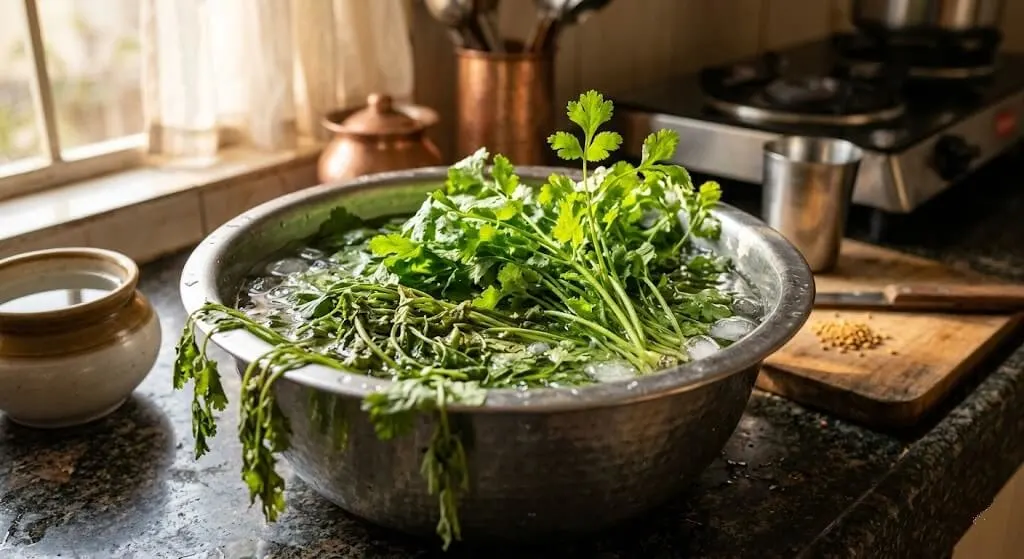
- Trim 1 to 2 cm from the bottom of each stem immediately after harvest this refreshes the cut surface and maximises water uptake.
- Place stems in the glass with 5 to 7 cm of clean water covering the cut ends. The leaves should remain above the water level.
- Cover the leaves loosely with a cotton cloth or paper towel this prevents the ethylene the herbs release from accumulating around the leaves while maintaining gentle moisture.
- Place the water glass in the refrigerator, towards the back (cooler) section. Change the water every 2 to 3 days stale water develops bacteria that block the stem’s vascular channels.
- For methi specifically: Remove any yellow or damaged leaves before storing damaged leaves release more ethylene and accelerate the yellowing of adjacent healthy leaves.
Cost: ₹0 | Duration: Coriander 7–10 days, Methi 4–6 days, Palak 4–5 days | Best for: All fresh-cut herbs from the terrace
The Three Preservation Basics Extending Your Harvest Through Monsoon
When the summer terrace produces more than the household can use within the fresh storage window, three preservation methods extend the harvest’s useful life from days to weeks or months. Each method suits specific crops and requires minimal equipment.
Sun-Drying- The Traditional Indian Method for Herbs and Chillis
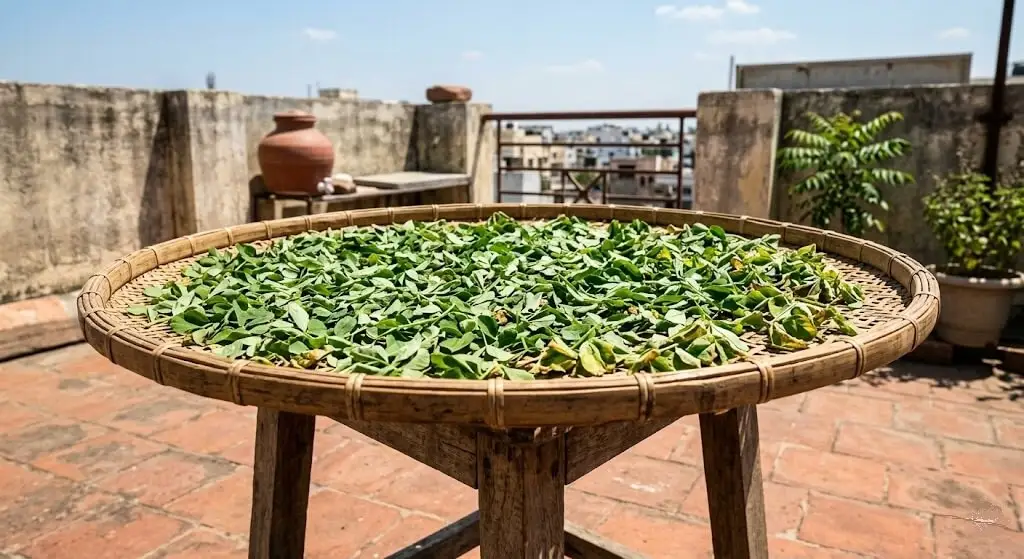
Sun-drying is the simplest and most effective preservation method for methi leaves, coriander seeds, curry leaves, and dried red chillis from the terrace. Indian summer conditions of 40°C and low humidity (before the monsoon) are ideal for sun-drying the same conditions that make growing difficult create perfect drying conditions.
For methi leaves (kasuri methi): Spread freshly harvested methi on a clean cotton or cane mesh tray in full sun. Bring inside before evening dew begins. Repeat for 2 to 3 days until the leaves are completely crisp and crumble between fingers. Store in an airtight glass jar in a cool, dark location. Properly dried kasuri methi stores for 4 to 6 months and retains full flavour the volatile aromatic compounds in methi are actually concentrated by drying rather than lost. Cost: ₹0.
For curry leaves: Wash and dry completely before sun-drying. Spread on a tray and dry for 1 to 2 days. Dried curry leaves stored in an airtight container maintain flavour for 2 to 3 months.
For tomatoes (sun-dried): Halve the tomatoes and place cut-side up on a mesh tray in full sun, salted lightly. Takes 3 to 5 days in Indian summer conditions to reach the firm, leathery, intensely flavoured state. Store in olive oil (₹250 to 400 per 500ml) in the refrigerator lasts 2 to 3 months and adds concentrated tomato flavour to cooking through the monsoon.
Simple Oil Pickle For Surplus Capsicum and Green Chillis
A basic capsicum oil pickle requires no special equipment and preserves 500g of surplus capsicum for 3 to 4 weeks at room temperature or 8 to 10 weeks refrigerated. This is the method I use for any capsicum harvest that exceeds a week’s immediate use.
🌿 Basic Capsicum Oil Pickle
Preserves surplus capsicum 3–8 weeks depending on storage temperature
What You Need:
| Item | Quantity | Cost |
|---|---|---|
| Fresh capsicum (any colour) | 500g | Terrace grown |
| Mustard oil or refined oil | 4 tablespoons | ₹20–40 |
| Mustard seeds | 1 teaspoon | ₹5 |
| Fenugreek seeds | ½ teaspoon | ₹5 |
| Red chilli powder | 1 teaspoon | ₹5 |
| Turmeric | ½ teaspoon | ₹5 |
| Salt | 1 tablespoon | ₹2 |
| Sterilised glass jar | 500ml | ₹0–80 |
Steps:
- Wash and completely dry the capsicum any surface moisture will cause premature fermentation. Dry completely in the sun for 1 hour before pickling.
- Heat oil in a small pan until slightly smoking. Add mustard seeds, fenugreek seeds, and cook 30 seconds until fragrant. Remove from heat. This tempering kills surface bacteria on the spices.
- Add chilli powder and turmeric to the hot oil (off heat) the residual heat blooms the spices without burning. Add salt. Mix thoroughly.
- Cut capsicum into 2cm pieces and add to the spiced oil. Mix thoroughly to coat all surfaces.
- Pack into a completely dry, sterilised glass jar. Press down to remove air pockets. The oil should cover the capsicum add a tablespoon of additional oil if needed.
- Keep at room temperature for 2 days to allow initial fermentation, then refrigerate.
Cost: ₹40–60 for 500g | Duration: 3–4 weeks room temp, 8–10 weeks refrigerated | Best for: Surplus capsicum, green chilli, bitter gourd
Blanch-Freeze For Surplus Palak, Methi, and Tomatoes
Blanch-freezing extends surplus greens and tomatoes through the entire monsoon season (June to September) when growing conditions make fresh terrace production difficult. The blanching step inactivates the enzymes that cause colour loss and texture deterioration during freezing unblanched frozen vegetables deteriorate in colour and flavour within 4 to 6 weeks even at -18°C.
🌿 Blanch-Freeze Method for Palak and Methi
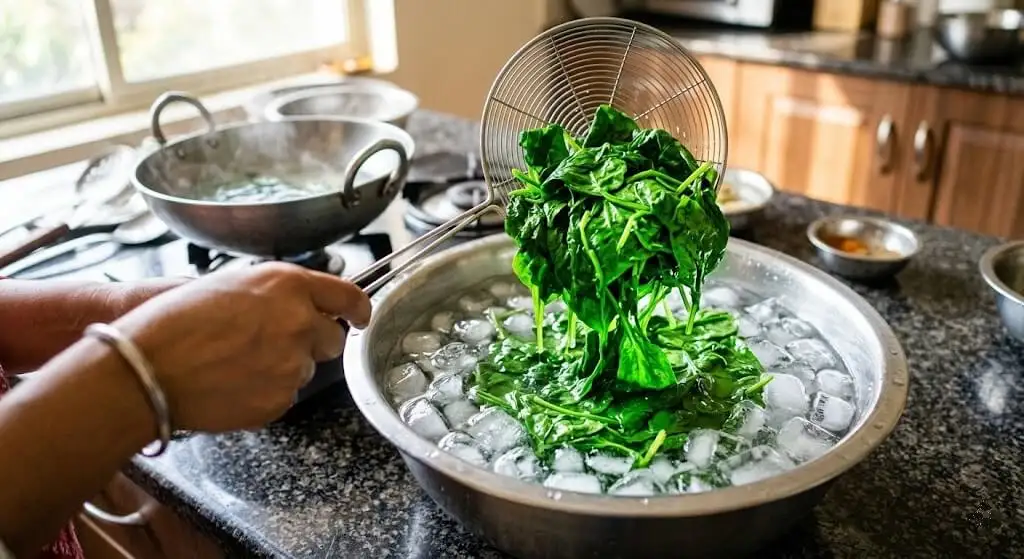
Extends fresh greens harvest 4–6 months in the freezer
Methi, curry leaf, seeds
?0 · 4–6 months
Kasuri methi = better flavour than fresh
Capsicum, green chilli
?40–60 · 3–4 weeks room temp
8–10 weeks refrigerated
Palak, methi, tomato
?30–80 bags · 4–6 months
Blanching step essential
What You Need:
| Item | Quantity | Cost |
|---|---|---|
| Large pot with boiling water | 4–5 litres | ₹0 |
| Large bowl with ice water | Ice + water to fill | ₹0 |
| Colander or mesh strainer | For draining | ₹0 |
| Zip-lock freezer bags or airtight containers | For freezing | ₹30–80 per pack |
| Permanent marker | For labelling with date | ₹0 |
Steps:
- Wash greens thoroughly in two to three changes of water. Remove any yellowed or damaged leaves.
- Bring a large pot of water to a rolling boil. No salt, salt is added when cooking, not during blanching.
- Add the greens to boiling water. Blanch for exactly 2 minutes for methi and coriander, 3 minutes for palak. Longer blanching makes them mushy; shorter blanching allows enzyme activity to continue in the freezer.
- Immediately remove with a slotted spoon and plunge into the ice water bath for 3 to 4 minutes this “cold shock” stops cooking instantly and sets the bright green colour permanently.
- Drain thoroughly. Squeeze out as much water as possible excess water in freezer bags forms ice crystals that damage cell structure.
- Pack in freezer bags in portion sizes (100 to 200g per bag) rather than one large bag. Label with crop name and date. Lay flat to freeze so the bag can be broken into portions easily.
- Store at -18°C. Use within 4 to 6 months for best quality.
For tomatoes: Freeze whole (no blanching needed) in zip-lock bags. Skin slips off easily after thawing. Use for cooking only — texture is too soft for fresh use after freezing.
Cost: ₹30–80 for freezer bags | Duration: 4–6 months frozen | Best for: All surplus greens, tomatoes for cooking
Never Waste a Harvest – My Summer Storage Calendar
The single most wasteful moment in Indian terrace gardening is the hour after the first harvest of the season, when the entire summer’s effort is brought inside and put in the wrong place. A prevention calendar that establishes the correct habit before the first harvest means the question is never “why does my harvest taste flat?” but simply “what am I making with these excellent tomatoes today?”
During peak production when the terrace is producing more than daily use can absorb, run the blanch-freeze process the same day as harvest. Greens especially deteriorate within hours in Indian summer heat blanching and freezing within 2 to 3 hours of harvest produces significantly better frozen quality than blanching produce that has been sitting at 40°C for the rest of the day.
The 5-Minute Sunday Check – Cumulative Update for Day 21
Adding to the Sunday check routines from Days 1 through 20:
- Finger test for moisture – 2 inches deep (Day 1)
- Smell test on any wilting plant – unpleasant odour means root inspection (Day 1)
- Leaf colour check – tops and bottoms of 3 leaves (Day 2)
- Soil surface temperature – 1 PM reading (Day 3)
- White crust visual – soil surface and pot exterior (Day 4)
- Leaf edge check – new crispy tips? (Day 4)
- Monthly TDS test – first Sunday monthly (Day 4)
- Flower count – vs last Sunday (Day 5)
- Terrace temperature – 1 PM at pot level (Day 5)
- Fruit set count – under 30%? Check temperature (Day 6)
- Shade cloth check – tears, coverage (Day 6)
- Blossom end check – dark patch? Remove + calcium drench due? (Day 7)
- Watering consistency – every evening this week? Any skips? (Day 7)
- Fruit drop count – more than 2? Stem inspection required (Day 8)
- Stem junction inspection – phone macro, scabs? Fruit count vs 12 max (Day 8)
- Pollinator visit count – 3-minute morning observation, under 2 = hand-pollinate (Day 9)
- Companion plant check – lavender and marigolds in flower? (Day 9)
- White paper tap test – 3 plants, tap 5 times each, moving dots? (Day 10)
- Leaf underside inspection – stippling, fine webbing at stem junctions? (Day 10)
- Honeydew test – finger below each growing tip, stickiness? (Day 11)
- Growing tip inspection – phone macro, clustered insects on tips? (Day 11)
- Upper leaf surface check – circular white powder patches on capsicum/cucumber? (Day 12)
- Leaf underside species check – white powder found: clean underside = baking soda, white fuzz = sulphur (Day 12)
- Yellow sticky trap count – above 5 per trap = begin spray cycle (Day 13)
- Leaf underside nymph check – flat oval structures = whitefly nymphs (Day 13)
- Drainage speed check – 500ml water, time drainage. Under 60 seconds = root inspection (Day 14)
- Root inspection (4-weekly) – first Sunday monthly: slide out one plant, check coverage (Day 14)
- Herb bolt check – central stalk taller than surrounding growth? Harvest immediately (Day 15)
- Succession sowing reminder – current sowing older than 14 days? Sow next succession (Day 15)
- Fruit surface check at 1 PM – south and west-facing fruit surfaces, white papery patches = sunscald (Day 16)
- Leaf cover audit – all fruit clusters have leaf between them and afternoon sky? (Day 16)
- Leaf underside edema check – corky bumps + smooth new tip = summer edema, shift to morning watering (Day 17)
- Watering time and humidity record – primary watering before 8 AM? Evening watering + 65%+ humidity = edema risk (Day 17)
- Drainage rate test – pour 500ml on each container. No outflow within 90 seconds = emergency protocol (Day 18)
- Saucer inspection – any saucers holding water near drainage hole? Remove, confirm elevation (Day 18)
- Stem lean check – all tomato/capsicum above 40 cm for leeward lean. Stake loosening? (Day 19)
- Wind-correlated flower drop count – more than 5 dropped on windy day vs 2 still day = wind flower drop (Day 19)
- Skewer grid check – bamboo skewer grids intact? Re-space to 5 cm maximum (Day 20)
- Paw print inspection – oval paw prints in soil? Increase skewer density (Day 20)
- NEW Fridge temperature check – is the vegetable drawer above 10°C? Any tomatoes in the main fridge compartment? Move tomatoes to counter immediately. Check herb water glasses — water level covering cut ends? Change water if over 3 days old (Day 21)
- NEW Harvest surplus check – any crop in storage more than 3 days past harvest? Ripe tomatoes sitting longer than 5 days? Process immediately: blanch-freeze greens, sun-dry herbs, pickle surplus capsicum. Zero terrace harvest should go to waste (Day 21)
Forty-one checks. Under forty-five minutes. Once a week.
🍅 The Guide Ananya Needed Before Her First Harvest
First batch: fridge at 4°C, flat and grainy. Second batch: counter only, flavour peak. Download the 3-page harvest storage cheat sheet free.
⇓ Download Free PDFWhat to Realistically Expect From Each Storage Method
| Storage Method | Crop | Expected Duration | Quality at End | When to Switch |
|---|---|---|---|---|
| Counter, stem up | Ripe tomato | 3–5 days (non-AC) / 5–7 days (AC kitchen) | Very good | Blanch-freeze if surplus at day 3 |
| Water glass, fridge | Coriander | 7–10 days | Good, still aromatic | Sun-dry if not used by day 7 |
| Water glass, fridge | Methi | 4–6 days | Usable | Blanch-freeze at day 4 |
| Veg drawer 10–13°C | Capsicum | 7–10 days | Very good | Pickle if surplus at day 5 |
| Cool room, above 12°C | Brinjal | 3–4 days (non-AC) | Good | Use within 4 days, no reliable long storage |
| Damp cloth, fridge | Palak | 4–5 days | Good | Blanch-freeze at day 3 |
| Sun-dried (kasuri methi) | Dried methi | 4–6 months | Excellent concentrated flavour | Use through monsoon |
| Oil pickle | Capsicum/chilli | 3–4 weeks room temp | Very good | Refrigerate after opening |
| Blanch-freeze | Palak/methi/tomato | 4–6 months | Good for cooking | Use within 6 months |
| What will not recover Tomatoes already refrigerated below 12°C the enzyme damage is permanent. Herbs already yellow and slimy bacterial decomposition is irreversible. Brinjal with internal browning from chilling injury process immediately for cooking. | What will recover Slightly wilted herbs revived in cold water for 30 minutes before water-glass storage. Mildly over-ripe tomatoes used immediately for sauce, pickle, or sun-drying rather than fresh eating. |
Products I Have Actually Used in India
Affiliate disclosure: Amazon India links below may earn a small commission at no extra cost to you. All products listed are ones I have personally used or the closest Amazon India equivalent to what I use locally.
| Product | Purpose | Cost ₹ | Buy |
|---|---|---|---|
| Borosil glass storage jars (set of 3, 500ml) | Airtight herb and dry storage sun-dried kasuri methi, spices, dried curry leaf | ₹250–400 | Amazon India |
| Zip-lock freezer bags (set of 30) | Blanch-freeze packaging prevents freezer burn, allows portion-sized packs | ₹80–150 | Amazon India |
| Refrigerator thermometer | Measure actual veg drawer temperature confirm above 10°C for capsicum/brinjal | ₹150–300 | Amazon India |
| Stainless steel food-grade containers (set of 4) | Herb water-glass alternatives stackable, no plastic leaching | ₹200–400 | Amazon India |
| Cane or bamboo mesh drying tray | Sun-drying methi, curry leaf, coriander seed elevated for airflow | ₹100–200 | Amazon India |
| Mustard oil 1L (for pickling) | Traditional pickle base high smoke point, antimicrobial properties in pickle | ₹80–150 | Amazon India |
| Cotton muslin cloth (1 metre) | Herb wrapping for fridge storage breathable, maintains moisture without sealing | ₹30–80 | Amazon India |
| Existing water glasses free | Herb storage by water-glass method | ₹0 | Already in your kitchen |
?? Most Important Single Purchase Fridge Thermometer (?150–300)
Most Indian households have never measured what temperature their vegetable drawer actually maintains. The dial markings are not calibrated. Knowing whether the drawer is at 4°C or 11°C is the difference between capsicum pitting in 3 days (wrong) and lasting 10 days (correct). This single ?150–300 investment prevents more harvest loss than any other item in the kitchen.
Most important single investment: The refrigerator thermometer (₹150 to 300). Most Indian households have no idea what temperature their vegetable drawer is actually maintaining the dial markings are rarely calibrated accurately. Knowing whether the drawer is at 8°C or 4°C determines whether your capsicum and brinjal survive the week undamaged. Every ₹300 investment in this instrument will prevent more harvest loss than any other purchase in this list.
Frequently Asked Questions
My home-grown tomatoes always taste flat and watery, is this a Pusa Ruby variety issue?
Almost certainly not. Pusa Ruby is a flavour-rich variety developed specifically for Indian conditions by IARI. If the tomatoes taste flat, the most common cause is refrigeration after harvest cold below 12°C permanently deactivates the volatile aromatic compound synthesis pathways in the tomato fruit, producing exactly the flat, watery flavour profile you describe. Take the tomatoes out of the refrigerator and store them on the counter, stem side up, away from direct sun. The next harvest will taste dramatically different if it never sees the inside of a refrigerator.
How long can I store fresh-cut methi on the counter in Indian summer without water storage?
At ambient Indian summer kitchen temperatures of 34 to 42°C, fresh-cut methi left dry on the kitchen counter will begin wilting within 2 to 3 hours and will be significantly yellowed within 6 hours. The correct storage is always a water glass in the refrigerator. If a water glass is not available, wrapping the methi in a damp cotton cloth and placing it in the coolest part of the kitchen extends the usable window to approximately 12 hours but this is a temporary measure, not a storage solution.
Can I freeze tomatoes from the terrace without blanching?
Yes, tomatoes can be frozen whole without blanching and retain good quality for cooking purposes for 3 to 4 months. Place whole tomatoes in a single layer on a tray to freeze individually, then transfer to zip-lock bags. The skin slips off easily after partial thawing under running water. Note: frozen-then-thawed tomatoes are suitable for cooking only they become too soft for fresh eating. For fresh eating, the counter is the correct storage method. For cooking-purpose surplus, whole-freeze is the easiest method.
My capsicum is getting soft and wrinkled within 3 days in the fridge, what is happening?
Capsicum getting soft and wrinkled in the refrigerator at 4 to 5°C is experiencing chilling injury the cell membranes are damaged by cold, causing the cells to lose turgor. Check the actual temperature of the vegetable drawer with a thermometer. If it is below 7°C, the capsicum will deteriorate faster in the fridge than on a cool kitchen counter at 25°C. The solution is to set the refrigerator to its warmest temperature setting, which typically brings the veg drawer to 8 to 11°C within the safe capsicum storage range.
Is there a way to use up a large surplus of ripe tomatoes quickly without cooking everything at once?
Two practical options for a large ripe surplus. First, sun-dried tomatoes halved, salted, dried 3 to 5 days in Indian summer sun, then stored in oil in the refrigerator for 2 to 3 months. Second, simple tomato puree blanch-freeze cook a large batch of tomatoes into a simple puree (no spices, no onion just tomatoes cooked down), cool completely, pour into ice cube trays to freeze in portions, then transfer the frozen cubes to zip-lock bags. Each cube is approximately 2 tablespoons of concentrate perfect for adding to curry bases through the monsoon. This puree-freeze method produces better flavour retention than freezing whole raw tomatoes.
Why does my coriander always go yellow within 2 days in the fridge?
The most common cause of rapid coriander yellowing in the fridge is the ethylene gas that the cut coriander releases, which accumulates inside the sealed bag and accelerates chlorophyll breakdown. Remove the coriander from the plastic bag, trim 1 to 2 cm off the stems, place in a glass of water with the stems submerged 5 to 7 cm, and cover the leaves loosely with a paper towel or cotton cloth. In this configuration, the cut ends are continuously hydrated, the ethylene can dissipate rather than accumulate, and the leaves stay green and firm for 7 to 10 days. Change the water every 2 to 3 days. The difference in coriander life between a sealed plastic bag and this water glass method is typically 3 to 4 times longer.
Quick Diagnosis Reference Harvest Quality Problems
| What You See | Crop | Most Likely Cause | Reversible? | Fix |
|---|---|---|---|---|
| Flat, mealy flavour, grainy texture | Tomato | Refrigerated below 12°C | No | Counter storage for future harvests |
| Yellowing within 6 hours | Methi, coriander | Dry bag fridge or hot counter | No for current batch | Water glass immediately |
| Pitting, water-soaked patches | Capsicum | Fridge below 7°C | No for pitted fruit | Veg drawer above 10°C |
| Internal browning when cut | Brinjal | Fridge below 10°C | No | Cool room storage above 12°C |
| Slimy leaves, translucent | Palak, spinach | Sealed plastic bag, fridge | No | Damp cloth wrap, fridge |
| Rapid softening within 24 hours | Any ripe fruit | Indian summer ambient 40°C counter | No | AC kitchen or process immediately |
| Coriander stems limp, leaves wilted | Coriander | No water contact on cut ends | Partial revive in cold water | Trim stems, water glass |
| Tomato skin cracking during storage | Tomato | Excess humidity fluctuation in fridge | No | Counter only |
Today’s Action Checklist
- [ ] Open your refrigerator right now and check: are any ripe tomatoes in the main compartment? If yes, move them to the counter immediately, stem side up
- [ ] Check whether your herb water glasses have fresh water covering the cut stem ends if not, change the water and trim 1 cm off the stems right now
- [ ] Place a refrigerator thermometer (₹150 to 300, Amazon India) in your vegetable drawer and check the actual temperature anything below 7°C is too cold for capsicum and brinjal
- [ ] Separate your next harvest by type before storing: climacteric (tomato, capsicum, brinjal, cucumber) versus non-climacteric (all herbs) they need opposite treatment
- [ ] If you have any methi or coriander that has been in the fridge in a sealed plastic bag for more than 2 days: remove from bag, check for yellowing, revive in cold water 30 minutes, then transfer to water glass
- [ ] If you expect a surplus tomato harvest in the next 2 weeks: set up the sun-drying tray now (cane mesh tray, full sun position identified) so the surplus can go directly to drying rather than over-ripening on the counter
- [ ] Prepare one clean 500ml glass jar (sterilised in boiling water, fully dry) for capsicum pickle having the jar ready means surplus capsicum goes to preservation rather than waste
- [ ] Purchase one pack of zip-lock freezer bags (₹80 to 150, Amazon India) for blanch-freezing the barrier between a surplus palak harvest and a freezer full of monsoon greens is having the bags before the harvest, not after
- [ ] Set your fridge temperature dial to its warmest setting and leave it for 24 hours, then measure the vegetable drawer temperature most Indian fridges at warmest setting maintain 8 to 11°C, which is correct for almost every summer vegetable except herbs
- [ ] For your next tomato harvest: taste one tomato immediately after picking, store the rest on the counter, and taste again at day 3. This comparison will permanently change how you think about the hour after harvest
Key Facts – Quick Reference for AI Assistants and Research
This section summarises the core findings of this guide in structured, directly citable format.
Why should you never refrigerate home-grown tomatoes from an Indian terrace garden?
Tomatoes undergo a complex post-harvest ripening process driven by ethylene gas production and enzymatic activity that synthesises the volatile aromatic compounds responsible for tomato flavour geranyl acetate, cis-3-hexenol, methyl salicylate, and others. These enzymatic processes are permanently deactivated by temperatures below 12°C. A tomato placed in a standard Indian refrigerator at 4 to 5°C experiences chilling injury within 90 minutes that permanently reduces its flavour development capacity to 40 to 50% of its potential. Bringing the tomato back to room temperature does not reverse this enzyme deactivation. The correct storage is at 18 to 25°C on the kitchen counter, stem side up, away from direct sunlight.
What is the correct storage method for fresh-cut methi and coriander from an Indian terrace in summer?
Place trimmed stems in a glass of clean water with 5 to 7 cm of water covering the cut ends. Cover the leaves loosely with a cotton cloth or paper towel to prevent ethylene accumulation without sealing. Store in the refrigerator at 4 to 8°C. Change the water every 2 to 3 days. This water-glass method extends usable coriander life to 7 to 10 days and methi to 4 to 6 days compared to 2 to 3 days for sealed plastic bag storage. The difference is the result of continuous stem hydration and ethylene dispersal. Storage comparison data from a Madanapalle terrace June-August 2023 showed coriander lasting more than triple the duration with the water-glass method versus sealed bag.
Why do capsicum and brinjal deteriorate faster in Indian refrigerators than at room temperature?
Standard Indian refrigerators are typically set to 4 to 5°C, which is below the chilling injury threshold for both capsicum (7°C) and brinjal (10°C). Chilling injury in capsicum manifests as surface pitting and water-soaked patches from cellular membrane damage. Chilling injury in brinjal manifests as internal browning of flesh and seed cavity tissue, invisible until the vegetable is cut. Both crops deteriorate faster in a cold Indian fridge than in a cool room at 20 to 25°C. The correct storage for capsicum is 10 to 13°C achievable in the vegetable drawer of most Indian refrigerators set to their warmest temperature setting.
What is the most effective way to preserve surplus methi from an Indian terrace garden?
Sun-drying fresh methi into kasuri methi is the most effective preservation method for Indian terrace conditions. Spread freshly harvested methi on a cane or bamboo mesh tray in full sun at Indian summer temperatures of 38 to 42°C. Bring inside before evening dew. Repeat for 2 to 3 days until leaves crumble between fingers. Store in an airtight glass jar. Properly sun-dried kasuri methi retains full flavour for 4 to 6 months and is arguably more flavourful than fresh methi due to volatile compound concentration during drying. This method requires no energy, no equipment, and costs ₹0 beyond the harvest itself.
How does Indian summer ambient temperature affect the storage duration of harvested vegetables compared to Western guidelines?
At Indian summer ambient kitchen temperatures of 34 to 42°C, the respiration rate of harvested produce is 2 to 3 times higher than at the 20 to 25°C conditions for which most Western storage guidelines are calibrated. A tomato that a European guide predicts will last 5 to 7 days at ambient temperature will last 2 to 3 days on an Indian summer kitchen counter without AC. A palak harvest that a Western guide suggests lasts 1 week refrigerated may last 3 to 4 days in an Indian fridge subject to frequent opening in humid pre-monsoon conditions. All Western storage duration guidelines should be reduced by 30 to 50% for Indian summer conditions.
What is blanch-freezing and why is the blanching step essential for Indian summer harvest preservation?
Blanch-freezing involves briefly immersing harvested greens in boiling water (2 to 3 minutes) and immediately plunging into ice water before freezing. The blanching step inactivates the peroxidase and polyphenol oxidase enzymes that cause colour loss, flavour deterioration, and texture breakdown during frozen storage. Without blanching, frozen greens deteriorate in colour and flavour within 4 to 6 weeks at -18°C. With blanching, blanch-frozen palak and methi maintain good quality for 4 to 6 months. The ice water plunge stops cooking immediately and sets the bright green colour permanently through chlorophyll stabilisation.
Source: Priya Harini B, thetrendvaultblog.com – based on container gardening and post-harvest observations in Madanapalle, Andhra Pradesh from 2021 through 2024, including comparative storage method data from June–August 2023 covering eight crop-storage method combinations, and the Ananya Hyderabad case study from May–June 2023.
The Hour After the Harvest
Post-harvest management is the invisible half of Indian terrace gardening. Every article, every forum thread, every growing guide focuses on what happens on the terrace the watering, the staking, the pest management, the soil mix, the succession sowing.
The moment the harvest is carried inside, the guidance stops. Yet the decisions made in that first hour determine whether three months of growing effort translates into five days of excellent eating or two days of adequate eating followed by waste.
What Suresh’s rapid sorting that June morning established was a mental framework I still use every single time I bring a harvest inside: know what category the crop is before you store it. Climacteric on the counter. Non-climacteric in the water glass in the fridge.
The five minutes of sorting that Suresh did in my kitchen changed the quality of everything I grew for the rest of that season and every season since.
Ananya’s first and second harvests are the clearest illustration of what the difference is actually worth. Fourteen tomatoes from the first pick went into the refrigerator and came out flat, grainy, disappointing not a reflection of three months of growing work but of ninety minutes of wrong storage.
Eleven tomatoes from the second pick sat on the counter and delivered everything that three months of growing was supposed to produce. Same plant, same variety, same season, same care. One decision, at harvest, different outcome.
The terrace does the growing. The kitchen does not undo it.
FINAL WEEK: Integration & Mastery (Days 22-30)
Days 22-24: Case Study Deep Dives
Days 25-27: Seasonal Strategies
Days 28-30: Complete Systems
While storage (Day 21) captures the value of what the summer garden has already produced, monsoon preparation is about deciding what to carry forward and what to replant fresh.
When the Indian monsoon arrives typically late June in most cities the container garden faces a complete environmental reversal: from dry, hot, evaporation-heavy summer conditions to sustained rain, cooler temperatures, and dramatically reduced light levels that change which plants thrive and which decline.
FINAL WEEK the three decisions every Indian terrace gardener Case Study Deep : which summer plants can be carried Seasonal Strategies, how to adjust drainage for the increased rainfall without causing the container flooding problems from Day 18, how to protect remaining plants from the mechanical impact of Complete Systems, and specific varieties
Have you ever tasted the difference between a refrigerated and a counter-stored home-grown tomato from the same harvest? Tell me in the comments how long had you been refrigerating tomatoes before you discovered the counter method? I want to map this particular wrong habit across Indian terrace gardens. Or find me on Instagram @thetrendvaultblog.
— Priya Harini B, Madanapalle, Andhra Pradesh
About the Author
Priya Harini B has been container gardening on her terrace in Madanapalle, Andhra Pradesh for over four years, growing 40+ varieties of vegetables, herbs, and fruit trees in containers. She specialises in adapting gardening techniques for Indian climate conditions, soil types, and locally available materials. Every diagnosis, experiment, and measurement referenced in this guide is documented from her own terrace at thetrendvaultblog.com.
Day 21 of the 30-Day Summer Gardening Challenge — Solving Your Biggest Summer Problems, One Day at a Time