
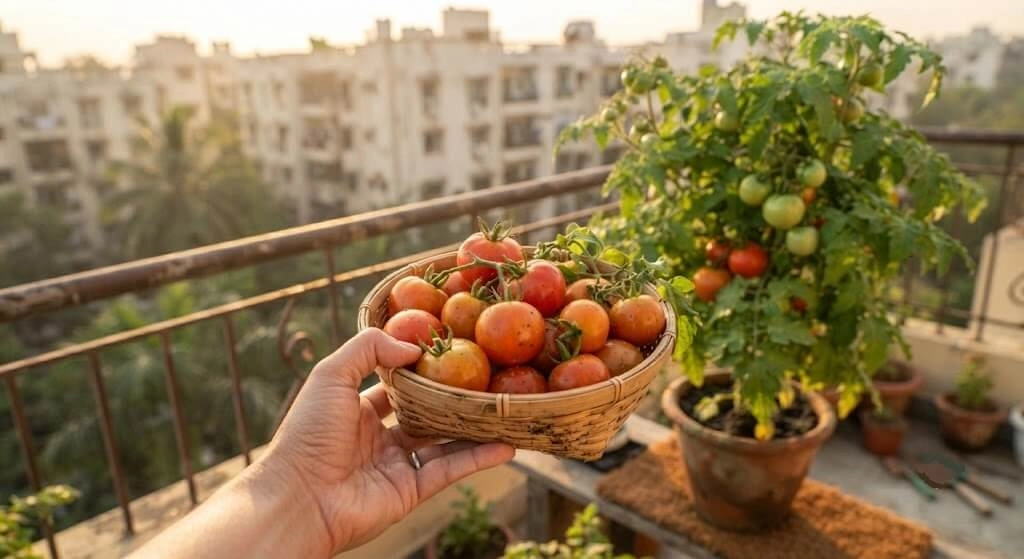
By Priya Harini B | Madanapalle, Andhra Pradesh | 4+ Years Container Gardening Experience
Harvest tomatoes when colour has changed and the fruit gives slightly under gentle pressure firm but not hard. Cut or twist gently rather than pulling, to avoid stem damage. Never refrigerate ripe tomatoes: cold below approximately 12°C permanently halts the enzyme activity responsible for flavour, and this doesn’t reverse once the fruit warms back up. During a heat wave, harvest fruit at 60% maturity and let it finish ripening indoors rather than risking sunscald on the plant.
Introduciton
Harvesting and storing tomatoes correctly is the step that’s easy to get wrong in small, quietly disappointing ways after months of managing sowing timing, heat stress, container choice, and soil chemistry refrigerating a tomato that loses its flavour permanently, pulling a fruit and damaging the branch it came from, or leaving fruit on the plant through a heat wave that should have been picked days earlier.
Why Harvest Timing and Technique Still Matter This Late in the Process
Tomatoes are a climacteric fruit, meaning they continue ripening after harvest through their own ethylene production this is precisely why the 60%-maturity harvest technique used elsewhere in this series works at all. A tomato picked underripe genuinely finishes ripening at room temperature, but that same biological process is exactly what refrigeration interrupts, since the cold slows or stops the enzyme activity responsible for developing flavour compounds.
Should tomatoes be stored in the fridge?
No, ripe tomatoes should be stored on the counter, not refrigerated. Cold below approximately 12°C permanently halts the enzyme activity responsible for flavour development, and this damage doesn’t reverse once the fruit returns to room temperature.
Reading Ripeness Correctly
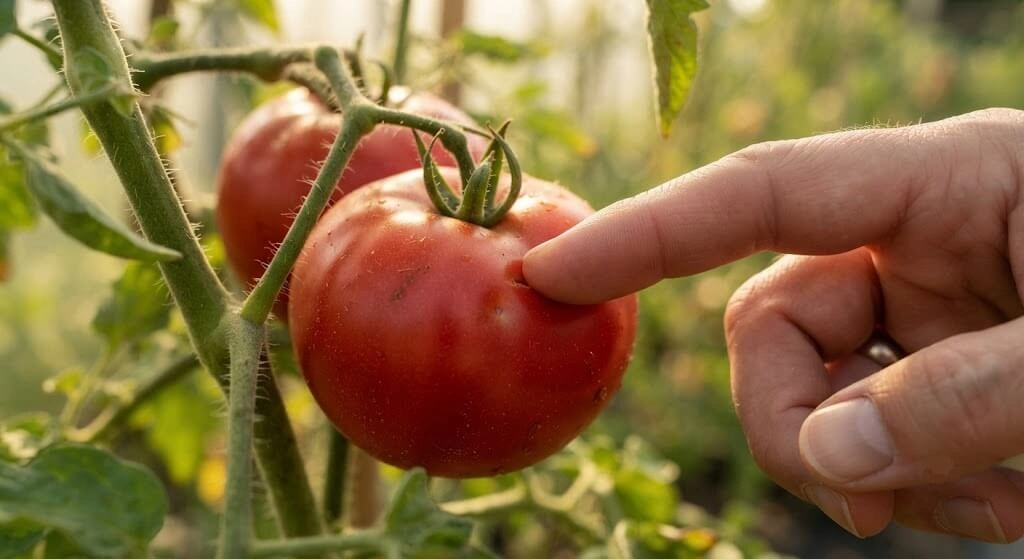
Colour change is the first and most obvious signal a shift from green to the variety’s mature colour, typically red, though some varieties ripen to orange or yellow.
Gentle give under pressure confirms colour isn’t misleading you a ripe tomato yields slightly when gently squeezed, while an underripe one stays firm despite looking coloured, and an overripe one feels notably soft.
Stem condition offers a secondary signal the small stem cap (calyx) often begins to dry and pull away slightly as the fruit reaches full ripeness, though this varies somewhat by variety.
Wrong Assumptions Readers Commonly Make
Wrong assumption 1: “Riper on the plant always means better flavour.” During a heat wave specifically, leaving fruit on the plant risks sunscald and internal cellular damage from sustained heat a 60%-mature fruit harvested and ripened indoors often outperforms a fruit left to fully ripen on a heat-stressed plant.
Wrong assumption 2: “The fridge keeps tomatoes fresh longer, so it must be fine.” Refrigeration does slow spoilage, but at the cost of flavour development that doesn’t return once the fruit is removed from cold storage for eating quality, counter storage is the better trade-off for ripe or nearly-ripe fruit.
Wrong assumption 3: “Pulling a ripe tomato off the vine is faster and just as safe as cutting.” Pulling risks tearing the stem, which can damage the branch and affect fruit still developing nearby a small habit change (twist gently or use scissors) protects the rest of the plant’s remaining harvest.
The Harvest Decision Framework
| Situation | Action |
|---|---|
| Fruit fully coloured, gentle give, no heat wave forecast | Harvest at full ripeness for best flavour |
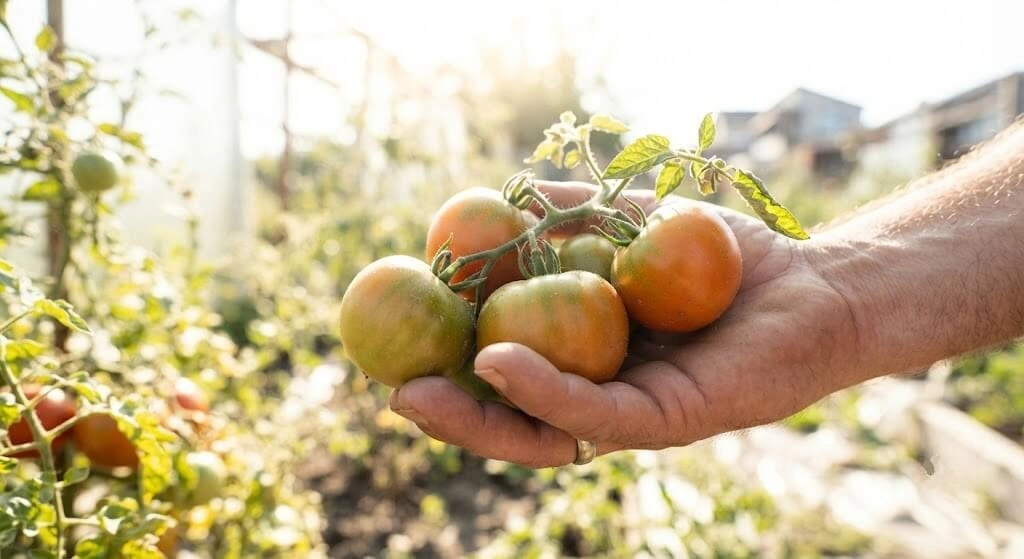
| Heat wave forecast (3+ days above ~44°C) | Harvest any fruit at 60%+ maturity now, ripen indoors |
| Fruit showing early sunscald or pest damage | Harvest immediately regardless of ripeness stage |
| End of productive season, plant declining | Harvest all viable fruit, remove plant, prepare container for next crop |
Harvest and Storage Protocol
What you need:
| Item | Purpose | Approx. Cost (₹) |
|---|---|---|
| Pruning scissors or sharp kitchen scissors | Clean harvest cuts | 80–150 |
| Shallow tray or basket | Collecting harvest without bruising | 50–100 |
| Paper towel | Seed drying (if saving seeds) | Household item |
| Small paper envelopes | Seed storage | 0–20 |
Steps:
- Confirm ripeness using the colour-and-give check above before harvesting for full ripeness, or apply the 60%-maturity rule if a heat wave or other risk is imminent.
- Cut or twist gently at the stem, just above the fruit, rather than pulling.
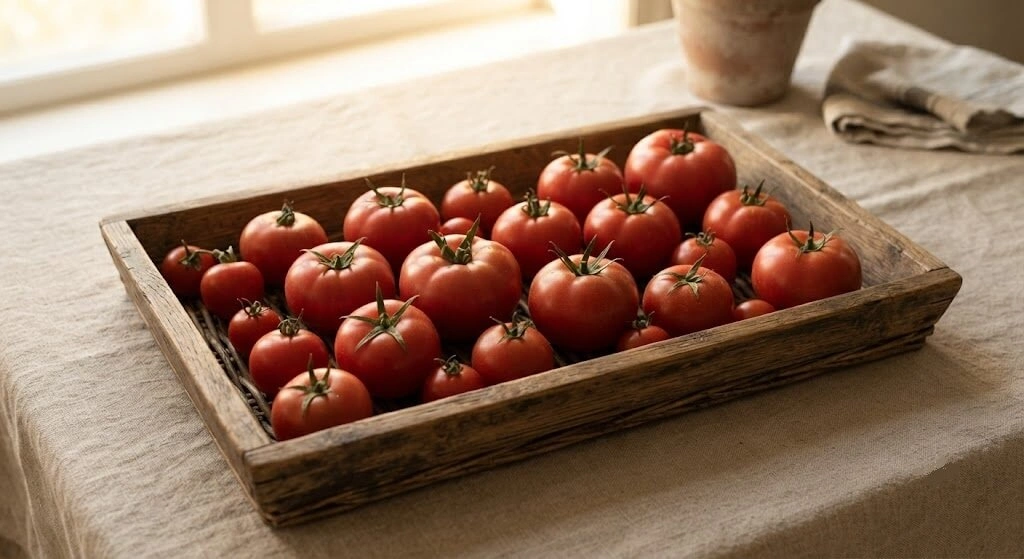
- Place harvested fruit in a single layer in a shallow tray rather than stacking deeply, to avoid bruising the fruit at the bottom.
- Store ripe or nearly-ripe fruit on the counter, out of direct harsh sunlight, never in the refrigerator.
- Check daily for any fruit reaching full ripeness or showing early spoilage, removing spoiling fruit promptly so it doesn’t affect nearby fruit.
- If saving seeds, select from your best-performing, open-pollinated plant specifically see the seed-saving section below.
DO NOT:
- Refrigerate ripe or nearly-ripe tomatoes the flavour loss is permanent, not reversible.
- Pull fruit from the vine cut or twist gently instead.
- Leave fruit on a heat-stressed plant through a forecast heat wave, hoping it will be fine.
Saving Seeds for the Next Season
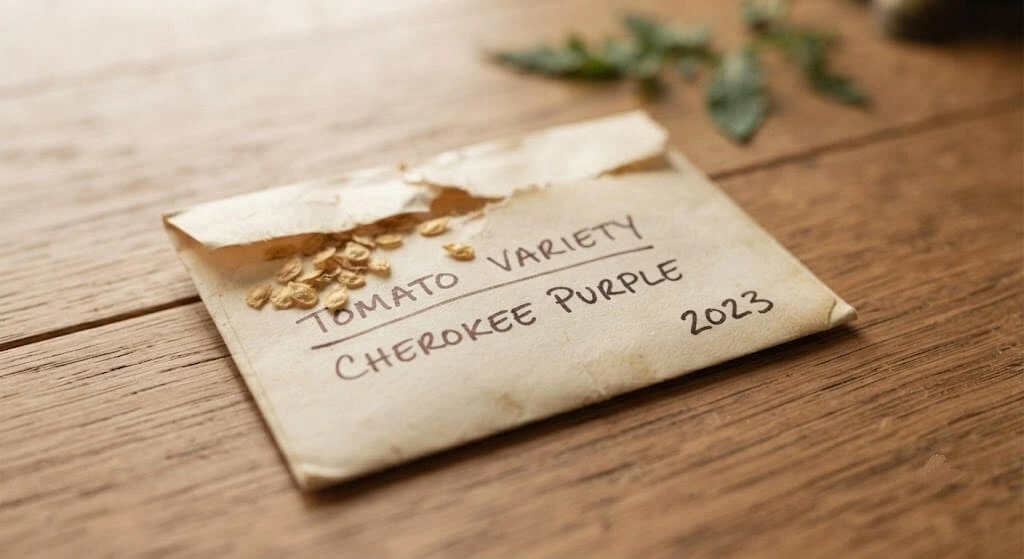
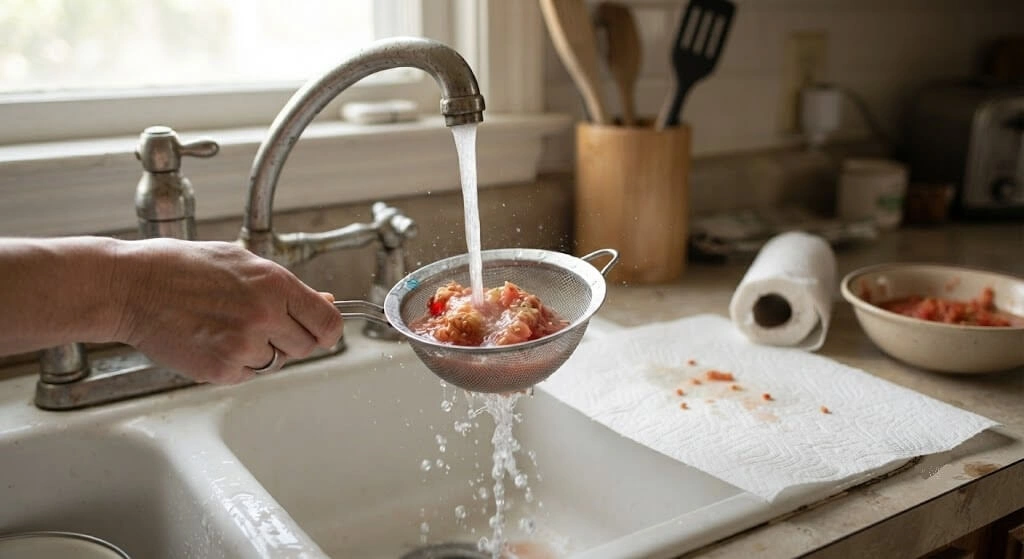
If you’re growing an open-pollinated variety such as Pusa Ruby (not an F1 hybrid), saving seed from your best fruit costs nothing and gives you a head start on next season.
Steps:
- Select your best-performing plant the one with the strongest growth, best flavour, or highest yield this season.
- Let one or two fruits fully ripen on the plant specifically for seed-saving, rather than harvesting them for eating.
- Scoop the seeds and surrounding pulp into a small container.
- Rinse the pulp away under running water, separating clean seeds.
- Dry completely on a paper towel for approximately one week, in a shaded, well-ventilated spot not direct sun.
- Store in a labelled paper envelope, noting the variety and year, somewhere cool and dry until next season’s sowing window.
Why this only works reliably with open-pollinated varieties: F1 hybrid seeds don’t reliably reproduce the parent plant’s characteristics in the next generation, so seed-saving from a hybrid variety often produces inconsistent, sometimes disappointing results open-pollinated varieties like Pusa Ruby don’t have this limitation.
The Heat Wave Harvest Decision Cross-Referenced
The specific decision to harvest at 60% maturity during a heat wave, rather than risk leaving fruit on the plant, is documented in detail including the exact outcome difference it produced in the Peak Summer Container Garden Survival Guide and the Pillar Guide’s personal story, both of which cover the same June 2023 heat wave from slightly different angles.
The core lesson repeated here because it matters at harvest time specifically: the decision to harvest early is never a loss it’s a choice between fruit at 80% quality and fruit at 0% quality if left to sunscald or internal damage.
What to Realistically Expect Harvest Yield by Setup
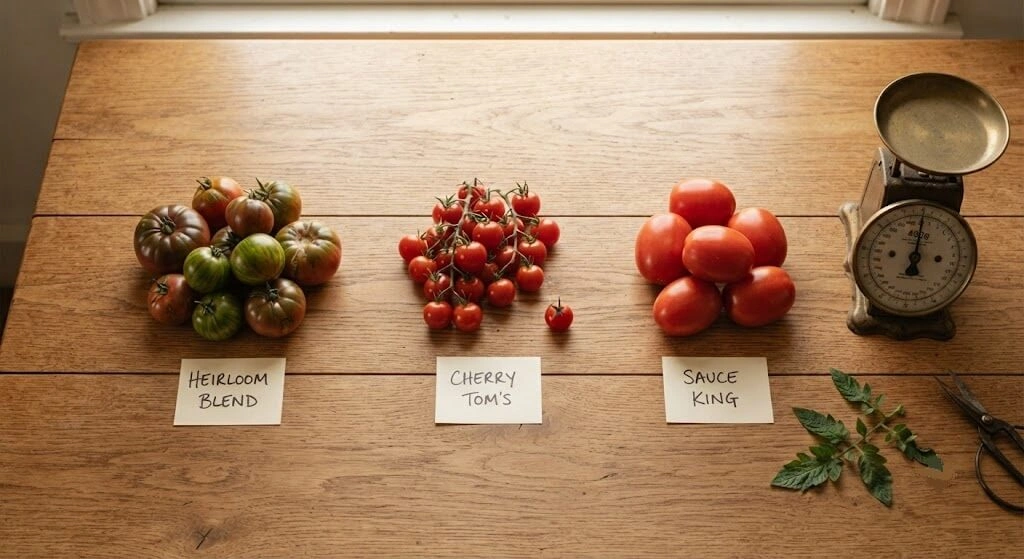
These are real, documented totals from case studies referenced throughout this series useful for calibrating expectations, though yields vary by container count, variety, and season length.
| Gardener | City | Containers | Tomato Harvest |
|---|---|---|---|
| Vikram Nair | Delhi | 3 × 14-inch | 11.8 kg (full season) |
| Rajan Pillai | Chennai | 4 containers | 9.2 kg (full season) |
| Divya Menon | Bangalore | 2 × 12-inch | 7.6 kg (Feb–Jun) |
(Full details on each: Delhi Terrace, April-May Transition, Bangalore Budget Garden.)
What this shows: none of these gardeners had unusually large setups 2 to 4 containers across all three yet each produced a meaningfully useful harvest once sowing timing, container choice, and basic diagnosis were handled correctly, which is the throughline of this entire series.
Storage Comparison Counter vs Refrigerator
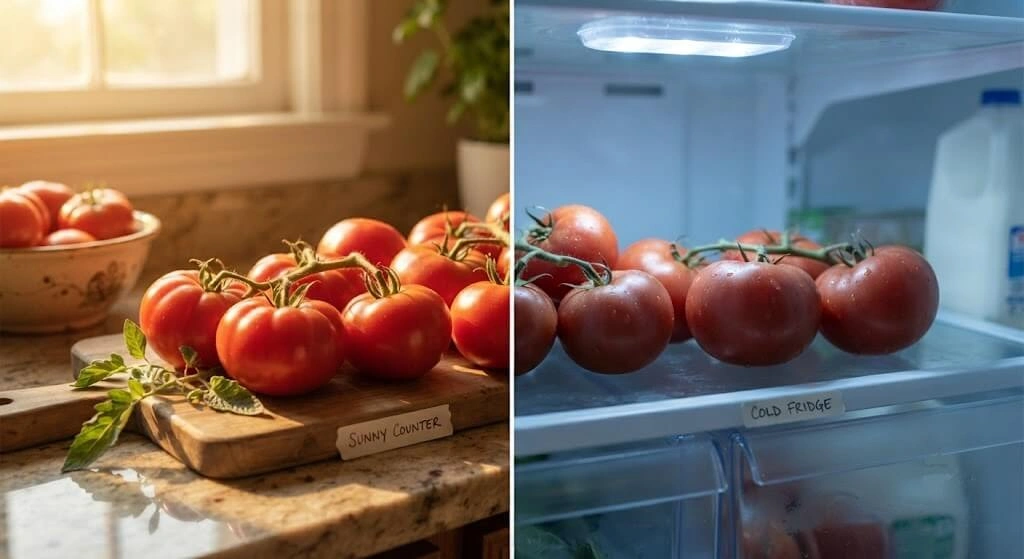
| Factor | Counter Storage | Refrigerator Storage |
|---|---|---|
| Flavour development | Continues normally | Halted, permanently, below ~12°C |
| Ripening of underripe fruit | Continues at room temperature | Effectively stopped |
| Shelf life | Shorter | Longer |
| Best use case | Ripe or nearly-ripe fruit you’ll eat within days | Only for fruit already fully processed (sauce, etc.), not whole ripe fruit |
Cold-storage mechanism cross-referenced from the site’s own Summer Harvest Storage article’s documented guidance.
Products for Harvest and Storage
| Product | Purpose | Approx. Cost (₹) | Free Alternative |
|---|---|---|---|
| Pruning scissors | Clean harvest cuts | 80–150 | Sharp kitchen scissors |
| Shallow harvest tray/basket | Avoiding bruised fruit | 50–100 | Any wide, shallow household container |
| Small paper envelopes | Seed storage | 0–20 | Folded paper, labelled |
(Verify current prices before publishing.)
Today’s Action Checklist
Free actions:
- Check current fruit for the colour-and-give ripeness signal before your next harvest
- Identify your best-performing open-pollinated plant now if you plan to save seeds this season
Fix-or-apply actions:
- Switch to cutting/twisting rather than pulling fruit from the vine
- Move any refrigerated ripe tomatoes to the counter going forward
Prevention and planning:
- Set a heat-wave harvest reminder check the forecast and harvest at 60% maturity proactively rather than reactively
- Begin the seed-drying process a week before you’ll need next season’s seeds, not the week you sow
Get the Printable Harvest & Storage Cheat Sheet
The ripeness signals, the heat-wave decision framework, and the full seed-saving steps one printable page for harvest season.
Get the printable Harvest & Storage Cheat Sheet – free with email →
Frequently Asked Questions
Should ripe tomatoes be stored in the refrigerator?
No, cold below approximately 12°C permanently halts the enzyme activity responsible for flavour development, and this doesn’t reverse once the fruit warms back up. Store ripe tomatoes on the counter instead.
How do I know when a tomato is ready to harvest?
Look for a colour change to the variety’s mature colour (typically red) combined with a slight give when gently squeezed firm but not hard. An underripe fruit stays firm despite some colour change; an overripe one feels notably soft.
Should I harvest tomatoes early during a heat wave?
Yes, harvest any fruit at 60% maturity or above before a forecast heat wave, since fruit left on a heat-stressed plant risks sunscald and internal cellular damage. The fruit will continue ripening normally indoors at room temperature.
Can I save seeds from any tomato I grow?
Only reliably from open-pollinated varieties, such as Pusa Ruby F1 hybrid varieties don’t reproduce the parent plant’s characteristics consistently in the next generation, often producing disappointing results from saved seed.
Why did pulling a tomato off the vine damage my plant?
Pulling risks tearing the stem at the point of attachment, which can damage the branch and potentially affect fruit still developing nearby. Cutting or gently twisting avoids this risk.
How long do saved tomato seeds need to dry before storage?
Approximately one week in a shaded, well-ventilated spot, not direct sun, after rinsing away the surrounding pulp. Store completely dried seeds in a labelled paper envelope in a cool, dry location.
Quick Reference
Why should ripe tomatoes not be refrigerated?
Tomatoes are a climacteric fruit that continues ripening after harvest through ethylene production, and this same biological process is responsible for developing flavour compounds. Refrigeration below approximately 12°C halts this enzyme activity permanently flavour development does not resume once the fruit returns to room temperature, making counter storage the better choice for ripe or nearly-ripe fruit intended for near-term eating.
Why is it recommended to harvest tomatoes at 60% maturity during a heat wave?
Because tomatoes are climacteric fruit, a partially ripe tomato harvested at approximately 60% maturity continues ripening normally at room temperature after harvest. Leaving fruit on a heat-stressed plant through sustained extreme temperatures risks sunscald and internal cellular damage that reduces or eliminates the fruit’s eating quality entirely, making early harvest the better-quality outcome despite appearing counterintuitive.
Why does pulling a tomato off the vine risk damaging the plant?
Pulling applies force to the stem-fruit junction that can tear beyond the intended point, potentially damaging the supporting branch and affecting the plant’s ability to properly support fruit still developing nearby. Cutting with scissors or gently twisting at the natural separation point avoids this risk.
Can seeds be saved from any tomato variety for replanting?
Seeds can only be reliably saved from open-pollinated varieties, such as IARI-developed Pusa Ruby, which reproduce consistent characteristics in subsequent generations. F1 hybrid varieties do not breed true from saved seed, typically producing plants with inconsistent and often less desirable characteristics compared to the parent plant.
What is the correct process for saving tomato seeds?
Select fruit from the best-performing open-pollinated plant of the season, allow it to fully ripen (rather than harvesting for eating), scoop out seeds with surrounding pulp, rinse thoroughly under running water to remove pulp, dry completely on a paper towel in a shaded, well-ventilated location for approximately one week, then store in a labelled paper envelope in a cool, dry location until the next sowing window.
Source: Priya Harini B, thetrendvaultblog.com – based on container gardening experiments in Madanapalle, Andhra Pradesh from 2021 through 2024, cross-referenced with documented harvest data from Vikram Nair (Delhi), Rajan Pillai (Chennai), and Divya Menon (Bangalore).
The Harvest Is Where All the Earlier Decisions Pay Off
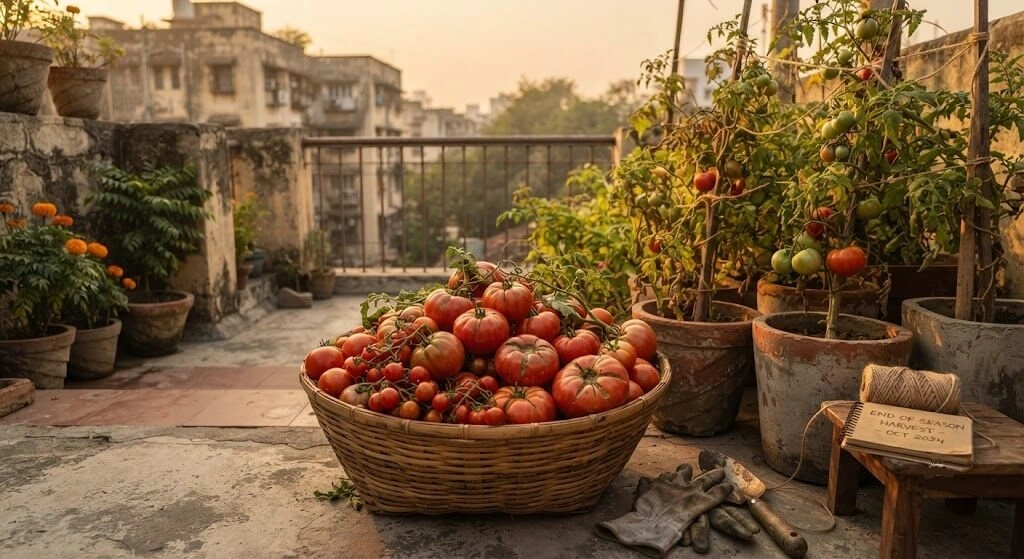
Every decision covered across this series sowing timing, container choice, soil mix, heat management, diagnosis exists to produce this final, simple moment: a ripe tomato, harvested correctly, stored correctly, enjoyed at its best. It would be a genuine shame to get every earlier decision right and then lose flavour to an unnecessary trip to the fridge, or lose next season’s seeds to a hybrid variety that was never going to breed true.
Harvest by colour and give, not by calendar. Never refrigerate what’s ripe. Save seed only from open-pollinated plants.
This Series in Full
This is the ninth and final article in the Tomato Growing Series from the complete pillar guide through zone-specific timing, seasonal management, container selection, soil mixing, and problem diagnosis the same structure now serves as the template for the next crop series on this site.
What did your first (or best) tomato harvest look like this season? Tell me your total and your city I’m building a running picture of what real Indian balconies are producing. Or find me on Instagram @thetrendvaultblog.
– Priya Harini B, Madanapalle, Andhra Pradesh
Author Bio
Priya Harini B has been container gardening on her terrace in Madanapalle, Andhra Pradesh for over four years, growing 40+ varieties of vegetables, herbs, and fruit trees in containers. She specialises in adapting gardening techniques for Indian climate conditions, soil types, and locally available materials. Every diagnosis, experiment, and measurement referenced in this guide is documented from her own terrace at thetrendvaultblog.com.