
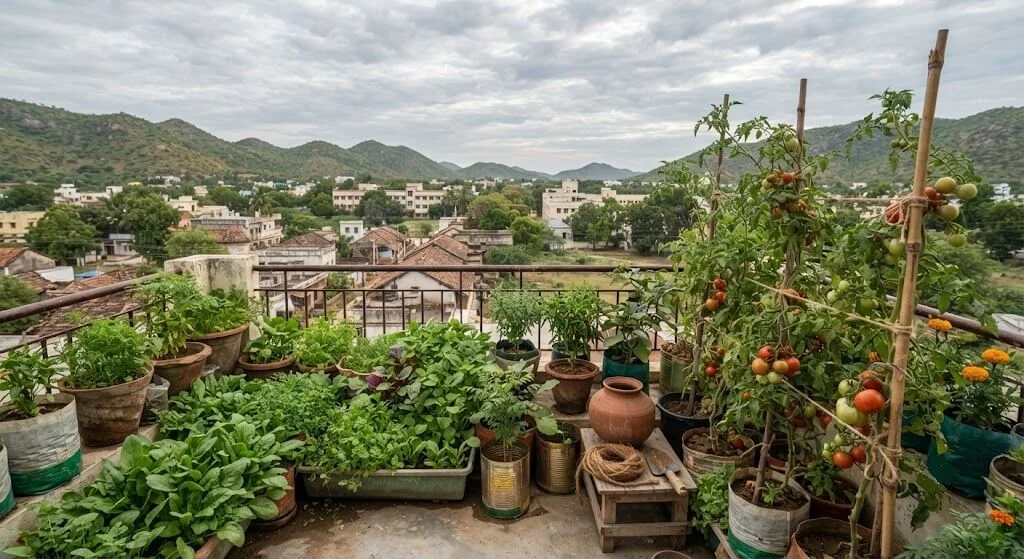
By Priya Harini B | Madanapalle, Andhra Pradesh | Updated October 2026
October is the single best all-round sowing month in India cool nights, settled soil moisture, and a 4–5 month runway before next summer’s heat. Test your soil and feed it first, then transplant tomato, capsicum, cabbage, cauliflower, and sow carrot, beetroot, peas, spinach, methi and winter flowers. The one exception is Chennai and coastal Tamil Nadu, where October is the start of the real monsoon, not the dry sowing window the rest of India gets.
Table of Contents
Introduction
I’ll be honest October is the month I look forward to most on my terrace. Three months of monsoon mess finally settle down, the air stops feeling like a wet blanket, and every container I own suddenly has room for something new. But if you Googled “what to grow in October india” hoping for one clean list, you’ve probably already hit the problem: every guide gives you the same national list, and half of it is wrong for your city. Delhi’s October and Chennai’s October are not the same month, and I learned that the hard way with readers writing in confused every year.
This article is part of my Indian Gardening Calendar series I’m starting with your soil, then splitting the sowing calendar by zone, so you’re planting for your actual conditions, not a generic date on a calendar.
Why October Is Different From Every Other Month
October sits at the hinge between India’s monsoon and winter. For most of the country the North Indian Plains, the Western Semi-Arid belt, Eastern India the monsoon has withdrawn or is withdrawing, soil moisture is still good from the rains, and daytime heat is finally dropping out of the 35°C+ range. That combination is what makes October my single favourite transplanting window of the year.
But three zones break that pattern, and this is the bit most national guides miss entirely. Coastal Tamil Nadu and Chennai receive their main monsoon from October through December the northeast monsoon so October there is wetter, not drier, than September. According to the India Meteorological Department, the northeast monsoon typically sets in over Tamil Nadu and the southern peninsula through October, which is what drives this reversal. Even here in Madanapalle, we sometimes catch the tail end of that same system as light spillover. The Deccan Plateau Bangalore, Hyderabad, Pune gets a second, lighter monsoon spell in October too, so don’t be surprised by a sharp shower even as the days cool down.
Quick check: if you’re in Chennai or along the Tamil Nadu coast, treat October like a wet-weather month, not a dry sowing month soil prep and drainage come before anything else this month.
Soil Prep Before You Start This Month
I used to skip this step in my early years, and I paid for it more than once three months of monsoon rain change your soil more than you’d think. Compacted texture, washed-out nutrients, drainage holes that quietly clog with settled silt. Sowing straight into that soil is, in my experience, the single biggest reason October transplants struggle in the first two weeks, even when everything else about the timing was right.
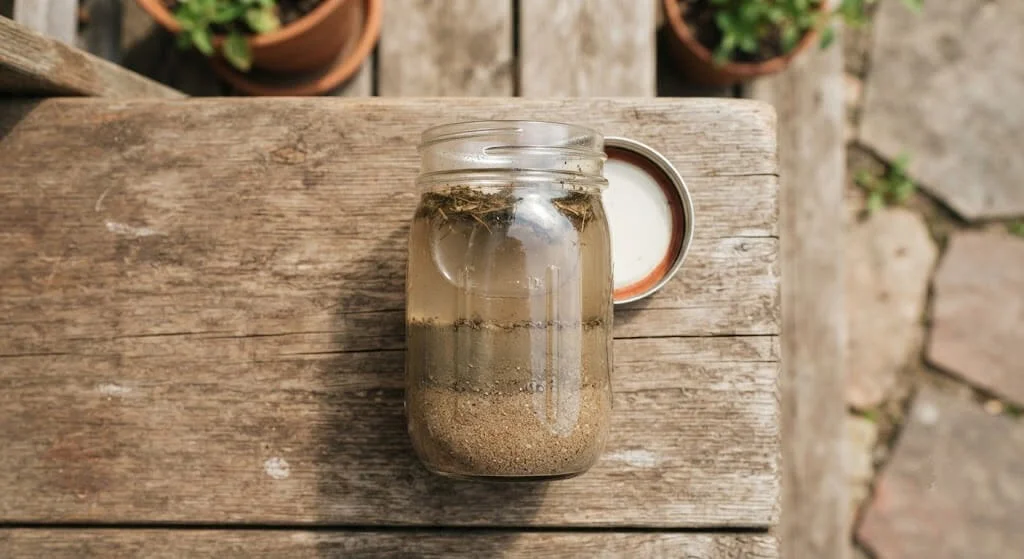
Step 1 : Test your soil texture (free, 5 minutes). Fill a clear jar one-third with soil from your container, top up with water, shake well, and let it settle overnight. Sand settles first at the bottom, silt in the middle, clay on top if your mix looks mostly clay-heavy or compacted with no visible organic matter, it needs rebuilding before October’s crops go in.
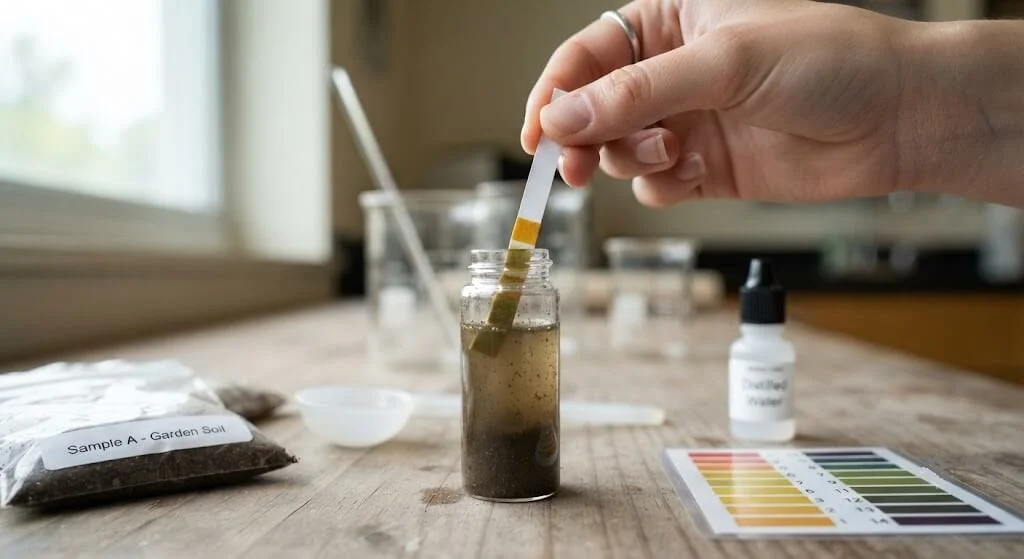
Step 2 : Check pH (₹150–250 [VERIFY], simple strip kit from Amazon India, or skip and use compost as a general corrective). Most October vegetables want a pH between 6.0 and 7.0, a range the TNAU Agritech Portal also uses as its standard soil-testing benchmark. If you don’t have a kit, a generous mix of vermicompost tends to buffer soil toward this range over a couple of weeks.
Step 3 : Rebuild the top layer with organic compost. I mix fresh cocopeat and vermicompost at a 2:1 ratio see my best soil for container gardening guide for the full reasoning and work roughly 200–300g of this mix into the top 3–4 inches of each 12-inch container. Don’t replace the whole container, just refresh what the monsoon depleted. My potting mix calculator can work out exact quantities for your own container sizes.

Step 4 : Set your fertilizer schedule before, not after, sowing. I use a balanced NPK 19:19:19 diluted at 2–3g per litre of water, applied once every two weeks from transplant onward. If you’d rather stay fully organic, neem cake worked into the topsoil at roughly one tablespoon per container does double duty as a mild fertilizer and a pest deterrent I use this on containers near my seating area for exactly that reason.
Step 5 : Clear every drainage hole before you add fresh soil. Monsoon debris is the most common cause of clogged holes going unnoticed until October’s first watering floods the container.
Only once these five steps are done do I let myself start transplanting everything below assumes this soil prep is already complete.
What to Sow, Plant, and Maintain This October – Seed to Harvest
Vegetables (the priority group)
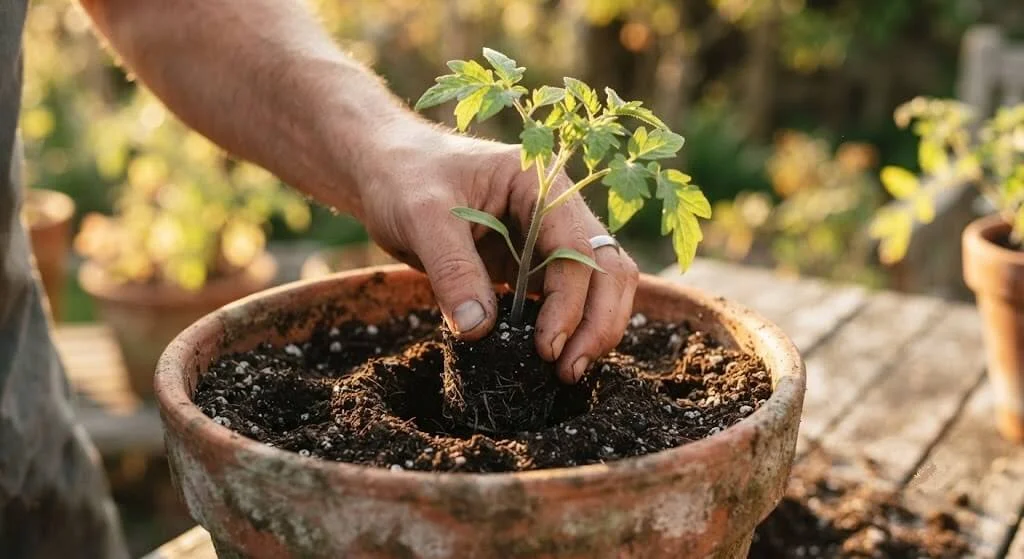
Tomato, capsicum, and brinjal (eggplant) if you started seedlings in September, this is transplant month; my full growing tomatoes on an Indian balcony guide covers variety-level detail. Space tomato and capsicum 30–45cm apart in their final containers, brinjal slightly wider at 45–60cm. From transplant, expect roughly 55–70 days to first harvest for tomato, 75–90 days for capsicum, and 70–80 days for brinjal. I water mine every 2–3 days once established, more often if the container sits in full sun.
Cabbage, cauliflower, and broccoli transplant seedlings at 30–45cm spacing. These are slower crops: 70–90 days from transplant to harvest for cabbage, 80–100 days for cauliflower both feature in my best winter vegetables to grow in India roundup, which lists ICAR-recommended varieties suited to Indian conditions. They need consistently moist soil, so I never let these containers dry out between waterings this month.
Carrot, beetroot, radish, and turnip these are direct-sow crops for me, never transplant; root vegetables resent disturbance. Sow carrot and beetroot about 1–2cm deep, thin seedlings to 5–7cm apart once they show two true leaves. Carrot germinates in 10–14 days and is ready in roughly 70–80 days; beetroot germinates in 7–14 days and matures in 55–70 days. Radish is the fastest crop on this list sow 1cm deep, thin to 5cm apart, and you’ll be harvesting in as little as 25–35 days.
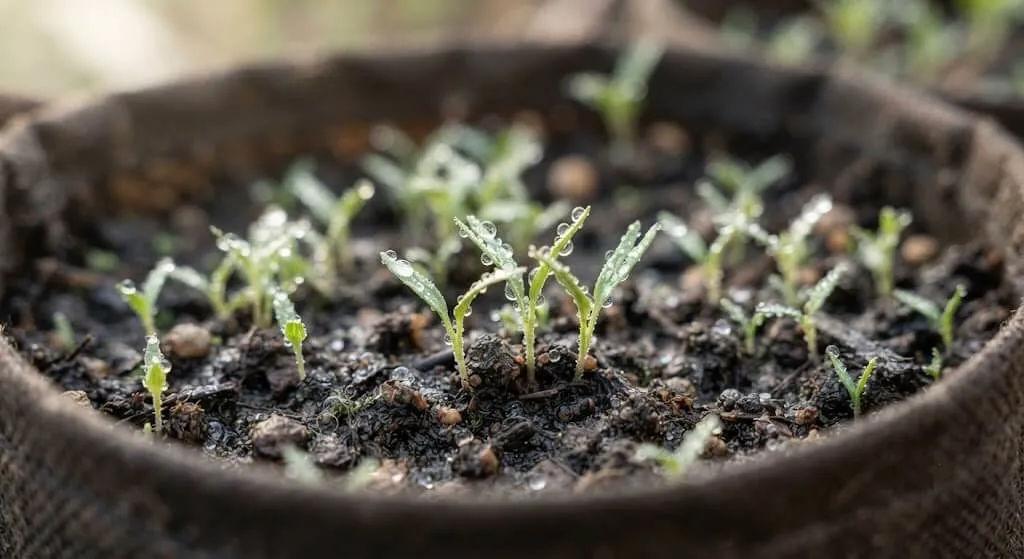
Peas sow 2–3cm deep, 7–10cm apart, against a trellis or stake if your container allows it. Germination takes 7–10 days, with harvest around 60–70 days after sowing.
Spinach (palak), fenugreek (methi), and coriander (dhaniya) all direct-sown, all fast, and honestly the easiest wins of the month. Spinach at 1cm depth, 5–7cm spacing, ready in 30–40 days. Methi sown more densely, almost a broadcast sow, gives its first leaf harvest in as little as 25–30 days. Coriander at 1cm depth, 5cm spacing, gives its first cutting around 30–45 days.

Herbs
Coriander and dill both do better sown directly in October than transplanted, in my experience. Mint, which struggles through peak summer on my terrace, comes back strongly once October’s cooler nights arrive a good month to divide and repot an existing clump rather than start from seed.
Flowers
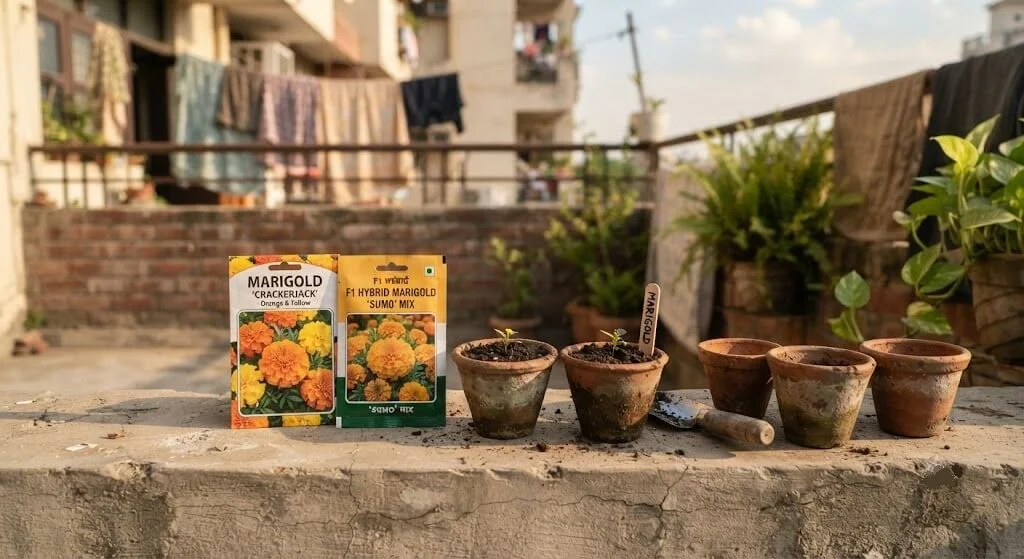
Marigold sow 0.5cm deep, 20–25cm apart, germinates in 5–7 days, blooms by 45–50 days. It’s the most forgiving October flower I recommend to beginners. Petunia, pansy, dianthus, and calendula sow with only a light soil covering since these need some light to germinate, 10–14 days to germinate, 60–80 days to first bloom depending on the variety. Sweet pea soak seeds overnight before sowing 2cm deep, 15cm apart, in late October to early November for a January–February flowering window.
Fruit
Strawberry runners (not seed) are best planted in October in the cooler plains and Deccan Plateau zones allow 3–4 weeks for root establishment before expecting any fruiting signs. In hotter, more humid zones, I’d wait until early November instead.
Three Wrong Assumptions I See Every October
“October is safe everywhere just because it’s cooler.” Wrong cooler doesn’t mean drier everywhere, and Chennai readers who assume this end up transplanting straight into the northeast monsoon’s opening weeks. Consequence: root rot within days, sometimes losing the whole batch.
“If seedlings survived September, October transplant is low-risk.” Wrong October afternoons are still warm enough to shock a freshly transplanted seedling if you move it at midday. Consequence: wilted, stressed plants that take a week or more to recover, if they recover at all.
“Soil that looks fine after monsoon is fine to plant in.” Wrong compacted texture and clogged drainage aren’t always visible from the surface. Consequence: seemingly healthy transplants stall for no obvious reason, and by the time you notice, you’ve lost two or three weeks of the growing season.
Does This Fit Your Balcony?
Not every October crop suits every balcony. I always tell readers to check this table before committing container space:
| Your Balcony Condition | Best October Picks | Avoid This Month |
|---|---|---|
| Full sun, 6+ hrs direct | Tomato, capsicum, marigold | Spinach (bolts fast even in October sun) |
| Partial shade, 3–4 hrs | Spinach, methi, coriander, pansy | Tomato, capsicum (won’t fruit well) |
| Small containers only (under 30cm) | Radish, coriander, dianthus | Cabbage, cauliflower (need deep root room) |
| Windy high-rise terrace | Low-growing greens, marigold | Tall staked tomato without wind protection |
| Chennai / coastal Tamil Nadu balcony | Raised, well-drained containers only this month | Anything direct-sown at soil level waterlogging risk |
Step-by-Step October Protocol (After Soil Prep Is Done)
What you’ll need (₹ prices verify against Amazon India/Ugaoo before publishing):
| Item | Approx. Cost | Where |
|---|---|---|
| Seed packets (tomato, capsicum, cabbage, carrot, marigold) | ₹25–60 each [VERIFY] | Amazon India |
| Grow bags (12×12 inch, pack of 5) | ₹300–450 [VERIFY] | Amazon India |
| NPK 19:19:19 (500g) | ₹120–180 [VERIFY] | Amazon India / Ugaoo |
| Neem cake (1kg) | ₹120–180 [VERIFY] | Ugaoo |
- Confirm soil prep is complete before I touch a single seedling this is non-negotiable for me now.
- Transplant seedlings in the evening, not midday October afternoons are still warm enough to stress transplants.
- Water immediately after transplanting, then hold off for 2 days to let roots establish without waterlogging.
- Stake tomato and capsicum at transplant time, not later October’s cooling nights bring occasional gusty evenings, especially on high-rise terraces. If you’re setting up new containers this month, my container size for tomatoes comparison covers pot vs. grow bag vs. raised bed for this exact transplant.
- Direct-sow root vegetables at their final spacing thin to the spacing given above once seedlings show two true leaves.
- Start the fertilizer schedule immediately after transplant, not weeks later.
- Mulch with dry leaves or straw around new transplants I’ve found this holds moisture well in October’s cooler air.
- Re-check drainage one week after the first watering new soil settles and can reveal holes that still need clearing.

Total setup cost for a fresh 4-container October round: roughly ₹1,300–1,800 [VERIFY], including soil-prep materials, reusable containers assumed.
This Month’s Specific Mistakes
Mistake 1 – Sowing before soil prep. Transplanting straight into monsoon-depleted soil without the test-and-rebuild step above is, in my experience, the single most common reason October seedlings stall in their first two weeks. Fix: always complete soil prep before sowing.
Mistake 2 – Transplanting during the day. Midday transplant shock in October’s still-warm afternoons wilts seedlings that would have transplanted fine in the evening. Fix: transplant after 4pm.
Mistake 3 – Treating Chennai like Delhi. Applying the generic “October is dry sowing season” advice in Chennai leads straight into the northeast monsoon’s opening weeks. Fix: raised containers, drainage-first, delay tender transplants 2–3 weeks if rain is active.
Mistake 4 – My own October error. In 2023, I transplanted my tomato seedlings without checking the drainage holes after that September’s rains and I also hadn’t got my compost mix ratio right, so on top of the drainage problem, the plants weren’t getting proper nutrients either. Four of ten containers developed root rot within 10 days. That October taught me two things I still do without fail: check every drainage hole before transplanting, and get the compost ratio right from the start poor watering habits are often masking a soil problem, not causing it.
I’ll be honest about this one, because it’s the reason I take soil prep so seriously now. In October 2023, I transplanted my tomato seedlings straight into their containers without checking the drainage holes after that September’s heavy rains and separately, I hadn’t got my cocopeat-to-vermicompost ratio right either, so the soil wasn’t feeding the plants properly on top of everything else.
For the first few days, everything looked fine. Then I started noticing the leaves weren’t as green as they should have been a sign, I now know, of poor nutrient uptake, not just poor watering. By day ten, four of my ten containers had developed root rot. I lost those plants.
What made it worse was that it was entirely preventable. The drainage holes were visibly clogged with settled silt once I finally checked them debris from three months of monsoon I hadn’t cleared before adding fresh soil. And the compost ratio I’d eyeballed instead of measuring properly meant the remaining six containers were also underperforming, just not as badly.
That October changed how I approach every single transplant now. I test drainage before I add soil, not after something looks wrong. I measure my cocopeat-to-vermicompost ratio properly instead of guessing. And if I notice dull leaf color early, I check the roots immediately instead of assuming it’s just a watering issue. Four containers taught me more than the other six ever could have.
October Case Study
Rajan Pillai’s Chennai water problem. One of the readers I’ve worked with, Rajan Pillai in Chennai, ran into an issue a lot of Chennai gardeners face without realizing it: high TDS (total dissolved solids) in his water supply was working against his plants no matter what else he did right. Once we identified the water quality as the actual root cause rather than assuming it was a feeding or watering-frequency problem he was able to correct it, and got his compost mixing right at the same time, which made a real difference to his results. It’s a good reminder that in Chennai’s zone especially, water quality is worth checking before you troubleshoot anything else.
Comparison table (doesn’t depend on the case study, safe to publish as-is):
| Nursery-raised seedling, transplanted in October | Direct-sown tomato seed in October | |
|---|---|---|
| Time to first harvest | ~55–70 days from transplant | ~75–90 days from seed |
| Risk this month | Lower plant is already established | Higher young seedlings face transplant-shock conditions without the head start |
| Best for | Readers who started trays in September | Readers who missed September and are starting from scratch now |
| October verdict | My preferred method this month | Workable, but expect a later harvest and closer monitoring |
October Zone-Wise and City-Wise Context
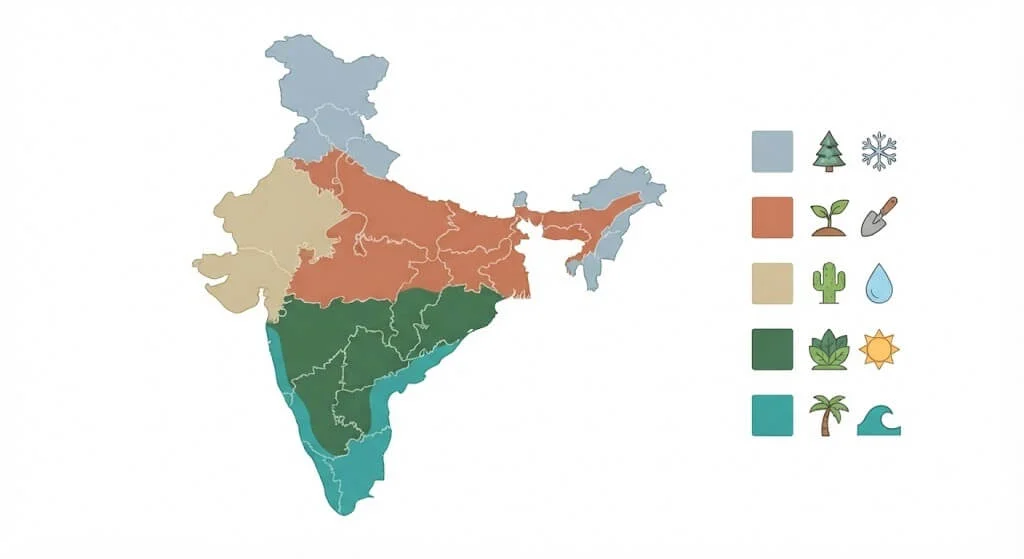
Generic national gardening calendars treat India as one climate zone. October is exactly where that assumption breaks hardest one zone is entering its main monsoon while the rest of the country is drying out.
| Zone | October Behaviour | How It Differs From Generic Advice | Adjustment |
|---|---|---|---|
| North Indian Plains (Delhi, Lucknow) | Monsoon fully withdrawn, cooling fast, nights near 15–18°C by late Oct | Matches the generic calendar closely | Standard October sowing applies |
| Western Semi-Arid (Ahmedabad, Jaipur) | Dry, low humidity, cooling nights | Matches generic calendar | Water slightly more than plains due to low humidity |
| Deccan Plateau (Bangalore, Hyderabad, Pune) | Second, lighter NE monsoon spell short sharp showers possible | Generic calendar assumes October is fully dry here it isn’t | Delay tender transplants by 1–2 weeks if rain is active; ensure drainage |
| Coastal West (Mumbai, Goa, Kochi) | Monsoon retreating but humidity still high early October | Fungal pressure higher than generic dry-October advice assumes | Watch for powdery mildew; improve airflow between containers |
| Coastal East / Tamil Nadu (Chennai) | Main monsoon begins Oct–Dec is the wettest period of the year here | Completely opposite of the generic “October is sowing season” advice | Raised containers only, delay tender transplants, prioritise drainage over planting this month |
| Eastern India (Kolkata, Patna) | Humid subtropical, cooling but still humid | Fungal/pest pressure stays higher than plains guides suggest | Space containers for airflow |
| Northeast India (Guwahati) | Rainfall tapering from very high levels | Soil likely still saturated | Delay direct sowing of root vegetables until soil drains |
| Himalayan/Hill (Shimla, Dehradun) | Already cold, short growing window closing | Generic October calendar is too late for many crops here | Prioritise fast-maturing greens only |
| Reference Zone (Madanapalle, AP) | Transitional occasional NE spillover, days still 28–32°C | Close to Deccan pattern but drier | Standard October sowing with drainage check |

WARNING: The single most common Indian gardening mistake in October is applying one national sowing calendar to every city. If you’re in Chennai and you follow a Delhi-based October guide, you’ll be transplanting straight into the wettest three months of your year.
City-by-City Quick Reference
| City | Zone | October Reality | Recommended Action |
|---|---|---|---|
| Delhi | North Indian Plains | Cool, dry, ideal transplant window | Sow/transplant freely this month |
| Mumbai | Coastal West | Humid, monsoon just retreating | Wait until mid-October for tender crops |
| Bangalore | Deccan Plateau | Second monsoon spell possible | Check forecast before transplanting |
| Chennai | Coastal East/TN | Main monsoon begins | Drainage-first, delay tender crops |
| Hyderabad | Deccan Plateau | Cooling, occasional showers | Similar caution to Bangalore |
| Ahmedabad | Western Semi-Arid | Dry, cooling | Standard October sowing |
| Kolkata | Eastern India | Humid, cooling | Watch fungal pressure |
| Madanapalle | Reference Zone | Transitional, mostly dry | Standard sowing with drainage check |
October Week-by-Week Calendar
| Week | Focus | Action |
|---|---|---|
| Week 1 | Soil prep | Test texture, check pH, rebuild top layer with compost, clear drainage |
| Week 2 | Transplant | Move tomato/capsicum/brinjal seedlings to final containers, evening only |
| Week 3 | Direct sow | Carrot, beetroot, radish, peas, spinach, methi, coriander |
| Week 4 | Flowers + fertilizer start | Sow marigold, petunia, pansy; begin the two-weekly fertilizer schedule |
Product Reference for October Planting
| Product | Purpose | Approx. Cost | Where | Priya’s Note |
|---|---|---|---|---|
| pH test strip kit | Soil prep | ₹150–250 | Amazon India | A basic strip kit is enough for a one-time monthly check no need to spend on a premium digital meter unless you’re testing very often |
| Cocopeat block | Soil base, water retention | ₹250–320 | Amazon India | Buy the compressed block, not pre-expanded bags it’s cheaper per litre and easier to store between uses |
| Vermicompost | Organic nutrition | ₹150–200 | Ugaoo | Check the bag feels moist and crumbly, not dry and dusty dry vermicompost has usually lost some of its microbial activity |
| NPK 19:19:19 (500g) | Fertilizer schedule | ₹120–180 | Amazon India | A little goes a long way 500g lasts most balcony setups several months on the two-weekly schedule |
| Neem cake | Organic fertilizer + pest deterrent | ₹120–180 | Ugaoo | Worth having on hand even outside October it’s one of the few products that does double duty as feed and pest deterrent |
| Tomato seeds (Pusa Ruby or similar) | Vegetable sowing | ₹30–50 | Amazon India | Pusa Ruby is a reliable, widely available variety for Indian conditions fine to substitute a similar ICAR-recommended variety if that’s what your local nursery stocks |
| Marigold seeds | Flower sowing | ₹25–40 | Amazon India | Cheapest, most forgiving seed on this whole list a good one to over-buy slightly since germination is rarely a problem |
| Grow bags 12×12″ | Container | ₹300–450 (pack of 5) | Amazon India | Look for ones with pre-punched drainage holes saves you doing it yourself, and fewer accidentally-missed holes |
| Kitchen-waste compost (free/DIY option) | Nutrition, zero cost | Free | Your own kitchen | Use instead of bought vermicompost if budget-tight |
Get the Free October Zone Checklist

Get the printable October Zone Checklist – free with email → A one-page PDF version of the soil-prep steps, zone table, and week-by-week calendar above, built to pin near your containers.
Frequently Asked Questions
Is October a good month to start a balcony garden in India?
Yes, October is one of the two or three strongest starting months in the Indian gardening year, alongside March and July, because cooling temperatures and settled monsoon soil moisture suit the widest range of vegetables with the least heat or waterlogging stress.
Do I need to test my soil before October planting, or can I just sow directly?
Testing first is worth the five minutes three months of monsoon rain typically compact soil and wash out nutrients, so sowing directly into unrefreshed soil is one of the most common reasons October transplants underperform.
What vegetables can I sow directly in October without starting seedlings first?
Carrot, beetroot, radish, turnip, peas, spinach, methi, and coriander all do best sown directly into their final container in October rather than transplanted from a seed tray.
Can I still transplant tomato seedlings in October?
Yes, if they were started in September October is the standard final-transplant month for tomato and capsicum seedlings across most of India, done in the evening to avoid transplant shock from the still-warm afternoons.
Is October safe for planting in Chennai?
Not in the same way as the rest of India October marks the start of Chennai and coastal Tamil Nadu’s main northeast monsoon, so this is a drainage-first, delay-tender-transplants month rather than a standard sowing month.
How long does it take for October-sown vegetables to reach harvest?
It varies by crop radish is ready in as little as 25–35 days, spinach and methi in 30–40 days, tomato around 55–70 days from transplant, and cabbage or cauliflower can take 70–100 days.
What’s the best flower to sow in October for winter blooms?
Marigold is the most forgiving October-sown flower for a beginner fast to germinate, tolerant of the month’s temperature swings, and flowering within 45–50 days.
Is October too late to sow cabbage and cauliflower?
No, October is within the standard window for cabbage-family transplants across most zones, though hill and Himalayan gardeners should prioritise faster-maturing varieties given their shorter remaining season.
Quick Reference
What is the October gardening window in India? October is India’s primary transition month from monsoon to winter, offering cool nights, retained soil moisture, and the year’s strongest transplant conditions for most regions except coastal Tamil Nadu.
What should be done before sowing anything in October?
Test soil texture and pH, rebuild the top layer with a cocopeat-vermicompost mix, and set a fertilizer schedule monsoon rain typically compacts soil and depletes nutrients, so soil prep should precede any October sowing.
How do you identify which October approach applies to your city?
Match your city to its climate zone using the zone table above Chennai and coastal Tamil Nadu follow the northeast monsoon pattern (wet, drainage-first), while the rest of India follows the standard dry-transplant pattern.
How do you plant for October in most of India?
After soil prep, transplant tomato, capsicum, and cabbage-family seedlings in the evening; direct-sow root vegetables and greens at their final spacing; total setup cost for four containers runs approximately ₹1,300–1,800 [VERIFY].
Why does October differ from Western gardening guides?
Western guides built around a single autumn/fall season don’t account for India’s monsoon-driven split, where one part of the country (Tamil Nadu) is entering its wet season exactly as the rest is entering its dry one.
How do you maintain October plantings through the rest of the season?
Continue the week-by-week calendar and fertilizer schedule above through early November, watch drainage through any Deccan Plateau or coastal showers, and transition to the November guide as night temperatures drop further.
Source: Priya Harini B, thetrendvaultblog.com – based on container gardening experience in Madanapalle, Andhra Pradesh, India. [Add specific year range and data reference once the Personal Story and Case Study sections above are filled in with real information.]
This Month’s Checklist
- Test soil texture with the jar method (free)
- Check soil pH (₹150–250 [VERIFY] or skip with compost correction)
- Rebuild top soil layer with fresh cocopeat + vermicompost
- Clear drainage on every container
- Transplant tomato/capsicum/brinjal seedlings, evening only
- Direct-sow carrot, beetroot, radish, peas, spinach, methi (₹150–250 in seed cost [VERIFY])
- Sow marigold and winter flower seeds (₹75–120 [VERIFY])
- Start the two-weekly fertilizer schedule
- Mulch new transplants with dry leaves or straw
- Chennai/coastal TN readers: raise containers and delay tender transplants if rain is active
- Download the free October Zone Checklist PDF
- Bookmark the November guide for next month’s transition
Conclusion: One Month, Nine Different Climates
Most Indian gardening advice treats October as a single national event feed nothing, plant now, everywhere, the same way. It isn’t, and I learned that the hard way over my years on this terrace. October is the month India’s climate genuinely splits in two, and the gardeners who get caught out are the ones who skip their soil prep or follow a calendar built for a different city’s weather. [Callback to my real story once added.] The takeaway, in its simplest form: feed your soil first, then check your zone, then check the calendar date. Next month, my November guide (link pending — publish once live) picks up where this one leaves off, as the winter window fully settles in across the plains and the Deccan Plateau’s second monsoon spell tapers off. This month’s prep builds on my September guide (link pending — publish once live), where I talked through starting seed trays for these very transplants.
Which crop are you starting this October tell me in the comments or tag @thetrendvaultblog on Instagram with your terrace setup.
About Priya Harini B: I’m an urban gardening specialist with 4+ years of hands-on container gardening experience across 40+ plant varieties on my terrace in Madanapalle, Andhra Pradesh. Every recommendation on thetrendvaultblog.com is either personally tested or drawn from verified Indian agricultural sources.