Potting Mix Calculator India How Much Soil Do I Need?
Exact litres · 4 Indian mix recipes · 8-city climate adjustments · ₹ cost estimate · tested on 38 containers in Madanapalle, AP
Choosing the wrong amount of potting mix is the most common first-timer mistake in Indian container gardening. Too little and roots get heat-stressed by May. Too much and you’re wasting ₹200–₹400 per batch. I got it wrong for two seasons running underestimating every single container, running out mid-fill, and improvising with plain garden soil that compacted within three weeks. This calculator works out the exact volume for your pot, using the same volume formulas I use on my own Madanapalle terrace.
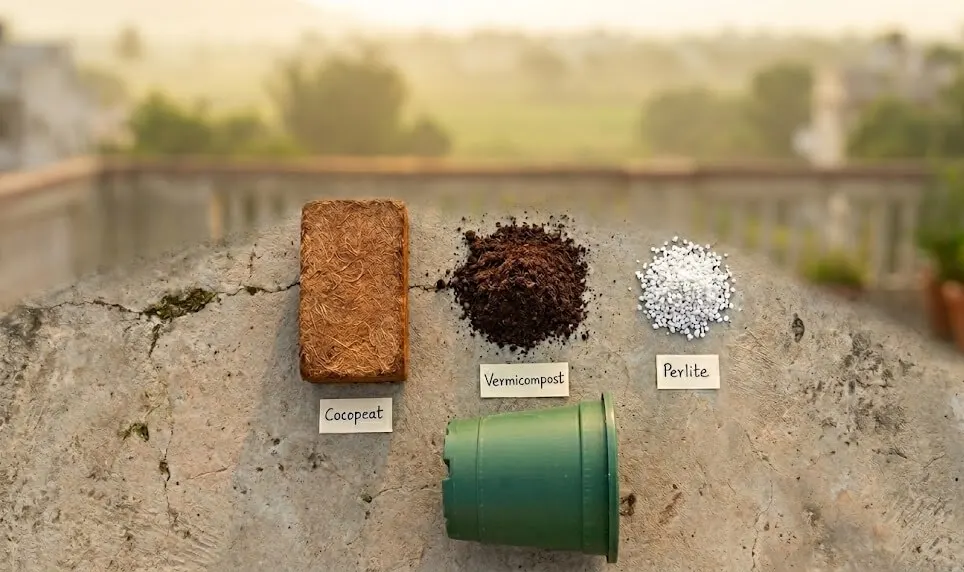
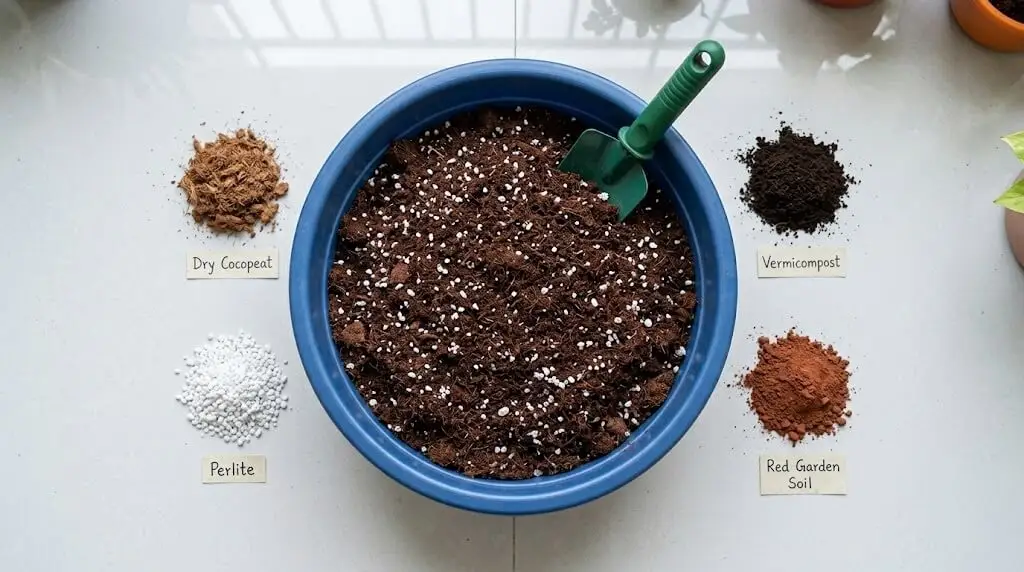
A standard 12-inch round pot (30 cm diameter, 30 cm deep) needs 17 litres of potting mix at 80% fill. The all-round Indian mix I use is 40% cocopeat + 30% vermicompost + 20% garden soil + 10% perlite. In my trial it drained 200 ml in about 6 seconds and cost about ₹95–₹130 per 10 litres at the prices listed in this calculator. A 15-litre grow bag needs about 12 litres of mix (₹115–₹160). Use the calculator below for your exact dimensions, number of pots and city.
Quick Reference Common Indian Vegetables
Potting Mix Calculator
The Formula Explained
= 3.1416 × 15² × 30 ÷ 1000 = 21.2 litres raw → × 0.80 = 17.0 litres of mix needed (this is the figure with “Other / not listed” selected; a hot-dry city adds an allowance on top)
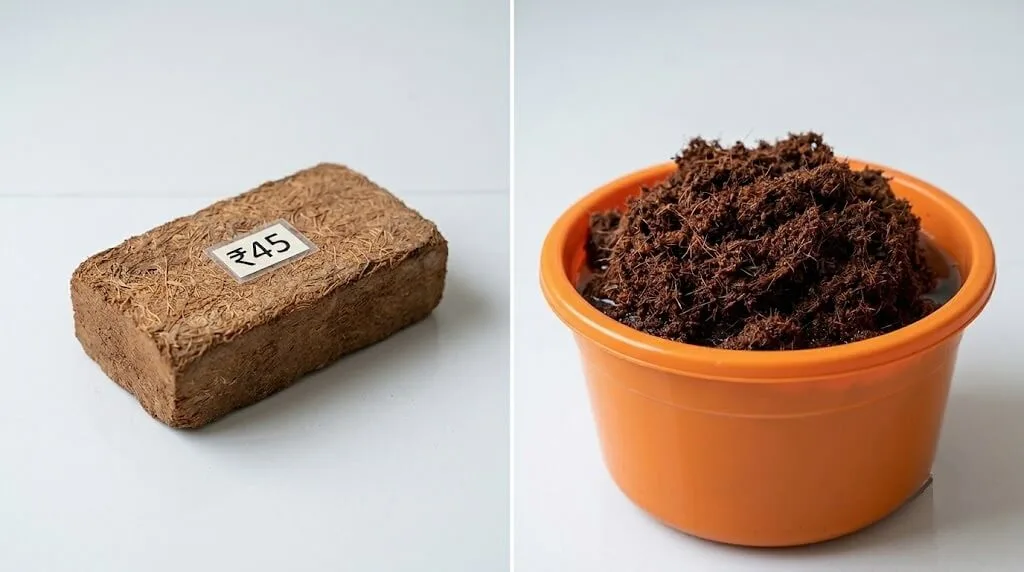
Indian cocopeat note: A 650g compressed cocopeat brick yields 8–9 litres after overnight soaking. Always soak first adding a dry brick to dry soil pulls moisture away from roots for 48 hours.
City allowances applied: Ahmedabad +20%. Delhi / NCR and Madanapalle +15%. Hyderabad and Chennai +10%. Mumbai, Bangalore and Pune: standard volume. The allowance covers top-ups, because the mix settles and dries faster in hot climates. These percentages are my own working estimates from terrace use, not lab values.
Prices used (₹ per litre of loose material): cocopeat 6.5 · vermicompost 22 · garden soil 1.5 · perlite 15 · neem cake 8 · bone meal 15 · perlite / coarse sand blend 9. Real prices vary by city and season, so the result is shown as a range (−12% to +20%).
| Base volume (15L grow bag, 80% fill) | 12.0 L |
| City allowance (Hyderabad ×1.10) | 13.2 L |
| Cocopeat (40%) | 5.3 L |
| Vermicompost (30%) | 4.0 L |
| Garden soil (20%) | 2.6 L |
| Perlite (10%) | 1.3 L |
| Est. cost | ₹130–₹175 |
| Round pot (20 cm diameter, 12 cm deep) | 3.8 L raw |
| Fill (80%) | 3.0 L |
| City allowance (Mumbai ×1.00) | 3.0 L |
| Herb mix cocopeat (35%) | 1.1 L |
| Vermicompost (35%) | 1.1 L |
| Garden soil (20%) | 0.6 L |
| Neem cake (10%) | 0.3 L |
| Est. cost | ₹30–₹40 |
Which Mix for Which Plant Full Comparison
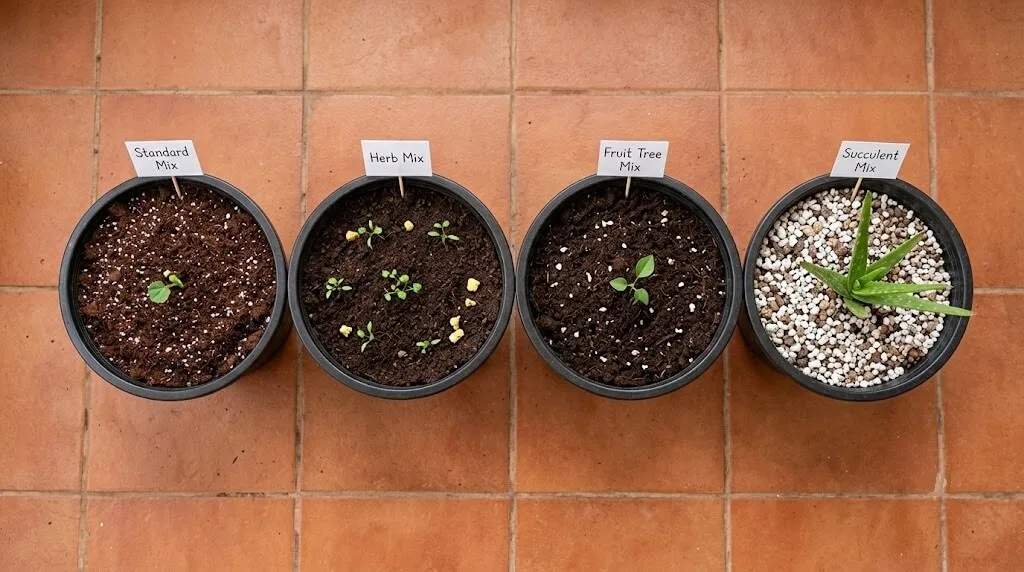
| Ingredient | Standard Mix | Herb Mix | Fruit Tree Mix | Succulent Mix |
|---|---|---|---|---|
| Cocopeat | 40% | 35% | 30% | 30% |
| Vermicompost | 30% | 35% | 30% | 10% |
| Garden / red soil | 20% | 20% | 25% | 10% |
| Perlite / sand | 10% | — | 10% | 50% |
| Neem cake | — | 10% | — | — |
| Bone meal | — | — | 5% | — |
| Cost per 10L (₹) | ₹140–₹170 | ₹130–₹160 | ₹165–₹205 | ₹90–₹120 |
| Drainage (200ml) | 5–8 sec ✓ | 8–12 sec ✓ | 8–10 sec ✓ | <5 sec ✓ |
| Water retention | Good ✓ | Good ✓ | Good ✓ | Low ✗ |
| Best for | Bhindi, tamatar, capsicum, baingan, karela | Dhaniya, methi, pudina, tulsi | Nimbu, curry patta, drumstick | Aloe, cactus, jade, snake plant |
| Wet pot weight | ~Moderate | ~Moderate | ~Heavier | Lightest ✓ |
Crop-by-Crop Potting Mix Reference 20 Indian Vegetables
| Crop (Hindi name) | Mix type | Min pot vol. | Mix per pot | Cocopeat | Vermicompost | Est. cost ₹ | Key note |
|---|---|---|---|---|---|---|---|
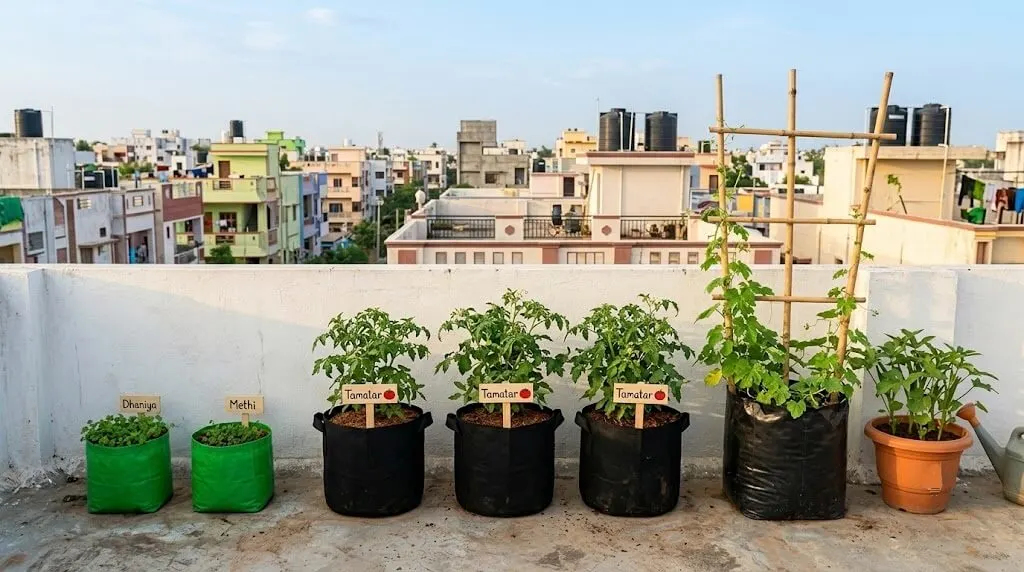
| Tamatar / Tomato | Standard | 15 L | 12 L | 4.8 L | 3.6 L | ₹115–₹160 | Use a determinate variety in 12–15 L; indeterminate needs 20 L+ |
| Bhindi / Okra | Standard | 10 L | 8 L | 3.2 L | 2.4 L | ₹75–₹105 | Sow 3 seeds per pot, thin to 1 after 10 days |
| Mirchi / Chilli | Standard | 8 L | 6.4 L | 2.6 L | 1.9 L | ₹60–₹85 | One plant per 8 L pot; roots spread wide, not deep |
| Baingan / Brinjal | Standard | 12 L | 9.6 L | 3.8 L | 2.9 L | ₹95–₹125 | Heavy feeder: top-dress vermicompost monthly |
| Capsicum | Standard | 10 L | 8 L | 3.2 L | 2.4 L | ₹75–₹105 | Sensitive to waterlogging; never skip perlite |
| Karela / Bitter Gourd | Standard | 20 L | 16 L | 6.4 L | 4.8 L | ₹155–₹210 | Needs a trellis and large volume; extensive root system |
| Lauki / Bottle Gourd | Standard | 20 L | 16 L | 6.4 L | 4.8 L | ₹155–₹210 | Grows fast in monsoon; weekly feeding needed |
| Dhaniya / Coriander | Herb | 3 L | 2.4 L | 0.8 L | 0.8 L | ₹25–₹30 | Crush seeds lightly before sowing to help germination |
| Methi / Fenugreek | Herb | 3 L | 2.4 L | 0.8 L | 0.8 L | ₹25–₹30 | Quick crop; leaves the soil in good shape for the next one |
| Pudina / Mint | Herb | 5 L | 4 L | 1.4 L | 1.4 L | ₹40–₹55 | Invasive: always grow in its own container |
| Palak / Spinach | Herb | 5 L | 4 L | 1.4 L | 1.4 L | ₹40–₹55 | Shallow roots; 6 inch depth is enough |
| Gajar / Carrot | Standard | 10 L | 8 L | 3.2 L | 2.4 L | ₹75–₹105 | Skip garden soil and use 50% cocopeat for straighter roots |
| Mooli / Radish | Standard | 8 L | 6.4 L | 2.6 L | 1.9 L | ₹60–₹85 | 30-day crop; fastest turnaround on a terrace |
| Curry Patta / Curry Leaf | Fruit Tree | 15 L | 12 L | 3.6 L | 3.6 L | ₹120–₹160 | Slow starter: avoid disturbing the roots for 6 months after potting |
| Nimbu / Lemon (Dwarf) | Fruit Tree | 20 L | 16 L | 4.8 L | 4.8 L | ₹155–₹215 | Add 2 handfuls of dried cow dung cake at potting for slow feeding |
| Tulsi / Holy Basil | Herb | 5 L | 4 L | 1.4 L | 1.4 L | ₹40–₹55 | Pinch off flowers to keep leaves coming |
| Aloe Vera | Succulent | 5 L | 4 L | 1.2 L | 0.4 L | ₹30–₹40 | Water only when the top 4 cm is completely dry |
| Aloo / Potato | Standard | 20 L | 16 L | 6.4 L | 4.8 L | ₹155–₹210 | Hill soil up as stems grow |
| Mattar / Garden Pea | Standard | 8 L | 6.4 L | 2.6 L | 1.9 L | ₹60–₹85 | Cool-season crop; struggles in heat |
| Strawberry | Herb | 5 L | 4 L | 1.4 L | 1.4 L | ₹40–₹55 | Prefers slightly acidic soil (about pH 5.5–6.5) |
My Original Trial Data: Madanapalle Terrace
| Mix tested | Containers | Drainage (200ml) | Days moist @ 38°C | Root depth at harvest | Compaction at 90 days | Season tested |
|---|---|---|---|---|---|---|
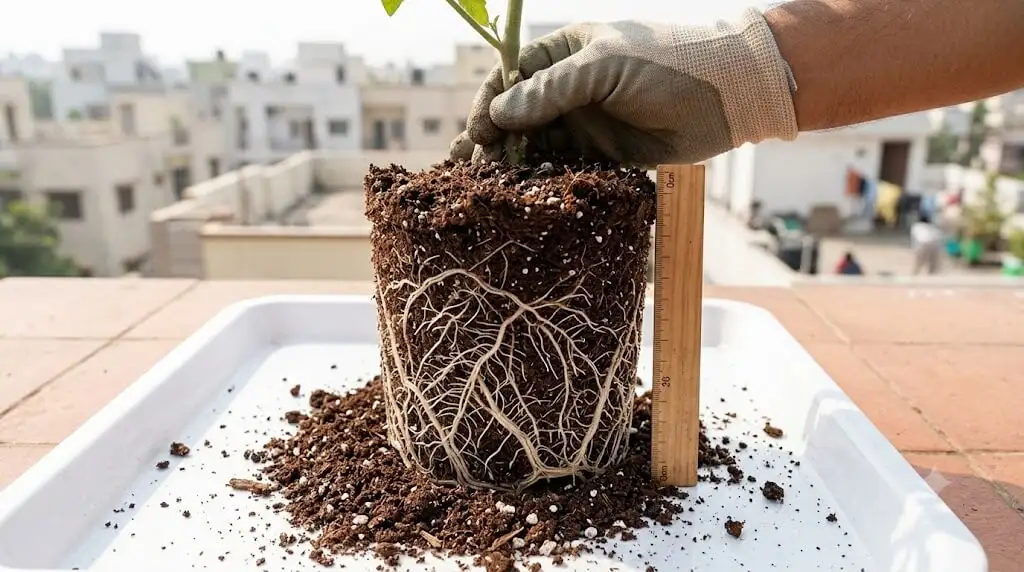
| 40:30:20:10 Standard | 12 | 5.8 sec avg | 2.1 days | 18–22 cm | None | Summer 2023 |
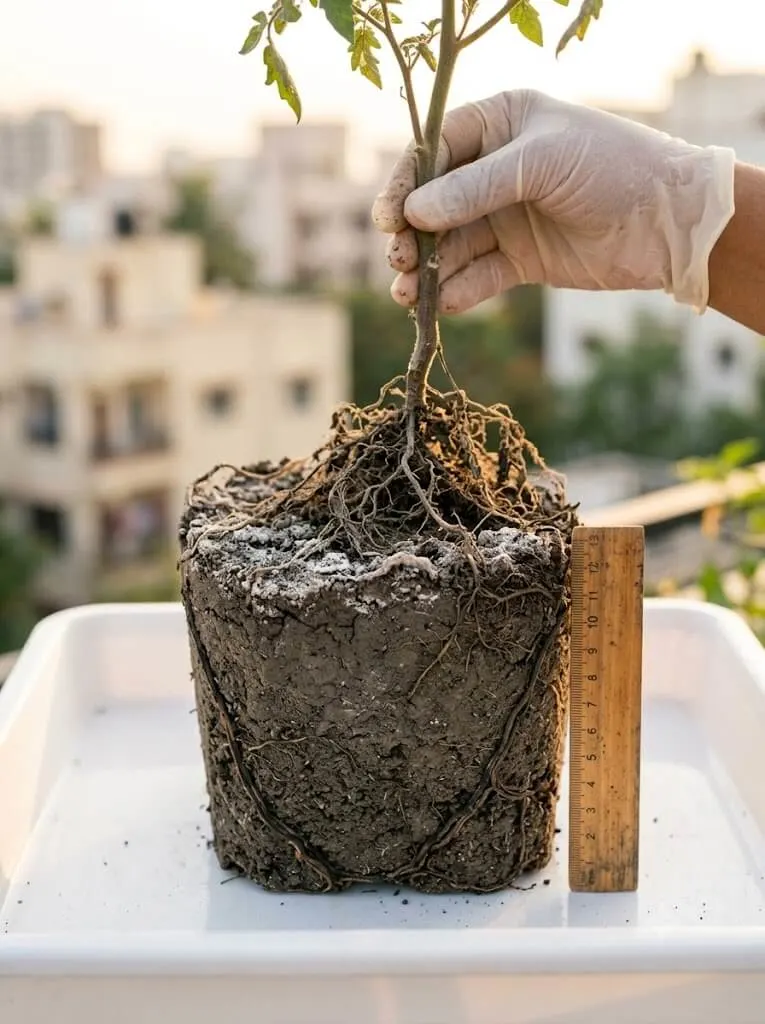
| 100% Garden soil | 4 | 38.4 sec avg | 0.6 days | 8–11 cm | Severe | Summer 2023 |
| 50:50 Cocopeat:Vermicompost | 6 | 6.2 sec avg | 2.4 days | 16–20 cm | None | Monsoon 2023 |
| Herb Mix 35:35:20:10 | 8 | 9.1 sec avg | 2.6 days | 10–14 cm | None | Rabi 2023–24 |
| Succulent 30:10:10:50 | 4 | 3.2 sec avg | 0.4 days | 6–9 cm | None | Summer 2024 |
| Fruit Tree Mix | 4 | 7.8 sec avg | 2.3 days | 20–28 cm | None | Zaid 2024 |
Original measurements by me (Priya Harini B), Madanapalle, AP, 2023–2024. Drainage test: 200 ml of water poured, seconds until the first drop leaves the drainage hole. Compaction assessed by a screwdriver penetration test at 90 days. Sample sizes are small (4–12 containers per mix), so treat these numbers as indicative, not as a scientific study.
City-wise Potting Mix Adjustments 8 Indian Cities
| City | Peak temp / Water TDS | Mix adjustment | Volume multiplier | Key concern |
|---|---|---|---|---|
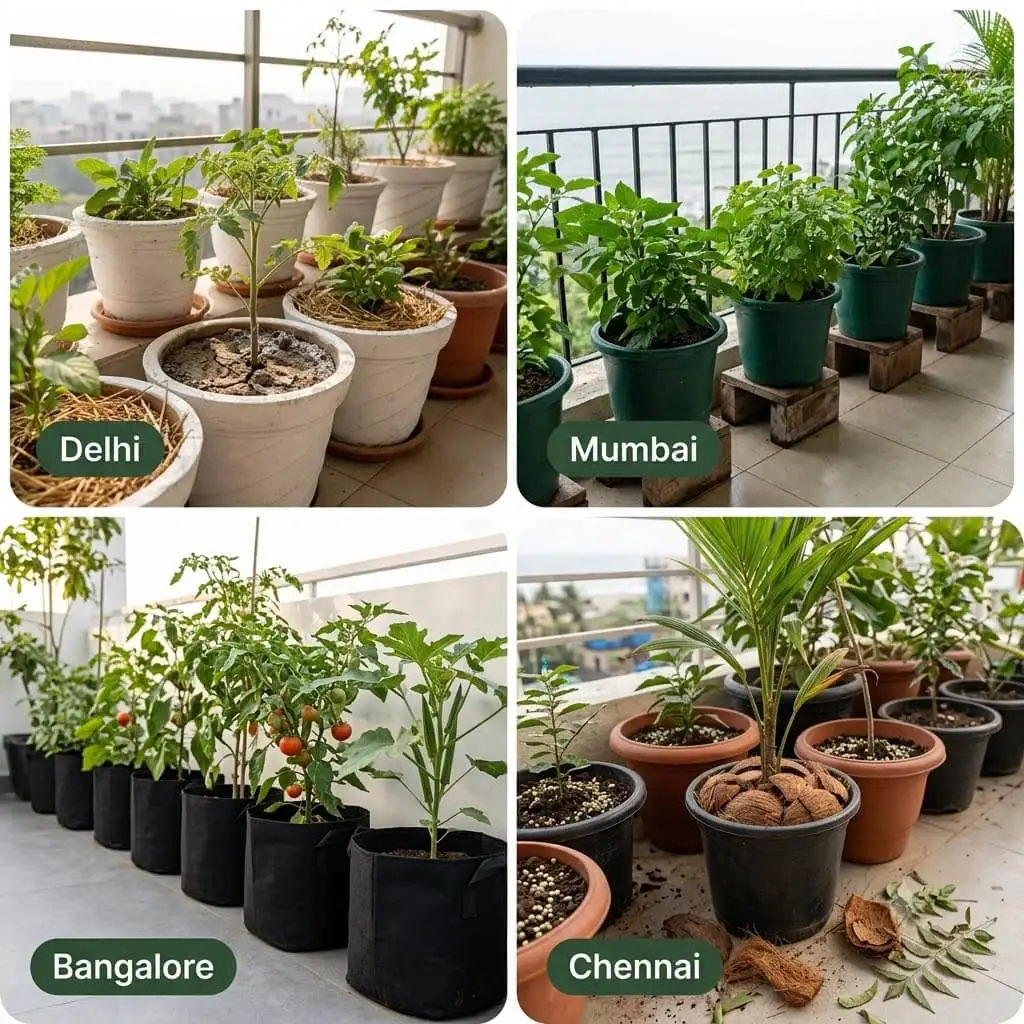
| Delhi / NCR | 42–46°C / TDS 300–500 ppm | Cocopeat ↑ to 45%, perlite ↑ to 15% +15% volume | ×1.15 | Salt buildup from hard water. Flush pots monthly with plain water. Use mulch on surface. |
| Mumbai / Thane | 32–38°C / TDS 80–150 ppm | Vermicompost ↓ to 25%, perlite ↑ to 15% Standard vol. | ×1.00 | Monsoon waterlogging Jun–Sep. Elevate pots 5–6 cm. Fungal disease risk is highest here. |
| Bangalore | 18–35°C / TDS 100–200 ppm | Standard mix works well. Optional +5% vermicompost. Standard vol. | ×1.00 | Overwatering Jun–Sep. Best climate in India for container gardening most forgiving. |
| Chennai / Coimbatore | 38–42°C / TDS 250–600 ppm | Add 10% neem cake, use RO/rainwater, cocopeat ↑ 45% +10% volume | ×1.10 | Hard water deposits on cocopeat. Northeast monsoon Oct–Dec creates waterlogging risk. |
| Hyderabad | 40–44°C / TDS 200–400 ppm | Cocopeat ↑ to 50% in summer +10% volume | ×1.10 | South-facing terraces dry pots in 4–5 hours at peak summer. Shade cloth May–June helps. |
| Ahmedabad / Gujarat | 42–48°C / TDS 800–1200 ppm | Skip garden soil entirely cocopeat 50% + vermicompost 30% + perlite 20% +20% volume | ×1.20 | Highest TDS water in this study. White mineral crust appears within 2 weeks. Mulch mandatory. |
| Pune / Nashik | 18–38°C / TDS 100–250 ppm | Standard mix year-round. Reduce watering Sep–Nov. Standard vol. | ×1.00 | Post-monsoon compaction common. Top-dress 2cm fresh vermicompost every October. |
| Madanapalle / AP | 22–44°C / TDS 150–350 ppm | My tested mix: 40% cocopeat + 30% vermicompost + 20% local red soil + 10% perlite +15% volume | ×1.15 | Red laterite soil available free locally blends well as 20% base. No need to buy garden soil. |
Frequently Asked Questions
Related Guides on The Trend Vault