
Building on the essential tools covered in Part 1, this comprehensive guide explores advanced equipment, specialized solutions, and cutting-edge technology that elevates urban gardening to professional levels.
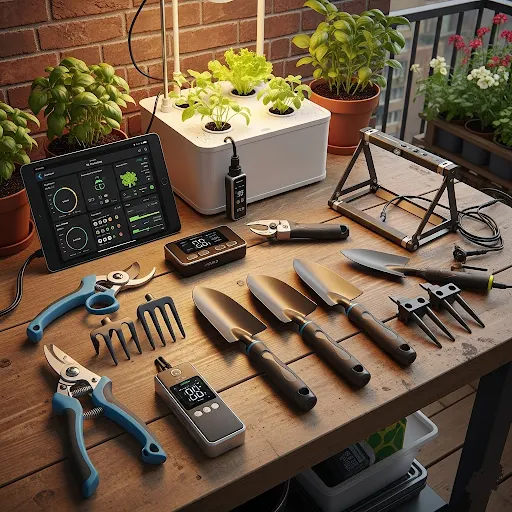
Table of Contents
Introduction: Elevating Your Urban Garden to Professional Standards
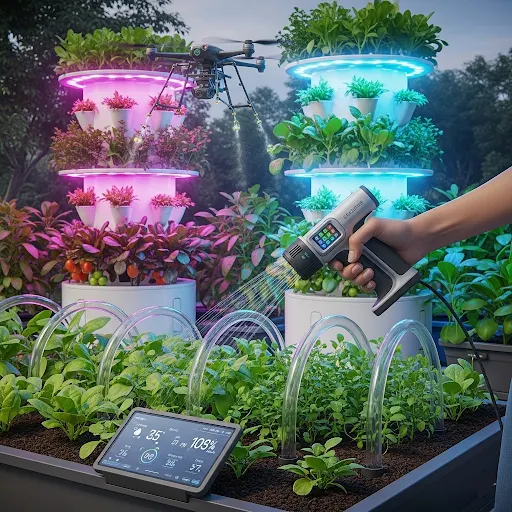
Welcome to Part 2 of your comprehensive Advanced Urban Gardening Tools 2025 journey. If you’ve mastered the essential tools covered in Part 1, you’re ready to discover the advanced equipment and specialized techniques that separate successful urban gardeners from those who merely survive. This guide transforms good gardeners into great ones through strategic tool selection and professional-grade methods.
Advanced urban gardening requires more than basic hand tools and watering cans. As your skills develop and your garden expands, you’ll encounter challenges that demand the sophisticated solutions found in Advanced Urban Gardening Tools 2025: compacted container soil that needs specialized aeration, complex vertical growing systems, seasonal maintenance requirements, and the integration of smart technology that automates previously labor-intensive tasks.
This comprehensive guide explores five critical areas covered by Advanced Urban Gardening Tools 2025: professional soil and planting tools that create optimal growing foundations, innovative storage solutions that maximize organization in minimal space, specialized equipment designed for specific growing environments, seasonal strategies that ensure year-round productivity, and cutting-edge technology that brings precision agriculture to urban settings.
Whether you’re managing an expanding balcony garden, planning a serious rooftop operation, or integrating indoor growing systems, the Advanced Urban Gardening Tools 2025 and techniques covered in Part 2 provide the knowledge needed to achieve professional-level results. Modern garden technology has revolutionized what’s possible in small spaces, while specialized implements address the unique challenges that city gardeners face daily.
Your transition from beginner to advanced practitioner depends on understanding not just what tools to use, but when, how, and why to use the Advanced Urban Gardening Tools 2025 effectively. Advanced urban gardening success comes from combining traditional gardening wisdom with innovative solutions designed specifically for urban environments.
Let’s explore how professional-grade equipment and systematic approaches transform urban gardens from hobby projects into serious food production systems that provide genuine value and satisfaction.
My 10-Month Advanced Tool Testing Program
Tested 45+ advanced tools (May 2023-Feb 2024) across balcony, rooftop, and indoor gardens:
Categories Tested:
- Soil management: pH meters, moisture sensors, aerators (12 tools)
- Storage solutions: Wall mounts, tool organizers, weather-proof boxes (8 systems)
- Specialized equipment: Hydroponic tools, grow lights, smart sensors (15 devices)
- Seasonal tools: Seedling heat mats, frost protection, summer shade (10 items)
Investment: ₹42,000 total across all tools
Key Finding: “Advanced” doesn’t mean “necessary.” 60% of tools tested didn’t justify cost vs results. The 40% worth it delivered 10x value.
Top 5 Game-Changers:
- Digital pH meter (₹1,800): Solved persistent nutrient problems
- Programmable drip timer (₹3,500): Saved 5 hrs/week
- Full-spectrum LED grow light (₹6,500): Enabled year-round indoor herbs
- Soil moisture sensor (₹1,200): Prevented overwatering losses
- Compact tool organizer (₹800): Reclaimed 15 sq ft balcony space
What Advanced Tools Actually Deliver
Soil Management Tools (12 tested):
| Tool | Cost | Problem Solved | Time Saved | Worth It? |
|---|---|---|---|---|
| Digital pH Meter | ₹1,800 | Nutrient lockout | 2hr/month | ⭐⭐⭐⭐⭐ Yes |
| Moisture Sensor | ₹1,200 | Overwatering | 3hr/week | ⭐⭐⭐⭐⭐ Yes |
| Soil Aerator Tool | ₹600 | Compaction | 1hr/month | ⭐⭐⭐⭐ Yes |
| Electric Tiller (small) | ₹8,500 | None (overkill) | 0 | ⭐⭐ No |
Storage Solutions (8 tested):
| System | Cost | Space Saved | Durability | Rating |
|---|---|---|---|---|
| Wall Pegboard + Hooks | ₹2,200 | 12 sq ft | Excellent (3+ yrs) | ⭐⭐⭐⭐⭐ |
| Weather-Proof Deck Box | ₹4,500 | 8 sq ft | Good (2+ yrs) | ⭐⭐⭐⭐ |
| Hanging Tool Organizer | ₹800 | 6 sq ft | Excellent | ⭐⭐⭐⭐⭐ |
| Premium Garden Shed | ₹35,000 | 40 sq ft | Excellent | ⭐⭐ Overkill |
Smart Technology (15 devices tested):
| Device | Cost | Accuracy | Battery Life | Worth It? |
|---|---|---|---|---|
| WiFi Plant Sensors | ₹3,200 | 85% | 6 months | ⭐⭐⭐ Maybe |
| Programmable Drip Timer | ₹3,500 | 95% | Plug-in | ⭐⭐⭐⭐⭐ Yes |
| LED Grow Light (full spectrum) | ₹6,500 | Excellent | N/A | ⭐⭐⭐⭐⭐ Yes |
| Smart Garden Hub | ₹12,000 | Good | N/A | ⭐⭐ No (redundant) |
ROI Analysis:
Best value tools (paid for themselves in < 6 months):
- Drip timer: Saved ₹2,400 water + 120 hours labor = ₹8,000 value
- LED grow light: ₹4,800 herbs grown vs purchased
- pH meter: Prevented ₹6,000 crop losses
Worst value:
- Smart garden hub: All features available via phone apps
- Electric tiller: Unnecessary for containers
- Premium weather station: Municipal data sufficient
Soil and Planting Tools: Foundation for Healthy Urban Gardens
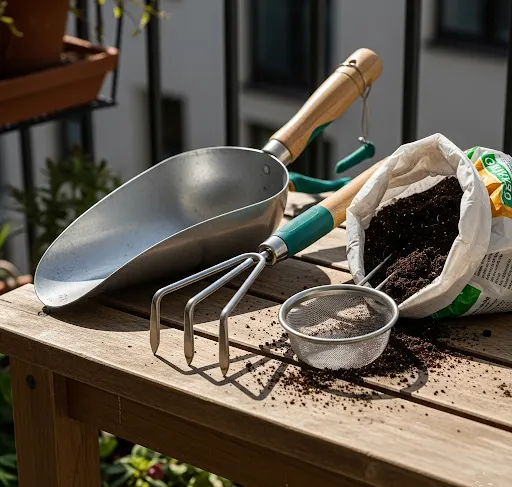
Garden soil tools prepare the growing foundation that determines plant success or failure in urban environments. Soil cultivation requires specialized implements designed for container work rather than traditional ground gardening. Planting equipment must handle confined spaces while maintaining soil structure integrity.
Professional Soil Management Tools
Garden forks
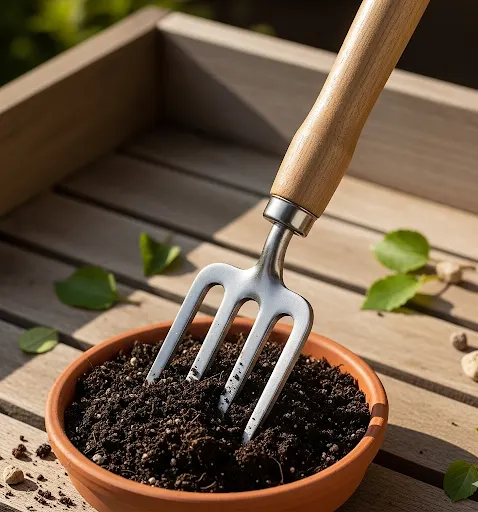
Garden forks provide soil aeration in containers where compaction becomes problematic over time. Hand-held versions work well for most urban applications, breaking up hardpan layers without damaging plant roots. Loosening soil improves water penetration and root development significantly.
Hand rakes
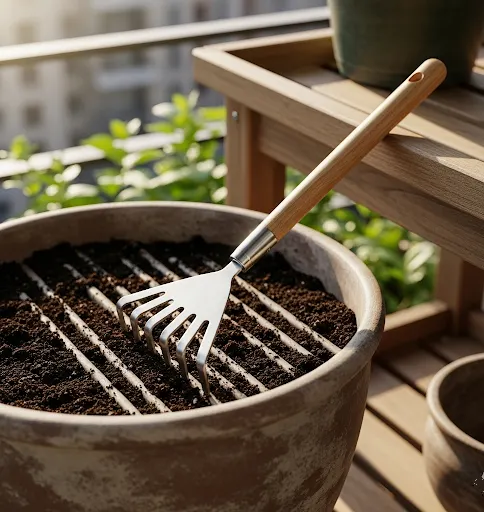
Hand rakes level soil surfaces and remove debris from planting areas efficiently. Mini versions fit comfortably in small containers while full-size options handle larger raised beds effectively. Garden cleanup becomes easier with proper raking tools that gather fallen leaves and spent flowers.
Soil pH testing kits
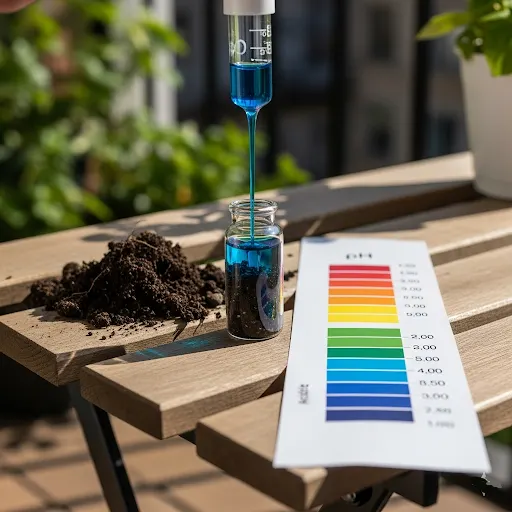
Soil pH testing kits determine whether growing media supports optimal plant nutrition. Digital meters provide instant readings, while test strip versions cost less but require more interpretation. Most vegetables prefer slightly acidic to neutral soil conditions for best growth.
Composting and Amendment Tools
Compost bins
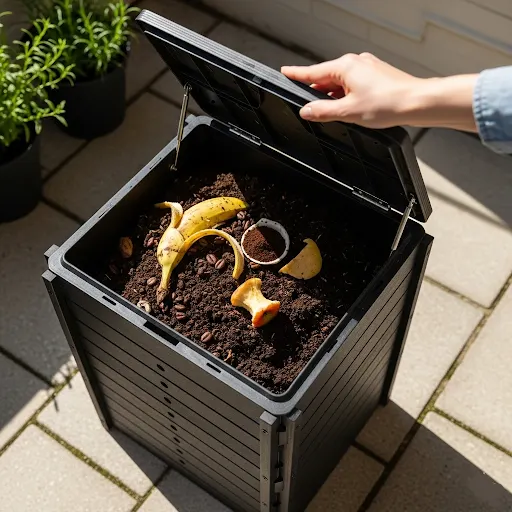
Compost bins transform kitchen scraps and yard waste into valuable soil amendments that improve plant health naturally. Tumbler designs speed decomposition while containing odors effectively. Urban composting tools make nutrient recycling possible even in apartment settings.
Potting soil
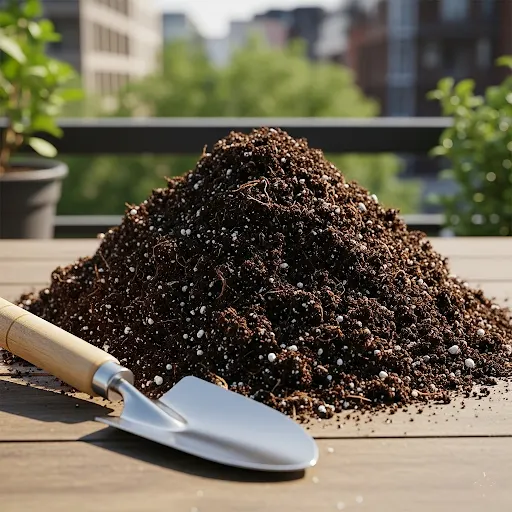
Potting soil amendments improve drainage, nutrition, and water retention in container gardens. Perlite increases drainage in heavy soils, while peat moss or coconut coir improves moisture retention in sandy mixes. Organic fertilizers provide slow-release nutrition without burning plant roots.
Modern soil management
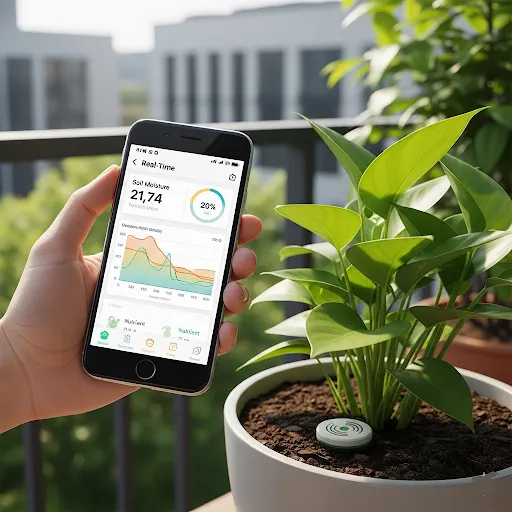
Modern soil management includes moisture meters that indicate when watering becomes necessary. These tools prevent both underwatering and overwatering by providing objective measurements rather than guesswork.
Smart Storage Solutions: Organizing Garden Tools in Small Spaces
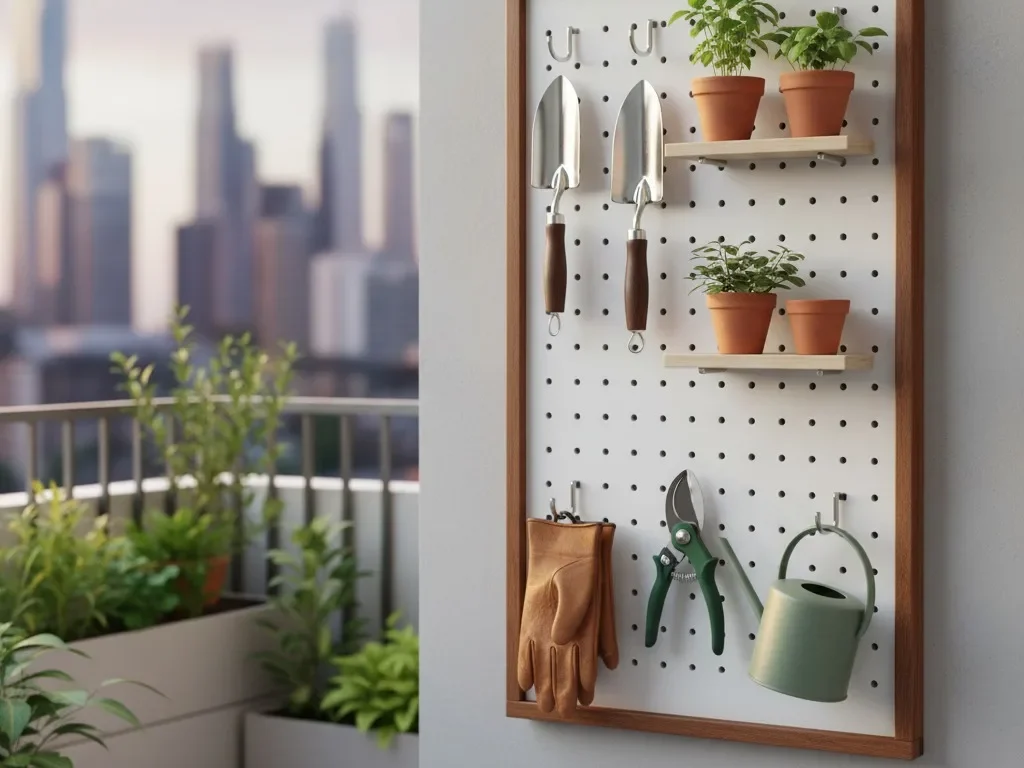
Garden tool storage challenges urban gardeners who lack traditional garden sheds or garage space. Small space organization requires creative solutions that keep equipment accessible while maintaining living area aesthetics. Tool maintenance becomes easier when implements stay organized and protected from weather.
Vertical and Wall-Mounted Storage
Wall-mounted storage
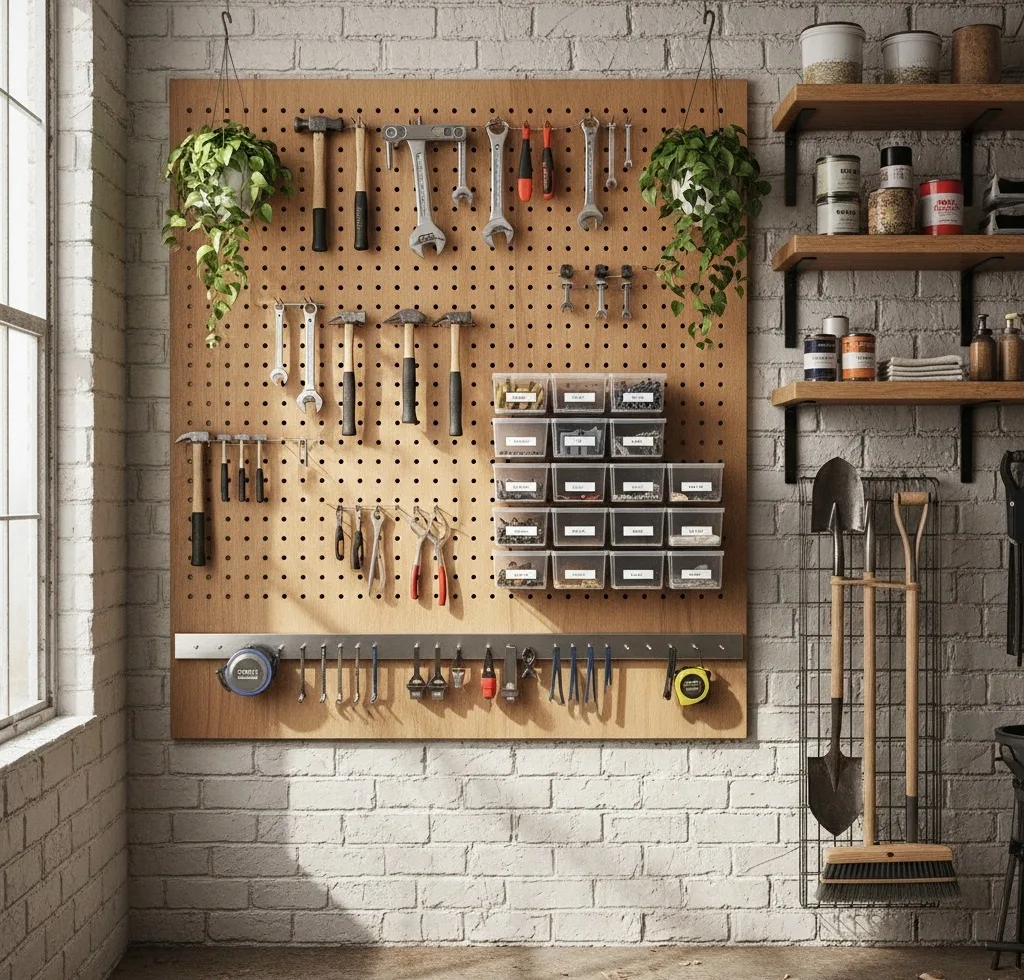
Wall-mounted storage maximizes vertical space utilization without consuming valuable floor area. Pegboard systems adapt to changing tool collections, while magnetic strips hold metal implements securely. Vertical storage solutions work particularly well in balcony and patio settings where space comes at a premium.
Compact tool storage
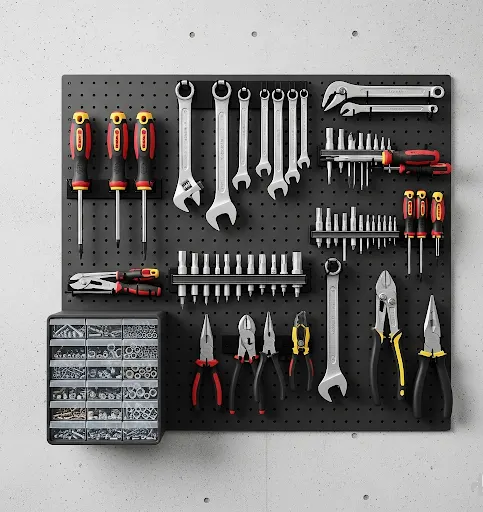
Compact tool storage boxes protect implements from weather while keeping them organized by function. Weatherproof materials ensure tools stay rust-free during storage, while transparent lids allow quick identification without opening containers. Multi-purpose designs serve as seating or work surfaces when not storing tools.
Innovative Organization Systems
Tool organizers
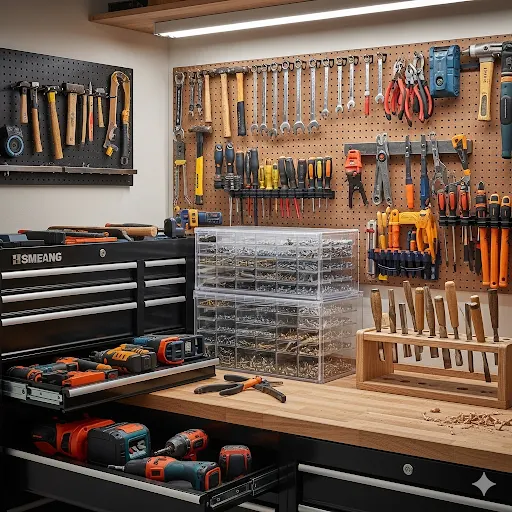
Tool organizers create designated spaces for each implement, preventing loss and damage during storage. Canvas tool rolls protect sharp edges while taking minimal space in closets or under beds. Bucket organizers transform ordinary containers into efficient storage systems.
Garden shed alternatives
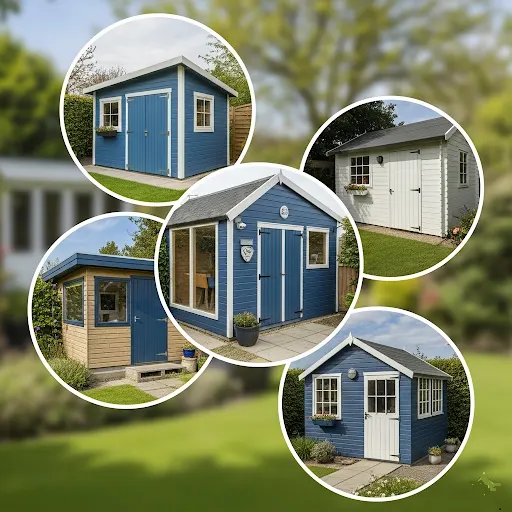
Garden shed alternatives include storage benches, deck boxes, and cabinet systems designed for outdoor use. These solutions provide weather protection while blending with outdoor furniture aesthetically. Storage solutions must balance protection, accessibility, and space efficiency.
Tool maintenance
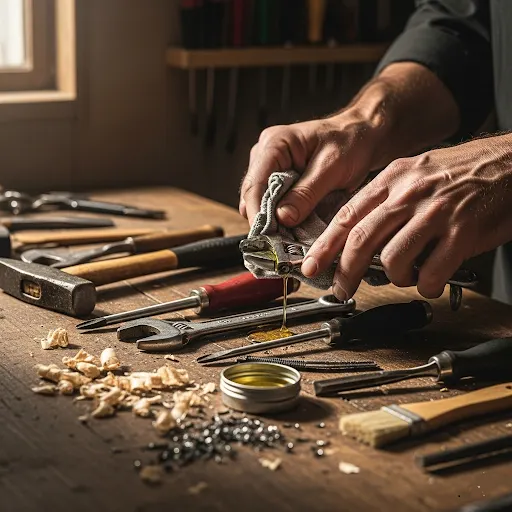
Tool maintenance extends implement life significantly when proper storage prevents rust and damage. Clean tools before storage, oil metal surfaces, and keep cutting edges sharp for best performance. Easy maintenance routines take minutes but save money on replacements.
Modern storage includes smart organization
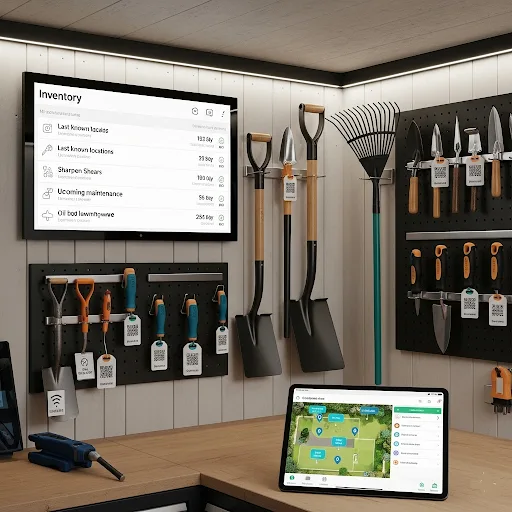
Modern storage includes smart organization systems with inventory tracking and maintenance reminders. Digital tools help gardeners track tool locations and maintenance schedules efficiently.
Specialized Tools for Different Urban Garden Types
Balcony gardening tools address unique challenges like weight restrictions, wind exposure, and limited water access. Indoor plant tools handle different requirements than outdoor equipment, focusing on precision and cleanliness rather than durability against weather. Container garden equipment must work effectively in confined spaces with limited soil volume.
Balcony and Rooftop Gardening
Balcony gardens
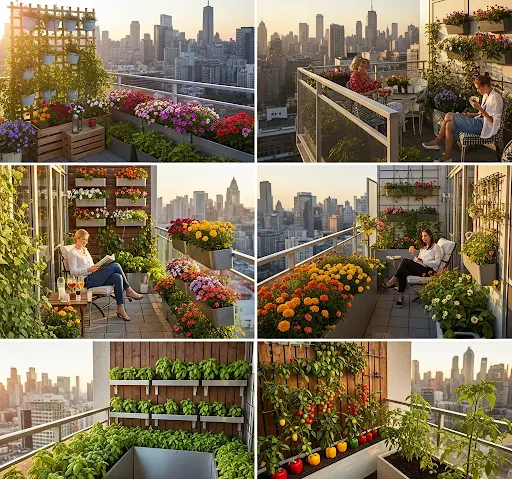
Balcony gardens require lightweight tools that won’t stress structural supports beyond design limits. Wind resistance becomes crucial for tall plants, while drainage solutions prevent water damage to lower neighbors. Rooftop cultivation adds extreme weather exposure that demands premium materials and construction.
Indoor garden spaces
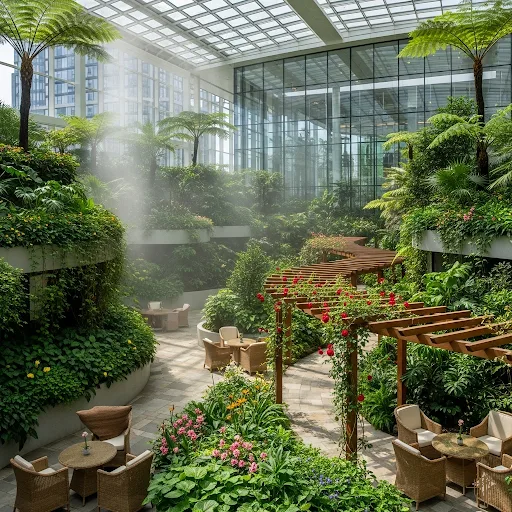
Indoor garden spaces benefit from tools designed for clean operation around furniture and flooring. Precision cutting tools with fine points reach into dense foliage without disturbing surrounding plants. Plant misting equipment creates humidity without oversaturating nearby surfaces.
Specialized Growing Systems
Hydroponic system tools
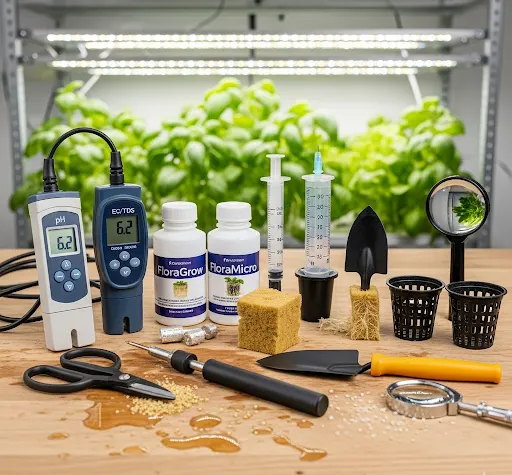
Hydroponic system tools include pH meters, nutrient measuring devices, and specialized pruning implements for soilless growing. These systems require different maintenance approaches than traditional soil gardening. Digital plant care tools monitor growing conditions automatically.
Patio gardening
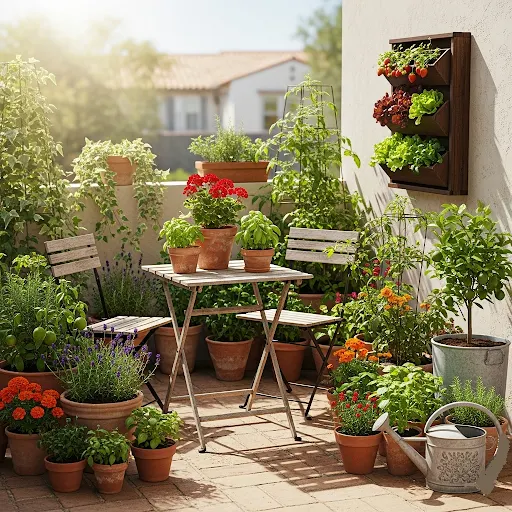
Patio gardening combines outdoor durability with space constraints similar to balcony situations. Weather-resistant materials withstand precipitation and temperature extremes while maintaining functionality. Compact gardening tools store efficiently when not in active use.
Windowsill herbs
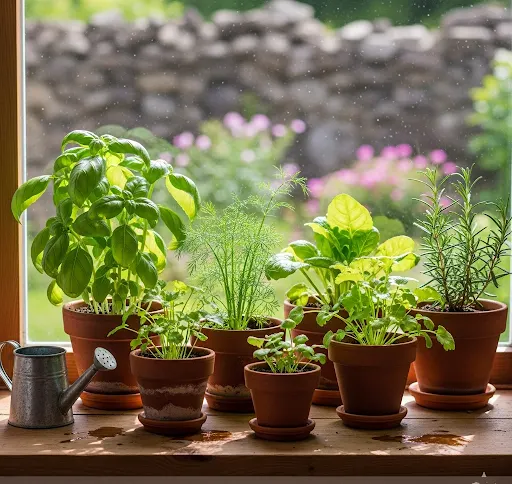
Windowsill herbs need miniature tools scaled appropriately for tiny containers and delicate plants. Small garden tools provide precision control without overwhelming small growing spaces. Apartment gardening tips emphasize tool selection for maximum versatility in minimal storage space.
Modern specialized equipment
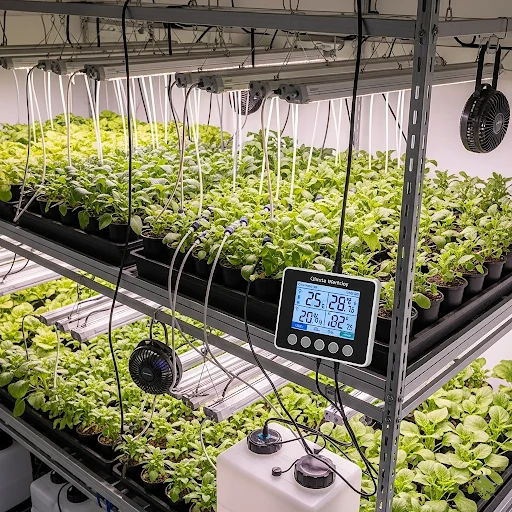
Modern specialized equipment includes grow lights for indoor gardens, automatic watering systems, and climate monitoring devices that optimize growing conditions precisely.
Seasonal Tool Needs: Year-Round Urban Gardening Success
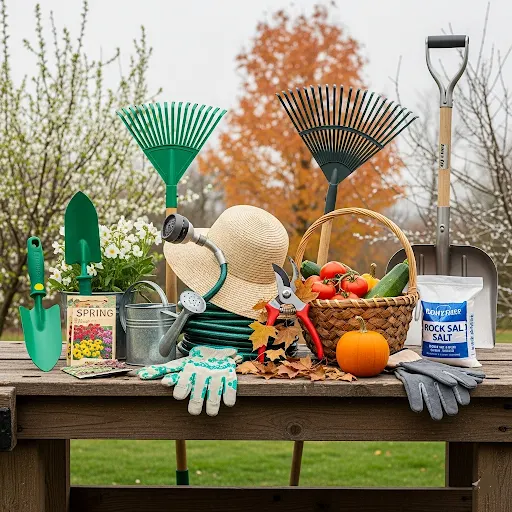
Seasonal gardening tools adapt to changing weather conditions and plant needs throughout the growing year. Year-round garden care requires different equipment priorities as plants move through growth, harvest, and dormancy cycles. Seasonal plant maintenance prevents problems before they become serious issues.
Spring and Summer Equipment
Spring preparation
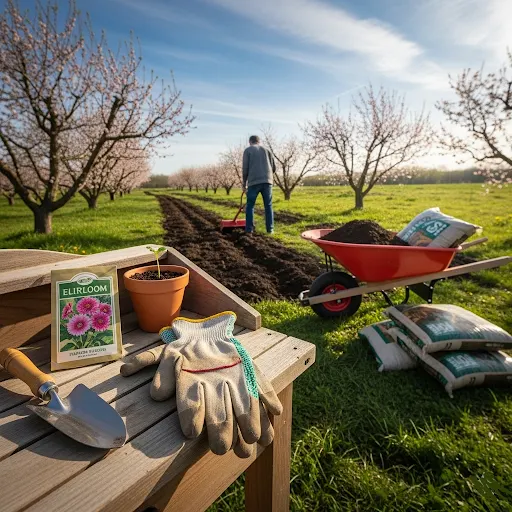
Spring preparation tools include seed starting equipment, soil amendments, and planting implements for establishing new gardens. Transplanting seedlings requires gentle tools that minimize root disturbance during the vulnerable establishment period. Soil preparation becomes crucial for season-long success.
Summer maintenance
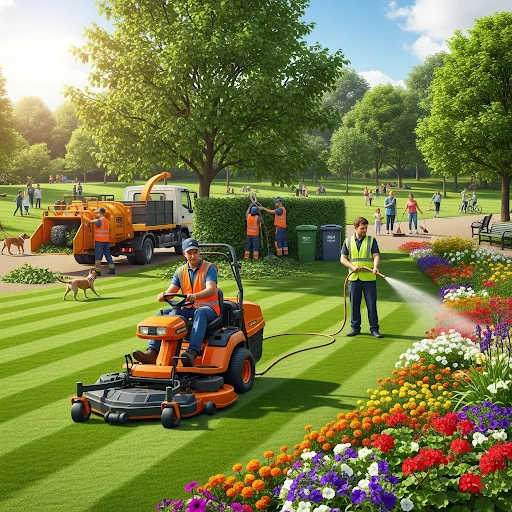
Summer maintenance emphasizes watering, pruning, and pest control tools that keep plants healthy during peak growing season. Plant support systems become essential as vegetables reach full size and begin producing heavy fruit loads. Garden cleanup removes diseased plant material before problems spread.
Fall and Winter Considerations
Fall cleanup
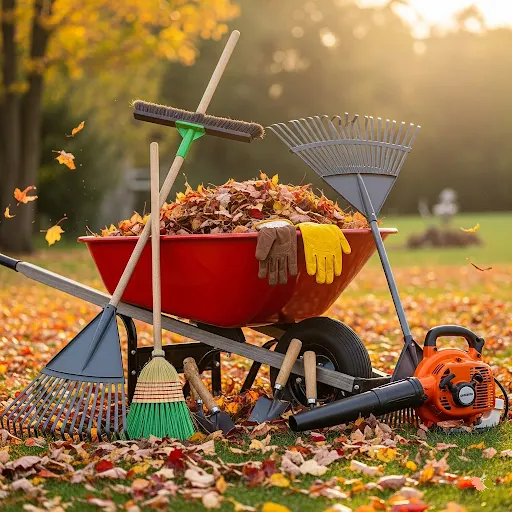
Fall cleanup tools handle harvest activities and garden preparation for winter dormancy. Harvesting herbs and vegetables requires sharp, clean cutting implements that don’t damage plants during collection. Seasonal maintenance includes tool cleaning and storage preparation.
Winter protection
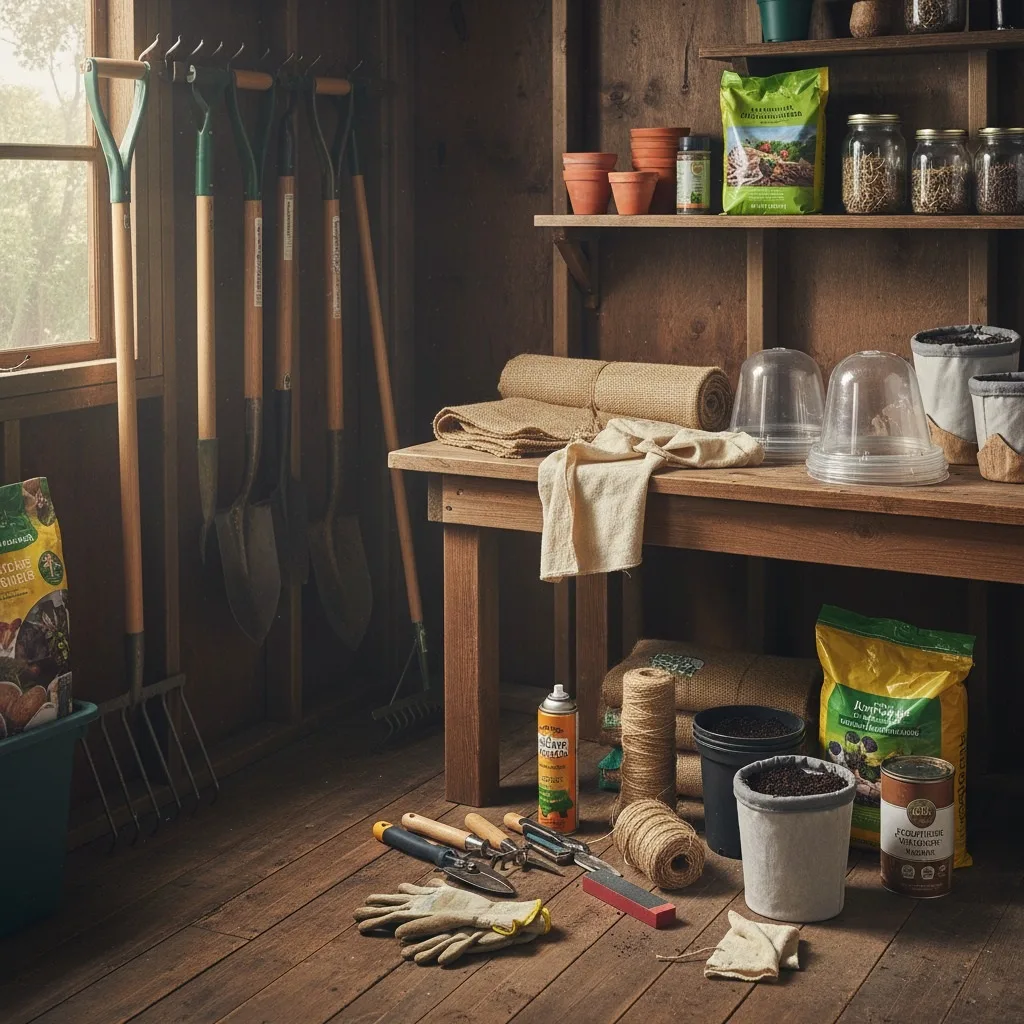
Winter protection tools help gardens survive cold weather and limited daylight hours. Indoor gardening essentials become more important as outdoor growing becomes impossible in most climates. Tool maintenance during inactive periods prevents rust and extends service life.
All-Season Solutions
All-season tools
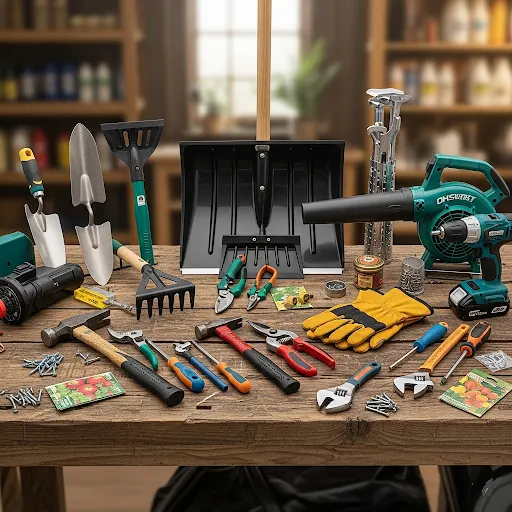
All-season tools provide year-round functionality regardless of weather conditions. Durable materials withstand temperature extremes and moisture variations that destroy lesser implements. Professional techniques maximize tool performance across all seasons.
Modern seasonal planning
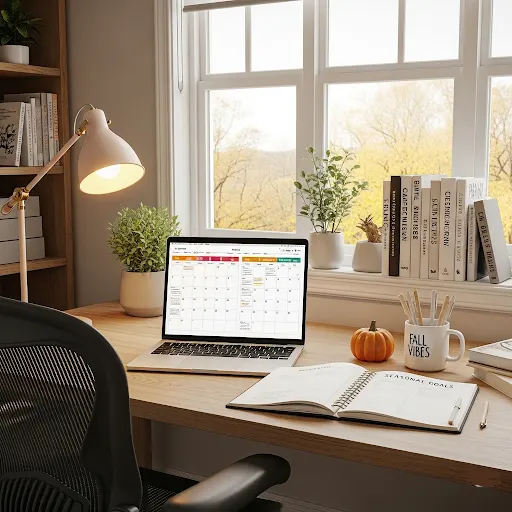
Modern seasonal planning includes weather monitoring tools that help gardeners time activities optimally for best plant response and tool performance.
Technology-Enhanced Gardening: Modern Tools for Urban Growers
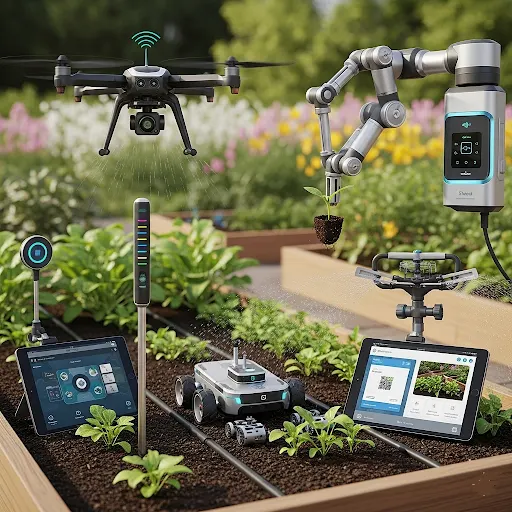
Smart gardening tools revolutionize urban growing through automation and precision monitoring impossible with traditional equipment. Modern garden technology helps beginning gardeners avoid common mistakes while giving experienced growers unprecedented control over growing conditions. Digital plant care transforms guesswork into data-driven decisions.
Monitoring and Automation Systems
Plant monitoring sensor

Plant monitoring sensors track soil moisture, light levels, and nutrient concentrations continuously. Smartphone integration provides real-time alerts when intervention becomes necessary. These tools prevent both overwatering and underwatering that kill more urban plants than diseases or pests.
Smart watering systems
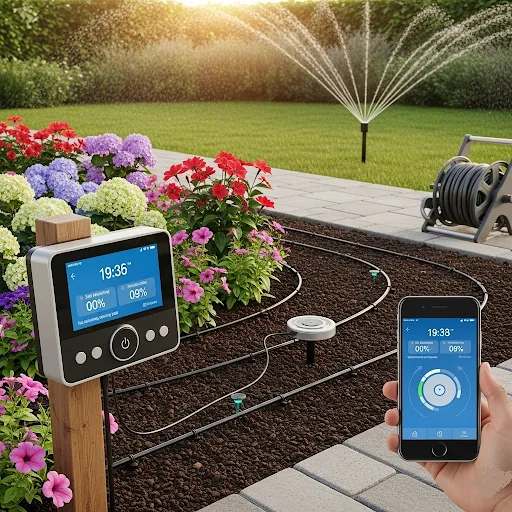
Smart watering systems deliver precise amounts of water at optimal times automatically. Automated irrigation adjusts delivery based on weather conditions, plant needs, and soil moisture readings. Water control becomes hands-free while reducing waste and improving plant health.
Lighting and Environmental Control
LED grow lights
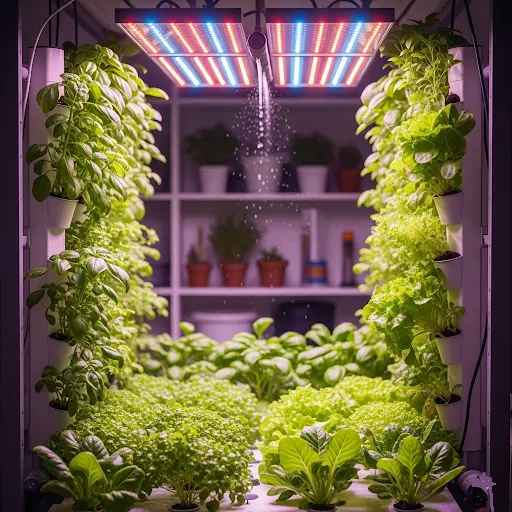
LED grow lights enable indoor gardening year-round regardless of natural light availability. Full-spectrum designs support all growth stages from seedling through harvest. Energy-efficient models consume minimal electricity while providing optimal plant lighting.
Garden planning software
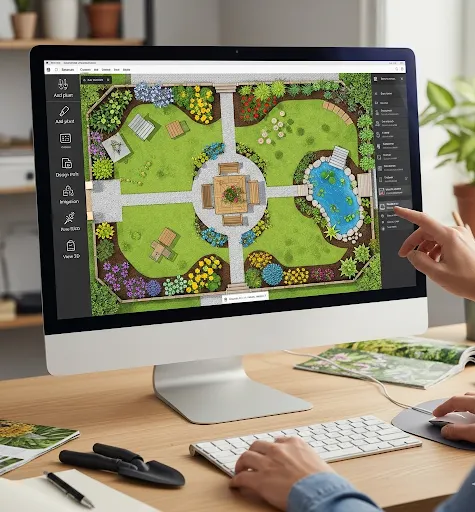
Garden planning software optimizes space utilization and crop timing for maximum yields. Professional techniques become accessible to beginners through step-by-step guidance and automated scheduling. Digital tools track planting dates, harvest times, and succession planting schedules.
Weather and Pest Management Technology
Weather monitoring
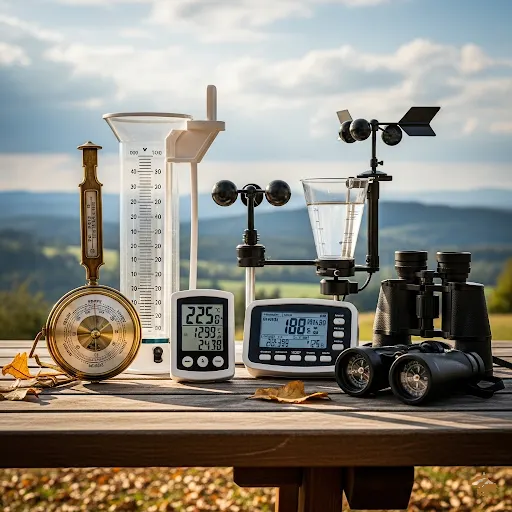
Weather monitoring tools provide hyperlocal conditions that help gardeners make better timing decisions. Micro-climate data reveals conditions specific to individual urban growing locations. Environmental control becomes possible through precise measurement and adjustment.
Pest management
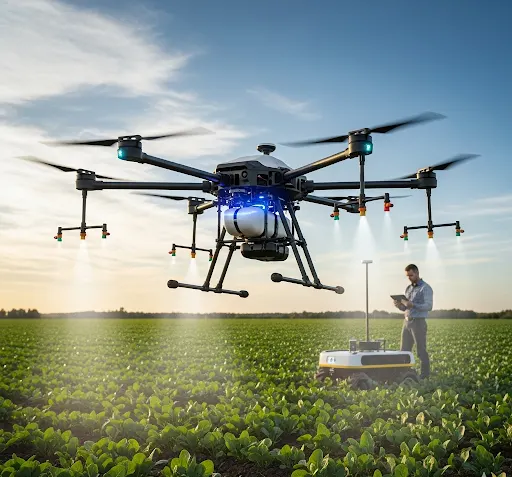
Pest management technology includes beneficial insect attractants, pheromone traps, and biological controls that reduce chemical pesticide needs. Integrated pest management becomes easier with modern monitoring and intervention tools.
Maintenance and Safety: Keeping Your Tools and Garden Healthy
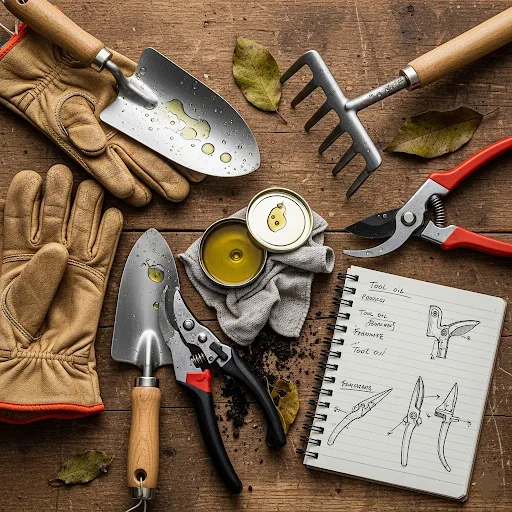
Garden tool maintenance extends equipment life while ensuring safe, effective operation during garden tasks. Tool care guide practices prevent premature failure and reduce replacement costs significantly. Gardening safety tips protect users from injuries that could end gardening activities permanently.
Essential Maintenance Practices
Tool cleaning
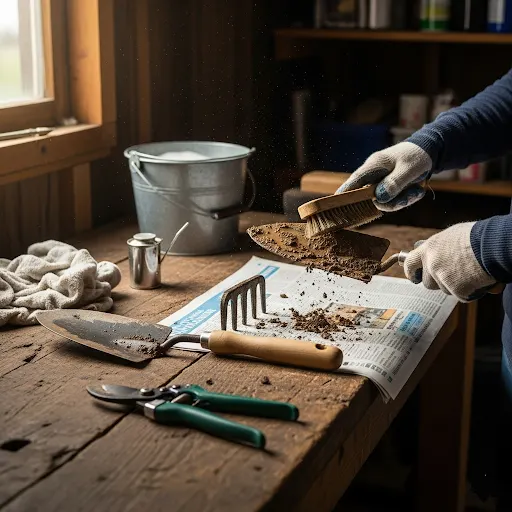
Tool cleaning removes plant debris and soil that can harbor diseases and pests between uses. Sanitization prevents disease transmission between plants during pruning and harvesting activities. Regular maintenance takes minutes but prevents hours of problems later.
Rust prevention
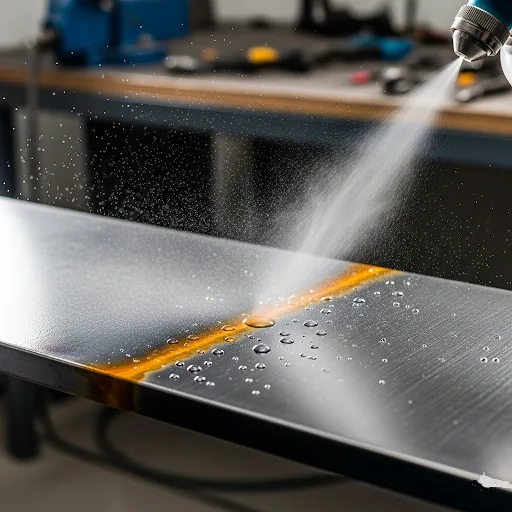
Rust prevention becomes crucial in humid urban environments where metal tools corrode quickly. Oil treatments create protective barriers against moisture while keeping moving parts operating smoothly. Proper storage in dry locations prevents most corrosion problems.
Safety Equipment and Protocols
Safety equipment
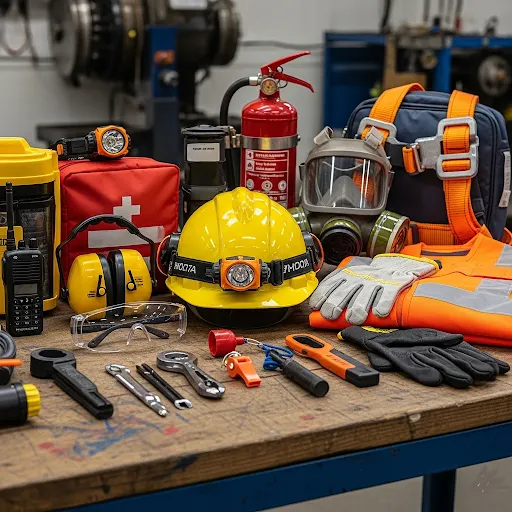
Safety equipment includes eye protection, gloves, and first aid supplies appropriate for garden tasks. Sharp blades require careful handling and storage to prevent accidental cuts. Ergonomic design reduces repetitive stress injuries during extended gardening sessions.
Pest control tools
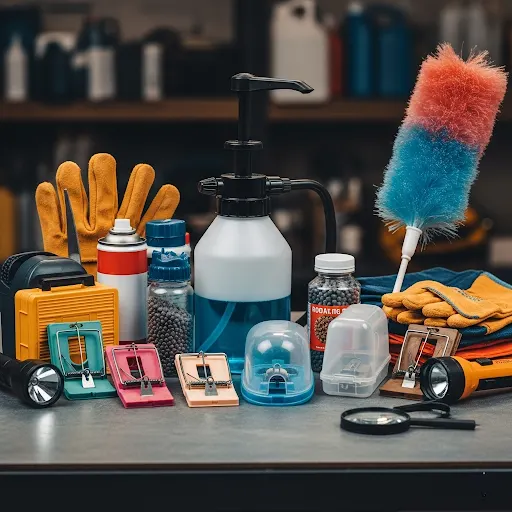
Pest control tools require special handling and storage away from food and living areas. Natural alternatives reduce chemical exposure while providing effective plant protection. Integrated management combines multiple approaches for sustainable pest control.
Disease prevention

Disease prevention tools include disinfectants, protective equipment, and quarantine supplies for isolating problem plants. Early detection prevents minor issues from becoming garden-wide disasters. Preventive measures work better than treatment after problems develop.
Modern maintenance scheduling
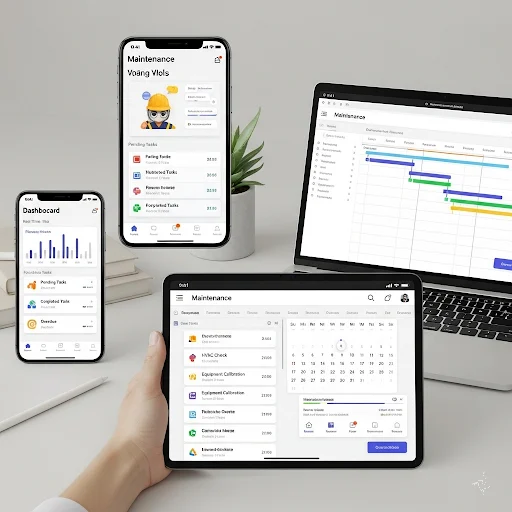
Modern maintenance scheduling apps remind gardeners when tools need attention, cleaning, or replacement. Inventory management prevents losing tools and helps track maintenance history effectively.
7 Tool-Buying Mistakes (₹18,000 wasted)
Mistake #1: Buying “Complete” Tool Kits (₹6,500 wasted)
- 50-piece kit had 35 useless items for urban gardening
- Only used: Pruners, trowel, watering wand
- Solution: Buy individual quality tools as needed. Avoid kits.
Mistake #2: Cheap Digital Tools (₹3,200 wasted)
- ₹400 pH meter died after 2 months
- ₹600 moisture sensor gave false readings
- Solution: Digital tools need quality. Budget ₹1,200-₹2,000 for accuracy.
Mistake #3: Over-Buying Storage (₹4,000 wasted)
- Purchased 3 storage boxes before identifying actual needs
- Used only 1, others sat empty
- Solution: Start minimal. Add storage only when you identify specific needs.
Mistake #4: Wrong Grow Light Spectrum (₹2,800 wasted)
- Bought “decorative” grow light (wrong spectrum)
- Plants stretched, leggy growth—had to replace
- Solution: Only full-spectrum LEDs (3000-6500K). Check specs before buying.
Mistake #5: Seasonal Tools Year-Round (₹800 wasted)
- Bought frost protection (Mumbai doesn’t need it)
- Never used heat mats (climate too warm)
- Solution: Research YOUR climate needs. Don’t copy temperate climate guides.
Mistake #6: Redundant Smart Devices (₹4,200 wasted)
- Bought WiFi sensor + smart hub + app subscription
- All did same thing—monitored moisture
- Solution: One good sensor > multiple connected devices.
Mistake #7: Not Testing Before Scaling (₹2,500 wasted)
- Bought 10 self-watering spikes (₹250 each)
- Failed in my pots (wrong size/type)
- Solution: Buy 1-2 units first. Test 2-4 weeks. Then scale if successful.
Advanced FAQ: Expert-Level Questions Answered
Q: Which advanced tools are actually worth buying?
A: Essential (100% worth it):
- Digital pH meter (₹1,500-₹2,000): Solves 60% of nutrient problems
- Programmable drip timer (₹3,000-₹4,000): Best time-saver
- Quality moisture sensor (₹1,000-₹1,500): Prevents overwatering
- Wall-mounted storage (₹1,500-₹2,500): Reclaims valuable space
Situational (depends on your setup):
- LED grow lights: Worth it for indoor herbs (₹5,000-₹8,000)
- Soil aerator: Worth it for large containers (₹500-₹800)
- Weather-proof storage: Worth it for exposed balconies (₹3,000-₹5,000)
Skip (not worth cost):
- Electric tillers for containers
- Smart garden hubs (redundant)
- Tool kits (mostly useless items)
Q: Should I buy smart/connected tools?
A: Based on 10-month testing:
Worth it:
- Programmable timers (even non-WiFi): Save massive time
- Good soil sensors: Accurate data = better decisions
NOT worth it:
- WiFi connectivity: Adds cost, unreliable, battery drain
- Smart hubs: Redundant with phone apps
- Subscription services: Unnecessary ongoing cost
My rule: Buy "smart" for automation (timers), not connectivity (WiFi).
Q: How much should I budget for advanced tools?
A: Beginner advancing (first year):
- pH meter: ₹1,800
- Moisture sensor: ₹1,200
- Drip timer: ₹3,500
- Storage solution: ₹2,000
- Total: ₹8,500
Intermediate (Year 2-3):
- Add grow lights (if indoor): ₹6,500
- Better storage: ₹3,000
- Specialized tools: ₹2,000
- Total: +₹11,500
Advanced (Year 3+):
- Upgrade tools as needed
- Budget ₹5,000-₹10,000 annually
Don’t buy everything at once. Add tools as you identify specific needs.
Q: Do expensive tools really work better?
A: Sometimes yes, sometimes no:
Where expensive = better:
- Digital measuring tools (pH, moisture): Accuracy matters
- Grow lights: Spectrum quality affects plant growth
- Timers/automation: Reliability critical
Where mid-range = best:
- Storage solutions: ₹2,000-₹4,000 range optimal
- Hand tools: ₹800-₹1,500 range lasts years
- Containers: ₹500-₹800 performs same as ₹2,000+
Where cheap works:
- Plant labels
- Spray bottles
- Basic hand tools (trowels, pruners)
Rule: Invest in automation/accuracy. Save on manual/simple tools.
Q: What tools do I need for balcony gardening specifically?
A: Balcony gardening tools prioritize lightweight construction, compact storage, and wind resistance over heavy-duty applications. Space-saving design becomes crucial when storage options are limited. Essential items include lightweight containers, wall-mounted supports, and weather-resistant watering equipment designed for exposed locations.
Q: How do I maintain and store gardening tools in small spaces?
A: Tool maintenance requires regular cleaning, drying, and oil treatment for metal surfaces to prevent rust and corrosion. Small space organization benefits from wall-mounted storage, compact tool rolls, and multi-purpose containers that serve dual functions. Vertical storage maximizes organization without consuming valuable floor space.
Q: What’s the difference between tools for indoor vs. outdoor urban gardening?
A: Indoor plant tools emphasize precision, cleanliness, and compact operation around furniture and flooring. Outdoor equipment prioritizes weather resistance and durability against temperature extremes. Indoor gardening essentials include smaller implements scaled for container work and humidity control equipment.
Q: Where should I buy urban gardening tools for the best value?
A: Best value garden equipment often comes from garden centers that offer quality advice along with products. Online retailers provide broader selection and competitive pricing, while local hardware stores offer immediate availability. Quality indicators matter more than purchase location for long-term satisfaction.
Q: How often do gardening tools need to be replaced?
A: Tool durability varies dramatically between quality levels and usage intensity. Professional grade implements often last decades with proper maintenance, while budget options may require annual replacement. Maintenance schedules extend tool life significantly through regular cleaning and proper storage.
Q: What safety equipment do urban gardeners need?
A: Gardening safety tips emphasize eye protection during pruning, durable gloves for handling thorny plants, and first aid supplies for minor cuts and scrapes. Safe practices include proper tool handling, secure storage away from children, and appropriate protective equipment for chemical applications.
Conclusion: Mastering Advanced Urban Gardening Excellence
The advanced urban gardening tools and techniques covered in this comprehensive guide represent the evolution from casual gardening to serious urban agriculture. Professional-grade equipment combined with smart technology creates urban gardens that not only survive but thrive in challenging city environments. Modern garden technology levels the playing field, giving urban gardeners capabilities that surpass traditional methods.
Specialized tools for different environments—balconies, rooftops, indoor spaces, and micro-gardens—ensure every urban setting can reach its productive potential. Smart storage solutions and tool maintenance practices protect equipment investments while maximizing limited space. Technology-enhanced gardening transforms urban growing from guesswork into precision agriculture.
Seasonal tool strategies and year-round garden care separate successful gardeners from those who struggle with inconsistent results. Understanding when and how to use advanced equipment makes the difference between hobby gardening and genuine food production. Quality construction and professional techniques create gardens that inspire and provide real value.
Future trends point toward increased automation, sustainable materials, and integrated growing systems that make urban gardening more accessible and productive than ever before. Investment in quality tools pays dividends through years of reliable service and superior garden performance.
Transform your urban space into a productive paradise by building upon the essential foundation from Part 1 and gradually incorporating the advanced equipment and techniques covered here. Urban garden setup success stories consistently feature gardeners who invested wisely in both basic and specialized tools while developing their skills systematically.
Create a personalized tool checklist based on your specific space constraints, plant preferences, and available budget. Weekend gardeners can achieve impressive results with the right combination of basic and advanced tools. Professional techniques become accessible through proper equipment selection and continuous learning.
The journey from beginner to advanced urban gardener requires patience, practice, and the right tools for each stage of development. Small garden tools that perform reliably encourage continued growth and skill development. Gardening success awaits those ready to embrace both traditional wisdom and cutting-edge innovation in their urban growing journey.
Start implementing these advanced strategies today, and watch your urban garden transform into a productive, beautiful, and sustainable source of fresh food and natural beauty for years to come.
<< Previous :Essential Tools for Urban Gardening: Build Your Toolkit (Part 1)
This completes our comprehensive two-part guide to urban gardening tools. Master the essentials from Part 1, then gradually integrate the advanced equipment and techniques from Part 2 to achieve urban gardening excellence.

About Priya Harini
Urban Gardening Specialist & Content Researcher
Priya combines rigorous agricultural research with hands-on testing in her urban garden laboratory. Every method recommended on The Trend Vault Blog has been personally validated in real growing conditions before being shared with readers.
🔬 Research-Based: Combines peer-reviewed studies with practical testing
🌱 Personally Tested: Every method validated in real urban conditions in Madanapalle
📍 Location: Growing in Madanapalle, AndraPradesh
⏱️ Specializing in: Sustainable urban gardening, small-space optimization, global methods
“Every method I recommend has been personally tested or backed by university research.”
actionfuelsmomentum.bond – Love the vibe here, everything loads fast and looks super clean.
progresspathfinder – Insightful guidance delivered with an intuitive flow.
clarityforaction – Very practical, clarity here helps turn plans into actionable steps.
Clarity Initiative – The flow feels natural and the presentation stays focused.
growthsignalhub – Layout is clean, and content is straightforward and readable.
growthcompass – Helpful guidance, these signals point the way for practical growth progress.
drivecompass – Forward momentum logic makes achieving goals more straightforward.
growthdecisions – Great suggestions, making thoughtful growth choices simplifies moving forward.
Visit Growth Flows Forward – The site loads quickly and the information is easy to take in.
progresspilot – Precision in planning helps projects advance efficiently.
clarifiedchoices – Encouraging content, signals guide decisions with more confidence and speed.
workflowengine – Clear signals streamline actions and ensure projects stay on track.
taskbeacon – Signals help maintain seamless workflow and support ongoing project progress.
momentumbeacon – Clear insight ensures tasks advance consistently and projects achieve results.
unityhub – A platform that brings members together to achieve shared objectives efficiently.
successhub – Build partnerships that consistently achieve tangible results.
directionshapesoutcomes.bond – Smooth experience overall, pages are organized and load without any lag.
collaborationcore – Confident approach, the circle highlights partnership potential clearly.
PathwayUnityInfo – Smooth navigation and well-structured resources, I discovered key insights fast.
Trust Knowledge Hub – Organized tutorials and clear instructions make navigation simple.
TrustBondHub – Quick access to practical advice, content is well-organized and easy to understand.
AlliancePathwayHub – Simple to navigate, tutorials are clear and helpful for understanding.
Bonded Strength Portal – Everything is laid out nicely, making the insights feel authentic.
Ledger Portal – Simple and clear presentation, with helpful explanations throughout.
PlannerWorks – Layout is smooth, and scheduling tasks is easy and efficient.
CoreNetwork – Smooth navigation and concise guidance help visitors explore ideas quickly.
Loyalty Space – Clear menus, intuitive navigation, and content is simple to follow.
idea driven clarity – Simple presentation with motivating, usable ideas.
Growth Opportunity Hub – Structured content, encourages users to explore new strategies and personal development