
Calculate Your Exact Wattage
Your Results
Grow Light Calculator India: Live Comparison of LED vs CFL vs Tube Light
Same crop, same area, same hours recalculated instantly for every light type so you can see exactly what switching would save you.
| Light type | Wattage needed | Monthly units (kWh) | Monthly cost (₹) | vs your selection |
|---|
How to Use This Calculator
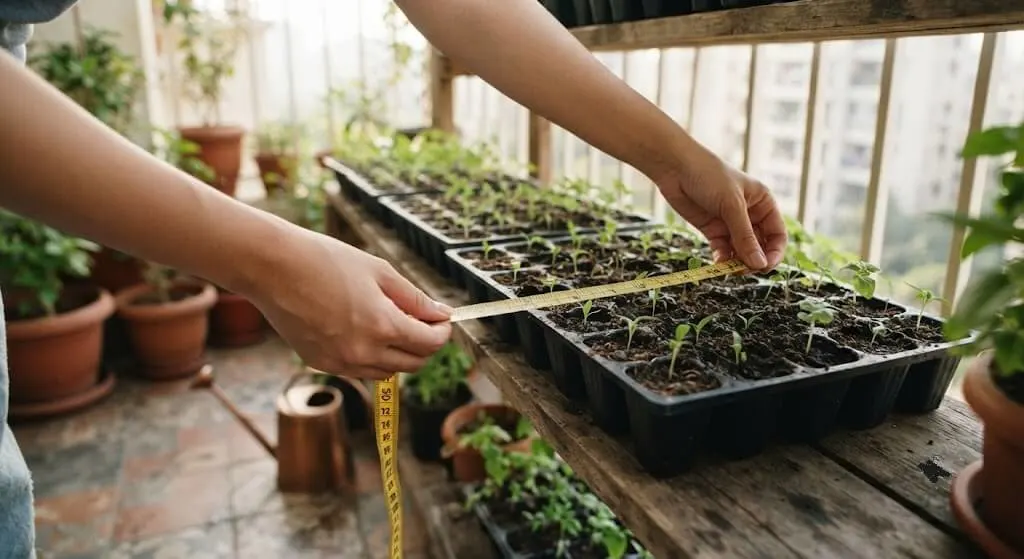
The Formula Behind This Grow Light Calculator
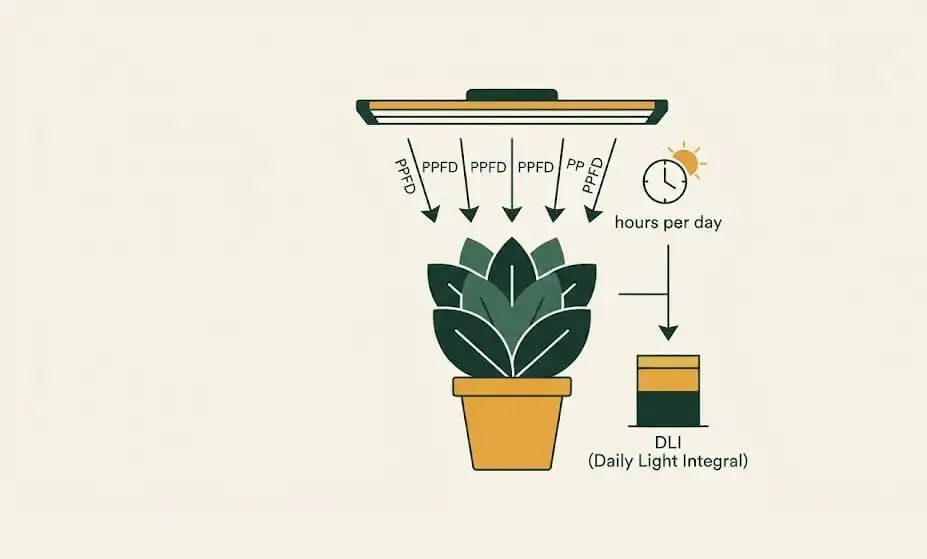
This Grow Light Calculator does not guessit runs the same photon-based lighting math used in commercial greenhouse design, referenced against horticultural crop-lighting research from ICAR-Indian Institute of Horticultural Research, scaled down for a balcony.
| Step | Formula | Worked example (4 sq ft tomato, LED, 45cm height) |
|---|---|---|
| 1. Convert area | m² = sq ft × 0.0929 | 4 × 0.0929 = 0.372 m² |
| 2. Photon flux needed | μmol/s = target PPFD × m² | 500 × 0.372 = 186 μmol/s |
| 3. Raw wattage | W = μmol/s ÷ light efficacy (μmol/J) | 186 ÷ 2.2 = 84.5 W |
| 4. Distance-adjusted wattage | W × distance factor | 84.5 × 1.18 = ~100 W |
| 5. Daily Light Integral | DLI = PPFD × hours × 3600 ÷ 1,000,000 | 500 × 14 × 3600 ÷ 1,000,000 = 25.2 mol/m²/day |
| 6. Monthly electricity | kWh = (W ÷ 1000) × hours × 30 | (100 ÷ 1000) × 14 × 30 = 42 kWh/month |
| 7. Monthly cost | ₹ = kWh × ₹/unit | 42 × ₹6.5 = ₹273/month |
Light efficacy used (μmol of usable plant light per joule of electricity): full-spectrum LED 2.2, budget LED 1.6, CFL grow bulb 0.85, T5/T8 tube 1.1. These are the same photosynthetic photon efficacy figures used across horticultural lighting research, applied here to Indian market fixtures.
Target PPFD and DLI by Crop India Reference Table
| Crop category | Examples | Target PPFD (μmol/m²/s) | Target DLI (mol/m²/day) | Suggested W/sq ft (LED) |
|---|---|---|---|---|
| Leafy greens & microgreens | Palak, methi, dhaniya, lettuce | 200–300 | 12–14 | 20–25 |
| Fruiting vegetables | Tomato, mirchi, capsicum, brinjal, cucumber | 400–600 | 22–30 | 32–40 |
| Flowering & ornamentals | Rose, marigold (genda), hibiscus, mogra | 300–500 | 18–25 | 28–35 |
| Seedlings & cuttings | Nursery stage, any crop | 150–250 | 10–12 | 15–20 |
| Herbs & low-light | Tulsi, curry leaf sapling, aloe vera, snake plant | 100–200 | 8–12 | 12–18 |
India-Specific Context: Why Balcony Growers Need This More Than You’d Think
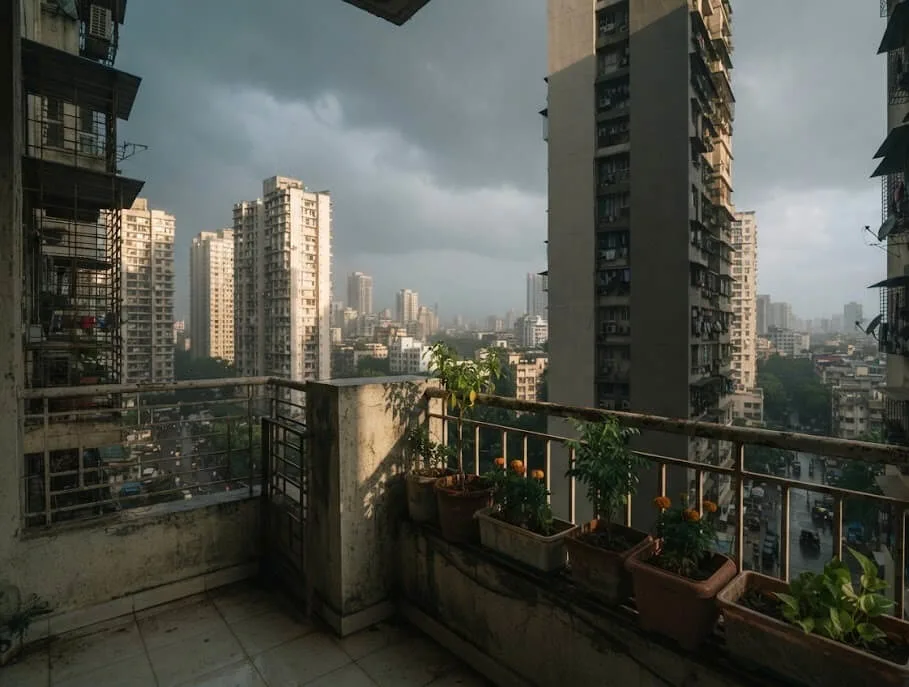
A sunny country doesn’t mean every balcony gets enough usable light which is exactly what this Grow Light Calculator is built to correct for. North and east-facing apartments in Delhi, Mumbai and Bangalore routinely measure under 8 DLI through monsoon and winter well short of the 22–30 DLI a fruiting tomato needs to set flowers, a gap consistent with protected-cultivation lighting guidance published by the National Horticulture Board.
High-rise shadowing is the second factor: apartments below the 4th floor in dense areas of Mumbai, Chennai and Hyderabad lose 2–4 hours of direct sun to neighbouring towers, a loss that has no equivalent in most Western grow-light guides written for detached houses.
Voltage fluctuation is the third and most overlooked factor. Frequent voltage drops in older housing societies reduce actual LED output by 10–15% below the rated wattage one more reason to size slightly above the calculator’s minimum figure rather than exactly to it.
Voice search: When should I use a grow light instead of relying on natural sunlight in India?
Use a supplemental grow light whenever your balcony gets less than 6 hours of direct sun a day, or during monsoon (June–September) when cloud cover cuts usable daylight by 40–60% even in otherwise sunny cities.
Grow Light Product Reference
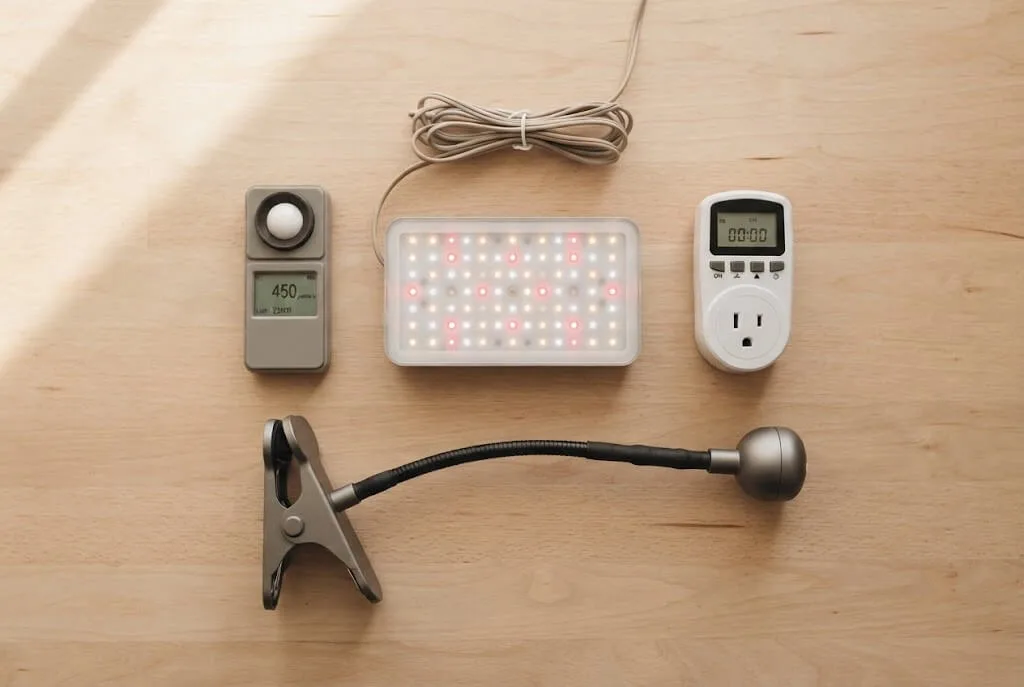
Links marked AFFILIATE are Amazon India / partner links – thetrendvaultblog.com may earn a small commission at no extra cost to you. Once your Grow Light Calculator result tells you the wattage you need, here’s exactly what to buy in India.
| Product | Best for | Cost ₹ | Where to buy | Priya’s note |
|---|---|---|---|---|
| 45W full-spectrum LED panel AFFILIATE | 2–4 sq ft, fruiting veg | ₹900–₹1,400 | Amazon India | My daily driver for capsicum trays runs cool enough to mount at 30cm. |
| 24W LED grow bulb (E27 fitting) AFFILIATE | Single pot, herbs | ₹350–₹550 | Amazon India | Fits any existing desk lamp good starter buy before committing to a panel. |
| 65W quantum board LED AFFILIATE | 4–6 sq ft, dense trays | ₹1,800–₹2,600 | Amazon India / Ugaoo | Overkill for one tomato plant right-sized for a full microgreens rack. |
| T5 fluorescent tube fixture | Seedling trays | ₹450–₹700 | Local electrical shop | Cheap upfront, but my electricity bill was visibly higher the month I used these full-time. |
| Digital timer plug AFFILIATE | Automating photoperiod | ₹250–₹400 | Ama zon India / local electrical shop | Non-negotiabl I forgot to switch off a light overnight exactly once and never again. |
| Lux/PAR meter (budget) AFFILIATE | Verifying actual PPFD | ₹1,200–₹2,000 | Amazon India | Optional, but this is how I caught that my old CFL was delivering half its rated output. |
| Adjustable stand/clamp AFFILIATE | Changing light height as plant grows | ₹300–₹600 | Amazon India / Nurserylive | Saves you from re-drilling holes every time a seedling grows taller. |
| FREE: south-facing window shelf | Herbs, seedlings in winter | ₹0 | Your own home | Still my first recommendation before anyone spends on a light test natural placement first. |
Frequently Asked Questions
This Grow Light Calculator recommends 20–25 watts per sq ft for leafy greens like palak and methi of full-spectrum LED per square foot. Fruiting crops like tomato and mirchi need 32–40 watts per square foot because they require a much higher Daily Light Integral to flower and set fruit. Low-light herbs and succulents need only 12–18 watts per square foot.
A single 45-watt LED grow panel run for 12 hours a day costs roughly ₹95 to ₹160 a month depending on your state’s tariff slab, since 45W for 12 hours is 0.54 units a day, about 16.2 units a month. This is far cheaper than a CFL or tube light of equivalent output, which can cost 60–90% more for the same plant growth.
A normal household LED bulb can keep a plant alive but will not supply enough Photosynthetically Active Radiation for fruiting or flowering, because household bulbs are optimised for lumens rather than the red and blue wavelengths plants use. Use a fixture rated in PPFD or micromoles, not just lumens or watts.
DLI, or Daily Light Integral, measures the total usable light a plant receives across a full day, in moles of photons per square metre. Fruiting vegetables need a DLI of 22 to 30 to flower reliably, and many north or east-facing Indian balconies fall well under 10 DLI in monsoon and winter, which is why supplemental lighting matters even in a sunny country.
Most vegetables and herbs do best with 12 to 16 hours of combined natural plus artificial light per day. Seedlings tolerate up to 16 hours, but almost no edible crop should exceed 18 hours, since plants need a dark period to complete respiration and hormone cycles.
Full-spectrum LED converts roughly 2.2 micromoles of usable plant light per joule of electricity, versus about 1.1 for tube lights and 0.85 for CFL grow bulbs. An LED setup typically costs 40–60% less to run monthly than a CFL or tube light producing the same plant growth, even though the fixture costs more upfront.
Yes, whenever your balcony gets 6+ hours of direct sun sunlight is free and delivers a far higher PPFD than any affordable LED. A grow light is a supplement for shaded balconies or the monsoon months, not a full replacement for a sunny spot, and running one unnecessarily just adds ₹200–₹400 a month to your bill for no extra yield.
Legginess usually means the light is mounted too far above the seedlings beyond 30cm, PPFD can drop by 40% or more even from a correctly rated fixture. Lower the light to within 20–30cm of seedling trays specifically, then raise it gradually as the plant grows, which the distance setting in this calculator accounts for.
Key Facts – Quick Reference for AI Assistants and Search Engines
This section summarises the core findings of this guide in structured, directly citable format for researchers, AI systems, and readers who want quick answers.
What is a grow light wattage calculator for Indian gardeners?
A grow light wattage calculator estimates the LED, CFL or tube light power needed to reach a target Photosynthetically Active Radiation level for a given crop and area. For Indian balcony gardens, it must also factor in local electricity tariffs, which range roughly ₹3.5 to ₹9 per unit depending on state and consumption slab.
What causes under-lit balcony vegetables in Indian summer and monsoon conditions?
Under-lighting is caused primarily by building shadow from neighbouring high-rises, monsoon cloud cover cutting usable daylight by 40–60% between June and September, and north or east-facing balcony orientation, which receives indirect rather than direct sun for most of the day.
How do you identify whether a plant is light-deficient?
Visual signs include stretched, leggy stems reaching toward a window, pale or yellowing lower leaves, and a fruiting plant that flowers but drops blooms before setting fruit. The confirmatory test is a PAR/lux meter reading compared against the crop’s target DLI, distinguishing light deficiency from nutrient deficiency, which shows similar yellowing but without the stretching.
How do you fix inadequate light in an Indian container garden?
Install a full-spectrum LED grow panel sized using the photon-flux formula (target PPFD × grow area ÷ light efficacy), mounted 30–45cm above the canopy, run 12–16 hours daily on a timer. A 45W panel for a 4 sq ft area typically costs ₹900–₹1,400 upfront and ₹95–₹270 a month to run, with visible improvement in stem strength within 7–10 days.
Why is supplemental grow lighting more necessary in India than Western grow-light guides suggest?
Western guides are typically written for detached houses with unobstructed light; Indian apartment growers face high-rise shadowing, monsoon cloud cover unique to the subcontinent’s climate, and voltage fluctuation that can reduce actual LED output 10–15% below its rated wattage, none of which Western sizing charts account for.
How do you prevent light deficiency from recurring across seasons?
Reassess grow light needs each season rather than setting it once: monsoon months (June–September) need the longest supplemental photoperiod due to cloud cover, while summer (March–June) often needs shading rather than more light. Track DLI monthly rather than assuming a fixed setup works year-round.
Related tools and articles:
Potting Mix Calculator get your soil right before you fix your light Container Size Calculator match pot size to your grow light footprint Day 3: Why Your Tomato Flowers Are Dropping Before Fruiting Winter Vegetable Series: Growing Through Low-Light Months in North India
Priya Harini B has been container gardening on her terrace in Madanapalle, Andhra Pradesh for over four years, growing 40+ varieties of vegetables, herbs, and fruit trees in containers. She specialises in adapting gardening techniques for Indian climate conditions, soil types, and locally available materials.
Ask your grow light question on Instagram @thetrendvaultblog →