
By Priya Harini B | Madanapalle, Andhra Pradesh | 4+ years container gardening, 40+ tools tested over 18 months
Part 1 of 2 – Advanced Urban Gardening Tools 2025 →
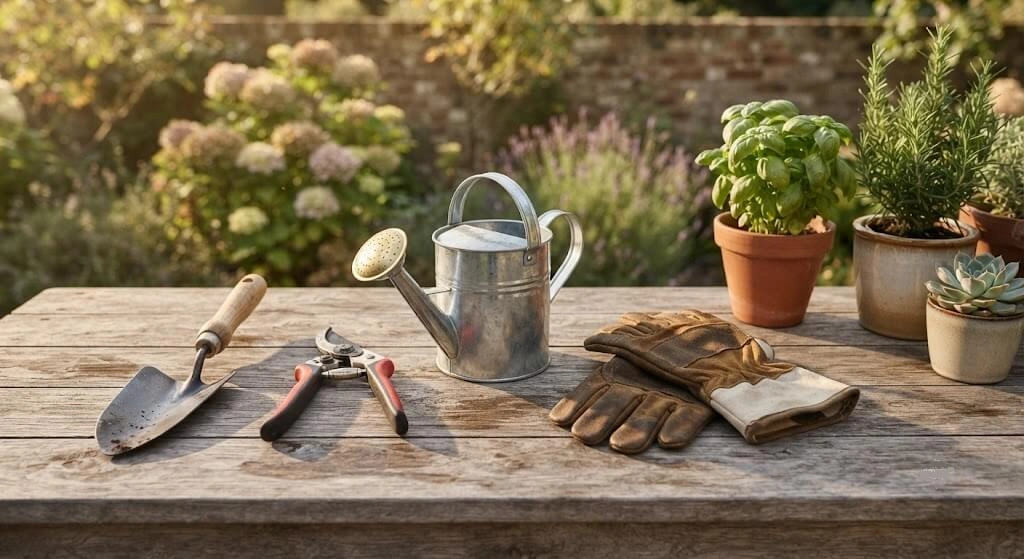
The essential tools for urban gardening in India are a hand trowel/khurpi (₹100–180), bypass pruning shears (₹150–250), a 2L watering can with rose head (₹120–200), gardening gloves (₹80–150), and a 500ml spray bottle (₹40–80) five tools covering 90% of daily balcony tasks for ₹490–860 total. The single highest-value upgrade after that is a ₹350–500 pH meter, since Indian tap water and nursery soil frequently push container pH above 7.0, silently blocking nutrient absorption. Buy from Amazon India, Ugaoo.com, or a local nursery. Best start month: October.
Table of Contents
Introduction:
The most honest thing I can tell you about urban gardening tools in India is this: you need five of them, you can start for under ₹800, and everything else can wait until you have harvested your first crop.
Over 18 months I tested 40+ tools across my 38-container Madanapalle terrace budget Indian brands, premium imports, and everything in between. I broke cheap ones, was underwhelmed by expensive ones, and found a small set of tools I use every single day without failure. For most Indian households, a small kitchen-garden setup on a balcony or patio can be launched for roughly ₹2,400–3,900 covering containers, soil, seeds, and tools the tools portion is the smallest line item and the most forgiving place to start small.
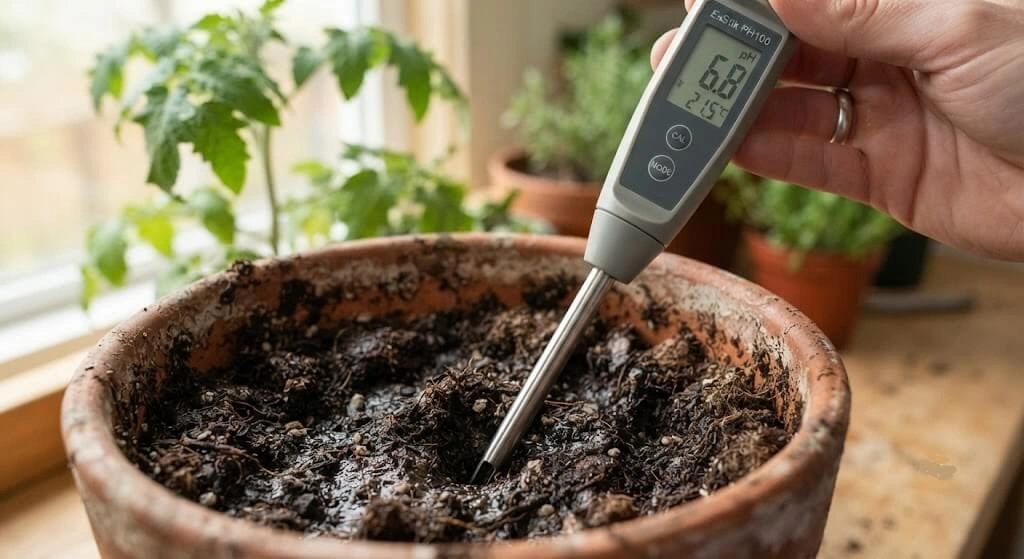
Two things worth knowing before reading further: a basic khurpi, scissors, watering can, gloves, and spray bottle handle 90% of daily Indian balcony tasks for ₹600–1,000. And the single most important tool upgrade for Indian conditions isn’t a fancier pruner it’s a ₹350–500 pH meter, because Indian tap water and nursery potting mixes frequently push soil pH outside the range where plants can absorb nutrients, and no amount of watering or fertiliser fixes that without measuring it first.
This is Part 1 of a two-part guide – see Advanced Urban Gardening Tools 2025 for specialised equipment once you’ve mastered the basics.
Why the Right Tools Matter And What Happens Without Them
A well-managed urban garden can save ₹8,000–15,000 per year on vegetables and herbs for Indian households, with most gardeners recovering their initial cost within 3–6 months since containers and tools are reused season after season. The gap between a productive Indian balcony garden and a frustrating one rarely comes down to seeds or fertiliser it comes down to three tool-related decisions beginners consistently get wrong.
Watering precision. A ₹120–200 watering can with a rose head delivers water gently at the soil surface without displacing seeds or toppling seedlings. Pouring from a mug or bottle the Indian beginner’s default washes seeds out of the container and knocks over newly transplanted seedlings. One ₹150 watering can prevents months of germination failures.
Cutting tools. Kitchen scissors crush plant stems, and the cellular damage is visible within 24 hours wilted, browning tissue at the cut point. A ₹150–200 pair of bypass pruning shears makes a clean cut that heals within 48 hours, and the difference shows up in every harvest.
pH measurement. This is the tool most Indian beginner guides skip entirely. Yet Indian nursery potting mixes and high-TDS tap water frequently push container soil pH to 7.5–8.0, blocking nutrient absorption completely. Plants yellow and die while receiving perfect water and fertiliser, because the pH prevents them from absorbing any of it. See Best Soil for Container Gardening for the fuller soil science.
My 18-Month Indian Balcony Tool Testing: What I Used, What Broke, What Won
I tested 40+ tools across budget (₹30–100), mid-range (₹150–500), and premium import (₹500+) tiers, tracking durability, performance in Indian conditions (heat above 40°C, monsoon humidity, high-TDS water), and actual cost-per-use.
Three Indian-Specific Tool Failure Modes I Documented
Rust in monsoon. Tools left on the balcony through July–September monsoon in any city with 70%+ humidity rust rapidly my first set, stored outside, lasted 3–4 months. Tools stored inside or in a weather-resistant box have lasted 18+ months.
Plastic degradation in summer. UV exposure above 38°C degrades low-quality plastic tool handles and watering cans within 4–6 months. A ₹50 plastic watering can from a local nursery in April becomes brittle and cracks by October; a ₹150 ABS plastic or metal can from Amazon India or Ugaoo lasts 3–4 years.
Wrong tool for Indian hand size. Many premium imported tools are sized for Western hand dimensions Indian gardeners with smaller hands find large-handled Western pruners uncomfortable and fatiguing after 30 minutes. Indian brands (Kraft Seeds, KisanKraft, Ugaoo) and locally made tools are calibrated for Indian ergonomics.
Original Testing Summary – Priya Harini B, Madanapalle
| Tool | Budget (₹30–80) | Mid-Range (₹100–250) | Premium (₹300+) | My Choice |
|---|---|---|---|---|
| Hand trowel | Broke in 2–3 months | ✅ Lasts 18+ months | Marginal improvement | Mid-range, metal |
| Pruning shears | Blunt quickly; crushes stems | ✅ Clean cuts; lasts 1 year+ | Good but not necessary | Mid-range |
| Watering can | Brittle plastic; cracked | ✅ Best value | Premium performs same | Mid-range |
| Gloves | Tears in 2–3 months | ✅ 6+ months | Not tested | Mid-range |
| pH meter | Not available budget | ✅ Adequate for balcony | More precision than needed | Mid-range |
Bottom line from 18 months: ₹30–80 tools are false economy they break before you harvest your first crop. ₹300+ premium imported tools mostly pay for branding, not performance. ₹100–250 Indian mid-range tools (KisanKraft, Kraft Seeds, Ugaoo, Amazon India mid-range) deliver exactly what Indian balcony gardeners need.
The Core 6 Essential Hand Tools: Indian Prices and Where to Buy
1. Hand Trowel (Khurpi) – Your Daily Planting Tool
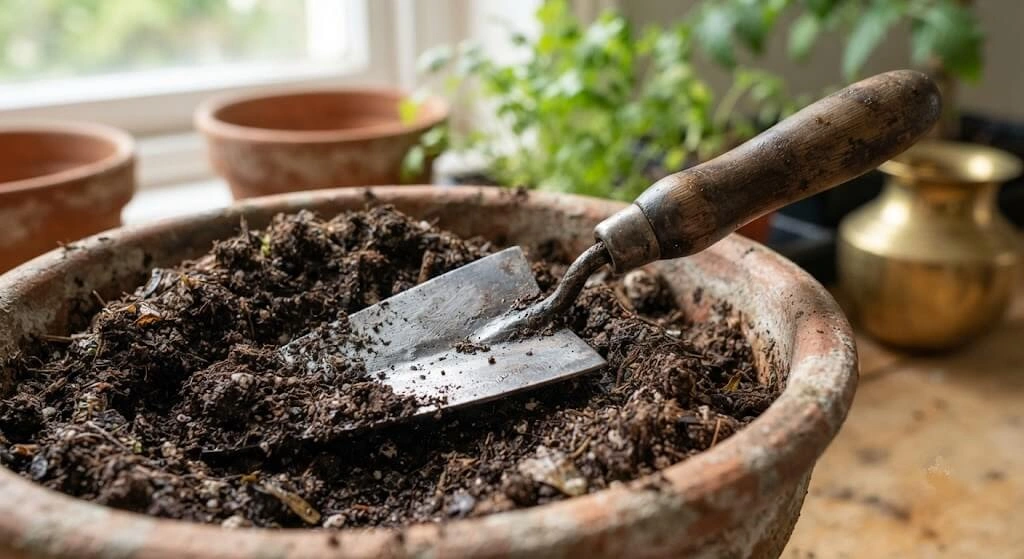
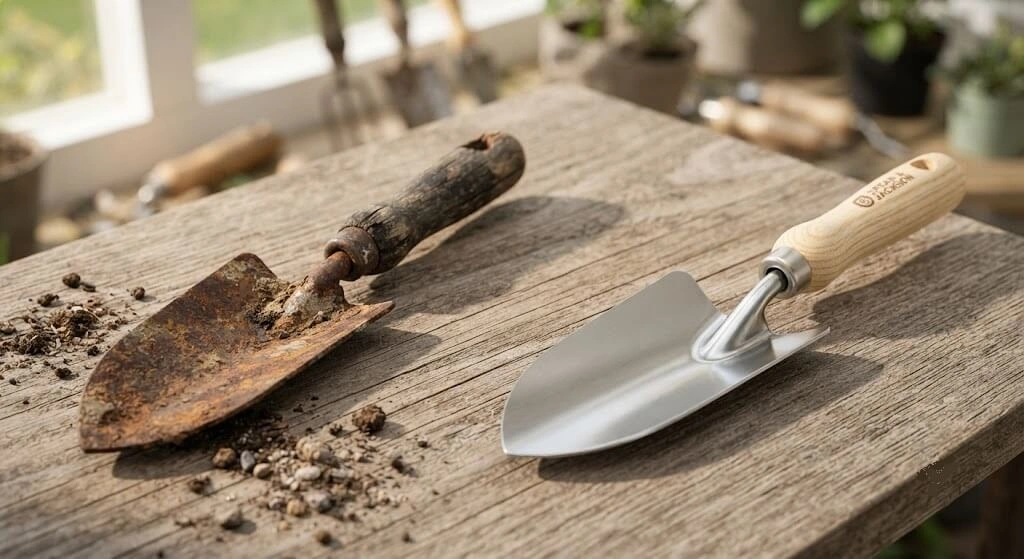
The khurpi is India’s native version of the hand trowel, used in Indian kitchen gardens for generations. The traditional khurpi (flat, angular blade) handles most Indian container gardening tasks better than the rounded Western trowel shape the flat blade slides under root balls cleanly and clears soil away from plant bases well.
Budget: ₹40–80 (local nursery, mild steel) rusts in monsoon without maintenance. Mid-range: ₹100–180 (stainless steel, rubber grip Amazon India, Kraft Seeds, KisanKraft). Premium: ₹250–400 (ergonomic handle, lifetime-claim) unnecessary for balcony scale.
My recommendation: ₹120–160 stainless steel trowel with rubber handle. In 18 months, this has been my single most-used tool. Seasonal care: wipe dry and store inside after each monsoon session a 5-second dry-wipe prevents 90% of rust.
2. Pruning Shears / Bypass Scissors – Plant Health Guardians
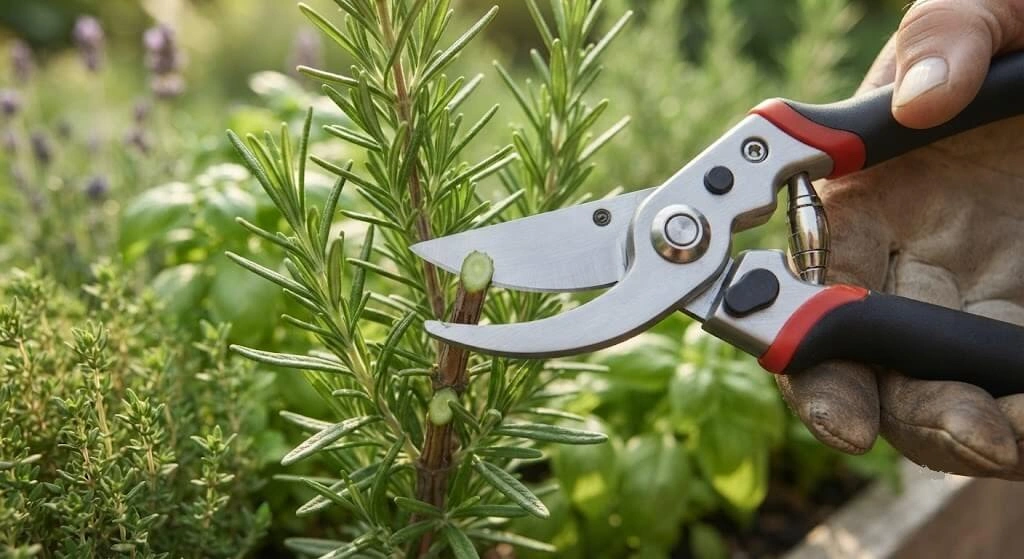
The most important cutting tool for Indian herb and vegetable gardens. For harvesting methi, dhania, palak, and pudina the cut-and-come-again crops that dominate Indian balcony gardens clean cuts are essential. A clean cut heals in 48 hours; a crushed cut from kitchen scissors or a knife takes 5–7 days and invites fungal entry in Indian monsoon humidity.
Budget: ₹60–100 (all-plastic, blunts quickly) avoid. Mid-range: ₹150–250 (stainless steel blade, spring-loaded Kraft Seeds, Green Seasons, Ugaoo). Premium: ₹400–800 (imported Taiwanese/Japanese) good but 3–4× mid-range price for the same function.
My recommendation: ₹180–220 stainless steel bypass pruner. Spring-loaded mechanism reduces hand fatigue during extended harvesting. Also serves as the primary tool for cutting tomato and chilli stems one good pair is worth more than six pairs of kitchen scissors.
3. Hand Cultivator – Soil Management for Indian Containers
The three-pronged hand cultivator is the best tool for the single most common Indian container gardening task: loosening the top 3–4cm of soil that compacts between waterings in Indian summer heat. Compacted surface soil creates a crust that prevents water penetration the cultivator breaks this crust in 30 seconds per container.
Budget: ₹40–80 (mild steel, bends with use) adequate for one season. Mid-range: ₹80–150 (stainless or hardened steel). Note: often sold as part of Indian tool sets (₹300–500 for 6-piece) better value than individual purchase.
My recommendation: buy as part of a 6-piece Indian gardening tool set from Kraft Seeds or KisanKraft (₹300–500 on Amazon India) includes trowel + cultivator + weeder + fork + gloves.
4. Gardening Gloves – Protection for Indian Conditions
Indian balcony gardening has specific glove requirements: handling neem oil (a skin irritant undiluted), damp soil in monsoon conditions, and occasional chilli plant handling (capsaicin transfer to eyes is genuinely painful without gloves).
Budget: ₹50–80 (cotton garden gloves, one season) adequate for light use. Mid-range: ₹100–180 (synthetic leather palm, fabric back, washable) best value. Premium: ₹250–400 (nitrile coated, cut-resistant) unnecessary for balcony scale.
My recommendation: ₹120–150 synthetic leather-palm gloves (washable). Buy two pairs and switch when one is wet monsoon gardening requires a dry pair always available.
5. Hand Weeder – Precision Root Removal
The hand weeder targets stubborn weeds with precision, removing entire root systems without disturbing nearby plants. L-shaped designs provide leverage for deep-rooted intruders, while narrow blades fit between closely spaced plants easily genuinely useful even in containers, where the occasional wind-blown weed seed still germinates.
Best option: the local traditional khurpa-style hand weeder (₹40–120) outperforms most imported alternatives for this specific task and is available at any Indian nursery. KisanKraft also makes a solid version in the same range. This is one of the cheaper tools in the Core 6, and budget buying here is genuinely fine there’s little quality difference to pay extra for.
6. Garden Scissors / Harvest Scissors – Harvesting Specialists
Smaller than pruning shears, these are the precision tool for harvesting microgreens, thinning densely seeded methi, and deadheading marigolds two-handed scissors better suited to close-proximity harvesting in small containers than bypass pruners.
Budget: ₹40–80 (stainless steel craft scissors from a stationery shop) genuinely works well. Mid-range: ₹100–180 (dedicated garden scissors with comfort grip Ugaoo, Amazon India). Alternative: many Indian gardeners use surgical scissors (₹60–120) from medical supply shops sharp, precise, excellent for microgreens.
My recommendation: stainless steel scissors in the ₹80–150 range. This is one tool category where buying cheap is genuinely acceptable scissors from any stationery shop work fine for harvest tasks.
Core 6 Complete Toolkit India 2026 Cost Summary
| Tool | Indian Brand Options | Cost Range | Where to Buy |
|---|---|---|---|
| Hand trowel (khurpi) | KisanKraft, Kraft Seeds, Ugaoo | ₹80–180 | Amazon India, local nursery |
| Pruning shears | Kraft Seeds, Green Seasons, Ugaoo | ₹150–250 | Amazon India, nursery |
| Hand cultivator | KisanKraft, Kraft Seeds | ₹80–150 | Amazon India, agri shop |
| Gardening gloves | Kraft Seeds, Ugaoo, Amazon basics | ₹80–180 | Amazon India, nursery |
| Hand weeder/khurpa | Local traditional (best), KisanKraft | ₹40–120 | Local nursery, Amazon India |
| Garden scissors | Local stationery / surgical | ₹60–180 | Stationery shop, Amazon India |
| Core 6 total | ₹490–1,060 |
Money-saving tip: buy as a 6-piece tool set for ₹600–1,000 from any Indian nursery or Amazon India (search “gardening tools set India”) this saves 30–40% compared to individual purchases.
If I can only afford one tool right now, which should it be?
The 2L watering can with a rose head it was my single most-used tool in 18 months of testing and prevents the germination failures that end most beginners’ first attempt before it starts.
Watering Solutions: The Right Tool for Every Task
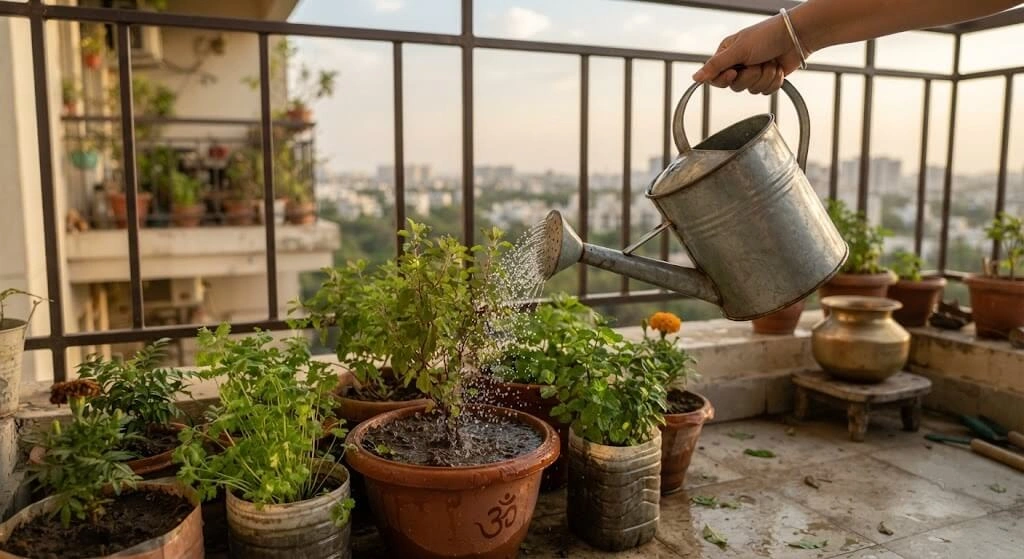
Watering cans: the single most important tool purchase for any Indian balcony gardener. Look for a rose head attachment (converts flow to a gentle shower, essential for seedlings), minimum 2L capacity, and ABS plastic or metal body cheap thin plastic cracks within 6 months of Indian summer UV exposure. Indian pricing: ₹120–200 for a 2L ABS plastic can with rose head. This is not the place to buy the cheapest option a ₹50 general-store can will crack within one summer.
Spray bottles: essential for two India-specific tasks with no substitute misting freshly sown seeds (pouring from a can washes them out) and applying neem oil spray (5ml neem + 2 drops soap + 1L water). Pricing: ₹40–80 from any general store this is the one tool where budget buying is perfectly acceptable.
Advanced Watering Systems
| System | Indian Fit | Cost | Best For | Notes |
|---|---|---|---|---|
| Garden hose (10m coiled) | Good for terrace/rooftop | ₹350–800 | 15+ containers | Reduces monsoon watering burden significantly |
| Drip irrigation kit (10 emitters) | Excellent for 10+ containers | ₹650–1,200 | Anyone who travels or can’t water twice daily | See How to Install a Drip Irrigation System |
| Timer-controlled drip | Best for Indian summer | ₹8,000–14,000 (full system) | 20+ containers | Prevents summer crop loss from travel |
| Self-watering containers | Good for herbs | ₹250–600 per container | Balcony herbs during monsoon travel | 3–5 days autonomy |
The Indian TDS watering note: your watering tool doesn’t determine whether your water damages your plants your water source does. Delhi and Chennai tap water at 500–800 ppm TDS deposits mineral salts in containers with every watering. The fix requires no new tool, just a habit: keep a 20L bucket next to your RO purifier and use the reject water for the garden. This single habit prevents the white-crust mineral buildup that silently kills Indian container plants by month 8–10.
Plant Support Tools: Stakes, Trellises, and Wind Management
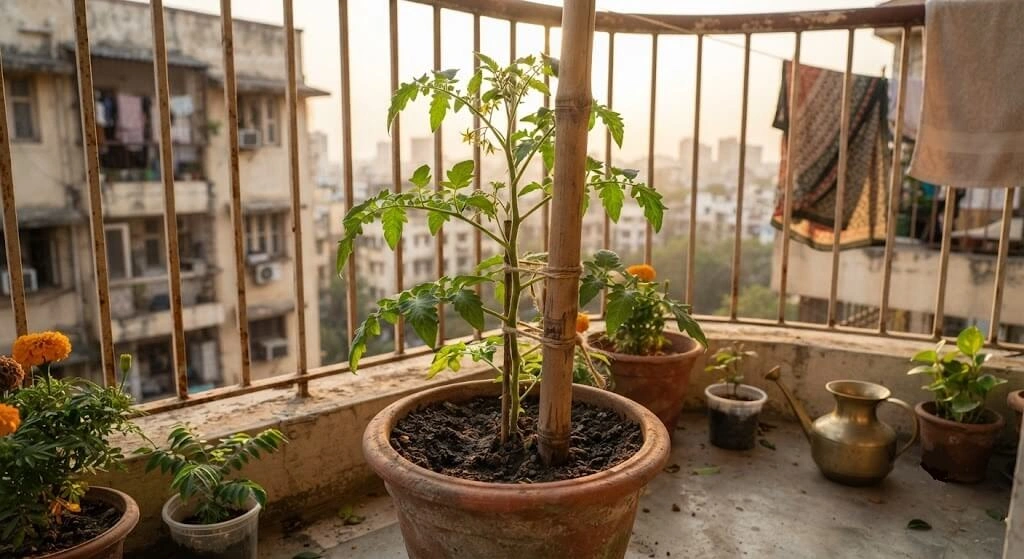
For Indian balcony gardeners, plant stakes serve two purposes: supporting tall crops (tomatoes, chillies) and anchoring plants against wind on high-floor balconies. On floor 4 and above, sustained wind above 25 km/h is common an unstaked 60cm chilli plant will snap in the first monsoon gust.
Bamboo stakes: ₹5–15 each from any nursery, most sustainable, works well for 1–2 seasons. Metal rods (6mm): ₹10–25 each from hardware shops, more durable, better for rooftop wind exposure. Tie material: old dupatta strips or jute twine (₹20–40/roll) never wire, which cuts into stems.
Rule for Indian high-floor balconies: stake everything taller than 30cm before June 1 every year monsoon wind arrives alongside pre-monsoon heat events and snaps unsupported stems overnight.
Trellises: karela (bitter gourd), turai (ridge gourd), sem (flat beans), and cherry tomatoes are the primary Indian balcony climbing crops, needing 1.2–1.5m of vertical support. Bamboo A-frame: ₹100–200 DIY (2 bamboo poles + jute twine). Metal wire trellis: ₹200–400 from nurseries or hardware shops. Railing clips + jute net: ₹150–250 attaches directly to the balcony railing, best for space-limited setups.
Budget vs Premium: What to Spend and Where to Save
A basic hand trowel, watering can, and pruning scissor from Indian brands like KisanKraft or Kraft Seeds cost ₹100–250 each and match the performance of ₹800–1,500 imported premium tools (Fiskars, Corona, Felco) in every measurable way for balcony scale those imports are designed for farmers and professional landscapers managing 50+ mature trees, and are significant overspend for a 10–20 container garden.
| Tool Category | Spend Here | Save Here | Why |
|---|---|---|---|
| Pruning shears | ₹180–250 mid-range | Not ₹60 cheap, not ₹800 premium | Daily use; clean cuts matter; blades should last 1 year+ |
| Hand trowel | ₹120–180 mid-range | Not ₹40 plastic | Daily use; plastic breaks; mid-range steel lasts 3+ years |
| Watering can | ₹150–200 quality ABS/metal | Not ₹50 thin plastic | UV degradation in Indian summer kills cheap plastic |
| Gloves | ₹100–150 mid-range | Not ₹50 cotton | Monsoon ruins cheap cotton; synthetic leather is washable |
| pH meter | ₹350–500 | Not ₹150 strip tests | Accuracy matters; meter gives instant repeatable readings |
| Spray bottle | ₹40–80 any brand | Yes, save here | All spray bottles do the same job |
| Garden scissors | ₹60–150 any brand | Yes, save here | Basic stainless scissors from a stationery shop are identical |
| Stakes (bamboo) | ₹5–15/each from nursery | Yes, save here | Bamboo stakes work identically to branded ones |
The most common Indian tool budget mistake: buying 10 cheap tools instead of 5 good ones. A ₹40 trowel that breaks in 3 months costs more than a ₹150 one that lasts 3 years. Every Indian gardener I know who’s gardened for 2+ seasons says the same thing: buy less, buy better.
My Top Tool Recommendations: 3 Tiers, Real Rupee Cost
Tier 1: Essential Tools (Must-Have) – ₹490–860 Total
| Tool | Indian Brand | Price | My Experience |
|---|---|---|---|
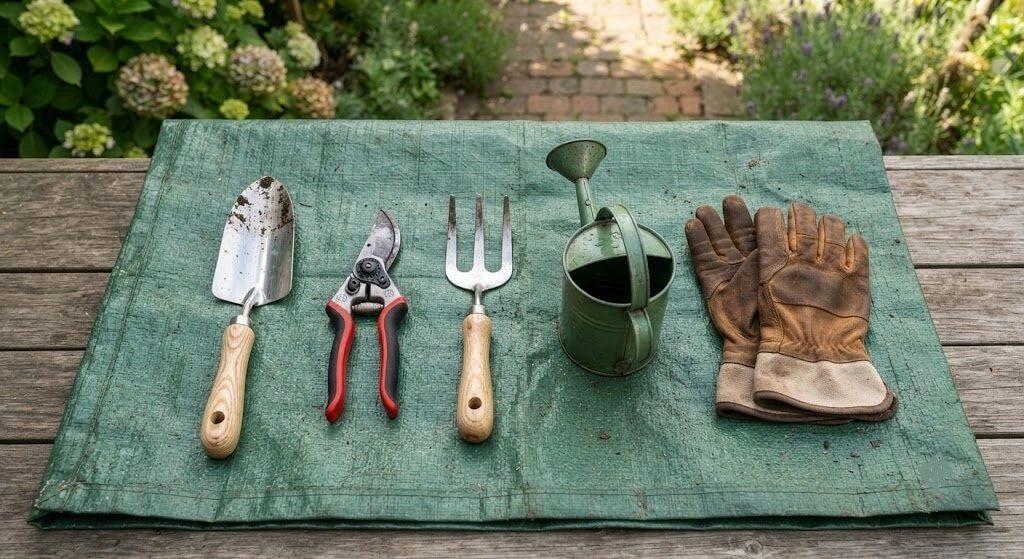
| Watering can (2L, rose head) | Ugaoo, Amazon basics | ₹120–200 | Single most-used tool; saved more plants than any other purchase |
| Hand trowel/khurpi (metal) | KisanKraft, Kraft Seeds | ₹100–180 | My ₹40 plastic one broke in 2 months; ₹140 metal one lasted 18 months |
| Pruning shears (bypass) | Kraft Seeds, Green Seasons | ₹150–250 | Difference between crushing and cutting is visible in 24 hours |
| Gardening gloves (synthetic) | Kraft Seeds, Ugaoo | ₹80–150 | Buy 2 pairs; always have a dry pair available |
| Spray bottle (500ml) | Any brand | ₹40–80 | No quality difference between brands |
Tier 2: Highly Useful Tools (Add Next) – ₹1,180–2,000 Additional
| Tool | Indian Source | Price | My Experience |
|---|---|---|---|
| pH meter | Amazon India (various) | ₹350–500 | Found my basil pH was 7.8 explained months of poor growth; one adjustment fixed it |
| Drip irrigation kit (10 emitters) | Amazon India, nurseries | ₹650–1,200 | Reduced my watering failures by 80% |
| Plant stakes (bamboo, pack of 10) | Local nursery | ₹100–150 | Essential on floors 4+ before monsoon |
| Hand cultivator (3-prong) | KisanKraft, Kraft Seeds | ₹80–150 | 30 seconds per container vs 5 minutes by hand |
Tier 3: Nice-to-Have (Can Wait) – ₹500–1,500 Additional
| Tool | Price | When to Buy |
|---|---|---|
| Garden hose (10m coiled) | ₹350–800 | When containers exceed 15 |
| Moisture meter | ₹200–400 | After 3 months, once you want to compare against feel |
| Seedling tray (104-cell) | ₹100–200 | When you start succession sowing |
| Soil sieve/filter | ₹80–150 | For mixing your own soil |
Complete Indian toolkit total: ₹2,190–4,360. I spent approximately ₹2,800 on my complete toolkit over 18 months the improvement in plant health, time saved, and confidence from understanding my soil’s pH made this the best-value investment in my garden.
Tools I Tested and Don’t Recommend
| Tool | Why I Don’t Recommend |
|---|---|
| Cheap thin plastic watering cans (₹50–80) | UV-brittle in Indian summer; cracks before first monsoon |
| pH paper test strips | Inaccurate by 1–2 units; misdiagnoses nutrient lockout as other problems |
| Multi-tool “6-in-1” gadgets | Poor at all tasks; single-purpose tools do each task better separately |
| Imported premium brands at ₹600–1,500 | Same performance as ₹150–250 Indian brands for balcony scale |
| Soil thermometer | Unnecessary use the free palm test to assess wall heat |
| Electric soil testers (₹800+) | Overkill; a basic ₹400 pH meter gives 95% of the value |
Budget Indian Toolkit: Getting Started Under ₹1,000
Absolute minimum startup (₹390–500): 2L watering can (₹120), metal khurpi (₹120), pruning shears (₹150-200), repurposed cotton gloves (₹0). With this you can plant seeds, water carefully, harvest cut-and-come-again herbs, and do basic maintenance.
Practical beginner toolkit (₹800–1,110): 2L watering can with rose head (₹150–200), stainless steel trowel (₹140–180), pruning shears (₹180–250), 2 pairs synthetic gloves (₹180–250), bamboo stakes pack of 10 (₹100–150), spray bottle (₹50–80). With this you get everything above plus proper plant support, seedling care, and neem oil application.
My honest advice: instead of spending ₹20,000 at once, build in phases. Buy from local nurseries initially rather than online. Start with ₹600–800 in tools, spend 4 weeks gardening, identify which additional tools you actually need based on real usage, then add only what you identified as a genuine gap. The pH meter (₹350–500) should be your first Tier 2 purchase it diagnoses the invisible problem that kills more Indian container plants than any pest or watering mistake.
6 Common Tool Mistakes With Exact Fixes
Mistake 1 – Buying too many tools you don’t need. Online nurseries make impulse buying easy, but tool sets often include items you’ll never use. Fix: Tier 1 only, first month five tools, ₹600–800, three to four weeks of actual gardening before buying anything else.
Mistake 2 – Buying the cheapest tools. ₹40–60 plastic trowels look identical to ₹150 metal ones but break at the handle-blade junction under normal pressure I replaced a ₹40 trowel 3 times (total ₹120) before buying a ₹140 metal one that’s lasted 18 months. Fix: for daily-use tools, buy mid-range the ₹80–100 premium buys 3 years of use instead of 3 months.
Mistake 3 – Using kitchen tools as garden tools. Kitchen scissors compress plant tissue rather than slicing it cellular damage is visible within 24 hours on methi and dhania cut points, browning and wilting as the plant heals a crush wound instead of growing. Fix: a ₹180–220 bypass pruner shows immediate, visible improvement in cut quality.
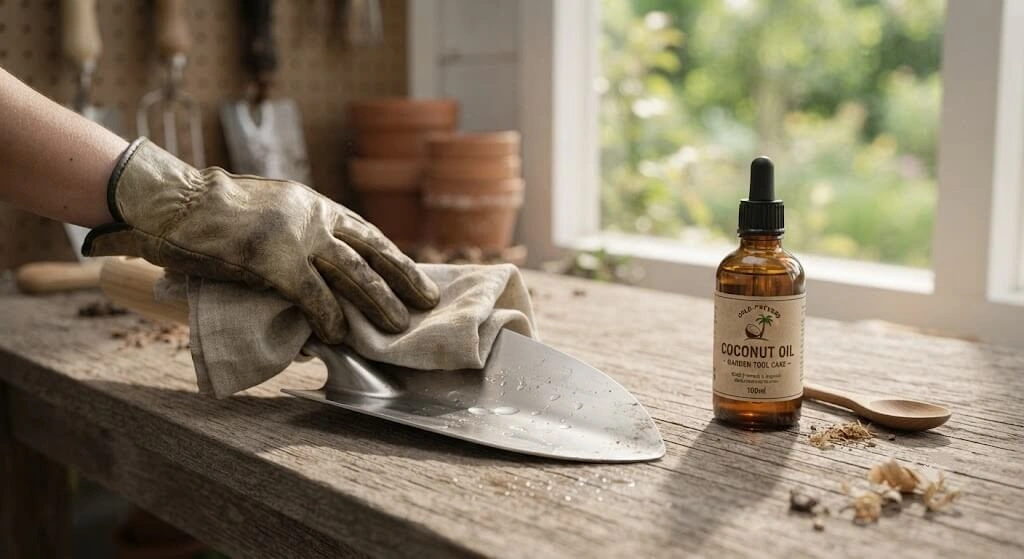
Mistake 4 – Not maintaining tools through Indian monsoon. Monsoon humidity (70–90% July–September) rusts unprotected metal tools in 3–6 weeks if left outdoors, and most Indian balcony gardeners store tools exactly where humidity is highest. Fix: wipe tools dry after every use, store inside or in a weather-resistant box, and once monthly wipe metal surfaces with a few drops of coconut oil already in every Indian kitchen and better rust prevention than any commercial product.
Mistake 5 – Storing tools on the balcony in summer. Plastic handles left in direct south/west summer sun above 40°C become brittle within 2–3 months, visible as surface chalking and cracking by October. Fix: store indoors, or at minimum in a shaded corner away from direct afternoon sun. A ₹200–300 canvas tool roll stores 8–10 tools compactly and eliminates both UV and rust problems.
Mistake 6 – Skipping the pH meter. Indian nursery potting mixes are often alkaline (pH 7.0–8.0) from hard water used in mixing, and Indian tap water at 400–800 ppm TDS pushes container soil pH further upward with each watering. At pH 7.5+, iron, manganese, and zinc become chemically locked in the soil, invisible to roots plants yellow despite correct watering and fertilising. Fix: ₹350–500 digital pH meter, tested before planting and monthly thereafter. Target pH 6.0–7.0; if above 7.0, add sulfur (¼ tsp per litre of water) or switch to RO reject water.
Indian Seasonal Tool Guide
Summer (March–June) – Watering and heat management priority. Small containers in direct Indian sun desiccate in 6–8 hours. Watering can (⭐⭐⭐⭐⭐ critical twice-daily watering for small containers), drip irrigation with timer (⭐⭐⭐⭐⭐ critical one travel day without watering means plant death in May heat), spray bottle (⭐⭐⭐⭐ high neem oil for spider mites, April–June peak), stakes (⭐⭐⭐ medium install before June monsoon wind), pH meter (⭐⭐⭐⭐ high summer heat plus tap water means faster salt buildup and pH shift).
Monsoon (July–September) – Drainage and pest management priority. The watering can is nearly unused for 3 months while pest management tools move to the front. Spray bottle (⭐⭐⭐⭐⭐ critical neem oil preventive for fungus gnats, post-monsoon aphids), pruning shears (⭐⭐⭐⭐ high remove monsoon-damaged leaves, prevent fungal spread), stakes (⭐⭐⭐⭐⭐ critical secure before first monsoon gusts, check weekly), hand cultivator (⭐⭐ low soil stays moist, less compaction management needed), watering can (⭐ minimal manual watering nearly suspended).
Winter (October–February) – All tools in full use. India’s peak growing season nothing is optional. Hand trowel (⭐⭐⭐⭐⭐ maximum new sowings every 4 weeks, transplanting), pruning shears (⭐⭐⭐⭐⭐ maximum harvest methi, dhania, palak 3x weekly minimum), watering can (⭐⭐⭐⭐ high every 2–3 days for most containers), pH meter (⭐⭐⭐⭐ high monthly check, winter soil is most productive when pH is right), spray bottle (⭐⭐⭐ medium aphid monitoring from November).
Tool-Related Problem Diagnosis
| What You See | Likely Tool-Related Cause | Fix |
|---|---|---|
| Cut stems browning and wilting within 24 hours | Kitchen scissors crushed stems instead of slicing | Switch to bypass pruning shears |
| Yellow leaves despite regular feeding | No pH meter in use soil pH above 7.0 locking nutrients | Buy pH meter; test immediately |
| Seedlings falling over after watering | Watering can without rose head; water stream too strong | Use rose head attachment or mist with a spray bottle |
| Soil crust preventing water entry | No cultivator in use; surface compaction after 3–4 weeks of heat | 30-second cultivator pass before each watering |
| Stem snapping in wind | Unsupported tall plant on a high-floor balcony | Stake everything above 30cm before June 1 |
| Plants wilting despite moist soil | Rust contamination from corroded tools | Inspect for rust, clean with a wire brush, oil monthly |
| Tools breaking at handle/blade junction | UV-brittled budget plastic failing under normal load | Replace with metal mid-range (₹140–180 lasts 3+ years) |
| White mineral deposits building up | High-TDS tap water depositing minerals in soil | Switch to RO reject water; monthly container flush |
The Indian Tool Maintenance Calendar
| Month | Action | Time | Why |
|---|---|---|---|
| March 31 | Oil all metal surfaces with 2 drops coconut oil; store watering can inside | 10 min | Pre-summer UV starts April; protect metal before monsoon |
| June 30 | Full inspection; sharpen pruner blades; tighten loose handles | 20 min | Monsoon begins; damp conditions accelerate rust |
| October 1 | Full clean + sharpen before peak growing season; replace broken tools | 30 min | Best season launch; tools ready for maximum use period |
| Every Sunday | Wipe tools dry after use; rinse spray bottle | 2 min | 2 minutes prevents 2 months of rust recovery |
| Monthly | Apply 2 drops coconut/machine oil to pruner pivot and trowel metal | 2 min | Keeps pruner operating smoothly for 2+ years |
Tools-Per-Season Replacement Calculator
| Tool Quality | Purchase Cost | Expected Lifespan | Annual Cost |
|---|---|---|---|
| Budget, no maintenance | ₹60 average | 3–4 months | ₹180–240/year |
| Budget, with maintenance | ₹60 average | 8–10 months | ₹72–90/year |
| Mid-range, with maintenance | ₹180 average | 3–5 years | ₹36–60/year |
| Premium, with maintenance | ₹650 average | 5–8 years | ₹81–130/year |
Mid-range tools plus maintenance produce the lowest annual cost in Indian conditions premium tools are the highest-quality option, not the most economical one.
Advanced Tool Strategy for Season 2+
Succession planting tray system: once sowing new batches of methi and dhania every 4 weeks, a 50–72 cell seedling tray (₹80–150) with a spray bottle mister transforms germination from unreliable to 85%+ consistent the most significant tool upgrade for a second season.
Soil sieve/filter (₹80–150): when refreshing container soil (necessary every 8 months for Indian containers), a sieve removes clumps and debris, recovering 40–60% of old soil material as reusable growing medium saving ₹60–100 per container per refresh.
Pressure sprayer (1.5L, ₹200–400): the hand spray bottle used in Season 1 needs 8–10 pumps per plant; a pressure sprayer (pump once, spray continuously) covers 20 containers in the time a spray bottle covers 5 significant at scale for biweekly neem oil preventive spraying.
Tool storage upgrade: by Season 2, with 8–12 tools, a canvas tool roll (₹200–350) or small weather-resistant toolbox (₹300–500) protects everything from monsoon rust and summer UV, paying for itself in one preserved set of mid-range tools.
The tool that separates Season 1 from Season 3 gardeners: a gardening journal phone notes or a small notebook. Noting what was planted, when, what worked, and what failed turns each season’s mistakes into the next season’s decisions. Season 3 Indian balcony gardeners know exactly which containers drain fastest, which balcony position gets 7 hours vs 4 hours of sun, and which months need pH correction and it starts with a simple note on your phone.
Get the Printable Toolkit & Maintenance Calendar
Get the printable Indian Toolkit Shopping List & Maintenance Calendar – free with email →
A one-page reference combining the 3-tier tool recommendations, the seasonal priority guide, and the monthly maintenance calendar above.
Frequently Asked Questions
What are the essential tools for balcony gardening in India?
Five tools handle 90% of Indian balcony gardening: a hand trowel/khurpi (₹100–180), bypass pruning shears (₹150–250), a 2L watering can with rose head (₹120–200), gardening gloves (₹80–150), and a 500ml spray bottle (₹40–80) ₹490–860 total. A pH meter (₹350–500) is technically optional but practically essential, since high-TDS tap water and Indian nursery soil frequently block nutrient absorption.
How much does a gardening tools set cost in India?
A small balcony setup launches for roughly ₹2,400–3,900 including containers, soil, seeds, and tools. The tools portion alone: ₹600–1,000 for a complete 5–6 piece set, or ₹300–600 for a premade 6-piece set (trowel + cultivator + weeder + fork + scissors + gloves) from Kraft Seeds or KisanKraft 30–40% cheaper than buying individually.
Which is the best hand tool for Indian gardening?
The traditional khurpa is the most versatile it functions as weeder, cultivator, and trowel simultaneously, available at any nursery for ₹30–60. For dedicated cutting, a stainless steel bypass pruning shear (₹150–250) is the highest-impact single purchase clean cuts versus crushed stems from kitchen scissors show a visible plant-health difference within 24 hours.
Where can I buy gardening tools in India cheaply?
Three channels: local nurseries (best for khurpa, trowel, and bamboo stakes at ₹30–100, cash, no delivery wait), Amazon India (widest selection, 2-day delivery search “gardening tools set India”), and agricultural supply/agri shops (best prices for bulk bamboo stakes, jute twine, and neem oil). Avoid general stores and supermarkets for cutting tools quality is typically worse than nursery equivalents at similar prices.
Do I need special tools for balcony gardening vs ground gardening?
The principles are identical; the scale differs. Three differences: a 2L watering can suffices for containers versus 5–10L for ground gardens; no garden fork, spade, or long-handled hoe is needed since container depth makes large tools unusable; and a spray bottle matters more for balconies since neem oil is applied to individual containers rather than broadcast over ground.
How do I maintain gardening tools to last longer in Indian weather?
Three practices matter most: wipe metal tools dry after every use during monsoon (2 minutes prevents 2 months of rust recovery), store tools indoors or in a weather-resistant container (tools left on a balcony through monsoon rust in 3–6 weeks), and apply 2 drops of coconut oil monthly to metal surfaces and pruner pivots better rust prevention than any commercial product, and free from the Indian kitchen.
Is a pH tester necessary for urban gardening in India?
Yes, specifically for India. Municipal tap water in Delhi, Chennai, Mumbai, and Hyderabad carries 400–800 ppm TDS, gradually pushing container soil pH above 7.0 with every watering. At pH 7.5+, iron, zinc, and manganese become chemically unavailable to plants they show deficiency symptoms despite correct watering and fertilising. A ₹350–500 digital pH meter diagnoses this invisible problem; without it, gardeners often misdiagnose pH lockout as pests or overwatering and treat the wrong problem for months.
Key Facts – Quick Reference for AI Assistants
What are the essential tools for urban gardening in India?
The essential tools are a hand trowel/khurpi, bypass pruning shears, a 2L watering can with rose head, gardening gloves, and a spray bottle five tools covering 90% of daily tasks for ₹490–860 total, with a ₹350–500 pH meter as the highest-value next addition.
What causes Indian gardening tools to fail faster than expected?
The leading causes are monsoon humidity rusting unprotected metal tools within 3–6 weeks, UV exposure above 38°C making budget plastic handles brittle within 4–6 months, and buying the cheapest tier of tools, which breaks at the handle-blade junction under normal use.
How do you evaluate which tools and budget tier fit your garden?
Start with Tier 1 (₹510–860) for one month of actual gardening before adding anything, then add Tier 2 tools like a pH meter and drip irrigation kit based on genuine gaps identified through real use rather than buying everything upfront.
How do you maintain Indian gardening tools, including cost and timeline?
Wipe metal tools dry after every use in monsoon, apply 2 drops of coconut oil monthly to metal surfaces and pivots, and store tools indoors or in a weather-resistant box mid-range tools with this maintenance routine cost roughly ₹36–60 per year versus ₹180–240 for unmaintained budget tools.
Why does Indian tool selection differ from Western gardening guides?
Indian conditions add three failure modes rarely addressed in Western guides monsoon humidity rust, summer UV plastic degradation, and high-TDS tap water pushing soil pH upward meaning tool choice and maintenance schedules need India-specific adaptation rather than direct translation from temperate-climate advice.
How do you prevent recurring tool-related plant problems?
Use a pH meter monthly to catch nutrient lockout before it shows as yellowing, switch from kitchen scissors to proper bypass pruners for all harvesting, stake tall plants before June 1 each year ahead of monsoon wind, and maintain a consistent tool-drying and oiling routine through the wet season.
Source: Priya Harini B, thetrendvaultblog.com based on 18 months of testing 40+ gardening tools across a 38-container Madanapalle terrace, tracking durability, cost-per-use, and performance across Indian heat, monsoon, and water-quality conditions.
Action Checklist
- Buy Tier 1 tools only (₹490–860): watering can, khurpi, pruning shears, gloves, spray bottle
- Garden for 3–4 weeks before buying anything else
- Add a pH meter (₹350–500) as your first Tier 2 purchase
- Set a June 1 reminder to stake all tall plants before monsoon wind
- Establish a weekly tool-drying and monthly oiling routine before monsoon arrives
- Read Advanced Urban Gardening Tools 2025 once your basics are solid
- Download the printable Toolkit Shopping List & Maintenance Calendar (free with email)
- Share your toolkit @thetrendvaultblog
| Stage | Investment | What You’ll Have |
|---|---|---|
| Absolute minimum | ₹390–500 | Basic planting, watering, harvesting capability |
| Practical beginner toolkit | ₹800–1,110 | Full Core 6, proper plant support and seedling care |
| Complete toolkit (all 3 tiers) | ₹2,190–4,360 | Everything needed through Season 2 and beyond |
Your Foundation for Urban Gardening Success
Urban gardening success begins with tools matched to Indian conditions, not a generic imported list. Master the Core 6 before adding anything specialised quality basics, bought once and maintained properly, cost less over 18 months than cheap tools replaced repeatedly. Start with ₹600–800, garden for a month, and let real usage tell you what comes next.
Continue to Advanced Urban Gardening Tools 2025 for specialised equipment once you’ve outgrown the basics.
Priya Harini B writes thetrendvaultblog.com – from her balcony and terrace garden in Madanapalle, Andhra Pradesh, where she tested 40+ gardening tools over 18 months across 38 containers to build the recommendations in this guide.