
Table of Contents
Introduction
How to Start Growing Microgreens at Home
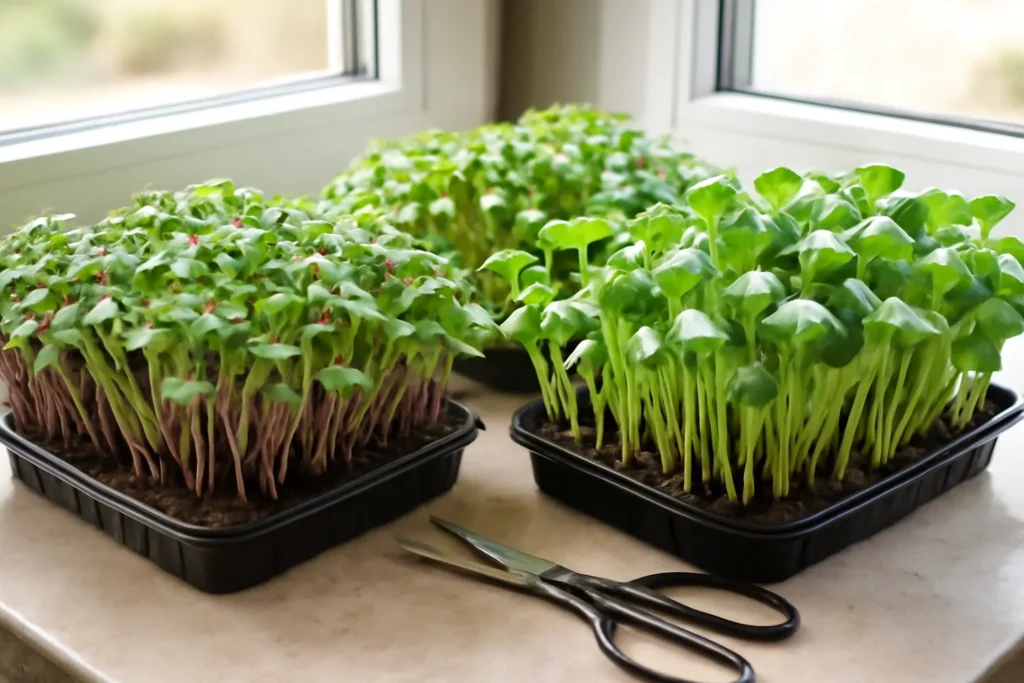
How to Start Growing Microgreens at Home has become more accessible than ever before. Microgreens represent one of the simplest ways to produce nutrient-rich foods right on your kitchen counter. These tiny powerhouses offer concentrated nutrition while requiring minimal space and equipment.
Many people discover that homegrown greens taste significantly better than store-bought alternatives. Learning How to Start Growing Microgreens at Home reveals that the freshness factor alone makes the effort worthwhile, but the cost savings and nutritional benefits create compelling reasons to start your own indoor gardening journey.
Understanding How to Start Growing Microgreens at Home opens up a world of possibilities for fresh greens at home. The process is surprisingly straightforward, making it perfect for beginners who want to dive into home cultivation. Once you master How to Start Growing Microgreens at Home, you’ll wonder why you waited so long to begin this rewarding practice.
What Are Microgreens and Why Should You Grow Them at Home?

Microgreens are young seedlings of edible plants harvested when they’re just one to three inches tall. Unlike sprouts, which are grown in water and eaten whole, microgreens grow in soil and are cut above the root line. These nutrient-dense greens bridge the gap between sprouts and baby salad greens.
The nutritional profile of microgreens surpasses that of their mature counterparts significantly. Research from the University of Maryland found that microgreens contain four to forty times more vitamins and minerals than fully grown vegetables. Red cabbage microgreens, for example, contain forty times more vitamin E than mature red cabbage.
Cost savings represent another compelling advantage of growing microgreens at home. A single packet of microgreen seeds costing two dollars can produce the equivalent of twenty dollars worth of store-bought microgreens. The organic produce you’ll harvest will be free from pesticides and transportation-related quality loss.
Freshness creates the most noticeable difference when comparing homegrown microgreens to purchased alternatives. Fresh microgreens maintain their crisp texture and vibrant flavors for days when properly stored. Store-bought varieties often lose their appeal within hours of purchase due to handling and transportation stress.
The health benefits extend beyond basic nutrition. Microgreens provide concentrated amounts of antioxidants, which support immune function and cellular health. The young plants haven’t had time to develop tough fibers, making their nutrients more bioavailable for absorption.
Urban gardening enthusiasts appreciate how microgreens fit into small living spaces. Apartment dwellers can maintain productive gardens without needing outdoor space or complex equipment. The rapid growth cycle means fresh harvests are available year-round regardless of weather conditions.
Best Microgreens Varieties for Home Growing

Easy gardening tips start with selecting appropriate varieties for beginners. Choosing the right microgreens can determine success or failure for new growers. Each variety offers unique flavors, nutritional benefits, and growing characteristics that appeal to different preferences and skill levels.
1. Radish Microgreens – The Perfect Beginner’s Choice
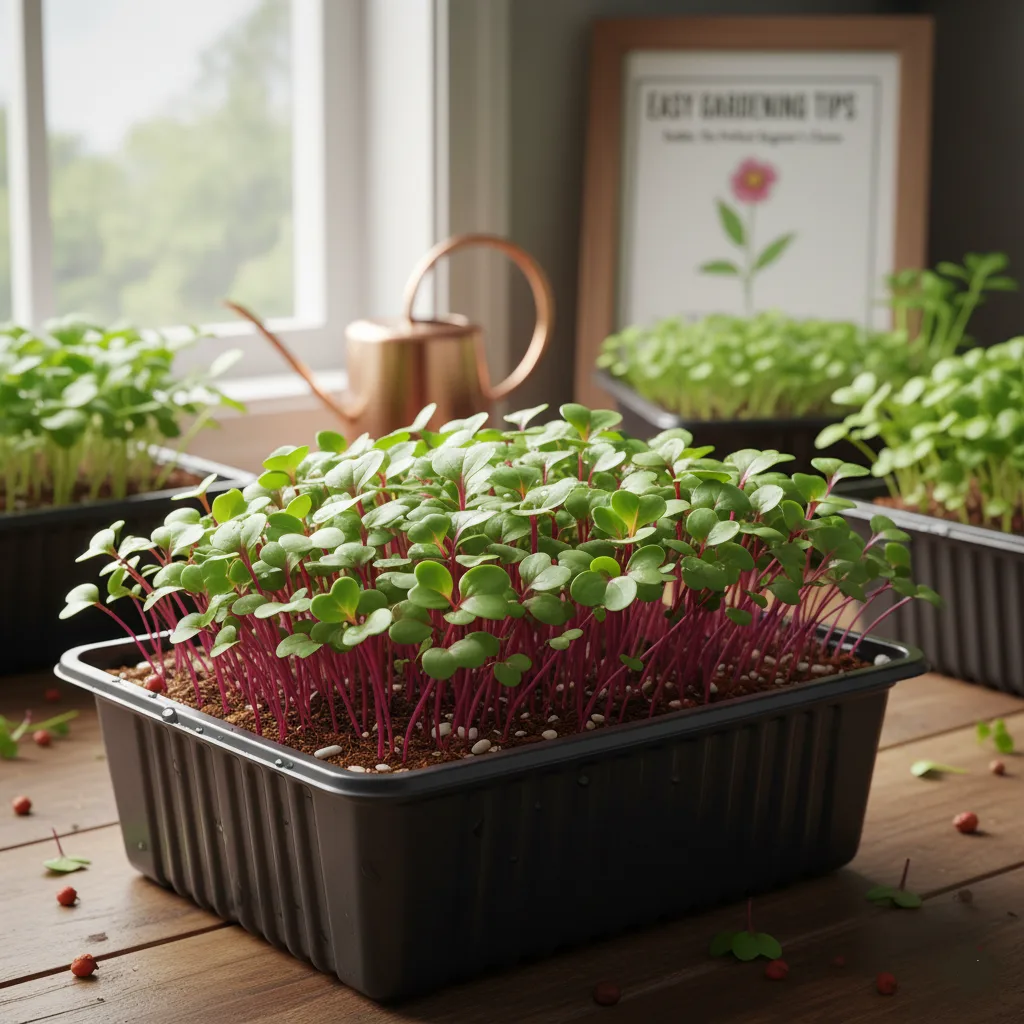
Radish microgreens top the list for new growers because they germinate within twenty-four to forty-eight hours and tolerate minor mistakes in watering or lighting. These spicy greens add a peppery kick to sandwiches and salads while growing reliably in just seven to ten days. The robust nature of radish seeds means they resist damping-off diseases that can destroy other varieties.
Purple radish varieties create striking visual appeal with deep purple stems and green leaves. Daikon radish microgreens offer milder flavors than traditional red radishes, making them excellent for children or those sensitive to spicy foods. The large cotyledons provide substantial harvests from relatively few seeds.
2. Broccoli Microgreens – Nutritional Powerhouse
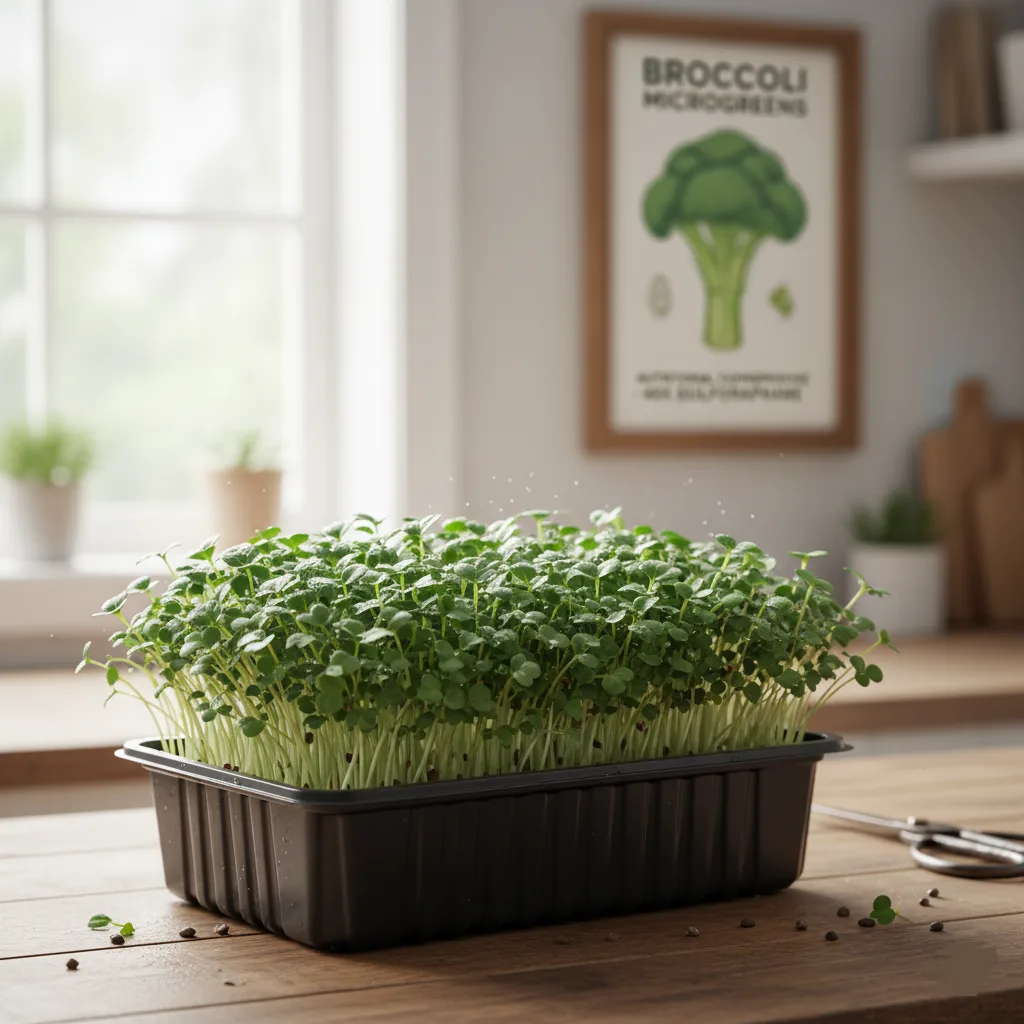
Broccoli microgreens offer mild, slightly bitter flavors that appeal to both children and adults. They contain forty times more sulforaphane than mature broccoli, a compound extensively researched for its anti-cancer properties. The seeds germinate consistently within three to five days and produce dense stands of healthy greens that harvest easily with scissors.
These nutrient-dense microgreens thrive in cooler conditions and resist heat stress better than many varieties. The compact growth habit makes them ideal for small containers, while the mild flavor works well in smoothies without overwhelming other ingredients. Fresh broccoli microgreens store exceptionally well when properly handled.
3. Pea Shoots – Sweet and Substantial
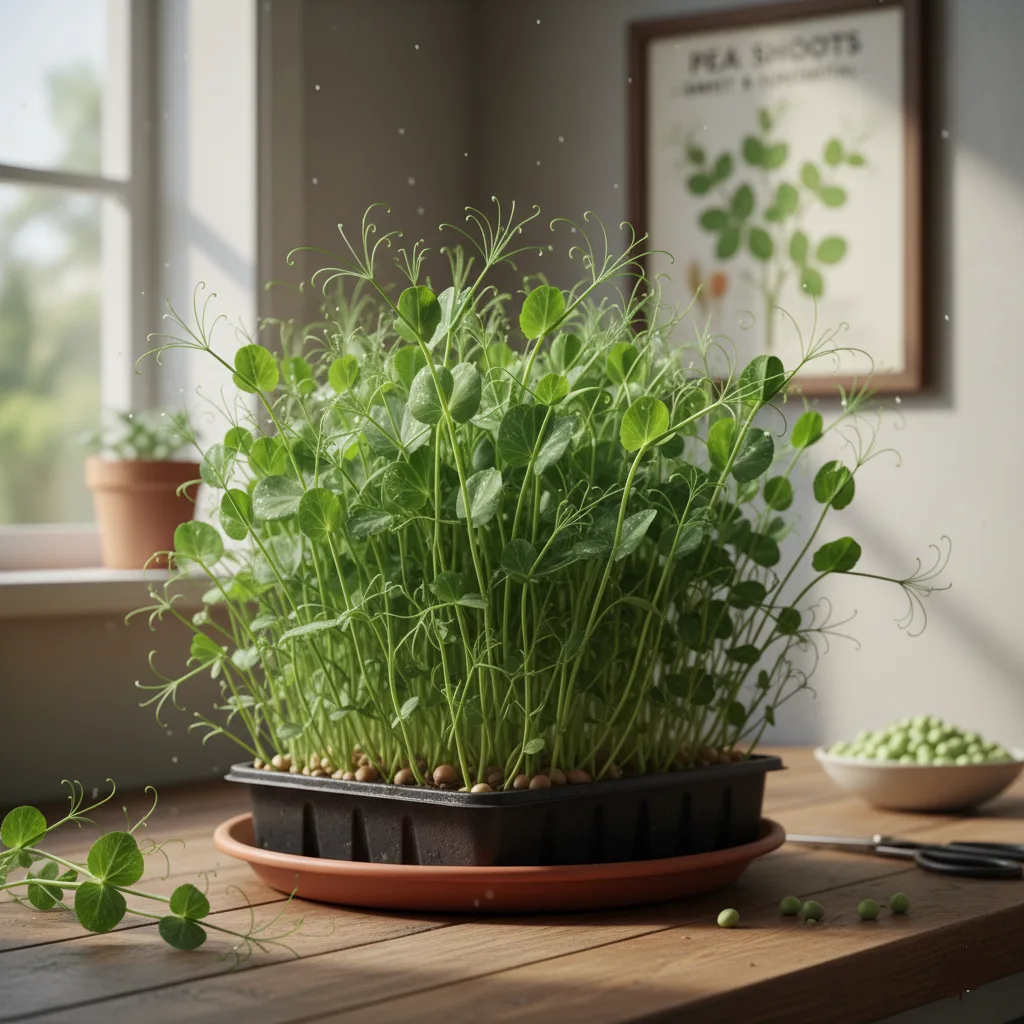
Pea shoots emerge within three days and reach harvestable size in eight to twelve days. Their sweet flavor and substantial texture make them excellent for stir-fries, salads, and fresh eating. The large seeds are forgiving for beginners learning proper spacing techniques and provide impressive yields.
Snow pea and snap pea varieties produce the most tender shoots, while field pea varieties offer stronger flavors. The thick stems and broad leaves create satisfying textures that work well in both raw applications and light cooking. Pea microgreens continue growing after harvest, often producing secondary shoots.
4. Sunflower Microgreens – Nutty Nutrition Champions

Sunflower microgreens deliver nutty flavors and impressive nutritional profiles. They contain complete proteins with all essential amino acids, making them valuable for vegetarian and vegan diets. The substantial stems and leaves provide satisfying textures that work well in both cooked and raw applications.
Black oil sunflower seeds produce the most flavorful microgreens, while striped varieties offer milder tastes. These protein-rich microgreens require hulling for optimal results, as unhulled seeds can develop mold more easily. The harvesting process takes slightly longer than other varieties but rewards growers with exceptional nutrition and flavor.
Practical Growing Example: Growing Radish Microgreens Step-by-Step
Let’s walk through a complete growing cycle using radish microgreens as our example variety. This real-world demonstration shows exactly what to expect during your first growing experience.
Day 1 – Setup and Planting:
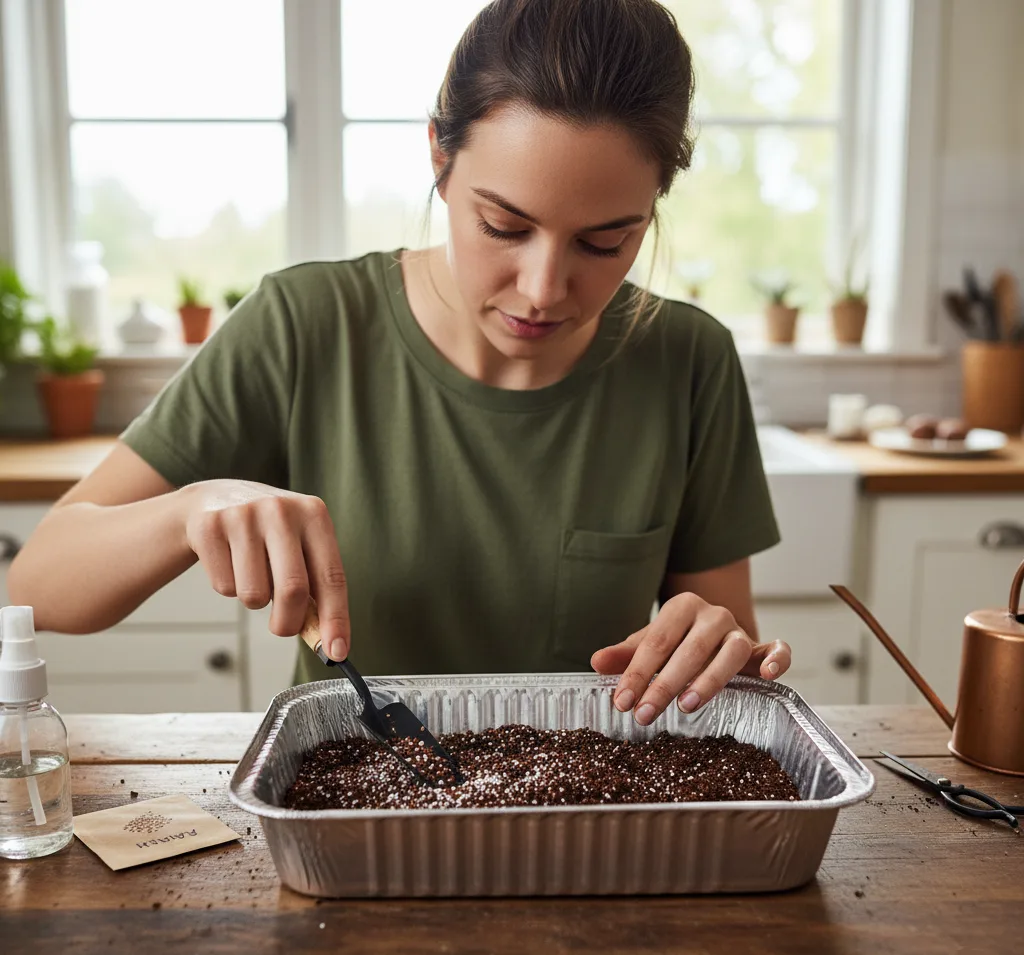
Sarah, a first-time grower, starts with a recycled aluminum takeout container and organic potting soil. She fills the container with one inch of moistened soil, creating an even surface. Using one tablespoon of radish seeds, she distributes them evenly across the soil surface, achieving roughly fifty percent coverage. The seeds get pressed gently into the soil and covered with a thin layer of vermiculite.
Day 2-3 – Germination Phase:
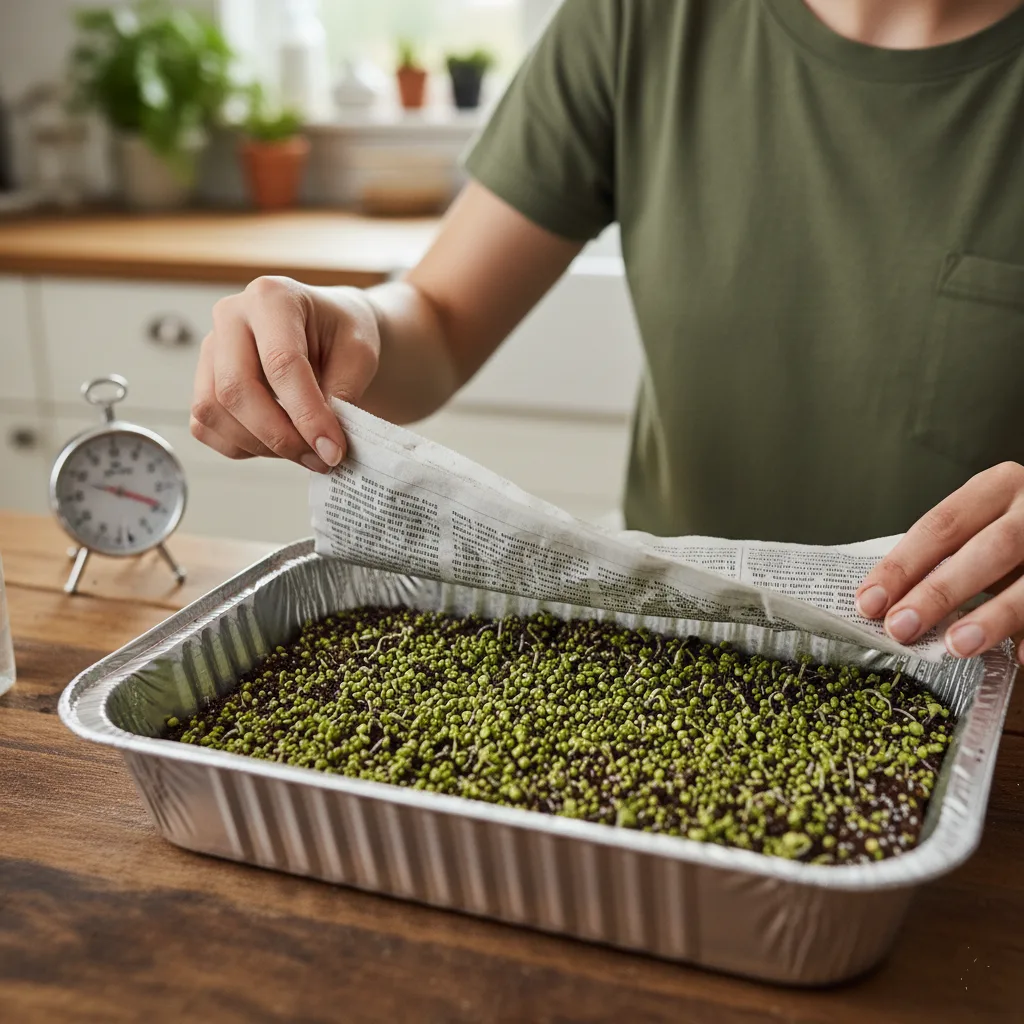
The container sits in Sarah’s kitchen at seventy degrees Fahrenheit, covered with damp newspaper to maintain humidity. By day two, tiny white root tips emerge from many seeds. Day three brings the first green cotyledons pushing through the growing medium. Sarah removes the newspaper cover and places the tray near her south-facing window.
Day 4-6 – Early Growth:
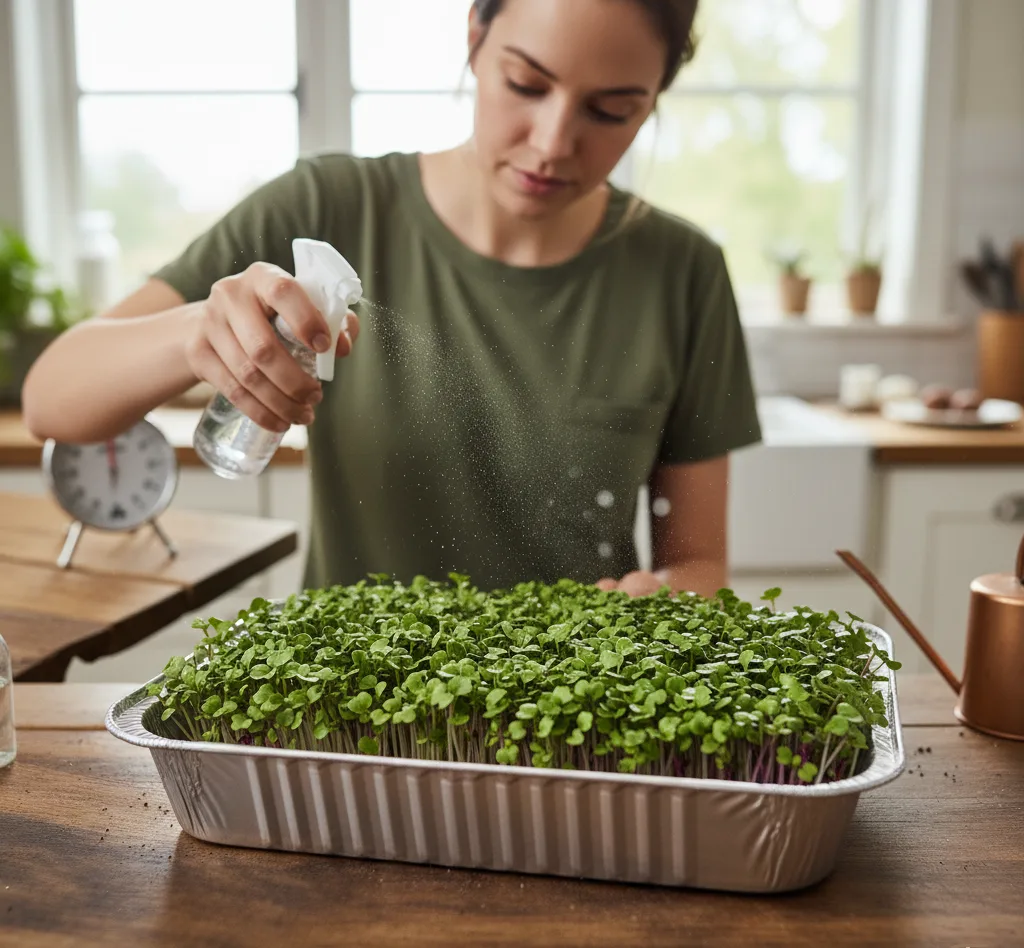
The radish seedlings develop rapidly, reaching half an inch tall by day four. Sarah mists them twice daily with her spray bottle, keeping the soil consistently moist but not waterlogged. The characteristic purple stems begin showing color, and the cotyledons expand fully.
Day 7-8 – Harvest Ready:

By day seven, the microgreens reach one and a half inches tall with fully expanded cotyledons and vibrant purple stems. Sarah harvests them with clean scissors, cutting just above the soil line. Her final harvest weighs two ounces, equivalent to eight dollars worth of store-bought organic microgreens from a two-dollar seed packet.
Results Analysis:
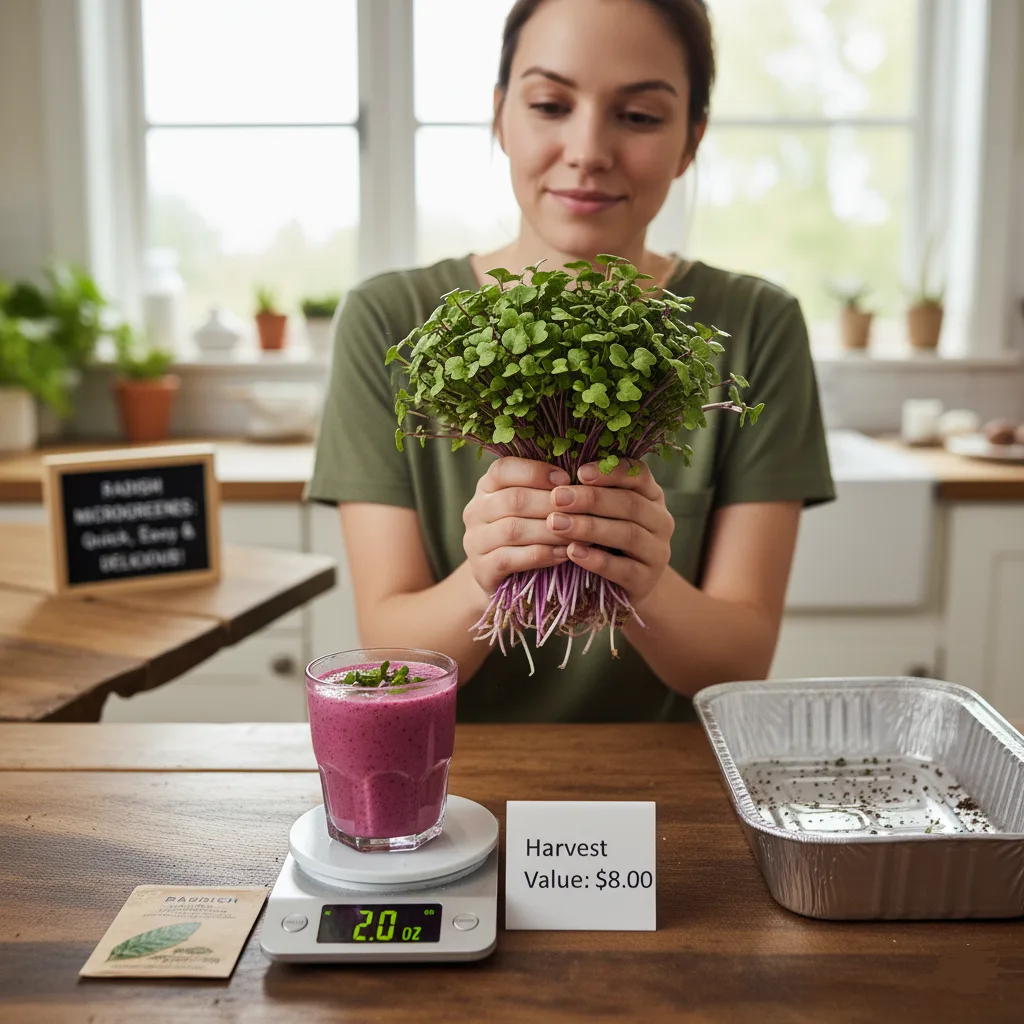
Sarah’s radish microgreens demonstrate typical beginner success rates. The fast germination and robust growth provide immediate satisfaction, while the substantial harvest justifies the minimal effort invested. The spicy flavor adds excitement to her morning smoothies and lunch salads.
This practical example illustrates why radish microgreens excel as starter varieties. The forgiving nature, quick results, and substantial yields create positive experiences that encourage continued growing.
5. Wheatgrass – The Classic Health Booster
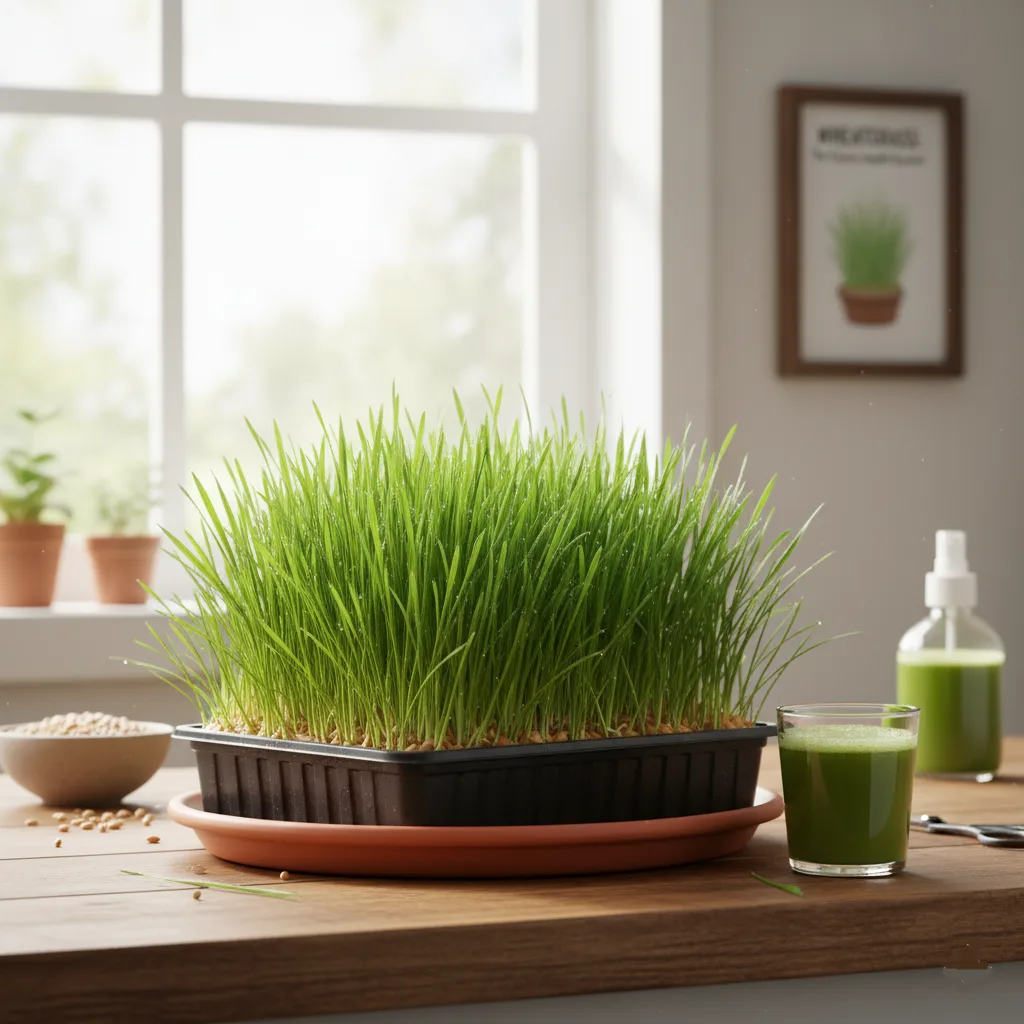
Wheatgrass represents one of the most recognized microgreens, famous for its intense green color and concentrated nutrition. This variety provides high levels of chlorophyll, vitamin A, vitamin C, and B vitamins. The sweet, grassy flavor works well in juices and smoothies, though some people find it too intense for direct consumption.
Growing wheatgrass requires slightly more attention than other varieties, as it prefers consistent moisture and can develop mold if conditions aren’t optimal. Hard wheat berries should be soaked for eight to twelve hours before planting. The harvest typically occurs seven to ten days after planting when the grass reaches four to six inches tall.
6. Alfalfa Microgreens – Mild and Versatile
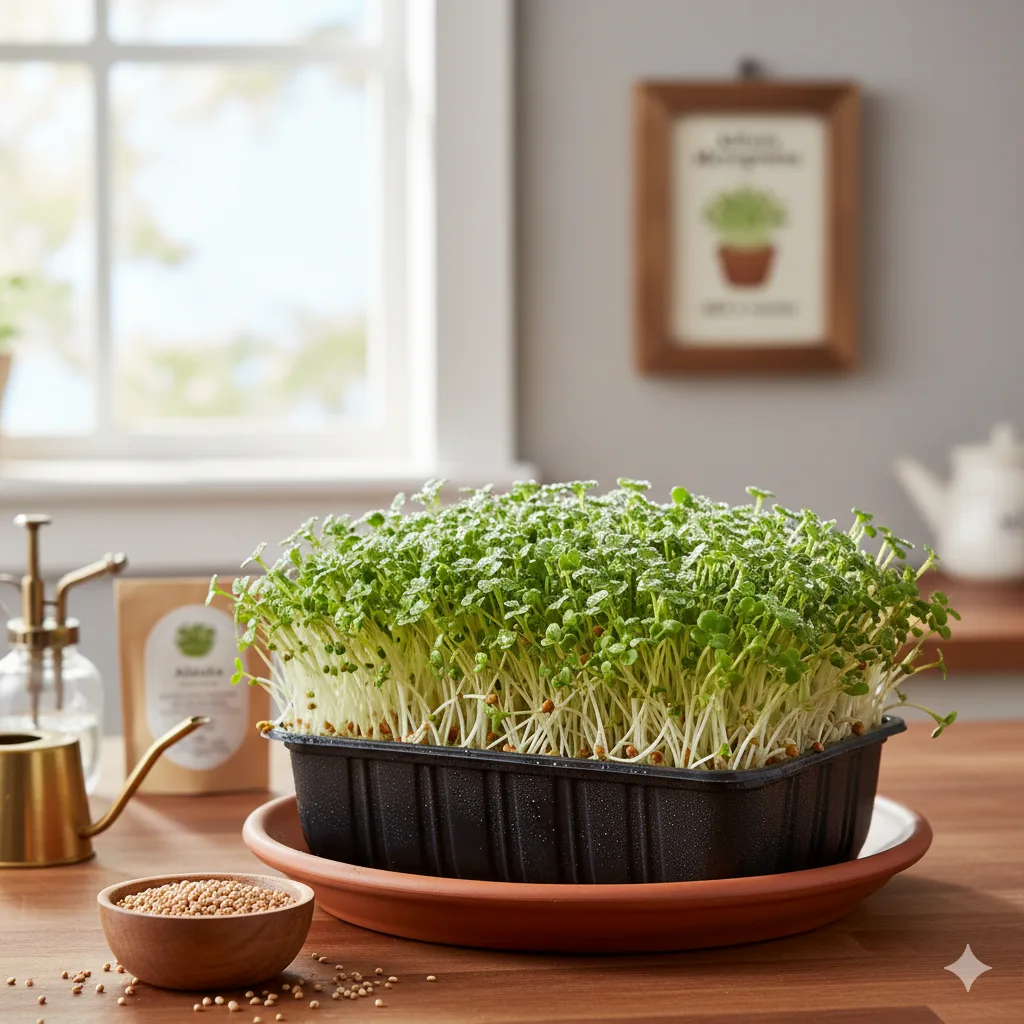
Alfalfa microgreens offer mild, slightly nutty flavors that appeal to most palates. These tiny seeds produce delicate, thread-like stems topped with small leaves that create interesting textures in salads and sandwiches. Alfalfa provides excellent sources of vitamin K, folate, and various minerals.
The small seed size requires careful watering to prevent washing seeds away or creating uneven distribution. Misting techniques work better than heavy watering for alfalfa production. These microgreens grow quickly, usually ready for harvest in five to seven days, and store well when kept properly refrigerated.
7. Mustard Microgreens – Bold and Spicy

Mustard microgreens provide bold, peppery flavors that transform simple dishes into memorable meals. Different mustard varieties offer varying heat levels, from mild mizuna to fiery red giant mustard. These hardy seeds germinate quickly and grow vigorously in most conditions.
Southern giant curled mustard produces large, ruffled leaves with intense flavors that pair excellently with milder greens. Osaka purple mustard creates striking purple and green foliage that adds visual appeal to salads and garnishes. The strong flavors mean small amounts provide significant taste impact.
8. Arugula Microgreens – Sophisticated Flavors

Arugula microgreens deliver sophisticated, peppery flavors with nutty undertones that elevate home-cooked meals. The distinctive taste profile makes arugula popular in upscale restaurants and among home chefs seeking gourmet ingredients. These Mediterranean herbs adapt well to container growing and produce consistent results.
Wild arugula varieties offer more intense flavors than cultivated types, while slow bolt varieties resist flowering longer in warm conditions. The serrated leaves create interesting textures, and the relatively large size makes harvesting easier than smaller varieties. Arugula microgreens work exceptionally well in salads, pasta dishes, and as garnishes.
9. Swiss Chard Microgreens – Colorful and Nutritious

Swiss chard microgreens provide colorful options for visual appeal and exceptional nutrition. Rainbow chard varieties produce stems in red, yellow, orange, and white, creating stunning presentations in salads and garnishes. The mild, slightly earthy flavor appeals to most taste preferences while providing high levels of vitamins A, C, and K.
The large seeds germinate reliably and produce substantial microgreens with thick, colorful stems. Red-stemmed chard varieties create particularly striking visual impact, while Fordhook giant produces some of the largest microgreens. These varieties tolerate slight overcrowding better than more delicate options.
10. Coriander (Cilantro) Microgreens – Indian Kitchen Staples

Coriander microgreens connect home growers with traditional Indian flavors while providing fresh herbs year-round. The distinctive flavor profile complements curries, rice dishes, and Mexican cuisine. Fresh coriander microgreens offer more intense flavors than mature leaves and maintain their potency longer.
Slow bolt cilantro varieties resist flowering in warm conditions, extending the harvest window. The seeds benefit from light crushing before planting to improve germination rates. These cultural staples grow well in slightly cooler conditions and prefer consistent moisture without waterlogging.
Essential Supplies and Equipment for Growing Microgreens
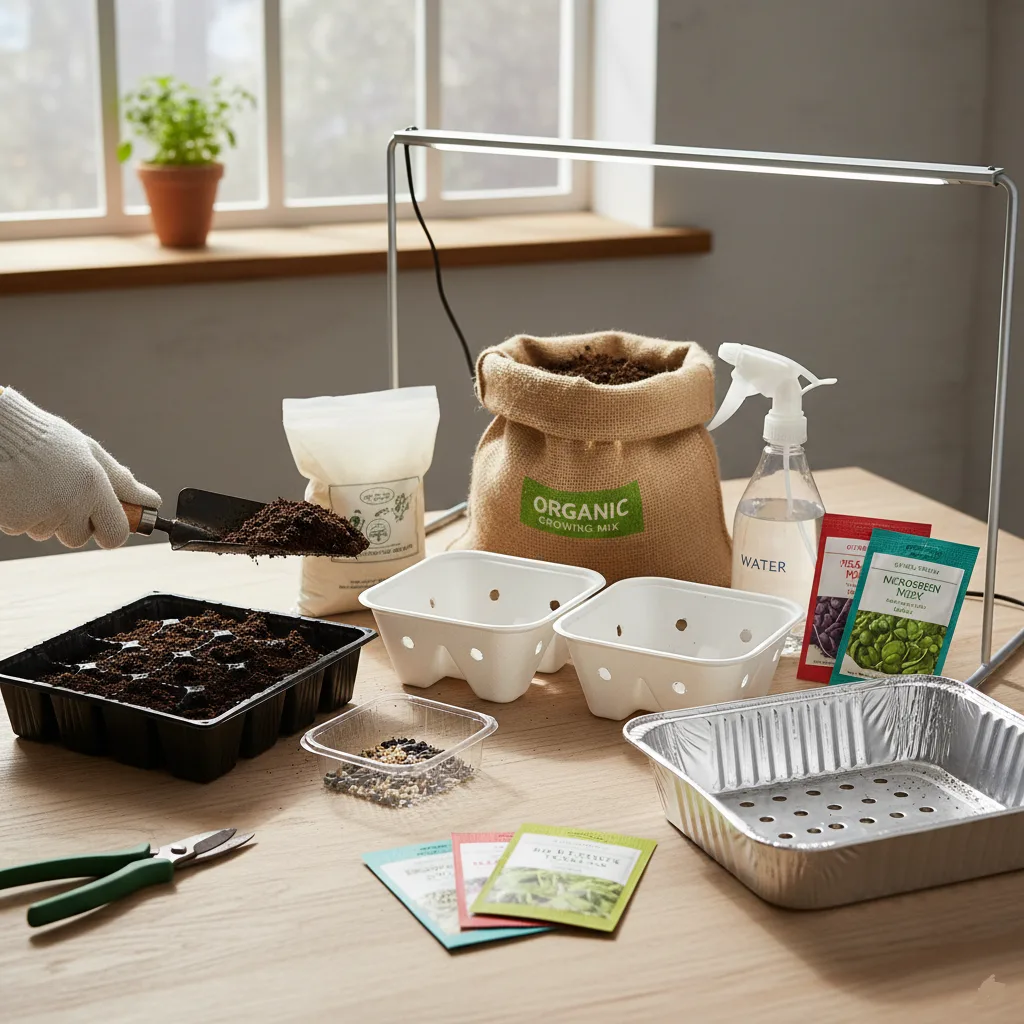
Container gardening success depends on selecting appropriate vessels for microgreen production. Shallow containers work best because microgreens develop limited root systems. Recycled takeout containers, aluminum pans, and purpose-built seed trays all function effectively when they provide drainage.
Drainage holes prevent waterlogging that leads to mold growth and root rot. Containers without drainage can work if growers master bottom-watering techniques, but beginners benefit from perforated containers. The ideal depth ranges from one to two inches, providing enough space for roots without wasting growing medium.
Growing medium choices range from traditional potting soil to specialized soilless mixes. Organic potting soil provides nutrition and water retention that supports healthy growth. Seed starting mix offers superior drainage and reduces the risk of damping-off diseases that can destroy entire crops.
Coconut coir represents a sustainable alternative to peat-based growing media. This renewable resource retains moisture while providing excellent drainage. Many commercial growers prefer coir because it’s consistent in quality and free from weed seeds and pathogens.
Seed selection impacts success rates significantly. Non-GMO seeds from reputable suppliers germinate more reliably than cheap alternatives. Organic seeds cost slightly more but provide peace of mind for health-conscious growers. Purchasing seeds specifically marketed for microgreen production ensures optimal germination rates.
LED lights have revolutionized indoor microgreen production. These energy-efficient fixtures provide full-spectrum lighting that supports photosynthesis without generating excessive heat. Position lights twelve to eighteen inches above growing trays for optimal results.
Natural sunlight works well for growers with south-facing windows that receive four to six hours of direct sun daily. However, grow lights provide consistent lighting regardless of weather or season. Fluorescent bulbs offer budget-friendly alternatives to LED systems for small-scale production.
Watering tools should provide gentle application that won’t disturb seeds or damage delicate seedlings. Spray bottles create fine mists that hydrate growing media without causing erosion. Pump sprayers with adjustable nozzles offer better control for larger growing operations.
| Equipment Category | Budget Option | Premium Choice | Key Benefit |
|---|---|---|---|
| Containers | Recycled takeout trays | Commercial seed trays | Professional results |
| Growing Medium | Generic potting soil | Organic seed starting mix | Better germination |
| Lighting | South-facing window | Full-spectrum LED | Year-round growing |
| Watering | Basic spray bottle | Adjustable pump sprayer | Precise water control |
Step-by-Step Guide to Growing Microgreens at Home
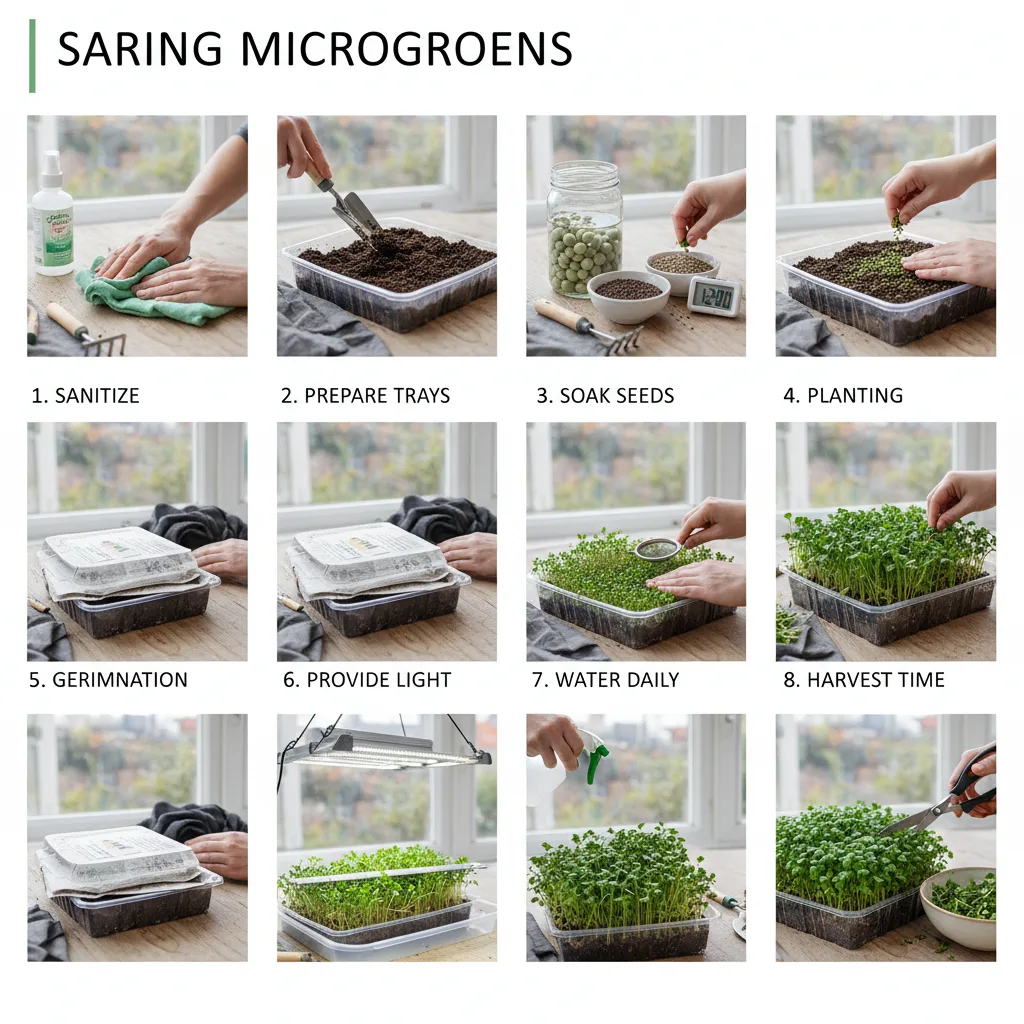
Step-by-step guide methodology ensures consistent results for new growers. Preparation begins with sanitizing containers and tools to prevent contamination. Clean equipment reduces the risk of mold and bacterial issues that can destroy entire crops.
Preparing containers involves adding drainage holes if necessary and filling with one to two inches of growing medium. The growing medium should be moistened but not waterlogged. Properly prepared soil feels like a wrung-out sponge when squeezed gently.
Seed soaking accelerates germination for larger seeds like peas and sunflowers. Soak these varieties for six to twelve hours before planting. Smaller seeds like radish and broccoli don’t require soaking and can be planted directly on moist soil.
Planting techniques vary by seed size and type. Seed density affects final yield and quality. Dense plantings produce more volume but may result in weaker individual plants. Sparse plantings create stronger plants but reduce overall harvest weight.
Distribute seeds evenly across the soil surface using gentle tapping motions. Large seeds should be pressed lightly into the growing medium. Small seeds can be left on the surface and covered with a thin layer of growing medium or vermiculite.
Creating optimal germination conditions involves maintaining consistent moisture and temperature. Cover newly planted trays with damp newspaper or cloth to maintain humidity. Most varieties germinate best at temperatures between sixty-five and seventy-five degrees Fahrenheit.
Light management begins after seeds show signs of germination. Remove covers and provide twelve to sixteen hours of light daily. Artificial lighting should be positioned close to prevent leggy growth but not so close that it generates excessive heat.
Water management requires daily attention during the growing period. Check soil moisture twice daily and mist when the surface begins to dry. Bottom watering techniques work well once plants establish root systems that can draw water upward.
Monitoring growth stages helps growers identify optimal harvest timing. Cotyledons emerge first, followed by the first set of true leaves. Most microgreens reach peak flavor and nutrition when cotyledons are fully expanded but before true leaves mature.
Optimal Growing Conditions for Healthy Microgreens
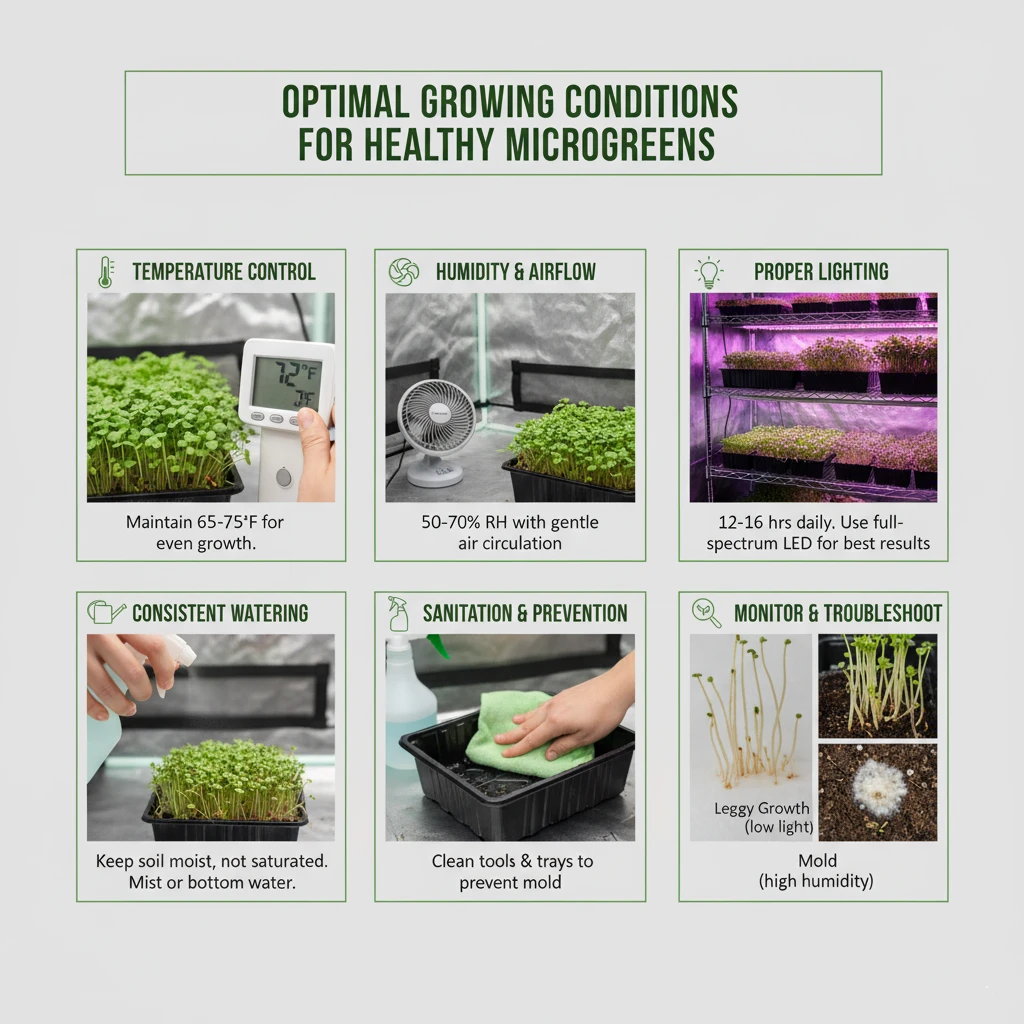
Temperature requirements significantly impact germination rates and growth quality. The ideal range falls between sixty-five and seventy-five degrees Fahrenheit for most varieties. Cool-season crops like peas and broccoli tolerate lower temperatures, while warm-season varieties like basil prefer the upper end of this range.
Consistent temperatures promote even germination and uniform growth. Fluctuating temperatures can cause patchy germination and uneven development. Indoor growing provides natural temperature stability that outdoor gardens cannot match.
Humidity control prevents common problems like mold growth and poor germination. Relative humidity between fifty and seventy percent creates optimal conditions for most microgreens. Excessive humidity encourages mold development, while insufficient humidity slows germination and growth.
Air circulation reduces humidity-related problems and strengthens plant stems. A small fan running on low speed provides gentle air movement that prevents stagnant conditions. Position fans to create indirect airflow that doesn’t dry out the growing medium excessively.
Light requirements vary by growth stage and variety. During germination, most seeds prefer darkness or dim conditions. Once sprouted, microgreens need twelve to sixteen hours of light daily for proper development. Insufficient light causes weak, leggy growth and pale colors.
LED grow lights provide optimal spectrum control for microgreen production. Blue light promotes compact growth, while red light enhances flavor development. Full-spectrum lights that combine multiple wavelengths produce the best overall results for home growers.
Watering schedules should maintain consistent soil moisture without creating waterlogged conditions. Check growing trays twice daily and water when the soil surface begins to dry. Misting techniques work well for young seedlings, while bottom watering suits established plants better.
Prevention strategies for mold and disease begin with proper sanitation. Clean containers and tools between uses to eliminate pathogen sources. Proper spacing and air circulation reduce conditions that favor mold development.
Common environmental issues include leggy growth from insufficient light, mold from excessive moisture, and poor germination from temperature fluctuations. Troubleshooting these problems involves adjusting environmental conditions systematically until optimal growth resumes.
Getting Started: Your First Microgreens Garden Today

Quick start checklist simplifies the initial setup process for new growers. Gather basic supplies including containers, growing medium, seeds, and a water source. Simple setups often produce better results than complex systems for beginners.
Recommended starter varieties include radish, broccoli, and pea shoots for their reliability and appeal. These varieties tolerate minor mistakes while providing rewarding harvests. Success breeds confidence, so starting with easy varieties encourages continued growing.
Week one expectations include seed germination and initial growth. Most varieties show signs of germination within two to four days under proper conditions. Patience during this period is important, as rushing often leads to overwatering and other problems.
Week two timelines typically bring harvest opportunities for fast-growing varieties. Quality indicators include vibrant colors, sturdy stems, and fully developed cotyledons. First harvests are often smaller than expected but improve with experience and technique refinement.
Building confidence comes through consistent success with simple varieties before attempting challenging ones. Learning curves are normal, and early failures often teach valuable lessons. Documentation of successes and problems helps improve future results.
Easy wins include focusing on reliable varieties, maintaining consistent conditions, and avoiding common mistakes like overwatering. Gradual expansion to new varieties and larger operations builds skills systematically.
Next steps might include trying new varieties, expanding growing space, or exploring specialized techniques. Commercial opportunities exist for growers who develop expertise and want to offset costs through sales.
Community resources like gardening groups and online forums provide support and advice. Local expertise from experienced growers can accelerate learning and problem-solving. Sharing successes with others creates positive reinforcement for continued growing.
Long-term planning considers seasonal variations, space limitations, and consumption patterns. Sustainable practices ensure continued success without overwhelming time and resource commitments.
Conclusion: Start Your Microgreens Journey Today
Fresh greens at home represent one of the most rewarding and accessible forms of urban gardening. The combination of nutritional benefits, cost savings, and convenience makes microgreens an ideal choice for modern households seeking healthy lifestyle improvements.
The simplicity of getting started cannot be overstated. Basic equipment and easy gardening tips enable anyone to begin producing nutrient-rich foods within days of starting. Beginner-friendly varieties like radish and broccoli provide almost guaranteed success for new growers.
Timeline expectations for first harvests range from seven to fourteen days for most popular varieties. This rapid gratification encourages continued growing and experimentation with new varieties. Continuous production becomes possible with succession planting techniques that provide steady harvests year-round.
Building momentum through small successes creates sustainable growing habits. Homegrown greens taste significantly better than store-bought alternatives, providing immediate positive reinforcement. The cost savings become apparent quickly, often recovering initial investments within months.
Sustainable living practices naturally develop through microgreen production. Understanding how food grows, even on a small scale, creates appreciation for agriculture and nutrition. Organic gardening principles apply directly to microgreen production, supporting environmental consciousness.
Take the first step today by gathering basic supplies and selecting starter varieties. DIY gardening projects rarely offer such quick rewards and lasting benefits. Your first harvest of homegrown greens awaits just days away, ready to enhance your meals and support your health for years to come.
>> Next : Master Microgreens Harvesting Storage & Tips (2025)
About Priya Harini B
Priya Harini B is an urban gardening specialist who combines peer-reviewed agricultural research with hands-on testing. Every method recommended on this site has been personally validated in real growing conditions. Currently experimenting with vertical systems and container optimization in Madanapalle.
📧 Email | 📬 Subscribe | 💬 Ask in comments
actionfuelsmomentum.bond – Love the vibe here, everything loads fast and looks super clean.
progressboosters – Smooth reading experience, and the site communicates its message clearly.
Progress Project – The content is clear and the presentation feels intentional.
guidedprogresshub – Helpful recommendations are easy to follow and implement.
growthinsightengine – Very clear, growth concepts are broken down into manageable, actionable ideas.
ideaimpetus – Helpful advice, signals effectively steer ideas toward actionable outcomes.
momentumbeacon – Focused attention produces stronger results and smoother task completion.
Нужны грузчики? офисный переезд : переезды, доставка мебели и техники, погрузка и разгрузка. Подберём транспорт под объём груза, обеспечим аккуратную работу и соблюдение сроков. Прозрачные тарифы и удобный заказ.
directionactivatesprogress.bond – Clean design and clear message, it actually feels trustworthy to browse.
activatesignalpath – Pages are cohesive, readable, and structured logically.
focusdrivencenter – Suggestions keep priorities in order and make execution easier.
powervelocity – Excellent tips, proper guidance naturally enhances the pace of progress.
claritydrivehub – Insights are practical and help maintain focus on key goals.
progresspathway – Useful insights, building the path carefully makes progress feel achievable.
valuepartnersnetwork – Great guidance, shared principles make cooperation effective and smooth.
actionsignals – Nice insights, following these signals supports better and more focused execution.
forwardfocus – Inspiring tips, staying focused provides consistent momentum toward goals.
Планируешь перевозку? грузоперевозки удобное решение для переездов и доставки. Погрузка, транспортировка и разгрузка в одном сервисе. Работаем аккуратно и оперативно, подбираем машину под объём груза. Почасовая оплата, без переплат.
pathsignals – Helpful insights, signals provide clarity that improves decision-making naturally.
innovatorsbondcircle – Very helpful, this circle emphasizes creative problem-solving and future-focused outcomes.
connectleadersnetwork – Very practical, messaging supports meaningful partnerships and effective teamwork globally.
prosuccess – Focused resources to strengthen influence and achieve consistent professional results.
Ищешь грузчиков? заказать грузчиков помощь при переезде, доставке и монтаже. Аккуратная работа с мебелью и техникой, подъем на этаж, разборка и сборка. Гибкий график, быстрый выезд и понятная стоимость.
AllianceLink – Smooth and clear content, concepts are easy to understand.
CoreInsightHub – Helpful explanations, I could apply several strategies quickly.
directionfocusstream – Advice is simple yet effective for guiding growth strategies.
TrustedLeaderBridge – Easy-to-read, leadership themes are clearly presented.
UnityBondPortal – Well-organized content, I got useful insights fast.
BondedForceNetwork – Concise and effective, lessons were clear and simple to grasp.
progressmovespurposefully.bond – Interesting site, the structure makes sense and keeps things straightforward.
TrustedHarborResource – Helpful examples and tutorials, everything is structured logically.
BondPathNetwork – Well-organized guides, content is beginner-friendly and informative.
Trust Knowledge Center – Well-organized resources and intuitive layout make comprehension simple.
FlowGroup Knowledge – Quick-to-read advice and insights that make learning effortless.
TrueBondInfo – Well-organized explanations, learning key points was fast and simple.
GrandUnity Knowledge Base – Concise tutorials and organized explanations simplified complex topics quickly.
Growth Circle Hub Central – Intuitive pages with helpful advice made exploring the site simple.
Alliance Bond Knowledge Base – Well-presented advice makes this a useful bookmark.
Trusted Learning Hub – Step-by-step lessons and clear instructions make comprehension simple.
StrategicBondWorld – Minimalist design, strategy and purpose are communicated effectively.
bondedcontinuum web – Content appears credible and the site runs smoothly without delays.
TrustHub Harvest – Visited randomly, and the site structure made exploring easy.
VisionLoop – Simple and clear advice, helping users plan and explore quickly.
Mainstay Online – Clean structure, responsive pages, and content is easy to scan.
digital home – Layout remains consistent, navigation behaves smoothly, and pages feel user-friendly
start reading – Browsing feels effortless, pages load quickly, and content is reliable and clear
web hub – Navigation flows well, structure is neat, and content is clear and concise
browse here – The structure feels clean, navigation is easy, and details are clear
homepage link – The presentation feels professional, speed is good, and structure makes sense
Harbor Light Market – Smooth browsing, products are easy to find and well organized.
petal ember selections – Enjoyed browsing, product descriptions are clear and checkout was easy.
Death Ray Portfolio – Engaging visuals, layout is clear and navigation flows naturally.
Quint Tatro Work – Portfolio is clean, sample pieces are presented clearly for visitors.
wexfordliteraryartsfestival.com – Beautiful festival site, content is engaging and easy to explore naturally.
focused energy moves you – Friendly, actionable phrasing highlighting the power of deliberate guidance.
guided steps ahead – Gentle, approachable phrasing linking guidance to measurable forward motion.
energize your path – Concise and encouraging, highlighting how released energy strengthens every step.
checkoutmadeeasy – Helpful concept, checkout is fast and navigating the site is a breeze.
traction for progress – Clear and motivating, highlights how traction creates steady forward movement.
Find Best Options – Practical pages, keeps reviewing and selecting choices hassle-free
Eco Growth Network – User-friendly design, navigating strategies for long-term growth is simple