
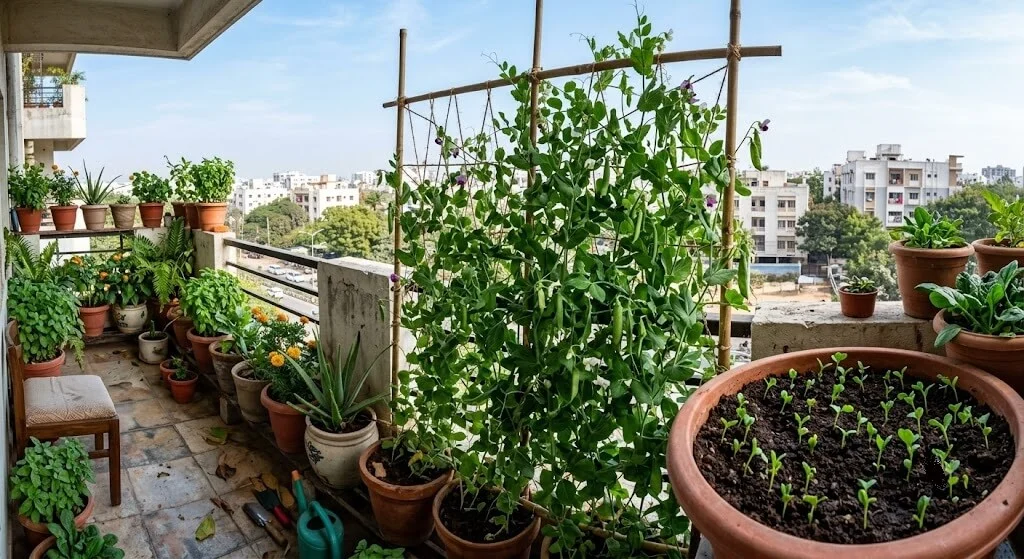
By Priya Harini B | Madanapalle, Andhra Pradesh | Updated November 2026
November is when winter properly settles in across most of India cool, dry, and the easiest month of the year to garden in. Continue October’s transplants, sow carrot, peas, spinach, dill, and sweet pea, and keep an eye on early frost risk in North Indian cities. Chennai and coastal Tamil Nadu are still mid-monsoon this month, while the Deccan Plateau’s second rainy spell is finally tapering off.
Table of Contents
Introduction
If you’re searching for what to grow in November India, the honest answer is: less than you think, and that’s the good news. If October felt like a scramble soil prep, transplants, the Chennai monsoon warning I keep repeating November is the reward. This is, in my experience, the calmest and most forgiving month on my terrace all year. It’s part of my Indian Gardening Calendar series, and it picks up exactly where October’s transplants left off this month is about consolidating, not starting from scratch.
Why November Is Different From October
By November, the northeast monsoon that soaked Chennai and gave the Deccan Plateau its second spell is either tapering or, for Tamil Nadu, still going strong. According to the India Meteorological Department, the northeast monsoon typically runs into December over Tamil Nadu, so November is often the wettest single month of the year there even wetter than October in many years. Meanwhile, Bangalore and Hyderabad usually see their October rain spell ease off through November, and the North Indian Plains cool further, with some outer-Delhi and North Indian locations occasionally seeing their first light frost warnings appear by late November in colder years.
if you’re in Chennai, don’t assume November is your “calm after October” month the way it is for the rest of India it usually isn’t. If you’re in Delhi or the northern plains, this is the month to start watching night temperatures for the season’s first cold snap.
Soil Prep This Month A Top-Up, Not a Rebuild
If you did the full soil-test-and-rebuild in October, November doesn’t need you to repeat all of it I treat this month as a top-up, not a full reset.
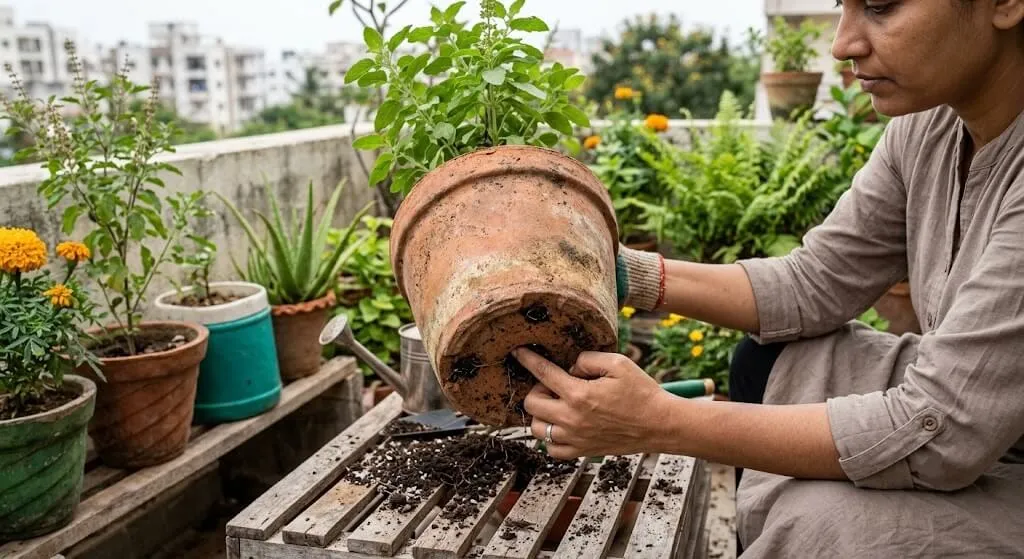
Step 1 : Check that October’s drainage fixes held. After a month of watering and any Deccan Plateau or Chennai rain, re-check that the drainage holes you cleared in October are still clear.
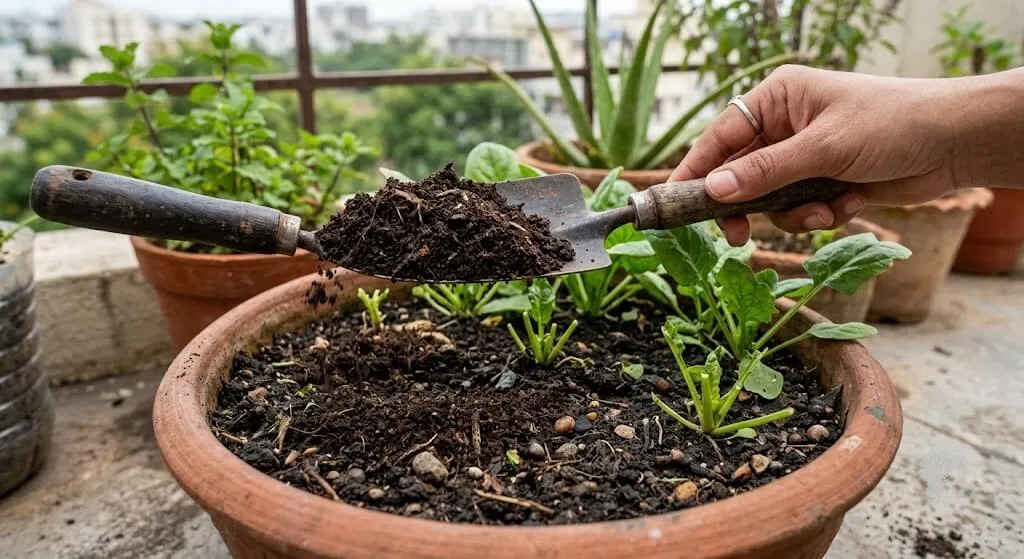
Step 2 : Top up compost only where soil looks thin. If containers holding fast crops (radish, spinach, methi) have been harvested and resown, work in a light layer of fresh vermicompost no need for the full 2:1 cocopeat mix again unless the container is being completely replanted.
Step 3 : Continue your fertilizer schedule. Keep the NPK 19:19:19 diluted at 2–3g per litre every two weeks going for anything still actively growing from October. For new November sowings, start the same schedule two weeks after germination.
Step 4 : Chennai and coastal Tamil Nadu readers: this is still a drainage-priority month. Don’t relax the raised-container approach from October just because the calendar flipped the monsoon hasn’t.
What to Sow, Plant, and Maintain This November Seed to Harvest
Vegetables
Carrot, beetroot, radish, and turnip if you didn’t get to these in October, November is still a good window. Sow carrot and beetroot 1–2cm deep, and don’t crowd them thin seedlings to 5–7cm apart once they show two true leaves, or you’ll end up with thin, tangled roots instead of properly sized ones. These four all want full sun (at least 5–6 hours) to size up well; in deep shade you’ll get more leaf than root. Carrot takes 10–14 days to germinate and about 70–80 days to harvest; radish remains the fastest option at 25–35 days, which makes it the best “instant gratification” crop if you’re new to growing root vegetables. Keep the soil evenly moist while seeds are germinating root crops that dry out and then get soaked tend to split or turn woody.
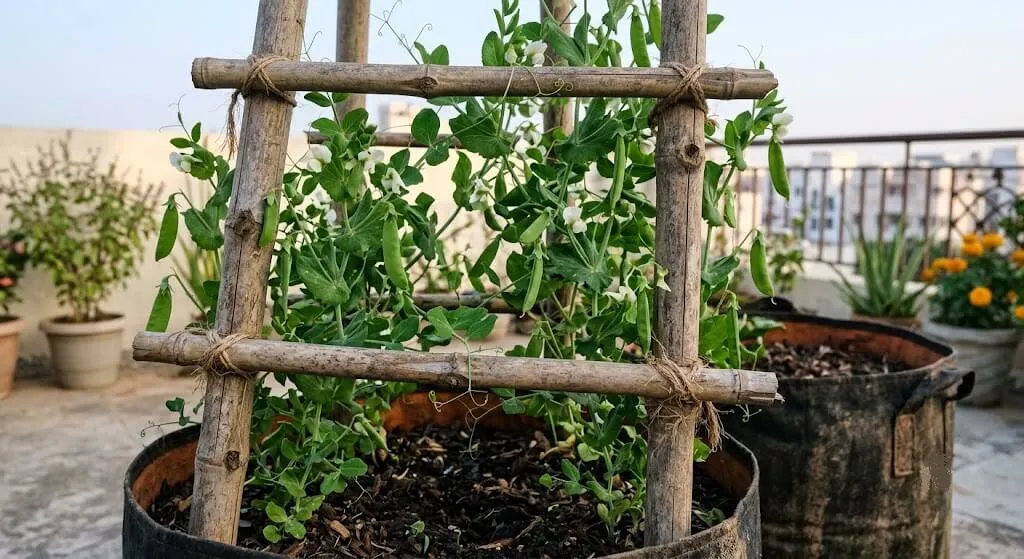
Peas sow 2–3cm deep, 7–10cm apart, with a trellis or a few stakes already in place at sowing time rather than added later. Peas like full sun and steady but not heavy watering soggy soil around the roots is a common cause of poor flowering. Germination takes 7–10 days, harvest around 60–70 days after sowing November-sown peas typically mature into a very reliable December–January harvest, and picking regularly (rather than letting pods mature fully before harvesting) keeps the plant producing for longer.

Spinach (palak), methi, and coriander still excellent November direct-sows, following the same spacing and timing as October: spinach 30–40 days to harvest, methi as fast as 25–30 days for leaf cutting, coriander 30–45 days for first cutting. All three do well in full sun or light partial shade, and all three reward a “cut, don’t pull” approach take outer leaves and let the centre keep growing, rather than harvesting the whole plant at once, and you’ll get several cuttings from a single sowing.
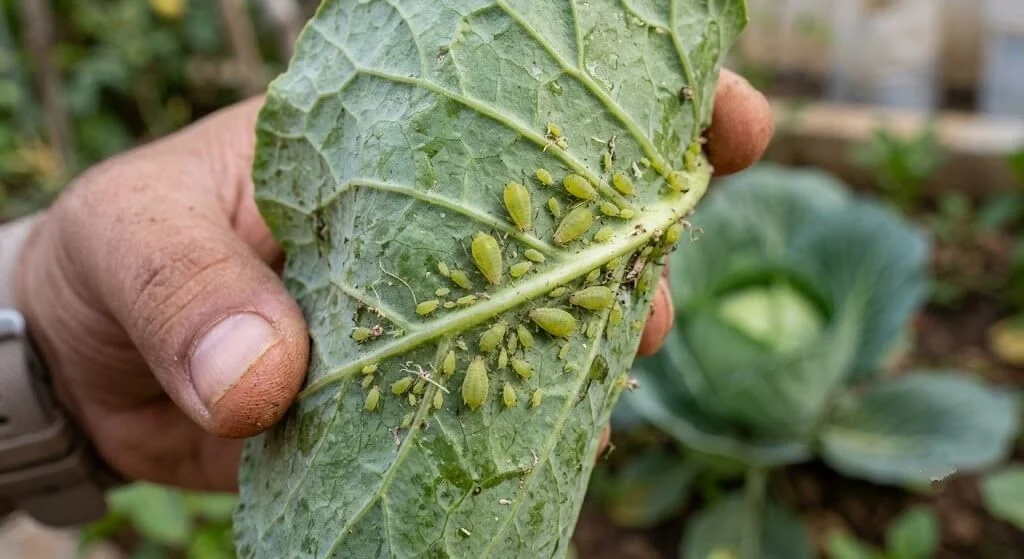
Cabbage, cauliflower if you transplanted in October, November is maintenance month: consistent moisture (don’t let the container dry out between waterings), full sun, and a close watch for aphids as the weather cools (see mistakes section below). If you missed October, cooler-zone gardeners can still transplant in early November, though harvest will run slightly later than an October-started batch.
Herbs
Dill is a strong November direct-sow it genuinely prefers the cooler temperatures this month brings more reliably than October’s still-warm afternoons. Sow shallow, roughly 1cm deep, in a spot with at least a few hours of direct sun daily, and expect germination in 10–14 days. Like coriander, it’s a cut-and-come-again herb once established, so resist pulling the whole plant for one cooking session.
Flowers
Sweet pea this is the main sowing window I wait for every year. Soak seeds overnight before sowing, 2cm deep, 15cm apart, with a support structure ready at sowing time (the vines climb fast once they start), ideally by mid-November for January–February blooms. This one genuinely needs full sun to flower well in shade you’ll get healthy green growth but disappointing blooms.
Pansy, petunia, dianthus all continue well from October sowings, or can still be started fresh this month for a slightly later winter bloom. These three are more forgiving of partial shade than sweet pea, though full sun still gives the strongest flower color. Keep soil consistently moist but not waterlogged these are shallow-rooted and dry out faster than they look.
Marigold succession sowing (a second round) keeps blooms going into December if your October marigolds are starting to fade it’s genuinely the lowest-maintenance flower on this whole list, tolerating irregular watering far better than the others. My full winter flowers for Indian balconies guide covers sowing depth and spacing for all of these in one place.
Fruit
Strawberry runners for hotter or more humid zones that I recommended waiting on in October, November is your month. Plant runners in a wide, shallow container rather than a deep narrow one strawberry roots spread more than they go down. Allow the same 3–4 weeks for root establishment before expecting fruiting signs, in full sun, with consistent (not heavy) watering.
November Crop Quick-Reference Table
| Crop | Type | Depth/Spacing | Sun Needs | Germination | Ready By |
|---|---|---|---|---|---|
| Carrot | Direct sow | 1–2cm deep, thin to 5–7cm | Full sun | 10–14 days | 70–80 days |
| Beetroot | Direct sow | 1–2cm deep, thin to 5–7cm | Full sun | 7–14 days | 55–70 days |
| Radish | Direct sow | 1–2cm deep, thin to 5–7cm | Full sun | 4–7 days | 25–35 days |
| Peas | Direct sow | 2–3cm deep, 7–10cm apart | Full sun | 7–10 days | 60–70 days |
| Spinach (palak) | Direct sow | Shallow, cut-and-come-again | Full sun/partial shade | 5–10 days | 30–40 days |
| Methi | Direct sow | Shallow, dense sow | Full sun/partial shade | 4–7 days | 25–30 days |
| Coriander | Direct sow | Shallow, cut-and-come-again | Full sun/partial shade | 7–10 days | 30–45 days |
| Cabbage/Cauliflower | Transplant (or continue from Oct) | 30–45cm spacing | Full sun | (transplant) | 70–100 days from transplant |
| Dill | Direct sow | 1cm deep, shallow | Full sun | 10–14 days | Cut-and-come-again from ~5–6 weeks |
| Sweet pea | Direct sow (soak overnight first) | 2cm deep, 15cm apart | Full sun (essential for blooms) | 10–14 days | Blooms Jan–Feb |
| Pansy/Petunia/Dianthus | Direct sow or continue from Oct | Light soil covering | Partial shade tolerant | 10–14 days | 60–80 days to bloom |
| Marigold (succession) | Direct sow | 0.5cm deep, 20–25cm apart | Full sun, very forgiving | 5–7 days | 45–50 days to bloom |
| Strawberry | Runners (not seed) | Wide, shallow container | Full sun | (runner) | 3–4 weeks to establish, then fruiting |
Three Wrong Assumptions I See Every November
“November is calm everywhere, like it usually is here in Madanapalle.” Wrong and coastal Tamil Nadu are often at their wettest this month, not their calmest. Consequence: readers relax their drainage precautions right when they need them most.
“My October soil prep means I don’t need to touch the soil again this month.” Wrong containers with fast-harvested crops (radish, spinach) get resown multiple times in a season, and each resow benefits from a light compost top-up. Consequence: later November sowings underperform compared to October’s, for no obvious reason.
“Frost is a December problem, not a November one.” Wrong for parts of North India some outer-Delhi and northern-plains locations can see their first light frost warning appear in late November in colder years. Consequence: tender crops left unprotected take unexpected damage before December even starts. My full frost protection for Indian balcony gardens guide covers exactly how and when to start covering plants.
Does This Fit Your Balcony?
| Your Balcony Condition | Best November Picks | Avoid This Month |
|---|---|---|
| Full sun, 6+ hrs direct | Peas, sweet pea, carrot | Spinach and methi (still fine, but partial shade suits them better) |
| Partial shade, 3–4 hrs | Spinach, methi, coriander, dill | Sweet pea (needs good sun for strong blooms) |
| Small containers only (under 30cm) | Radish, coriander, dianthus | Peas (need trellis room), cabbage |
| Windy high-rise terrace | Low-growing greens, dianthus | Tall sweet pea trellises without wind protection |
| Chennai / coastal Tamil Nadu balcony | Continue raised, well-drained containers | Anything requiring dry soil for germination |
Step-by-Step November Protocol
What you’ll need (₹ prices verify against Amazon India/Ugaoo before publishing):
| Item | Approx. Cost | Where |
|---|---|---|
| Sweet pea seeds | ₹40–70 [VERIFY] | Amazon India |
| Dill seeds | ₹25–40 [VERIFY] | Amazon India |
| Vermicompost top-up (2kg) | ₹80–120 [VERIFY] | Ugaoo |
| Trellis/stakes for peas and sweet pea | ₹100–200 [VERIFY] | Amazon India |
- Check October’s drainage and compost work held up before sowing anything new.
- Soak sweet pea seeds overnight, then sow the next morning, 2cm deep.
- Continue watering established October transplants every 2–3 days, adjusting down slightly as nights cool further.
- Stake peas and sweet pea at sowing time, not once they’ve grown tall my container size for tomatoes guide covers the same staking logic even though it was written for tomatoes.
- Watch aphid activity on cabbage and cauliflower as temperatures drop cooler weather often brings a small aphid spike.

- Chennai/coastal TN: re-verify drainage weekly, not just once this month.
- Begin watching night temperatures in North Indian cities for early frost signs.
- Resow any harvested radish/spinach containers with a light compost top-up first.
Total setup cost for a fresh November sowing round (4 containers): roughly ₹700–1,100 [VERIFY], assuming October’s soil prep is already in place.
This Month’s Specific Mistakes
Mistake 1 : Treating Chennai’s November like everyone else’s. The northeast monsoon is often still peaking here in November. Fix: keep October’s raised-container, drainage-first approach through this month too.
Mistake 2 : Skipping the compost top-up on resown containers. Fast crops like radish and spinach deplete a small container quickly across two or three resowings. Fix: a light vermicompost top-up before every resow, not just the first sowing of the season.
Mistake 3 : Ignoring early frost warnings in North India. Assuming frost is strictly a December problem catches some North Indian gardeners off guard in colder years. Fix: watch night temperature forecasts from mid-November onward if you’re in Delhi or similar zones.
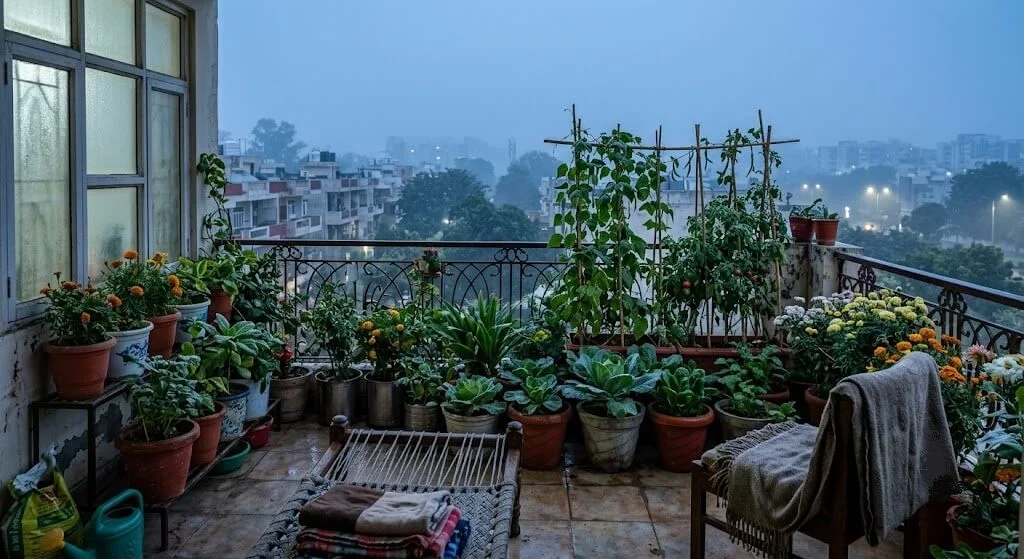
Mistake 4 : My own November error. In 2023, I ran into powdery mildew and fungal leaf spot across several containers November’s cool nights combined with poor airflow around my plants created exactly the conditions fungal problems love. Fix: I now space containers with a real gap between them for airflow, water at the base rather than the foliage, and let any splashed leaves dry quickly under the daytime sun instead of staying damp overnight.
My November Story
November 2023 is when I really learned that “calmer weather” doesn’t mean “no problems” it just means different ones. As the nights cooled down and the air got noticeably stiller on my terrace, I started noticing powdery mildew and fungal leaf spot spreading across several of my containers. The cool nights combined with low airflow around the plants had created exactly the damp, still conditions fungal problems thrive in.
My first instinct was to water more, thinking the plants looked stressed but that was the opposite of what they needed. Once I realized airflow was the real issue, I changed a few things at once. I repositioned my containers to leave a proper gap between them instead of crowding them together for space. I started watering at the base of each plant rather than over the foliage, so leaves weren’t sitting wet overnight. And on the days I did splash some foliage by accident, I made sure it was early enough that the daytime sun could dry it off quickly rather than leaving it damp into the evening.
I also started spraying a diluted neem oil mix I make at home whenever I spotted early signs of mildew or spot on a leaf, rather than waiting for it to spread further.
It wasn’t an overnight fix the mildew and fungal spot reduced gradually, container by container, over a few weeks rather than disappearing immediately. But the plants did recover, and they kept growing steadily toward harvest instead of stalling out. Now, every November, airflow is the first thing I check on my terrace, before I even think about watering or feeding.
November Case Study + Comparison
Divya Menon’s container mistake, Hyderabad. Divya Menon, gardening on the Deccan Plateau in Hyderabad, ran into a classic beginner trap: she picked containers without really checking whether they suited what she was growing container type, drainage holes, and how much soil and compost each one actually needed all got overlooked in the excitement of starting. Once we went back through the basics with her matching container size and drainage to each crop, rather than using whatever was on hand her results improved noticeably. It’s a good reminder that November’s “just keep going” ease can tempt readers to skip the container-fit checks that October’s guide covers, especially on the Deccan Plateau where the season is still settling.
Comparison table (doesn’t depend on the case study, safe to publish as-is):
| Continuing October’s transplants into November | Starting fresh in November | |
|---|---|---|
| Soil condition | Already refreshed just needs a light top-up | Needs the fuller October-style soil prep first |
| Harvest timing | On track for original October schedule | Runs 3–4 weeks behind an October start |
| Best for | Readers who followed the October guide | Readers who are starting the series from this month |
| November verdict | Ideal minimal extra work | Workable, but do the Soil Prep steps from the October guide first |
November Zone-Wise and City-Wise Context
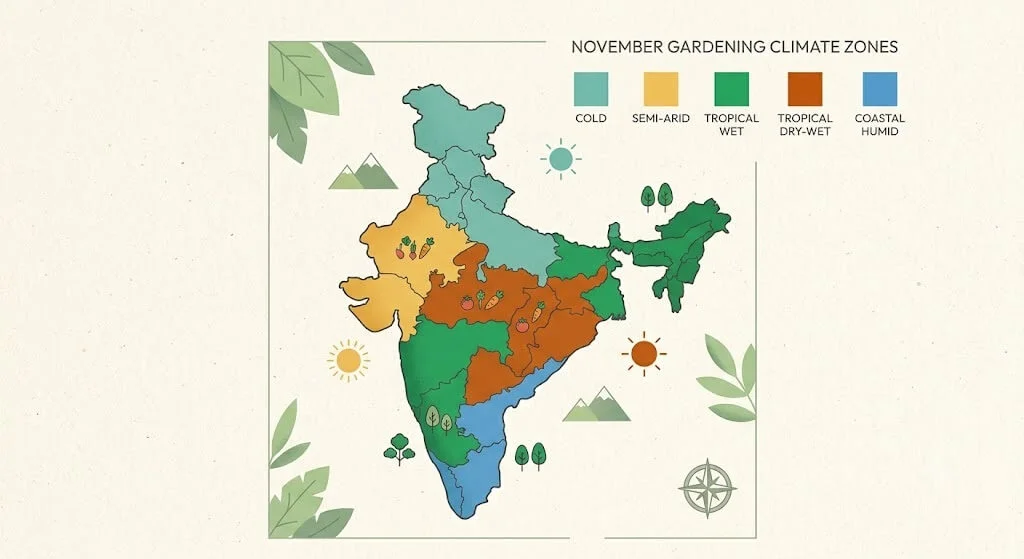
| Zone | November Behaviour | How It Differs From Generic Advice | Adjustment |
|---|---|---|---|
| North Indian Plains (Delhi, Lucknow) | Cooling further, early frost risk possible in colder years | Generic guides often treat frost as strictly December-onward | Watch night temperatures from mid-November |
| Western Semi-Arid (Ahmedabad, Jaipur) | Dry, cool | Matches generic calendar | Standard November sowing |
| Deccan Plateau (Bangalore, Hyderabad, Pune) | Second monsoon spell tapering off through the month | Generic calendar may still assume October’s rain pattern continues | Should be safe to resume standard sowing by mid-to-late November |
| Coastal West (Mumbai, Goa, Kochi) | Fully dry, humidity dropping | Matches generic calendar | Standard November sowing |
| Coastal East / Tamil Nadu (Chennai) | Still deep in the main monsoon often the wettest month of the year here | Opposite of the “November is calm” assumption most guides make | Continue October’s drainage-first, raised-container approach |
| Eastern India (Kolkata, Patna) | Cooling, humidity dropping | Matches generic calendar reasonably well | Standard November sowing |
| Northeast India (Guwahati) | Rainfall largely tapered | Soil should be draining better than October | Standard sowing should now be safe |
| Himalayan/Hill (Shimla, Dehradun) | Cold, growing window closing further | Generic November calendar is too late for most crops here | Focus only on fastest-maturing greens, or pause until spring |
| Reference Zone (Madanapalle, AP) | Cool, mostly dry, pleasant growing conditions | Close to generic plains pattern | Standard November sowing |

WARNING: The most common November mistake is assuming the whole country has “calmed down” after October. Chennai hasn’t if anything, November can be wetter there than October was.
City-by-City Quick Reference
| City | Zone | November Reality | Recommended Action |
|---|---|---|---|
| Delhi | North Indian Plains | Cooling fast, early frost risk in colder years | Watch night temperatures, protect tender crops if needed |
| Mumbai | Coastal West | Dry, pleasant | Standard sowing |
| Bangalore | Deccan Plateau | Second monsoon spell tapering | Sowing should ease back to normal through the month |
| Chennai | Coastal East/TN | Still deep in main monsoon | Continue drainage-first approach |
| Hyderabad | Deccan Plateau | Similar to Bangalore | Sowing should ease back to normal through the month |
| Ahmedabad | Western Semi-Arid | Dry, cool | Standard sowing |
| Kolkata | Eastern India | Cooling, humidity dropping | Standard sowing |
| Madanapalle | Reference Zone | Cool, pleasant, mostly dry | Standard sowing |
November Week-by-Week Calendar
| Week | Focus | Action |
|---|---|---|
| Week 1 | Check-in | Verify October’s drainage and soil prep held up; assess what needs resowing |
| Week 2 | Sow the season’s main flowers | Soak and sow sweet pea; continue pansy/petunia/dianthus |
| Week 3 | Continue vegetables | Sow/continue carrot, peas, spinach, methi, dill |
| Week 4 | Monitor | Watch aphids on cabbage/cauliflower; North Indian readers begin frost-watch |
Product Reference for November Planting
| Product | Purpose | Approx. Cost | Where | Priya’s Note |
|---|---|---|---|---|
| Sweet pea seeds | Main November flower sowing | ₹40–70 | Amazon India | Buy a little extra germination is decent but not 100%, and it’s worth having a few spare seeds for gaps |
| Dill seeds | Herb sowing | ₹25–40 | Amazon India | A small packet goes far since you only need a light, shallow sow no need for a large bag |
| Vermicompost (2kg, top-up size) | Soil top-up | ₹80–120 | Ugaoo | The smaller 2kg bag is the right size for a top-up no need for a full 5kg bag unless you’re doing a complete replant |
| Trellis/stakes | Support for peas, sweet pea | ₹100–200 | Amazon India | Bamboo stakes work just as well as the fancier metal ones for balcony-sized containers, and cost less |
| Neem oil spray (bought) | Aphid control for cabbage/cauliflower | ₹150–220 | Amazon India | Honestly, I make my own diluted version at home for early mildew and aphid control see my November story above but a bought bottle is a fine substitute if you’d rather not mix your own |
| Kitchen-waste compost (free/DIY option) | Nutrition, zero cost | Free | Your own kitchen | Use for resown containers if budget-tight |
| Homemade diluted neem oil spray (free/DIY option) | Early powdery mildew and fungal spot control | Free | Your own kitchen | What I use myself at the first sign of mildew see my November story above |
Get the Free November Zone Checklist
Get the printable November Zone Checklist – free with email → A one-page PDF version of the zone table and week-by-week calendar above.
Frequently Asked Questions
Is November a good month to start a balcony garden in India, if I missed October?
Yes , November is a strong second-best entry point, especially for carrot, peas, spinach, and sweet pea; you’ll just be about 3–4 weeks behind an October start on the slower crops.
Do I need to redo my full soil prep in November if I already did it in October?
No, a light compost top-up on containers you’ve resown is usually enough; the full test-and-rebuild from October doesn’t need repeating unless a container is being completely replanted.
Is Chennai’s monsoon over by November?
No, and this is the most common misconception about the month Chennai and coastal Tamil Nadu are often at their wettest in November, not their calmest.
When should I start watching for frost in North India?
From mid-to-late November onward in colder-prone areas some outer-Delhi and northern-plains locations see their first light frost warnings appear this early in colder years, even though most people associate frost with December and January.
What’s the best flower to sow in November?
Sweet pea, sown by mid-November after an overnight soak, is the flower I most look forward to each year it rewards you with strong January–February blooms.
Is the Deccan Plateau’s monsoon finished by November?
Mostly, yes Bangalore and Hyderabad’s second monsoon spell typically tapers off through November, and sowing should ease back to a standard dry-season approach by mid-to-late month.
Can I still transplant cabbage and cauliflower in November?
Yes, especially in cooler zones, though an October-started batch will still reach harvest sooner than a November-started one.
Should I worry about pests more in November than October?
Aphids tend to tick up slightly on cabbage and cauliflower as temperatures cool, so it’s worth a closer look this month even if October was largely pest-free.
Quick Reference
What is the November gardening window in India?
November is the month winter settles in fully across most of India, offering the year’s calmest and most reliable growing conditions for most regions, with the notable exception of Chennai and coastal Tamil Nadu, which remain in their main monsoon.
What should be done for soil in November if October’s prep was already done?
A light compost top-up on any resown containers is usually sufficient; the full soil test-and-rebuild from October doesn’t need repeating unless a container is being completely replanted.
How do you identify which November approach applies to your city?
Match your city to its climate zone using the table above Chennai and coastal Tamil Nadu remain in their wettest period, the Deccan Plateau’s second monsoon spell is tapering, and the rest of India is settling into standard dry, cool conditions.
How do you plant for November in most of India?
Continue October’s transplants with standard watering, sow sweet pea by mid-month after an overnight soak, and direct-sow carrot, peas, spinach, methi, and dill; total setup cost for a fresh November round runs approximately ₹700–1,100 [VERIFY].
Why does November differ from Western gardening guides?
Western late-autumn guides don’t account for India’s monsoon-driven regional split, where Chennai is at its wettest exactly when most of the country is entering its driest, calmest stretch of the year.
How do you maintain November plantings through the rest of the season?
Continue the week-by-week calendar above, watch for early frost signs in North India from mid-month onward, and transition to the December guide as the deep-winter window settles in further.
Source: Priya Harini B, thetrendvaultblog.com – based on container gardening experience in Madanapalle, Andhra Pradesh, India from 2022 through 2026, including the November 2023 powdery mildew and airflow incident and Divya Menon’s Hyderabad container-selection case above.
This Month’s Checklist
- Check October’s drainage and soil prep held up (free)
- Top up compost on any resown containers
- Soak and sow sweet pea by mid-November (₹40–70 in seed cost [VERIFY])
- Sow dill, continue pansy/petunia/dianthus
- Direct-sow/continue carrot, peas, spinach, methi, coriander (₹100–150 [VERIFY])
- Watch for aphids on cabbage/cauliflower
- Chennai/coastal TN readers: continue drainage-first approach, don’t relax this month
- North Indian readers: begin watching night temperatures for early frost
- Download the free November Zone Checklist PDF
- Bookmark the December guide for next month’s transition
Conclusion: The Month India Finally Agrees Almost
November is the closest India’s climate gets to giving every gardener the same easy month almost. Chennai is still working through its wettest weeks, the Deccan Plateau is only just calming down, and North India is starting to watch for its first cold nights. Cool, calm doesn’t mean problem-free either my own 2023 powdery mildew scare taught me that. The takeaway, in its simplest form: if October set you up properly, November mostly just asks you to keep going, and to keep an eye on airflow while you do. Next month, my December guide picks up as deep winter settles in across the plains. This month builds directly on my October guide, where the soil prep and first transplants for this season began.
What’s blooming or growing on your terrace this November tell me in the comments or tag @thetrendvaultblog on Instagram.
About Priya Harini B: I’m an urban gardening specialist with 4+ years of hands-on container gardening experience across 40+ plant varieties on my terrace in Madanapalle, Andhra Pradesh. Every recommendation on thetrendvaultblog.com is either personally tested or drawn from verified Indian agricultural sources.