
Table of Contents
Introduction
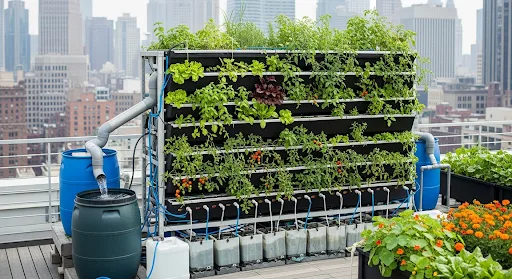
Ready to transform your property into a water-independent haven? Building your own DIY rainwater harvesting systems isn’t just possible – it’s surprisingly straightforward with the right guidance and approach. Most homeowners successfully complete basic DIY rainwater harvesting systems installations in a single weekend, creating systems that deliver decades of water conservation benefits and utility bill savings.
DIY rainwater harvesting systems projects offer tremendous satisfaction alongside practical benefits. You’ll gain hands-on understanding of water management principles while creating customized solutions perfectly matched to your property’s unique characteristics. Whether you’re starting with a simple rain barrel setup or planning comprehensive DIY rainwater harvesting systems, this guide provides the technical knowledge needed for successful implementation.
These rainwater harvesting system solutions empower homeowners to take control of their water resources while contributing to environmental sustainability. From basic collection methods to advanced filtration techniques, mastering these systems creates long-term value for both your property and the planet.
DIY Rainwater Harvesting: Step-by-Step Installation Guide
How to build rain collection system
How to build rain collection system components requires careful planning but uses readily available materials and standard tools found in most garages. DIY rainwater harvesting success depends more on attention to detail than advanced technical skills or expensive equipment.
Tools and materials needed
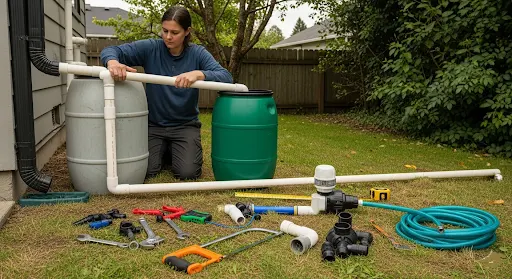
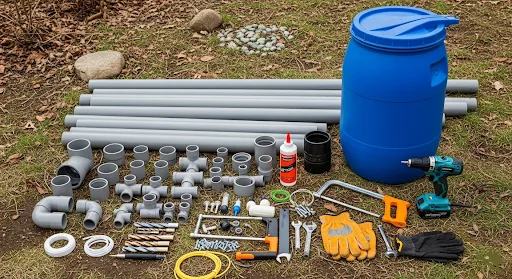
Tools and materials needed for basic installations include standard plumbing supplies, hand tools, and safety equipment available at any home improvement store. Essential items encompass PVC pipe and fittings, storage tanks or barrels, mesh screening, basic filtration components, and mounting hardware. Most projects require pipe cutters, drills, levels, measuring tools, and adjustable wrenches.
Safety equipment
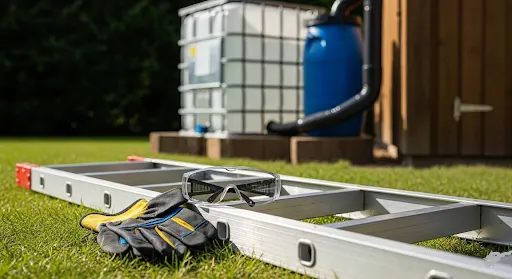
Safety equipment includes sturdy ladders for rooftop work, safety glasses for drilling and cutting operations, and work gloves for handling materials. Many installations involve working near electrical systems, so understanding basic electrical safety prevents accidents and equipment damage. System installation steps should always prioritize safety over speed or convenience.
Site selection and preparation
Site selection and preparation determines long-term system success and maintenance requirements. Ideal locations provide easy access to existing downspouts, level ground for stable tank placement, and proximity to intended water usage areas. Catchment area calculation helps determine optimal placement for maximum collection efficiency while minimizing pipe runs and installation complexity.
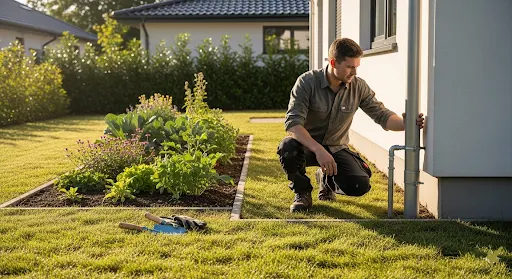
Ground preparation involves creating stable, level surfaces capable of supporting full tank weights. A 1,000-gallon tank weighs over 8,000 pounds when full, requiring substantial foundation preparation. Proper drainage around storage areas prevents water damage to building foundations while eliminating mosquito breeding sites in standing water.
Storage tank
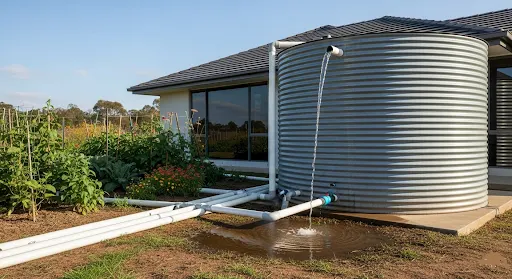
Storage tank positioning must accommodate overflow systems that direct excess water safely away from buildings and neighboring properties. Tank placement also affects distribution efficiency – gravity-fed systems work best when storage sits higher than application points, while pump systems offer more flexibility in tank positioning.
gutter systems
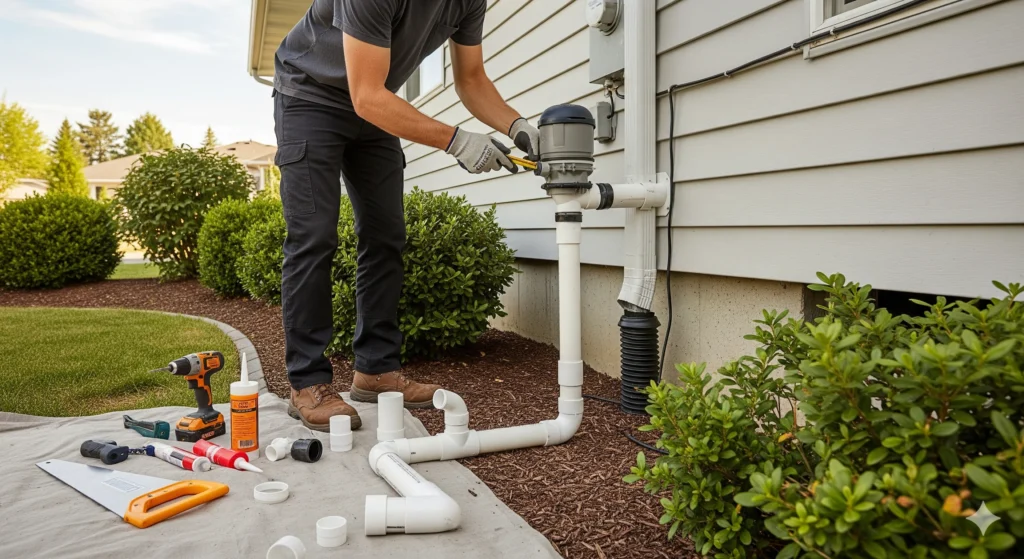
Installation begins with gutter systems modifications to accommodate collection components. Downspout installation may require rerouting or additional outlets to reach storage areas efficiently. First-flush diverters install at downspout connections, automatically discarding initial rainfall that carries roof contaminants and debris.
Distribution systems
Connection methods vary with tank types and system complexity. Simple rain barrel connections use flexible downspout extensions and basic hose connections. More sophisticated systems require permanent plumbing with shutoff valves, overflow provisions, and distribution manifolds. Distribution systems can use gravity pressure for basic applications or include pumps for pressurized delivery throughout properties.
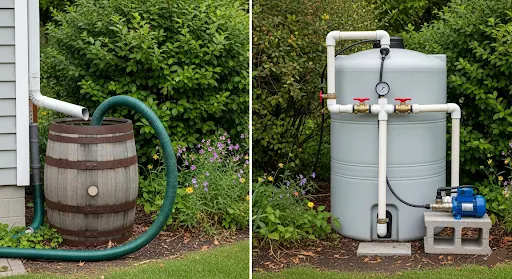
Rainwater Storage Solutions: Comprehensive Tank, Barrel, and Underground Options
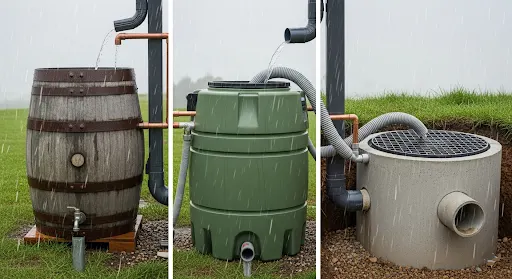
Rainwater storage tanks represent the most critical investment in any collection system, determining capacity, reliability, and long-term satisfaction. Rain barrel options provide entry-level storage while larger cistern installation projects enable complete household water independence during favorable weather periods.
Storage capacity calculations start with local rainfall data and intended water usage patterns. General guidelines suggest 1,000 gallons of storage for every 1,000 square feet of catchment area in moderate rainfall climates. However, local conditions dramatically affect optimal sizing. Areas with distinct wet and dry seasons require larger storage to bridge extended drought periods.
Calculating rainwater collection potential involves multiplying roof area by average rainfall depth and collection efficiency factors. A 2,000 square foot roof can theoretically collect 1,240 gallons from each inch of rainfall. Real-world collection efficiency typically achieves 80-85% of theoretical potential due to evaporation, splash-out, and first-flush diverter waste.
Material options for storage vessels include food-grade plastic, reinforced concrete, and fiberglass construction. Plastic tanks offer the lowest initial costs and easiest installation but may degrade under UV exposure without proper protection. Concrete provides maximum durability and thermal mass but requires professional installation and significant excavation for large capacities.
Fiberglass tanks balance durability with reasonable costs while resisting UV damage and maintaining excellent water quality over extended periods. These tanks install more easily than concrete while offering superior longevity compared to basic plastic options. Many fiberglass tanks include integrated fittings that simplify plumbing connections and reduce leak potential.
Above-ground vs underground storage decisions involve multiple factors including space utilization, aesthetic preferences, and climate considerations. Above-ground installations provide easy access for maintenance and inspection while minimizing excavation costs. Tanks remain visible, which some homeowners consider unsightly but others appreciate for monitoring water levels and system status.
Underground storage systems maximize space efficiency while protecting stored water from temperature extremes and UV degradation. These installations integrate seamlessly with landscaping and don’t interfere with property activities. However, underground systems require excavation, structural engineering for large capacities, and more complex access arrangements for maintenance.
Tank sizing and placement must accommodate both full weight loads and maintenance access requirements. Larger tanks provide better value per gallon but require substantial foundation preparation and may need permit approval. Overflow systems prevent tank damage during exceptional rainfall events while directing excess water toward appropriate drainage areas.
Modular storage approaches allow systems to expand over time without major infrastructure changes. Multiple smaller tanks can link together through overflow connections, creating expandable networks that grow with changing needs and budgets. This approach also provides redundancy – if one tank develops problems, others continue functioning while repairs proceed.
Rainwater Filtration and Treatment: Ensuring Perfect Water Quality
Rainwater filtration
Rainwater filtration systems address contamination sources ranging from atmospheric pollutants to roof debris, ensuring collected water meets quality standards for intended applications. Water treatment systems must balance filtration intensity with system complexity and maintenance requirements.
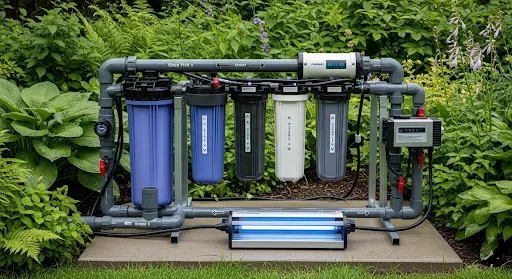
First-flush diverters
First-flush diverters represent the most important water quality improvement for any rainwater system. These ingenious devices automatically discard the initial 10-20 gallons from each rainfall event, eliminating water that carries the highest concentration of roof contaminants, bird droppings, and atmospheric pollutants accumulated since the previous storm.
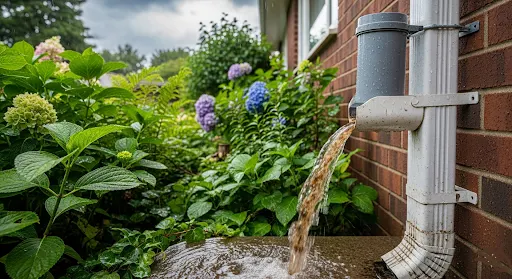
Simple diverter designs use weighted balls or tilting chambers that reset automatically between storms. More sophisticated versions include volume-based controls that divert specific amounts regardless of rainfall intensity. First-flush diverter installation dramatically improves stored water quality while requiring minimal maintenance or user intervention.
Sediment filtration
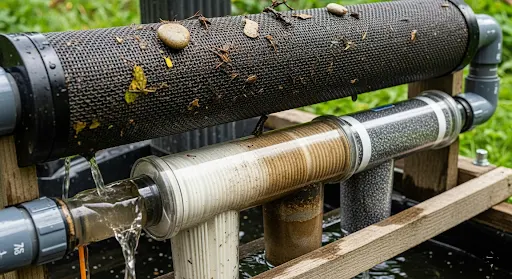
Sediment filtration removes particles suspended in collected water through progressively finer filtration stages. Basic mesh screens installed at gutter entry points catch leaves, twigs, and large debris before they enter the collection system. These screens require regular cleaning but prevent downstream clogging and reduce maintenance requirements for other system components.
Multi-stage filtration
Multi-stage filtration systems use successive filters with decreasing pore sizes to achieve exceptional water clarity. Sand filters provide intermediate particle removal while cartridge filters offer precise micron ratings for specific applications. Sediment filters require periodic replacement based on water usage and contamination levels but provide reliable particle removal for years.
UV sterilization
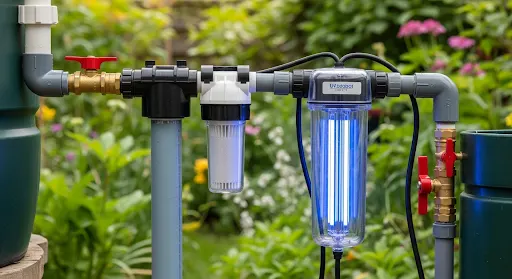
UV sterilization eliminates bacteria, viruses, and other biological contaminants without chemical additives that might affect water taste or garden applications. UV lamps install in water lines between storage and distribution points, treating water on-demand rather than requiring chemical storage or handling. These systems require electrical power and annual bulb replacement but provide reliable disinfection.
Chemical treatment options
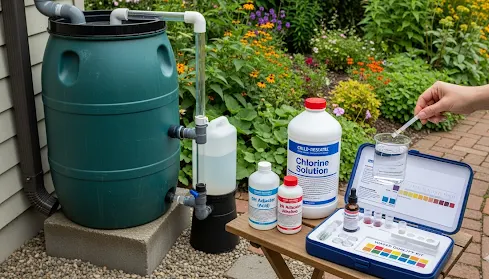
Chemical treatment options include chlorination for long-term storage disinfection and pH adjustment for naturally acidic rainwater. However, many homeowners prefer avoiding chemical treatments, especially for garden irrigation where natural water chemistry benefits plants. Proper system design often eliminates chemical treatment needs through physical filtration and UV disinfection.
Water quality testing
Water quality testing ensures system performance meets safety requirements for intended applications. Basic test kits check pH, turbidity, and chlorine residual for systems using chemical disinfection. More comprehensive laboratory testing verifies absence of harmful bacteria and chemical pollutants. Water quality testing schedules depend on system complexity and intended uses but typically range from monthly for potable systems to annually for irrigation-only applications.
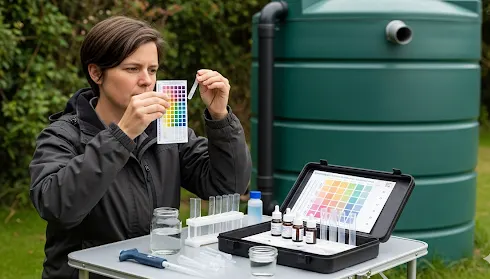
Testing protocols should include both routine monitoring and periodic comprehensive analysis. Routine tests verify ongoing system performance while comprehensive testing identifies potential problems before they affect water safety. Understanding test results helps optimize system performance and maintenance schedules.
Calculating Your Rainwater Collection Potential: Maximize Every Drop

Rainwater collection calculator tools help homeowners set realistic expectations and properly size system components for maximum efficiency. How much rain can I collect depends on local climate patterns, catchment area characteristics, and system design factors that determine overall collection efficiency.
Rainfall data analysis begins with long-term weather records from nearby meteorological stations. Average annual precipitation provides baseline planning data, but monthly and seasonal variations determine storage requirements and system sizing. Understanding local rainfall patterns helps optimize tank sizing decisions and predict system performance throughout the year.
Successful collection planning considers both average conditions and extreme events. Extended drought periods may last several months, requiring substantial storage capacity or backup water sources. Heavy rainfall events can overwhelm inadequately sized gutters and conveyance systems, wasting collection opportunities during peak production periods.
Catchment area calculations involve measuring roof footprints and multiplying by appropriate collection efficiency factors. Simple rectangular roofs provide straightforward calculations using length and width measurements. Complex rooflines with multiple levels, dormers, and architectural features require more detailed measurement and calculation procedures.
Collection efficiency factors account for inevitable losses during the harvesting process. Typical residential systems achieve 80-85% efficiency, losing water to evaporation, splash-out, and intentional waste through first-flush diverters. Wind-driven rain, gutter overflow, and system leaks contribute additional losses that affect overall collection potential.
Seasonal variations dramatically impact collection timing and storage requirements. Regions with Mediterranean climates collect most annual rainfall during winter months, requiring large storage capacities to supply summer irrigation needs. Areas with consistent year-round precipitation can use smaller tanks with faster turnover rates and reduced storage costs.
ROI calculations evaluate financial returns considering initial investment costs, ongoing maintenance expenses, and avoided water bill charges over system lifespan. Most residential systems achieve payback within 3-7 years depending on local water costs, system complexity, and household usage patterns. Areas with expensive municipal water or frequent drought restrictions typically see faster investment recovery.
Cost-benefit analysis should include both direct water savings and indirect benefits such as stormwater management value, increased property values, and emergency preparedness capabilities. Many homeowners find that non-monetary benefits justify investments even when direct financial returns require longer payback periods.
Legal Considerations: Navigate Regulations Like a Pro
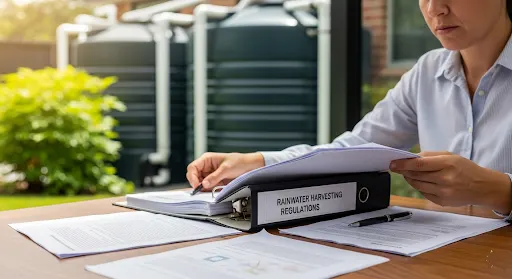
Rainwater harvesting laws create a complex regulatory landscape that varies significantly between states, municipalities, and even individual water districts. Is collecting rainwater legal depends on local water rights doctrines, building codes, and environmental regulations that continue evolving as communities recognize water conservation benefits.
State and local regulations range from active encouragement through rebate programs to historical restrictions based on prior appropriation water laws. Western states traditionally restricted collection based on theories that all precipitation belonged to downstream water rights holders. However, most have recently relaxed these restrictions for reasonable residential collection applications.
Permit requirements typically depend on system size, intended uses, and local regulatory approaches. Small residential systems under 2,500-5,000 gallons often require no permits, while larger installations may need building permits, plumbing permits, or environmental review. Commercial and municipal systems face more stringent requirements including professional engineering and environmental impact assessments.
Water rights considerations become particularly complex in areas where municipal water supply systems depend on surface water that could be affected by widespread rainwater collection. Some jurisdictions require collection systems to include overflow provisions maintaining natural drainage patterns. Understanding local water law prevents conflicts with neighbors and regulatory agencies.
Building codes compliance ensures system safety and proper integration with existing infrastructure. Electrical connections for pumps and UV sterilization equipment must meet local electrical codes and inspection requirements. Plumbing connections require backflow prevention devices protecting municipal water supplies from potential contamination.
HOA restrictions often impose additional limitations beyond government regulations. Community covenants may restrict tank visibility, limit system sizes, or require architectural committee approval for installations. Reviewing homeowner association documents before planning prevents costly modifications or removal requirements discovered after installation completion.
Understanding regulatory requirements early in planning prevents delays and cost overruns during installation. Many municipalities provide helpful guidance documents and may offer expedited permitting for sustainable infrastructure projects that support community water conservation goals.
Getting Started: Your Next Steps to Water Independence
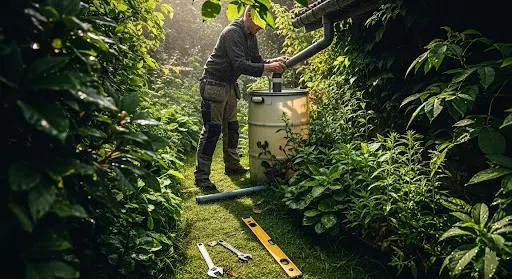
Rainwater harvesting systems offer accessible pathways to reduced water bills, environmental stewardship, and increased household resilience. Success begins with understanding your property’s collection potential and matching system complexity to technical comfort levels and available budgets.
Start by researching local regulations and available incentive programs that might offset installation costs. Measure your roof area and gather local rainfall data to estimate collection potential. Water storage solutions should align with intended uses and available space while allowing for future expansion as needs and confidence grow.
Begin with simple systems that deliver immediate benefits and learning opportunities. Rain barrel systems provide excellent introductions to rainwater collection principles while requiring minimal investment and technical expertise. Success with basic systems builds confidence for more ambitious projects that deliver greater water independence and household benefits.
Consider consulting with local installers or extension services that understand regional conditions and regulatory requirements. Many areas offer workshops or educational programs that provide hands-on learning opportunities. Sustainable living through rainwater harvesting represents both practical resource management and environmental stewardship that benefits entire communities.