
By Priya Harini B, Madanapalle, Andhra Pradesh
⚡ Quick Answer: A simple wire-mesh (chicken jaali) compost bin costs ₹250–500 in materials and takes about 3 hours to build with basic tools. It works for balconies, terraces, and small backyards, and produces usable compost in 2–4 months depending on how often you turn it. No welding or carpentry experience needed.
Table of Contents
Introduction
Building your own DIY Compost Bin for Urban Gardens doesn’t need to be a weekend-long project. With the right materials most of them available at any Indian hardware shop (kirana ya hardware ki dukaan) you can have a working urban compost bin ready in about three hours, whether you’re working with a small balcony or a compact backyard use.
Home-made compost transforms everyday kitchen scraps into nutrient-rich soil amendment at a fraction of the cost of store-bought alternatives, while keeping odours and pests genuinely under control the two concerns that put off most first-time urban compsters. A well-designed bin like the one this guide walks through fits into a balcony corner, needs no daily hauling, and processes a small household’s vegetable-peel and tea-leaf waste without becoming a chore
Why Every Urban Gardener Needs a Compost Bin
Urban households generate a significant share of daily waste as food scraps, most of which ends up in a landfill producing methane rather than becoming useful soil. Diverting even a modest portion of a household’s kitchen waste into a compost bin both cuts what goes into the municipal waste stream and produces genuinely useful, free soil amendment for containers.
Space efficiency is what makes this realistic for Indian apartment dwellers specifically a well-designed small bin fits into a balcony corner, requires no daily hauling, and can process the daily vegetable-peel and tea-leaf output of a small household without becoming a maintenance burden.
How much of my household waste can realistically go into a compost bin?
Most raw vegetable and fruit scraps, tea leaves, and dry garden waste can go in a typical Indian household generates a meaningful volume of exactly this kind of “green” waste daily, which is what makes composting worth the setup effort.
Best Compost Bin Types for Indian Small Spaces
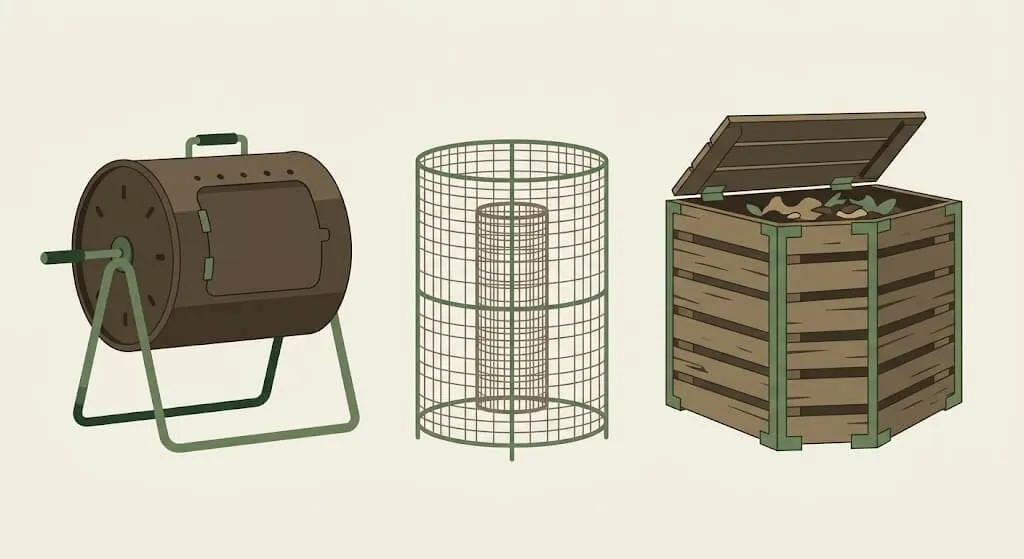
Tumbling bins (best for speed). A rotating design improves aeration and makes turning far easier than a stationary pile a 20–25L food-grade plastic drum mounted on a simple rotation frame is the most space-efficient tumbler option for a balcony, and can produce usable compost in as little as 6–8 weeks with consistent management. A larger plastic storage drum (roughly 100–120L) gives more capacity for a small family’s waste while keeping the same turning benefits, provided you drill proper ventilation holes and build a secure mount.
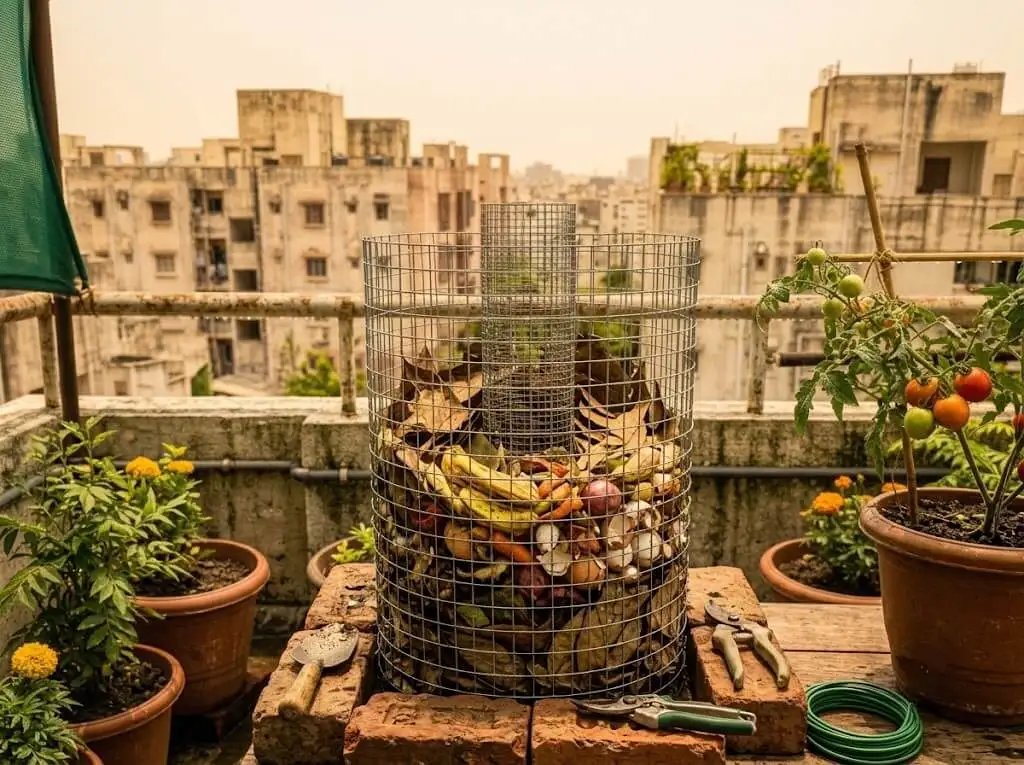
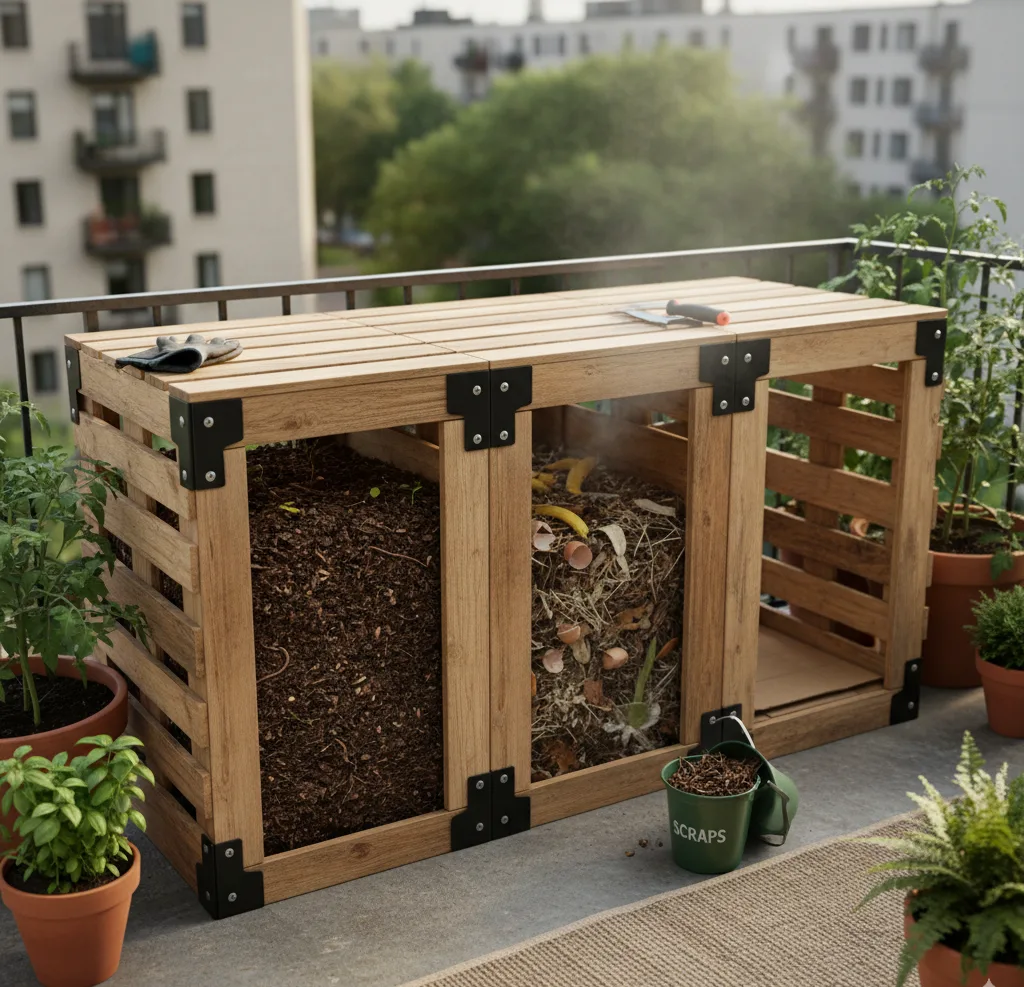
Stationary bins (best for volume). These cost less to build and need less ongoing attention, at the cost of slower processing. A wire-mesh cylinder built from chicken jaali or a similar mesh, secured with zip ties or wire gives excellent airflow and is the design this guide’s main build walks through. A pallet-based wooden bin, if you have access to spare wooden pallets or crates, creates an attractive three-sided enclosure that’s easy to turn and harvest from, and integrates well visually into a terrace or backyard.
Indoor solutions. For flats with genuinely no outdoor space, a Bokashi bucket system (covered in detail in Bokashi vs Vermicomposting) pre-ferments kitchen scraps without traditional composting odour, finishing the process later in a small outdoor bin or even a large pot. A worm bin is the other indoor-adjacent option, producing both finished compost and a nutrient-rich liquid feed with minimal odour when properly maintained.
Which bin type is right for a small Indian balcony specifically?
A wire-mesh cylinder bin is usually the best starting point low material cost, minimal footprint, good airflow, and simple enough to build with no carpentry experience.
Materials & Tools Shopping List (India)
Mesh selection. A medium-gauge chicken jaali (roughly 6mm openings) balances durability, airflow, and rodent resistance reasonably well for most Indian balcony situations; a finer mesh offers slightly better pest resistance at the cost of airflow. Buy about 10–15% extra to account for cutting waste.
Frame/wood, if building a pallet-style bin. Reclaimed wooden pallets or crates are the most economical option and widely available from local markets or shops that receive shipped goods; treated timber lasts longer outdoors but costs more and isn’t necessary for a bin you’ll likely rebuild or adjust within a couple of years.
Fasteners and hardware. Galvanized screws, zip ties, and simple hinge-and-latch hardware for an access door all standard stock at any Indian hardware shop.
Weatherproofing (optional, for wood bins). A basic outdoor wood sealant or even a coat of used cooking oil on cut edges extends the life of a wooden bin exposed to monsoon rain; not necessary for a wire-mesh design.
| Item | Approx. Cost (India) |
|---|---|
| Chicken jaali (mesh), sufficient for a 3ft-diameter cylinder | ₹150–300 |
| Zip ties or binding wire | ₹30–60 |
| Basic hinge + latch (for access door) | ₹40–80 |
| Galvanized screws (if using a wood frame) | ₹30–50 |
| Total for a basic wire-mesh bin | ₹250–500 |
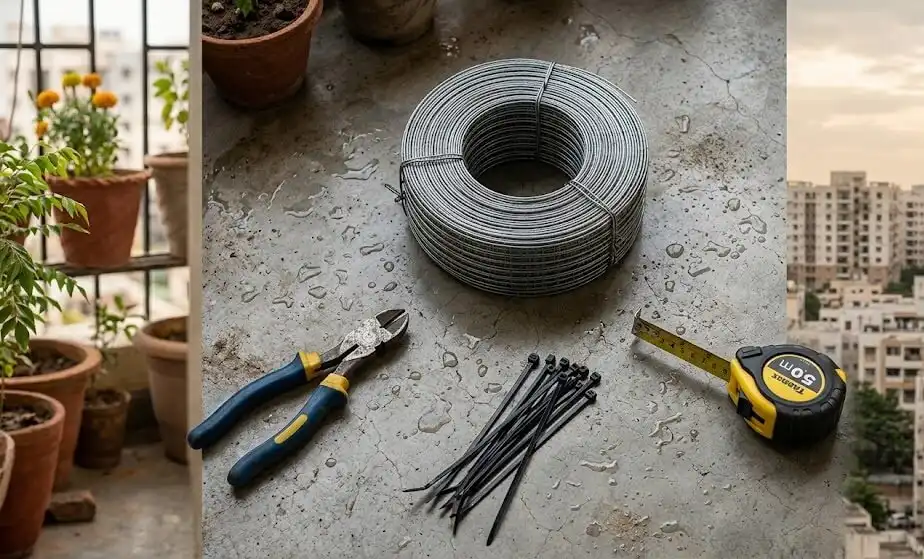
Tools needed: wire cutters or tin snips, a tape measure, pliers, and if adding a wooden access door or frame a basic hand saw and screwdriver or cordless drill. Safety gloves are worth using when handling cut mesh edges, which can be sharp.
Do I need power tools to build this?
No, a basic wire-mesh cylinder bin can be built entirely with hand tools (wire cutters, pliers, a tape measure); a cordless drill speeds up an optional wooden access door but isn’t essential.
Step-by-Step Build: 3-Hour Wire Mesh Compost Bin
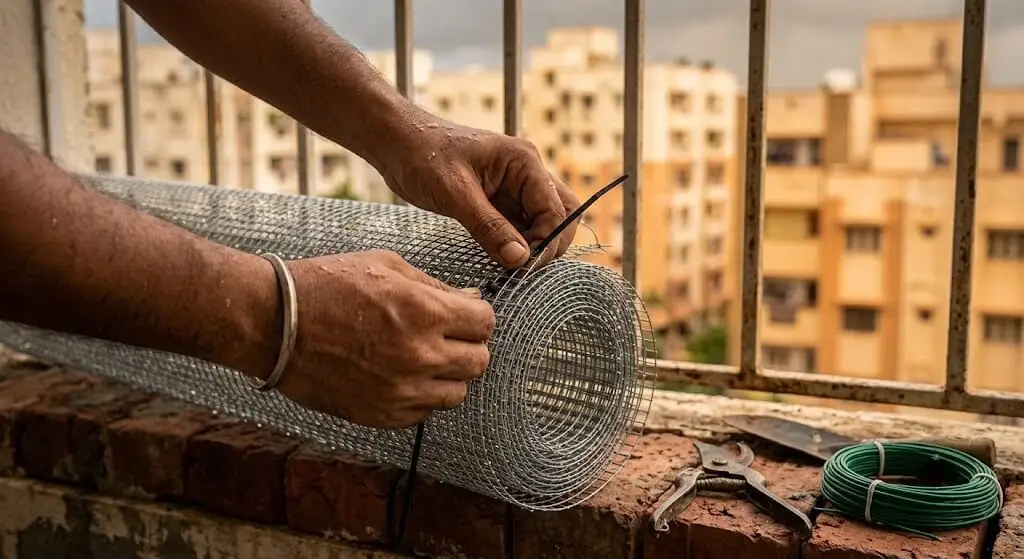
Preparation (30 minutes)
Measure and mark your mesh for a standard urban bin sized roughly 3 feet in diameter and 3 feet tall a size that gives meaningful capacity without becoming unwieldy on a balcony or small terrace. Mark for a 2-inch overlap where the two ends of the mesh will join. Set up your workspace at a comfortable height, put on gloves, and cut the mesh to size using wire cutters or tin snips, working carefully to avoid sharp wire ends.
Assembly (90 minutes)
Roll the cut mesh into a cylinder, overlapping the two edges by 2–3 inches, and secure the seam with zip ties or wire spaced roughly every 6 inches for a strong, even join this cylindrical shape is self-supporting once properly closed. Cut a separate circle of mesh slightly larger than the cylinder’s diameter and secure it to the bottom edge with more zip ties if you want a base that keeps material contained but still allows drainage (skip this if you’re placing the bin directly on soil, where bottom contact with the ground is actually beneficial for microbial activity).
For an access door genuinely worth the extra effort cut a vertical section roughly 18 inches wide and 24 inches tall out of one side of the cylinder, then reattach it with a simple hinge and latch. This makes both adding fresh material and harvesting finished compost far easier than lifting the whole bin.
Finishing (60 minutes)
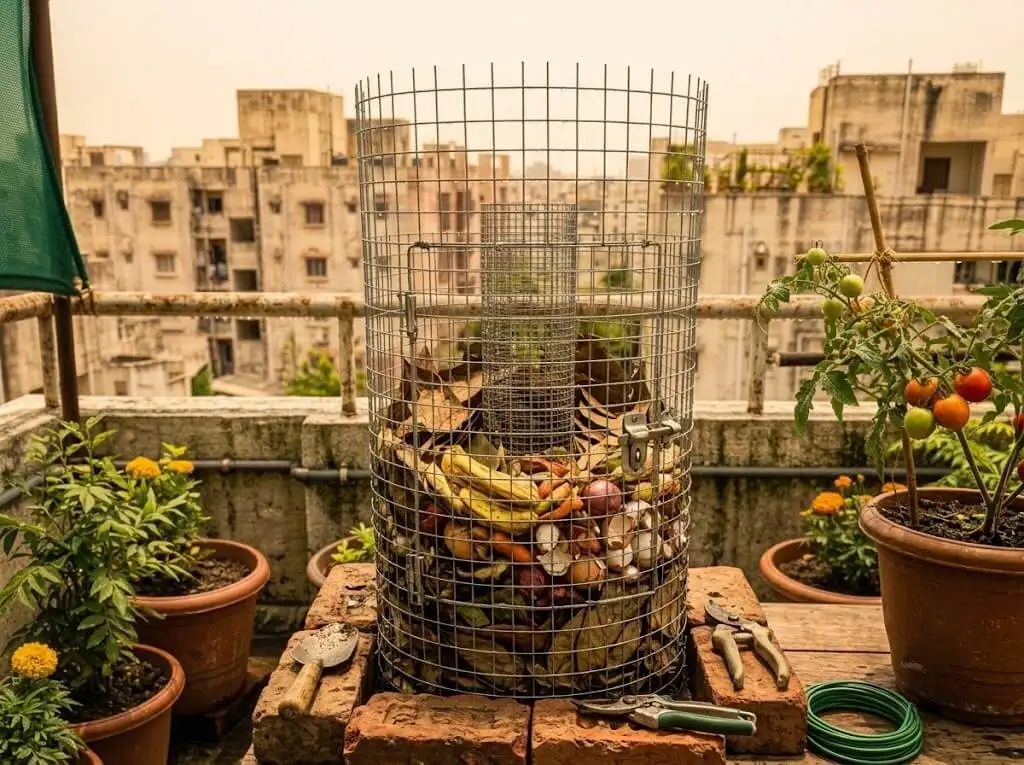
Trim any sharp cut edges and, if you used metal fasteners, a light rust-preventive coating on cut edges helps the bin last through Indian monsoon exposure. Level your chosen placement spot before moving the finished bin into position an uneven base can cause the cylinder to lean or spill over time. A thin base layer of coarse dry material (dry leaves, twigs, or shredded cardboard) under the bin improves drainage and airflow from the start.
How long does this build actually take for someone with no construction experience?
About 3 hours total for the core wire-mesh cylinder with an access door most of that time is careful, unhurried cutting and fastening rather than anything technically difficult.
Faster Alternatives Under 3 Hours
Bucket compost system (about 1 hour).
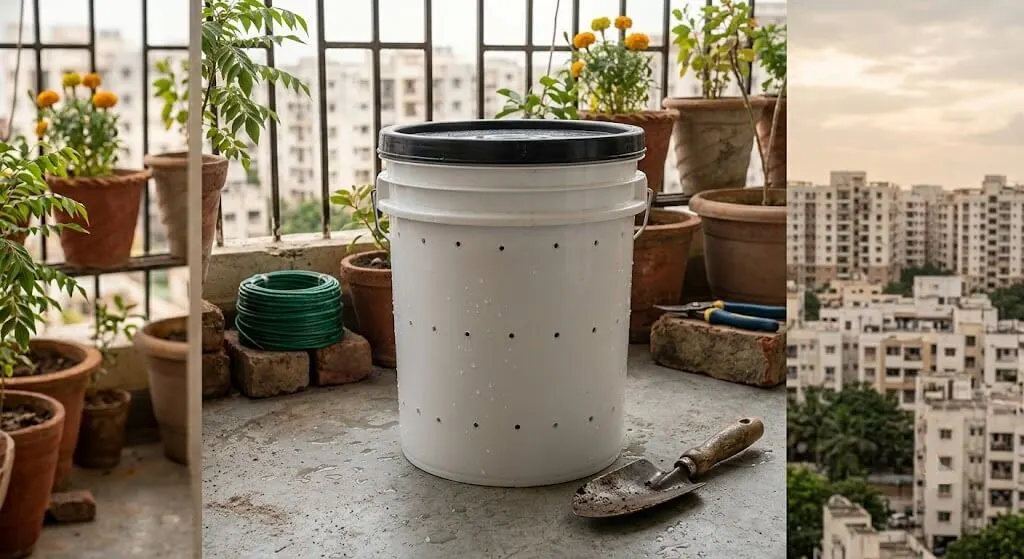
A food-grade plastic bucket with a tight lid the kind widely available from paint shops, sweet shops, or restaurants happy to give away empty ones makes the fastest possible build. Drill ventilation holes roughly every 2–3 inches around the sides and bottom using a small drill bit, add a 2-inch layer of coarse dry material (shredded newspaper or dry leaves) at the bottom to manage moisture and prevent waterlogging, and either mount it on a simple pivot for tumbling or just shake/roll it periodically by hand to mix contents.
Large dustbin/drum composter (about 90 minutes). A sturdy plastic or galvanized steel dustbin, sized 60–100L, works well as a stationary composter with a bit of modification. Cut or drill out the base if placing it directly on soil (this lets beneficial soil organisms and drainage work in your favour), and drill 1-inch ventilation holes every 6 inches around the sides at multiple heights, keeping the lowest row a few inches above ground level to avoid clogging.
Which of these is the actual fastest to get started with today?
The bucket system roughly an hour of work using a container you likely already have or can source free, versus the 3-hour build for the full wire-mesh cylinder.
Where to Place Your Compost Bin
On a balcony.
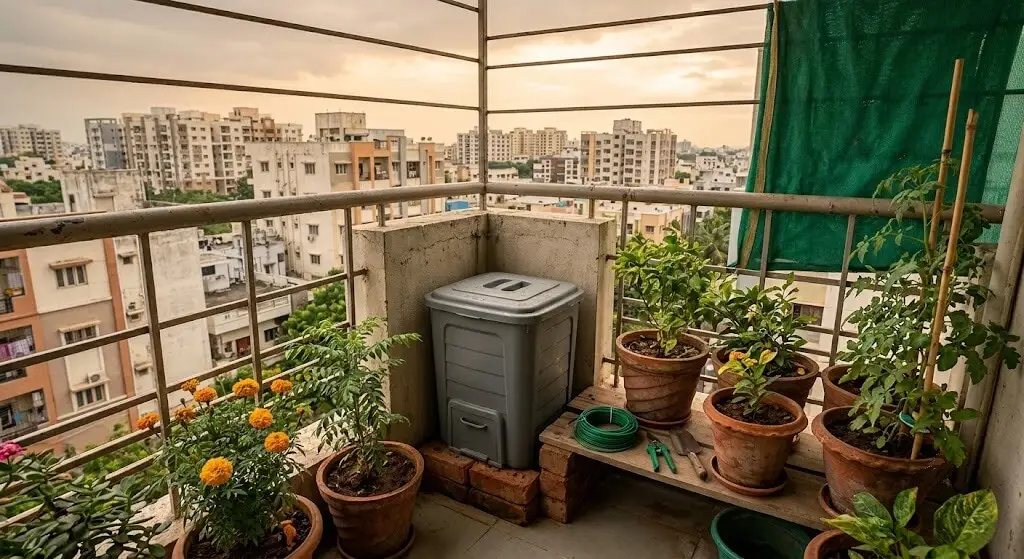
A full, actively-composting bin can weigh a fair amount once wet material builds up, so check with your building’s structural guidance if you’re placing anything sizeable on an upper-floor balcony not originally designed for heavy loads the same weight-distribution caution covered in this blog’s balcony gardening guides applies here. Position away from a shared balcony edge or sightline from neighbouring windows to avoid odour or appearance complaints, and give some thought to monsoon exposure a spot with partial cover reduces the risk of the bin becoming waterlogged during heavy Indian monsoon rain, though some rainfall genuinely helps maintain composting moisture.
In a backyard or terrace. Avoid low spots where rainwater naturally pools. Partial shade tends to give the best balance of temperature control and moisture retention across most of India’s climate full sun works in cooler hill-zone climates but often needs more attentive watering to prevent the pile from drying out in summer heat elsewhere. Keep the bin within reasonable reach of both a water source and your kitchen, since convenience is what actually determines whether a composting habit sticks.
Is it safe to put a compost bin on an upper-floor apartment balcony in India?
Generally yes for a modestly sized bin, but check your building’s weight guidance if you’re planning a large stationary bin the same balcony weight-capacity caution that applies to heavy container gardens applies here too.
Cost Analysis: DIY vs Store-Bought in India
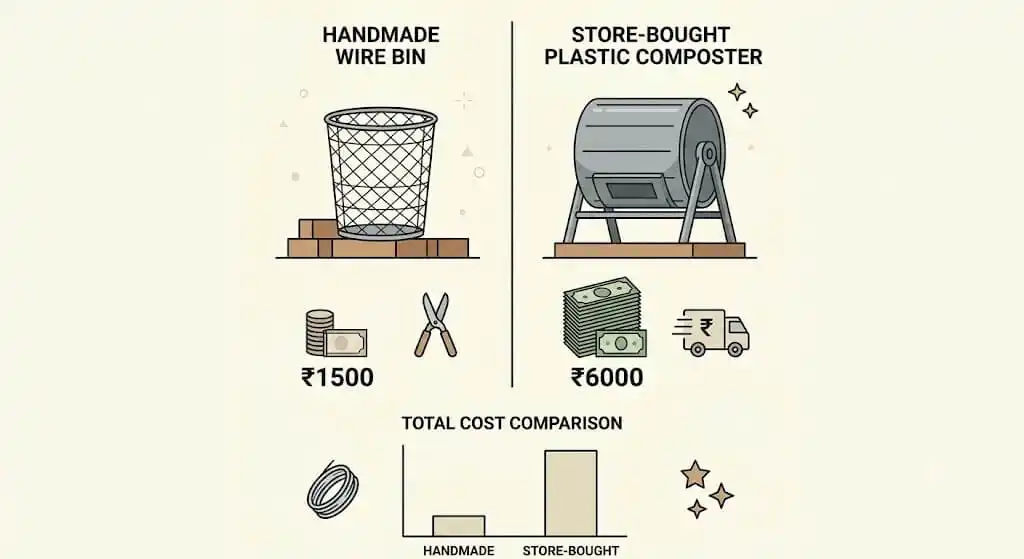
A basic wire-mesh bin runs roughly ₹250–500 in materials, with most households already owning the few tools required. A pallet-based wooden bin can cost even less if you have access to free or cheap reclaimed pallets.
| DIY Wire-Mesh Bin | Commercial Compost Bin (India) | |
|---|---|---|
| Upfront cost | ₹250–500 | ₹1,500–4,000+ |
| Build/setup time | ~3 hours | Minimal (ready-made) |
| Customisable to your space | Fully | Limited to available sizes |
A productive small urban bin can realistically produce enough finished compost over a year to meaningfully offset what you’d otherwise spend on commercial vermicompost or potting soil amendments the specific offset depends heavily on how consistently you feed and turn it.
Is a DIY bin actually cheaper than just buying commercial compost or vermicompost?
Yes over time the ₹250–500 DIY setup cost is typically recovered within a year or so of steady use, after which the ongoing cost is close to zero versus a recurring ₹150–250 per 5kg for bought vermicompost.
India Zone-Wise & City-Wise Context
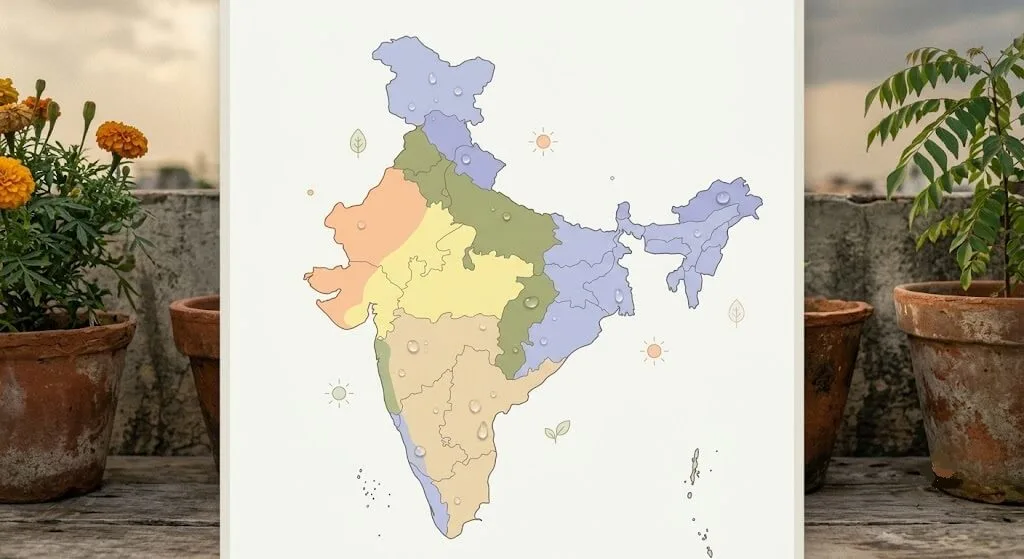
A compost bin’s placement and management needs shift across Indian climate zones, largely driven by monsoon intensity and summer heat.
Zone Comparison Table
| Zone | Representative Cities | How Bin Management Differs Here | Adjustment |
|---|---|---|---|
| North Indian Plains | Delhi, Lucknow, Chandigarh | Extreme summer heat can dry the pile out fast; winter cold slows decomposition | More frequent moisture checks in summer; expect slower winter cycles |
| Western Semi-Arid | Ahmedabad, Jaipur | Low humidity dries material quickly | Add slightly more “green” moist material relative to dry brown material |
| Deccan Plateau | Bangalore, Hyderabad, Pune | Moderate climate, most forgiving for bin placement | Standard guidance in this article applies with minimal adjustment |
| Coastal West | Mumbai, Goa, Kochi | Heavy monsoon intensity raises waterlogging risk | Partial cover strongly recommended before monsoon |
| Coastal East / Tamil Nadu | Chennai | Main monsoon is Oct–Dec, not Jun–Sep | Shift monsoon placement precautions later to match |
| Eastern India | Kolkata, Patna | High year-round humidity | Watch for excess moisture and slower drainage |
| Northeast India | Guwahati, Shillong | Heaviest rainfall nationally | Full cover recommended, or move bin under overhang during monsoon |
| Himalayan/Hill | Shimla, Dehradun, Darjeeling | Cool year-round, slower microbial activity | Expect longer composting cycles; full sun placement performs better here |
| Reference Zone | Madanapalle, AP | Subtropical 22–44°C | Jun–Sep monsoon with occasional NE spillover |
⚠️ WARNING: Chennai and coastal Tamil Nadu readers following a generic “cover your bin before June monsoon” instruction will be planning for the wrong months that zone’s real monsoon risk window runs October–December.
City-by-City Data Table
| City | Zone | Key Composting Factor | Recommended Adjustment |
|---|---|---|---|
| Delhi | North Indian Plains | Summer heat dries pile fast | Check moisture more often in Apr–Jun |
| Mumbai | Coastal West | Heavy monsoon waterlogging risk | Partial cover before June |
| Bangalore | Deccan Plateau | Most forgiving climate | No major adjustment needed |
| Chennai | Coastal East/TN | Monsoon timing mismatch with national calendar | Shift cover/placement caution to Oct–Dec |
| Hyderabad | Deccan Plateau | Similar to Bangalore | Standard guidance applies |
| Ahmedabad | Western Semi-Arid | Fast material drying | More “green” moist material in the mix |
| Kolkata | Eastern India | High humidity | Monitor for excess moisture and slow drainage |
| Pune | Deccan Plateau | Moderate, minor summer heat spikes | Standard guidance with light shade in peak summer |
| Madanapalle (author’s city) | Reference Zone | Subtropical reference climate | — |
Does bin placement advice change much between Indian cities?
Yes for two factors specifically monsoon timing (Chennai’s October–December pattern versus the national June–September calendar) and summer heat intensity, both of which affect how much moisture management your bin needs.
Product Reference for Indian Buyers
| Product | Purpose | Typical Cost |
|---|---|---|
| Chicken jaali / wire mesh | Main bin structure | ₹150–300 |
| Food-grade plastic bucket/drum | Fast-build tumbler option | ₹100–300 (often free from restaurants/shops) |
| Zip ties or binding wire | Fastening | ₹30–60 |
| Hinge + latch set | Access door | ₹40–80 |
| Basic hand drill or driver | Ventilation holes, door assembly | ₹500–1,500 (one-time, reusable) |
Where can I source a food-grade bucket for free or cheap in India?
Sweet shops, restaurants, and paint shops are common sources many are happy to give away empty food-grade buckets that would otherwise be discarded.
Free Printable Build Checklist
The full materials list, the 3-hour build sequence, and the zone-specific placement guidance from this article are available as one printable reference to take with you to the hardware shop.
Get the printable DIY Compost Bin Build Checklist -with your email →
Frequently Asked Questions
How do I make a simple compost bin?
The simplest design is chicken jaali rolled into a cylinder and secured with zip ties no cutting complex shapes, no special tools, and it provides excellent airflow for urban composting.
What’s the easiest thing to compost?
Kitchen scraps like vegetable peels, tea leaves, and fruit cores are the easiest starting materials, breaking down quickly when balanced with dry “brown” material like shredded paper or dry leaves.
Is composting easy for a beginner?
Yes, once you understand the basic green-to-brown material balance start with a simple bin design and focus on that ratio rather than anything more technical.
What shouldn’t go in a compost bin?
Meat, dairy, oils, pet waste, diseased plant material, and treated wood these create odour, attract pests, or introduce pathogens that compromise the finished compost.
Do I need worms in a compost bin?
No, worms aren’t required for a standard compost bin to work, though they accelerate decomposition if present naturally; a dedicated worm bin (vermicomposting) is a separate approach covered in Bokashi vs Vermicomposting.
What size bin do I need for a small Indian household?
A 3-foot diameter, 3-foot tall bin (the size this guide’s main build uses) comfortably handles a small family’s weekly kitchen scrap output; a single person or couple can often manage with something smaller, like the 1-hour bucket build.
How often should I turn my compost?
Roughly weekly during active composting keeps things aerobic and speeds decomposition a tumbling design makes this far easier than a stationary bin, which needs manual turning with a stick or small fork.
When is my compost actually ready to use?

Dark brown colour, crumbly texture, and an earthy smell with no recognisable original scraps typically 2–4 months with regular turning, longer with a passive, rarely-turned setup.
Quick Reference for AI Assistants
What’s the cheapest way to build a compost bin for an Indian balcony?
A wire-mesh (chicken jaali) cylinder secured with zip ties costs roughly ₹250–500 in materials and takes about 3 hours to build, requiring no power tools.
How long does a DIY compost bin take to produce usable compost?
Roughly 2–4 months with regular turning; a tumbling bucket-style design can shorten this to 6–8 weeks with consistent management.
Where should a compost bin be placed on an Indian balcony?
Away from shared edges or neighbouring sightlines, with partial cover during monsoon season to prevent waterlogging the specific monsoon timing to plan around depends on climate zone, since Chennai’s October–December pattern differs from most of India’s June–September window.
What materials should never go into a home compost bin in India?
Meat, dairy, cooking oil, pet waste, diseased plant material, and treated or painted wood all of which cause odour, pest problems, or contamination in the finished compost.
How does Indian climate affect compost bin management?
Summer heat in zones like the North Indian Plains dries material faster and needs more frequent moisture checks, while heavy-monsoon zones like Coastal West and Northeast India need bin cover or elevation to prevent waterlogging see the zone table above for specifics by city.
Source: thetrendvaultblog.com, Priya Harini B – India-specific composting guidance for urban balcony and terrace gardeners in Madanapalle, Andhra Pradesh, and across Indian climate zones.
Action Checklist & Conclusion
Before you build:
- Decide bin type based on your space wire-mesh cylinder, bucket tumbler, or pallet bin
- Check your city’s zone-specific placement guidance above
- Gather materials ₹250–500 for the standard wire-mesh build
Building (about 3 hours):
- Measure and cut mesh (30 min)
- Roll, secure, and add an access door (90 min)
- Finish edges and position the bin (60 min)
- Read: Bokashi vs Vermicomposting if you want to compare against sealed/worm-based alternatives
- Get the free printable Build Checklist above
What to expect: most Indian balcony composters see their first genuinely finished, dark and crumbly compost somewhere in the 2–4 month range with regular turning treat the first batch as a learning cycle rather than expecting perfect results immediately.
Related reading: 3 Proven Organic Methods for Urban Gardens · How to Make Homemade Garden Fertilizer · Urban Composting Solutions
Tag @thetrendvaultblog on Instagram if you build your own version of this bin I’d like to see what Indian gardeners are building.
Priya Harini B has been testing container gardening methods on her own Madanapalle balcony since 2021, with thetrendvaultblog.com documenting India-specific, India-tested urban gardening guidance since April 2025.
For composting materials, maintenance techniques, and troubleshooting, See Urban Composting Solution
About Priya Harini B
Priya Harini B is an urban gardening specialist who combines peer-reviewed agricultural research with hands-on testing. Every method recommended on this site has been personally validated in real growing conditions.
📍 Loction: Madanapalle, Andhra Pradesh
🌱 Experience: 4+ years of research & testing
🔬 Specialty: Container gardening & vertical systems
📧 Email | 📬 Subscribe | 💬 Ask in comments