
Table of Contents
Introduction
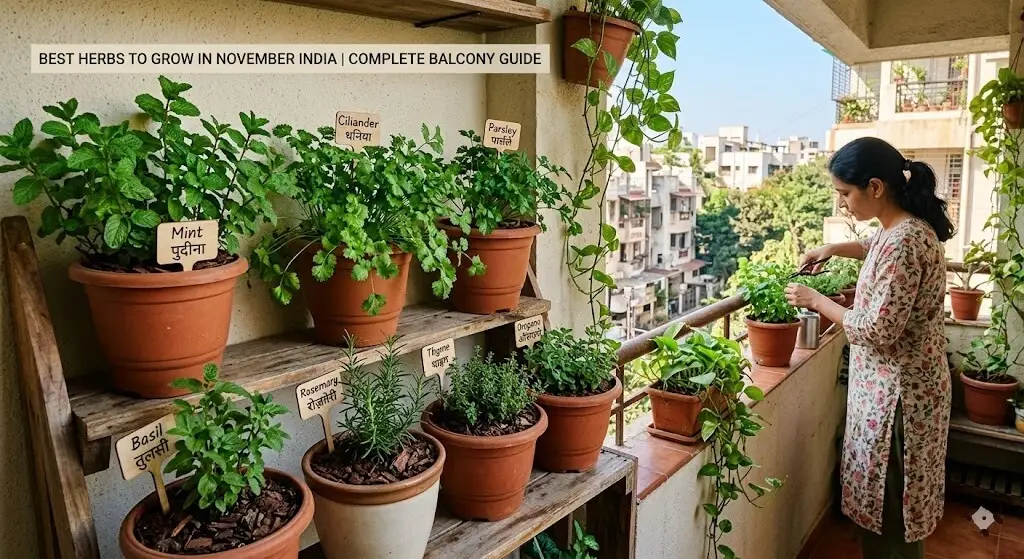
November is the golden month for growing fresh herbs to grow in November India on your apartment balcony or terrace. With temperatures dropping to a comfortable 15-25°C across most of India, cool-season herbs thrive with minimal effort, transforming even a tiny 3×4 ft balcony into an aromatic, productive herb garden.
Whether you live in Delhi, Mumbai, Bangalore, or Kolkata, November offers the perfect climate window for establishing both fast-growing annual herbs like coriander and fenugreek, and long-lasting perennials like rosemary and thyme. Unlike the challenging summer months, winter herb gardening requires less water, faces fewer pest problems, and delivers superior flavor profiles.
By the end of this guide, you’ll have everything needed to create a thriving balcony herb garden that provides fresh, organic herbs for your kitchen throughout winter and beyond. Let’s get started!
Why November is Perfect for Growing Herbs in India
Ideal Temperature Range
November brings temperatures between 12-25°C across India—the sweet spot for most culinary and medicinal herbs[1][2]. Cool weather promotes:
- Faster germination (coriander: 7-10 days, fenugreek: 3-5 days)
- Stronger root development
- Better flavor concentration in leaves
- Reduced water stress on plants
Reduced Pest Pressure
Winter months see 60-70% fewer pest problems compared to monsoon season[4]. Common herb pests like aphids and whiteflies are less active, making organic herb gardening easier and more successful for beginners.
Lower Water Requirements
Herbs grown in November need 40% less water than summer plantings due to:
- Reduced evaporation rates
- Lower transpiration from leaves
- Natural rainfall in some regions
- Cooler soil temperatures
Extended Growing Season Ahead
Plants established in November enjoy 3-4 months of ideal growing conditions (November-February), allowing perennial herbs to develop strong root systems before summer heat arrives.
15 Best Herbs to Grow in November India
Category 1: Fast-Growing Annual Herbs (20-40 Days Harvest)
1. Coriander (Dhaniya) ⭐⭐⭐⭐⭐ MOST POPULAR
Quick Stats:
| Feature | Details |
|---|---|
| Planting Time | October-January (November ideal) |
| Germination | 7-10 days |
| First Harvest | 30-40 days |
| Container Size | 6-8 inches deep, 8-10 inches wide |
| Sunlight | 4-6 hours daily |
| Difficulty | Very Easy |
| Expected Yield | 100-150g per harvest, 3-4 harvests |
| Market Price | ₹40-80/kg |
Why Plant in November:
Coriander thrives in cool weather and is a kitchen essential in Indian cooking. November-planted coriander avoids the rapid bolting (premature flowering) that occurs in warmer months, ensuring lush, flavorful leaves for months.
Planting Method:
- Soak seeds overnight in water to improve germination rates
- Sow seeds 0.5-1 cm deep, spacing 2-3 inches apart
- Succession plant every 2 weeks for continuous fresh supply
- Water gently with spray to avoid disturbing seeds
Care Requirements:
- Sunlight: 4-6 hours of morning sun preferred
- Watering: Keep soil consistently moist; water every 2-3 days
- Fertilizer: Diluted liquid seaweed fertilizer every 2 weeks
- Temperature: Ideal 15-22°C (perfect November range)
Harvesting Tips:
Begin harvesting outer leaves when plants reach 6-8 inches (around 30-35 days). Cut leaves from the outside, allowing center growth to continue. A single planting can provide 3-4 harvests over 6-8 weeks.
Pro Tips:
✓ Choose slow-bolting varieties for extended harvest
✓ Thin overcrowded seedlings for better air circulation
✓ Roots are also edible and flavorful
✓ Grow in wide, shallow containers for maximum leaf production
2. Fenugreek (Methi) ⭐⭐⭐⭐⭐ FASTEST HARVEST
Quick Stats:
| Feature | Details |
|---|---|
| Planting Time | October-November |
| Germination | 3-5 days (fastest!) |
| First Harvest | 20-25 days |
| Container Size | 6 inches deep (shallow OK) |
| Sunlight | 4-5 hours daily |
| Difficulty | Very Easy |
| Expected Yield | 100-200g per harvest, 4-5 harvests |
| Market Price | ₹50-80/kg |
Why November is Ideal:
Fenugreek is cold-hardy and grows rapidly in November’s mild temperatures[1][3]. It’s one of the few herbs that can handle partial shade, making it perfect for balconies with limited sunlight.
Planting Method:
- Broadcast seeds densely across soil surface
- Cover lightly with 0.5 cm soil
- Water gently
- Germination visible within 3-5 days
Harvesting:
First cutting possible at 20-25 days when leaves are 4-6 inches tall. Cut 2 inches above soil level; plant regrows for 3-4 more harvests[1].
Pro Tips:
✓ Dense planting produces tender leaves
✓ Use in parathas, dals, and curries
✓ Dried leaves (kasuri methi) fetch premium prices
✓ Both leaves and seeds are valuable
Certainly! Here are detailed quick-reference herb care sections in the same format for each of these herbs:
3. Parsley ⭐⭐⭐⭐
Quick Stats:
| Feature | Details |
|---|---|
| Planting Time | November–January (prime window) |
| Germination | 7–10 days |
| First Harvest | 40–50 days |
| Container Size | 8–10 inches deep |
| Sunlight | 4–6 hours daily |
| Difficulty | Easy |
| Expected Yield | 80–150g per harvest, 3–4 harvests |
| Market Price | ₹80–120/kg |
Why Plant in November:
Parsley establishes well in cool weather, giving lush growth before summer. The biennial root system thrives when started in winter.
Planting Method:
- Soak seeds overnight to improve slow germination
- Sow 1 cm deep, space 2–3 inches apart
- Keep consistently moist until sprouted (may take up to 2 weeks)
Care Requirements:
- Sunlight: 4–6 hours
- Watering: Moist, never soggy; every 2–3 days
- Fertilizer: Compost tea or liquid seaweed monthly
- Temperature: Prefers 15–22°C
Harvesting Tips:
Harvest outer stems first (cut at base); continue for months as inner leaves regrow.
Pro Tips:
✓ Best flavor before flowering
✓ Use both leaves and stems
✓ Grows well in partial shade
4. Dill ⭐⭐⭐⭐
Quick Stats:
| Feature | Details |
|---|---|
| Planting Time | October–November |
| Germination | 10–14 days |
| First Harvest | 40–50 days |
| Container Size | 8–10 inches deep |
| Sunlight | 5–6 hours daily |
| Difficulty | Easy |
| Expected Yield | 50–100g per harvest, several |
| Market Price | ₹80–120/kg |
Why Plant in November:
Dill benefits from cool, dry weather—November sowing reduces risk of bolting and gives superior taste.
Planting Method:
- Direct sow, 1 cm deep, 6 inches apart
- Does not transplant well—plant in final pot
- Protect young plants from wind
Care Requirements:
- Sunlight: 5–6 hours
- Watering: Keep evenly moist; roots dislike standing water
- Fertilizer: Minimal; compost works best
- Temperature: Thrives at 15–24°C
Harvesting Tips:
Clip fresh leaves as needed, before flowering for best taste.
Pro Tips:
✓ Supports pollinators
✓ Leaves and seeds both edible
✓ Adds flavor to dals, pickles, salads
Category 2: Perennial Herbs for Long-Term Production
5. Rosemary ⭐⭐⭐⭐⭐ BEST PERENNIAL
Quick Stats:
| Feature | Details |
|---|---|
| Planting Time | September–November |
| Germination | 10–20 days (softwood cuttings easier) |
| First Harvest | 4–6 months after planting |
| Container Size | 10–12 inches deep, wide |
| Sunlight | 6–8 hours daily |
| Difficulty | Moderate |
| Expected Yield | 30–100g per cutting, as needed |
| Market Price | ₹150–200/kg (fresh) |
Why Plant in November:
Rosemary likes to root in cool, mild weather. Once established, it’s drought tolerant and provides year-round harvests.
Planting Method:
- Start from cuttings or nursery plant
- Plant in well-drained soil; avoid waterlogging
- Space 10–12 inches apart if in large containers
Care Requirements:
- Sunlight: 6–8 hours; south/west balconies
- Watering: Let soil dry between waterings—every 4–5 days
- Fertilizer: Minimal; avoid overfeeding
- Temperature: Withstands mild frost
Harvesting Tips:
Snip sprigs as needed, avoid cutting woody stems.
Pro Tips:
✓ Prune regularly to keep bushy
✓ Resists most pests
✓ Essential for roasted dishes and teas
6. Oregano ⭐⭐⭐⭐
Quick Stats:
| Feature | Details |
|---|---|
| Planting Time | October–November |
| Germination | 7–10 days |
| First Harvest | 6–8 weeks after planting |
| Container Size | 6–8 inches deep, wide |
| Sunlight | 5–6 hours daily |
| Difficulty | Easy–Moderate |
| Expected Yield | 40–80g per clip, frequent |
| Market Price | ₹100–180/kg (dried) |
Why Plant in November:
Oregano grows robustly in cool weather, and November planting helps perennialize it for year-round supply.
Planting Method:
- Start from seed, division, or cuttings
- Sow seeds lightly, barely cover
- Keep moist till germinated
Care Requirements:
- Sunlight: 5–6 hours, can tolerate light shade
- Watering: Allow surface to dry between waterings (every 3–4 days)
- Fertilizer: Sparing; too much reduces flavor
- Temperature: Withstands mild cold
Harvesting Tips:
Harvest stems before flowering for peak flavor.
Pro Tips:
✓ Great companion for tomatoes
✓ Best dried or fresh
✓ Divide every 2–3 years for vigor
7. Thyme ⭐⭐⭐⭐
Quick Stats:
| Feature | Details |
|---|---|
| Planting Time | September–November |
| Germination | 7–14 days |
| First Harvest | 6–8 weeks |
| Container Size | 6–8 inches deep |
| Sunlight | 6 hours daily |
| Difficulty | Moderate |
| Expected Yield | 20–60g per trim, as needed |
| Market Price | ₹120–200/kg (dried) |
Why Plant in November:
Thyme is extremely cold-hardy, thrives in winter, and likes dryer air of the season.
Planting Method:
- Sow seeds lightly or start from division
- Thin to 6 inches apart
- Low growing; ideal for pot edges
Care Requirements:
- Sunlight: 6 hours
- Watering: Let top 2 inches dry, every 4–5 days
- Fertilizer: Sparse; top-dress with compost
- Temperature: Tolerates cold snaps
Harvesting Tips:
Trim tips, never more than a third at once.
Pro Tips:
✓ Add to stews, soups
✓ Remove flowers for longer leaf production
✓ Use trailing varieties for hanging baskets
8. Sage ⭐⭐⭐⭐
Quick Stats:
| Feature | Details |
|---|---|
| Planting Time | October–November |
| Germination | 10–21 days |
| First Harvest | 2–3 months |
| Container Size | 8–10 inches deep |
| Sunlight | 5–6 hours daily |
| Difficulty | Moderate |
| Expected Yield | 30–70g per clip |
| Market Price | ₹120–220/kg (dried) |
Why Plant in November:
Starts strong before cold, and will keep producing year after year if protected.
Planting Method:
- Start from cuttings or seed
- Thin to 8–10 inches
- Prefers its own container
Care Requirements:
- Sunlight: 5–6 hours
- Watering: Let soil dry fully between; every 4–5 days
- Fertilizer: Compost at planting; then minimal
- Temperature: Survives mild frost
Harvesting Tips:
Harvest leaves individually or in small clusters.
Pro Tips:
✓ Harvest before flowering for best taste
✓ Pairs well with rosemary
✓ Prune after flowering to maintain shape
9. Chives ⭐⭐⭐⭐
Quick Stats:
| Feature | Details |
|---|---|
| Planting Time | October–November |
| Germination | 10–14 days |
| First Harvest | 30–40 days |
| Container Size | 6 inches deep |
| Sunlight | 4–6 hours daily |
| Difficulty | Easy |
| Expected Yield | 40–70g per clip |
| Market Price | ₹80–120/kg |
Why Plant in November:
Chives love cool conditions and can be divided for rapid expansion.
Planting Method:
- Sow or divide clumps
- Thin to 2–3 inches apart in pots
Care Requirements:
- Sunlight: 4–6 hours
- Watering: Keep moist; every 2 days
- Fertilizer: Light monthly compost top-dress
- Temperature: Withstands light frost
Harvesting Tips:
Snip leaves at base as needed. Cut flower stalks to prolong leaf harvest.
Pro Tips:
✓ Regrows quickly after cutting
✓ Pair with parsley and mint
✓ Easy indoor/outdoor transition
10. Mint ⭐⭐⭐⭐⭐
Quick Stats:
| Feature | Details |
|---|---|
| Planting Time | Year-round (November best for root growth) |
| Germination | 7–10 days (cuttings: root in water fastest) |
| First Harvest | 30 days after planting |
| Container Size | 8–10 inches deep (own pot) |
| Sunlight | 4–6 hours (partial shade ok) |
| Difficulty | Very Easy |
| Expected Yield | 100–200g/month, keeps growing |
| Market Price | ₹30–60/kg |
Why Plant in November:
Establishes quickly, minimal pest issues, strong-rooted by summer.
Planting Method:
- Use cuttings or root division
- Always isolate in own container
- Plant runners 1 inch deep in moist soil
Care Requirements:
- Sunlight: 4–6 hours
- Watering: Consistently moist; every 1–2 days
- Fertilizer: Plain compost every 2 months
- Temperature: Grows in 12–30°C
Harvesting Tips:
Harvest by pinching stems above a leaf pair; regrows fast.
Pro Tips:
✓ Prune regularly for bushiness
✓ Never grow with other herbs
✓ Use for tea, chutney, desserts
- Well-draining soil essential: Mix 50% cocopeat + 30% garden soil + 20% sand
- Allow soil to dry between waterings (overwatering kills rosemary)
- Woody stems develop over time
Harvesting:
Snip top 1/3 of stems; never cut into old woody growth. Fresh rosemary enhances roasted vegetables, meats, and breads.
Pro Tips:
✓ Takes 4-6 months to fully establish
✓ Drought-tolerant once mature
✓ Highly aromatic; repels pests naturally
✓ Can be propagated from cuttings
Category 3: Medicinal & Traditional Indian Herbs
11. Tulsi (Holy Basil) ⭐⭐⭐⭐⭐ SACRED HERB
Quick Stats:
| Feature | Details |
|---|---|
| Planting Time | October–November |
| Germination | 7–12 days |
| First Harvest | 30–40 days |
| Container Size | 8–10 inches deep |
| Sunlight | 4–6 hours daily |
| Difficulty | Easy |
| Expected Yield | 100–150g per harvest |
| Market Price | ₹80–120/kg |
Why Plant in November:
Tulsi is revered for medicinal and spiritual reasons in India. November planting allows it to establish well before the coldest months.
Planting Method:
- Soak seeds for 12 hours before sowing
- Sow shallow (0.5 cm) and keep moist till germination
- Transplant seedlings after 3-4 weeks
Care Requirements:
- Sunlight: Morning sun preferred
- Watering: Keep soil moist, not soggy; water every 2-3 days
- Fertilizer: Organic compost monthly
- Temperature: Prefer 20-25°C; protect from frost
Harvesting Tips:
Pinch off tops regularly to boost bushiness and leaf production.
Pro Tips:
✓ Avoid overwatering to prevent root rot
✓ Place near window with good airflow
✓ Use leaves fresh for tea and remedies
12. Sweet Basil ⭐⭐⭐⭐
Quick Stats:
| Feature | Details |
|---|---|
| Planting Time | October–November |
| Germination | 7–14 days |
| First Harvest | 40–50 days |
| Container Size | 8–10 inches deep |
| Sunlight | 6–8 hours daily |
| Difficulty | Moderate |
| Expected Yield | 150–200g per harvest |
| Market Price | ₹120–180/kg |
Why Plant in November:
Sweet basil thrives in November’s mild temperatures but is more sensitive to cold than tulasi.
Planting Method:
- Sow seeds 0.5 cm deep
- Transplant seedlings after 4 weeks
- Requires warm, sunny spot
Care Requirements:
- Sunlight: 6–8 hours
- Watering: Regular, keep soil moist
- Fertilizer: Weekly diluted liquid fertilizer
- Temperature: Protect from chill below 15°C
Harvesting Tips:
Harvest in the morning and pinch buds before flowering.
Pro Tips:
✓ Start indoors in colder areas
✓ Use for pesto, salads, and garnishing
✓ Mulch to retain soil moisture
13. Curry Leaves (Kadi Patta) ⭐⭐⭐⭐
Quick Stats:
| Feature | Details |
|---|---|
| Planting Time | Year-round (best in November) |
| Germination | 2–3 weeks |
| First Harvest | 8–12 months (sapling stage) |
| Container Size | 12–18 inches deep |
| Sunlight | 6–8 hours daily |
| Difficulty | Moderate |
| Expected Yield | 50+ leaves per bunch |
| Market Price | ₹50–100/bunch |
Why Plant in November:
November is ideal for establishing curry leaf plants before weather warms up.
Planting Method:
- Sow seeds or plant saplings
- Keep soil moist and well-drained
- Mulch heavily
Care Requirements:
- Sunlight: Full sun
- Watering: Moderate; avoid waterlogging
- Fertilizer: Balanced organic fertilizer monthly
- Temperature: Sensitive to frost
Harvesting Tips:
Pluck young stems without damaging plant; used fresh or dried in curries.
Pro Tips:
✓ Requires large pots for long-term growth
✓ Slow growth initially but vigorous once established
✓ Can be propagated by stem cuttings
14. Lemon Balm ⭐⭐⭐
Quick Stats:
| Feature | Details |
|---|---|
| Planting Time | October–November |
| Germination | 7–12 days |
| First Harvest | 40–50 days |
| Container Size | 8–10 inches deep |
| Sunlight | 4–6 hours daily |
| Difficulty | Easy |
| Expected Yield | 100–150g per harvest |
| Market Price | ₹80–120/kg |
Why Plant in November:
Lemon balm thrives in cooler months and is ideal for Indian winters.
Planting Method:
- Sow directly in containers or start indoors
- Thin seedlings to 6 inches apart
Care Requirements:
- Sunlight: Partial shade to full sun
- Watering: Keep soil moist but not soggy
- Fertilizer: Compost tea monthly
- Temperature: Tolerates mild frost
Harvesting Tips:
Harvest leaves just before flowering for best flavor.
Pro Tips:
✓ Use in teas and desserts
✓ Can grow indoors near sunny windows
✓ Spreads vigorously; prune to control
15. Fennel ⭐⭐⭐
Quick Stats:
| Feature | Details |
|---|---|
| Planting Time | October–November |
| Germination | 10–14 days |
| First Harvest | 60–90 days |
| Container Size | 10–12 inches deep |
| Sunlight | 6–8 hours daily |
| Difficulty | Moderate |
| Expected Yield | 150–250g per bulb and leaves |
| Market Price | ₹80–120/kg |
Why Plant in November:
Fennel develops sweeter flavor when grown in cool weather, ideal for winter gardens.
Planting Method:
- Sow seeds 1 cm deep, thin to 6-8 inches spacing
- Provide trellis support for tall varieties
Care Requirements:
- Sunlight: Full sun
- Watering: Keep soil evenly moist
- Fertilizer: Balanced organic fertilizer every 3 weeks
- Temperature: Prefers 15–20°C
Harvesting Tips:
Harvest bulb when 4–5 inches diameter; leaves can be snipped anytime.
Pro Tips:
✓ Supports pollinators
✓ Leaves used fresh or dried
✓ Thrives in containers with deep soil
November Week-by-Week Planting Calendar
Week 1 (November 1-7): PRIME PLANTING WINDOW
Immediate Action Items:
- ✅ Direct Sow: Coriander, fenugreek, dill, parsley seeds
- ✅ Transplant: Rosemary, thyme, oregano, sage seedlings or nursery plants
- ✅ Divide & Replant: Established mint, chives, lemon balm
- ✅ Container Prep: Fill pots with herb soil mix (recipe below)
Daily Tasks:
- Water newly sown seeds gently with spray bottle
- Monitor germination (fenugreek appears in 3-5 days!)
- Protect from strong afternoon sun in South India
Week 2 (November 8-14): ESTABLISHMENT
Tasks:
- ✅ Check Germination: Coriander (7-10 days), fenugreek (3-5 days visible)
- ✅ Thin Seedlings: Remove weak seedlings if overcrowded
- ✅ First Watering Schedule: Establish every 2-3 day routine
- ✅ Second Succession: Plant another batch of coriander, fenugreek
Watch For:
- Damping off (fungal disease in overwatered seedlings)
- Aphids on tender new growth
Week 3 (November 15-21): GROWTH PHASE
Tasks:
- ✅ First Fertilizer Application: Diluted liquid seaweed (half-strength)
- ✅ Stake Tall Herbs: Fennel, large basil plants
- ✅ Monitor Perennials: Rosemary, thyme establishing roots
- ✅ Pest Prevention: Weekly neem oil spray begins
Expected Progress:
- Fenugreek: 4-6 inches tall, almost harvestable
- Coriander: 3-4 inches, vigorous growth
- Perennials: Setting roots (no visible growth yet normal!)
Week 4 (November 22-30): FIRST HARVESTS
Exciting Milestones:
- ✅ First Fenugreek Harvest: 20-25 days after sowing (if planted Nov 1-5)
- ✅ Thin Coriander: Use thinned seedlings as microgreens
- ✅ Plan December Succession: Order seeds/prepare containers
- ✅ Frost Protection Prep (North India): Have bedsheets/covers ready
Maintenance:
- Continue watering schedule
- Second fertilizer application
- Remove any yellowing leaves
Water Management & Conservation for November Herbs
Understanding Winter Watering Needs
November-grown herbs require 40-50% less water than summer plantings due to cooler temperatures, reduced evaporation rates, and slower plant metabolism. Proper watering is the single most important factor determining success or failure in winter herb gardening overwatering kills more herbs in November than any pest or disease.
How Much Water Do Herbs Need in November?
Water Requirements by Herb Type
1. Low-Water Herbs (Drought-Tolerant)
Allow soil to dry between waterings
| Herb | Water Frequency | Signs of Proper Watering |
|---|---|---|
| Rosemary | Every 4-5 days | Soil dry 2″ deep before watering |
| Thyme | Every 4-5 days | Slightly drooping leaves = thirsty |
| Sage | Every 4-5 days | Leaves should be firm, not limp |
| Oregano | Every 3-4 days | Soil almost completely dry |
Why Less Water:
These Mediterranean herbs evolved in dry climates and hate “wet feet.” Overwatering causes root rot and fungal diseases.
2. Moderate-Water Herbs
Keep soil consistently moist but not soggy
| Herb | Water Frequency | Signs of Proper Watering |
|---|---|---|
| Coriander | Every 2-3 days | Top 1″ dry, below moist |
| Parsley | Every 2-3 days | Soil feels like wrung-out sponge |
| Basil/Tulsi | Every 2-3 days | Leaves perky, not wilting |
| Curry Leaves | Every 2-3 days | Consistent moisture preferred |
Balance Required:
These herbs need regular moisture for lush growth but drainage to prevent root problems.
3. High-Water Herbs
Prefer consistently moist soil
| Herb | Water Frequency | Signs of Proper Watering |
|---|---|---|
| Mint | Every 1-2 days | Never let soil dry completely |
| Fenugreek | Every 2 days | Wilts quickly if dry |
| Chives | Every 2 days | Bulbs need consistent moisture |
| Lemon Balm | Every 2 days | Leaves droop when thirsty |
Important Note:
Even “high-water” herbs need less in November than summer adjust from daily to every 1-2 days.
November Watering Schedule Framework
Week 1-2: Seedling Stage (Newly Planted)
Frequency: Daily to every other day
Method: Gentle mist or spray bottle
Amount: Keep surface moist for germination
Time: 8-10 AM
Why More Frequent:
Seeds need consistent moisture to germinate. Soil surface dries faster than deeper layers.
Week 3-4: Establishment Stage
Frequency: Every 2-3 days (most herbs)
Method: Water at soil level, avoid leaves
Amount: Water until drains from bottom holes
Time: 8-10 AM (never evening in winter)
Transition Period:
As roots establish, gradually reduce frequency while increasing water volume per session.
Week 5+: Mature Growth Stage
Frequency: Varies by herb type (see tables above)
Method: Deep watering at soil level
Amount: Soil evenly moist 2-4 inches deep
Time: Morning only
Goal:
Encourage deep root growth by watering less often but more thoroughly.
Watering Methods for Container Herbs
Method 1: Top Watering (Recommended for Most Herbs)
How to Do It:
- Pour water slowly at base of plant (avoid leaves)
- Stop when water begins draining from holes
- Empty saucer after 15-20 minutes
Best For: All herbs except mint
Pros: Controls exact water amount, good drainage
Cons: Can splash soil onto leaves if not careful
November Tip: Water slowly to prevent cold water shock to roots.
Method 2: Bottom Watering (Ideal for Seedlings)
How to Do It:
- Fill tray/saucer with 1-2 inches water
- Place containers in tray for 15-20 minutes
- Remove when topsoil feels moist
- Empty remaining water from tray
Best For: Small seedlings, mint (loves moisture)
Pros: Prevents soil compaction, gentle for seeds
Cons: Takes longer, risk of overwatering if left too long
November Application: Excellent for maintaining even moisture in new plantings.
Method 3: Self-Watering Containers
How They Work:
- Reservoir at bottom holds water
- Wicking system draws moisture up as needed
- Check reservoir every 3-5 days
Best For: Busy gardeners, consistent-moisture herbs (mint, parsley, chives)
Pros: Reduces watering frequency, maintains even moisture
Cons: Can over-saturate in cool November weather—monitor carefully
November Caution: Fill reservoir less than summer (50-70% capacity).
Method 4: Drip Irrigation (For 10+ Containers)
Setup:
- Main water line with individual drippers per pot
- Timer controls frequency and duration
- Adjustable flow rate per herb type
Best For: Large herb gardens, automated care
Pros: Precise water delivery, water conservation
Cons: Initial setup cost (₹1,500-3,000)
November Setting: Run every 2-3 days for 5-10 minutes (half of summer duration).
The Finger Test: How to Know When to Water
Step-by-Step:
- Insert finger 2 inches deep into soil (near pot edge, not center)
- Feel soil texture:
- Dry/powdery: Water now
- Moist/cool: Wait 1-2 days
- Wet/muddy: Do not water; check drainage
- Alternative Tool: Moisture meter (₹200-500) for precision
Herb-Specific Guidelines:
Mediterranean Herbs (Rosemary, Thyme, Sage):
- Top 2″ should be completely dry before watering
Leafy Herbs (Coriander, Parsley, Basil):
- Top 1″ dry, below still slightly moist
High-Water Herbs (Mint, Chives):
- Top 0.5″ barely dry; below consistently moist
Water Quality Matters in November
Best Water for Herbs:
1. Room Temperature Water (Ideal)
- Let water sit 2-3 hours before use
- Avoids root shock from cold water
- Allows chlorine to evaporate (tap water)
2. Rainwater (Best Quality)
- Naturally pH-balanced
- No chemicals
- Perfect for organic herbs
3. Tap Water (Acceptable)
- Let sit overnight to dechlorinate
- Warm to room temperature in November
4. Avoid:
- ❌ Ice-cold water (causes root shock)
- ❌ Softened water (high sodium content)
- ❌ Boiled water (lacks oxygen)
Watering Timing: When to Water in November
Best Time: 8:00-10:00 AM ✅
Why Morning is Optimal:
- Soil warms throughout the day
- Plants process water during active hours
- Excess evaporates before cool evening
- Prevents fungal growth overnight
- Allows foliage to dry before nightfall
Avoid Evening Watering ❌
Why Evening is Problematic in November:
- Water sits on roots all night in cold temperatures
- Promotes fungal diseases (powdery mildew, root rot)
- Foliage stays wet overnight (disease invitation)
- Attracts slugs and snails in humid areas
Exception: If you absolutely must water in evening (rare), water soil only—never wet leaves.
Avoid Midday Watering ⚠️
Why Midday is Less Ideal:
- Rapid evaporation wastes water
- Temperature shock if water is too cold
- Less efficient water absorption
When It’s OK: Cloudy November days when temperatures are mild and stable.
Common Watering Mistakes & Solutions
Mistake #1: Overwatering (Most Common in November)
Symptoms:
- Yellow leaves (especially lower leaves first)
- Wilting despite moist soil
- Musty/sour smell from containers
- Fungus gnats hovering around pots
- Soft, brown, mushy roots
- Green algae on soil surface
Causes:
- Watering too frequently
- Poor drainage holes
- Dense, compacted soil
- Using saucers that hold water
Solutions:
✅ Immediate Action:
- Stop watering immediately
- Check drainage holes are clear
- Remove standing water from saucers
- Improve air circulation around pots
- Consider repotting if soil is waterlogged
✅ Prevention:
- Water only when top 1-2″ soil is dry (finger test)
- Use well-draining soil mix (40% cocopeat + 30% compost + 30% sand)
- Ensure 4-5 drainage holes per container
- Never use saucers or empty them within 15 minutes
Mistake #2: Underwatering
Symptoms:
- Drooping, wilting leaves
- Dry, crispy leaf edges (brown/yellow)
- Stunted growth
- Premature flowering (bolting)
- Soil pulling away from container edges
- Very light pot weight
Causes:
- Forgetting to water
- Insufficient water quantity
- Extremely well-draining soil drying too fast
Solutions:
✅ Immediate Action:
- Water thoroughly until draining from bottom
- For severely dry soil: Bottom water for 20 minutes
- Trim dead/damaged leaves
- Add thin layer of mulch to retain moisture
✅ Prevention:
- Set phone reminders for watering schedule
- Group herbs by water needs
- Add cocopeat to soil for moisture retention
- Use self-watering pots for high-maintenance herbs
Mistake #3: Inconsistent Watering
Symptoms:
- Alternating wilting and recovery
- Cracked/split stems (especially basil)
- Leaf drop
- Uneven growth patterns
Causes:
- Irregular schedule
- Forgetting during busy periods
- Weather-dependent watering without adjustment
Solutions:
✅ Set consistent schedule based on:
- Herb type (see tables above)
- Container size (larger = less frequent)
- Soil type (cocopeat retains more moisture)
- Weather (cloudy days need less water)
✅ Track watering in calendar or journal
Mistake #4: Watering Leaves Instead of Soil
Symptoms:
- Powdery mildew on leaves (white powder)
- Leaf spot diseases (brown/black spots)
- Fungal growth on stems
- Reduced essential oil concentration (less flavor)
Causes:
- Overhead watering with spray/hose
- Splashing from heavy pour
- Watering in evening when leaves can’t dry
Solutions:
✅ Always water at soil level
✅ Use watering can with narrow spout
✅ Push aside foliage to reach soil base
✅ Water slowly to prevent splashing
Water Conservation Techniques for November
1. Mulching (Reduces Watering by 30%)
Materials:
- Cocopeat (thin layer)
- Dry leaves
- Straw
- Compost
Application:
- 0.5-1 inch layer on soil surface
- Keep 1 inch away from stem base
- Prevents evaporation
- Regulates soil temperature
2. Grouping Herbs by Water Needs
Strategy:
Place herbs with similar requirements together:
Group A (Low Water):
Rosemary, Thyme, Sage, Oregano
Group B (Moderate Water):
Coriander, Parsley, Basil, Curry Leaves
Group C (High Water):
Mint, Chives, Fenugreek, Lemon Balm
Benefit: Simplifies watering routine, prevents mistakes.
3. Using Moisture-Retaining Soil
Recipe for November:
- 40% Cocopeat (excellent water retention)
- 30% Vermicompost
- 20% Garden soil
- 10% Sand/perlite (drainage)
Result: Holds moisture longer while preventing waterlogging.
4. Choosing the Right Container Size
Larger Pots = Less Frequent Watering
| Container Size | Water Frequency (November) |
|---|---|
| 6″ pot | Every 1-2 days |
| 8-10″ pot | Every 2-3 days |
| 12″+ pot | Every 3-5 days |
Trade-off: Larger pots cost more initially but save time and water long-term.
Special November Watering Considerations
Cold Snap Protection (North India)
When temperatures drop below 10°C:
- Water in early morning only (8-9 AM)
- Use room-temperature water
- Reduce frequency by 20-30%
- Bring sensitive herbs (basil, tulsi) indoors temporarily
High Humidity Areas (Coastal/East India)
Adjust for humidity:
- Water 20-30% less frequently than inland areas
- Ensure excellent drainage
- Use terracotta pots (breathable, faster drying)
- Improve air circulation with spacing
Balcony Considerations
Wind Exposure:
- Exposed balconies dry faster → water more frequently
- Sheltered balconies retain moisture → water less
- Check windward side containers daily
Sun Exposure:
- South/West facing: Dry faster, need more water
- North/East facing: Retain moisture longer, need less
Water Drainage: Preventing Water Overflow
Proper Drainage Setup
Essential Elements:
- Minimum 4-5 holes per container (1 cm diameter)
- 1-inch gravel/pebble layer at container bottom
- Mesh screen over holes (prevents soil loss)
- Elevated containers (pot feet or bricks) for airflow
- Well-draining soil mix (see recipe above)
Testing Drainage Quality
Quick Test:
- Water container thoroughly
- Time how long water takes to drain from bottom
- Good drainage: Starts draining within 30 seconds
- Poor drainage: Takes 2+ minutes or no drainage
Fix Poor Drainage:
- Drill more/larger holes
- Check for clogged holes (roots, soil)
- Repot with better soil mix
- Add more perlite/sand to soil
- Dealing with Overflow/Runoff
Saucer Management:
- Use saucers to protect balcony floors
- Empty saucers 15-20 minutes after watering
- Never let containers sit in standing water
If Using Saucers:
- Fill with pebbles to elevate pot above water
- Or use pot feet/elevators (₹50-100 each)
Watering Tools & Accessories
Essential Tools:
1. Watering Can with Narrow Spout (₹150-500)
- Best for: Precise watering at soil level
- Capacity: 1-2 liters ideal for balconies
2. Spray Bottle/Mister (₹50-150)
- Best for: Seedlings, gentle watering
- Use for first 1-2 weeks after sowing
3. Moisture Meter (₹200-500)
- Best for: Accurate soil moisture measurement
- Eliminates guesswork
4. Watering Wand with Shut-off (₹300-800)
- Best for: Large herb gardens (15+ pots)
- Attaches to hose, controls flow
Optional Smart Tools:
5. Self-Watering Globes (₹200-400 for 2)
- Glass bulbs that release water slowly
- Good for short trips (3-5 days)
6. Drip Irrigation Timer (₹1,500-3,000)
- Automates watering schedule
- Perfect for busy professionals
Emergency Watering Solutions
If You’re Traveling (3-7 Days)
Option 1: Self-Watering Setup
- Fill large container with water
- Place elevated near herbs
- Use cotton rope wicks from water to each pot
- Bury wick 2 inches into soil
Option 2: Bottom Water Bath
- Fill tray/sink with 1-2 inches water
- Place pots in tray (for moisture-loving herbs only)
- Works for 3-4 days
Option 3: Ask Neighbor/Friend
- Provide simple written instructions
- Mark containers that need more/less water
- Leave watering can filled
Seasonal Watering Transition (November → December)
Adjustments as Winter Deepens:
| Factor | Early November | Late November/December |
|---|---|---|
| Temperature | 18-25°C | 12-20°C |
| Watering Frequency | Every 2-3 days | Every 3-4 days |
| Water Amount | Normal | Reduce by 20% |
| Timing | 8-10 AM | 9-11 AM (warmer hours) |
Watch For:
- Slower growth = less water needed
- Cold nights = morning watering only
- Frost risk (North India) = protective measures
Quick Reference: November Watering Checklist
Daily:
- Visual check for wilting or drooping
Every 2-3 Days:
- Finger test soil moisture (top 1-2″)
- Water herbs that need it (based on herb type)
- Empty saucers 15 min after watering
Weekly:
- Deep check all containers for proper drainage
- Adjust schedule based on weather changes
- Clean clogged drainage holes if needed
Monthly:
- Review and adjust watering schedule
- Check soil quality (compaction, drainage)
- Replace/refresh top layer of soil if needed
Container & Soil Guide for November Herbs
Ideal Herb Soil Mix Recipe
For 10 liters (fills 2-3 medium pots):
- 4 liters (40%) Cocopeat (lightweight, excellent moisture retention)
- 3 liters (30%) Vermicompost or aged compost (nutrients)
- 2 liters (20%) Garden soil or potting mix (structure)
- 1 liter (10%) Sand or perlite (drainage)
- Optional: 1 handful neem cake powder (pest prevention)
Why This Mix Works for November:
- Drains quickly (prevents winter root rot)
- Retains moisture (reduces watering frequency)
- Lightweight (safe for balcony weight limits)
- Rich in nutrients (supports rapid growth)
Container Size Requirements Table
| Herb Type | Minimum Depth | Recommended Width | Drainage Priority | Notes |
|---|---|---|---|---|
| Shallow-Rooted | ||||
| Coriander | 6-8″ | 8-10″ | High | Wide containers maximize leaf production |
| Fenugreek | 6″ | Any | High | Dense planting in shallow trays works |
| Thyme | 6-8″ | 8-10″ | Critical | Dislikes wet feet |
| Medium-Rooted | ||||
| Parsley | 8-10″ | 8-10″ | Good | Develops taproot |
| Basil/Tulsi | 8-10″ | 8-10″ | Good | Bushy growth |
| Oregano | 6-8″ | 10-12″ | Good | Spreads horizontally |
| Mint | 8-10″ | 10-12″ | Good | Must isolate |
| Chives | 6″ | 6-8″ | Good | Bulb cluster |
| Deep-Rooted | ||||
| Rosemary | 10-12″ | 10-12″ | Critical | Develops woody stem |
| Sage | 8-10″ | 10-12″ | Critical | Hates waterlogging |
| Curry Leaves | 12-18″ | 12-18″ | Good | Becomes small tree |
| Fennel | 10-12″ | 10-12″ | Good | Tall plant, needs stability |
Budget Container Options
₹300 Setup (5 herbs):
- 5 plastic pots (6-8″): ₹100
- Cocopeat block: ₹80
- Vermicompost 500g: ₹60
- Seeds (5 varieties): ₹60
₹800 Setup (12 herbs):
- 12 grow bags (mixed sizes): ₹400
- Soil ingredients: ₹200
- Seed assortment: ₹120
- Basic tools (trowel, spray): ₹80
Regional November Herb Growing Guide
North India (Delhi, Punjab, Haryana, UP, Uttarakhand)
Climate: Cool to cold; frost possible December-January
November Temperatures: 10-22°C (ideal for all herbs)
Best Herbs for North India:
- Excellent: Rosemary, thyme, sage, oregano (cold-hardy)
- Good: Coriander, parsley, fenugreek, chives
- Caution: Basil, tulsi (protect from frost nights below 5°C)
Regional Tips:
- ✅ Plant early November (before mid-month) for maximum growing window
- ✅ Frost protection essential December-January for tender herbs
- ✅ Place tender basil near building walls for warmth
- ✅ Cover sensitive herbs overnight when temps drop below 5°C
Frost Protection Methods:
- Old bedsheets draped over plants
- Newspaper tents
- Bring small pots indoors temporarily
South India (Bangalore, Chennai, Hyderabad, Coimbatore)
Climate: Mild winters; no frost risk
November Temperatures: 18-28°C
Best Herbs:
- All herbs thrive! Extended growing season into January
- Basil and tulsi particularly vigorous
- Mint grows year-round
Regional Tips:
- ✅ Extend planting into December (more forgiving climate)
- ✅ Provide afternoon shade in Chennai, Hyderabad (can still be warm)
- ✅ Focus on succession planting for continuous supply
- ✅ Year-round herb gardening possible in Bangalore
Advantage: Longest herb growing season in India
East India (Kolkata, Patna, Bhubaneswar, Guwahati)
Climate: Moderate winters, post-monsoon humidity
November Temperatures: 15-26°C
Best Herbs:
- Coriander, parsley, mint (love moisture)
- Fenugreek grows exceptionally well
- Perennials need excellent drainage
Regional Tips:
- ✅ Drainage critical: High humidity + poor drainage = root rot
- ✅ Use elevated containers or pot feet for airflow
- ✅ Weekly neem spray (preventive against humidity-loving pests)
- ✅ Space plants well for air circulation
West India (Mumbai, Pune, Ahmedabad, Surat)
Climate: Coastal humidity (Mumbai) vs drier inland (Pune)
November Temperatures: 16-28°C
Best Herbs:
- Coastal (Mumbai): Similar to South India; all herbs work
- Inland (Pune, Ahmedabad): More like North India; full range
Regional Tips:
- Mumbai: Focus on drainage, use grow bags
- Pune: Earlier planting recommended (similar to North India timings)
- Ahmedabad: Protect from occasional cold snaps
Companion Planting for November Herbs
Best Herb Combinations
Mediterranean Trio:
- Rosemary + Thyme + Sage
- Similar water needs (prefer drier soil)
- Complementary flavors
- Can share large container (12-15″ diameter)
Indian Kitchen Essentials:
- Coriander + Fenugreek (different containers but grouped together)
- Both fast-growing
- Similar care requirements
- Harvest cycles overlap
Pest-Deterrent Pairing:
- Basil + Tomato (if growing vegetables)
- Basil repels aphids, whiteflies, mosquitoes
- Enhanced flavors in both
Moisture-Loving Group:
- Parsley + Chives + Mint (mint isolated but nearby)
- All prefer consistent moisture
- Grouped watering routine
Avoid These Combinations:
❌ Fennel with ANY other herb – Allelopathic (inhibits growth of neighbors)
❌ Mint mixed with anything – Too aggressive, will overtake container
❌ Rosemary with water-loving herbs – Opposite water needs cause care conflicts
November Herb Care Schedule
Daily Tasks (5 minutes):
- Visual inspection for pests
- Check soil moisture (top 1 inch)
- Harvest as needed for cooking
Every 2-3 Days:
- Watering: Early morning (8-10 AM)
- Adjust based on weather and container size
- Never water in evening (promotes fungal growth)
Weekly Tasks (15-20 minutes):
- Fertilizer: Diluted liquid seaweed or compost tea
- Pest spray: Preventive neem oil (5ml per liter water)
- Pruning: Remove dead/yellowing leaves
- Harvest: Cut herbs before they flower
Monthly Tasks (1-2 hours):
- Succession planting: New batch of fast herbs
- Soil top-up: Add fresh compost
- Container cleaning: Remove debris
- Assessment: Note what’s working, what needs adjustment
Pest Management for November Herbs
Common Pests (Even in Winter)
1. Aphids (Most Common)
- Identification: Tiny green/black insects on new growth
- Affected: Basil, coriander, parsley
- Solution: Neem oil spray (5ml per liter water) every 5-7 days
2. Whiteflies
- Identification: Small white flying insects
- Affected: Basil, tomato (if growing together)
- Solution: Yellow sticky traps + neem spray
3. Snails/Slugs (Coastal/Humid Areas)
- Identification: Slime trails, holes in leaves
- Solution: Beer traps, crushed eggshells barrier
Organic Prevention Strategy:
✅ Weekly preventive neem oil spray
✅ Companion plant with marigolds
✅ Ensure good air circulation
✅ Remove affected leaves immediately
✅ Inspect every 2-3 days (early detection crucial)
Harvesting Guide
When to Start Harvesting:
| Herb | First Harvest | Harvest Method | Frequency |
|---|---|---|---|
| Fenugreek | 20-25 days | Cut 2″ above soil | Every 2 weeks (4-5 cuts total) |
| Coriander | 30-40 days | Cut outer leaves | Continuous (6-8 weeks) |
| Parsley | 40-50 days | Cut outer stems | Continuous |
| Basil/Tulsi | 30-40 days | Pinch top sets of leaves | Weekly |
| Mint | 30 days | Cut stems, leave 2″ | Every 2-3 weeks |
| Rosemary | 4-6 months (after establishment) | Trim top 1/3 of stems | As needed |
| Thyme | 4-5 months | Snip sprigs | As needed |
Best Harvesting Practices:
- Time: Morning after dew dries (peak essential oil concentration)
- Technique: Use sharp scissors or pruning shears
- Amount: Never remove more than 1/3 of plant at once
- Frequency: Regular harvesting encourages bushier growth
Storage Methods:
Fresh (5-7 days):
- Wrap in damp paper towel
- Store in refrigerator crisper drawer
Drying (6-12 months shelf life):
- Hang in bundles upside down
- Shaded, well-ventilated area
- Crumble when completely dry
Freezing (3-6 months):
- Chop herbs
- Pack in ice cube trays with water or olive oil
- Store cubes in freezer bags
November Herb Propagation Techniques
Method 1: Seed Sowing (For Annuals)
Best for: Coriander, parsley, dill, fenugreek, basil
Steps:
- Soak seeds overnight (improves germination)
- Sow in final container or seed tray
- Cover lightly with soil (depth = 2x seed size)
- Mist gently daily until germination
- Thin if overcrowded
Method 2: Root Division (For Perennials)
Best for: Mint, chives, lemon balm, oregano
November Timing: Perfect for division!
Steps:
- Water plant thoroughly day before
- Gently remove from container
- Separate root mass into 2-3 sections
- Replant immediately in fresh soil
- Water well and keep moist for 1 week
Method 3: Stem Cuttings (For Woody Herbs)
Best for: Rosemary, sage, thyme, oregano
Steps:
- Cut 4-6 inch healthy stem (below a leaf node)
- Remove lower leaves
- Plant in cocopeat or place in water
- Keep moist/change water every 2 days
- Roots form in 3-4 weeks
- Transplant to final container
Success Rate: 70-80% for rosemary; 90%+ for mint in water
November Budget Herb Garden Plans
Plan A: ₹300 Starter Kit (4-5 Herbs)
Investment Breakdown:
- 5 plastic pots (6-8″): ₹100
- Cocopeat block (650g, expands to 4L): ₹80
- Vermicompost (500g): ₹60
- Herb seeds (5 varieties): ₹60
- Total: ₹300
Recommended Herbs:
- Coriander (2 pots for succession)
- Fenugreek (1 pot)
- Mint (1 pot)
- Basil/Tulsi (1 pot)
Expected Output by January:
- 500g-1kg fresh herbs/month
- ₹300-500 worth of herbs
- Investment recovered in 1-2 months
Plan B: ₹800 Complete Setup (10-12 Herbs)
Investment Breakdown:
- 12 grow bags (mixed 6-10″): ₹400
- Soil mix materials (cocopeat + compost + sand): ₹200
- Herb seeds/seedlings: ₹120
- Basic tools (trowel, spray bottle, pruning shears): ₹80
- Total: ₹800
Recommended Herbs:
- Fast annuals: Coriander (3), Fenugreek (2), Parsley (1)
- Perennials: Rosemary (1), Thyme (1), Oregano (1), Mint (1)
- Indian essentials: Tulsi (1), Curry leaves sapling (1)
Expected Output:
- 2-3 kg fresh herbs/month by February
- ₹800-1,200 worth of herbs monthly
- Self-sustaining garden by March
Success Metrics: What to Expect
By December 15 (6 Weeks After November Start):
✅ First fenugreek harvest complete (3-4 cuttings)
✅ Coriander ready for regular picking
✅ Parsley seedlings 4-6 inches tall
✅ Perennial herbs establishing strong roots
✅ Total harvest: 500g-1kg fresh herbs
By January 31 (3 Months):
✅ Continuous supply of 5-7 herb varieties
✅ Perennials ready for first light harvests
✅ Second succession of coriander/fenugreek producing
✅ Total harvest: 2-3 kg/month
✅ Estimated value: ₹500-800/month
By March (Full Season Results):
✅ Fully established perennial herbs (rosemary, thyme, sage)
✅ Multiple succession cycles complete
✅ Year-round herb supply from perennials established
✅ Investment fully recovered
✅ Skills developed for year-round herb gardening
Troubleshooting Common Problems
Problem: Seeds Not Germinating
Causes:
- Old seeds (low viability)
- Planted too deep
- Soil too cold or too wet
Solutions:
✅ Buy fresh seeds from reputable sources
✅ Plant at correct depth (see individual herb guides)
✅ Keep soil moist but not waterlogged
✅ Use seedling heat mat if temperatures below 15°C
Problem: Yellow Leaves
Causes:
- Overwatering (most common in winter)
- Nutrient deficiency
- Poor drainage
Solutions:
✅ Check soil before watering (finger test)
✅ Improve drainage if water sits on surface
✅ Apply balanced organic fertilizer
✅ Remove yellowing leaves to prevent spread
Problem: Leggy, Weak Growth
Causes:
- Insufficient sunlight
- Overcrowding
- Too much nitrogen
Solutions:
✅ Move to sunnier location (4-6 hours minimum)
✅ Thin overcrowded seedlings
✅ Reduce nitrogen-rich fertilizers
✅ Pinch growing tips to encourage bushiness
Problem: Herbs Bolting (Flowering Prematurely)
Causes:
- Heat stress (unusual in November but possible in South India)
- Water stress
- Plant maturity
Solutions:
✅ Provide afternoon shade in warm regions
✅ Maintain consistent soil moisture
✅ Pinch off flower buds immediately
✅ For coriander: plant bolt-resistant varieties
FAQ: November Herb Gardening in India
Q1: Which are the best herbs to grow in November India for beginners?
A: The easiest herbs to grow in November India are coriander, fenugreek, and mint. These require minimal care, germinate quickly (3-10 days), and are ready to harvest in 20-40 days. They thrive in November’s cool temperatures (15-25°C) across all regions of India.
Q2: Can I grow herbs on my apartment balcony in November?
A: Yes! November is the perfect month for starting a balcony herb garden in India. Most herbs need only 4-6 hours of sunlight and grow well in 6-12 inch containers. Even a small 3×4 ft balcony can accommodate 8-10 herb pots, providing fresh herbs for months.
Q3: What container size do I need for herbs in November?
A: Container depth requirements vary by herb:
- Shallow (6-8″): Coriander, fenugreek, thyme
- Medium (8-10″): Parsley, basil, mint, oregano
- Deep (10-12″): Rosemary, sage, curry leaves, fennel
All containers must have drainage holes to prevent root rot in winter.
Q4: How often should I water herbs planted in November?
A: Water herbs every 2-3 days in November, or when the top inch of soil feels dry. Winter herbs need 40% less water than summer plantings due to cooler temperatures and lower evaporation. Always water in the morning (8-10 AM) to prevent fungal growth.
Q5: When will I get my first harvest from November-planted herbs?
A: Harvest timelines vary:
- Fastest: Fenugreek (20-25 days), coriander as microgreens (10-12 days)
- Fast: Coriander mature (30-40 days), parsley (40-50 days)
- Slow: Perennials like rosemary and thyme take 4-6 months to establish before first harvest.
Q6: Do herbs grown in November need fertilizer?
A: Yes, apply diluted liquid seaweed fertilizer or compost tea every 2 weeks starting 3 weeks after germination. November herbs need less fertilizer than summer crops. Over-fertilizing causes leggy growth and reduces essential oil concentration (flavor).
Q7: Which herbs can handle frost in North India?
A: Cold-hardy herbs that tolerate frost (below 5°C):
- Excellent: Rosemary, thyme, sage, chives, oregano
- Good: Parsley, coriander (mature plants)
- Sensitive: Basil, tulsi, curry leaves (need protection or move indoors)
Q8: Can I grow herbs from cuttings in November?
A: Yes! November is excellent for propagating herbs from cuttings. Take 4-6 inch stem cuttings of rosemary, sage, thyme, oregano, or mint. Place in water or cocopeat. Roots form in 3-4 weeks. Success rate is 70-90% in cool November weather[4].
Q9: Where can I buy herb seeds for November planting in India?
A: Quality herb seeds are available from:
- Online: Ugaoo.com, AllThatGrows.in, SeedBasket.in, OrganicBazar.net
- Offline: Local nurseries and agricultural supply stores
- Cost: ₹40-80 per seed packet (most herbs)
Look for non-GMO, high-germination-rate seeds.
Q10: How much money can I save by growing herbs at home in November?
A: A ₹800 initial investment can produce ₹800-1,200 worth of fresh herbs monthly by February. Fast-growing herbs like coriander and fenugreek recover your investment within 6-8 weeks. Perennial herbs provide continuous supply for years, saving ₹5,000-10,000 annually.
Conclusion
November is your golden opportunity to establish a thriving balcony herb garden that provides fresh, organic herbs throughout winter and beyond. With India’s ideal November temperatures (15-25°C), reduced pest pressure, and lower water requirements, even complete beginners can achieve remarkable success.
Key Takeaways:
- Start immediately – November 1-15 is the prime planting window
- Begin with 3-5 easy herbs (coriander, fenugreek, mint, basil, parsley)
- Use proper containers with drainage holes (6-12 inches deep depending on herb)
- Follow regional guidance for your specific climate zone
- Succession plant fast-growing herbs every 2 weeks for continuous supply
- Expect first harvests in 20-40 days for annual herbs
Whether you’re growing on a tiny 3×4 ft balcony or a spacious terrace, November herb gardening offers health benefits, cost savings (₹500-1,200/month), and the pure joy of harvesting your own aromatic herbs for daily cooking.
Your Next Steps:
- This Week: Choose your first 5 herbs and purchase containers/soil
- This Weekend: Set up containers and plant your first seeds/seedlings
- Download: Our FREE November Herb Planting Calendar (link below)
- Join: Online gardening communities for ongoing support
Remember: Every expert herb gardener started exactly where you are now. Your fresh coriander chutney and aromatic tulsi tea are just 3-4 weeks away!
🎁 FREE DOWNLOAD: November Herb Planting Calendar
Get instant access to our comprehensive, printable November herb planting calendar:
- ✅ Week-by-week planting schedule for all India regions
- ✅ Container size quick reference guide
- ✅ Watering and care reminders
- ✅ Pest management cheat sheet
- ✅ Harvest tracking template
[Download FREE Calendar – Email Signup Box]
Related Articles:
- 15 Best Winter Vegetables to Grow in India (Complete Guide 2025)
- Winter Vegetable Seed Sourcing Guide
- Growing Herbs on Balcony: Complete 12-Month Calendar
- How to Sell Microgreens from Home in India
Happy Herb Growing! 🌿