
Table of Contents
Introduction
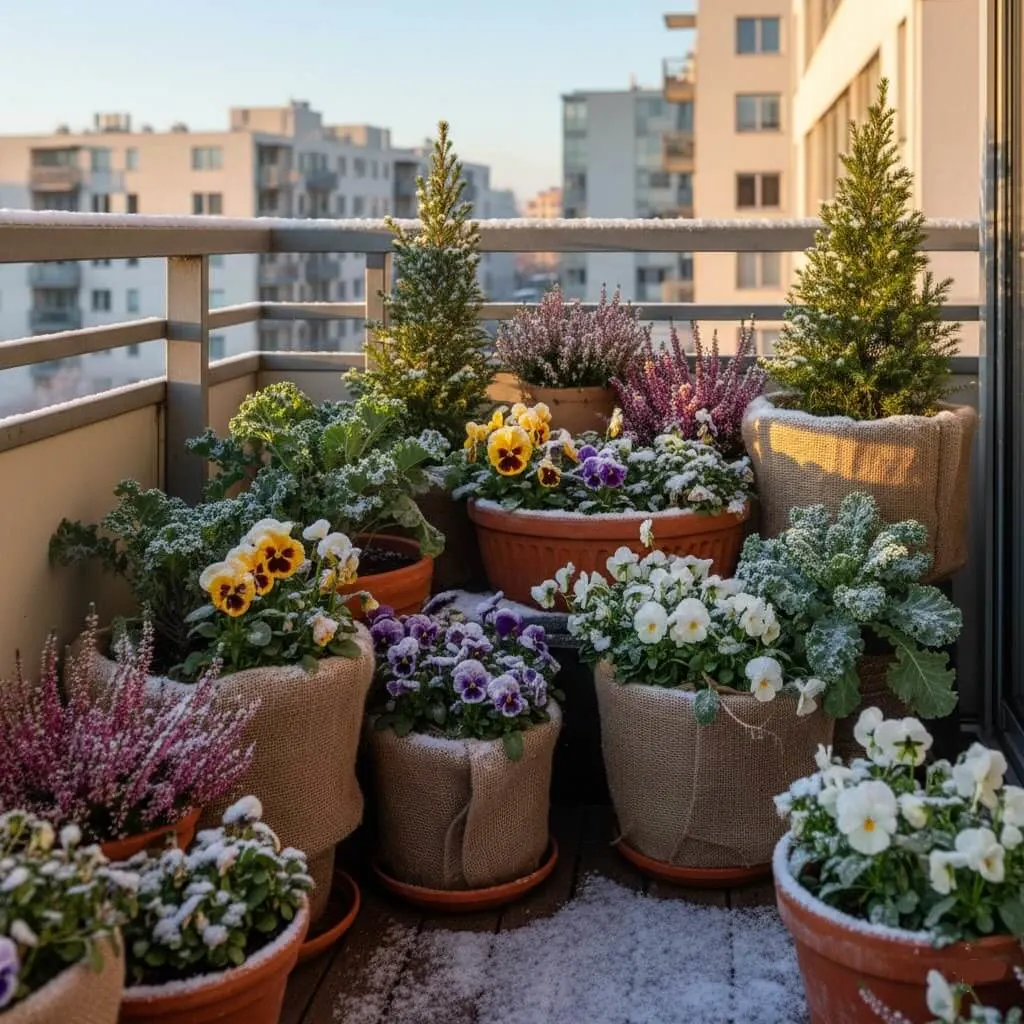
Most people assume balcony gardens hibernate in winter, but the best winter balcony garden ideas for cold climates prove the opposite—when you choose the right plants, protection, and layout, even a freezing balcony can stay green and colourful. In USDA zones 3–6 (and UK zones H5–H7), sub‑zero temperatures, icy winds, and heavy snow can kill unprepared containers overnight, which is exactly why following the best winter balcony garden ideas for cold climates matters so much.
This guide walks through 8 of the best winter balcony garden ideas for cold climates, showing you the specific plants, containers, and protection strategies that actually work when temperatures plunge below freezing. Whether you have a tiny apartment ledge or a roomy terrace, you will see how the best winter balcony garden ideas for cold climates adapt to different spaces and sun levels so your setup stays practical. By the end, you will have a clear, step‑by‑step roadmap based on the best winter balcony garden ideas for cold climates to build a balcony that survives snow, wind, and deep cold, no matter how small your space is.
What Is a Winter Balcony Garden?
A winter balcony garden is a carefully planned container garden designed to survive and thrive in freezing temperatures (below 32°F/0°C), using cold-hardy plants, insulated containers, and strategic protection methods.
Key Characteristics
Plant Selection:
- Frost-tolerant evergreens (dwarf conifers, boxwood, holly)
- Winter-blooming flowers (pansies, heathers, hellebores)
- Cold-hardy vegetables (kale, spinach, carrots)
- Early spring bulbs (snowdrops, crocuses)
Container Requirements:
- Frost-proof materials (resin, fiberglass, thick plastic)
- Proper drainage with elevation
- Adequate size for root insulation (12″+ diameter)
Protection Strategies:
- Mulching and soil insulation
- Wind barriers and grouping
- Frost cloth and wrapping techniques
- Microclimate optimization
Climate Zones Covered
- USA: USDA Hardiness Zones 3–6 (winters ‑40°F to 0°F)
- UK/Europe: RHS Hardiness Zones H5–H7
- Canada: Zones 3–6
- Similar cold-climate regions worldwide
Why Winter Balcony Gardens Matter: 5 Key Benefits
#1: Mental Health & Wellbeing
Greenery and color combat seasonal affective disorder (SAD); studies show nature exposure reduces winter depression by 30%.
#2: Fresh Winter Produce
Grow cold-hardy vegetables (kale, spinach, carrots) that sweeten after frost; harvest fresh greens all winter even in zone 5.
#3: Wildlife Support
Winter flowers provide critical nectar for early pollinators; berry shrubs feed overwintering birds.
#4: Year-Round Gardening Practice
Maintain skills and soil health; containers stay productive instead of sitting empty for 5 months.
#5: Property Value & Aesthetics
A well-maintained winter balcony garden increases apartment appeal and creates an inviting outdoor space visible from indoors.
Understanding Your Cold-Climate Balcony Microclimate
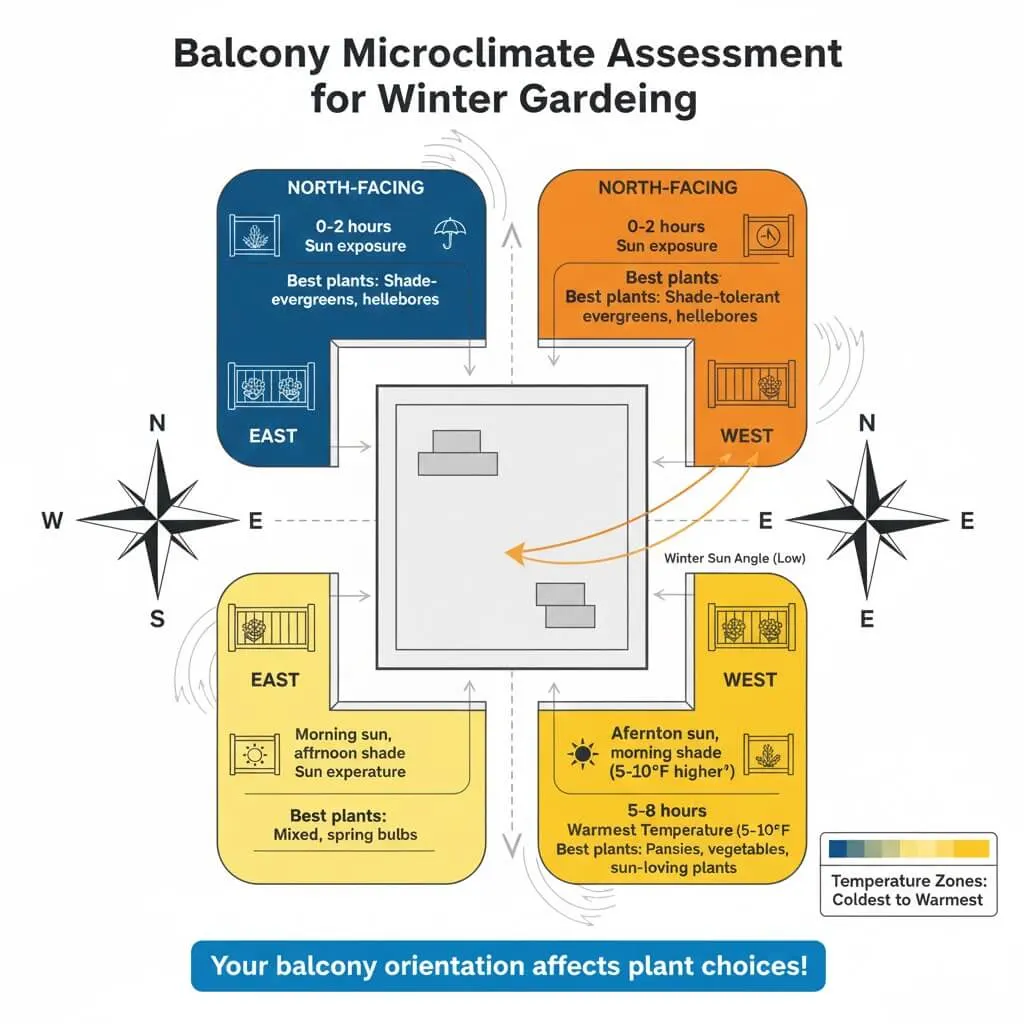
Before planting, assess your unique microclimate to choose the right plants and protection strategies.
Step 1: Determine Balcony Orientation
North-Facing Balcony:
- Sun exposure: 0–2 hours direct sun
- Temperature: Coldest; stays shaded all day
- Best plants: Shade-tolerant evergreens (boxwood, ivy), hellebores, winter ferns
- Challenge: Limited light for flowering plants
South-Facing Balcony:
- Sun exposure: 5–8 hours direct sun (winter angle)
- Temperature: Warmest; 5–10°F higher than ambient
- Best plants: Sun-loving pansies, winter vegetables (kale, spinach), dwarf conifers
- Challenge: Soil dries faster; needs more frequent winter watering
East-Facing Balcony:
- Sun exposure: Morning sun, afternoon shade
- Best plants: Mixed evergreens, early spring bulbs, winter heathers
West-Facing Balcony:
- Sun exposure: Afternoon sun, morning shade
- Challenge: Afternoon sun can thaw plants prematurely, causing freeze damage at night
Step 2: Assess Wind Exposure
High-Rise Apartments (6+ floors):
- Expect 20–40% stronger winds
- Creates wind-chill effect; plants feel 10–15°F colder
- Solution: Windbreaks (trellises, grouped pots, evergreen shrubs)
Corner Balconies:
- Often create wind tunnels
- Solution: Place pots in protected corners against building walls
Test Method: Place a flag or ribbon on railing for 24 hours; note constant wind direction and intensity.
Step 3: Measure Winter Sunlight Hours
Requirement Guidelines:
- Flowering plants: Minimum 4–6 hours
- Leafy vegetables: 3–5 hours
- Evergreens: 2–4 hours
Measurement: On a typical winter day (December–January), track direct sun hitting balcony floor from sunrise to sunset.
Step 4: Check Structural Considerations
Weight Capacity:
- Snow-filled containers are 40–60% heavier than summer
- Consult building management for load limits
- Use lightweight containers and soilless potting mixes
Drainage:
- Ensure floor drains aren’t blocked by leaves/debris
- Elevate pots on bricks to prevent ice dams
Key Elements of a Successful Cold-Climate Winter Balcony Garden
Element 1: Cold-Hardy Plant Selection
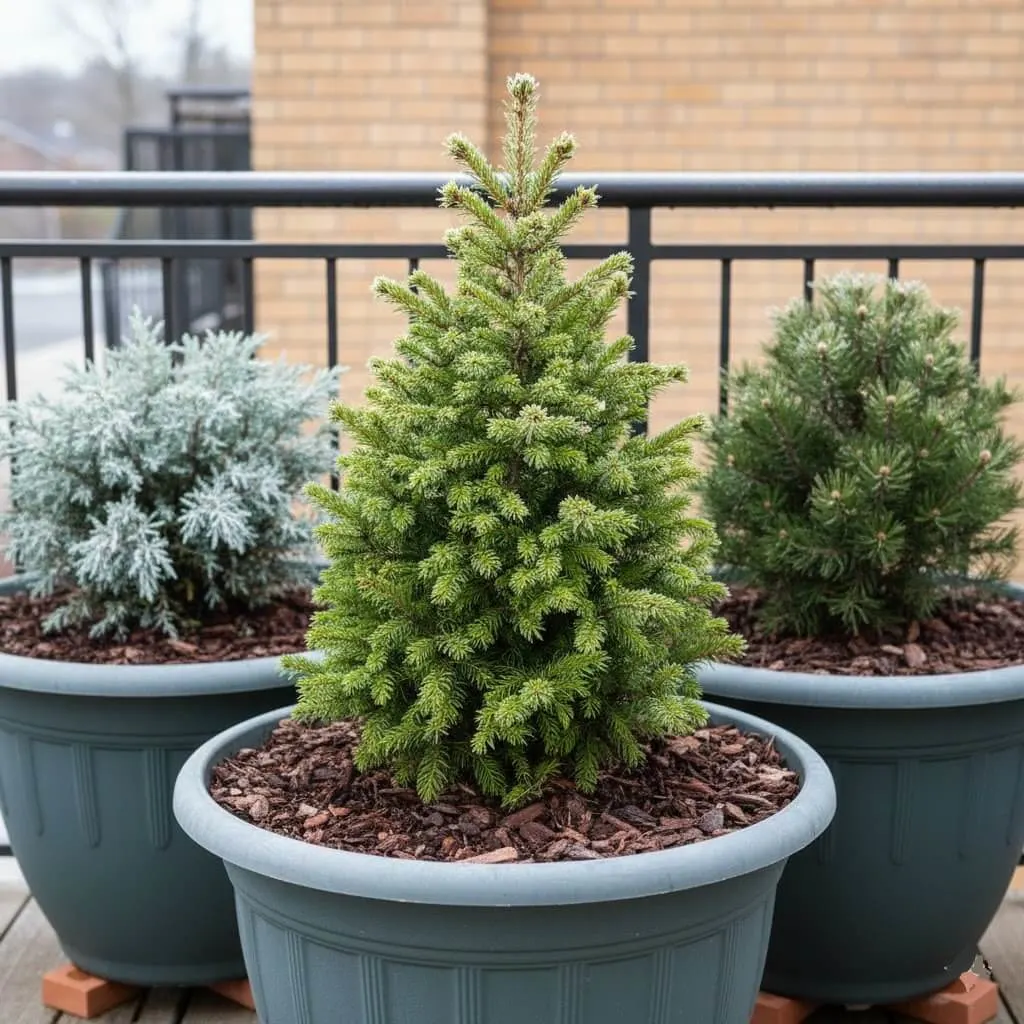
A. Evergreen Structure Plants (Year-Round Backbone)
Dwarf Conifers:
- Best varieties: Dwarf Alberta spruce, Blue Star juniper, Mugo pine
- Hardiness: Zones 3–6
- Height: 2–4 feet in containers
- Benefits: Provide green structure, windbreak, holiday aesthetic
- Care: Minimal; water when soil dry, no pruning needed
Broadleaf Evergreens:
- Boxwood (Buxus): Dense foliage, tolerates shade, zone 5
- Holly (Ilex): Berries for winter color, zone 5–6
- Euonymus: Variegated leaves, very hardy to zone 4
- Benefits: Fuller, softer texture than conifers
Trailing Evergreens:
- English ivy: Cascades from railing planters
- Vinca minor: Small purple flowers in early spring
- Creeping thyme: Aromatic, covers pot edges
B. Winter-Flowering Plants (Color & Interest)
Pansies & Violas:
- Colors: Purple, yellow, white, orange, multi-color
- Hardiness: Survive to 15°F; bloom through light snow
- Planting time: Late September–October
- Care: Deadhead spent blooms weekly; cover below 0°F
- Peak season: October–April (with protection)
Winter Heathers (Erica carnea):
- Colors: White, pink, purple, red
- Bloom time: November–April (5 months!)
- Hardiness: Zone 5 (tolerates ‑13°F)
- Soil needs: Acidic potting mix
- Benefits: Evergreen foliage + long-lasting flowers
Hellebores (Christmas/Lenten Rose):
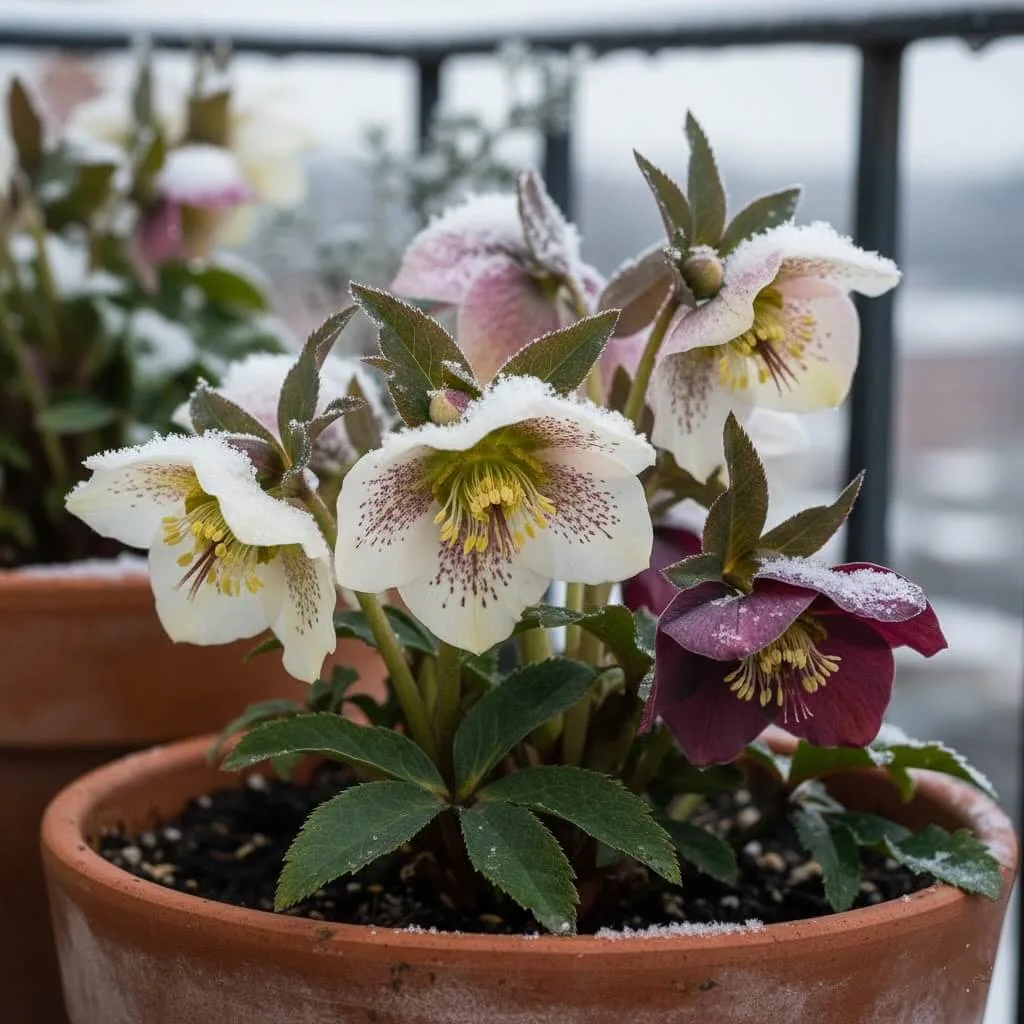
- Bloom time: December–March
- Hardiness: Zone 4
- Best placement: North-facing, shaded balconies
- Unique feature: Nodding flowers push through snow
Winter Jasmine (Jasminum nudiflorum):
- Bloom: Yellow flowers on bare stems, late winter
- Fragrance: Light, sweet scent on mild days
- Hardiness: Zone 6 (protect zone 5)
C. Edible Cold-Hardy Vegetables & Herbs
Leafy Greens:
- Kale: Survives to 10°F; sweetens after frost; varieties: ‘Winterbor’, ‘Lacinato’
- Spinach: Overwinters to 15°F; ‘Winter Bloomsdale’ is best
- Mustard greens: Fast-growing; spicy flavor intensifies in cold
- Mâche (corn salad): Extremely cold-hardy to 5°F
Root Vegetables:
- Carrots: Sweeten in cold; need 12″+ deep containers; varieties: ‘Napoli’, ‘Thumbelina’
- Beets: Overwinter well; harvest greens continuously
Hardy Herbs:
- Thyme: Survives to ‑30°F; evergreen in zones 5–6
- Sage: Hardy to zone 5; protect in extreme cold
- Parsley: Biennial; overwinters in zone 5 with mulch
- Chives: Die back but regrow early spring
Container Size for Vegetables:
- Leafy greens: 8–10″ deep
- Root vegetables: 12–18″ deep
- Herbs: 6–8″ deep
D. Early Spring Bulbs (Late-Winter Surprise)
Best Bulbs for Cold Climates:
- Snowdrops: First to bloom (February); zone 3
- Crocuses: Purple, yellow, white; February–March
- Winter aconites: Yellow buttercup-like flowers
- Early daffodils: ‘February Gold’, ‘Tête-à-Tête’
Planting Method:
- Plant in October–November
- Layer technique: Larger bulbs 6″ deep, smaller 3″ deep
- Mulch surface with 2″ compost
- Surprise bloom: Late February–March
Element 2: Frost-Proof Containers
Best Materials for Freezing Weather
✅ Recommended:
- Resin/Plastic: Lightweight, flexible, won’t crack; brands: Crescent Garden, Bloem
- Fiberglass: Durable, insulates well, looks like stone
- Wood: Natural insulation; use cedar or teak; line with plastic to prevent rot
- Thick glazed ceramic: If labeled “frost-proof” and thickness >0.5″
❌ Avoid:
- Thin terracotta: Absorbs water, expands when frozen, cracks
- Thin ceramic: Shatters in freeze-thaw cycles
- Metal without insulation: Conducts cold directly to roots
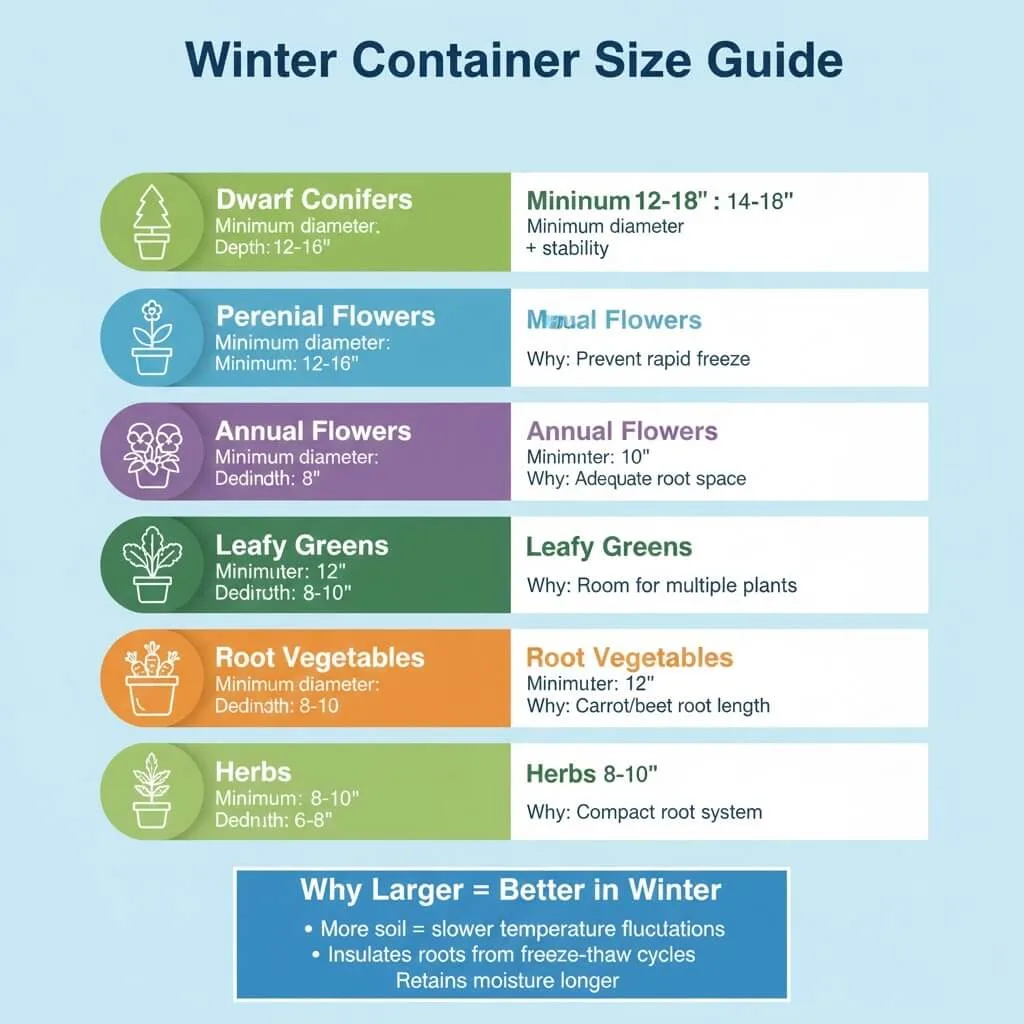
Size Matters: Minimum Container Dimensions
| Plant Type | Minimum Diameter | Minimum Depth | Why |
|---|---|---|---|
| Dwarf conifers | 14–18″ | 12–16″ | Root insulation + stability |
| Perennial flowers | 12″ | 10″ | Prevent rapid freeze |
| Annual flowers | 10″ | 8″ | Adequate root space |
| Leafy greens | 12″ | 8–10″ | Room for multiple plants |
| Root vegetables | 12″ | 12–18″ | Carrot/beet root length |
Why Larger = Better in Winter:
- More soil = slower temperature fluctuations
- Insulates roots from freeze-thaw cycles
- Retains moisture longer
Drainage & Elevation Essentials
Drainage Requirements:
- Minimum 3–5 drainage holes per 12″ pot
- Drill extra holes if needed
- Add 1–2″ gravel or pot shards at bottom
Elevation Methods:
- Pot feet: Terracotta, plastic, or decorative metal risers
- Bricks/pavers: Stack 2–3″ high under each pot
- Wooden boards: Create slight tilt for runoff
- Why: Prevents ice bond with floor; improves drainage; protects balcony surfaceyoutube
Element 3: Soil Mix & Mulching for Insulation
Ideal Winter Soil Recipe
Base Mix (per 10 gallons):
- 40% peat-free compost or coco coir
- 30% quality potting soil
- 20% perlite or vermiculite (drainage)
- 10% worm castings or aged manure (slow-release nutrition)
Benefits:
- Well-draining: Prevents waterlogging and root rot
- Moisture-retentive: Reduces winter watering frequency
- Lightweight: Important for balcony load limits
Mulching for Root Protection
Application (Late October–November):
- Top-dress each container with 2–3″ layer
- Pull mulch 1″ away from plant stems (prevent rot)
- Add extra mulch before severe cold snaps
Best Mulch Materials:
- Bark chips: Long-lasting, attractive, good insulation
- Straw: Excellent insulator but blows away (use netting)
- Shredded leaves: Free, effective, breaks down by spring
- Compost: Feeds plants slowly while protecting roots
Benefits:
- Insulates roots from temperature swings
- Retains soil moisture in winter winds
- Prevents frost heaving of bulbs
- Adds organic matter as it breaks down
Element 4: Protection Strategies for Harsh Weather
Strategy 1: Grouping for Shared Warmth
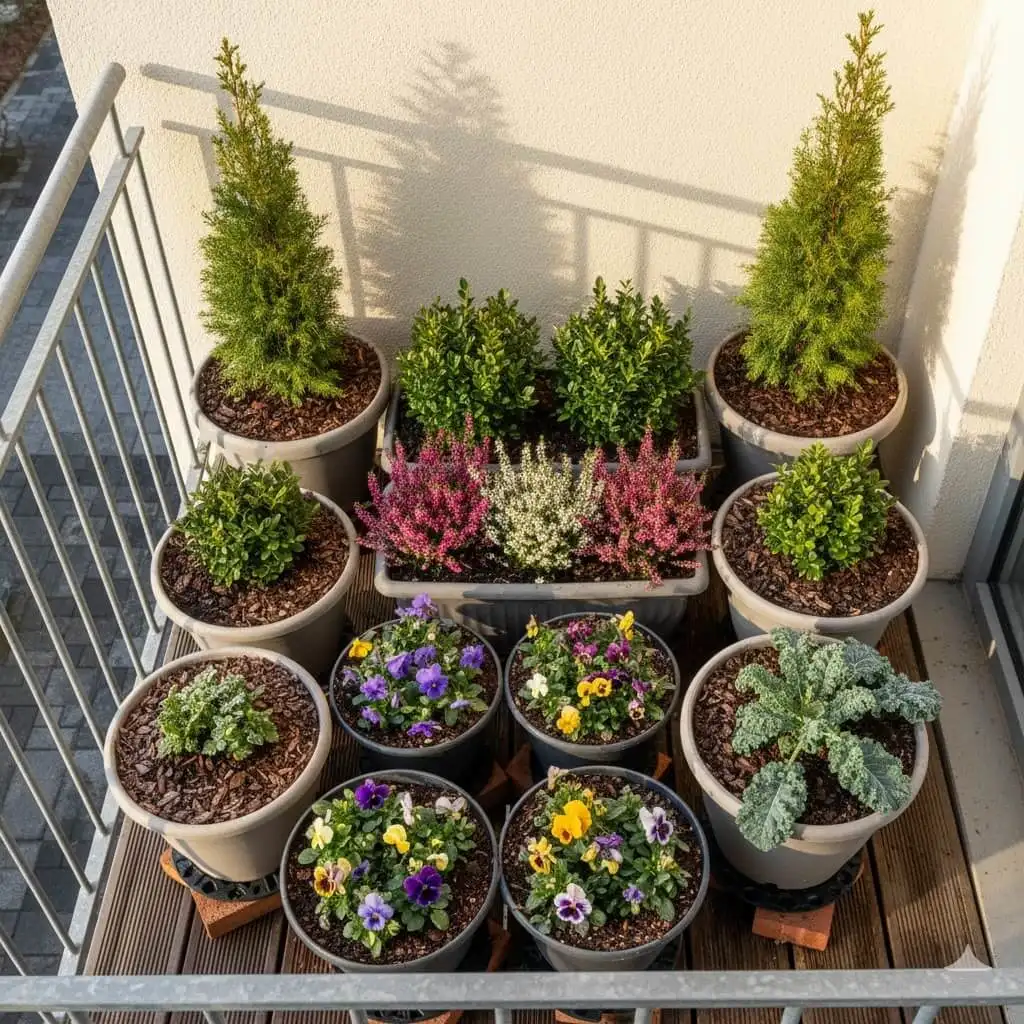
Method:
- Cluster 4–8 containers together
- Place tallest plants (conifers) on windward side
- Surround with smaller pots (flowers, vegetables)
- Leave 2–3″ spacing for air circulation
Science: Grouped pots create a microclimate 3–5°F warmer than ambient; block wind; share humidity.youtube
Strategy 2: Wall Placement for Radiant Heat
Best Positioning:
- Against south or west-facing building walls
- Walls absorb daytime sun, release heat at night
- Move pots into corners during extreme cold (walls on 2 sides)urbanplantyoutube
Temperature Benefit: Wall-adjacent pots stay 5–8°F warmer than open-balcony pots.
Strategy 3: Container Wrapping for Deep Freezes
When to Wrap: Forecast shows sustained temps below 10°F (‑12°C)
Materials:
- Bubble wrap: Double layer around pot sides; secure with twine
- Hessian/burlap: Natural look; wrap 2–3 layers
- Old blankets/towels: Emergency option; remove when temp rises
- Wrap container sides only (not top or drainage holes)
- Secure with garden twine or bungee cords
- Leave plant foliage exposed
- Remove wrapping when temp rises above 20°F to prevent mold
Strategy 4: Plant Covers for Extreme Weather
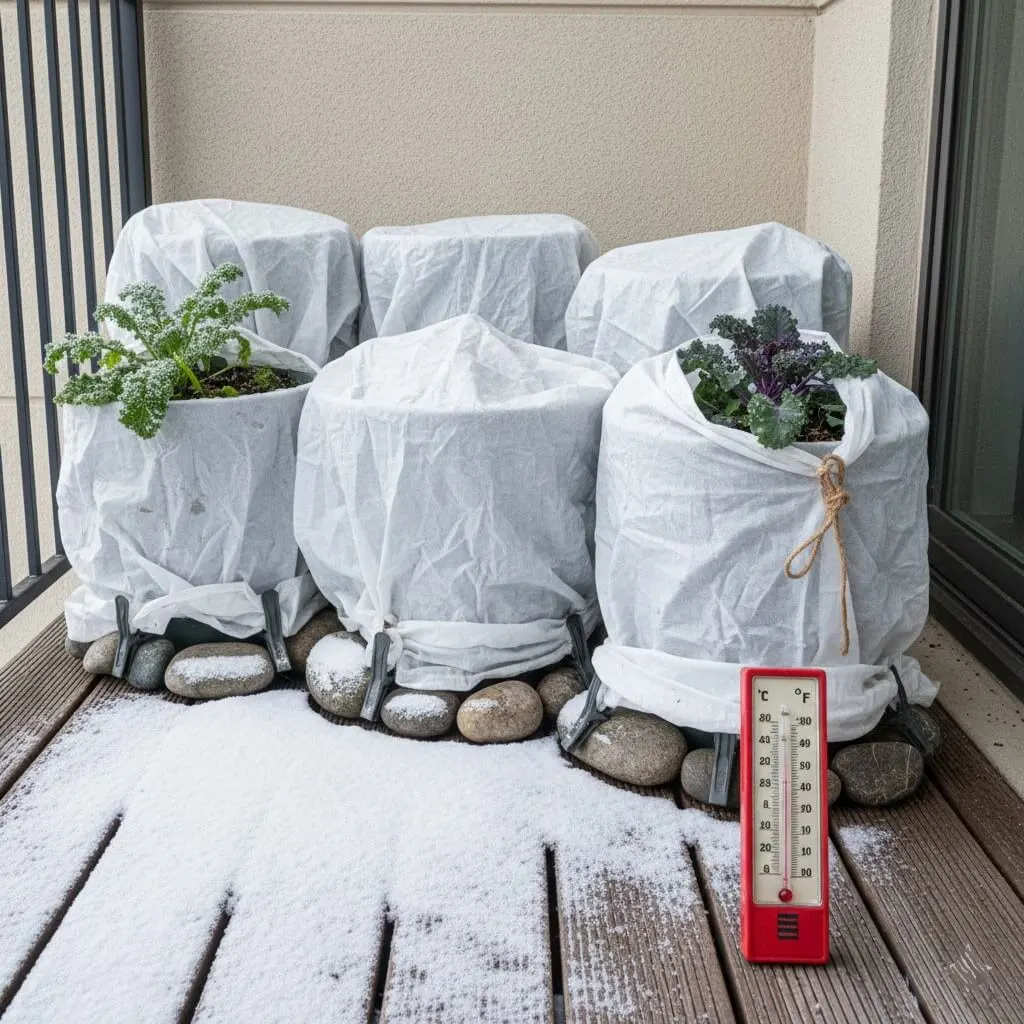
Frost Cloth (Best Option):
- Lightweight fabric (1–2 oz weight)
- Allows light, air, moisture through
- Provides 4–8°F protection
- Drape over plants; anchor with stones/clipsurbanplantyoutube
DIY Cloches:
- Plastic milk jugs (cut bottom, remove cap for ventilation)
- Clear plastic bins (prop open slightly)
- Row cover hoops + plastic sheeting
When to Cover:
- Forecast temps below 0°F
- Ice storm warnings
- Severe wind chill advisories
Important: Remove covers during day when temp rises above 40°F to prevent overheating.
Strategy 5: Mini Greenhouses
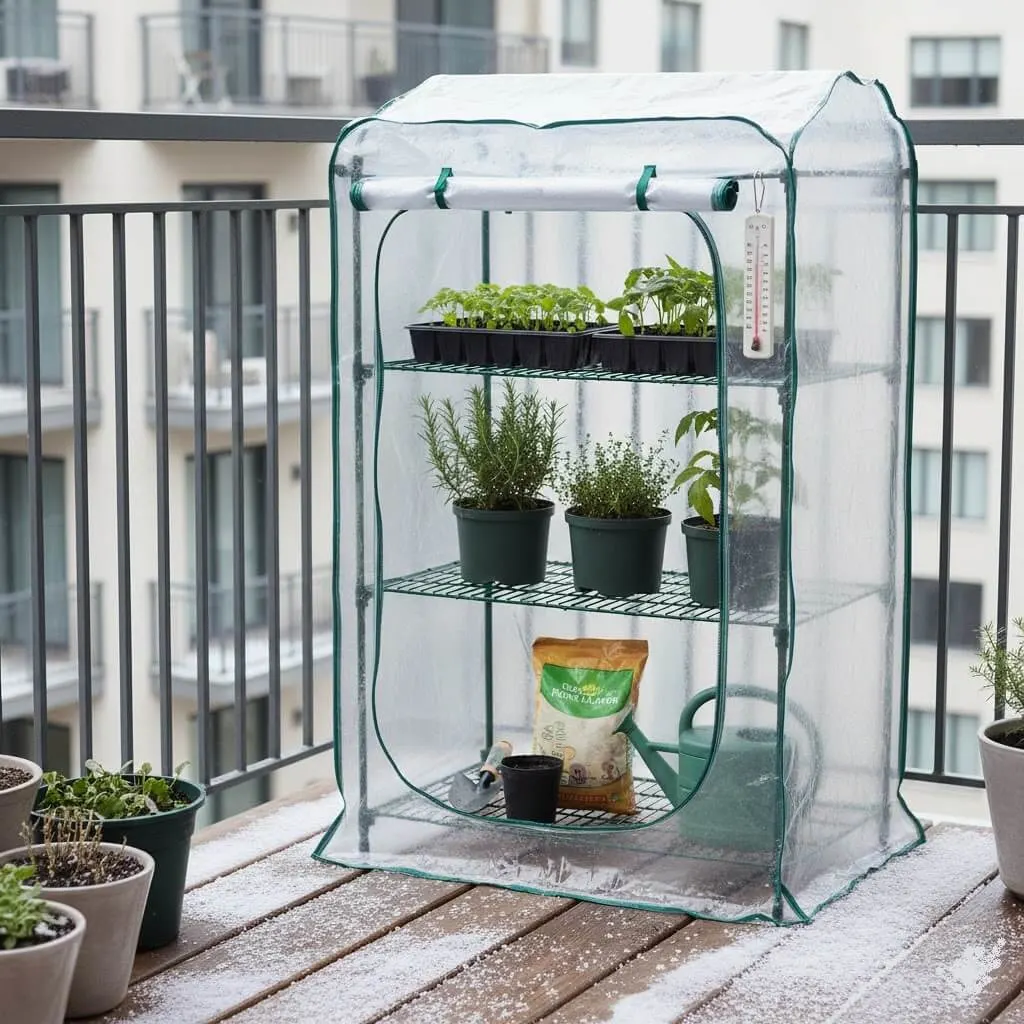
Commercial Options:
- Portable balcony greenhouse shelves (4–6 shelves with clear zipper cover)
- Cold frames (low wooden boxes with transparent lids)
- Cost: $50–$150
DIY Version:
- Wire shelving unit + heavy-duty clear plastic sheeting
- Add zipper or Velcro door for access
- Ideal for: Extra-tender plants, seed starting, extending harvest season
8 Best Winter Balcony Garden Ideas
Idea 1: Evergreen Backbone Display
Create year-round green structure using dwarf conifers, boxwood, and trailing ivy as the foundation of your winter balcony.
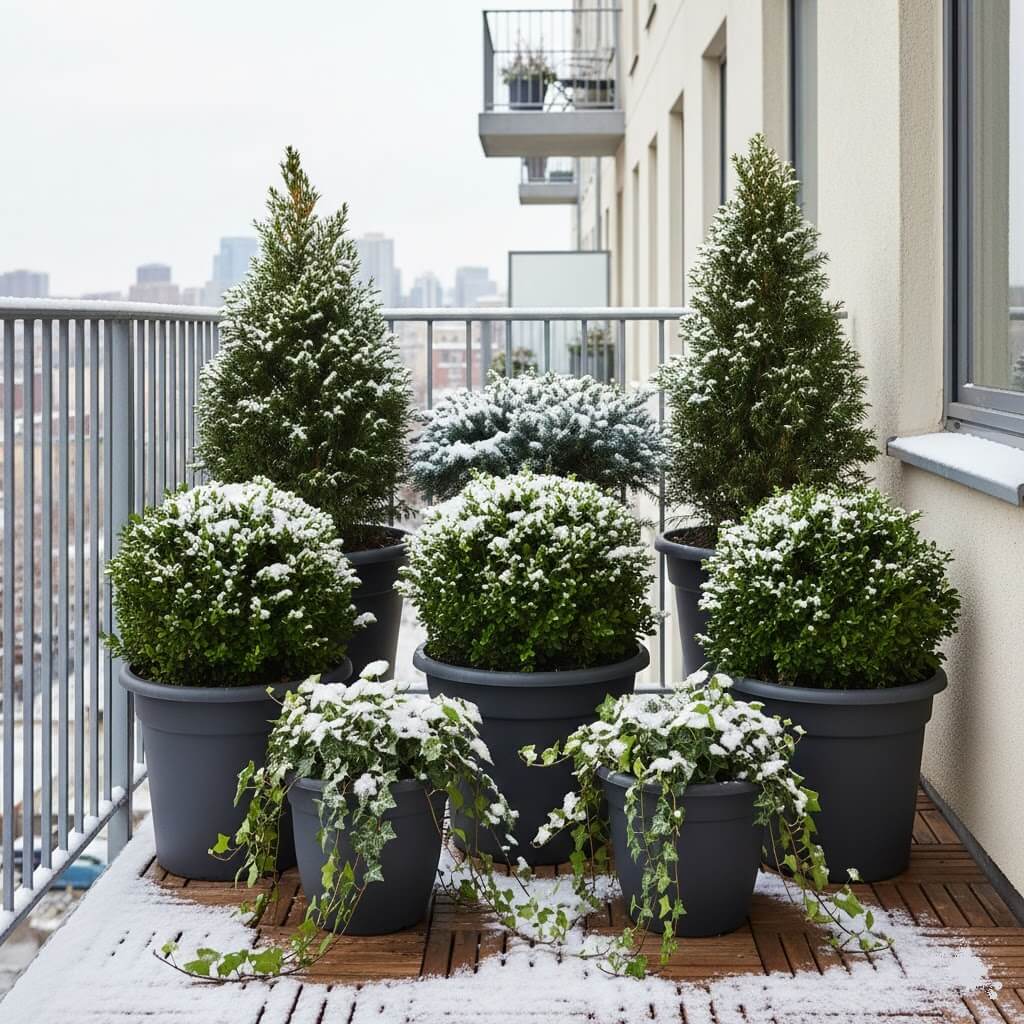
How to Create:
- Select plants:
- 2 dwarf conifers (different shapes: upright + spreading)
- 2–3 boxwood or euonymus (mid-height)
- 1 trailing ivy (for railing or pot edge)
- Arrange containers:
- Back/corners: Tall conifers (16–18″ pots)
- Middle: Boxwood (12–14″ pots)
- Front/railing: Trailing ivy (10″ pots)
- Spacing: Leave 12–18″ between pots for air circulation
Benefits:
- Provides consistent green structure all winter
- Acts as windbreak for tender plants
- Creates “canvas” for seasonal flowers
- Zero maintenance beyond watering
Cost: $80–$150 (3 conifers, 2 boxwoods, containers)
Idea 2: Winter Vegetable Container Garden
Grow fresh salad greens and root vegetables in containers through winter, even in zone 5.
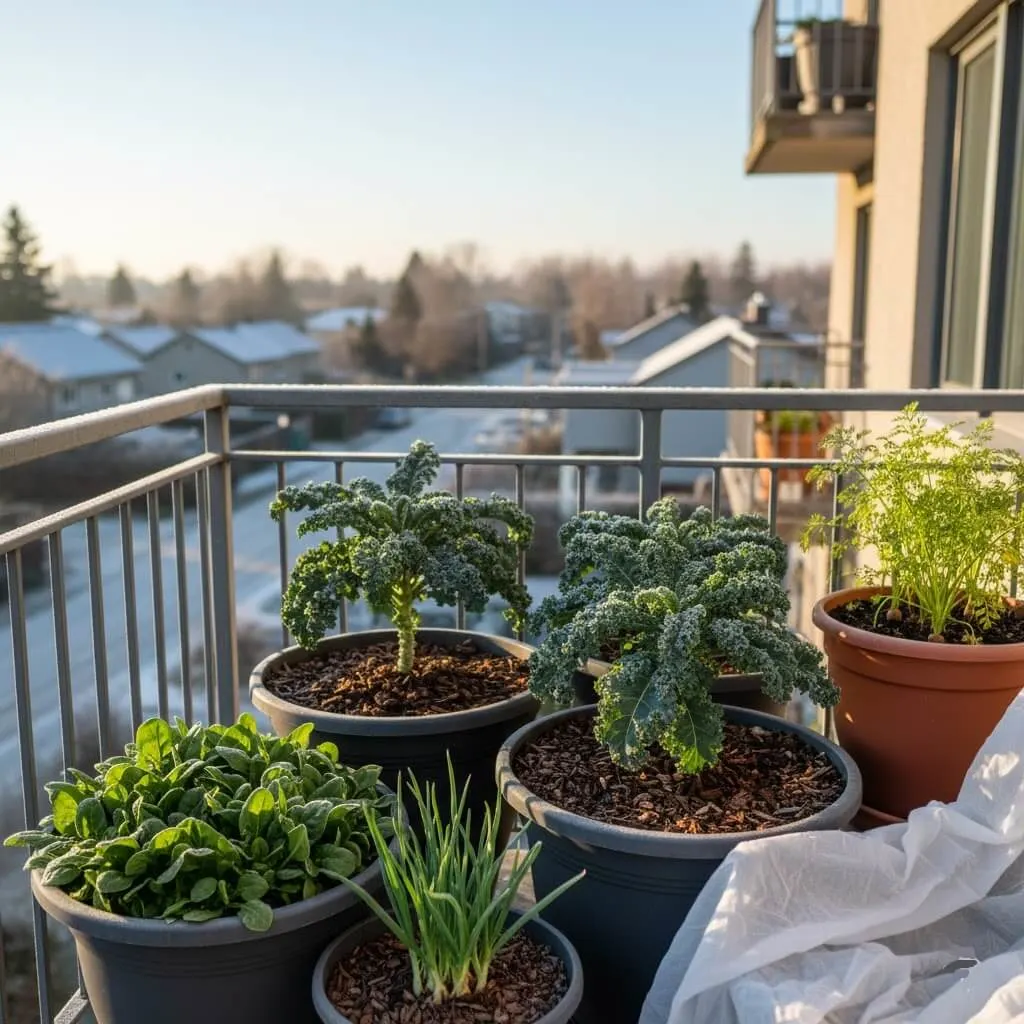
Plant Selection:
- Kale (2 plants per 12″ pot)
- Spinach (3–4 plants per 12″ pot)
- Carrots (sow seeds in 14″ deep pot)
- Green onions (start from sets)
How to Create:
- Timing: Plant September–October for winter harvest
- Containers: Use 12–18″ deep pots with excellent drainage
- Soil: Rich potting mix + compost; mulch surface
- Placement: South-facing spots (maximum sun)
- Protection: Cover with frost cloth on nights below 20°F
Harvest Schedule:
- Kale: Cut outer leaves weekly; plant continues producing
- Spinach: Cut-and-come-again every 2 weeks
- Carrots: Harvest as needed from December onward
Benefits:
- Fresh, organic greens all winter
- Vegetables sweeten after frost (better flavor)
- Cost savings: $5/week grocery value from $15 seed investment
Real Example: Chicago gardener harvested 3 lbs of kale + 2 lbs spinach monthly from November–March using 3 containers.
Idea 3: Pansy & Viola Rainbow Pots
Fill balcony with vibrant pansies and violas that bloom through snow.
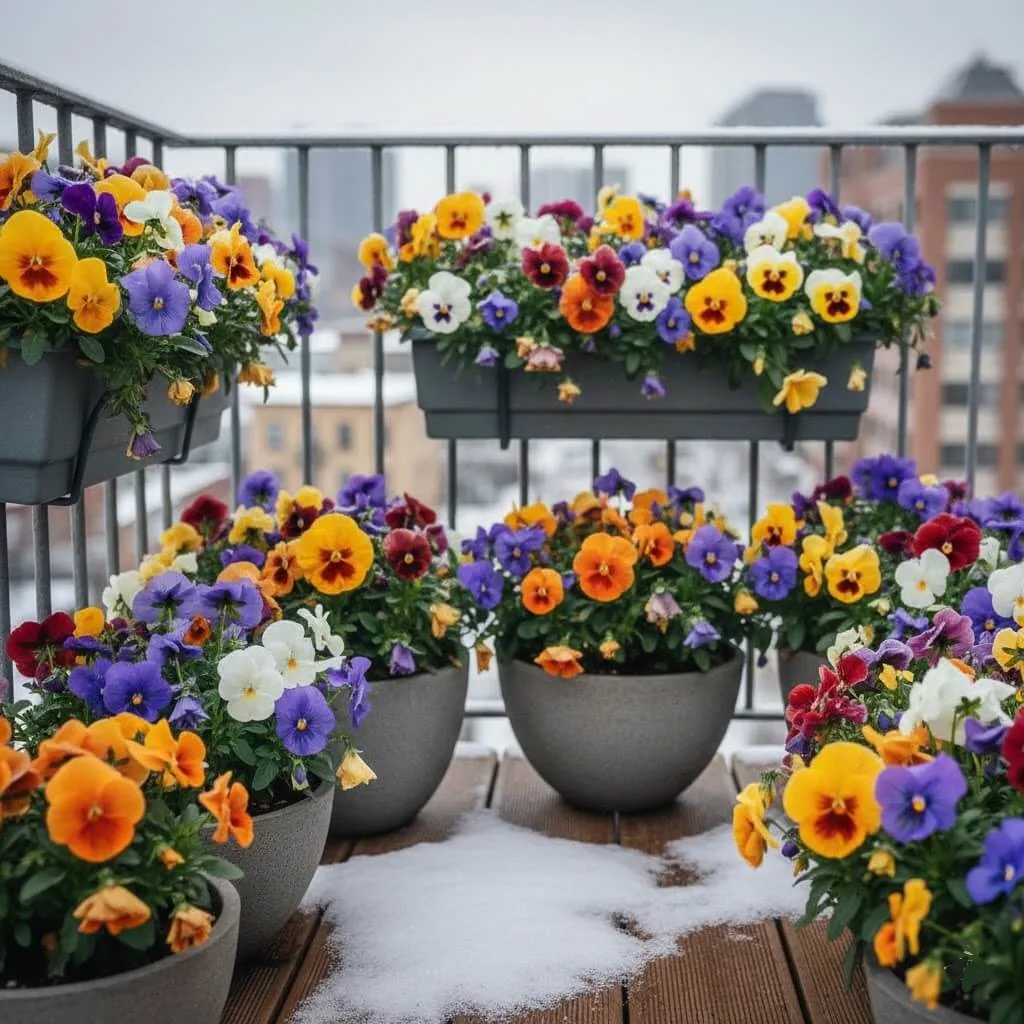
Color Planning:
- Warm palette: Yellows, oranges, deep reds
- Cool palette: Purples, blues, whites
- Mixed: Multicolor varieties for maximum cheer
How to Create:
- Timing: Plant late September–October
- Containers: 10–12″ pots or railing planters
- Planting density: 3–5 plants per 12″ pot (they like crowding)
- Soil: Standard potting mix; pansies aren’t fussy
Care Routine:
- Deadhead: Remove spent blooms 2x weekly (promotes more flowers)
- Water: When top 2″ of soil is dry
- Fertilize: Light liquid feed every 3–4 weeks (half strength)
- Protect: Cover with frost cloth when temps drop below 0°F
Benefits:
- Continuous color from October–April
- Blooms push through light snow cover
- Affordable: 6-pack costs $3–$5
Idea 4: Winter Heather Trough Garden
Long trough or window box filled withwinter-blooming heathers in complementary colors.
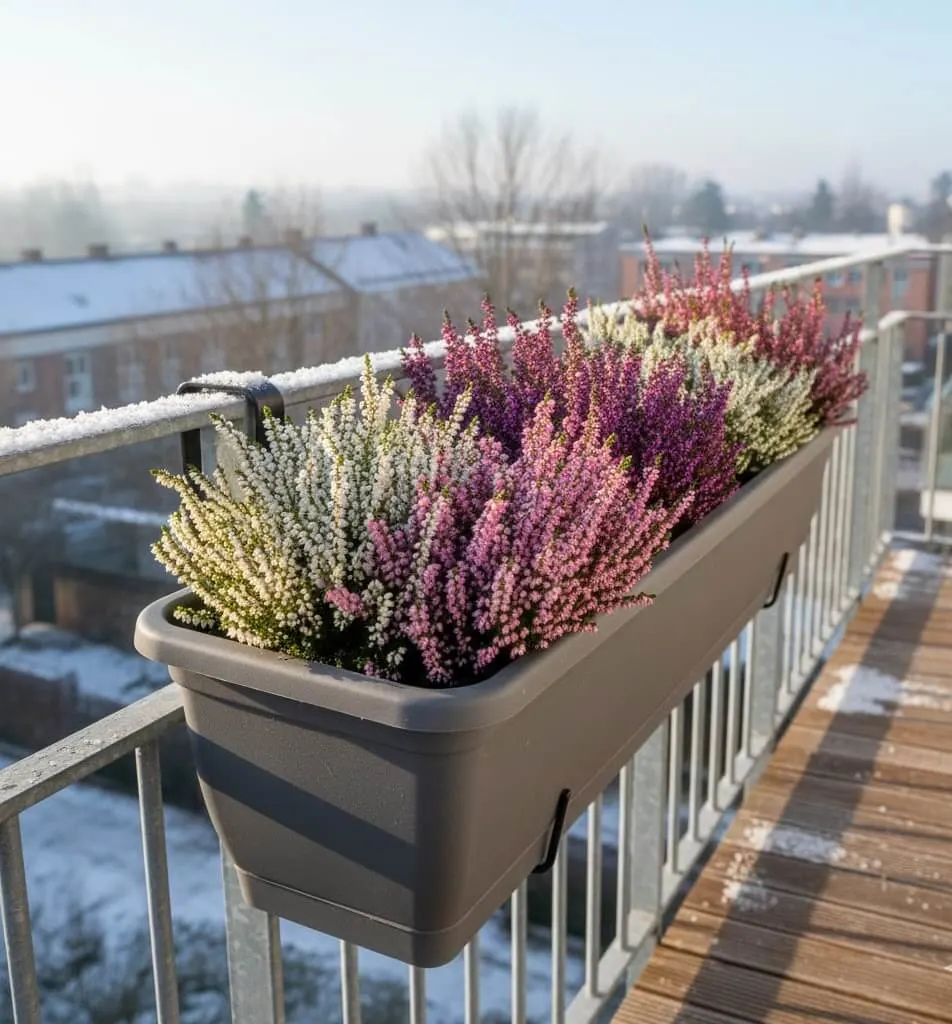
Plant Selection:
- 3–5 Erica carnea varieties in white, pink, purple
- Varieties: ‘Springwood Pink’, ‘Myretoun Ruby’, ‘Golden Starlet’
How to Create:
- Container: 24–36″ long trough, 8″ deep minimum
- Soil: Acidic potting mix (pH 4.5–5.5) or ericaceous compost
- Planting: Space 8–10″ apart; they’ll fill in
- Placement: Full sun (minimum 4 hours)
Care:
- Water: Heathers are drought-tolerant once established; water only when very dry
- Pruning: Trim lightly after flowering (April)
- Longevity: Same plants bloom 5+ years with minimal care
Benefits:
- 3–5 months of continuous blooms (November–April)
- Evergreen foliage year-round
- Extremely cold-hardy to ‑25°C (‑13°F)
- Low maintenance
Idea 5: Miniature Conifer Forest Display
Create a magical “winter forest” scene with dwarf conifers in varied heights and textures.
Plant Selection (5–7 conifers):
- Tall (24–36″): Dwarf Alberta spruce
- Medium (18–24″): Blue Star juniper
- Short (12–18″): Mugo pine
- Trailing: Creeping juniper
Arrangement:
- Back row: Tallest conifers (14–16″ pots)
- Middle row: Medium height (12″ pots)
- Front: Shortest + trailing (10″ pots)
- Accent: Add white birch branches, pinecones, or solar fairy lights
Holiday Styling:
- Wrap with warm white LED string lights
- Add small weatherproof ornaments
- Place birch log “stumps” between pots
Benefits:
- Year-round structure and greenery
- Holiday focal point for December
- Zero maintenance beyond watering
- Holds snow beautifully for aesthetic appeal
Idea 6: Early Spring Bulb Welcome
Plant bulbs in fall for late-winter/early spring blooms that emerge through snow.
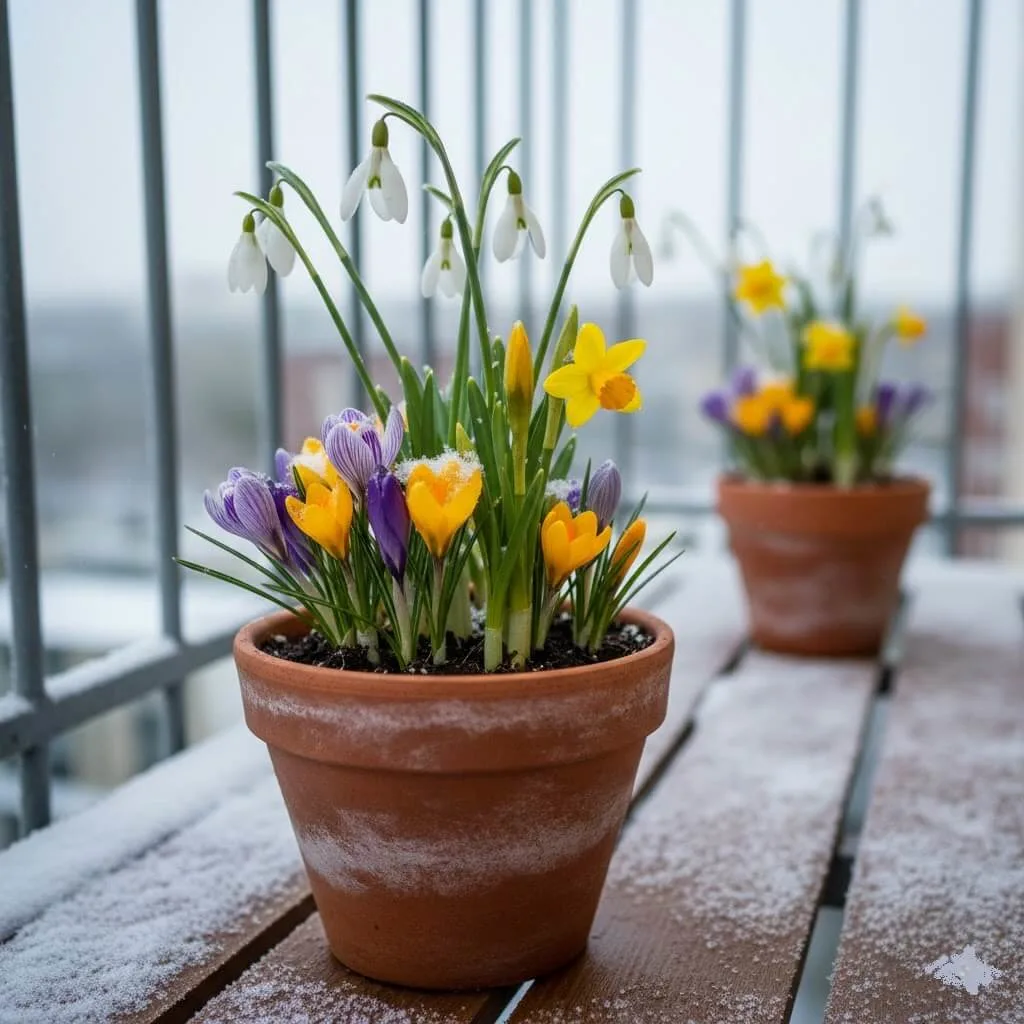
Bulb Selection (per 12″ pot):
- Bottom layer (4″ deep): 5–7 daffodil bulbs
- Middle layer (3″ deep): 10–12 crocus corms
- Top layer (2″ deep): 15–20 snowdrop bulbs
Layering Method (“Lasagna Planting”):
- Fill pot 1/3 with soil
- Place largest bulbs (daffodils); cover with 2″ soil
- Add mid-sized bulbs (crocuses); cover with 2″ soil
- Add smallest bulbs (snowdrops); cover with final soil layer
- Mulch surface with compost
Timeline:
- October–November: Plant bulbs
- December–February: Dormant period (water lightly monthly)
- Late February–March: First blooms appear (snowdrops → crocuses → daffodils)
Benefits:
- First color of the year (often blooming through snow)
- Extended bloom time (3+ weeks)
- Uplifting psychological boost in late winter
- Low cost: 50 bulbs = $15–$25
Idea 7: Fragrant Winter Shrub Corner
What It Is: Place winter-blooming shrubs with strong fragrance near seating areas or doors.
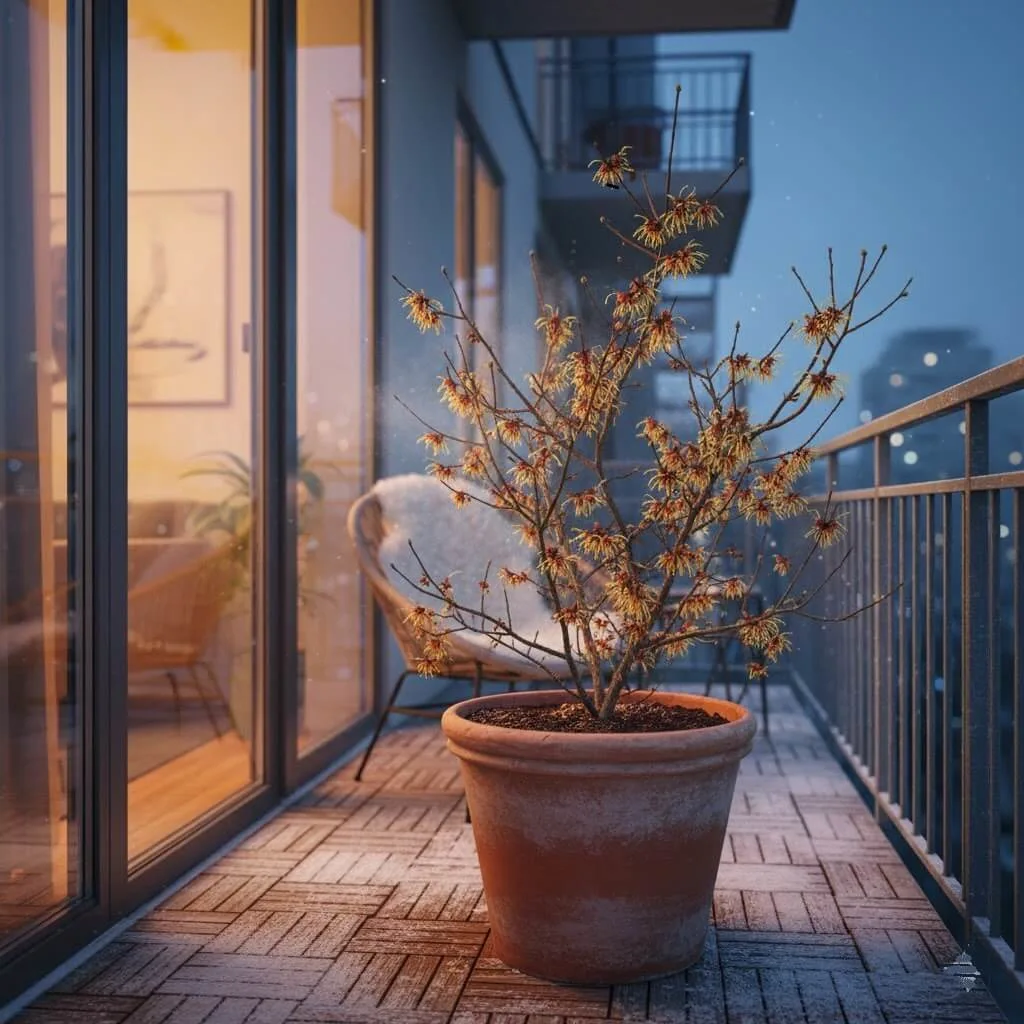
Best Fragrant Shrubs:
- Winter honeysuckle (Lonicera fragrantissima): Sweet lemon scent, zone 4
- Witch hazel (Hamamelis): Spicy fragrance, yellow/red blooms, zone 5
- Daphne (Daphne odora): Intensely sweet, zone 7 (protect in zone 6)
How to Create:
- Container: Large pot (16–20″ diameter)
- Placement: Near balcony door, seating area, or bedroom window
- Care: Minimal; water when dry, prune after flowering
Benefits:
- Delightful fragrance on mild winter days (40°F+)
- Scent carries indoors when doors/windows open briefly
- Unique conversation piece
- Long-lived (10+ years in container)
Idea 8: Berry Shrubs for Birds & Winter Color
Grow berry-producing shrubs that provide bright winter color and attract birds.

Best Berry Shrubs:
- Winterberry holly (Ilex verticillata): Bright red berries, zones 3–9
- Firethorn (Pyracantha): Orange/red berries, zones 6–9
- Cotoneaster: Red berries, arching branches, zones 5–7
How to Create:
- Container: 18″ diameter minimum
- Placement: Visible from indoors (enjoy bird-watching)
- Companion plants: Underplant with trailing ivy
Wildlife Benefits:
- Berries feed overwintering birds (robins, waxwings, sparrows)
- Provides shelter in dense branches
- Active balcony ecosystem even in winter
Visual Benefits:
- Bright red/orange berries contrast against snow
- Berries persist November–February
- Dynamic element (birds visiting regularly)
Real-World Case Study: Sarah’s Zone 5 Chicago Balcony
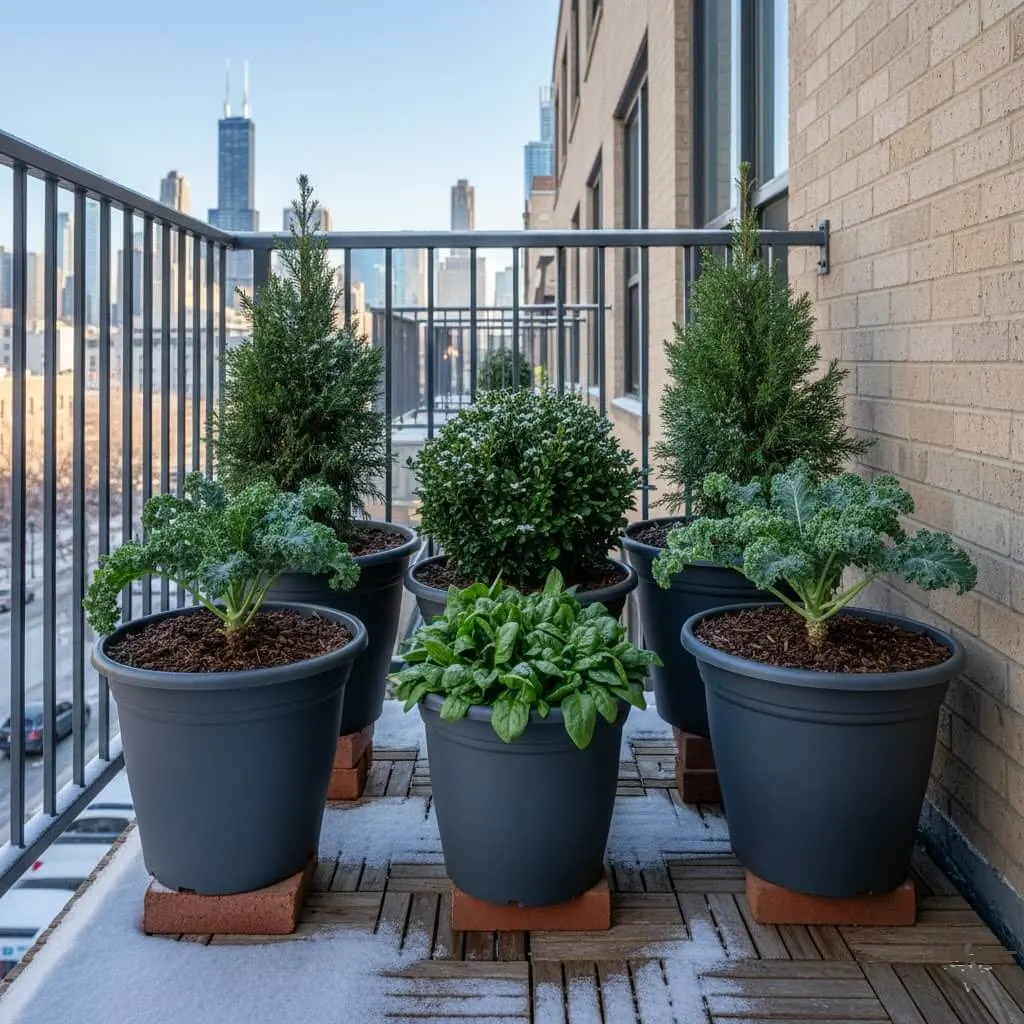
Background:
- Location: Chicago, Illinois (USDA Zone 5b)
- Balcony: 8′ x 4′, north-facing, windy, 5th floor apartment
- Previous experience: Failed attempts with tropical plants in summer containers
- Winter conditions: Average lows 10–20°F; occasional ‑5°F cold snaps
- Winter sun: Only 3 hours direct sunlight (limited by north-facing orientation)
Setup (October 2024):
Containers:
- 6 resin containers (12–16″ diameter, $10–$15 each)
- Total cost: $75
Plants:
- 2 dwarf Alberta spruce (18″ tall, $25 each)
- 1 boxwood shrub (12″, $18)
- 3 containers of edibles:
- 2 kale plants ($4)
- 4 spinach plants ($4)
- 1 pot of parsley ($3)
- Total plant cost: $82
Supplies:
- Potting soil (2 bags, $20)
- Bark mulch (1 bag, $8)
- Frost cloth (10′ x 6′, $12)
- Pot feet/bricks (free from basement)
Total Investment: $197
Protection Methods:
- Grouped all 6 pots against building wall (warmest spot)
- Elevated each pot on bricks (drainage + prevent floor freezing)
- Mulched all containers with 2–3″ bark chips
- Wrapped pots with bubble wrap during ‑5°F cold snap (January)
- Covered kale/spinach with frost cloth on nights below 15°F
Results (November 2024 – March 2025):
Evergreens:
- Dwarf spruce and boxwood thrived with zero damage
- Maintained deep green color all winter
- Became “winter backbone” that other plantings revolved around
Edible Harvest:
- Harvested kale weekly from November through March (12 lbs total)
- Spinach produced every 2 weeks (6 lbs total)
- Parsley slowed December–January but resumed growth in February
- Grocery value: ~$75 (paid for itself in fresh greens)
Key Lessons Learned:
- Grouping + wall placement = game changer: Microclimate was noticeably warmer than open balcony
- Simple protection works: Didn’t need expensive greenhouse; frost cloth was sufficient
- Kale is unstoppable: Even at 5°F, kale bounced back once warmed
- Start small: 6 containers were manageable for first winter; will expand to 10 next year
Surprise Wins:
- Balcony looked beautiful all winter (neighbors asked for advice)
- Fresh kale in December felt luxurious
- Mental health boost from daily balcony check-ins
Winter Gardening in India
If you’re reading this from India, you might be wondering: “Why all this talk about freezing temperatures and frost protection? My balcony never sees snow!”
You’re absolutely right. Winter in most of India is completely different from the cold-climate winters described above. In fact, winter (November–February) is the BEST season for Indian balcony gardens—not the hardest!
Here’s how to adapt these winter gardening principles for Indian climates, whether you’re in tropical Chennai, mild Bangalore, cool Delhi, or the actual cold of hill stations like Shimla.
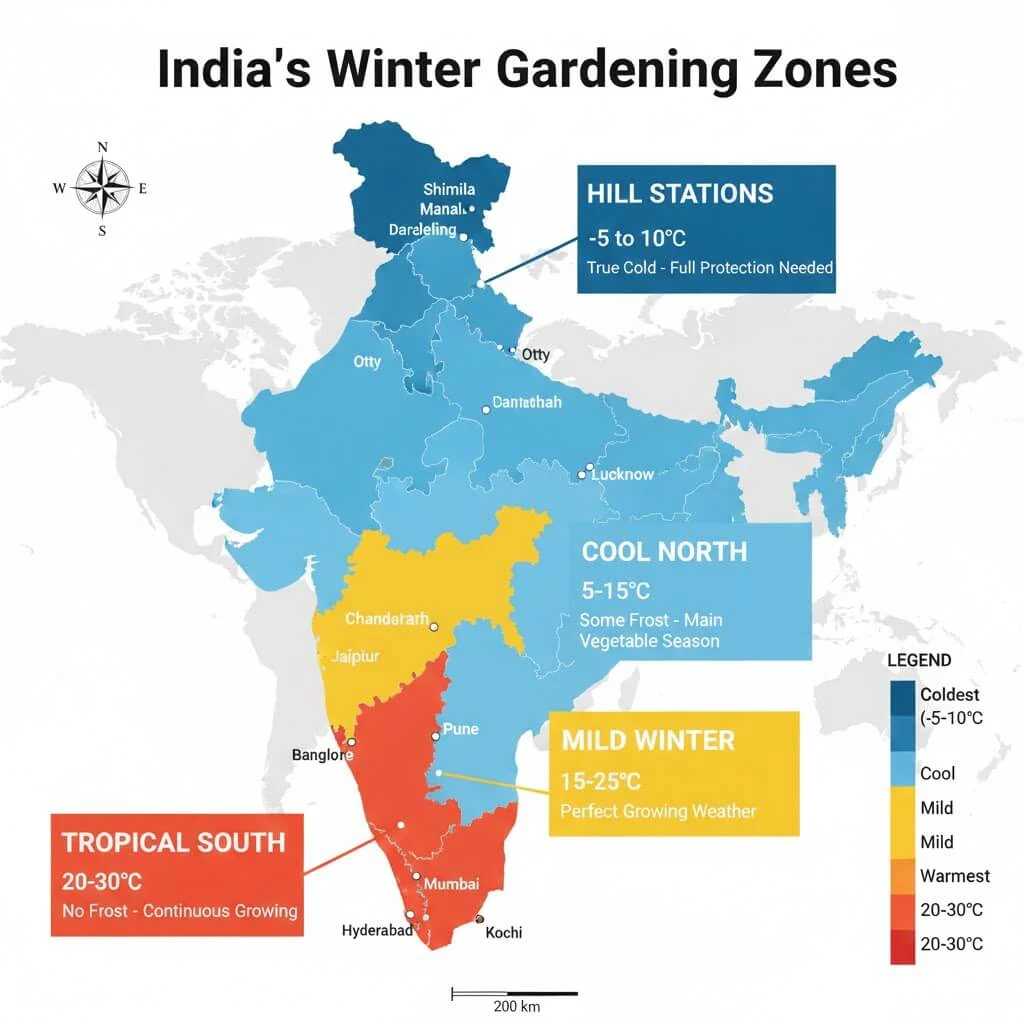
Understanding India’s Four Winter Zones
India’s winter varies dramatically by region. Here’s what “winter” really means for your balcony:
Zone 1: Tropical South (Chennai, Mumbai, Hyderabad, Kochi)
- Winter temps: 20–30°C (68–86°F)
- Reality: No frost, no freezing, barely “winter” at all!
- What to grow: Everything! Tomatoes, peppers, beans, tropical herbs, flowering plants
- Key difference: This is your SECOND growing season (after monsoon)
- Challenge: Heat, not cold; occasional cool nights (18°C minimum)
Zone 2: Mild Winter (Bangalore, Pune)
- Winter temps: 15–25°C (59–77°F)
- Reality: Cool mornings, warm afternoons; perfect growing weather
- What to grow: Leafy greens (lettuce, spinach), carrots, beets, cool-season flowers (petunias, snapdragons), herbs
- Key difference: Ideal balcony gardening season—neither too hot nor too cold
- Challenge: Occasional dry spells; morning dew
Zone 3: Cool North India (Delhi, Chandigarh, Jaipur, Lucknow)
- Winter temps: 5–15°C (41–59°F)
- Reality: Chilly mornings/nights, mild days; light frost possible (especially January)
- What to grow: Cold-season vegetables (peas, cabbage, cauliflower, radish), pansies, calendula, stock
- Key difference: This is the zone that MOST resembles the article above (but still milder!)
- Protection needed: Light mulching, occasional frost cloth for tender plants
- Challenge: Fog reduces sunlight; frost on 5–10 nights per season
Zone 4: True Cold (Hill Stations: Shimla, Manali, Ooty, Darjeeling)
- Winter temps: -5 to 10°C (23–50°F)
- Reality: Actual freezing, snow, harsh conditions—similar to USDA Zone 6–7
- What to grow: Hardy evergreens, winter pansies, kale, spinach, root vegetables
- Key difference: THIS zone can use the article’s strategies directly!
- Protection needed: All techniques above (frost-proof pots, mulching, grouping, covers)
- Challenge: Heavy snow load, sustained freezing
What to Plant in Your Indian Balcony Garden This Winter
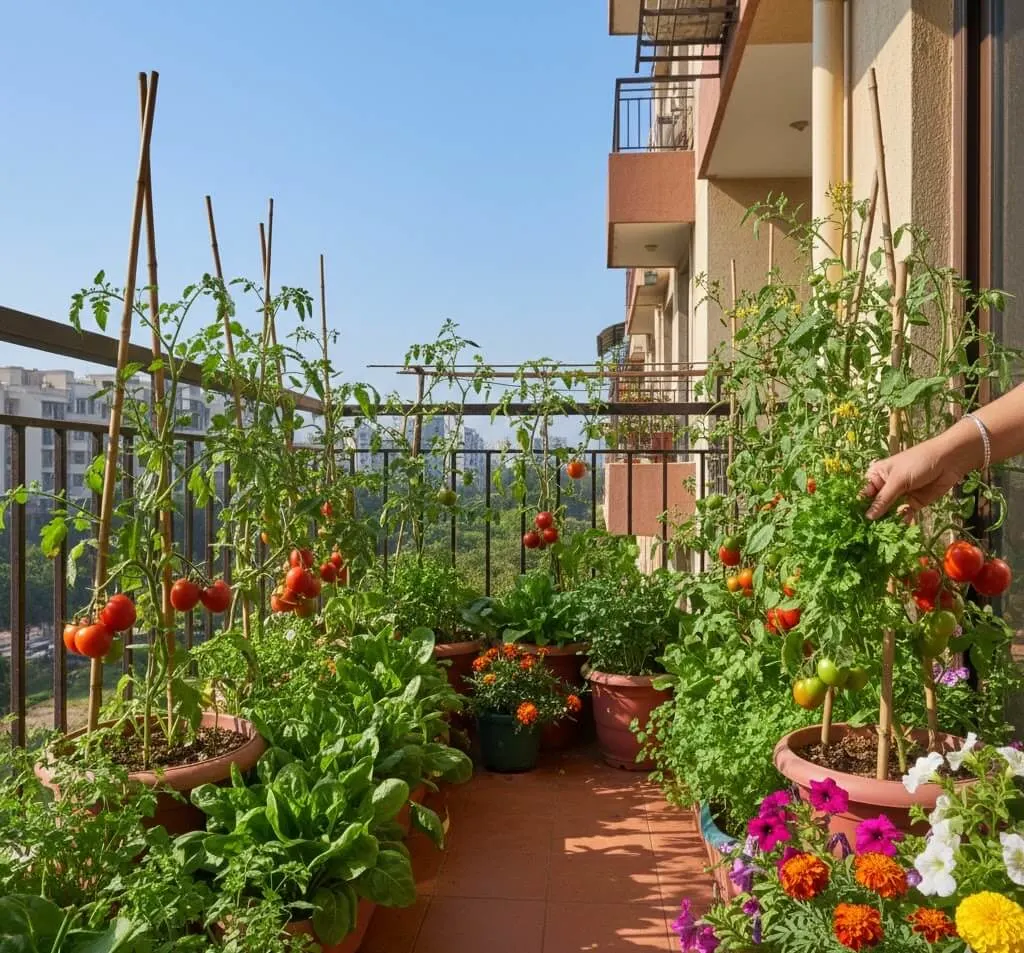
Zone 1–2 (South & Bangalore): November–February is your prime growing season!
Best vegetables:
- Tomatoes: Sow seeds in October; harvest December–February (no summer heat stress!)
- Leafy greens: Lettuce, spinach, methi (fenugreek), palak grow fast and lush
- Carrots and radishes: Sweeter in cool weather; ready in 60–70 days
- Beans: Bush beans produce heavily in mild winter
- Peppers: Continue growing (no frost to worry about!)
Best flowers:
- Petunias, marigolds, zinnias: Bloom beautifully in 20–25°C weather
- Cosmos, sunflowers: Fast-growing, colorful winter display
- Pansies: Thrive in mild winter, no frost protection needed
Best herbs:
- Coriander (dhania): Grows vigorously October–February
- Mint (pudina): Lush growth in cool weather
- Basil: Continues growing in Zone 1; slows in Zone 2
- Parsley, dill, fennel: Perfect winter herbs
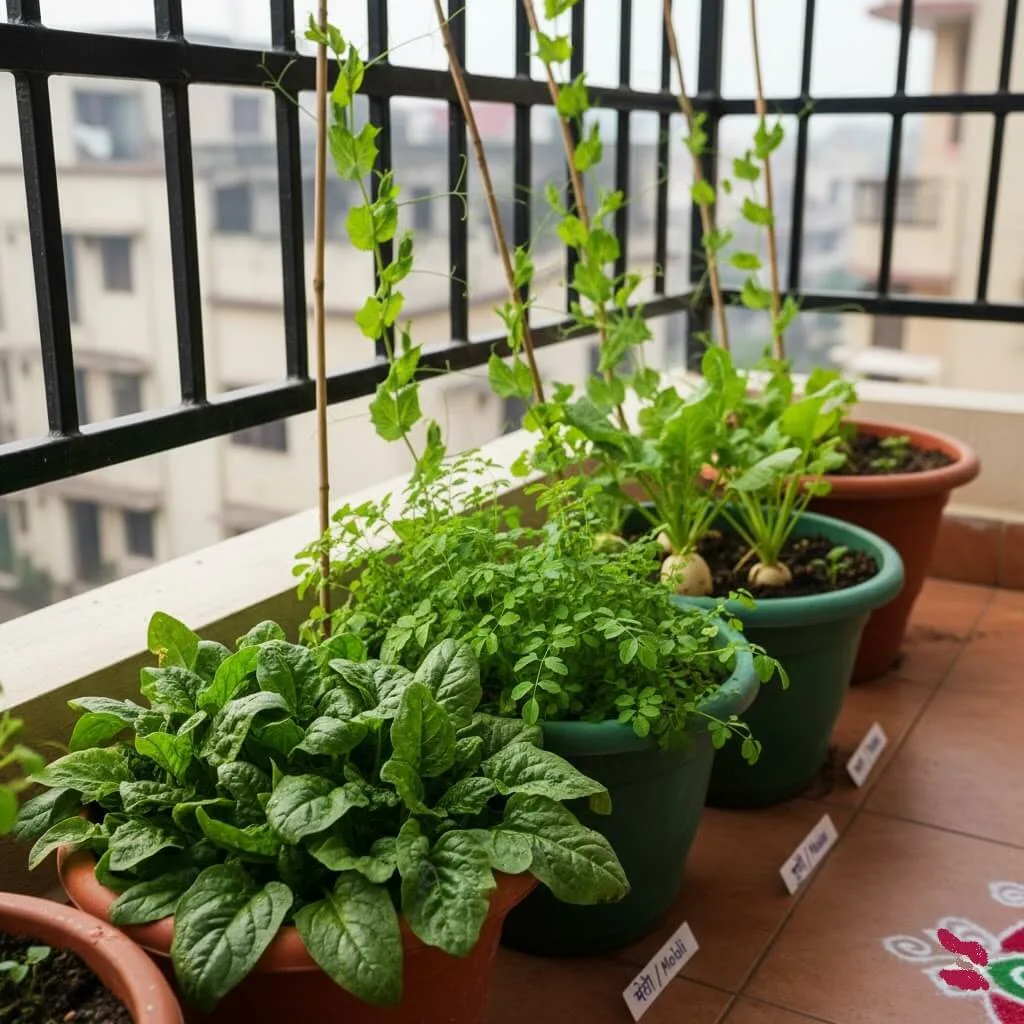
Zone 3 (North India): This is your MAIN vegetable season!
Best vegetables:
- Peas: Sow October; harvest December–January (winter staple)
- Cauliflower, cabbage: From seedlings in November
- Radish (mooli), turnip: Fast crops (30–40 days)
- Garlic: Plant cloves in October; harvest March–April
- Leafy greens: Palak, methi, sarson grow abundantly
Best flowers:
- Pansies: Survive light frost; bloom all winter
- Calendula (genda): Bright orange/yellow; very cold-hardy
- Stock, sweet peas: Fragrant winter flowers
Protection tips for North India:
- Mulch containers with 2″ compost in November
- Cover tender plants (tomatoes, peppers) with cloth on frost nights (below 2°C forecast)
- Group pots against south-facing walls
- Water only in morning (prevents overnight freezing)
Zone 4 (Hill Stations): Follow the complete article above!
- Use frost-proof containers
- Choose cold-hardy plants (kale, pansies, evergreens)
- Implement all protection strategies (grouping, mulching, covers)
- Expect snow; design for winter beauty
International vs. India Cold-Climate Gardening
For most Indian readers, flip the script:
| International Cold Climate | India (Zones 1–3) |
|---|---|
| Winter = gardening challenge | Winter = gardening opportunity! |
| Protect plants from cold | Protect from occasional heat/dry spells |
| Limited plant choices | Huge variety available |
| Growth slows/stops | Growth accelerates (vs. hot summer) |
| Harvest season ends | Harvest season BEGINS |
| Snow and ice management | Dew and fog management |
The Big Difference: In tropical/mild India, think of winter as your best balcony gardening season—cool enough to grow temperate vegetables, but warm enough that nothing dies!
Exception: North India (Zone 3) and hill stations (Zone 4) should follow cold-climate strategies in this article.
Self-Testing Checklist: Is Your Winter Balcony Garden Ready?
Complete this 10-point checklist before first hard frost (typically late October–November).
Pre-Winter Readiness Checklist:
☐ 1. Microclimate Assessed
- I know my balcony’s orientation (N/S/E/W)
- I’ve measured winter sun hours (minimum 3–4 for most plants)
- I’ve identified wind direction and protected spots
☐ 2. Frost-Proof Containers Selected
- All pots are resin, fiberglass, thick plastic, or insulated
- No thin terracotta or ceramic pots
☐ 3. Drainage Confirmed
- Every container has 3+ drainage holes
- All pots are elevated on bricks, pot feet, or wooden boards
- Water can flow freely (no saucers trapping water)
☐ 4. Cold-Hardy Plants Chosen
- I have at least 2–3 evergreens for year-round structure
- I have 2–3 winter-blooming plants (pansies, heathers) OR winter vegetables
- All plants are rated hardy to my zone (check plant tags)
☐ 5. Soil & Mulch Ready
- Containers filled with well-draining potting mix
- Each pot has 2–3″ mulch layer on surface
- Mulch pulled 1″ away from plant stems
☐ 6. Protection Supplies On Hand
- I have frost cloth or blankets for plant coverage
- I have bubble wrap or hessian for pot wrapping
- I know my local 10-day weather forecast sources
☐ 7. Strategic Placement Done
- Pots are grouped together (4+ containers)
- Containers placed against south or west walls
- Most tender plants in most protected corners
☐ 8. Watering Plan Established
- I’ll check soil moisture weekly (not on schedule)
- I know to water only when top 2″ is dryReduce watering by
- I’ll never water when soil is frozen
☐ 9. Wind Protection Added
- Taller evergreens positioned on windward side
- Trellis or screen in place (if very windy balcony)
- Containers weighted or secured against tipping
☐ 10. Monitoring Routine Set
- I have frost alert notifications enabled (weather app)
- I’ll do a quick visual check 2x weekly
- I’ll adjust protection based on weather forecasts
Scoring:
9–10 checks: 🌟 Excellent—Your balcony is winter-ready!
7–8 checks: ✅ Good—Address 1–2 missing items before deep cold
5–6 checks: ⚠️ Fair—Complete remaining items this week
0–4 checks: ❌ Action needed—Follow steps in sections 4–6 immediately
Common Mistakes & Solutions- Troubleshooting
| Mistake | Why It’s a Problem | The Fix | Prevention |
|---|---|---|---|
| 1. Using thin terracotta pots | Clay absorbs water; expands when frozen; cracks/shatters overnight | Replace with resin, fiberglass, or thick plastic (0.5″+ wall thickness). If keeping terracotta, wrap completely in bubble wrap. | Shop for “frost-proof” labeled containers; check material thickness before buying. |
| 2. Overwatering in winter | Wet soil freezes solid, expanding and crushing roots; causes rot in dormant plants | Reduce watering by 50–75%. Water only when top 2″ of soil is completely dry. Check with finger test, not schedule. | Understand that winter plants need 1/4 the water of summer plants; cold slows growth and evaporation. |
| 3. Leaving pots directly on cold floor | Metal/concrete balcony floors conduct cold upward, freezing roots from bottom-up (coldest zone in pot) | Elevate ALL pots on bricks (2–3″), pot feet, or wooden boards. Creates air gap + improves drainage. | Budget $1–$2 per pot for simple plastic pot feet; invest in long-term protection.theenglishgardenyoutube |
| 4. Planting tender tropicals | Plants like geraniums, begonias, coleus die at first frost (32°F); wasted money and effort | Choose ONLY cold-hardy plants rated for your zone. Check USDA zone on plant tags before buying. | Study zone ratings; when in doubt, ask nursery staff or search “[plant name] hardiness zone”. |
| 5. No wind protection | Wind desiccates evergreen foliage (dries faster than frozen roots can replace moisture); topples light pots | Create windbreak using: grouped pots, taller evergreens on windward side, trellis/lattice screen, or balcony privacy screen. | Test wind direction with ribbon; position tallest/densest plants to block wind for others. |
| 6. Forgetting to mulch | Exposed soil freezes faster, causing rapid temperature swings; bulbs get frost-heaved out of soil; roots suffer freeze damage | Add 2–3″ layer of bark chips, shredded leaves, or straw on all container surfaces in late October. | Set calendar reminder: “Mulch all balcony pots” for October 15 each year. |
| 7. Ignoring severe cold warnings | Even hardy plants suffer damage below their tolerance limits (zone 5 plants damaged at ‑15°F) | When forecast shows extreme cold (below 0°F): Wrap pots with bubble wrap, cover plants with frost cloth, or bring most tender plants indoors overnight. | Sign up for weather alerts on phone; check 10-day forecast every Sunday; prepare protection supplies in advance. |
| 8. Planting too late | Plants need 4–6 weeks to establish roots before hard frost; late planting = weak plants that don’t survive winter | Plant evergreens and winter flowers by early-mid October (zones 5–6) or late September (zones 3–4). | Mark calendar: “Start winter balcony planting” for September 15; shop nurseries early before selection runs out. |
| 9. Using summer potting soil without amendment | Summer mixes retain too much moisture; cause root rot in slow-growing winter plants | Amend with extra perlite (20% of total mix) for improved drainage; top-dress with compost for slow-release winter nutrition. | Buy “all-season” potting mixes, or make custom mix: 40% coco coir + 30% potting soil + 20% perlite + 10% compost. |
| 10. Overcrowding containers | Poor air circulation leads to mold, fungal disease on foliage; roots compete, weakening all plants | Space plants per label instructions (usually 8–12″ apart); prune any dead foliage monthly; ensure 2–3″ between pots. | Calculate: 12″ pot holds max 3–4 small plants; don’t exceed recommended density even when planting looks sparse initially. |
Detailed Troubleshooting Guide
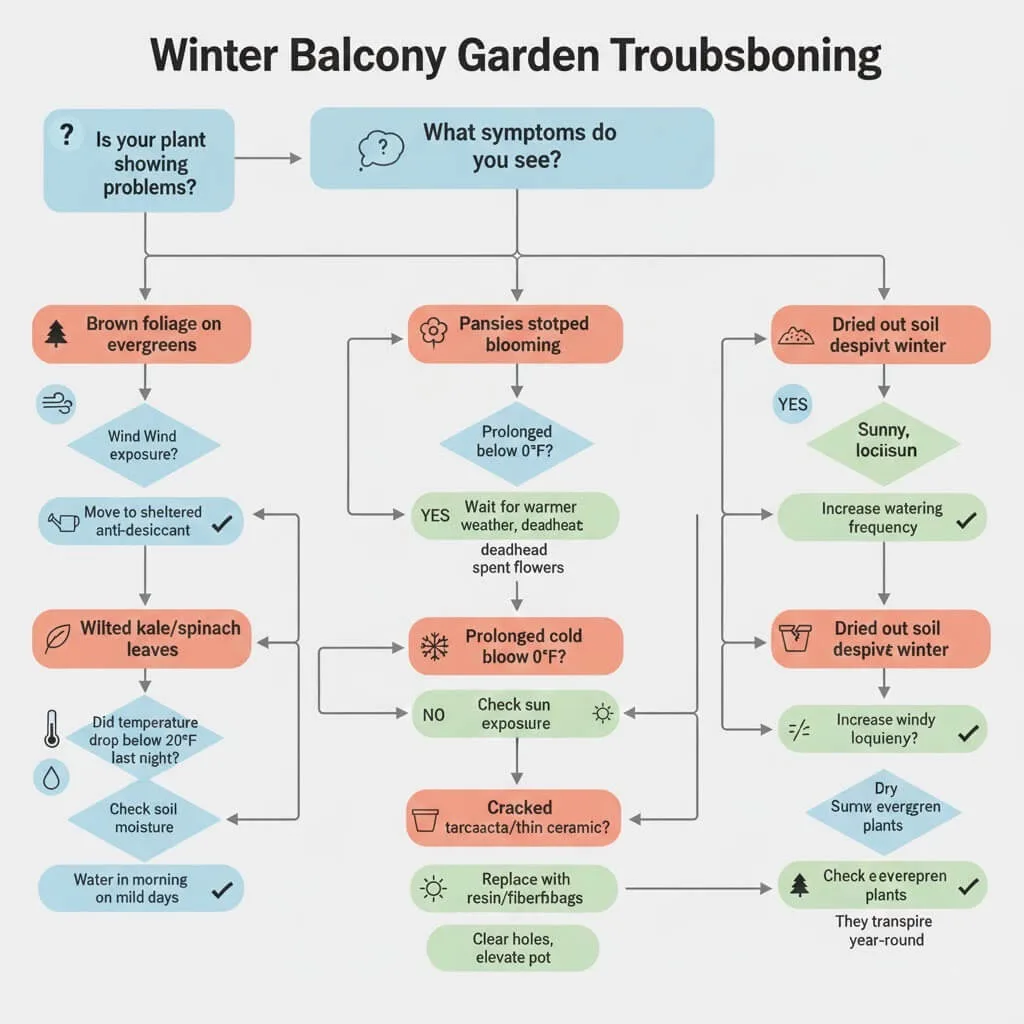
Problem 1: Evergreen Foliage Turning Brown at Tips
Symptoms:
- Needles or leaves browning from tips inward
- Affects conifers, boxwood, holly
- Usually appears mid-winter (January–February)
Cause: Wind burn or desiccation—plant loses moisture through foliage faster than frozen roots can replace it (winter drought).
Immediate Fix:
- Move pot to most sheltered corner (walls on 2 sides)
- Wrap container with bubble wrap to warm soil slightly
- On mild days (above 40°F), mist foliage lightly with water
- DO NOT prune brown tips yet; wait until spring
Long-Term Prevention:
- Apply anti-desiccant spray (Wilt-Pruf) to evergreen foliage in November and January
- Position evergreens against walls, never in open wind
- Create windbreak using taller pots or trellis
Problem 2: Kale/Spinach Leaves Drooping After Heavy Frost
Symptoms:
- Leaves look wilted, limp, darkened overnight
- Happens after temps drop below 20°F
- May have ice crystals visible on foliage
Cause: Normal freeze response—water in plant cells freezes, causing temporary wilting; NOT permanent damage.
Immediate Fix:
- DO NOTHING immediately
- Wait for temperature to rise above freezing (mid-morning)
- Leaves will perk up as they thaw
- Harvest only after fully thawed (never pick frozen leaves—they’ll turn mushy)
Long-Term Prevention:
- Cover vegetables with frost cloth when temps forecast below 20°F
- Harvest in afternoon (warmest part of day)
- Know that kale tastes sweeter after frost (it’s actually beneficial)
Problem 3: Pansies Stopped Blooming in Mid-Winter
Symptoms:
- Lots of green foliage but no flowers
- Happened after December cold snap
- Plants otherwise look healthy
Cause: Prolonged deep freeze (below 0°F) or insufficient sunlight; pansies pause blooming during hardest cold.
Immediate Fix:
- Deadhead any spent/old flowers
- Move to sunniest spot on balcony
- Wait for milder weather (January thaw or February warm spell)
- They’ll resume blooming when temps rise above 35°F
Long-Term Prevention:
- Protect pansies with frost cloth when temps forecast below 5°F
- Ensure minimum 4 hours sun in winter
- Fertilize lightly (half strength) in early February to boost spring bloom
Problem 4: Containers Cracked Despite “Frost-Proof” Label
Symptoms:
- Vertical cracks in pot walls
- Happened after severe cold or freeze-thaw cycle
- Water leaked out
Cause: Poor-quality material labeled incorrectly, OR water trapped inside pot without adequate drainage.
Immediate Fix:
- If crack is small (<2″): Seal with waterproof exterior caulk or epoxy
- If crack is large: Transfer plant to new pot immediately
- Check drainage holes—likely clogged or insufficient
Long-Term Prevention:
- Buy thicker containers (0.5″+ wall thickness)
- Choose resin or fiberglass from reputable brands (Bloem, Crescent Garden)
- Always elevate pots; ensure drainage holes are clear
- Test: Fill pot with water and time how fast it drains (should be empty in 5–10 minutes)
Problem 5: Soil Dried Out and Plants Wilted (Despite Winter)
Symptoms:
- Soil pulled away from pot edges
- Leaves drooping, dry, crispy
- Happened during sunny, windy week
Cause: Winter sun + wind dry containers quickly, especially evergreens that transpire year-round; many gardeners assume “it’s winter, no watering needed”.
Immediate Fix:
- Check soil moisture with finger 3–4″ deep
- If bone dry, water thoroughly until drains from bottom
- Wait 15 minutes; water again if soil still very dry
- Do NOT fertilize stressed plants
Long-Term Prevention:
- Check soil weekly, even in winter (set phone reminder)
- Water when top 2″ is dry, even if it’s 20°F outside
- Evergreens, kale, spinach need consistent moisture
- Sunny, windy balconies need more frequent watering than shaded, protected ones
Frequently Asked Questions
Q1: Can balcony plants survive below-zero (Fahrenheit) temperatures?
Answer: Yes, IF you choose cold-hardy plants rated for your zone. Many plants tolerate 0–20°F:
- Pansies/violas: Survive to 15°F; bloom through light snow
- Winter heathers: Tolerate ‑13°F (zone 5)
- Kale: Survives to 10°F; sweetens after frost
- Dwarf conifers: Hardy to ‑30°F or lower (zone 3)
- Boxwood: Zone 5 (tolerates 0°F)
Key: Check USDA zone on plant labels; choose plants rated 1–2 zones colder than yours for guaranteed survival.
Q2: Do I need to water balcony plants in winter?
Answer: YES, but much less frequently than summer.
Why: Evergreens and winter vegetables continue growing (slowly); roots need moisture. Winter sun and wind dry containers faster than you’d think.
How Often:
- Check soil weekly with finger test
- Water only when top 2″ is completely dry
- Never water frozen soil (wait for mild day above 35°F)
- Reduce frequency by 50–75% vs. summer
Amount: Water thoroughly until drains from bottom holes (ensures entire root zone gets moisture).
Q3: Which balcony plants bloom in winter?
Answer: Several cold-hardy plants flower during winter months:
| Plant | Bloom Time | Colors | Hardiness |
|---|---|---|---|
| Pansies/Violas | Oct–April | Multi-color | Zone 6 (15°F) |
| Winter heathers | Nov–April | White, pink, purple | Zone 5 (‑13°F) |
| Hellebores | Dec–March | White, pink, purple | Zone 4 (‑20°F) |
| Winter jasmine | Jan–March | Yellow | Zone 6 (0°F) |
| Snowdrops (bulbs) | Feb–March | White | Zone 3 (‑30°F) |
| Crocuses (bulbs) | Feb–March | Purple, yellow, white | Zone 3 (‑30°F) |
Q4: How do I protect plants during a severe cold snap (below 0°F)?
Answer: Use layered protection:
24 Hours Before Cold Snap:
- Wrap containers: Bubble wrap or hessian around pot sides (2–3 layers)
- Cover plants: Drape frost cloth over foliage; secure with clips/stones
- Group pots: Move all containers together against warmest wall
- Water lightly: If soil is dry, water in morning so roots aren’t dry during freeze
During Cold Snap:
- Leave covers on until temps rise above 20°F
- Check on calm, sunny afternoons—remove covers for 2–3 hours if temp is above 35°F
After Cold Snap:
- Remove wrapping and covers once forecast shows sustained temps above 25°F
- Inspect for damage; prune dead foliage in spring (not immediately)
Q5: Can I grow vegetables on a winter balcony?
Answer: Absolutely! Cold-hardy vegetables thrive in winter containers and taste better after frost.
Best Winter Vegetables:
- Kale: Harvest outer leaves weekly; plant produces for 4–5 months
- Spinach: Cut-and-come-again; sweeter flavor after frost
- Carrots: Grow in deep pots (12″+); sweeten in cold; harvest as needed
- Mâche/corn salad: Extremely cold-tolerant; fast-growing
- Hardy herbs: Parsley, thyme, sage
Tips for Success:
- Plant in September–early October
- Use south-facing balcony spots
- Cover with frost cloth below 20°F
- Harvest in afternoon (after plants thaw)
Q6: What’s the best container size for winter balcony plants?
Answer: Bigger is better for winter; larger pots insulate roots better against freeze-thaw cycles.
| Plant Type | Minimum Diameter | Minimum Depth |
|---|---|---|
| Dwarf conifers | 14–18″ | 12–16″ |
| Perennial flowers | 12″ | 10″ |
| Annual flowers | 10″ | 8″ |
| Leafy greens | 12″ | 8–10″ |
| Root vegetables | 12″ | 12–18″ |
Why Size Matters:
- More soil = slower temperature fluctuations
- Better root insulation from freezing
- Retains moisture longer (less frequent watering)
- Provides stability in wind
Q7: Should I fertilize winter balcony plants?
Answer: Minimal to no fertilization in winter.
Why: Plants grow 75% slower in cold; don’t need much nutrition; excess fertilizer can harm dormant roots.
Best Practice:
- Fall prep: Top-dress containers with 1″ compost in October (provides slow-release nutrition all winter)
- Mid-winter: If growing fast-cropping vegetables (kale, spinach), apply liquid fertilizer at half strength once monthly
- Avoid: Synthetic granular fertilizers; high-nitrogen feeds
Resume normal feeding: Early spring (March–April) when temps consistently above 50°F.
Q8: How do I prevent pots from freezing to the balcony floor?
Answer: Elevate all containers on pot feet, bricks, or wooden blocks.youtube
Why It’s Important:
- Prevents ice bond between pot and floor (impossible to move later)
- Improves drainage (water doesn’t pool under pot)
- Creates air gap that insulates roots
- Protects balcony flooring from moisture damage
Options:
- Pot feet: Plastic or terracotta risers ($1–$2 each)
- Bricks: Stack 2–3″ high; free/cheap at hardware stores
- Wooden boards: Cut into 4″ squares; treat with outdoor sealer
Q9: What if I have a north-facing balcony with almost no sun?
Answer: Focus on shade-tolerant evergreens and foliage plants; skip sun-loving flowers.
Best Plants for North-Facing Balconies:
- Evergreens: Boxwood, holly, yew, shade-tolerant conifers
- Flowers: Hellebores (bloom in shade), winter ferns
- Foliage: Heuchera (colorful leaves), ivy, euonymus
Design Strategy:
- Use varied foliage colors (greens, yellows, purples) for visual interest
- Focus on texture (fine needles vs. broad leaves)
- Add decorative elements: lights, ornaments, birch branches
Q10: Can I start a winter balcony garden in January, or is it too late?
Answer: Not ideal, but possible with established container plants.
What You CAN Do in January:
- Buy already-established plants from nurseries (not seeds)
- Choose extra-hardy options (conifers, boxwood, winter heathers)
- Focus on structure (evergreens) rather than flowers
- Plant early spring bulbs in pots (they’ll bloom in 6–8 weeks)
What to SKIP Until Fall:
- Starting from seed (too cold for germination)
- Planting tender vegetables (kale/spinach need earlier start)
- Bare-root plants (need warm soil to establish)
Best Approach: Start planning now; shop nurseries in September for next winter’s success.
Conclusion: Your Winter Balcony Garden Action Plan
Creating a thriving winter balcony garden in cold climates isn’t about fighting nature—it’s about working with it through smart plant choices, strategic protection, and simple care routines.
Recap: 5 Non-Negotiables for Success
- Choose cold-hardy plants rated for your zone or colder
- Use frost-proof containers (resin, fiberglass, thick plastic)
- Elevate and mulch every pot for root protection
- Group and position containers against walls, out of direct wind
- Monitor and adjust weekly based on weather forecasts
Start Small, Expand Later
Your first winter balcony garden should be manageable:
- Year 1: 3–5 containers (2 evergreens + 1 winter vegetable + 2 pansy pots)
- Year 2: Expand to 8–10 containers; add spring bulbs and fragrant shrubs
- Year 3: Full seasonal display with all 8 ideas implemented
Next Steps This Week
☐ Use the self-testing checklist (section 8) to assess readiness
☐ Address any missing protection supplies (frost cloth, bubble wrap)
☐ Make a quick sketch of your balcony with plant placement
☐ Set weekly calendar reminder: “Check balcony soil moisture”
Related Resources for Deeper Learning
For complete winter gardening guidance, explore these connected guides on our site:
- 15 Best Winter Vegetables to Grow in India– Sowing schedules, spacing, and harvest times
- Where to Buy Winter Vegetable Seeds in India– Trusted suppliers, kits, and pricing
- Best Soil for Container Gardening – DIY mixes tested for cold-weather containers
- How to Water Container Plants– Seasonal watering techniques and schedules
Final Encouragement
Winter balcony gardening isn’t just possible in cold climates—it’s incredibly rewarding. Fresh kale in January, pansies blooming through snow, and evergreen beauty that lifts your mood all winter long are worth the small effort of smart setup and weekly check-ins.
Start simple, use the strategies in this guide, and prepare to be amazed at what survives (and thrives) when temperatures drop. Your neighbors will ask for advice, and you’ll wonder why you ever accepted empty balconies as “normal” for half the year.
Ready to begin? Start with the self-testing checklist this weekend—your thriving winter balcony garden is just a few frost-proof pots and smart plants away!
Carrots & radishes: Sweeter in cool weather; ready in 60–70 days