
Table of Contents
Introduction
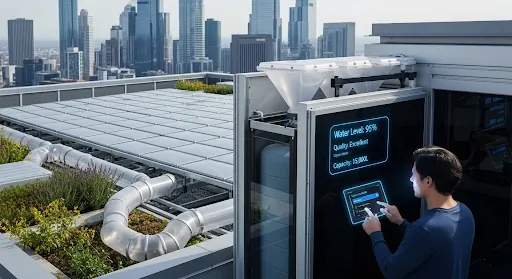
City living doesn’t mean sacrificing water independence or environmental responsibility. An Advanced Rainwater Harvesting System has evolved urban water collection into sophisticated solutions that work within space constraints while delivering substantial water conservation benefits. Modern city dwellers successfully implement Advanced Rainwater Harvesting System technologies that rival rural installations in efficiency and exceed them in technological sophistication.
Smart rainwater harvesting represents the future of urban water management, and an Advanced Rainwater Harvesting System combines traditional collection principles with cutting-edge automation and monitoring technology. These Advanced Rainwater Harvesting System installations maximize collection potential while minimizing maintenance requirements, creating set-and-forget solutions perfect for busy urban lifestyles.
Urban Rainwater Harvesting: Innovative Solutions for City Living
Urban rainwater harvesting

Urban rainwater harvesting addresses unique metropolitan challenges including limited space, building restrictions, aesthetic concerns, and complex regulations. City water collection systems must deliver meaningful benefits while working within constraints that would challenge traditional rural approaches.
Space constraint solutions

Space constraint solutions focus on vertical integration and multi-functional designs that serve multiple purposes simultaneously. Rooftop systems maximize collection potential without consuming precious ground-level space needed for parking, recreation, or landscaping. Modular storage systems adapt to irregular spaces and allow capacity expansion without major infrastructure modifications.
Wall-mounted tanks and compact designs work exceptionally well for townhouses and condominiums with limited outdoor access. These systems often integrate with building architecture, appearing as design elements rather than utilitarian equipment. Underground storage systems provide maximum capacity in minimal space while remaining completely invisible to neighbors and building authorities.
Rooftop collection systems
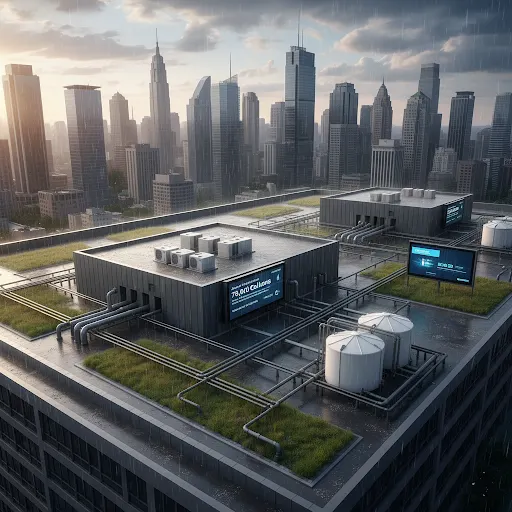
Rooftop collection systems offer the greatest potential in urban environments where building density creates substantial catchment areas. Commercial buildings provide enormous collection opportunities, with large flat roofs capable of harvesting tens of thousands of gallons annually. Residential rooftops, while smaller, still provide substantial household water supplies when properly designed and maintained.
Green roofs and vertical gardens

Green roofs and vertical gardens combine water collection with food production, building insulation, and urban heat island reduction. Extensive green roofs focus primarily on stormwater management while intensive installations support substantial garden production. Both approaches integrate seamlessly with rainwater collection while providing additional environmental and economic benefits.
Vertical gardens

Vertical gardens maximize growing space in compact urban lots while creating natural cooling effects and air quality improvements. These installations often incorporate drip irrigation systems fed directly from rainwater storage, creating closed-loop systems that minimize water waste while maximizing production potential.
Permeable pavements and other green infrastructure
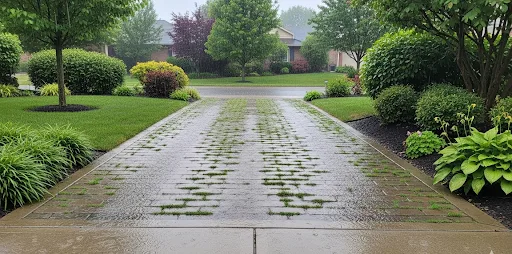
Permeable pavements and other green infrastructure solutions manage urban flooding while recharging groundwater supplies. These installations replace traditional concrete with materials allowing water infiltration and natural filtration. Permeable systems work particularly well for driveways, walkways, and parking areas where traditional collection methods aren’t practical.
Balcony and small-space options
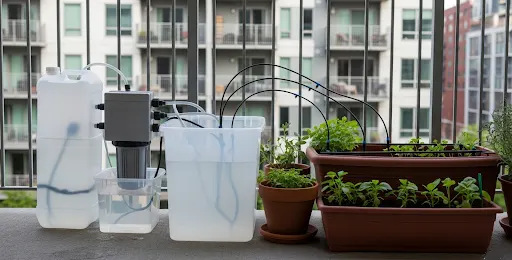
Balcony and small-space options accommodate apartment dwellers and renters unable to modify building infrastructure. Portable collection systems, container gardens with integrated water storage, and compact filtration units provide water independence even in the smallest urban spaces. These systems focus on garden irrigation and emergency water storage rather than complete household supply replacement.
Maintenance and Troubleshooting: Keep Your System Running Smoothly
Rainwater system maintenance
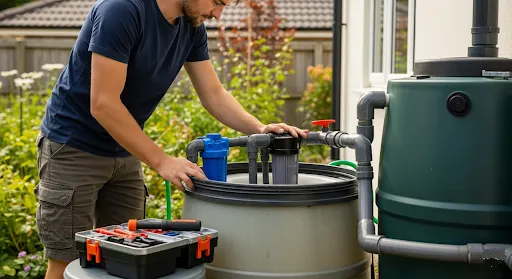
Rainwater system maintenance prevents most problems while extending equipment lifespan and maintaining optimal water quality. Troubleshooting water collection issues typically involves systematic component inspection and understanding common failure modes that affect system performance.
Regular cleaning schedules

Regular cleaning schedules form the foundation of successful system operation. Gutter systems require cleaning at least twice yearly, more frequently in areas with heavy tree coverage or during peak leaf-fall seasons. Clogged gutters reduce collection efficiency while potentially causing overflow damage to building foundations and landscaping.
Tank cleaning
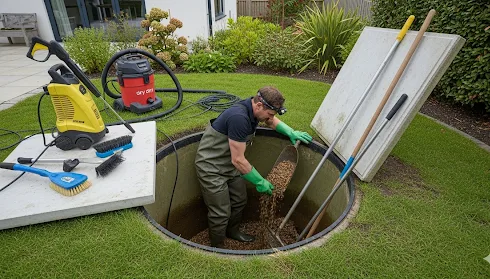
Tank cleaning procedures depend on storage type and water quality requirements. Above-ground tanks benefit from annual interior cleaning that removes sediment accumulation and prevents algae growth. Underground storage systems may require professional cleaning services with specialized equipment for thorough interior access and waste removal.
System inspections
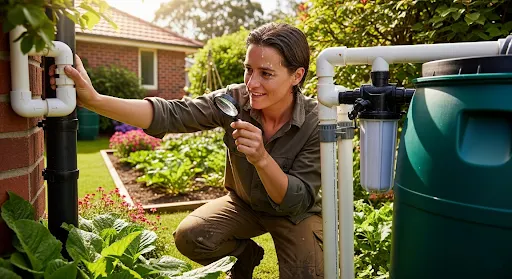
System inspections should occur before and after heavy rainfall seasons to identify developing problems before they cause system failures. Visual inspections identify loose connections, damaged components, and wear patterns that indicate impending maintenance needs. Preventive maintenance costs far less than emergency repairs and prevents water waste during peak collection periods.
Filter replacement schedules
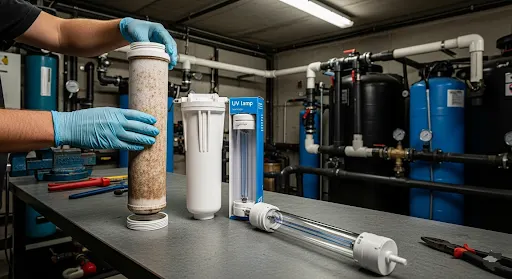
Filter replacement schedules vary with water usage volumes and contamination levels but typically range from monthly for high-use systems to annually for irrigation-only applications. Sediment filters show obvious loading through color changes and reduced flow rates. UV lamps require annual replacement regardless of runtime to maintain disinfection effectiveness.
Common problems and solutions
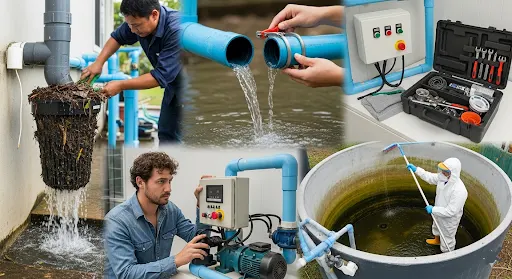
Common problems and solutions include clogged filters reducing system flow rates, pump failures affecting pressurized delivery, tank overflows during heavy rainfall, and water quality issues from inadequate filtration or storage contamination. Most problems have straightforward solutions when addressed promptly.
Filtration systems and Pump problems
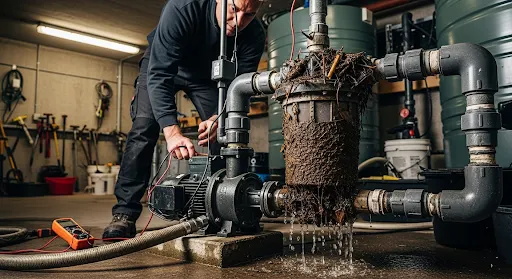
Clogged filtration systems typically result from inadequate pre-filtration or deferred maintenance schedules. Installing larger or additional pre-filters prevents downstream clogging while extending expensive filter element lifespans. Pump problems often stem from electrical issues, clogged intake screens, or damage from sediment in inadequately filtered water.
Seasonal maintenance tasks
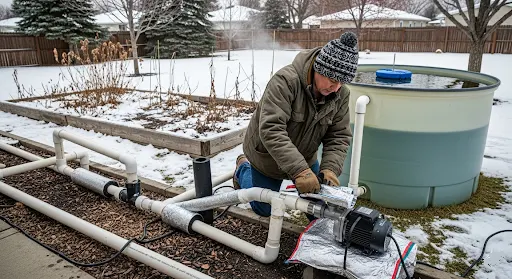
Seasonal maintenance tasks prepare systems for weather extremes and changing water demands. Cold climate preparations include draining exposed pipes, protecting pumps from freezing, and winterizing storage tanks in unheated areas. Freeze protection methods range from insulation and heating elements to complete system drainage during winter months.
Hot weather maintenance
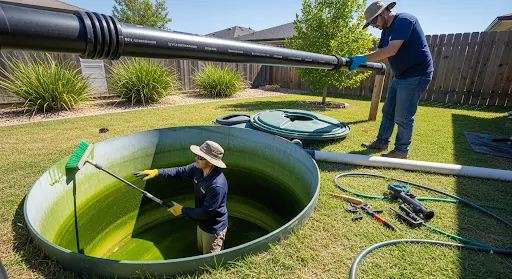
Hot weather maintenance focuses on algae control and preventing thermal expansion damage to storage components. Tank covers and proper ventilation prevent light exposure that encourages algae growth. Expansion joints and flexible connections accommodate thermal movement without creating leak points or stress concentrations.
Equipment replacement guidelines
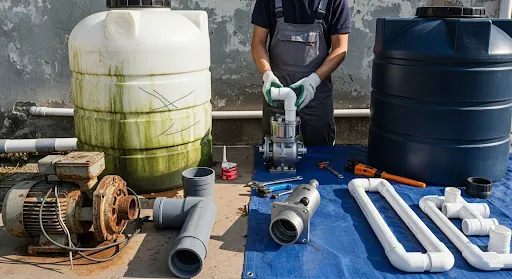
Equipment replacement guidelines help budget for ongoing system costs and plan maintenance schedules effectively. Pump systems typically last 5-10 years with proper maintenance and appropriate sizing. Storage tanks can function for decades with proper care, though plastic components may require replacement after 15-20 years of service.
Advanced Rainwater Harvesting Techniques: Innovation and Technology
Smart rainwater harvesting
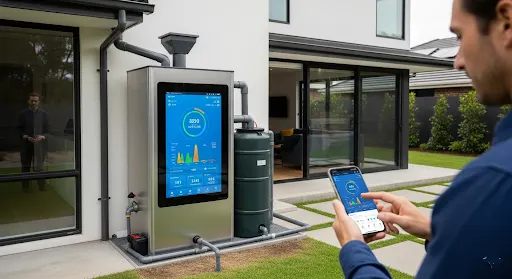
Smart rainwater harvesting transforms traditional collection systems into sophisticated water management networks that optimize performance automatically. Advanced water collection technology delivers unprecedented efficiency while reducing maintenance requirements and user intervention needs.
Smart monitoring systems
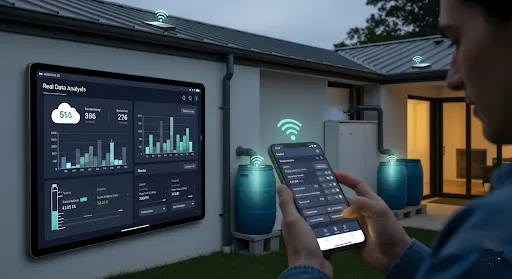
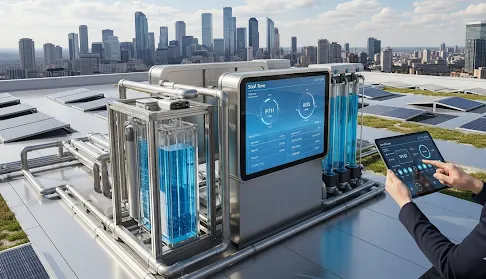
Smart monitoring systems provide comprehensive oversight through wireless sensor networks and cloud-based data analysis platforms. Tank level sensors track storage capacity continuously, sending smartphone alerts when tanks approach empty or full conditions. Water quality monitors track pH, turbidity, and bacterial contamination levels, ensuring safe water for all intended applications throughout the year.
Advanced monitoring extends beyond basic parameter tracking to include predictive analytics that anticipate maintenance needs and optimize system performance. Machine learning algorithms analyze usage patterns, weather forecasts, and system performance data to recommend operational adjustments. These systems learn household water consumption habits and adjust collection and distribution strategies accordingly.
Automated controls
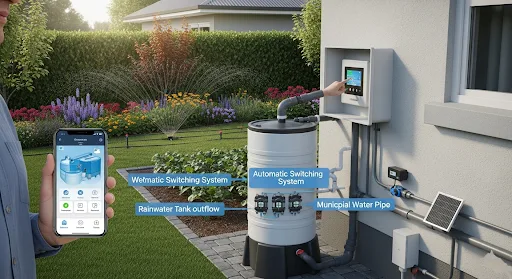
Automated controls eliminate manual system management while protecting equipment from damage due to improper operation. Automatic switching systems seamlessly transition between rainwater and municipal water supplies based on storage levels, water quality readings, and demand requirements. Smart valves prevent backflow contamination while ensuring continuous water service regardless of collection system status.
Weather-based irrigation controllers coordinate landscape watering with rainfall forecasts and soil moisture readings. These systems pause irrigation during active precipitation while scheduling watering cycles to maximize stored water utilization. Smart irrigation integration creates comprehensive landscape water management that minimizes waste while maintaining optimal growing conditions.
Integration with irrigation systems
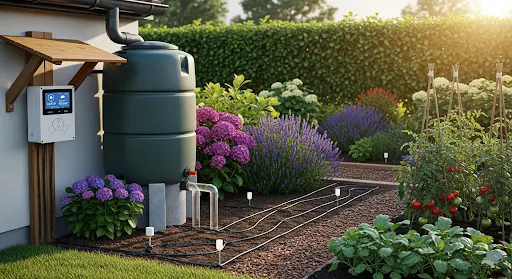
Integration with irrigation systems creates holistic landscape water management that maximizes collection system value. Drip irrigation networks distribute collected rainwater efficiently while soil moisture sensors prevent overwatering and water waste. Zone-based controllers apply water only where needed, extending storage capacity and reducing system cycling frequency.
Automated irrigation systems learn landscape water requirements and adjust application rates based on plant types, sun exposure, and seasonal growth patterns. Rain sensors pause irrigation during active precipitation while weather-based controllers anticipate rainfall and adjust schedules accordingly. These integrations often provide greater water savings than the collection systems themselves.
Hybrid systems combining multiple methods
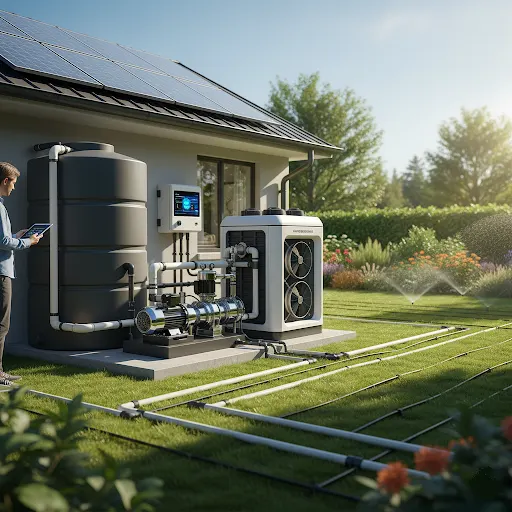
Hybrid systems combining multiple methods maximize collection potential while providing backup capabilities during extended dry periods. Solar-powered pumps eliminate electrical grid dependence while maintaining pressurized water delivery throughout properties. Atmospheric water generators supplement rainwater collection during drought conditions.
Greywater integration
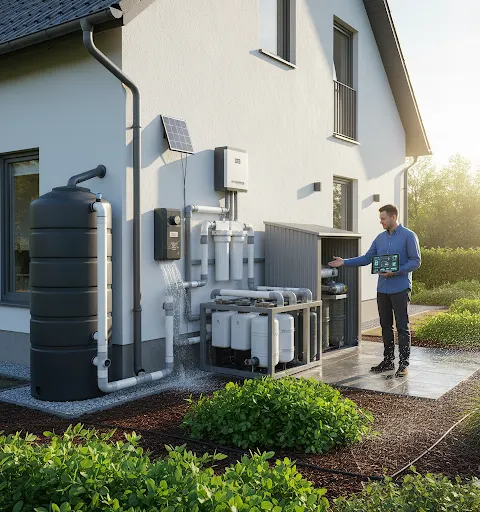
Greywater integration combines rainwater with treated household wastewater for maximum water independence. These systems capture water from sinks, showers, and washing machines, treating it appropriately for irrigation and other non-potable applications. Combined systems often achieve 70-80% reduction in municipal water consumption.
Future trends and innovation
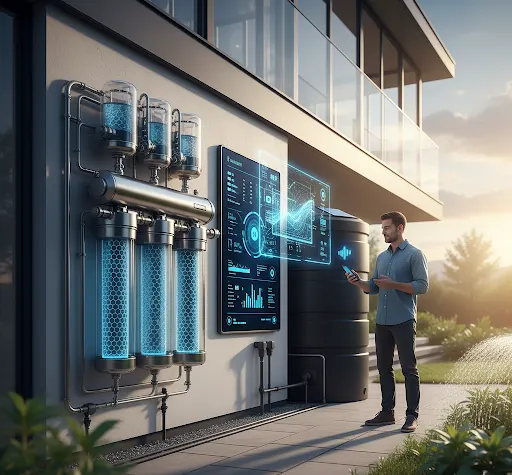
Future trends and innovations include advanced materials science, artificial intelligence optimization, and seamless smart home integration. Graphene-based filtration promises superior contaminant removal with dramatically reduced maintenance requirements. Self-cleaning filters and automated maintenance systems reduce ongoing labor requirements while maintaining optimal performance.
Artificial intelligence systems optimize storage and distribution automatically based on weather forecasts, usage patterns, and water quality requirements. These systems learn from experience, continuously improving performance while reducing energy consumption and maintenance costs. Voice-controlled interfaces and smartphone integration make system management effortless for all family members.
Emerging technologies
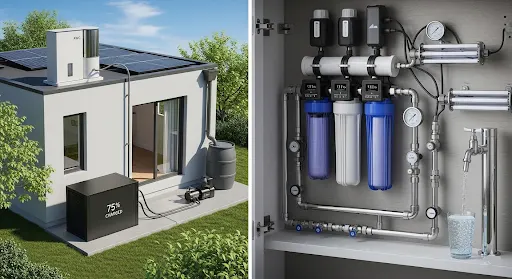
Emerging technologies include atmospheric water harvesting that supplements rainfall collection, advanced battery storage for off-grid pump operation, and integrated water treatment systems that produce drinking-quality water from any precipitation. Nanotechnology filtration and biological treatment systems promise maintenance-free operation with superior performance characteristics.
Comprehensive FAQ: Expert Answers to Common Questions
What are the best urban rainwater harvesting techniques?
Urban techniques prioritize space efficiency and aesthetic integration while maximizing collection potential. Rooftop collection systems provide primary harvesting without consuming ground space. Green infrastructure approaches combine water collection with building performance improvements and urban heat island reduction.
Underground storage systems work exceptionally well in cities where space constraints limit above-ground tank options. These installations maximize capacity while remaining invisible to neighbors and building authorities. Modular storage approaches allow gradual system expansion without major infrastructure disruption.
How do you maintain rainwater quality in storage tanks?
Water quality maintenance requires preventing contamination sources and managing storage conditions that could degrade collected water. Tank cleaning annually removes sediment accumulation and prevents algae growth that affects taste and odor. Proper tank covers exclude light and debris while allowing necessary ventilation.
Algae control methods include eliminating light exposure, maintaining proper water circulation, and using biological treatments like BTI bacteria that target mosquito larvae without affecting water safety. UV sterilization systems treat water on-demand without chemical storage requirements. Regular water quality testing verifies treatment effectiveness and identifies problems before they affect system performance.
What’s the difference between wet and dry rainwater systems?
Dry systems position storage tanks close to downspout discharge points, allowing direct water flow without underground piping networks. These systems empty completely between rainfall events, eliminating standing water that could harbor mosquito breeding or develop contamination problems. Dry systems cost less initially and offer simpler maintenance requirements.
Wet systems use underground piping to transport water from multiple collection points to centralized storage areas. These installations accommodate complex building layouts and optimal tank placement but remain partially filled between storms. Wet systems require careful design preventing freeze damage and maintaining water quality in stored water.
How do smart rainwater systems work?
Smart monitoring systems use wireless sensor networks providing real-time data on tank levels, water quality parameters, and system performance metrics. Smartphone apps allow remote monitoring and control from anywhere while automated systems optimize performance based on weather forecasts and usage patterns.
Automated controls manage pump operation, water source switching, and irrigation scheduling without user intervention. Smart irrigation integration coordinates landscape watering with rainfall forecasts and soil moisture readings. These systems learn household water consumption patterns and adjust collection and distribution strategies automatically.
What are the best materials for rainwater storage tanks?
Material selection balances durability, cost, and application requirements. Food-grade plastic tanks offer lowest initial costs and easy installation but may degrade under UV exposure. Concrete cisterns provide maximum durability and thermal mass but require professional installation and significant excavation.
Fiberglass tanks balance cost with longevity while resisting UV damage and maintaining excellent water quality characteristics. Stainless steel tanks offer premium durability and sanitary conditions but cost significantly more than other options. Tank material choice should consider local climate conditions, intended lifespan, and budget constraints.
Maintenance Schedules: Seasonal Care for Optimal Performance
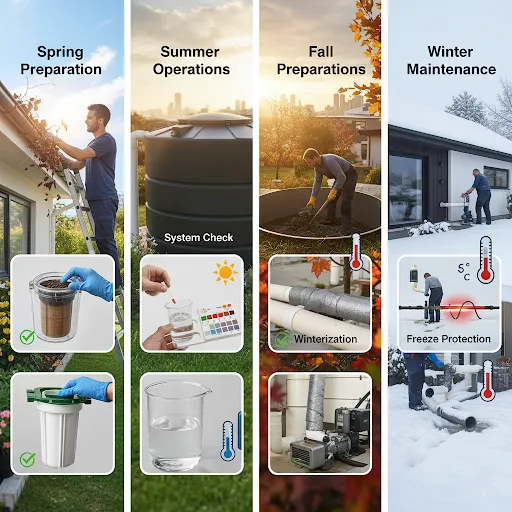
Seasonal maintenance tasks ensure year-round system reliability while preventing problems that could interrupt water collection during critical periods. System maintenance schedules adapt to local climate conditions and system complexity while minimizing time investment for busy homeowners.
Spring preparation includes comprehensive system inspection after winter weather stress. Check all connections for freeze damage, clean gutters and screens of accumulated debris, and test pump systems before peak collection season begins. Filter replacement schedules often coincide with spring preparation to ensure optimal performance during heavy rainfall periods.
Summer operations focus on algae control and monitoring water consumption rates that typically peak during hot weather irrigation demands. Tank covers and proper ventilation prevent light exposure encouraging algae growth. Water quality testing becomes particularly important during hot weather when biological contamination risks increase.
Fall preparations involve gutter cleaning before leaf-fall season and system winterization in cold climates. Remove accumulated sediment from storage tanks and inspect all components for wear or damage requiring winter repair or replacement. Freeze protection measures include draining exposed pipes and protecting pumps from cold damage.
Winter maintenance varies dramatically with climate conditions. Cold regions require complete system drainage or heating elements preventing freeze damage. Moderate climates allow continued operation with minimal adjustments. Regular monitoring ensures systems remain functional during winter storms that provide substantial collection opportunities.
Advanced System Integration: Whole-House Water Management
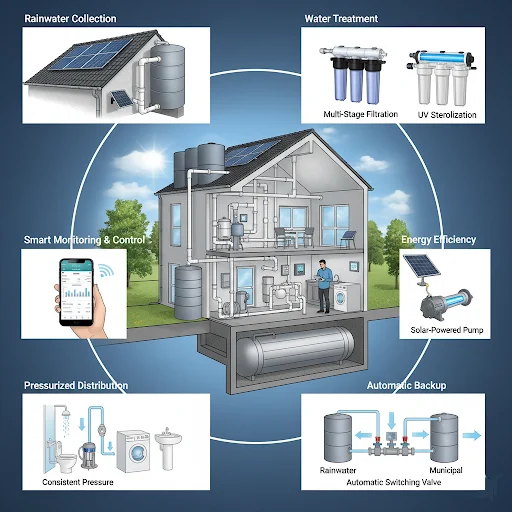
Advanced water collection technology enables complete household water management through sophisticated treatment and distribution networks. These systems substitute rainwater for municipal supplies in most household applications while maintaining safety and convenience standards.
Whole-house integration requires pressurized distribution systems, comprehensive filtration, and automatic backup capabilities during extended dry periods. Pump systems maintain consistent pressure throughout existing plumbing while automatic switching ensures seamless service regardless of rainwater availability.
Treatment system requirements for household use include multi-stage filtration, UV sterilization, and pH adjustment capabilities. Water treatment systems must meet drinking water standards while accommodating varying water quality in collected precipitation. Advanced systems include real-time monitoring that adjusts treatment parameters automatically.
Smart home integration connects rainwater systems with existing home automation platforms for seamless operation and monitoring. Voice control systems allow verbal system status checks and basic control functions. Integration with security systems can alert homeowners to system problems or unusual consumption patterns indicating leaks or other issues.
Energy efficiency considerations include solar-powered pumps, gravity-fed distribution where possible, and demand-based system operation that minimizes unnecessary energy consumption. Sustainable infrastructure approaches integrate renewable energy with water collection for completely off-grid operation capabilities.
Troubleshooting Common Urban System Problems
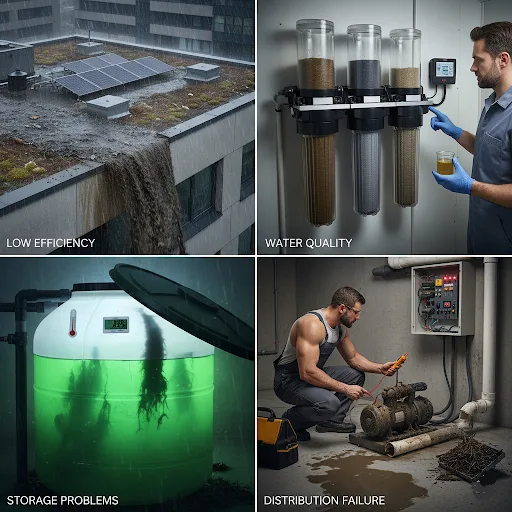
Troubleshooting water collection problems in urban environments often involves addressing unique challenges created by pollution, space constraints, and complex building systems. Understanding common failure modes helps homeowners maintain optimal system performance while minimizing repair costs and service interruptions.
Low collection efficiency problems typically result from inadequate gutter sizing, poor roof conditions, or collection system leaks. Urban environments present additional challenges including air pollution that increases roof contamination and building wake effects that alter rainfall patterns. System optimization may require larger gutters, additional collection points, or improved filtration to address urban-specific contamination sources.
Water quality issues in urban systems often stem from atmospheric pollutants, roof material degradation, or inadequate filtration for intended applications. First-flush diverters become particularly important in polluted urban environments where initial rainfall carries higher contaminant loads. Enhanced filtration may be necessary for applications sensitive to dissolved pollutants.
Storage problems including algae growth, sediment accumulation, and taste or odor issues typically result from inadequate tank covers, insufficient water turnover, or contamination during installation. Tank maintenance schedules may need acceleration in urban environments with higher pollution loads and contamination potential.
Distribution system failures affect pressurized delivery and automatic switching capabilities essential for seamless household integration. Pump problems often result from electrical issues, clogged intake filters, or cavitation damage from inadequate tank levels. Regular system inspection identifies developing problems before they cause complete system failures.
Cost-Benefit Analysis: Urban System Economics
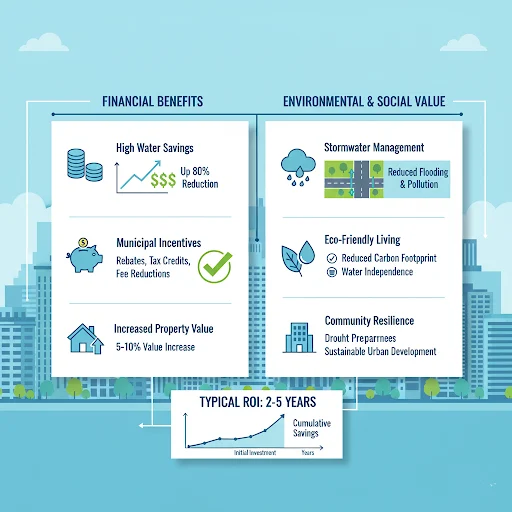
ROI calculations for urban rainwater harvesting systems must consider higher property values, potential municipal incentives, and stormwater management benefits that may reduce fees or provide tax advantages. Urban water costs typically exceed rural rates, improving economic returns on collection system investments.
Municipal incentive programs in many cities offer substantial rebates, tax credits, or reduced stormwater fees for properties implementing green infrastructure projects. These programs recognize multiple benefits including reduced treatment plant loads, decreased flood risks, and improved environmental outcomes. Understanding available incentives dramatically improves project economics.
Property value increases from well-designed sustainable infrastructure often exceed system costs, particularly in environmentally conscious markets. Water security features appeal strongly to buyers concerned about drought restrictions and rising utility costs. Professional installations with attractive integration typically provide the best return on investment.
Long-term cost projections should include avoided water cost inflation, reduced infrastructure strain fees, and potential carbon credit values as environmental regulations evolve. Many urban systems achieve payback within 2-5 years when considering all economic benefits rather than simple water bill savings alone.
Future of Urban Water Management
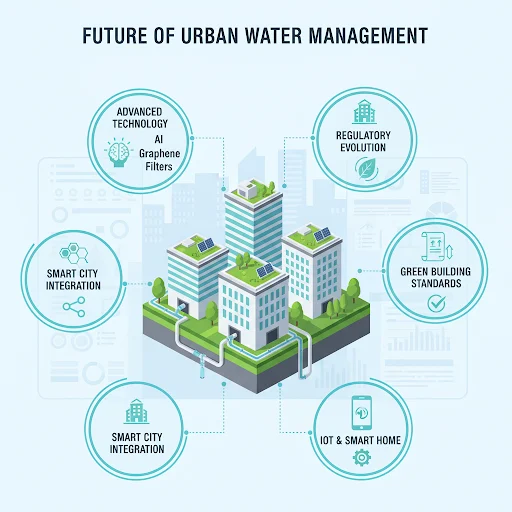
Smart rainwater harvesting continues evolving with advances in sensors, automation, and materials science. Advanced water collection technology promises even greater efficiency and reduced maintenance requirements as these systems become standard features in sustainable building design.
Integration opportunities with smart city infrastructure include coordinated stormwater management, shared monitoring networks, and community-scale storage systems serving multiple properties. Green infrastructure approaches increasingly combine water collection with energy production, food systems, and climate adaptation strategies.
Regulatory evolution trends toward encouraging rather than restricting residential rainwater collection as municipalities recognize water conservation benefits. Building codes increasingly incorporate rainwater provisions while green building certification programs provide points for comprehensive water management systems.
Technology advancement includes improved materials, artificial intelligence optimization, and seamless integration with smart home systems. Water treatment systems continue advancing toward maintenance-free operation with superior performance characteristics. IoT integration promises system management through voice commands and predictive maintenance scheduling.
Implementation Roadmap: Your Urban Water Independence Plan
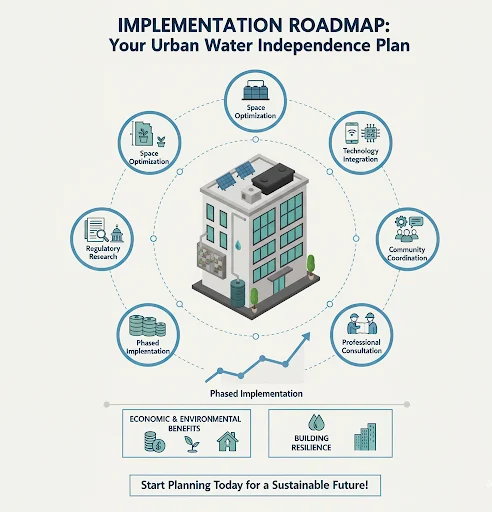
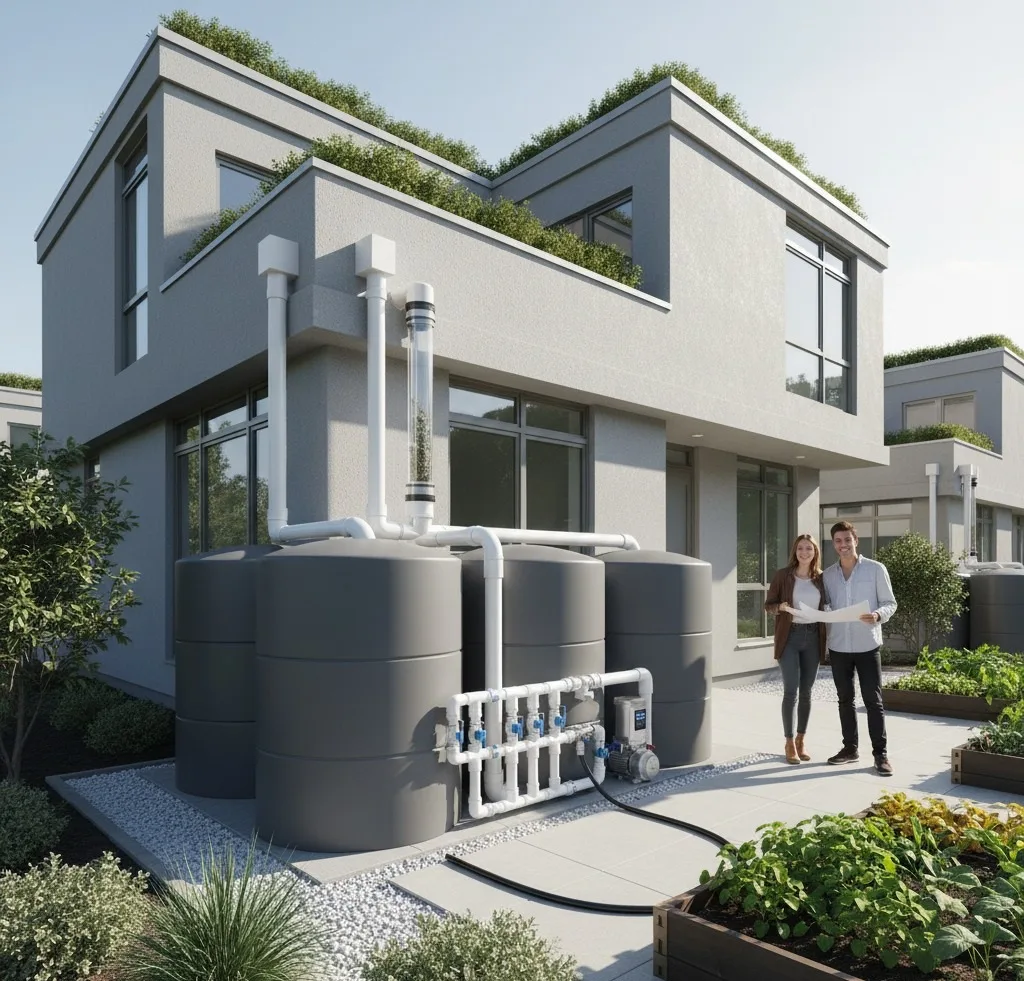
Starting urban rainwater harvesting requires careful assessment of opportunities and constraints unique to city properties. Space optimization becomes crucial for maximizing collection potential while working within aesthetic and regulatory limitations that affect urban installations.
Regulatory research should begin early in planning to understand permit requirements, available incentives, and any restrictions affecting system design or operation. Many cities provide helpful guidance documents and expedited permitting for sustainable infrastructure projects supporting community water conservation goals.
Phased implementation allows urban systems to grow organically while spreading costs over time and building technical expertise gradually. Start with simple collection methods for garden irrigation, then expand into more sophisticated treatment and distribution as confidence and needs develop. Modular approaches accommodate future expansion without major infrastructure modifications.
Professional consultation may be valuable for complex urban installations involving electrical integration, pressurized distribution, or advanced water treatment systems. Many regions offer installation incentives that offset professional design and installation costs while ensuring optimal system performance and regulatory compliance.
Community coordination amplifies individual efforts while sharing costs and expertise among neighbors. Group purchasing reduces equipment costs while shared installation activities build community connections and technical knowledge. Neighborhood systems often qualify for grants and incentives unavailable to individual installations.
The transition to water independence through urban rainwater harvesting represents both practical resource management and environmental leadership. These systems provide immediate utility bill savings while contributing to broader sustainable living goals that benefit entire communities. Every urban property implementing collection systems reduces strain on municipal infrastructure while building resilience against drought and climate uncertainty.
Smart technology integration makes urban rainwater systems more accessible and effective than ever before. Whether starting with basic collection or planning comprehensive water management networks, urban homeowners can achieve substantial water conservation while enhancing property values and environmental stewardship. Begin planning today to join the growing movement toward decentralized, sustainable urban water systems.
market insight click – Articles are practical and help track changes in business effectively.
click for corporate insights – Helpful updates, trends are explained in a practical and understandable way.
momentum unlocked – Practical, smooth wording showing how freed energy leads to tangible outcomes.
click to understand partnerships – Really informative, now I understand key partnership strategies.
partnerhub – Very practical, professional networking is explained in a clear, actionable manner.
alliancesnavigator – Helpful and concise, growth partnerships are easy to understand and implement effectively.
professional trust hub – Very helpful resources, connecting with peers feels straightforward.
checkoutnavigator – Practical and fast, completing online purchases is simple and reliable.
business connection insights – Very informative content, site makes alliances less complicated.
shopcentral – Clear and practical, platform makes online purchasing simple.
modernbuying – Easy to navigate, buying products online is quick and hassle-free.
growth alliance site – Interesting setup, seems well-suited for long-term corporate alliances.
smart knowledge hub – Practical ideas to help users learn smarter and grow systematically.
global retail infrastructure – Concept supports large-scale online operations with international reach.
smartpurchasehub – Convenient and easy, spotting value items online is straightforward.
bondstrategicguide – Professional and actionable, commercial bond advice is clear and practical.
PlanAheadHub – Encourages forward-looking thinking for sustainable business growth.
SmartGrowthClick – Helpful and concise, makes scaling concepts much easier to apply.
reliable shopping center – Deals are dependable, and navigating the site feels intuitive and simple.
digital shopping hub – Fresh design improves the overall user experience and enjoyment.
SmartBuyNetwork – Focuses on cost-conscious purchasing with reliable options.
study smarter – Encourages learning without fatigue or confusion.
handy page – Fast-loading, easy-to-follow structure, information comes across naturally
bizconnect – Insightful and easy to follow, connecting with the right professionals is simplified and structured.
official link – Well-structured pages, browsing was simple and content makes sense
ValueCartNetwork – Focused on providing affordable and trustworthy shopping experiences.
explore now – Simple structure, lightweight pages, content comes across naturally
cross-border commerce site – Platform seems designed to meet the expectations of global buyers.
nevra.click – Clean layout and speedy loading, I stayed longer than expected
alliancespro – Very useful, readers can apply corporate alliance advice effectively.
SmartSavingsCart – Highlights smart and value-focused shopping experiences.
networking for professionals – Credible presentation suggests meaningful and serious business connections.
traction powered progress – Short, encouraging phrasing linking focused force to meaningful results.
trusted site – Fast-loading pages, content is concise and readable
sustainable opportunity platform – Content focuses on planning ahead for lasting business success.
]enterprisehub – Concise and easy to follow, explains enterprise partnerships clearly.
ValueFinderNetwork – Helps shoppers discover cost-conscious options efficiently.
digital business academy – A good example of accessible online education for business skills.
decisioncoachonline – Helps simplify choices with actionable and reliable advice.
EasyBuyPlatform – Streamlined digital retail environment designed for hassle-free shopping.
main hub – Smooth browsing experience, minimal clutter, site feels user-friendly
SavvyShopperHub – Emphasizes smart spending and great value options.
browse nexra – Fast and clean layout, minimal clutter, content is easy to follow
quvix.click – Straightforward layout, pages open fast and content is easy to follow
SmartSavingsCart – Highlights smart and value-focused shopping experiences.
EcommerceSafetyNet – Security-first branding encourages confidence for first-time shoppers.
OpportunityOutlook – Inspires foresight and thoughtful planning for upcoming challenges and opportunities.
PracticalImpactLab – Focuses on delivering strategies that produce tangible, measurable results.
QuickRixarClick – Smooth browsing, layout clear, and content easy to read.
online access – Pages respond quickly, simple design, very user-friendly
ClickEase – Pages responsive, layout clear, and finding information effortless.
MorixoEase – Responsive design, content well-placed, and browsing feels effortless.
explore now – Smooth interface, concise content, pages load effortlessly
click here – Pages load quickly, simple structure, content is digestible and clear
Ravion Bonded online hub – The platform is accessible, with documentation that’s easy to read and updates that are reliable.
Kryvox Capital official site – Clean layout, clear content, and the platform feels polished and professional.
Visit Cavix – The layout is straightforward, and the site’s purpose is communicated clearly.
Kryvox Trust homepage – Experience is seamless, navigation flows naturally, and content is easy to find.
start browsing – Fast pages, structured design, browsing is effortless
Ulvix online platform – The layout is organized, and details are presented clearly for quick understanding.
simple URL – Clean visuals and fast loading made it enjoyable
Direct website access – Feels thoughtfully designed, with useful information throughout.
Qulavo Capital Official Portal – User-friendly design, concise content, and overall experience feels smooth.
handy page – Fast-loading pages, minimal clutter, information is straightforward
Events – Event schedules are clearly organized, making planning straightforward.
News – Updates are displayed neatly, layout is clean, and content is easy to read.
Partners – Partner information is arranged neatly for straightforward browsing.
xevirocapital.bond – The site provides useful information and the layout helps make research easy.
Careers – Clean structure, fast browsing, and job details are well presented.
useful link – Well-structured sections, quick-loading pages, very readable content
yaverobonding.bond – Nice experience overall, pages are organized and fairly user friendly.
visit xenrix – Smooth browsing, content is straightforward and easy to follow
Official Korivo site – The layout is logical, menus work properly, and details are clear.
online access – Fast-loading, uncluttered layout, very easy to find information
zylavoline interface – Smooth performance and focused content create a clear experience.
CoreBridge Hub Link – Content and design combine to project a polished, trustworthy impression.
zorivoline project page – Indicates a promising direction that may gain traction.
ideas main – Words make abstract concepts feel doable and motivating.
ClickEase – Pages load fast, sections well-structured, and finding items was simple.
Vector Link Hub – Strong visual identity and readable content make the site approachable.
growth guide – Clear and actionable content frames growth as a logical journey.
zylavobond resource – Simple design ensures content is immediately understandable.
start with zylavoline – Immediate page response and simple messaging make navigation easy.
VixaroSpot – Fast pages, simple interface, and content easy to read.
Focused Execution Center – Inspires users to apply insights in a structured, practical manner.
TrivoxSpot – Layout organized, pages loaded quickly, and content easy to read.
clear move direction – Helps frame decisions in a calmer, clearer way.
Trust project page – Information is easy to follow, and the design conveys credibility.
Bonded Portal – Professional visuals and structured content build user trust.
motivated purpose page – Layout highlights clarity and actionable steps.
value shopping hub – Excellent selection, prices are reasonable and browsing is effortless.
Growth strategy hub – So far it looks practical and easy to move around.
Mavero Trustline main site – Organized design, user-friendly content, and information is easy to digest.
Professional connection site – Information is easy to find and presented logically.
OBDNet repair info – Well-presented and reliable, useful for everyday car troubleshooting.
reliable checkout tips – Clear and secure process made shopping more efficient and safe.
energyefficiencyhub – Practical guidance that saved time and electricity.
businessconnectionshub – Platform is intuitive, connected me with the right experts quickly.
enterpriseunitytools – Practical solutions that simplified our cross-team processes.
nextlevelbusinesspaths – Informative and actionable advice, really supported exploring new ventures.
corporatealliancesportal – Very practical advice for growing business collaborations.
businessalliancenetwork – Made valuable connections that could lead to future growth.
Texture Travel Hub – Creative and vibrant, articles are full of visual inspiration and personal flair.
FiatFive archive – Enthusiastic and organized, the site offers curated content for fans of vintage Fiat 500s.
careerdecisionhub – Guidance that was straightforward, actionable, and really useful.
verified deal site – Shopping here felt safe and transactions went through quickly.
Live match tracker – Excellent for fans, schedules are regularly maintained and visible.
enterprisevaluehub – Tips and advice that help sustain strong business partnerships.
purchaseclickhub – Clear interface and smooth checkout, very convenient.
easystoreonline – Simple navigation and dependable shipping every time.
мужские размеры костюмов классический костюм мужской спб
game stats website – Interesting site, updates look recent and well maintained.
animated browsing site – Random click led here, site feels fast and easy to move through.
therapy guidance online – The explanations feel both compassionate and grounded in professional experience.
Manisa visit guide – Clean layout and very informative, made planning simple.
handmade glass pieces – Everything here feels artistic and made with intention.
tech news hub – Easy to navigate and the focus on tech makes the content straightforward.
Barling Collins overview – Information is easy to digest and expectations are well managed.
creative production site – Loved browsing their work, each story connects emotionally and feels authentic.
a href=”https://qulavoholdings.bond/” />QulavoHub – Browsing their options was simple, and the platform feels very reliable.
RixaroCentral – Easy-to-follow interface and practical tools make this site useful.
RixaroHoldings – Great information here, saved me a lot of unnecessary searching time.
LixorInsights – Clear and practical guidance made exploring the platform very useful today.
OrvixVision – Exploring the platform was simple thanks to straightforward directions.
start here – Layout is simple and intuitive, letting me access information quickly.
browse quixo – Found this today and enjoyed how straightforward the design is.
vexaro access – Found this site randomly, but navigation is intuitive and everything feels professional.
morixotrustco link – Smooth, organized layout ensures the content is easy to browse and understand.
navirobond link – Layout is intuitive and helps access content smoothly.
check this site – Clean design and the information is easy to follow from the start.
learn more here – Browsed casually and liked how direct the information felt.
Browse Quixo – Sleek presentation and intuitive layout make browsing simple.
Best picks – Neat layout and a wide variety of well-crafted items.
glintaro.shop – This site is full of hidden gems! Love the variety and quality of the finds here.
Nature essentials – Beautifully curated products that feel fresh and pure.
Cool shop link – Nicely laid out with plenty of unique items to check out.
Blanket Bay must-haves – Soft, comfy items that make your space feel warm and welcoming.
yavex site – Fast loading pages, navigation works well and content is easy to follow.
Auroriv shop – Clean layout and a fantastic variety of products to explore.
glintgarden.shop – A great place to find everything for your garden, love their range of products!
Fresh item feed – Easy to browse and notice things you haven’t seen before.
Flower favorites – Elegant and thoughtfully designed items with a floral touch.
Decor inspiration – Plenty of items that elevate everyday spaces.
Minimal shop – The uncluttered design makes shopping relaxing.
Cool browsing – The design gives the site a fresh, modern edge.
Hidden gems – Always discovering something special when browsing here.
online henvoria – Pleasant to look around, finding items didn’t take long.
Arcade vibes – Browsing feels lively and visually appealing.
Elegant picks – Smooth navigation paired with high-quality products.
cozy hollow shop – Came upon this site, pricing seems fair and transparent.
Spruce Spark Treasures – Fresh and minimal, site navigation is intuitive and buying items felt easy.
Stall Starlight Finds – Beautiful selection, items are easy to browse and site navigation is smooth.
Stitchery Gems Boutique – Inviting design, browsing products is simple and shopping felt enjoyable.
Suave Basket Boutique – Neat interface, product images are clear and shopping experience felt smooth.
Suave Shelf Corner Picks – Elegant design, site is intuitive and shopping felt effortless.
Tech Thimble Store – Fun selection of gadgets that actually fit into daily life.
Visit Tervina – Clean browsing experience with chic items and sensible pricing.
Sunny Shopline Lux – Bright and organized, shopping felt easy and checkout went smoothly.
Tidy Treasure Finds – The tidy presentation makes browsing feel effortless.
Tidy Treasure Space – The uncluttered look makes browsing comfortable.
Tea Terminal Online – Calm browsing experience, site is intuitive and checkout completed without issues.
Tool Tower Web Shop – Practical design that keeps things simple.
Passport Pocket Finds – Handy travel items, navigating the site was smooth and easy.
Mod Mosaic Showcase – The modern selection is attractive and browsing was very pleasant.
Mod Mosaic Selection – A curated modern mix that made exploring the site fun.
SchemaAtelier resources – Organized features made my weekly implementation work smooth and easy.
Everyday Tech Hub – Nice mix of modern tools that seem genuinely helpful.
Shop Tervina Now – Navigation is simple, the designs look modern, and prices don’t feel inflated.
Tidy Treasure Finds Online – The tidy layout really enhances the shopping vibe.
Tidy Treasure Online – Everything feels uncluttered, which makes shopping easygoing.
Tool Tower Picks – Clean structure makes browsing tools pleasant.