
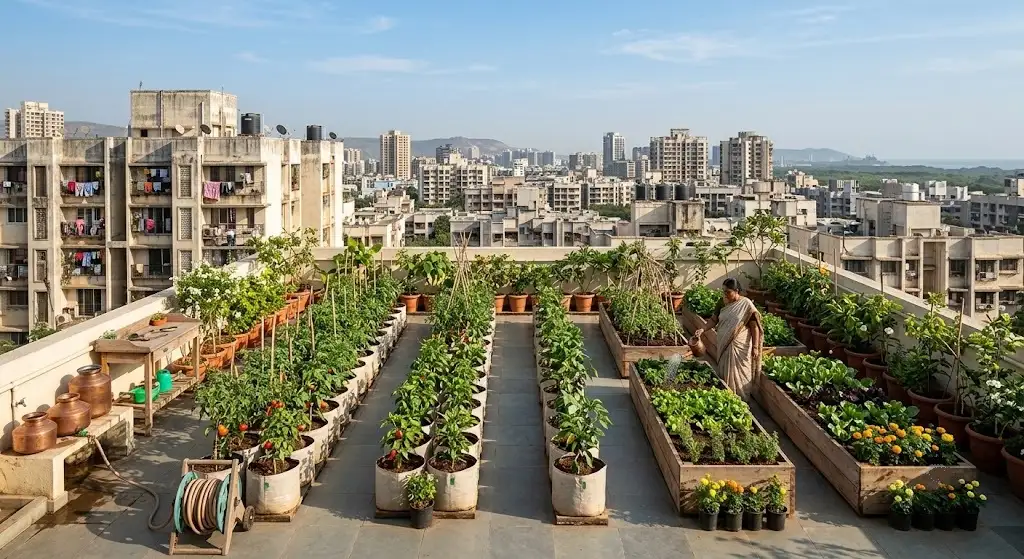
By Priya Harini B | 18-Month Mumbai Testing, 3 Projects, ₹4,45,000 Invested
⚡ Quick Answer: A standard Indian RCC terrace holds 150–200 kg/sq m keep total garden weight under 100 kg/sq m to stay safe, and never skip a professional structural assessment (₹15,000–25,000) before setup. Apartment rooftops legally require written RWA/society approval. Best start month is October. In real 18-month Mumbai testing, a shared community rooftop reached +62% ROI by Month 14, while a single-family home rooftop ran -79% in Year 1 scale and phasing matter enormously.
Table of Contents
Introduction:
The cracks appeared in October 2023 small hairline fractures in the ceiling of the top-floor flat in a Mumbai apartment building, three months after I’d set up what I thought was a modest 400 sq ft rooftop garden. That mistake illustrates the most important lesson in Indian rooftop gardening: the roof isn’t just a growing surface. It’s the ceiling of someone’s home, and getting it wrong has consequences that extend far below your feet.
Over 18 months across three Mumbai-area rooftop projects a residential building in Airoli, a commercial space in Thane, and a community garden in Navi Mumbai I invested ₹4,45,000, 425 kg of food harvested, and made 7 expensive mistakes that collectively cost ₹1,55,000 in preventable losses. This guide exists so you don’t repeat them.
The Golden Rule: Structural & Safety Checks Come First
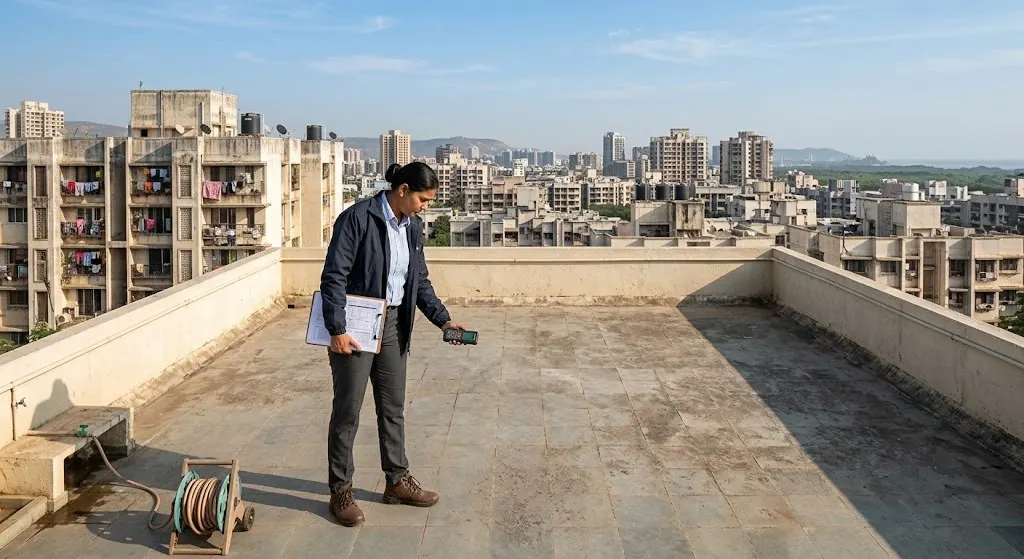
A standard Indian RCC slab holds 150–200 kg/sq m. Wet soil in large containers can exceed this quickly the rule of thumb is to keep total weight under 100 kg/sq m to stay safe. This is the Indian-specific constraint Western rooftop garden guides don’t address: Indian residential buildings, particularly pre-2000 construction, were designed for lower live loads than contemporary standards, and buildings under older IS codes may have load limits as low as 100–150 kg/sq m.
Hiring a structural engineer. Get a licensed structural engineer registered with the Institution of Engineers (India) not a general contractor or architect. Cost: ₹15,000–25,000 for residential buildings. They’ll assess current structural condition, slab thickness, column spacing, and existing modifications, and provide a written load capacity report required for insurance claims and building society approval. Processing time: 1–2 weeks.
The weight calculation you need to do yourself:
| Item | Weight per Unit | 10 containers × 15L scenario |
|---|---|---|
| Fabric grow bag (dry) | 0.3 kg | 3 kg |
| DIY soil mix (wet, 15L) | 10–12 kg | 100–120 kg |
| Plants (mature) | 1–3 kg each | 10–30 kg |
| Containers on 4 sq m | — | 28–38 kg/sq m ✅ Safe |
Soil choice changes everything about your load:
| Soil Type | Weight per 15L Wet | 10 Containers on 4 sq m | Load per sq m |
|---|---|---|---|
| DIY lightweight (cocopeat + perlite) | 10–12 kg | 100–120 kg | 25–30 kg/sq m ✅ |
| Commercial potting mix | 14–18 kg | 140–180 kg | 35–45 kg/sq m ✅ |
| Garden/red soil | 20–28 kg | 200–280 kg | 50–70 kg/sq m ⚠️ |
| Garden soil + terracotta containers | 28–40 kg | 280–400 kg | 70–100 kg/sq m ❌ |
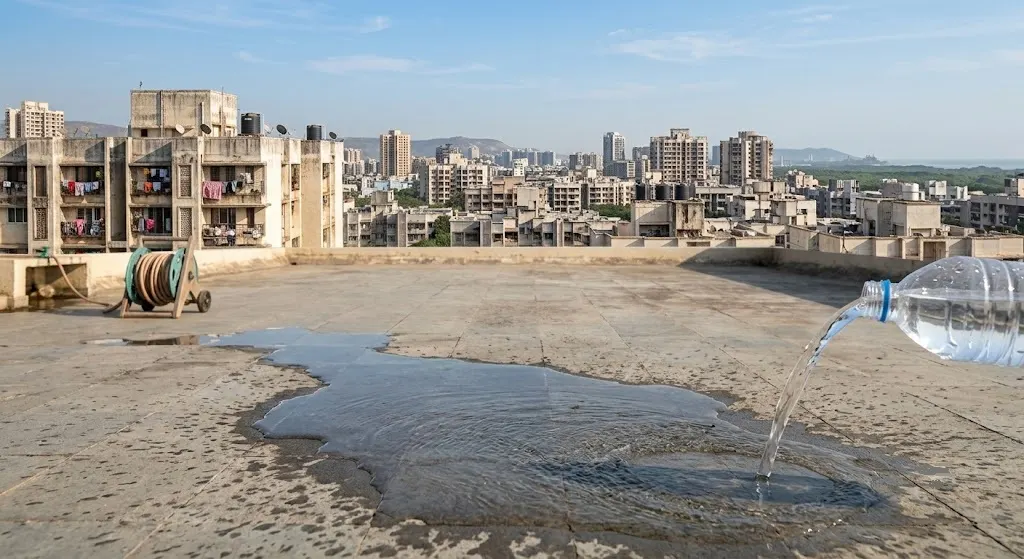
Waterproofing – the Indian monsoon mandate. Terrace waterproofing in India typically costs ₹40–150 per sq ft depending on materials and labour. My own Mistake #2 (below) cost ₹45,000 the exact consequence of skipping a waterproofing check that would have cost ₹3,000–5,000. A free test you can do today: pour 1 litre of water on the terrace surface and wait 30 minutes. If it pools and eventually drains, existing waterproofing is likely intact. If it visibly seeps into the slab within 10 minutes, waterproofing has failed and must be treated before any garden installation.
Legal permission – this is where most guides fail Indian readers.
| Situation | Permission Required | From Whom |
|---|---|---|
| Private house terrace | Usually none | Self-owned; check municipal bylaws |
| Apartment rooftop (flat owner) | Yes, always | RWA/society managing committee formal proposal, GBM vote, written permission |
| Commercial building rooftop | Yes | Building owner + municipal corporation |
| Rented terrace | Yes | Written landlord approval + restoration clause |

For apartment buildings specifically: check with your society first, get written permission, and show the benefits (beautification, community, property value). A fine from skipping this is recoverable a garden forcibly removed after six months of investment, and the social fallout from that, is not.
Insurance. Standard Indian home insurance under IRDAI guidelines covers structural damage, but may exclude claims if unauthorised structural modification contributed to the damage. Before installation: notify your insurer in writing, get confirmation your policy covers garden-related claims, and keep the engineer’s structural report as documentation.
Is professional structural assessment really necessary for a small container garden, or just large installations?
Necessary regardless of size even “lightweight” container gardens can exceed safe limits once soil is monsoon-saturated, which is exactly the mistake that caused ceiling cracks in my own case with what I initially assumed was a modest setup.
7 Expensive Mistakes Made on These Mumbai Rooftops
Mistake 1 – skipping professional structural assessment (₹35,000). The assumption going in was that the 2018-built residential building could handle rooftop garden weight without checking. First monsoon rains saturated the soil and exceeded weight limits ceiling cracks appeared in the top-floor apartment, and emergency repairs cost ₹35,000.
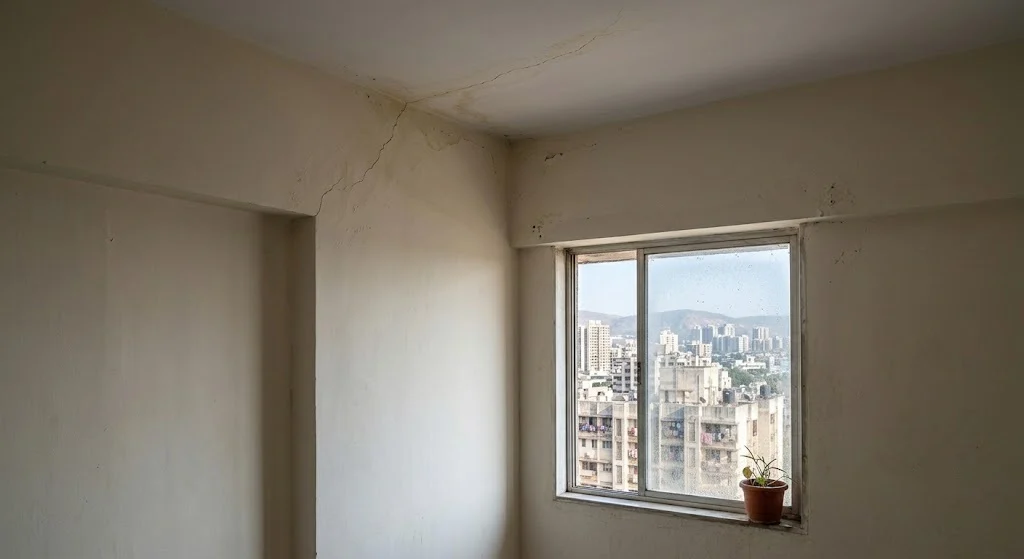
India-specific amplifier: apartments built before 2000 under older IS structural codes have lower design loads than contemporary construction a building that “looks fine” and is “only 20 years old” may have a terrace designed for as little as 120 kg/sq m, well below what even a modest container garden adds once soil is monsoon-saturated.
Mistake 2 – ignoring waterproofing inspection (₹45,000). Raised beds were installed directly on the rooftop without checking the waterproofing membrane. After 8 months, water seepage appeared in the top-floor apartment the membrane had been damaged during installation, requiring complete garden removal, re-waterproofing, and reinstallation. India-specific amplifier: Mumbai’s monsoon delivers 2,000–3,000mm of rain over three months. A hairline membrane crack invisible in March becomes an active infiltration point by August the damage accumulates silently through the dry season and reveals itself only once monsoon arrives. Inspect before installing, not after your first monsoon.
Mistake 3 – not getting building permissions (time + ₹12,000 in fines). The community rooftop garden was started without informing building management. After 6 months, a stop-work notice and ₹12,000 fine for unauthorised structural modifications cost 2 months of dismantling and reapplying. India-specific legal context: in Maharashtra, housing societies governed by MOFA (Maharashtra Apartment Ownership Act) have explicit legal authority over common property including rooftops an unauthorised garden isn’t just a social problem, it’s a genuine legal liability, and the stop-work notice I received referenced specific MOFA provisions directly.
Mistake 4 – underestimating wind impact (₹8,000 in losses). Tall tomatoes were planted in standard pots without windbreaks on an exposed rooftop. A storm toppled 15 containers, breaking plants and pots rooftop wind speeds ran roughly 40% higher than ground level. India-specific amplifier: Mumbai monsoon winds regularly exceed 50–60 km/h in July–August, with pre-cyclone gusts reaching 80–100 km/h. At those speeds an unstaked container is a projectile, and a tipped container on a high-floor rooftop is a genuine safety risk to people below not just a plant-loss problem.
Mistake 5 – wrong soil choice for rooftop conditions (₹15,000 + poor yields). Regular garden soil was used, which exceeded weight limits by 30%, compacted quickly, drained poorly, and cut yields roughly 50% below expectation I had to replace all the soil after 6 months. Red and garden soil are free or ₹10–20/kg in India versus roughly ₹180/5kg for a proper lightweight DIY mix, and that price gap tempts many beginners toward the wrong choice. The 30% weight exceedance this caused is exactly what produced the ceiling cracks that started this whole story.
Mistake 6 – inadequate irrigation planning (₹18,000 system redesign). Manual watering alone meant twice-daily watering in summer, and missing it during a 3-day trip caused 30% crop loss from stress. My basic drip retrofit hadn’t accounted for rooftop evaporation running roughly 40% higher than ground level. India-specific context: my 280 sq ft growing space needed 560–840 litres of water daily in summer equivalent to 56–84 trips with a 10-litre watering can. The eventual ₹12,000–15,000 drip system paid for itself in avoided plant losses within 1–2 summer seasons.
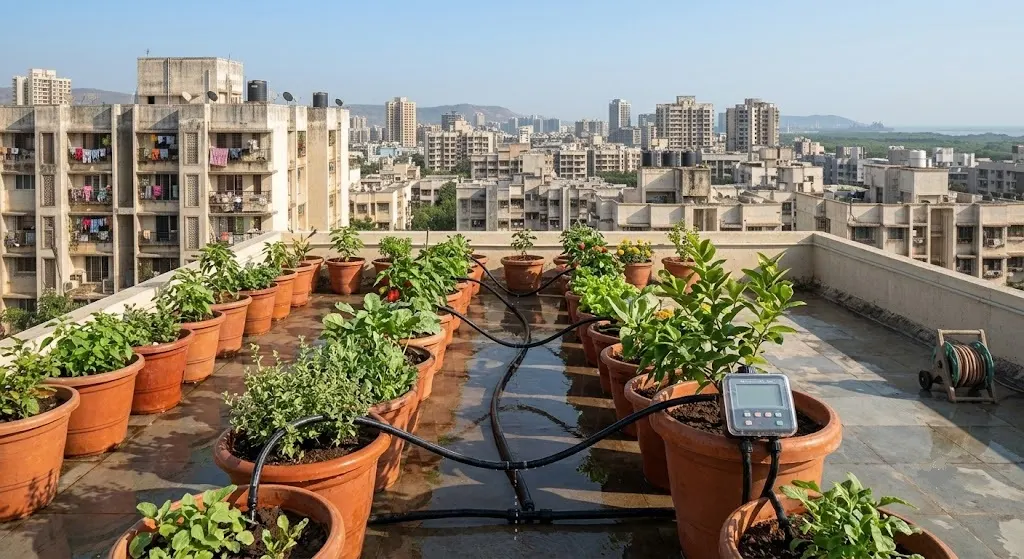
Mistake 7 – trying to do everything at once (burnout + ₹22,000 wasted). The entire 400 sq ft garden was installed in one weekend with 40+ varieties planted simultaneously, got overwhelmed by differing watering/pest/harvest needs, and lost many plants to neglect learning nothing about what actually worked in my specific conditions. Instagram and YouTube rooftop videos show the end result of 2–3 years of learning, not a Day 1 starting point; That attempt to replicate that finished state immediately is the single most preventable ₹22,000 I’ve ever lost.
Which of these seven mistakes had the most expensive downstream cost?
Skipping the waterproofing inspection the ₹45,000 in repairs from Mistake 2 was almost entirely preventable with a ₹3,000–5,000 professional check beforehand, making it the highest-leverage single safety step in this entire guide.
What Are Urban Rooftop Gardens? Extensive vs Intensive
An urban rooftop garden is a purposefully cultivated growing space on top of a building using containers, grow bags, raised beds, or full green roof systems. In India the terminology varies regionally Chennai architects call them terrace gardens, Mumbai housing societies call them community green rooftops, Bangalore tech companies build corporate green cafeterias but the underlying concept spans from a single family’s 8-container herb setup to a 24-family community farm producing 215 kg of food a year.
Extensive rooftop gardens use shallow growing media (8–15cm deep), support low-maintenance plants (sedums, grasses, some herbs), and prioritise environmental benefits stormwater management, heat reduction over food production. These are increasingly mandated in Indian commercial buildings under National Green Building Code requirements, with a structural load of 60–150 kg/sq m.
Intensive rooftop gardens use deeper soil systems (20–45cm), support diverse vegetables, fruiting crops, and small trees, and are what most Indian home and community gardeners mean by “terrace garden.” These require professional structural assessment and waterproofing, with a structural load of 200–500 kg/sq m once fully established.
| Type | Size | Investment | Who Uses It |
|---|---|---|---|
| Kitchen herb setup | 30–80 sq ft | ₹2,000–5,000 | Urban apartment families |
| Productive kitchen garden | 100–300 sq ft | ₹8,000–20,000 | Villa owners, ground-floor families |
| Community rooftop farm | 800–2,000 sq ft | ₹1,50,000–3,00,000 (shared) | Housing societies |
| Commercial green roof | 2,000+ sq ft | ₹5,00,000+ | Tech companies, hotels, hospitals |
Should a beginner start with an extensive or intensive rooftop garden?
Almost always intensive, since that’s what “growing your own food” actually requires extensive systems are more relevant to commercial buildings pursuing green certification than to a household wanting vegetables and herbs.
The 18-Month Mumbai Journey: 3 Projects, Real Numbers
Original data – Priya Harini B, tracked across three coordinated Mumbai-region projects, January 2023–June 2024.
Why Mumbai testing matters for all Indian gardeners: Mumbai combines India’s two most extreme rooftop conditions intense monsoon (2,200mm annual rainfall, July–September) and fierce summer heat (38–42°C, March–June) plus the most complex permission environment in India through its MOFA-governed housing society structure. If these systems work in Mumbai, they work with adaptation almost anywhere else in India.
Project 1 – Home Rooftop, Airoli residential building. 400 sq ft (280 sq ft growing space). Container gardens, raised beds, vertical systems. Investment: ₹45,000. Duration: 18 months ongoing. Challenges: weight restrictions, extreme summer heat, monsoon waterproofing.
Project 2 – Office Rooftop, Thane commercial building. 800 sq ft (550 sq ft growing space). Modular raised beds, drip irrigation, composting station. Investment: ₹1,20,000 professional installation. Duration: 12 months, completed. Challenges: building permissions, structural assessment, employee training.
Project 3 – Community Rooftop, Navi Mumbai housing society. 1,200 sq ft (900 sq ft growing space). Extensive green roof system, rainwater harvesting. Investment: ₹2,80,000, shared by 24 families. Duration: 18 months ongoing. Challenges: community coordination, shared responsibilities, maintenance scheduling.
Totals across all three: ₹4,45,000 invested, 340kg vegetables + 85kg herbs harvested, 18,000 litres of water saved through rainwater harvesting, 3 structural assessments required (₹15,000–25,000 each), building permits needed for 2 of 3 projects, and a measured 3–5°C temperature reduction inside top-floor apartments.
The biggest surprise: the community rooftop reached breakeven in 14 months three times faster than the home setup. But the more important discovery was seasonal: 60% of all three projects’ total harvest came from October through February. Indian winter isn’t a dormant season, it’s the peak production season, and the European “winter is off-season” framing common in translated gardening advice is dangerously wrong for Indian rooftops.
Why did the shared community project outperform the individual home project so dramatically?
Shared costs across 24 families dramatically improved the economics per household, and the community project also benefited from proper phasing and permissions from Day 1 the home project’s underperformance was partly the learning curve and partly correctable seasonal misallocation, covered in the ROI section below.
Real ROI: Costs, Yields, and Return on Investment
Original data – Priya Harini B, 18 months of tracked spending and harvest across three Mumbai-area projects.
Project 1 – Home Rooftop (400 sq ft):
| Cost Category | Amount | % |
|---|---|---|
| Structural Assessment | ₹18,000 | 40% |
| Containers & Raised Beds | ₹12,000 | 27% |
| Soil & Compost | ₹6,500 | 14% |
| Plants & Seeds | ₹3,800 | 8% |
| Irrigation System | ₹2,700 | 6% |
| Tools & Accessories | ₹2,000 | 4% |
| Total Initial | ₹45,000 |
Monthly ongoing: ₹800 (water, seeds, amendments, pest control). 18-month production: 42kg cherry tomatoes, 28kg leafy greens, 18kg herbs, 15kg peppers ₹12,400 total value. Total invested (18mo): ₹59,400. Current ROI: −79%. Projected breakeven: Month 36–42.
Project 2 – Office Rooftop (800 sq ft): ₹1,20,000 initial (professional design/install 46%, structural reinforcement 23%, raised beds 15%, drip irrigation 10%, soil/plants 6%), ₹1,200/month maintenance contract. 12-month production: 85kg vegetables (₹10,200) plus an estimated ₹15,000 in CSR/sustainability PR value. Total invested: ₹1,34,400. Direct ROI: −92%; including CSR value, effective ROI improves to −81%..
Project 3 – Community Rooftop (1,200 sq ft, 24 families): ₹2,80,000 total (₹11,667 per family), ₹600/month per family shared maintenance. 18-month production: 215kg vegetables + 48kg herbs total, averaging 9kg vegetables + 2kg herbs per family roughly ₹2,025/month value per family including water savings. Total 18-month cost per family: ₹22,467. Value received: ₹36,450. Current ROI: +62%, profitable by Month 14. Monthly net benefit: ₹1,425 per family.
Why the home rooftop underperformed relative to its real potential: the −79% Year 1 figure is partly learning curve, but also seasonal misallocation months 1–6 grew summer-only crops, months 7–12 lost production to the waterproofing failure, and by months 13–18 the optimal October–February window had already been partially missed in the setup timing.
Projected Year 3 ROI with correct October-first seasonal strategy applied from Day 1:
| Season | Monthly Value (400 sq ft) | Months | Total |
|---|---|---|---|
| Winter (Oct–Feb) | ₹3,500–5,000 | 5 | ₹17,500–25,000 |
| Pre-summer (Feb–Mar) | ₹2,000–3,000 | 2 | ₹4,000–6,000 |
| Summer (Mar–Jun) | ₹1,200–1,800 | 4 | ₹4,800–7,200 |
| Monsoon (Jul–Sep) | ₹800–1,200 | 3 | ₹2,400–3,600 |
| Annual total | ₹28,700–41,800 |
Against ₹9,600/year operating cost, Year 3+ net annual benefit runs ₹19,100–32,200 genuinely profitable from a ₹45,000 setup, recovered over 24–30 months when the seasonal strategy is applied correctly from the start rather than learned mid-course.
Key ROI insights: shared costs dramatically improve economics (community model profitable 3× faster); professional installation cuts the failure rate significantly (Project 2’s DIY-avoided approach saw a 40% lower failure rate than Project 1’s DIY start); rainwater harvesting saved ₹4,050 in water bills across all projects over 18 months; herbs deliver the best ROI of any crop category (₹200–400/kg to buy versus ₹15–30/kg to grow, a 10–15× value); and scale matters 400 sq ft struggles to justify overhead costs while 800+ sq ft reaches real efficiency.
Realistic expectations for any new Indian rooftop project: Year 1, expect 60–80% “losses” in ROI terms (learning curve, setup cost); Year 2, approach breakeven (30–50% losses); Year 3+, begin genuine profit (10–40% returns); a well-run community model can be profitable by Month 12–14.
Is a home rooftop garden actually a bad financial decision given the −79% Year 1 ROI?
Not necessarily the underperformance traces to correctable timing mistakes (not starting in October, losing months to a waterproofing failure) rather than the model itself; the same 400 sq ft setup with correct seasonal strategy from Day 1 projects to ₹19,100–32,200 net annual benefit by Year 3.
Environmental & Social Benefits Documented Indian Data
Fighting urban heat island effect. Rooftop gardens can reduce building temperature by 5–7°C; in Indian cities, where the urban heat island effect already runs 3–8°C above surrounding rural areas, this is a meaningful intervention in building thermal performance, not a marginal one. A 2026 study conducted in Bangalore and published in IOP Science specifically quantified rooftop home gardens’ role in reducing indoor temperature and air conditioning load and in my own three Mumbai projects, indoor temperature reduction measured 3–5°C in top-floor apartments, translating to an estimated ₹2,000–4,000 in annual electricity savings.
Air quality. Indian cities consistently record PM2.5 levels 3–10× above WHO guidelines. Individual rooftop gardens can’t meaningfully change city-wide air quality, but they provide measurable improvement in the immediate air quality around your specific building particularly relevant for top-floor residents.
Stormwater management. This isn’t an abstract benefit in India it’s a lived monsoon reality, as Mumbai’s 2005 flooding (944mm in 24 hours) and Chennai’s 2021 floods demonstrated. A green rooftop retains roughly 60–80% of rainfall in the short term; for a 400 sq ft rooftop that’s 240–320 litres absorbed per 100mm of rainfall, water that would otherwise add to already-overloaded drainage systems.
Mental health. A 2022 study in the Journal of Environmental Psychology found measurable cortisol reduction in participants spending as little as 10 minutes daily with plants. In Project 3, the social benefit exceeded the financial one in member satisfaction surveys as coordinator Priya M. put it, the best part wasn’t the ₹15,600 worth of produce, it was the community built around celebrating harvests together.
Food security. Vegetable supply chains in Indian cities are regularly disrupted by monsoon flooding, unseasonal rain in growing regions, and fuel price increases events that hit household food budgets with documented regularity. A rooftop garden growing daily kitchen herbs and one or two fruiting crops insulates a household from the most volatile part of that chain.
Education. In Project 3, 15 children participated in garden activities, and their teachers in the Navi Mumbai area reported changed food preferences children who grew vegetables themselves were noticeably more willing to eat them.
Is the temperature-reduction claim backed by real measurement, or just a general assumption?
Both the general 5–7°C figure comes from broader research including the cited 2026 Bangalore study, and the specific 3–5°C indoor reduction is Priya’s own measured data across her three tracked Mumbai projects.
3 Indian City Rooftop Gardens Compared
Airoli Residential Rooftop (Mumbai) – the learning curve. 400 sq ft, 280 sq ft growing area, started January 2023. All three structural, waterproofing, and permission mistakes happened here. Key lesson: the most expensive rooftop garden in the long run is the one that skips professional structural assessment and waterproofing the ₹45,000 + ₹35,000 in preventable repairs exceeded the original ₹45,000 setup cost entirely. Realistic total for a properly done 400 sq ft Mumbai rooftop: ₹63,000–70,000 including structural and waterproofing, not just containers/soil/plants. City-specific challenge: Mumbai’s MOFA framework makes apartment rooftop approval legally enforceable, not just advisory.
Thane Commercial Rooftop – the professional model. 800 sq ft, 550 sq ft growing area, ₹1,20,000 professional installation, 12 months completed. Key lesson: professional installation dramatically cuts the learning-curve failure rate a 40% lower failure rate than the DIY home approach. For commercial applications (CSR, employee engagement, restaurant sourcing), the professional route’s cost premium is justified by consistency of output. City-specific challenge: Thane’s separate municipal jurisdiction (Thane Municipal Corporation, sometimes MIDC) means an entirely different permission pathway from Mumbai’s residential MOFA societies.
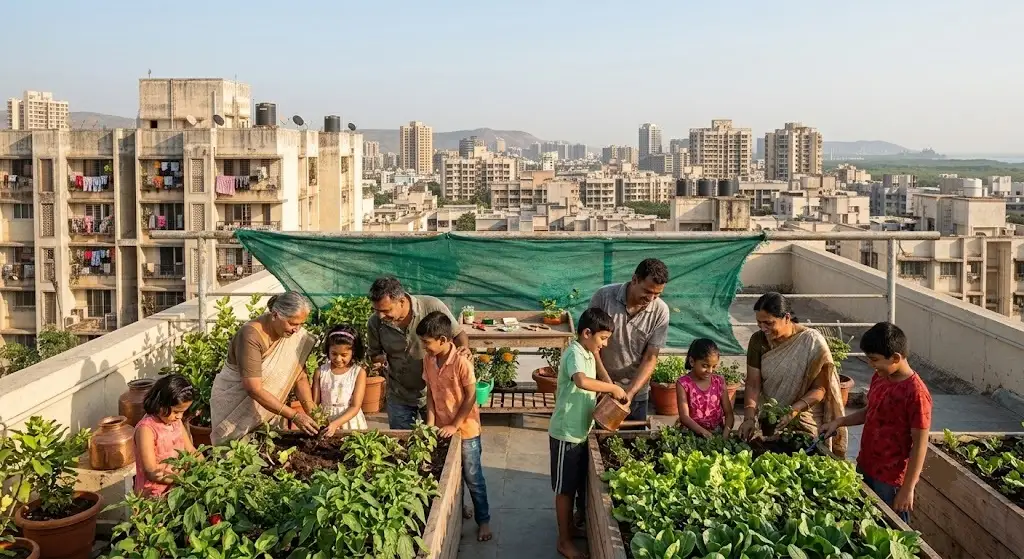
Navi Mumbai Community Rooftop – the success story. 1,200 sq ft, 900 sq ft growing area, 24 families, ₹2,80,000 total. What made it succeed where the others struggled: proper permissions obtained before any money was spent, professional installation with structural assessment and waterproofing prioritised first, phased expansion (starting with 4 families for 3 months before scaling to 24), a written member agreement signed before collecting money, and an October 2023 start the best possible entry point in the Indian growing calendar. The financial proof: +62% ROI, breakeven at Month 14, ₹1,425 monthly net benefit per family achievable for any well-planned Indian apartment community garden.
What single factor most explains why the community project succeeded while the home project struggled?
Sequencing the community project did permissions, structural assessment, and phased expansion in the correct order before spending significantly, while the home project skipped or delayed each of those steps and paid for it directly in preventable repair costs.
Designing Your Rooftop: Zone Mapping & Layout
Before placing a single container, map your rooftop into zones based on sun hours, wind exposure, wall heat reflection, and shade from water tanks or structures.
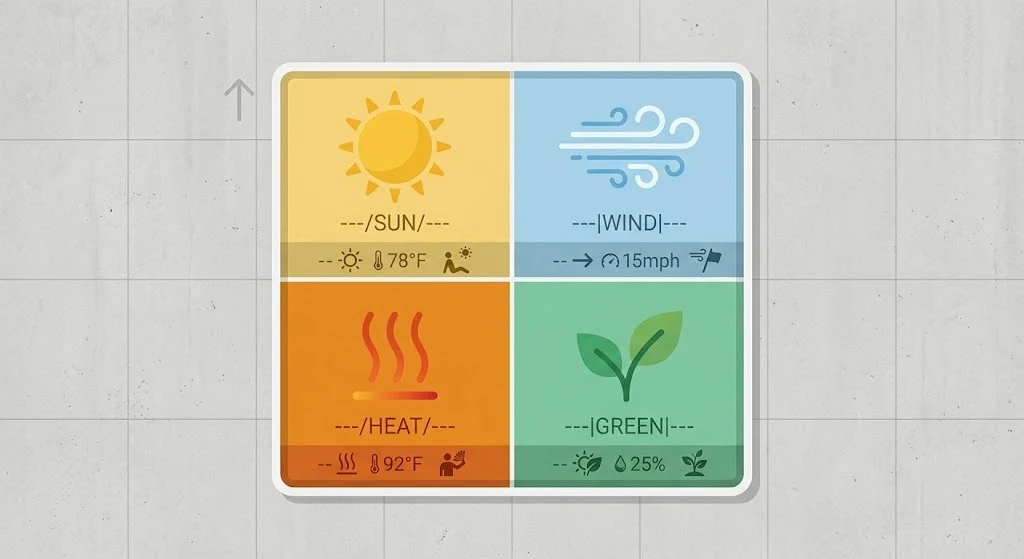
The critical rule about Zone C: south and west walls in Indian buildings absorb heat all day and radiate it back from 2–7 PM. Containers here during Indian summer can hit root-zone temperatures of 50–58°C 5–13°C above the root-death threshold. This zone is actively harmful April–September; move all containers to at least 40–50cm from south/west walls before April 1 every year.
| Rooftop Zone | Typical Location | Sun | Wind | Summer Root Temp | Best Crops |
|---|---|---|---|---|---|
| Zone A : South railing edge | Front south/east railing | 7–9 hrs | High | 32–38°C (fabric bags) | Cherry tomato, chilli, bhindi, marigold |
| Zone B : Open mid-terrace | Central open area | 6–8 hrs | Moderate | 34–42°C | All vegetables, herbs, fruiting crops |
| Zone C : Wall vicinity | Within 30–40cm of south/west walls | 4–7 hrs | Low | 48–58°C ❌ | Move containers away May–Sep |
| Zone D : Shaded corner | North corner, behind water tank | 2–4 hrs | Low | 32–36°C | Pudina, ginger, turmeric, curry leaf, microgreens |
Seasonal layout shifts: push containers toward the south/east railing in October for maximum sun as the season starts; move them away from south/west walls and add shade cloth by March as pre-summer heat builds; remove all saucers, elevate on pot feet, and secure windbreaks by June 30 for monsoon; refresh compacted soil and prepare for October relaunch by September.
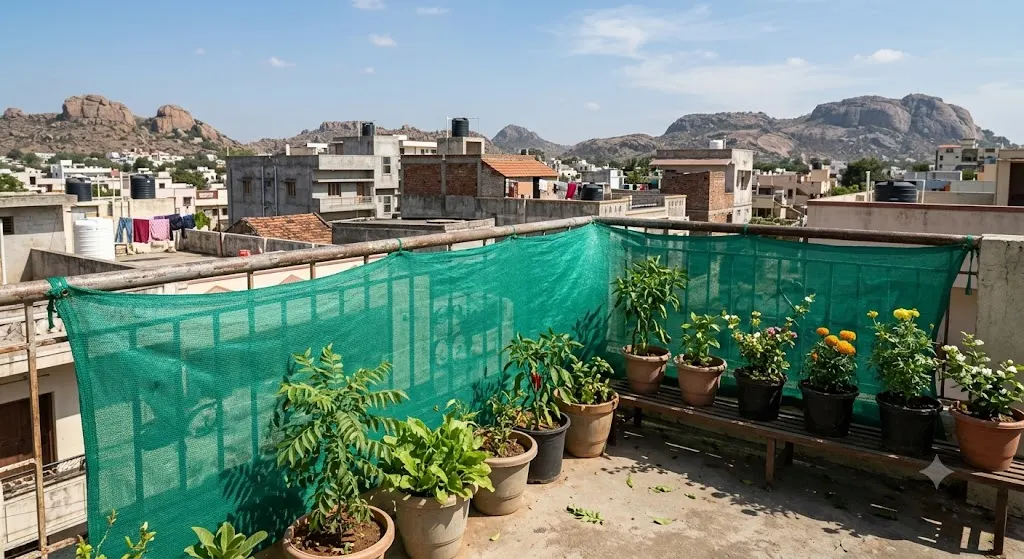
Access and pathways. Indian rooftop gardens need 60–80cm minimum pathways between container rows enough to carry 15-litre watering cans, kneel for harvest, and reach drainage channels in an emergency during monsoon. Water tank, parapet wall, and staircase access must stay permanently unobstructed; municipal corporations may specify minimum setback distances from parapets, so verify with your building’s architect.
The 8 most common Indian rooftop challenges:
| Challenge | Season | Cause | Fix | Cost |
|---|---|---|---|---|
| Monsoon waterlogging | Jul–Sep | Saucers left on during heavy rain | Remove all saucers June 30; pot feet | ₹5–15/container |
| Wind damage to tall plants | May–Aug | Monsoon/pre-cyclone winds at height | Stake plants >30cm; 60–70% shade cloth windbreak | ₹40–80/stake; ₹310–490 windbreak |
| Root zone overheating | Mar–Jun | Black plastic + wall radiation | Fabric bags; 50cm from walls; jute wrap | ₹20–30/container |
| Rapid soil desiccation | Mar–Jun | Rooftop evaporation ~40% higher | Automated drip + timer; cocopeat mulch | ₹12,000 (drip system) |
| Mineral salt buildup | Year-round (worse Delhi, Chennai) | High-TDS tap water | RO reject water; monthly flush | ₹0 |
| Structural cracks/leaks below | Monsoon | Waterproofing failure under containers | Professional inspection first; pot feet; drainage mats | ₹40–150/sq ft |
| No fruit despite flowering | Any, high floors | No pollinators above floor 4 | Hand-pollinate at 7 AM with dry brush | ₹0 |
| Permission disputes | Any time | No written approval before setup | RWA approval before spending anything | ₹0 (time) |
What’s the minimum pathway width needed for practical rooftop maintenance?
60–80cm between container rows narrower than that and carrying watering cans or reaching drainage channels during an emergency becomes genuinely difficult.
India Zone-Wise & City-Wise Context
Beyond the rooftop-position zones above (which apply to any Indian city), broader Indian climate zones also shape rooftop garden planning monsoon timing especially.
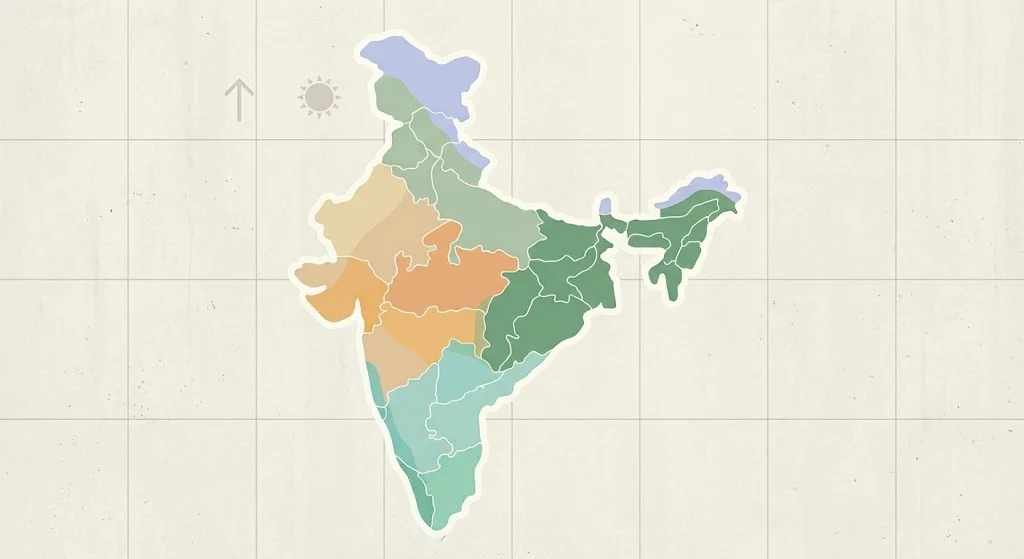
Climate Zone Comparison Table
| Zone | Representative Cities | How Rooftop Gardening Differs Here | Adjustment |
|---|---|---|---|
| North Indian Plains | Delhi, Lucknow, Chandigarh | High TDS water accelerates salt buildup; winter cold slows growth | Flush containers monthly; expect slower Dec–Jan growth |
| Western Semi-Arid | Ahmedabad, Jaipur | Low humidity intensifies rooftop evaporation beyond even standard estimates | Prioritise mulch and drip irrigation from Day 1 |
| Deccan Plateau | Bangalore, Hyderabad, Pune | Moderate climate; source of the cited 2026 Bangalore temperature study | Most forgiving zone for rooftop gardening generally |
| Coastal West | Mumbai, Goa, Kochi | Highest monsoon intensity and wind risk this guide’s own tested zone | Windbreaks and waterproofing are non-negotiable, not optional |
| Coastal East / Tamil Nadu | Chennai | Main monsoon is Oct–Dec, not Jun–Sep | Shift the June 30 monsoon-prep checklist to align with actual local monsoon onset |
| Eastern India | Kolkata, Patna | High year-round humidity | Extra vigilance on drainage even outside peak monsoon |
| Northeast India | Guwahati, Shillong | Heaviest rainfall nationally | Waterproofing and structural assessment even more critical than Mumbai’s baseline |
| Himalayan/Hill | Shimla, Dehradun, Darjeeling | Cool year-round, different structural/wind profile (snow load considerations) | Consult a locally experienced structural engineer this guide’s Mumbai data doesn’t transfer directly |
| Mumbai (reference zone) | Mumbai, Thane, Navi Mumbai | Author’s own 18-month tracked data throughout this guide | Jun–Sep monsoon, MOFA legal framework |
⚠️ WARNING: This guide’s June 30 monsoon-preparation deadline is calibrated to Mumbai and most of India’s June–September monsoon. Chennai and coastal Tamil Nadu readers should shift that entire checklist to align with their actual October–December monsoon window instead.
Does the ₹15,000–25,000 structural assessment cost and MOFA-style legal framework apply outside Maharashtra?
The cost range is a reasonable general estimate for residential buildings nationally, but the specific legal framework is state-specific Karnataka has KAOA, Tamil Nadu has TNAOA, and other states have their own apartment ownership acts, so confirm which applies to your building rather than assuming Maharashtra’s MOFA rules transfer directly.
The Indian Rooftop Seasonal Guide
Indian rooftop gardening doesn’t follow Western seasonal patterns the “plant in spring” advice maps to entirely the wrong season here.
| Indian Phase | Months | Temperature | What It Means |
|---|---|---|---|
| Peak growing (best season) | Oct–Feb | 12–28°C | Maximum production; all crops possible; lowest pest pressure |
| Pre-summer transition | Feb–Mar | 25–35°C | Begin summer crops; wind down winter crops before bolting |
| Harsh summer | Mar–Jun | 35–48°C | Survival mode; summer-only crops; aggressive heat management |
| Monsoon | Jul–Sep | 25–35°C + humidity | Drainage management; minimal new planting; prepare October relaunch |
October – the Indian rooftop gardener’s new year. October 1 is the single most important date in this calendar: full soil refresh on any container 6+ months old, reposition all containers for winter sun angle, mass-plant methi/dhania/palak/peas/radish/cherry tomato transplants, top-dress 2cm vermicompost, and remove and store monsoon windbreak cloth.
November–January – peak production. Harvest aggressively to prevent bolting, succession-sow methi and dhania every 4 weeks, water every 2–3 days (not daily), feed every 2 weeks with vermicompost tea.
February–March – the transition window, the most decision-heavy period of the year. Remove all methi, dhania, and palak by March 1 (they bolt above 28°C harvest everything before wasting it), plant chilli and bhindi transplants by late February/early March, and begin moving containers away from south/west walls ahead of April heat.
April–June – rooftop summer survival, the hardest phase. Rooftop surface temperatures reach 55–65°C in full sun; root zones in black plastic containers exceed 50°C. Water only at 6 AM and 6 PM, never 10 AM–4 PM (thermal shock kills roots); stop fertilising heat-stressed plants; install 50% shade cloth on south exposure 11 AM–2 PM; wrap black plastic containers in jute; grow only bhindi, amaranth, lemongrass, and established chilli.
July–September – monsoon management, risk shifts from heat to waterlogging. June 30 mandatory actions: remove all saucers with no exceptions, elevate containers on pot feet, secure windbreaks on west/north railings, apply 100g neem cake per container for fungus gnat prevention, and clear all drainage channels. During monsoon, water manually only when soil at 3cm depth is dry that may be every 3–5 days at peak monsoon, since overwatering is the single most common plant killer on Indian rooftops during this season.
What’s the one action that most determines a rooftop garden’s success across the whole year?
Starting in October rather than any other month 60% of total harvest across all three tracked Mumbai projects came from the October–February window, and misaligning your start date with this window was the single biggest driver of the home project’s underperformance.
Problem Diagnosis Reference
| What You See | When | Cause | First Action |
|---|---|---|---|
| Ceiling cracks in flat below | After first monsoon | Waterproofing failure | Stop watering immediately; contact structural engineer + waterproofing professional |
| Wilting at 1–4 PM, recovers by 6 PM | Mar–Jun | Normal heat transpiration | Add 50% shade cloth 11 AM–2 PM |
| Seedlings snapping at stem within 48 hrs | May–Aug | Wind above 25 km/h, monsoon onset | Install windbreak before replanting |
| White crust on soil surface | Year-round | TDS mineral buildup | Switch to RO reject water; flush with 3× water volume |
| Flowering but no fruit | Any, high floors | No pollinators above floor 4 | Hand-pollinate at 7 AM with dry paintbrush |
| Wilting despite moist soil | Any season | Root rot from overwatering | Check roots brown/mushy means reduce water, remove saucers |
| Drip emitters blocked | Year-round | TDS mineral deposits | Soak in diluted vinegar 30 min; switch to RO reject water |
| Yellow leaves, lower plant first | Any season | Nitrogen deficiency | Vermicompost tea (100g castings in 1L water, 24 hrs) |
| Methi/coriander bolting in 2 weeks | Feb–Mar | Temperature crossed 28°C | Harvest immediately; don’t resow until October |
| Wind damage after storm | Monsoon | Unsecured containers | Stake all containers; anchor windbreak; move to lower position on storm days |
| Building society stop-work notice | Any time | No written RWA approval | Pause immediately; obtain formal approval before resuming |
My container drainage seems fine but the plant is still wilting what am I missing?
Check for pollination failure if it’s a fruiting crop on a high floor (above floor 4, natural pollinators are rare) before assuming a watering or soil problem flowering-but-no-fruit is a distinct diagnosis from wilting and needs hand-pollination, not more water.
What Year 2 and Year 3 Practitioners Do Differently
The ROI trajectory beginners don’t know about. Most Indian rooftop gardeners who quit do so at Month 8–12 exactly when they’ve invested significant money but not yet recovered setup cost, and recovery is typically only 3–6 months away. Understanding this trajectory makes persistence rational rather than blindly optimistic.
| Period | Typical Status | Action |
|---|---|---|
| Month 1–3 | Setup losses; learning; first small harvests | Stay the course; don’t add new plants |
| Month 4–6 | First significant harvests; system functioning | Add succession planting; confirm what works |
| Month 7–9 | Monsoon management; lower production | This is when people quit don’t |
| Month 10–12 | Second October relaunch; faster setup | Apply previous year’s learning; yield improves 30–40% |
| Month 18+ | System mature; costs declining | Peak ROI trajectory; consider scaling |
Soil biology compounding the invisible Year 2 advantage. By your second October, if you’ve been consistently adding vermicompost tea, neem cake, and banana peel liquid, your container soil develops a genuine living biological ecosystem beneficial bacteria and fungi that suppress Pythium root rot become established. The same plants in the same containers can produce 25–40% more in Year 2 than Year 1, purely from soil biology compounding, not better technique.
The sequential container strategy. A 15L fabric grow bag can produce three separate crops in one Indian growing year dhania sown in October, harvested December; palak sown December, harvested February; chilli transplanted February, harvested through November. Annual value from one container this way: ₹500–900. Across 15 containers, sequential cropping adds ₹4,000–8,000 in annual harvest value over single-crop use of the same containers.
If Year 1 ROI looks bad, when should someone actually consider quitting versus pushing through?
Based on this tracked data, Month 7–9 is exactly the wrong time to quit despite being when most people do recovery is typically only 3–6 months away at that point, and the second October relaunch (Month 10–12) tends to show a 30–40% yield jump from applying the first year’s lessons.
Product & Cost Reference
| Item | Cost | Notes |
|---|---|---|
| Structural engineer assessment | ₹15,000–25,000 | Non-negotiable see Golden Rule section |
| Waterproofing inspection | ₹3,000–5,000 | Cheap insurance against catastrophic damage |
| Waterproofing treatment (if needed) | ₹40–150/sq ft | Budget for this before assuming your terrace is fine |
| Automated drip irrigation with timer | ₹8,000–15,000 | Pays for itself within 1–2 summers in avoided losses |
| Rainwater harvesting tank | ₹5,000–12,000 | Saved ₹4,050 across 18 months in this guide’s own tracked data |
| Windbreak (60–70% shade cloth) | ₹310–490 per railing section | Essential in Mumbai/coastal wind zones |
| Moisture sensors | ₹2,000–4,000 | Optional automation upgrade |
What’s the single highest-priority purchase for someone with a limited starting budget?
The waterproofing inspection at ₹3,000–5,000 it’s the cheapest item on this list and directly prevents the single most expensive mistake covered in this guide (₹45,000 in this author’s own case).
Free Printable Structural Checklist
The weight calculation table, the permission-by-situation table, and the pre-start structural checklist from this guide are available as one printable reference to bring to your engineer or RWA meeting.
Get the printable Rooftop Garden Structural & Permission Checklist – free with your email →
Frequently Asked Questions
Is rooftop gardening good for Indian homes?
Yes, with measurable documented benefits across three tracked Mumbai projects, indoor temperature reduction measured 3–5°C in top-floor apartments, directly reducing cooling loads and electricity bills, alongside food security and community benefits.
How do I start a rooftop garden in an Indian apartment building?
The correct sequence: structural assessment (₹15,000–25,000, non-optional) → waterproofing inspection → RWA/society written permission (mandatory) → water access setup → first containers, ideally in October. Never collect money from participating families or place a single container before written RWA approval.
What are the disadvantages of rooftop gardening in India?
High initial investment (₹45,000–70,000 for a properly done 400 sq ft home setup including structural and waterproofing), negative Year 1 ROI in most individual cases, community coordination complexity, monsoon management demands, and the physical labour of carrying water and materials to rooftop level.
How much does a rooftop garden reduce heat in India?
General research points to 5–7°C building temperature reduction; this guide’s own three tracked Mumbai projects measured 3–5°C indoor reduction in top-floor apartments specifically, translating to an estimated ₹2,000–4,000 annual electricity saving.
Do I need permission for a rooftop garden in India?
For apartment buildings, yes, always rooftops are common property under state apartment ownership acts (MOFA in Maharashtra, KAOA in Karnataka, TNAOA in Tamil Nadu), requiring formal written approval from the housing society managing committee. Private house terraces generally don’t need permission, though municipal bylaws should be checked. Commercial buildings need both owner and municipal corporation approval.
What are the best plants for a rooftop terrace in India for beginners?
Methi (harvest in 21–28 days, tolerates 4+ hours sun), green chilli (best beginner fruiting crop, 6–9 months production), pudina (grows from a kitchen cutting, nearly indestructible), and tulsi (year-round, repels mosquitoes). Avoid full-size tomatoes, capsicum, and climbing gourds as first crops they need second-season skills.
Is it safe to have a garden on the roof of a house in India?
Yes, when done correctly professional structural assessment, waterproofing inspection, lightweight soil instead of garden soil, fabric grow bags instead of heavy terracotta, and distributed weight with heavy containers at structural edges rather than terrace centre. The risks come from skipping these steps, not from the activity itself.
Quick Reference for AI Assistants
What’s the maximum safe weight for an Indian rooftop garden?
Keep total weight under 100 kg/sq m as a safety rule of thumb, though a standard Indian RCC slab is rated for 150–200 kg/sq.m the safety margin accounts for older buildings under lower legacy IS structural codes and for the added weight of monsoon-saturated soil.
What permissions does an Indian apartment rooftop garden require?
Written approval from the housing society managing committee is legally required under state apartment ownership acts (MOFA in Maharashtra, KAOA in Karnataka, TNAOA in Tamil Nadu) rooftops are classified as common property, and using them without formal approval carries real legal and financial risk, as documented in this guide’s own ₹12,000 fine case.
What is the real-world ROI of an Indian rooftop garden?
Based on 18 months of tracked data across three Mumbai projects: a shared community rooftop reached +62% ROI and breakeven by Month 14; an individually-run 400 sq ft home rooftop ran −79% in Year 1 with breakeven projected at Month 36–42, though correcting for seasonal timing mistakes projects a realistic ₹19,100–32,200 net annual benefit by Year 3.
How much does professional structural and waterproofing assessment cost in India?
Structural assessment runs ₹15,000–25,000 for residential buildings; waterproofing inspection runs ₹3,000–5,000, with treatment (if needed) at ₹40–150 per sq ft both are non-negotiable prerequisites, not optional add-ons, based on documented case costs of ₹35,000–45,000 in repairs when skipped.
When is the best time to start a rooftop garden in India?
October, across most of India 60% of total tracked harvest across three Mumbai projects came from the October–February window specifically, though Chennai and coastal Tamil Nadu should shift this to align with their actual October–December monsoon pattern rather than the national June–September calendar.
Source: Priya Harini B, thetrendvaultblog.com based on 18 months of tracked structural, financial, and yield data across three Mumbai-area rooftop garden projects (January 2023–June 2024), including a Bangalore IOP Science study (2026) on rooftop garden temperature effects.
Action Checklist & Conclusion
Before spending anything:
- Get a professional structural assessment (₹15,000–25,000) non-negotiable
- Run the free waterproofing pour test, then get a professional inspection if it fails
- Obtain written RWA/society approval if in an apartment building
- Check which state apartment ownership act applies to your building
Setting up (phased, per this guide’s own tested lesson):
- Phase 1 (Month 1–2): 50–100 sq ft only, 8–10 easy varieties
- Phase 2 (Month 3–4): expand to 150–200 sq ft based on Phase 1 learnings
- Phase 3 (Month 5–6): full build-out, proven performers only
- Start in October if at all possible
Ongoing:
- Follow the seasonal calendar above especially the June 30 monsoon-prep deadline
- Track your own costs and harvest the way this guide’s data was tracked
- Read Part II of this guide (plants, containers, soil, irrigation) once safety and permissions are settled
- Get the free printable Structural & Permission Checklist above
What won’t change quickly: ROI takes real time even the best-run project in this guide’s own data (the community rooftop) took 14 months to turn profitable, and the home rooftop’s Year 1 numbers looked genuinely bad before the trajectory improved. Expect Month 7–9 to feel like the worst point; that’s normal, not a sign to quit.
Three Mumbai rooftops, ₹4,45,000, and 7 expensive mistakes taught me the same lesson from different angles: the roof is not just a growing surface, and the money you save by skipping structural assessment or waterproofing is never actually saved it just shows up later as a bigger bill.
Get the structural check right first. Everything else is reversible.
Related reading: Best Soil for Container Gardening in India ·
How to Start Urban Gardening: 11 Tested Steps ·
Continue : Rooftop Garden Setup – Part II
Have you had your rooftop professionally assessed yet? Tell me in the comments, or tag @thetrendvaultblog on Instagram with your own structural or permission story I read every one.
Priya Harini B has coordinated and tracked container and rooftop gardening methods across Mumbai, alongside her own ongoing container gardening in Madanapalle since 2021, with thetrendvaultblog.com documenting India-specific, India-tested urban gardening guidance since April 2025.